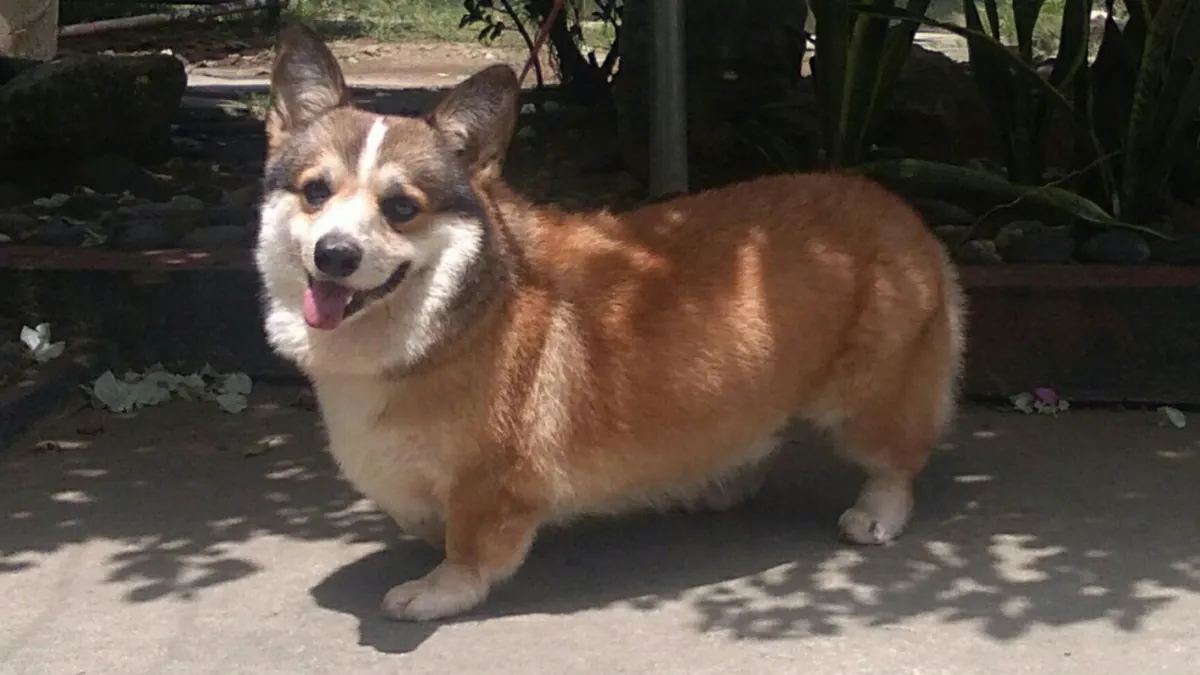

A Chihuahua Corgi mix, often called a Chigi, is a cross between a Chihuahua and a Pembroke or Cardigan Welsh Corgi. Most are small dogs with a Corgi’s long body and short legs and a Chihuahua’s big ears and big opinions, but size, coat and temperament vary widely because the parents are so different. The things to plan for are a sensitive back, small-dog teeth, a lot of barking and steady shedding.
This guide uses American Kennel Club (AKC) breed pages, Orthopedic Foundation for Animals (OFA) screening data, the American College of Veterinary Surgeons (ACVS) and peer-reviewed studies. Where nobody has studied the mix itself, we say so and show you what each parent brings instead.
Chihuahua Corgi mix quick facts
- Other names: Chigi, Chorgi, ChiCorgi, Corgihuahua. None is official; no major kennel club recognizes the cross.
- Height: no standard. The parents span 5 to 8 inches (Chihuahua) and 10 to 12.5 inches (Corgis) at the shoulder (AKC Chihuahua; AKC Pembroke; AKC Cardigan).
- Weight: no standard. Chihuahuas weigh no more than 6 pounds; Pembrokes up to 30; Cardigans 25 to 38.
- Parent lifespans (AKC): 14 to 16 years (Chihuahua), 12 to 13 (Pembroke), 12 to 15 (Cardigan). No study has measured the mix.
- Energy (AKC rating): 4 out of 5 for all three parent breeds.
- Barking (AKC rating): 5 (Chihuahua), 4 (Pembroke), 5 (Cardigan). Plan for a vocal dog.
- Grooming and shedding (AKC): grooming 1 to 2 out of 5; shedding 2 (Chihuahua), 4 (Pembroke), 3 (Cardigan).
- Good with young children (AKC rating): 1 (Chihuahua), 3 (Pembroke), 4 (Cardigan).
- Good with other dogs (AKC rating): 3 (Chihuahua), 4 (Pembroke), 3 (Cardigan).
- Main health watch-outs: back and disc problems, loose kneecaps, dental disease, weight gain.
- Good fit for: someone home a fair amount who wants a small, alert, funny companion and doesn’t mind barking or dog hair.
What is a Chihuahua Corgi mix?
A Chigi is a “designer” cross or, just as often, an accidental one. There is no breed club, no written standard and no reliable record of when people started breeding them on purpose, so we won’t repeat origin stories we can’t verify.
What we can describe are the parents.
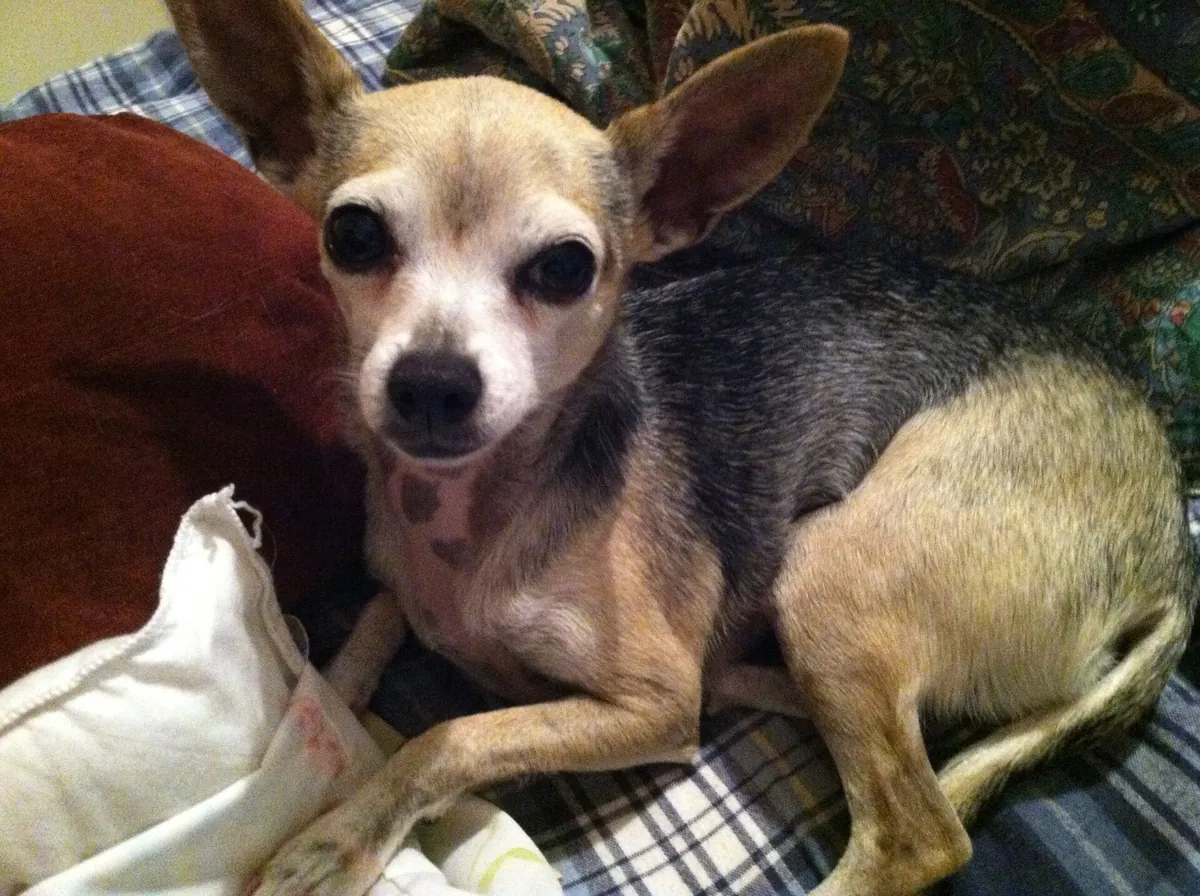
The Chihuahua is a toy breed the AKC describes as “a balanced, graceful dog of terrier-like demeanor, weighing no more than 6 pounds” (AKC Chihuahua). Chihuahuas come in smooth and long coats and two head shapes people call apple-head and deer-head. Our Chihuahua breed guide covers the breed in depth.
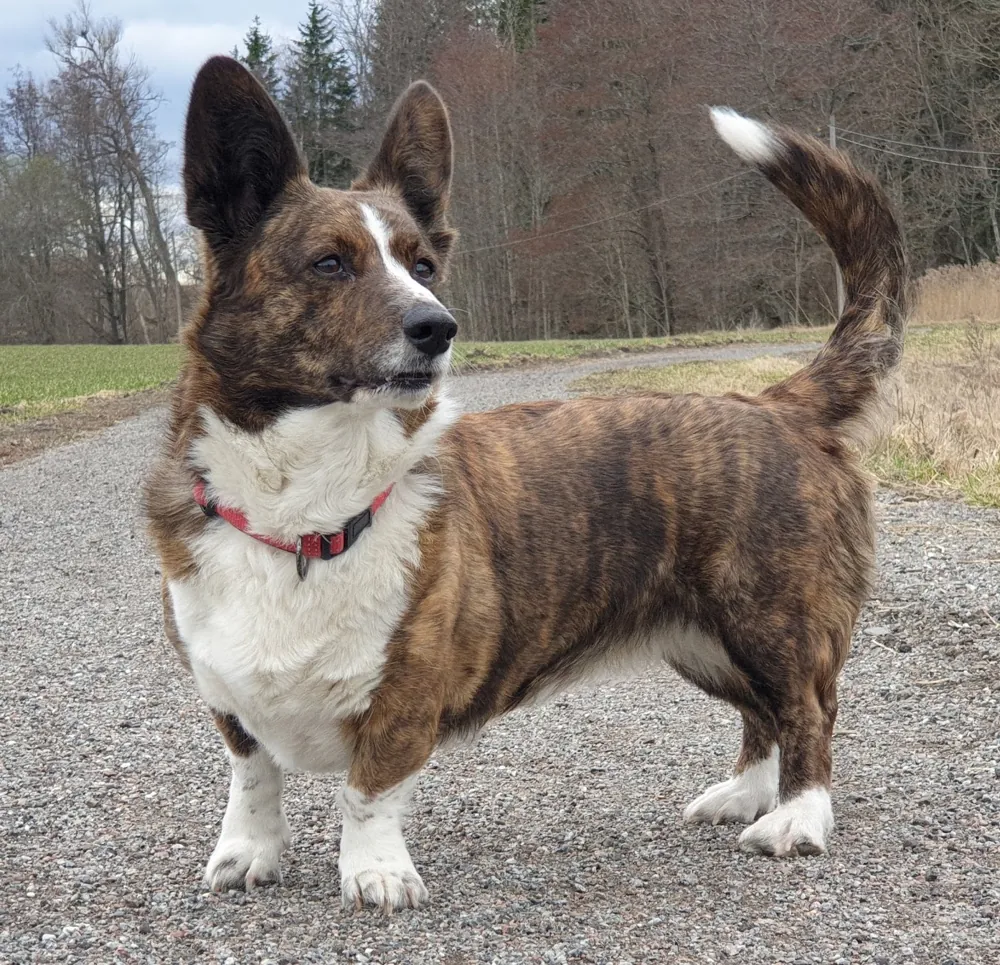
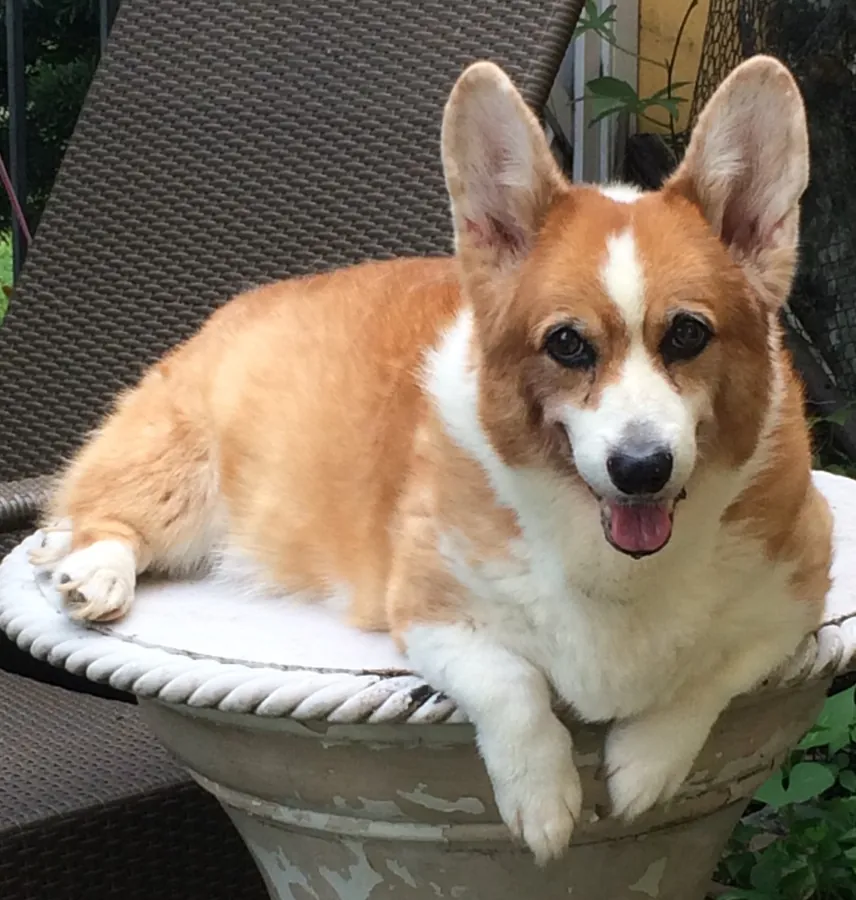
The Welsh Corgi is really two separate breeds. Pembrokes are the more common and usually have a docked or naturally short tail. Cardigans are a little bigger and heavier, always have a full tail, and come in more colors, including blue merle and brindle (AKC Pembroke; AKC Cardigan). Both are herding dogs, bred to move cattle by nipping at their heels.
So “Chihuahua Corgi mix” can mean two quite different crosses. If you are meeting a dog, ask which Corgi was involved. A Cardigan cross may be heavier, and the two Corgi breeds have different inherited risks (see Health).

Chihuahua vs. Corgi vs. Chihuahua Corgi mix
| Chihuahua | Pembroke Welsh Corgi | Cardigan Welsh Corgi | Chihuahua Corgi mix (what we can honestly say) | |
|---|---|---|---|---|
| Height | 5 to 8 in | 10 to 12 in | 10.5 to 12.5 in | No standard. Usually between the parents. |
| Weight | Not exceeding 6 lb | Up to 30 lb (male), up to 28 lb (female) | 30 to 38 lb (male), 25 to 34 lb (female) | No standard. A Cardigan cross may run heavier. |
| Life expectancy | 14 to 16 yrs | 12 to 13 yrs | 12 to 15 yrs | Not studied. |
| Coat | Smooth or long | Double coat, short | Double coat, medium | Anything from a smooth single coat to a dense double coat. |
| Shedding (AKC) | 2 of 5 | 4 of 5 | 3 of 5 | Expect at least moderate shedding if the Corgi coat comes through. |
| Barking (AKC) | 5 of 5 | 4 of 5 | 5 of 5 | Likely vocal. |
| Trainability (AKC) | 3 of 5 | 4 of 5 | 4 of 5 | Varies; reward-based training works for all three. |
| Openness to strangers (AKC) | 2 of 5 | 4 of 5 | 4 of 5 | May be friendly or wary. Early socialization helps. |
| Good with young children (AKC) | 1 of 5 | 3 of 5 | 4 of 5 | Best with older, gentle children. |
| Key health screening (AKC) | Knees, heart, eyes | Hips, eyes | Hips, DM DNA test, PRA-rcd3 DNA test | Ask about both parents’ results. |
Sources: AKC Chihuahua, Pembroke Welsh Corgi and Cardigan Welsh Corgi breed pages and ratings (1 to 5, 5 = most).
Appearance and size
Why most Chigis have short legs
The Corgi’s long-and-low build comes from inherited forms of dwarfism, called chondrodysplasia, that shorten the leg bones. A 2017 study in the Proceedings of the National Academy of Sciences found two separate copies of a growth gene, FGF4, behind short legs in dogs. One of them, on chromosome 12, also makes the cushioning discs in the spine age early, which is called chondrodystrophy, and it raised the odds of intervertebral disc disease about 51-fold. The study listed the Pembroke Welsh Corgi among breeds with significantly increased IVDD risk, and the Cardigan among breeds carrying the other short-leg copy (Brown et al., 2017).
What that means for a mix: a puppy may inherit short legs, medium legs, or something in between, and you can’t tell which gene variants it carries just by looking. A DNA test can check for the chromosome 12 variant if you want to know.
Size: a range, not a guarantee
Because the parents differ so much (a 5-pound Chihuahua and a 30-pound Corgi are both normal), there is no reliable size chart for this cross. Figures you see online, often 10 to 20 pounds, aren’t backed by any published measurements. Most first-generation Chigis will fall somewhere between the parents. Which end depends on the individual dog’s genes, and littermates can turn out quite differently. If size matters to you, adopt an adult whose size you can see.
Coat, color and ears
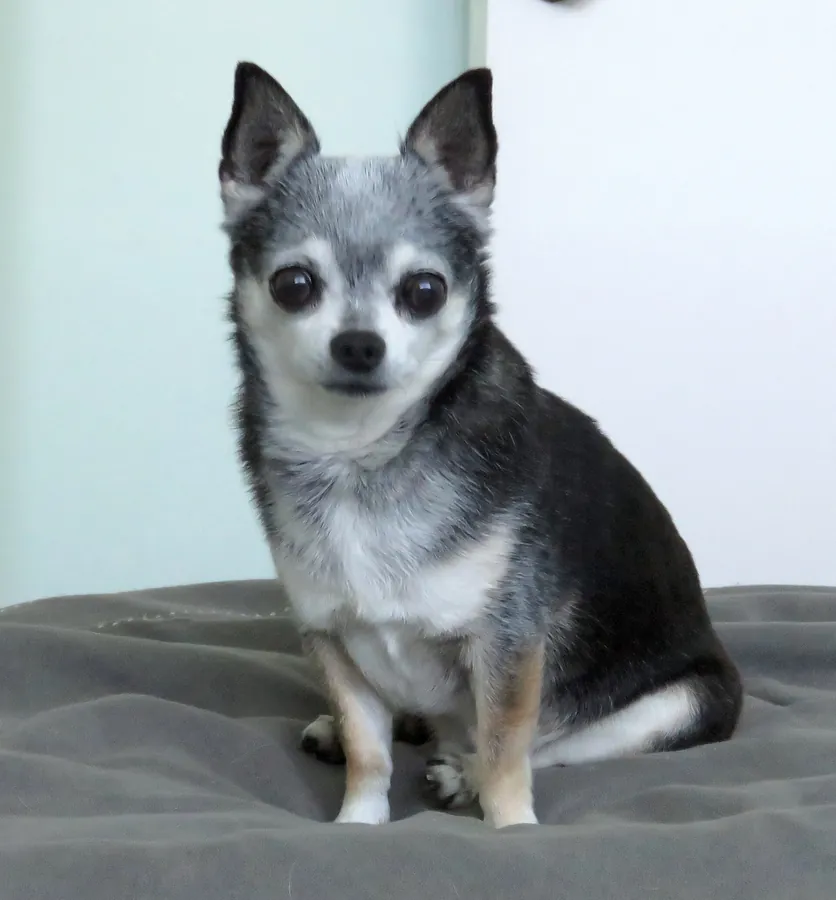
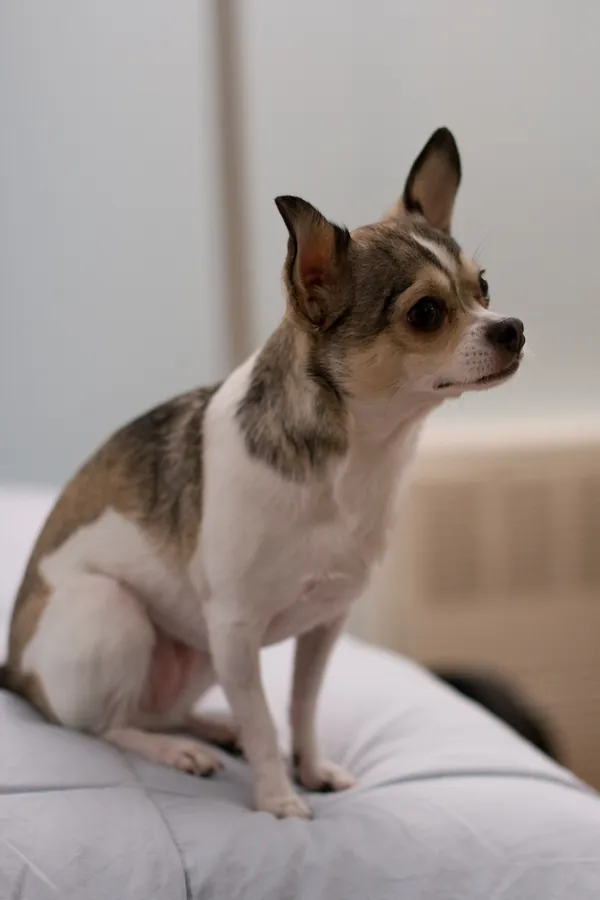
Expect anything from the Chihuahua’s smooth coat to the Corgi’s thick double coat, and almost any color either parent carries, including the red-and-white and sable common in Pembrokes. Big upright ears are likely, since all three parent breeds have them. Some dogs inherit the Chihuahua’s rounded “apple” skull, sometimes with a soft spot on top called a molera (see Health).

Temperament
Both sides are alert, loyal and opinionated. The AKC says the Chihuahua has “big-dog attitude” and warns that without training “this clever scamp will rule your household like a little Napoleon” (AKC Chihuahua). It describes the Pembroke as “affectionate and companionable without being needy” (AKC Pembroke). Corgis were bred to herd, so some mixes nip at heels or try to herd children and other pets.
What to expect in daily life:
- Barking. Every parent breed scores 4 or 5 out of 5 for barking with the AKC. This is a dog that will tell you about the mail carrier.
- Strangers. Pembrokes and Cardigans rate 4 out of 5 for openness to strangers; Chihuahuas rate 2. Your mix may be a social butterfly or a watchful one-person dog.
- Children. Chihuahuas rate 1 out of 5 with young children, and the AKC notes they are “too small for roughhousing with kids” (AKC Chihuahua). A small Chigi may do best with adults or gentle older children.
A label only tells you so much. A genetic study of 18,385 dogs found that breed explains about 9% of the variation in behavior between individual dogs (Morrill et al., 2022). The dog in front of you matters more than its parents’ reputations.
Exercise needs
All three parent breeds rate 4 out of 5 for energy with the AKC. The AKC recommends “short, slow walks” for Chihuahuas and warns against overexerting them, and says Corgis “benefit from moderate daily exercise,” adding that their short legs “won’t allow them to keep up with a bicycle rider” (AKC Chihuahua; AKC Pembroke).
In practice, a couple of walks at a comfortable pace, plus play and sniffing games, suits most Chigis. Skip long runs, frisbee leaps and repeated stair climbing. Hard twisting and jumping are exactly what a long back doesn’t need. Puzzle feeders and short training sessions tire the brain without stressing the spine.
Grooming
- Brushing. Smooth-coated Chigis need little more than a weekly once-over. If your dog has the Corgi double coat, brush at least weekly and more during heavy seasonal shedding; the AKC says Pembrokes shed “a fair amount on a daily basis, and even more so in the late spring/early summer” (AKC Pembroke). Long-coated Chihuahuas need brushing “at least once a week” (AKC Chihuahua).
- Nails. Trim regularly. Long nails change how a dog stands and walks, which matters on a long back.
- Teeth. The most important grooming job for this mix. See the dental section below.
Our guide to reducing dog shedding has practical tips for double coats.
Health: what the parent breeds face
No one has studied the Chihuahua Corgi mix as a group, so there is no health data on it. What we do have is each parent breed’s screening data. Share this with your vet if your dog has either breed in its background.
| Condition | Chihuahua | Pembroke Welsh Corgi | Cardigan Welsh Corgi |
|---|---|---|---|
| Back and disc disease (IVDD) | Small OFA sample (82 dogs) found 98.8% clear of the chromosome 12 disc variant | Listed among breeds at significantly increased IVDD risk (Brown et al., 2017) | AKC warns of “potential back issues” in this “long and low” breed |
| Hip dysplasia (OFA, % abnormal) | 5.6% of 177 dogs | 21.9% of 17,527 dogs | 24.4% of 4,169 dogs |
| Loose kneecaps, patellar luxation (OFA, % abnormal) | 6.5% of 5,670 dogs | 0.9% of 931 dogs | 3.4% of 117 dogs |
| Degenerative myelopathy (OFA DNA tests, % at risk) | 0.4% of 272 dogs | 53.8% of 5,479 dogs | 15.5% of 1,025 dogs |
| Other conditions the AKC names | Heart problems, eye disease, idiopathic epilepsy | Elbow dysplasia, eye disorders, heart issues, von Willebrand’s disease | Progressive retinal atrophy (PRA-rcd3 DNA test recommended) |
Sources: OFA disease statistics (owner-submitted screening results, so not a random sample of all dogs); AKC Chihuahua, Pembroke and Cardigan pages.
The back: IVDD
Intervertebral disc disease happens when a disc between the vertebrae bulges or ruptures and presses on the spinal cord. The ACVS says chondrodystrophic breeds “account for the vast majority of all disc ruptures” and that signs usually start between 3 and 6 years old. Signs include “back or neck pain, possibly refusing to walk around the room” and a wobbly “drunken sailor” walk (ACVS IVDD). Treat sudden weakness or wobbling in the back legs as an emergency and call your vet straight away.
The ACVS lists lifestyle changes that help: “weight loss, switching to a body harness instead of neck lead, and minimizing jumping off furniture” (ACVS IVDD). The AKC gives Cardigan owners the same advice: “Avoid letting the Cardigan jump down off the bed or couch, and stairs can also be a hazard” (AKC Cardigan).
Degenerative myelopathy
Degenerative myelopathy (DM) is a slowly progressing disease of the spinal cord that weakens the hind legs. A key study linked a variant of the SOD1 gene to DM in five breeds, including the Pembroke Welsh Corgi, with signs typically beginning at 8 years or older (Awano et al., 2009). Testing “at risk” does not mean a dog will get DM, but it is worth knowing. A DNA test can tell you whether your mix carries the variant.
Knees
Patellar luxation means the kneecap slips out of place. The ACVS says it “affects primarily small dogs,” names Chihuahuas, and notes it “affects both knees in half of all cases” (ACVS patellar luxation). Skipping, or holding a back leg up for a few steps, is worth mentioning to your vet.
Teeth
Small dogs have a harder time with teeth. In a UK study of 22,333 dogs, Chihuahuas had about twice the odds of periodontal (gum) disease compared with crossbred dogs, and the odds fell as body weight rose (O’Neill et al., 2021). The AKC says dental care for Chihuahuas “is necessary” (AKC Chihuahua).
The molera and hydrocephalus
Many Chihuahuas have a molera, a soft spot on top of the skull that doesn’t fully close. The AKC breed standard allows it, and the Chihuahua Club of America says a molera alone “does not predispose the Chihuahua” to hydrocephalus (fluid on the brain) (CCA molera statement). Researchers in Finland found open soft spots in 92% of the 50 Chihuahuas they examined, and a companion study linked them to small size and some skull and brain changes (Kiviranta et al., 2021, Part I; Part II). If your Chigi has a soft spot, show your vet and protect the top of the head. Don’t panic about it.
Is a mix healthier?
Not automatically. A 2024 UK study of more than 584,000 dogs found that 47.1% of purebred breeds had a longer median lifespan than crossbreds, and only 25.8% had a shorter one (McMillan et al., 2024). Crossing two breeds that share a risk, such as a long back on short legs, doesn’t cancel it out.

Back, joint and dental care for older owners
This is the part most guides skip. Many of the habits that protect a long-backed little dog also protect the person caring for it.
Protecting the dog’s back (and yours)
- Keep the dog lean. The ACVS lists weight loss first among the lifestyle changes for IVDD (ACVS IVDD). Check body condition monthly (see Diet below).
- Use a harness, not a collar, on walks, as the ACVS suggests.
- Add ramps or steps to the sofa, bed and car, so neither of you is lifting several times a day. See our guides to dog ramps for the bed and dog stairs.
- Lift the right way. One hand under the chest, one under the rump, back level, dog held close to your body. Bend your knees, not your back.
- Gate the stairs if your dog runs up and down them all day.
- Use non-slip rugs on slick floors. They help an older dog’s joints and your footing.
Falls are a real risk with small dogs
The US Centers for Disease Control and Prevention (CDC) estimated more than 86,000 fall injuries a year in the US linked to pets, mostly dogs, with the highest rates in people 75 and older. Among dog-related falls, 31.3% came from tripping over the dog (Stevens et al., 2010). A low, fast little dog that follows you everywhere is easy to miss. A small bell on the collar, a night light, and teaching a “wait” at doors and stairs all help.
Teeth: the easiest win
- Brush daily if you can, with dog toothpaste (never human toothpaste).
- Ask about dental checks at every vet visit. Small dogs often need professional cleanings under anesthesia. Our guide to vet dental cleanings explains what’s involved.
- If brushing is hard on your hands, ask your vet which products may help, and try a finger brush.
Training
Positive methods suit all three parent breeds. The AKC says Pembrokes respond best to “positive, reward-based training,” and that early socialization is “of the utmost importance” for Cardigans (AKC Pembroke; AKC Cardigan). The American Veterinary Society of Animal Behavior (AVSAB) recommends reward-based training and says “there is no evidence that aversive training is necessary” (AVSAB).
Priorities for a Chigi:
- “Quiet” and “settle.” Reward the pause between barks rather than shouting over them.
- Redirect heel nipping. Swap ankles for a tug toy, and reward calm walking beside you.
- Gentle handling. Practice touching paws, ears and mouth with treats, so nail trims, tooth brushing and vet visits stay easy.
- House-training. Small dogs have small bladders. Frequent trips out and quick rewards work better than puppy pads that never get phased out. Our potty training guide walks through it step by step.
Diet basics
There’s no special diet for this mix. Choose a complete and balanced food that suits your dog’s age and size, and talk to your vet before switching. The World Small Animal Veterinary Association (WSAVA) offers free nutrition guidelines for owners.
The most important thing is portion size. On the WSAVA body condition chart, an ideal-weight dog has “ribs easily palpable, with minimal fat covering,” and a waist “easily noted, viewed from above.” Because a Chigi’s ideal weight could be 8 pounds or 25, judge by body shape, not by a number from someone else’s dog. Count treats as part of the daily food.
Who a Chihuahua Corgi mix suits, and who should skip it
A good fit if you:
- Want a small, portable companion that’s still sturdy enough for daily walks.
- Are home a fair amount; both parents are people-focused.
- Don’t mind dog hair and a dog that announces visitors.
- Can commit to tooth brushing and back-friendly habits for life.
Think twice if you:
- Live with thin shared walls and neighbors who complain about barking.
- Have toddlers or very young grandchildren visiting often (Chihuahuas rate 1 out of 5 with young children).
- Can’t bend, lift or manage ramps, and have nobody to help.
- Want a jogging or hiking partner for long distances.
Is a Chihuahua Corgi mix right for you? A checklist
- Yes / No: I can walk a small dog twice a day at a comfortable pace.
- Yes / No: I’m comfortable with a dog that barks at noises and visitors, or I’m ready to train around it.
- Yes / No: I can add a ramp or steps to the furniture and car.
- Yes / No: I’ll brush its teeth most days and budget for dental care.
- Yes / No: I’m ready for regular brushing and shedding.
- Yes / No: My home, landlord or HOA allows a dog.
- Yes / No: I’ve thought about who would care for this dog if I couldn’t.
A “no” isn’t a failure. Our guide to dog breeds for people over 50 has other small dogs worth meeting.

Realistic costs
We don’t quote puppy prices for this mix. There’s no breed club or health-testing standard behind them, and prices online aren’t verified. For any dog, the ASPCA estimates $1,391 a year in ongoing costs and $3,221 in the first year, including $1,030 in one-time costs. Its line items include about $300 a year for food, $225 for routine medical care and $500 for dental care (ASPCA). A small dog may eat less than average, but dental cleanings and any back problems can push vet bills up. If you’re considering pet insurance, get it early, before any back or dental issue is diagnosed and excluded as pre-existing.
Adopting a Chihuahua Corgi mix
Bone Voyage ran a shelter and rescue from 2019 to 2024. Today it’s an educational resource and backup-plan movement, and it doesn’t place dogs. Here’s where to look.
- Local shelters and adoption sites. Search for “Chihuahua mix” and “Corgi mix,” not just “Chigi.” Chihuahuas were one of the most common breed signatures in a DNA study of 919 shelter dogs (Gunter et al., 2018).
- Breed rescues. Breed rescues mainly place purebred dogs (the Cardigan Welsh Corgi National Rescue Trust, for example, says its mission is homes for purebred Cardigans), but they know the local rescue scene and can point you to groups that take mixes. Start with the Pembroke Welsh Corgi Club of America rescue page and the AKC Rescue Network, which lists rescues by breed.
- Consider an adult or senior dog. You’ll know its size, coat, energy and noise level on day one. Our guide to senior pet adoption explains why that can be a good choice.
Shelter breed labels are guesses. In the same study, staff at one shelter who guessed by looks matched more than one breed in the dog’s DNA only 10.4% of the time (Gunter et al., 2018). If it matters to you, our guide to figuring out what breed your dog is explains how breed DNA tests work.
Questions to ask the shelter or rescue
- How was this dog’s breed label decided? Has it had a DNA test?
- Does it have any back pain, wobbliness, limping or knee problems? Any X-rays or vet notes?
- When were its teeth last checked, and does it need a dental cleaning?
- How does it react to being picked up, having its paws touched and being brushed?
- How much does it bark, and at what?
- How is it with children, cats and other dogs?
- Why was it surrendered, and will you take it back if it doesn’t work out?
Our 9 questions to ask when adopting a dog covers the general ones.

Other small mixes to compare
- Beagle Corgi mix, another long-backed Corgi cross with a sourced guide to the back risk.
- Dachshund Corgi mix (Dorgi), the royal Corgi cross, with both parents carrying the same disc-disease gene.
- Jack Russell Chihuahua mix, a lively small terrier cross.
- Chihuahua Dachshund mix (Chiweenie), another long-backed Chihuahua cross.
- Chihuahua Pomeranian mix, a fluffy toy-sized cross.
- Chihuahua terrier mixes, several small crosses compared.
- Mini Corgi Doodle, a Corgi cross with a lower-shedding parent.
- Corgidor, a bigger Corgi cross with a Labrador.
- German Shepherd Corgi mix (Corman Shepherd), a herder-and-herder Corgi cross with a shepherd’s head on short legs.
Give your dog a backup plan
A Chigi can easily live into its teens, so it’s worth deciding now who would care for it if you couldn’t. Write down its routine, vet, food, and how it likes to be picked up. Our guide What Happens to Your Dog When You Die walks you through it, and the free My Dog’s Backup Plan worksheet keeps it all in one place. Bone Voyage is also building the pledge: a volunteer’s pledge to adopt a specific older adult’s dog if that person dies or can no longer care for it. You can join the free list on the guide page.
Frequently Asked Questions
What is a Chihuahua Corgi mix called?
Most people call it a Chigi. You will also see Chorgi, ChiCorgi and Corgihuahua. None of these is an official name, because no major kennel club recognizes the cross. Shelters usually list these dogs simply as a Chihuahua mix or a Corgi mix.
How big does a Chihuahua Corgi mix get?
There is no standard, so the honest answer is a range. By AKC figures, Chihuahuas stand 5 to 8 inches and weigh no more than 6 pounds, Pembroke Welsh Corgis stand 10 to 12 inches and weigh up to 30 pounds, and Cardigans stand 10.5 to 12.5 inches and weigh 25 to 38 pounds. A first-generation mix will most likely land between its parents, but even littermates can differ a lot. An adult dog’s size is known; a puppy’s is a guess (AKC Chihuahua; AKC Pembroke; AKC Cardigan).
How long do Chihuahua Corgi mixes live?
Nobody has studied the mix, so there is no reliable lifespan figure for it. The AKC lists 14 to 16 years for Chihuahuas, 12 to 13 for Pembroke Welsh Corgis and 12 to 15 for Cardigans. Being a mix does not automatically add years: a 2024 UK study of more than 584,000 dogs found many purebred breeds outlived crossbreds. Weight, dental care and regular vet visits matter more than the label (McMillan et al., 2024).
Do Chihuahua Corgi mixes have back problems?
They can. A long back on short legs comes from the Corgi side, and the Pembroke Welsh Corgi is one of the breeds a 2017 study found at significantly increased risk of intervertebral disc disease (IVDD). Keep the dog lean, use a harness instead of a collar, limit jumping off furniture, and call your vet the same day if your dog suddenly cries out, hunches, refuses to move or wobbles on its back legs (Brown et al., 2017; ACVS IVDD).
How should you pick up a Chihuahua Corgi mix?
Support both ends at once. Slide one hand under the chest and the other under the rump so the back stays level, then lift close to your body. Don’t lift by the front legs or under the armpits with the back end dangling. If lifting is hard for you, a ramp to the sofa or car lets the dog climb instead, which also protects your own back.
How do you house-train a Chihuahua Corgi mix?
Take the dog out often (after waking, eating and playing), go to the same spot, and reward it the moment it finishes outdoors. Never punish accidents; clean them with an enzyme cleaner and supervise more closely. The American Veterinary Society of Animal Behavior recommends reward-based training only. A sudden change in an adult dog’s toilet habits is worth a vet visit (AVSAB).
How can I tell if my Chihuahua Corgi mix is overweight?
Don’t go by the number on the scale alone, because the right weight depends on which parent your dog takes after. Use the WSAVA body condition chart instead: at an ideal weight you can feel the ribs easily under a thin layer of fat and see a waist behind the ribs from above. If you can’t feel ribs or see a waist, ask your vet for a weight plan (WSAVA).
Is a Chihuahua Corgi mix a good dog for someone over 50?
It can be a lovely fit for an older adult who wants a small, alert companion and can commit to daily walks, dental care and protecting the dog’s back. It is a harder fit if you can’t bend or lift, live with constant visitors, or need a quiet dog, because both parent breeds bark a lot. Adopting an adult dog lets you see its size, energy and noise level first.
Before you go
A Chihuahua Corgi mix packs a lot of personality into a small, long body. Go in expecting barking, shedding and a back and teeth that need looking after, and you’ll get a loyal, funny companion who wants to be wherever you are. If you can, meet the adult dogs waiting in your local shelter first.
Sources
- American Kennel Club, Chihuahua, Pembroke Welsh Corgi and Cardigan Welsh Corgi breed pages, and the AKC Rescue Network
- Orthopedic Foundation for Animals, disease statistics by breed (hips, patellas, elbows, degenerative myelopathy, chondrodystrophy)
- American College of Veterinary Surgeons, Intervertebral Disc Disease and Patellar Luxations
- Brown EA et al. (2017). FGF4 retrogene on CFA12 is responsible for chondrodystrophy and intervertebral disc disease in dogs. PNAS 114(43):11476-81.
- Awano T et al. (2009). Genome-wide association analysis reveals a SOD1 mutation in canine degenerative myelopathy that resembles amyotrophic lateral sclerosis. PNAS 106(8):2794-9.
- O’Neill DG et al. (2021). Epidemiology of periodontal disease in dogs in the UK primary-care veterinary setting. Journal of Small Animal Practice 62:1051-61.
- Kiviranta AM et al. (2021). Persistent fontanelles in Chihuahuas, Part I. Journal of Veterinary Internal Medicine; and Part II.
- Chihuahua Club of America, Molera statement
- McMillan KM et al. (2024). Longevity of companion dog breeds: those at risk from early death. Scientific Reports 14:531.
- Morrill K et al. (2022). Ancestry-inclusive dog genomics challenges popular breed stereotypes. Science 376(6592):eabk0639.
- Gunter LM, Barber RT, Wynne CDL (2018). A canine identity crisis: Genetic breed heritage testing of shelter dogs. PLOS ONE 13(8):e0202633.
- Stevens JA, Teh SL, Haileyesus T (2010). Dogs and cats as environmental fall hazards. Journal of Safety Research 41(1):69-73.
- American Veterinary Society of Animal Behavior, Position Statement on Humane Dog Training (2021)
- World Small Animal Veterinary Association, Global Nutrition Guidelines and Body Condition Score chart
- ASPCA, Cutting Pet Care Costs
- Pembroke Welsh Corgi Club of America, Rescue; Cardigan Welsh Corgi National Rescue Trust