
Chihuahua terrier mix breeds are crosses between a Chihuahua and any terrier, such as a Rat Terrier, Jack Russell, Yorkshire Terrier or Fox Terrier. Expect an alert, people-loving dog with a big voice, usually small but often bigger than a Chihuahua, with a coat that may be smooth, silky or wiry. None of these crosses is a recognized breed, so the terrier in the family, and the individual dog, matter more than the nickname.
“Chihuahua/terrier mix” is also one of the labels you may see on a shelter kennel card, and it is often a guess. Below you’ll find each common cross with what the American Kennel Club (AKC), the United Kennel Club (UKC) and veterinary research say about the parent breeds, a side-by-side table, the DNA evidence on which of these mixes really turn up in shelters, and help choosing one if you’re over 50.
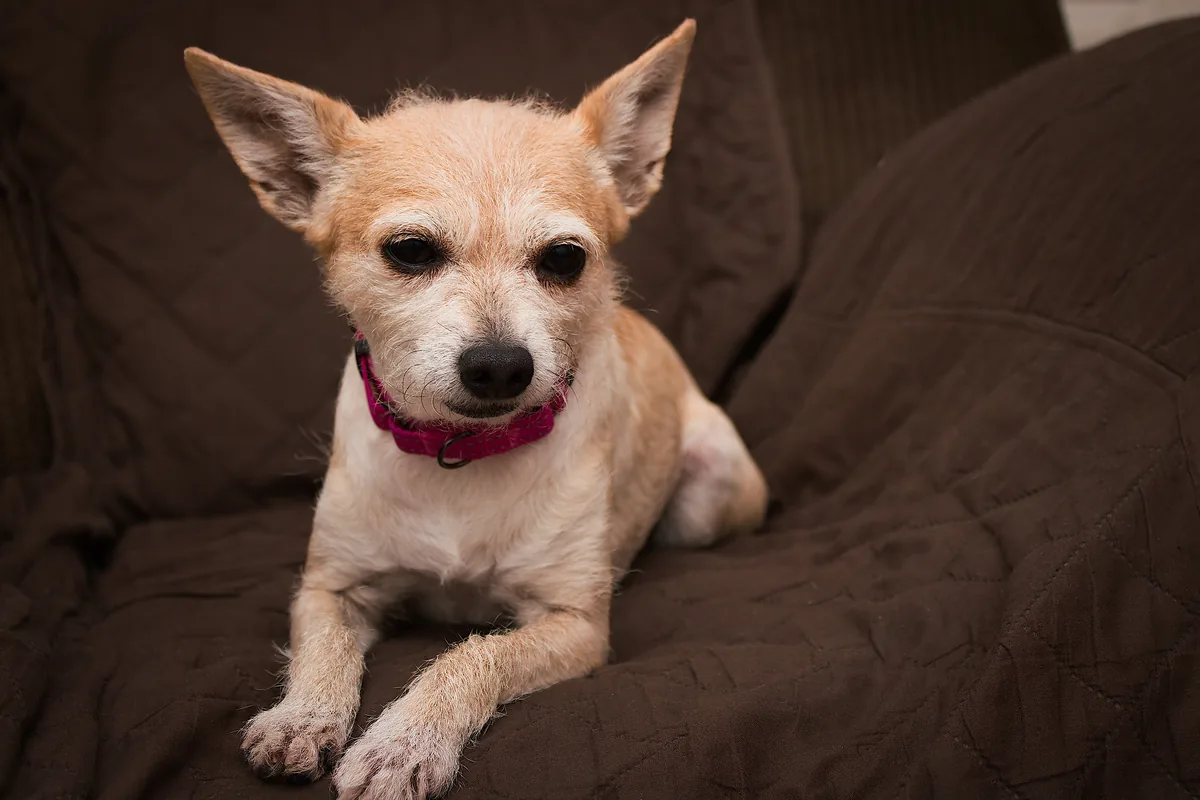
A note on our photos: every dog on this page was described by its own photographer as the mix in the caption, unless the caption says “not a mix.” Nobody DNA-tested them for us.
Chihuahua terrier mix quick facts
No one has measured these crosses as a group, so the figures are for parent breeds unless we say otherwise.
- Recognized? No. The AKC and UKC recognize the parent breeds, not the crosses. A mixed-breed dog can still enroll in AKC Canine Partners and take part in dog sports.
- Chihuahua parent: 5 to 8 inches, no more than 6 pounds (AKC). Pet Chihuahuas often weigh more; see size.
- Small terrier parents: from the Toy Fox Terrier at 4 to 9 pounds (AKC) to the Rat Terrier at 10 to 25 (AKC).
- Lifespan: not studied for the mixes. The AKC lists 14 to 16 years for the Chihuahua and 11 to 18 across the small terriers below.
- Energy (AKC ratings): Chihuahua 4 out of 5; the small terriers in our tables 4 or 5.
- Barking (AKC ratings): Chihuahua 5 out of 5; the small terriers 3 to 5. Assume a talker.
- Grooming: easy for smooth coats, more work for wiry ones, daily brushing for a long Yorkie-type coat.
- Young children (AKC ratings): Chihuahua 1 out of 5; terriers 3 to 5. Best with adults or calm, older children, supervised.
- Other pets: ask dog by dog. Terriers were bred to chase small animals.
- Health to ask about: kneecaps, teeth, eyes, windpipe, heart and weight.
Chihuahua terrier mixes compared
Every number is a registry figure for the purebred parent. Your mix can land anywhere between the Chihuahua row and the terrier row, or outside both. The Fox Terrier and Westie crosses have no settled nickname.
| Parent breed (cross name) | Height | Weight | AKC life expectancy |
|---|---|---|---|
| Chihuahua | 5 to 8 in | Up to 6 lb | 14 to 16 yrs |
| Rat Terrier (Rat-Cha) | 10 to 18 in | 10 to 25 lb | 12 to 18 yrs |
| Russell Terrier (Jack Chi) | 10 to 12 in | 9 to 15 lb | 12 to 14 yrs |
| Yorkshire Terrier (Chorkie) | 7 to 8 in | Up to 7 lb | 11 to 15 yrs |
| Toy Fox Terrier | 8.5 to 11.5 in | 4 to 9 lb | 13 to 15 yrs |
| Smooth Fox Terrier | Up to 15.5 in | 15 to 18 lb | 12 to 15 yrs |
| Wire Fox Terrier | Up to 15.5 in | 15 to 18 lb | 12 to 15 yrs |
| West Highland White Terrier | 10 to 11 in | 15 to 20 lb | 13 to 15 yrs |
| American Staffordshire Terrier (Chipit) | 17 to 19 in | 40 to 70 lb | 12 to 16 yrs |
Now the AKC’s 1 to 5 trait ratings (5 = most). “Kids” means good with young children and “Dogs” means good with other dogs.
| Parent breed | Energy | Barks | Coat care | Kids | Dogs |
|---|---|---|---|---|---|
| Chihuahua | 4 | 5 | 1 | 1 | 3 |
| Rat Terrier | 4 | 3 | 2 | 5 | 3 |
| Russell Terrier | 5 | 4 | 2 | 3 | 5 |
| Yorkshire Terrier | 4 | 4 | 5 | 5 | 3 |
| Toy Fox Terrier | 4 | 4 | 2 | 3 | 3 |
| Smooth Fox Terrier | 4 | 5 | 2 | 3 | 3 |
| Wire Fox Terrier | 4 | 4 | 3 | 5 | 3 |
| West Highland White Terrier | 4 | 5 | 3 | 5 | 3 |
| American Staffordshire Terrier | 3 | 3 | 1 | 3 | 3 |
Sources: AKC pages for the Chihuahua, Rat Terrier, Russell Terrier, Yorkshire Terrier, Toy Fox Terrier, Smooth Fox Terrier, Wire Fox Terrier, West Highland White Terrier and American Staffordshire Terrier. Cross names are informal nicknames, not registry names.
A surprise in the tables: the Yorkshire Terrier and Toy Fox Terrier are terriers by ancestry, but the AKC puts both in its Toy Group with the Chihuahua. The AKC Terrier Group dogs were “bred to hunt, kill vermin and to guard their families home or barn.”
The Chihuahua side
The AKC calls the Chihuahua “a balanced, graceful dog of terrier-like demeanor” with a rounded “apple” head, erect ears and “full, luminous eyes,” in long or short coats and many colors. It credits the breed with “loyalty, charm, and big-dog attitude,” warns that without training “this clever scamp will rule your household like a little Napoleon,” and says Chihuahuas are “too small for roughhousing with kids” (AKC). Our Chihuahua guide covers the purebred.
That “terrier-like” is worth remembering. The AKC rates the Chihuahua and every small terrier in our tables 4 or 5 out of 5 for energy and for watchdog nature, so whichever side a mix takes after, expect someone to be in charge of the doorbell.
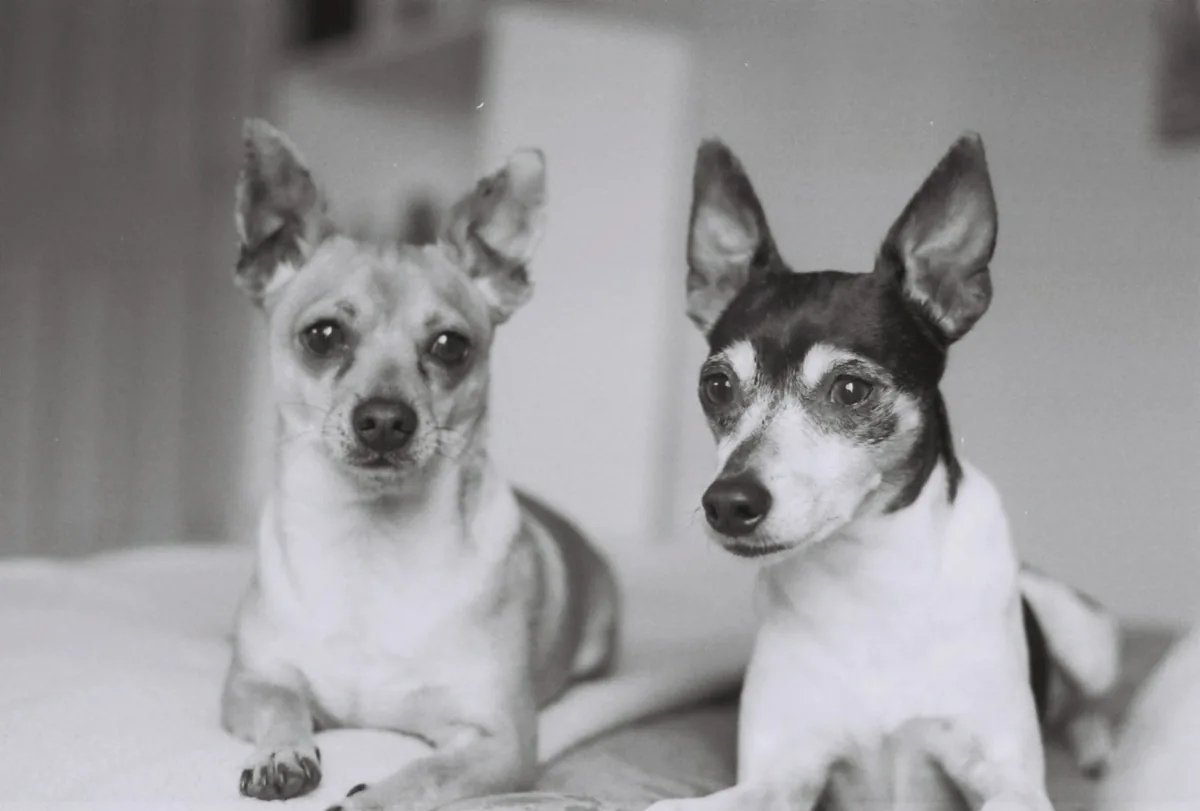
The common Chihuahua terrier mixes, one by one
Rat Terrier x Chihuahua (Rat-Cha)
If you only learn one cross on this page, make it this one. In DNA tests of 919 shelter dogs in Phoenix and San Diego, just 12 had two purebred parents of different breeds. Three of those 12 were Chihuahua and Rat Terrier, the most common pairing found (Gunter et al., 2018, Table 2).
- What the terrier brings: the AKC describes Rat Terriers as “extremely intelligent and trainable,” “unusually sensitive and intuitive,” and “one of the calmest of the terrier breeds,” though still high-energy dogs that “may be reserved with strangers” (AKC).
- Size: the parents span 5 to 18 inches and up to 25 pounds. The Rat Terrier comes in two sizes, miniature (10 to 13 inches) and standard (over 13 to 18), so ask which, if anyone knows (AKC).
- Look: short coat, often with patches. The Rat Terrier’s coat comes in “varieties of pied patterns,” meaning large patches of color with white (AKC).
- Know before you adopt: the AKC says Rat Terriers have “a strong prey drive” and “should never be allowed off lead” (AKC).
- Good match for: someone who enjoys training and a daily walk, and wants a sturdier dog than a Chihuahua.
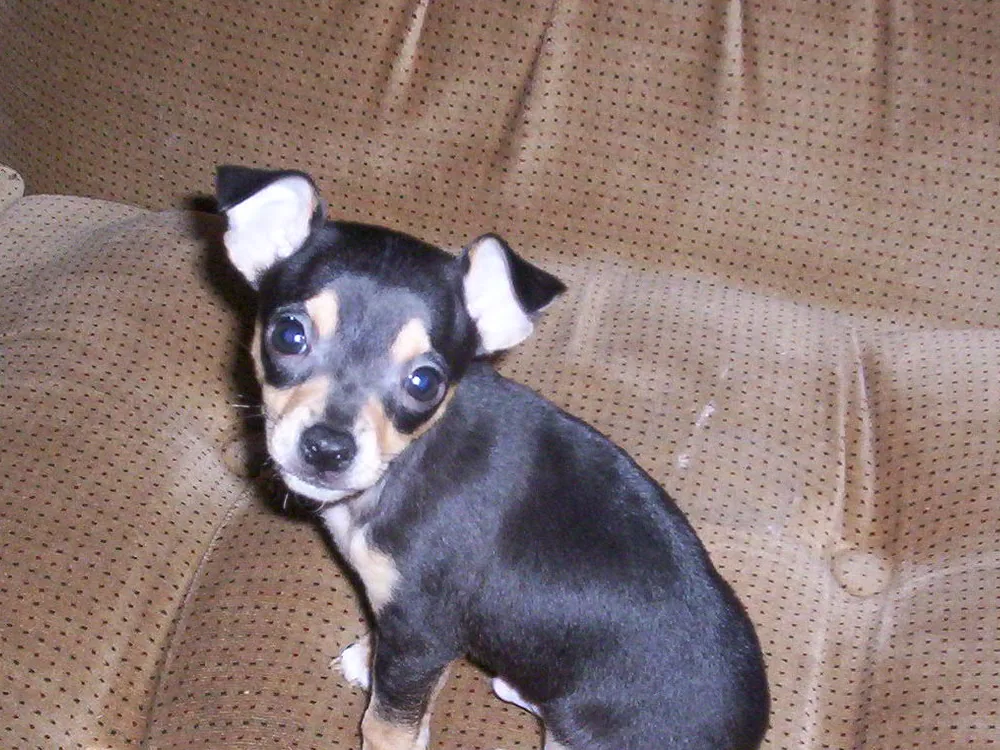
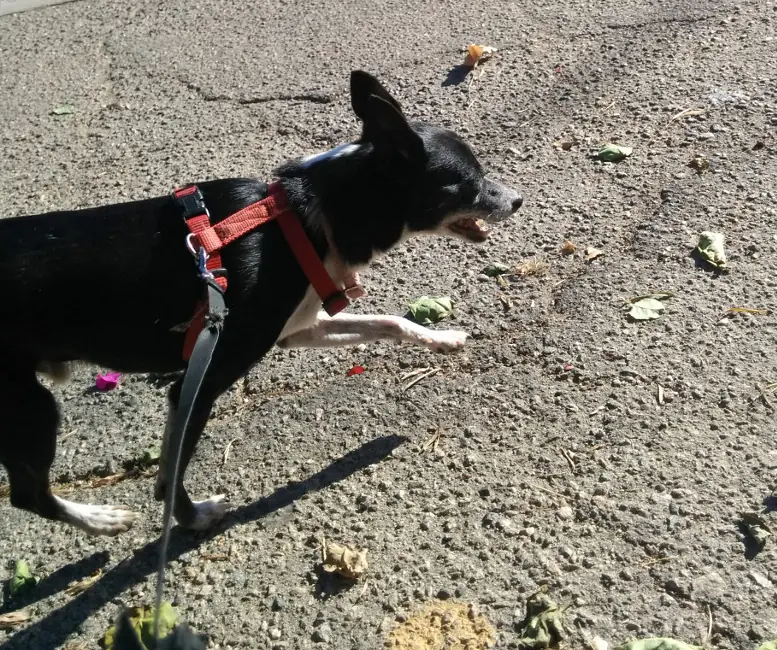

Jack Russell x Chihuahua (Jack Chi)
- What the terrier brings: the UKC calls the Jack Russell “a bold, friendly, active and alert hunting terrier” and “a high-energy breed” (UKC). The AKC recognizes two close relatives, the Russell Terrier and the Parson Russell Terrier.
- Size: the parents span 5 to 12 inches and up to about 15 pounds, or up to 14 inches and 17 pounds if the terrier is a Parson (AKC; AKC).
- Look: smooth, broken or rough coat, often white with patches.
- Know before you adopt: the Russell Terrier is rated 5 out of 5 for energy and for mental stimulation needs (AKC). It’s the only parent in our tables rated 5 for energy.
- Good match for: an active walker who likes games and training.
- Also in the DNA: one of the 12 first-generation crosses in the shelter study was Chihuahua and Russell Terrier (Gunter et al., 2018).
- Read more: our full Jack Russell Chihuahua mix guide.
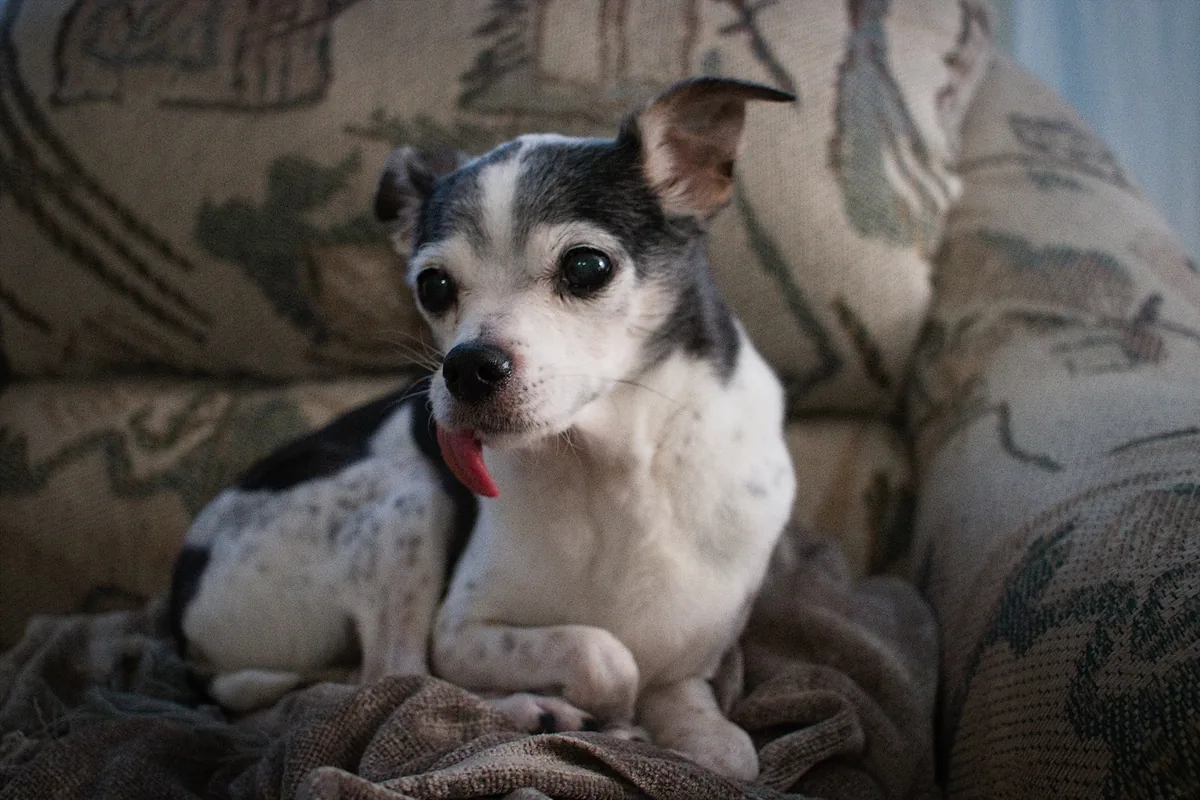
Yorkshire Terrier x Chihuahua (Chorkie)
- What the terrier brings: the AKC says the Yorkie is “tenacious, feisty, brave, and sometimes bossy” and “exhibits all the traits of a true terrier,” in a dog of no more than 7 pounds (AKC).
- Size: the smallest common cross. The parents span 5 to 8 inches, and both standards stop at 6 or 7 pounds.
- Look: anything from nearly smooth to long and silky, often tan with darker shading. The dogs in our top photo and below show two versions.
- Know before you adopt: a long Yorkie coat “needs to be brushed daily” (AKC). Yorkies were more likely than crossbred dogs to have loose kneecaps in a study in England, as were Chihuahuas (O’Neill et al., 2016).
- Good match for: a quiet, careful, mostly adult home that can keep a tiny dog from being stepped on or dropped. Our page on Yorkshire Terrier puppies has more on the purebred.

Fox Terrier x Chihuahua
“Fox Terrier” can mean three breeds, and the difference in size is large.
- Toy Fox Terrier: 4 to 9 pounds. This terrier already has Chihuahua in its family tree. The AKC says breeders made it in the early 1900s by crossing small Smooth Fox Terriers “with toy dogs, Chihuahuas and Italian Greyhounds among them” (AKC). Our Italian Greyhound guide covers that small sighthound.
- Smooth and Wire Fox Terriers: about 15 to 18 pounds and up to 15.5 inches. The AKC calls Smooths “bold but not aggressive toward people” and excellent watchdogs, notes a taste for digging, and says some can become “jealous or aggressive toward other dogs, cats, or other small pets” as they mature (AKC). It calls Wires “upbeat, friendly” with “loads of personality,” best with positive training (AKC).
- Know before you adopt: both full-size breeds should be leashed or fenced (AKC; AKC).
- Good match for: a fenced home that enjoys a clown. Our Fox Terrier guide covers the pair.
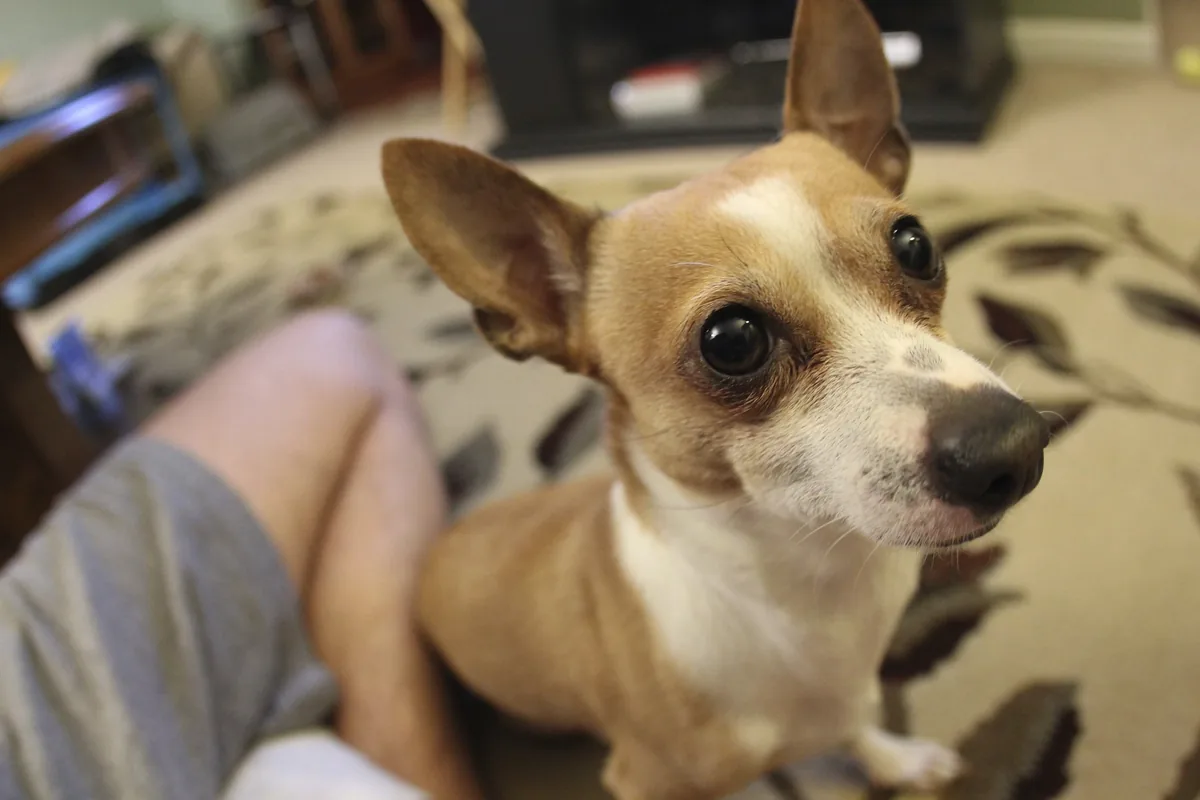
West Highland White Terrier x Chihuahua
- What the terrier brings: the AKC describes Westies as alert, active, “surprisingly strong and tough,” with an independence that “can make training a challenge,” though they “take to patient, consistent lessons” (AKC).
- Size: parents span 5 to 11 inches and up to 20 pounds.
- Look: often a scruffy face and beard.
- Know before you adopt: Westies will “run after anything that moves” and need regular coat care (AKC). In a UK study of Westies under vet care, gum disease (15.7%), ear infections (10.6%) and allergic skin problems (6.5%) were among the most common disorders (O’Neill et al., 2019).
- Good match for: someone patient who doesn’t mind grooming.
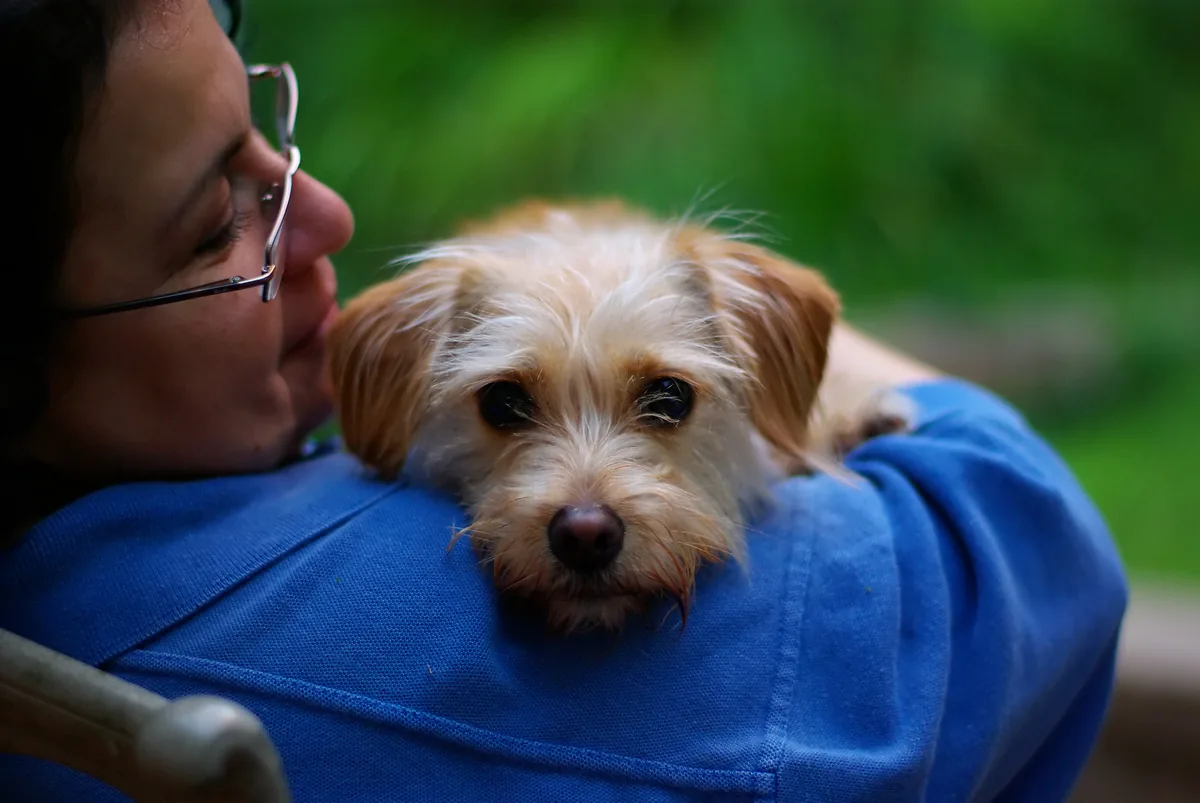
Pit bull-type terrier x Chihuahua (Chipit)
The American Pit Bull Terrier (recognized by the UKC, not the AKC) and the American Staffordshire Terrier (AKC) are terriers too. This cross has by far the widest size range, since one parent tops out at 6 pounds and the other starts at 30 or more. We cover its size, health, housing rules and breed-label questions in our Pitbull Chihuahua mix guide.
Other terrier crosses people ask about
For these we found no study, registry or reliably documented information about the cross itself. Here is what’s documented about the other parent.
- Patterdale Terrier x Chihuahua. The UKC-recognized Patterdale stands 10 to 15 inches. The UKC calls it “very active” with “a strong prey drive,” and “not a dog for the average pet owner” (UKC). See our Patterdale Terrier guide.
- Boston Terrier x Chihuahua. Despite the name, the AKC puts the Boston in its Non-Sporting Group: 12 to 25 pounds, rated 2 out of 5 for barking. Bostons are flat-faced and can struggle in heat, and their eyes need daily checks (AKC).
- Miniature Schnauzer x Chihuahua. An AKC Terrier Group dog of 11 to 20 pounds that sheds little but is usually trimmed every five to eight weeks; rated 5 out of 5 for barking (AKC).
- Cairn Terrier x Chihuahua. 13 to 14 pounds, 9.5 to 10 inches (AKC).
We left out crosses with bigger terriers such as the Airedale and Bull Terrier. Cornell’s veterinary college lists oversized puppies among the causes of difficult births and Chihuahuas among the dogs at higher risk (Cornell), so a large mismatch is not a pairing to plan.
Size: how big do these mixes get?
There is no measured average. You’ll see “5 to 15 pounds” and similar ranges online; we couldn’t find a study behind any of them. What’s documented:
- Pet Chihuahuas are often over the show limit. In a UK study of 11,647 Chihuahuas, the median adult weighed 3.4 kg (about 7.5 pounds) and the range was 0.8 to 9.8 kg, or about 2 to 22 pounds (O’Neill et al., 2020).
- So is the odd terrier. The average adult Westie in the UK study above weighed 9.6 kg, about 21 pounds, over the AKC’s 20 (O’Neill et al., 2019).
- The terrier sets the ceiling. A Yorkie or Toy Fox parent points to a lap dog. A standard Rat Terrier or Fox Terrier parent points to a dog you may not want to carry upstairs.
If size matters for your lease, your lap or your back, adopt a full-grown dog and weigh it.
Looks: why littermates can look unrelated
Most of the variety in dog coats comes down to three genes, and different combinations of them account for most coat types in purebred dogs (Cadieu et al., 2009). Cross a smooth Chihuahua with a wiry or silky terrier and those combinations get reshuffled, so one puppy may be sleek and the next may have a beard.
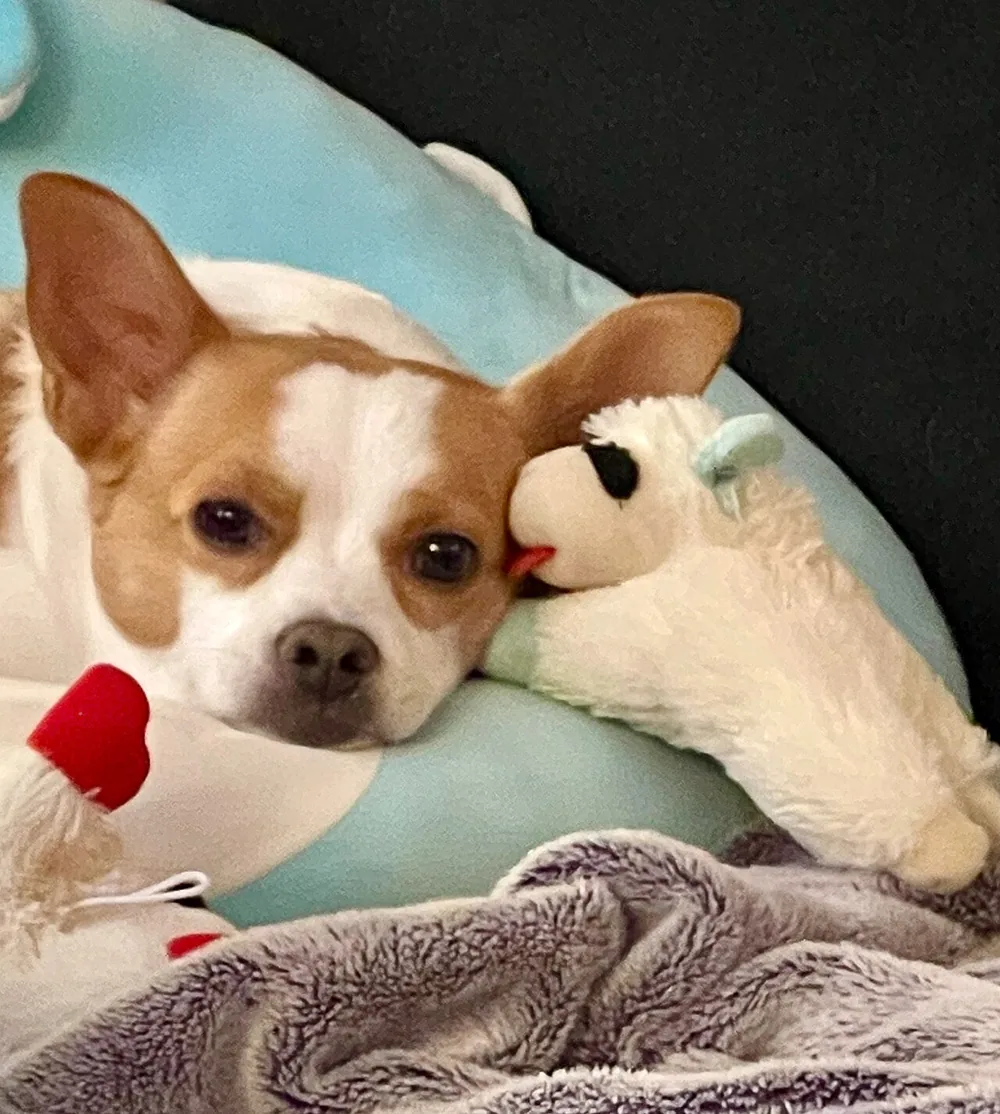
- Ears. Chihuahuas and Toy Fox Terriers have upright ears (AKC; AKC). Wire Fox Terriers have folded ones (AKC). Rat Terriers may have either (UKC). Mixes may have one of each, like Ozzie.
- Head. The Chihuahua’s rounded “apple” head may soften into a longer terrier face.
- Color. The Chihuahua comes in many colors and patterns, so nearly anything is possible.
Don’t use looks to prove ancestry, though. In a large study in Science, people guessing mutts’ breeds leaned on traits such as pricked ears (for Chihuahua), and the authors called this “an error-prone approach” (Morrill et al., 2022).
Temperament: what to realistically expect
Registry descriptions are about purebred parents. That same Science study surveyed owners of 18,385 dogs and found that breed explains just 9% of the differences in behavior between individual dogs (Morrill et al., 2022). So treat these as things to ask about.
- Attachment. The AKC rates the Chihuahua 4 out of 5 for affection with family, and every small terrier in our tables 5. Ask how the dog copes alone.
- Strangers. The Chihuahua is rated 2 out of 5 for openness to strangers; the Rat, Russell, Toy Fox and Yorkshire Terriers are rated 5 (AKC; AKC; AKC; AKC; AKC), though the AKC also says Rat Terriers can be reserved. This is where the mixes differ most from one another.
- Barking. Likely. The AKC rates the Chihuahua and every small terrier in our tables 4 or 5 out of 5 as watchdogs.
- Chasing. Squirrels, cats and pet rodents may all look like a job. Introduce slowly and separate animals when you can’t watch.
- Other dogs. Mostly rated 3 out of 5. Meet first, on neutral ground.
- Children. A little dog can be hurt by a fall or a tight hug, and a frightened one may snap. Grandchildren should sit on the floor, with you beside them.

Exercise needs
The parents ask for different amounts. The AKC says a Chihuahua does well with “short, slow walks” and can usually get enough exercise in a very small space (AKC); that “a short walk twice a day will likely be enough” for a Yorkie (AKC); that most Rat Terriers “will thrive with daily walks” and play in a fenced area (AKC); and that Toy Fox Terriers are “happy to run laps in the living room” (AKC).
A fair starting point is two walks a day plus indoor games and a few minutes of training. Then let the dog, and your vet, adjust it. Keep the leash on outside a fence, check for gaps at ground level, and consider a harness. Cornell includes switching from a neck collar to a harness among lifestyle changes for small dogs with a collapsing windpipe (Cornell).
Training
Trainability ratings run from 3 out of 5 for the Chihuahua and Russell Terrier to 5 for the Rat and Toy Fox Terriers (AKC; AKC; AKC). The AKC says Rat Terriers “respond quickly to positive training methods” and that praise and treats “work far better with the Yorkie than harsh corrections” (AKC; AKC). The American Veterinary Society of Animal Behavior recommends reward-based methods for all dogs and says “there is no evidence that aversive training is necessary” (AVSAB, 2021).
- Quiet cue. Let the dog bark three or four times, calmly say “Quiet,” and reward the pause. Blocking the view of passersby helps too (ASPCA).
- House training. Small dogs need frequent, regular trips. Our potty training guide has a plan.
- “Leave it” and recall. Practice indoors first. The chase instinct is real.
- Handling. Pair being lifted, brushed and having teeth touched with treats.
- No free passes for being cute. Growling over a lap isn’t funny to the next visitor. Reward calm, and ask your vet for a referral if it worries you.
Grooming: match the routine to the coat
| If your mix has | Usual routine (from the parent breed) |
|---|---|
| A smooth coat | Occasional brushing for a Chihuahua (AKC); a weekly once-over with a soft brush for a Rat Terrier (AKC) |
| A long Chihuahua coat | Brush at least once a week (AKC) |
| A long Yorkie coat | Brush daily, keep hair out of the eyes, bathe about weekly (AKC) |
| A wiry Westie-type coat | Daily brushing and combing, and a groomer about every 4 to 6 weeks (AKC) |
Trim nails, check ears weekly and brush teeth. No Chihuahua terrier mix is guaranteed hypoallergenic: the AKC’s hypoallergenic page says there are no 100% hypoallergenic dogs, breeds or mixes (AKC). Our hypoallergenic dog breeds guide has more.
Diet basics
There’s no special diet for these crosses. For the Chihuahua, Rat Terrier and Yorkie alike, the AKC advises food suited to the dog’s age and an eye on calories and treats (AKC; AKC; AKC), and it calls obesity “a serious issue” for Toy Fox Terriers (AKC). On a 9-pound dog, one extra pound is more than a tenth of its weight. Tiny puppies need frequent meals, because toy-breed puppies can run low on blood sugar (AKC). Ask your vet how much to feed.
Health: what to know and what to ask
We found no health study of these mixes. The list below comes from parent breeds or dogs of similar size, and most dogs won’t have most of it. Use it as a list of questions for your vet.
A mix isn’t a guarantee either way. A University of California, Davis study of 27,254 dogs with inherited disorders found purebreds more likely to have 10 of 24 conditions, with no difference for 13, including loose kneecaps (Bellumori et al., 2013).
| Condition | Which side | What the source says |
|---|---|---|
| Loose kneecaps (patellar luxation) | Chihuahua and most terriers here | In a study of 210,824 dogs in England, diagnosed in 5.4% of Yorkies, 4.9% of Chihuahuas, 2.5% of Westies, 1.7% of Jack Russells and 1.2% of crossbreeds (O’Neill et al., 2016). Affected dogs may suddenly carry a back leg for a few steps (ACVS). |
| Dental disease | Chihuahua, small dogs | Gum disease was the most common problem in UK Chihuahuas (13.5%), and 5.7% kept baby teeth (O’Neill et al., 2020). |
| Lens luxation (the eye’s lens slips) | Terriers | The PLL gene variant is found in many breeds, “many of which are terriers or breeds with terrier co-ancestry” (Gould et al., 2011). A PLL DNA test is on the AKC’s list for Rat, Russell and Toy Fox Terriers (AKC; AKC; AKC). A lens that slips forward is extremely painful and can cause blindness, so call your vet immediately about any change in the eye (VCA). |
| Tracheal collapse | Toy and small dogs, including Yorkies | A harsh, “goose-honking” cough, usually in middle-aged or older dogs (Cornell). |
| Liver shunt | Yorkie | Yorkies had the most diagnoses in a study of 2,400 cases, though it was still uncommon at 2.9% of Yorkies seen at teaching hospitals (Tobias & Rohrbach, 2003). |
| Heart disease | Chihuahua, Rat Terrier, Smooth Fox Terrier | A cardiac exam is on the AKC’s list for all three (AKC; AKC; AKC). |
| Deafness | Russell Terrier | A hearing (BAER) test is on the AKC’s list (AKC). |
| Skin and ear problems | Westie | See the Westie figures above (O’Neill et al., 2019). |
| Extra weight | All | Recorded in 5.9% of UK Chihuahuas and 6.1% of UK Westies (O’Neill et al., 2020; O’Neill et al., 2019). |
What to do with this list: book a checkup soon after you adopt, and ask the vet to look at knees, teeth, heart and eyes. Brush teeth daily if you can; our page on professional dental cleanings explains the rest. Call about a skipping step, a honking cough, or a red, cloudy or painful eye. Trouble breathing, collapse or a seizure is an emergency.

Lifespan: the parent breeds, two ways
No study has followed these mixes. Kennel club figures and recorded ages don’t always agree, so here are both. The second column is from a 2024 study of 584,734 UK dogs (McMillan et al., 2024, Supplementary Table S3).
| Dog | AKC life expectancy | UK median survival (2024) |
|---|---|---|
| Chihuahua | 14 to 16 yrs | 11.8 yrs |
| Jack Russell / Russell Terrier | 12 to 14 yrs (Russell) | 13.3 yrs (Jack Russell) |
| Yorkshire Terrier | 11 to 15 yrs | 13.3 yrs |
| West Highland White Terrier | 13 to 15 yrs | 13.4 yrs |
| Wire Fox Terrier | 12 to 15 yrs | 13.5 yrs |
| Toy Fox Terrier | 13 to 15 yrs | 12.9 yrs (only 163 dogs) |
| Rat Terrier | 12 to 18 yrs | Not in our source |
| Crossbreeds of every kind | Not applicable | 12.0 yrs |
A median is a midpoint: about half of dogs live longer. It isn’t a promise for any one dog.
Puppies: what to ask
A puppy’s adult size and coat are the big unknowns. Meet the mother where the puppies live, ask what both parents weigh, and ask to see results for the health tests on the AKC’s lists: kneecaps, heart and eyes for the Chihuahua (AKC), and the terrier’s own tests, such as PLL for a Rat Terrier (AKC). Be wary of “teacup” claims. The Chihuahua Club of America says such terms are “incorrect and misleading,” and that the standard doesn’t sort Chihuahuas by size (CCA). For many people over 50, a grown dog from a shelter or foster home is the easier start.
Is that shelter dog really a Chihuahua terrier mix?
Maybe partly. Here’s what DNA studies say.
- Chihuahua ancestry is common. In the Phoenix and San Diego shelters, 24.0% and 17.8% of dogs had some Chihuahua in them, the second most common breed overall. Their average share was 38% to 39%, and only three dogs with Chihuahua ancestry were purebred (Gunter et al., 2018).
- True half-and-half crosses are rare. Only 1.3% of the 919 dogs had two purebred parents of different breeds. But a third of those 12 dogs, four of them, were a Chihuahua crossed with a Rat Terrier or Russell Terrier (Gunter et al., 2018).
- Most mutts are more mixed than two names. In the Science study, only 17% of mutts were mixes of just two breeds (Morrill et al., 2022).
- Guessing by eye is shaky. At the San Diego shelter, staff’s main breed label matched the DNA for 56.7% of 384 dogs, and both breeds were right for 10.4% (Gunter et al., 2018). In a study of 20 adopted dogs, the agency’s named breed was a main breed in the DNA for 4 of 16, or 25% (Voith et al., 2009).
- “Terrier” alone can’t even be scored. The shelter researchers set aside dogs labeled simply “Terrier,” because it’s a generic label, not a breed (Gunter et al., 2018).
Casey, below, shows the point. Her family adopted her as a nine-pound “Chihuahua/Pomeranian/Wirey Sort of Terrier Mix,” wondered about Jack Russell too, and settled happily on “Heinz 57.” If you’re curious, our guide to figuring out your dog’s breed explains what DNA tests can tell you.
Which Chihuahua terrier mix fits you?
Use the parent facts above as a starting point, then meet the dog.
| If you want | Ask to meet | Because |
|---|---|---|
| The smallest dog | Yorkie or Toy Fox crosses | Both parents are under 10 pounds (AKC) |
| The easiest coat | Smooth-coated Rat, Toy Fox or Russell crosses | Coat care rated 1 to 2 (AKC) |
| The most trainable | Rat or Toy Fox crosses | Trainability rated 5 (AKC) |
| A walking or agility buddy | Russell, Rat or Fox Terrier crosses | Energy rated 4 to 5 (AKC) |
| A sturdier dog | Standard Rat or Westie crosses | Parents reach 20 to 25 pounds (AKC) |
| Fewer surprises | Any adult in a foster home | You can see its size, coat and habits |
Checklist for 50+ adopters
A few “no” answers don’t rule you out. They tell you what to plan for.
- Yes / No: I can lift this dog, or I have a ramp or helper.
- Yes / No: I can live with barking while we work on it, and so can my neighbors.
- Yes / No: I’ll keep the leash on and check the fence.
- Yes / No: I can brush teeth daily and manage this dog’s coat, or pay a groomer.
- Yes / No: My walkways are lit, and I’ll watch for a small dog underfoot.
- Yes / No: I have no cats or small pets, or I can introduce them slowly.
- Yes / No: Visiting grandchildren can follow gentle-hands rules.
- Yes / No: I’ve checked my lease or community pet rules.
- Yes / No: I’ve thought about who would care for this dog if I couldn’t.
A Chihuahua terrier mix may suit you if you’re home a good deal, want a small dog with opinions, and enjoy short walks and games.
Consider a different dog if you need a quiet home, have toddlers or pet rabbits, or want a dog who loves every stranger on sight. Our best small dog breeds guide has other ideas.
Costs to plan for
We found no reliable price data for these crosses, so we don’t quote puppy prices. The ASPCA’s 2021 estimate for a dog is $1,391 a year, and $3,221 in the first year with one-time costs (ASPCA). Leave room for dental cleanings, a possible knee problem and, for Yorkie or Westie coats, a groomer.
Adopting a Chihuahua terrier mix
Where to look
Start with your local shelters and search for “Chihuahua mix,” “terrier mix,” “Rat Terrier mix,” “Yorkie mix” and plain “small mixed breed.” Rescues whose own websites we checked in November 2026:
- Chihuahua Rescue & Transport rescues Chihuahuas and Chihuahua mixes across the Midwest, Southeast and Southwest. Its adoption page says it doesn’t adopt outside its regions.
- New Rattitude is a national volunteer rescue for Rat Terriers and Rat Terrier mixes.
- Russell Rescue is a volunteer network for Jack Russell Terriers. Ask whether it has mixes.
- Yorkshire Terrier National Rescue is a nonprofit for Yorkies. Ask whether it has mixes.
- The AKC Rescue Network lists American Fox Terrier Rescue contacts.
Listing a group isn’t an endorsement, so ask your own questions. Bone Voyage itself no longer takes in or places dogs. Our page on small dogs for adoption has more places to look.
Questions to ask the shelter or foster
The ASPCA suggests leaning on shelter staff to find a good match (ASPCA). Ask:
- What is the label based on: known parents, a DNA test, or looks?
- What does the dog weigh now, and is it full grown?
- How much does it bark, and at what?
- How is it with visitors, other dogs, cats and children, in a home?
- Has it bitten or snapped? What was happening?
- How does it feel about being picked up, brushed and having its mouth touched?
- Is it house trained, and on what schedule?
- What did the vet find on knees, teeth, heart and eyes?
- How does it do alone?
- Is there a foster-to-adopt or trial period, and will you take the dog back?
Give your dog a backup plan
Small dogs can be with you a long time. Naming someone now who knows your dog and has agreed to step in helps make sure it never has to go to a shelter. Our guide What Happens to Your Dog When You Die walks you through it, and the free My Dog’s Backup Plan worksheet records your dog’s routine, vet and quirks. Bone Voyage is also building the pledge: a promise by a volunteer to adopt a specific older adult’s dog if that person dies or can no longer care for it. You can join the free list on the guide page.
Related guides
- Mixes: Jack Russell Chihuahua, Pitbull Chihuahua, Chihuahua Pomeranian
- Parents: Chihuahua, Fox Terrier, Patterdale Terrier, Yorkshire Terrier puppies
Frequently Asked Questions
What is a Chihuahua and terrier mix called?
It depends on the terrier. Common nicknames are Rat-Cha (Rat Terrier), Jack Chi (Jack Russell), Chorkie (Yorkshire Terrier) and Chipit (pit bull type). They are informal, and people use them differently. The AKC and UKC recognize the parent breeds but not the crosses, so “Chihuahua terrier mix” is the plainest name.
How big do Chihuahua terrier mixes get?
There is no measured average. The AKC lists the Chihuahua at 5 to 8 inches and no more than 6 pounds (AKC), and the small terriers it’s most often crossed with range from 4 pounds (the smallest Toy Fox Terriers) to 25 (the largest Rat Terriers) (AKC; AKC). Pit bull-type crosses can be much bigger. Adopting an adult lets you see the size instead of guessing.
What is the cutest Chihuahua mix breed?
That’s a matter of taste, and no study ranks it. People who like a scruffy face often enjoy Yorkie or Westie crosses, and people who like big upright ears and a sleek coat often enjoy Rat Terrier or Fox Terrier crosses. Littermates can look very different, so pick the individual dog, and choose on temperament first.
What is the cleanest house dog?
No dog is officially the cleanest, but low-maintenance coats help. The AKC rates the Chihuahua 1 out of 5 for coat care and 2 for shedding (AKC), and the Yorkshire Terrier 1 for shedding but 5 for coat care (AKC). A smooth-coated Chihuahua terrier mix is usually quick to groom. House training matters more to a clean home than breed.
How much does a teacup Chihuahua usually cost?
We don’t quote a price, because “teacup” isn’t a recognized type. The Chihuahua Club of America says the breed standard doesn’t sort Chihuahuas by size, that puppies sold with such labels are not of greater monetary value, and that the terms are “incorrect and misleading” (CCA). For any dog, the ASPCA’s 2021 estimate for care is $1,391 a year (ASPCA).
Do Chihuahuas have to sleep with you?
No. Many love to be close: the AKC says Chihuahuas could happily spend hours on your lap or snuggled under the blankets (AKC). But a warm bed near yours works too. If a small dog does share your bed, steps or a ramp can save it a jump; the AKC suggests limiting jumping height for Yorkies, to help avoid kneecap trouble (AKC).
Do Chihuahua terrier mixes bark a lot?
Often, though no study has measured it. The AKC rates the Chihuahua 5 out of 5 for barking (AKC), the Yorkie, Russell and Toy Fox Terriers 4, and the Rat Terrier 3 (AKC). Blocking the view of passersby and teaching a “Quiet” cue can help (ASPCA). Ask the shelter how vocal a particular dog is.
Are Chihuahua terrier mixes good for seniors?
They can be. Many are light enough to lift, need only modest walks and love company. The trade-offs are barking, chasing, daily tooth brushing and the trip hazard of a small dog underfoot. An adult dog from a foster home, whose size and manners are known, is often the easiest fit.
Before you go
Whatever the kennel card says, you’ll be living with one particular little dog. Read the parent breeds for clues, then trust what you see and what its foster family tells you. And whichever dog comes home with you, decide now who would step in if you ever couldn’t.
Sources
- American Kennel Club breed pages: Chihuahua, Rat Terrier, Russell Terrier, Parson Russell Terrier, Yorkshire Terrier, Toy Fox Terrier, Smooth Fox Terrier, Wire Fox Terrier, West Highland White Terrier, American Staffordshire Terrier, Boston Terrier, Miniature Schnauzer, Cairn Terrier. Also Terrier Group, Canine Partners, Hypoallergenic Dogs and Hypoglycemia in Dogs
- United Kennel Club standards: Jack Russell Terrier, Rat Terrier, Patterdale Terrier, American Pit Bull Terrier
- Chihuahua Club of America, Official Teacup Statement
- Gunter LM et al. (2018). A canine identity crisis: Genetic breed heritage testing of shelter dogs. PLOS ONE 13(8):e0202633.
- Morrill K et al. (2022). Ancestry-inclusive dog genomics challenges popular breed stereotypes. Science 376(6592):eabk0639.
- Voith VL et al. (2009). Comparison of adoption agency breed identification and DNA breed identification of dogs. Journal of Applied Animal Welfare Science 12(3):253-62.
- Cadieu E et al. (2009). Coat variation in the domestic dog is governed by variants in three genes. Science 326(5949):150-3.
- O’Neill DG et al. (2020). Chihuahuas under primary veterinary care in the UK in 2016. BMC Veterinary Research 16:42.
- O’Neill DG et al. (2019). West Highland White Terriers under primary veterinary care in the UK in 2016. Canine Genetics and Epidemiology 6:7.
- O’Neill DG et al. (2016). The epidemiology of patellar luxation in dogs attending primary-care veterinary practices in England. Canine Genetics and Epidemiology 3:4.
- Gould D et al. (2011). ADAMTS17 mutation associated with primary lens luxation is widespread among breeds. Veterinary Ophthalmology 14(6):378-84.
- Tobias KM, Rohrbach BW (2003). Association of breed with the diagnosis of congenital portosystemic shunts in dogs: 2,400 cases. JAVMA 223(11):1636-9.
- Bellumori TP et al. (2013). Prevalence of inherited disorders among mixed-breed and purebred dogs: 27,254 cases. JAVMA 242(11):1549-55.
- McMillan KM et al. (2024). Longevity of companion dog breeds. Scientific Reports 14:531.
- American College of Veterinary Surgeons, Patellar Luxations; Cornell Riney Canine Health Center, Tracheal Collapse and Dystocia in dogs; VCA Animal Hospitals, Lens Luxation in Dogs
- American Veterinary Society of Animal Behavior, Position Statement on Humane Dog Training (2021)
- ASPCA, Barking, Cutting Pet Care Costs (2021 cost update) and Finding your Fido
- Rescues (their own websites): Chihuahua Rescue & Transport, New Rattitude, Russell Rescue, Yorkshire Terrier National Rescue; also the AKC Rescue Network
- Photos: Flickr and Wikimedia Commons contributors, credited under each image. Full license records are kept in this site’s image-credits file.