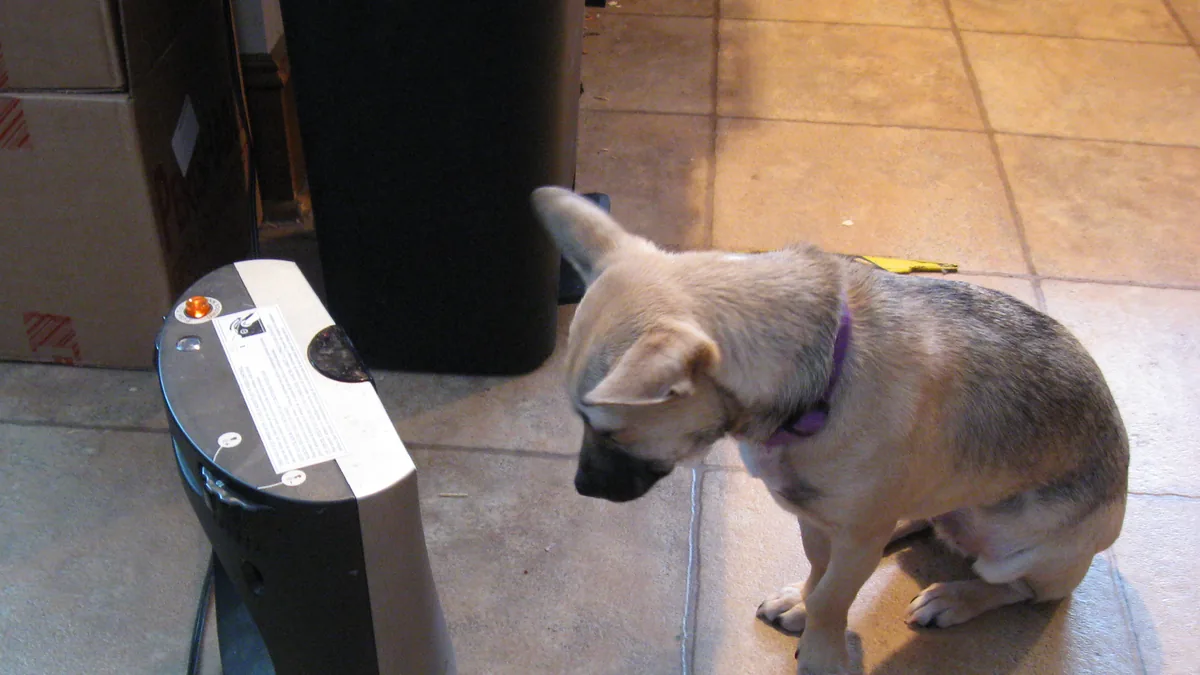
A German Shepherd Corgi mix, often called a Corman Shepherd, is a cross between a German Shepherd Dog and a Pembroke or Cardigan Welsh Corgi. Expect a smart, loyal, alert herding dog that sheds, barks and needs daily exercise, in a body that can range from Corgi-sized to a long-backed medium dog. It isn’t a recognized breed, so size and temperament vary a lot, and the things to plan for are the back, the hips and a spinal cord disease both parents carry.
This guide uses American Kennel Club (AKC) breed pages, Orthopedic Foundation for Animals (OFA) screening data, the American College of Veterinary Surgeons (ACVS), Cornell’s Riney Canine Health Center and peer-reviewed genetics research. No one has studied the Corman as a group, so where the evidence is about the parent breeds, we say so.
German Shepherd Corgi mix quick facts
- What it is: a cross of a German Shepherd Dog and a Pembroke or Cardigan Welsh Corgi. Not an AKC breed; no breed standard.
- Other names: Corman Shepherd, Corman, Corgi German Shepherd mix, Corgi Shepherd.
- Height (parent ranges): German Shepherd 22 to 26 inches; Pembroke 10 to 12; Cardigan 10.5 to 12.5 (AKC GSD; AKC Pembroke; AKC Cardigan). The mix can land anywhere between.
- Weight (parent ranges): German Shepherd 50 to 90 pounds; Pembroke up to 30; Cardigan 25 to 38. Our rough estimate for most first-generation mixes is 25 to 70 pounds, not a measured figure.
- Life expectancy: not studied in the mix. Parents: 12 to 14 years (German Shepherd), 12 to 13 (Pembroke), 12 to 15 (Cardigan), per the AKC. UK vet records give German Shepherds a median of 10.3 years (O’Neill et al., 2017).
- Energy: high. The AKC rates German Shepherd energy 5 out of 5 and both Corgis 4.
- Shedding: heavy. Both parents have double coats.
- Barking: often a lot. The AKC rates the Pembroke 4 and the Cardigan 5 for barking.
- Biggest health watch-outs: degenerative myelopathy (DM), hip and elbow dysplasia, disc disease of the back, and weight gain.
- Best fit: an active person or family that is home a lot and wants a clever, busy, devoted dog.
What is a Corman Shepherd?
A Corman is any cross between a German Shepherd and a Welsh Corgi. Some are deliberate “designer” crosses. Many more are unplanned and turn up in shelters labeled “Shepherd mix” or “Corgi mix.” There is no documented origin story for the cross, and the AKC doesn’t recognize it; the AKC says its conformation shows require “a defined breed standard, which does not exist for mixed breeds,” though mixed breeds can compete in many other AKC sports through its Canine Partners program (AKC).
The pairing makes more sense than it looks. Both parents are herding breeds:
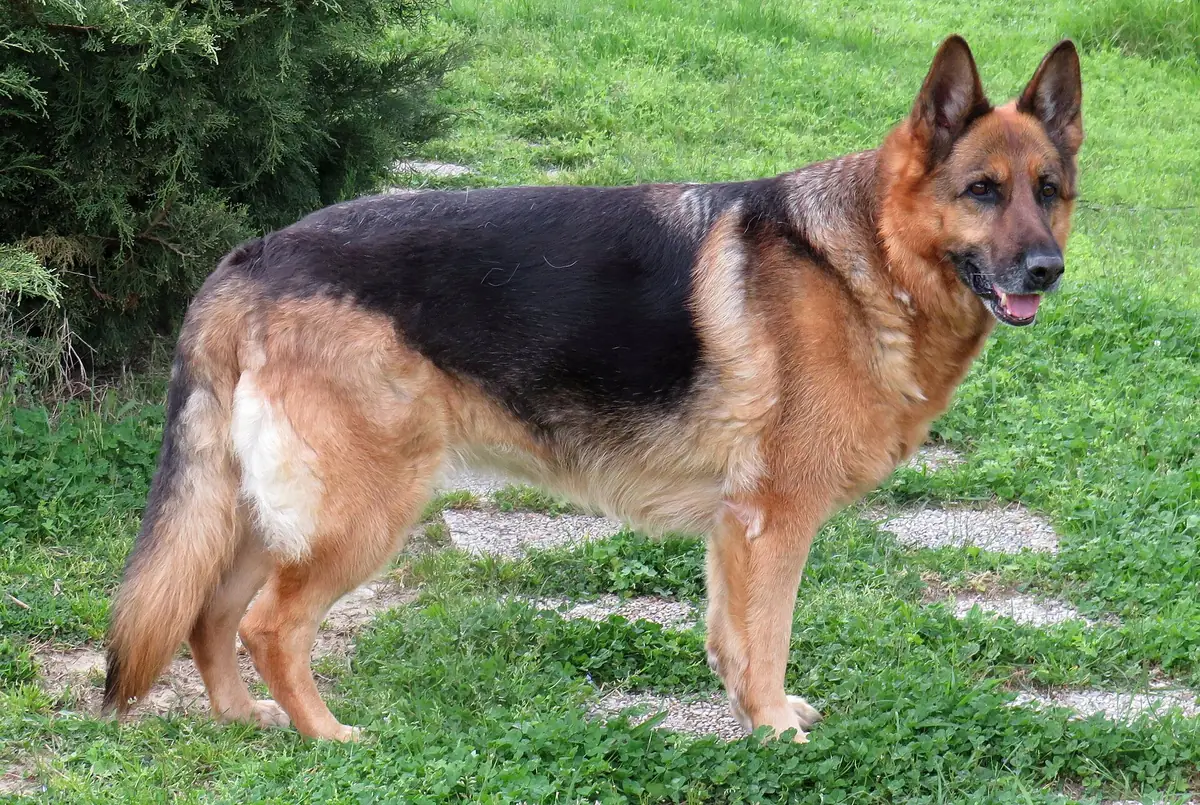
- The German Shepherd was developed in Germany in the late 1800s as the ideal herding dog, and the AKC recognized the breed in 1908. The AKC says it’s “extremely bonded to his people” and “happiest when he lives with his family” (AKC GSD).
- The Welsh Corgis are cattle-driving dogs from Wales. The AKC calls the Pembroke “a strong, athletic, and lively little herder who is affectionate and companionable without being needy” (AKC Pembroke). The AKC recognized the Pembroke in 1934 and the Cardigan in 1935.
So a Corman puts two working herders in one dog: a sheep-guarding shepherd’s brain and loyalty with a cattle dog’s boldness, voice and heel-nipping instinct. Which mix of those you get is not something any breeder can guarantee.
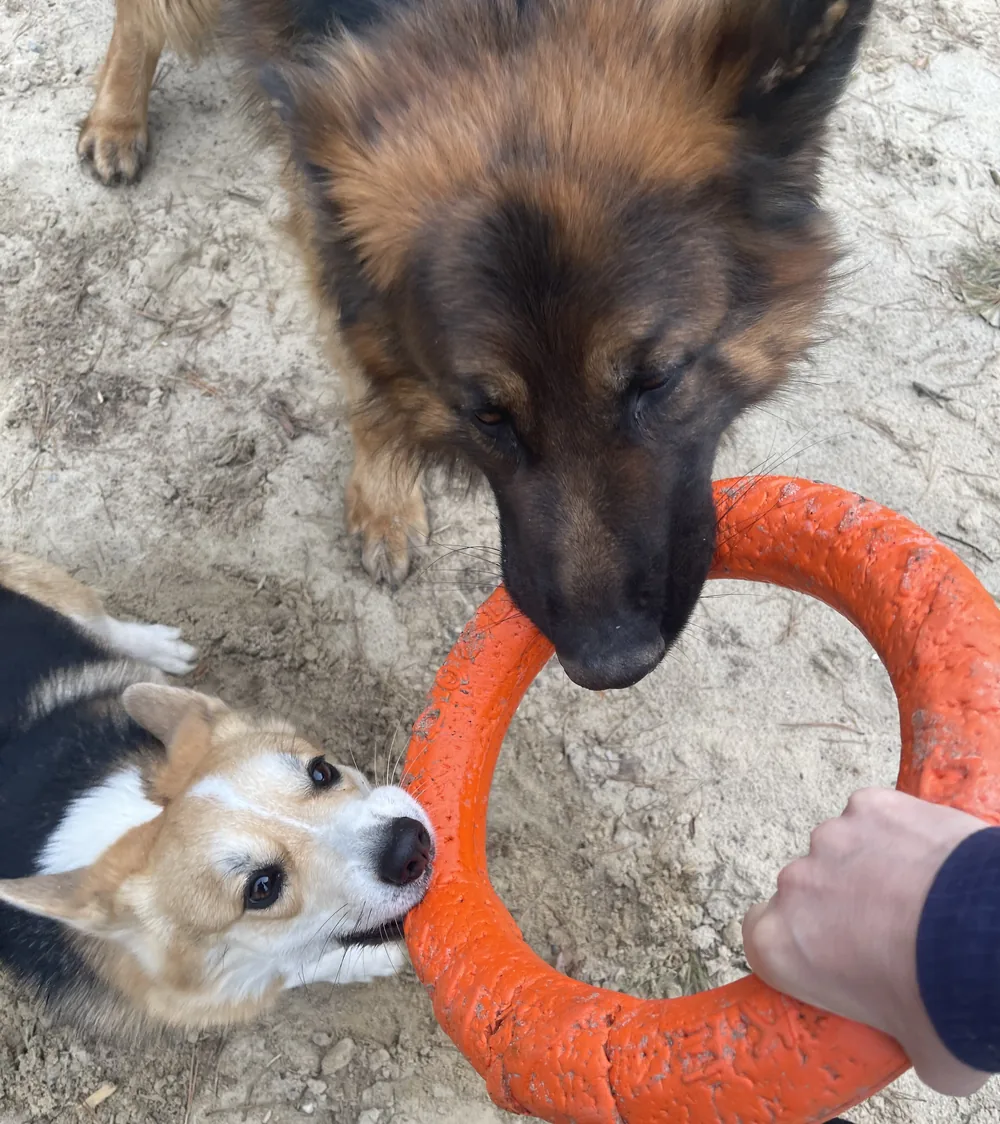
German Shepherd vs. Corgis vs. Corman at a glance
| German Shepherd Dog | Pembroke Welsh Corgi | Cardigan Welsh Corgi | Corman (mix) | |
|---|---|---|---|---|
| Original job | Herding and guarding sheep | Driving cattle | Driving cattle | Companion |
| Height | 22-26 in. | 10-12 in. | 10.5-12.5 in. | Varies widely |
| Weight | 50-90 lb | Up to 30 lb | 25-38 lb | Estimate: about 25-70 lb |
| AKC life expectancy | 12-14 years | 12-13 years | 12-15 years | Not studied |
| Energy (AKC, out of 5) | 5 | 4 | 4 | High |
| Shedding (AKC) | 4 | 4 | 3 | Expect heavy |
| Barking (AKC) | 3 | 4 | 5 | Often vocal |
| Good with young children (AKC) | 5 | 3 | 4 | Supervise; may herd |
| Trainability (AKC) | 5 | 4 | 4 | Usually quick to learn |
| Tail | Long, bushy | Usually docked | Long, “foxlike” | Usually long |
| AKC popularity rank | 4 of 211 | 15 of 211 | 60 of 211 | Not ranked |
Sources: AKC breed pages for the German Shepherd Dog, Pembroke and Cardigan, checked November 2026, and the AKC Corgi comparison. Mix figures are our estimates from the parents.
Appearance and size
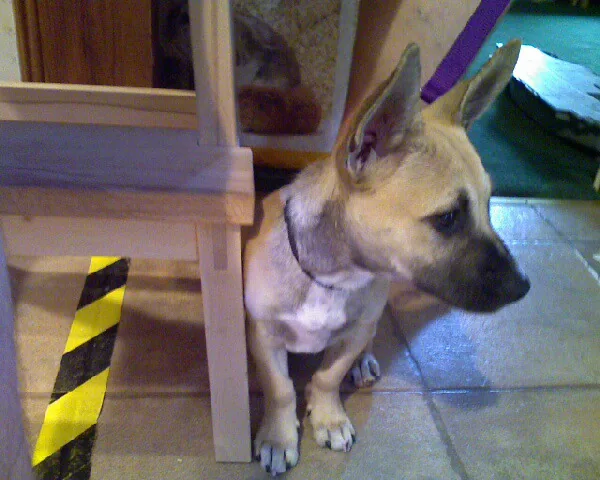
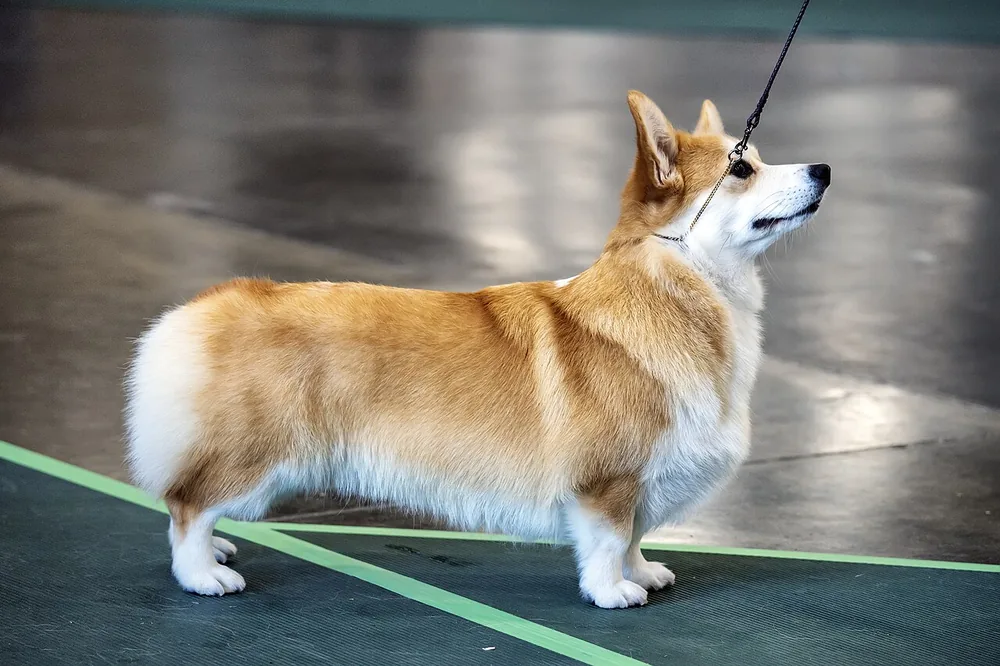
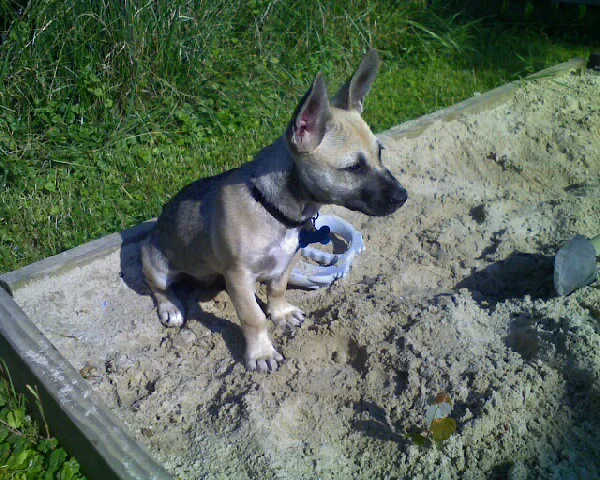
No two Cormans look quite alike, but most share a few things. The ears are usually big and upright (both parents have prick ears). The coat is usually the German Shepherd’s tan-and-black or sable, or the Corgi’s red, fawn or sable, often with white on the chest and feet. The muzzle often has the shepherd’s black mask. And the body is usually longer than it is tall.
How big will a Corman get?
Size is the hardest thing to predict. A female German Shepherd can weigh 50 pounds and a male 90; a Pembroke tops out around 30 (AKC GSD; AKC Pembroke). A puppy from those parents can take after either side, or end up in between, and leg length doesn’t always match body size.
Three common outcomes:
| What the dog took after | What it tends to look like | What it means for you |
|---|---|---|
| Mostly Corgi | Short legs, Corgi-sized, shepherd colors | Easier to lift and handle; watch the back |
| In between | A medium, long-backed dog on short-to-medium legs | The most common look in photos of the mix |
| Mostly shepherd | Leggy, 50+ lb, looks like a small German Shepherd | Stronger on the leash; heavier to lift |
This is our summary from the parent breeds and photos of real Cormans, not a measured study. You’ll see “12 to 15 inches and 20 to 70 pounds” quoted for the mix on several sites; we found no measurements behind those figures. If size matters for your home, your car or your own strength, an adult dog lets you see it instead of guessing.
Pembroke or Cardigan parent?
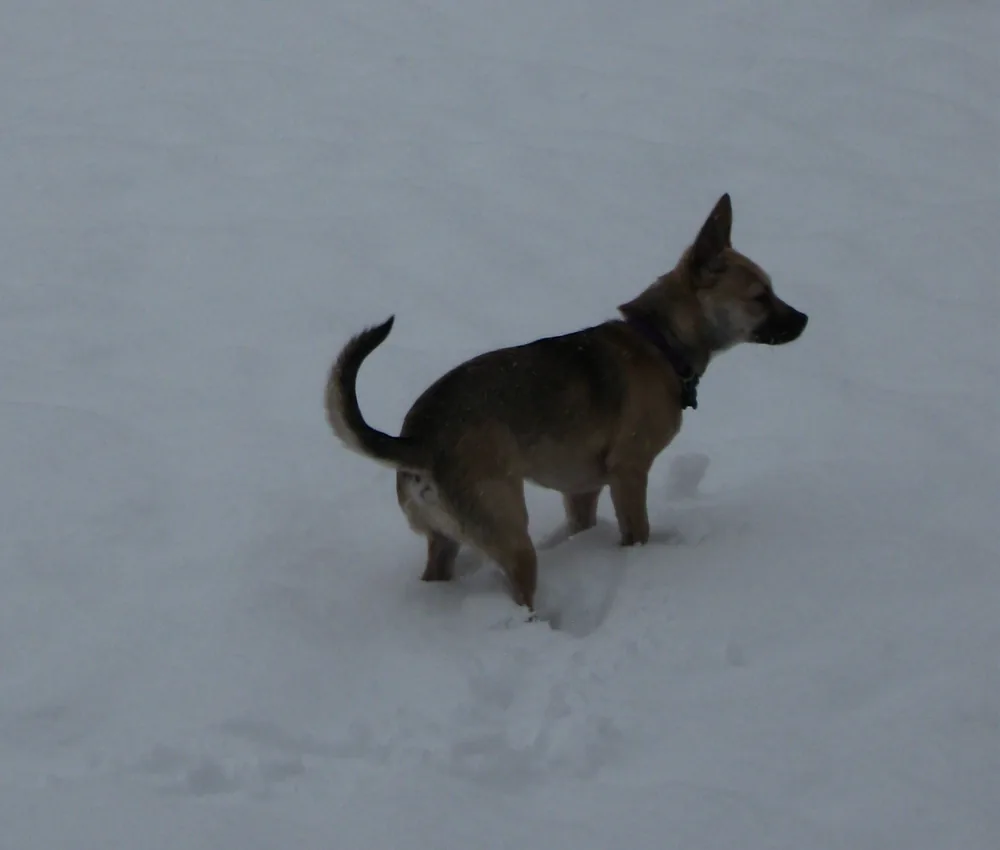
“Welsh Corgi” covers two separate AKC breeds, and either can be a Corman parent. The Pembroke is far more common. A Cardigan is heavier-boned, has a long “foxlike” tail and comes in more colors, including brindle and blue merle (AKC). In a shelter dog you usually can’t tell which Corgi it was without a DNA test, and it doesn’t change how you care for the dog.

Temperament: what to expect
Both parents are clever, loyal working dogs, so most Cormans are too. In everyday life that often means:
- A devoted, people-focused dog. German Shepherds are “extremely bonded” to their families (AKC GSD); Corgis are affectionate without being clingy (AKC Pembroke).
- A watchdog. The AKC gives German Shepherds 5 out of 5 as a watchdog, and Corgis were bred to bark at cattle. Expect your Corman to announce visitors.
- Some reserve with strangers. The AKC German Shepherd standard describes “a certain aloofness that does not lend itself to immediate and indiscriminate friendships” (AKC standard). Early, gentle socializing helps.
- Herding habits. Circling, nudging and nipping at heels, especially of running children, are normal herding behaviors, not aggression. They need redirecting, not punishment.
- A busy brain. A bored Corman finds its own jobs, which may include digging, chewing or barking.
These are tendencies, not guarantees. Large genetic studies show breed explains only a small part of an individual dog’s behavior (Morrill et al., 2022). The dog in front of you, and what its foster says about it, matters most.
Exercise needs
Plan on at least an hour of activity a day, split between walks, play and brain work. The AKC says a German Shepherd “requires lots of exercise for his physical and mental well-being” and one that doesn’t get enough “will become frustrated and likely to develop undesirable behaviors” (AKC GSD). Corgis are energetic too (AKC energy rating 4 out of 5).
Good outlets that are easy on a long back and on your joints:
- Two brisk walks a day with time to sniff.
- Nose games, puzzle feeders and hide-and-seek with treats.
- Short training sessions, which tire a herding dog’s brain as much as a run.
- Low-impact dog sports such as rally or scent work. The AKC opens many of its sports to mixed breeds, though not herding tests (AKC).
Go easy on repeated high jumps and long stair runs, especially for short-legged dogs and growing puppies (see Health).
Grooming
- Brushing: a few times a week, daily during seasonal sheds. The AKC says a German Shepherd needs “just a quick brushing every few days or so” but sheds “more profusely once or twice a year” (AKC GSD). Corgis have a double coat too (AKC). Don’t shave a double coat.
- Nails: trim every few weeks.
- Teeth: brush with dog toothpaste, daily if you can.
- Ears: check weekly. Ear infections (otitis externa) were the most common problem recorded in UK German Shepherds, at 7.9% (O’Neill et al., 2017).
Health: what the parent breeds tell us
There’s no health data on the Corman itself. What we know comes from the parent breeds. Being a mix isn’t a guarantee of better health: in a large UC Davis study, purebred dogs had higher rates of 10 of 24 inherited disorders, but there was no difference for 13 others, including hip dysplasia (Bellumori et al., 2013).
Health screening at a glance
This table uses the OFA’s breed statistics, owner-submitted screening results that aren’t a random sample of all dogs (OFA).
| Condition | German Shepherd (OFA) | Pembroke (OFA) | Cardigan (OFA) | What to ask for |
|---|---|---|---|---|
| Hip dysplasia | 20.4% abnormal of 147,083 evaluated | 21.9% of 17,527 | 24.4% of 4,169 | OFA or PennHIP hip results for both parents |
| Elbow dysplasia | 18.7% of 68,543 | 5.6% of 2,541 | 5.4% of 1,388 | OFA elbow results, especially for the shepherd parent |
| Degenerative myelopathy (SOD1 DNA test) | 14.9% at risk, 29.0% carriers, of 18,372 tested | 53.8% at risk, 31.7% carriers, of 5,479 | 15.5% at risk, 29.8% carriers, of 1,025 | DM DNA test for both parents, or the dog itself |
| Disc disease gene (chromosome 12 FGF4, “CDDY”) | Rare: allele frequency 0.05 | Very common: 0.92 | Carries short-leg FGF4 genes | UC Davis CDDY test if the dog has short legs |
Sources: OFA disease statistics (checked November 2026); allele frequencies from Batcher et al., 2019 (Table 1) and Brown et al., 2017.
Degenerative myelopathy (DM)
DM is a slowly progressive spinal cord disease that causes hind-leg weakness, “typically affecting dogs around eight years of age or older,” and progresses to “an inability to walk after six to twelve months,” according to Cornell (Cornell DM). There’s no cure; ask your vet about physical therapy and mobility aids if signs appear.
This is the one condition where the Corman’s two parents line up badly. The landmark study that found the SOD1 gene variant behind DM named both breeds: “Homozygosity for the A allele was associated with DM in 5 dog breeds: Pembroke Welsh corgi, Boxer, Rhodesian ridgeback, German Shepherd dog, and Chesapeake Bay retriever” (Awano et al., 2009). Because it’s recessive, a dog needs two copies, one from each parent, to be “at risk,” and either parent can easily be a carrier. Cornell notes that two copies raise the risk “although it is not guaranteed that they will develop the disease” (Cornell DM). A cheek-swab DNA test tells you where your dog stands; ask your vet whether it’s worth doing.
Back and disc disease (IVDD)
Corgi short legs come from extra copies of a growth gene called FGF4. The copy on chromosome 12 also makes spinal discs age early, and dogs carrying it had an odds ratio of 51 for intervertebral disc disease (IVDD) in a UC Davis study (Brown et al., 2017). In the UC Davis repository, 92% of Pembroke chromosomes carried it, compared with 5% for German Shepherds (Batcher et al., 2019), and one copy is enough to raise the risk (UC Davis VGL).
What that likely means: a first-generation Corman with a Pembroke parent will very often inherit one copy, through the Corgi side. That’s our inference from the frequencies, not a study of the mix. It doesn’t mean your dog will have a disc problem; it means the risk is real. The AKC’s own advice for the Cardigan applies: “as with any ‘long and low’ canine, one must be cognizant of potential back issues” (AKC Cardigan). A UC Davis cheek-swab test can tell you whether your dog carries it.
Signs of IVDD include back or neck pain, a hunched back, reluctance to move, crying when picked up and a wobbly “drunken sailor” walk (ACVS IVDD). If your Corman suddenly can’t walk normally, call your vet or an emergency clinic right away, and don’t give any medicine without asking your vet.
Hip and elbow dysplasia
Hip dysplasia is a loose, malformed hip joint. The ACVS says genetics is “the biggest single risk factor,” that “rapid weight gain and growth through excessive nutritional intake can complicate” it, and that “all dogs with CHD should be kept very slim” (ACVS hip). Elbow dysplasia, a group of developmental problems in the elbow, is also most common in large breeds (ACVS elbow). As the table shows, both parents carry real hip risk in OFA records, and German Shepherds carry most of the elbow risk.
Other things to know
- Bloat (GDV). The AKC says German Shepherds “can experience bloat” (AKC GSD). Bloat is an emergency in which the stomach fills with gas and can twist; signs include a swollen belly, retching without bringing anything up and restlessness (Cornell GDV). Call your vet immediately.
- Weight. Overweight and obesity were among the most common problems in UK German Shepherds (O’Neill et al., 2017), and Corgis love food. Extra weight loads both the hips and a long back.
- Eyes and blood. The AKC says responsible Pembroke breeders also screen for eye disorders, cardiac issues and von Willebrand’s disease, and Cardigan breeders for progressive retinal atrophy (AKC Pembroke; AKC Cardigan).
- Spay and neuter timing. In a study of mixed-breed dogs, neutering before one year was linked to higher joint-disorder risk in dogs over about 44 pounds (Hart et al., 2020). If you have a puppy, ask your vet about timing.
Training
Cormans are usually quick learners; the AKC gives German Shepherds its top trainability score and Corgis 4 out of 5. For German Shepherds, “consistency and positive, reward-based training will yield excellent results” (AKC GSD). Use food, toys and praise, and skip punishment: the American Veterinary Society of Animal Behavior recommends reward-based methods only (AVSAB).
Priorities for a Corman:
- Calm greetings and “quiet,” for a watchful, vocal dog.
- Redirecting herding. Teach a “leave it” and reward calm behavior around running children, bikes and other pets.
- Loose-leash walking, early, before a shepherd-sized dog learns to pull.
- Handling practice (paws, mouth, being lifted) so vet visits and back care are easy.
- Socializing, with calm, positive meetings with people, dogs and new places.
Don’t count on off-leash reliability. The AKC says even a well-trained German Shepherd “can become distracted and not follow every command” (AKC GSD). If you see growling, lunging or guarding that worries you, ask your vet for a referral to a qualified behavior professional.
Diet basics
There’s no special Corman diet. Feed a complete and balanced food for your dog’s life stage and size, measure every meal and count treats; the WSAVA nutrition guidelines are a good plain-language starting point (WSAVA). You should be able to feel the ribs easily and see a waist from above (WSAVA body condition chart). For a puppy likely to grow large, ask your vet about large-breed puppy food, since fast growth can complicate hip dysplasia (ACVS hip).
Who a Corman suits, and who should skip it
A good match if you:
- Are active and home a good part of the day.
- Enjoy walking, training and giving a dog a job.
- Don’t mind barking at the door and dog hair on everything.
- Can budget for possible back, hip or mobility care later in life.
Think twice if you:
- Need a quiet dog for an apartment with thin walls.
- Want a low-energy couch companion.
- Have toddlers or cats and can’t supervise a dog that may try to herd them.
- Can’t lift a 40-pound dog or manage a strong puller (a hurt back may mean carrying the dog for weeks).
A 50+ home checklist for a Corman
Bone Voyage helps people over 50 adopt, keep and thrive with dogs, and this mix brings a few specific things to plan for. Our checklist:
- Walk the dog before you say yes. A leggy Corman can pull like a German Shepherd. If it pulls you off balance, ask the rescue about a smaller or calmer dog.
- Plan for lifting. Know how you’d get the dog into the car or to the vet if its back or hips were hurt. Ramps and pet steps help both of you; see our guides to dog ramps for the bed and dog stairs.
- Prevent trips. The CDC estimated more than 86,000 fall injuries a year in the US linked to pets, mostly dogs, with the highest rates in people 75 and older (Stevens et al., 2010). A dog that circles and herds your feet is a trip hazard. Teach a solid “wait” at doors and stairs, use rugs on slick floors and add night lights.
- Match the energy to your week. If daily walks are hard, a dog walker or a nearby friend can help, but a Corman still needs daily activity.
- Budget for the senior years. DM, arthritis and disc problems mostly show up in middle and old age, when your dog may need a harness, rehab or a cart.
- Write down a backup plan for who would care for your dog if you couldn’t (see the end of this guide).
Realistic costs
We don’t quote Corman puppy prices. There’s no breed club or health-testing standard behind them, and the prices we found online weren’t verified. For any dog, the ASPCA estimates $1,391 a year in ongoing costs and $3,221 in the first year (ASPCA). A larger, shepherd-sized Corman will eat more than a Corgi-sized one, and surgery for hips, elbows or a disc can cost far more than a year of routine care. If you’re considering pet insurance, get it early, before any problem is diagnosed and excluded as pre-existing. DNA tests for DM and CDDY are extra one-time costs.
Adopting a German Shepherd Corgi mix
Bone Voyage ran a shelter and rescue from 2019 to 2024. Today it’s an educational resource and backup-plan movement, and it doesn’t place dogs. Here’s where to look.
- Local shelters and adoption sites. Search “Shepherd mix” and “Corgi mix,” not just “Corman.” Shelter breed labels are guesses: in one study, staff at a shelter who labeled dogs by looks matched more than one breed in the dog’s DNA only about 10% of the time (Gunter et al., 2018).
- Breed rescues. German Shepherd and Corgi rescues mainly place purebreds, but many take mixes or can refer you. Start with the AKC Rescue Network, the Pembroke Welsh Corgi Club of America rescue page and shepherd rescues such as German Shepherd Rescue of New England.
- Consider an adult or senior Corman. You’ll know its size, coat, energy, voice and health history from day one. German Shepherd Rescue of New England says shepherd puppy energy often doesn’t level off until a dog is 2 or 3 (GSRNE).
Wondering what’s in your own shepherd-type mix? Our guide to figuring out what breed your dog is explains how DNA tests work.
Questions to ask the shelter or rescue
- How big is the dog now, and is it fully grown?
- How does it walk on a leash? Can I walk it myself?
- Has it had any limping, back pain, wobbliness or trouble with stairs? Any X-rays or vet notes?
- Has it had a DM or CDDY DNA test?
- How does it react to strangers, children, cats and other dogs? Any herding or nipping?
- How much does it bark, and at what?
- How does it handle being brushed, having its nails trimmed and being picked up?
- Will you take the dog back if it doesn’t work out?
Our 9 questions to ask when adopting a dog covers the general ones.
Other shepherd and Corgi mixes to compare
- Dachshund Corgi mix (Dorgi), a long, low Corgi cross with even more back risk.
- Beagle Corgi mix, a hound-and-herder Corgi cross.
- Chihuahua Corgi mix, a much smaller Corgi cross.
- Corgidor, a Corgi and Labrador cross.
- Aussie Corgi mix (Auggie), the other all-herder Corgi cross, with an Australian Shepherd parent.
- Husky Corgi mix (Horgi), a Corgi cross with a sled dog’s energy and coat.
- German Shepherd Border Collie mix, a leggier all-herder shepherd cross.
- Labrador German Shepherd mix, a friendlier, bigger shepherd cross.
- Siberian Husky Shepherd mix and Shepherd Pitbull mix, two more popular shepherd crosses.

Give your Corman a backup plan
A Corman can easily live into its teens. Deciding now who would care for it if you couldn’t makes it far less likely it will end up in a shelter. Write down its routine, vet, food, health history and how it likes to be picked up. Our guide What Happens to Your Dog When You Die walks you through it, and the free My Dog’s Backup Plan worksheet keeps it all in one place. Bone Voyage is also building the pledge: a volunteer’s pledge to adopt a specific older adult’s dog if that person dies or can no longer care for it.
Frequently Asked Questions
What is a German Shepherd Corgi mix called?
Most often a Corman Shepherd, or just a Corman. You’ll also see Corgi German Shepherd mix and Corgi Shepherd. None of these is an official breed name: the American Kennel Club doesn’t register the cross and there’s no breed standard, so shelters usually list these dogs as a Shepherd mix or a Corgi mix.
How big does a German Shepherd Corgi mix get?
There’s no standard, so expect a wide range. The AKC lists German Shepherds at 22 to 26 inches and 50 to 90 pounds, Pembroke Welsh Corgis at 10 to 12 inches and up to 30 pounds, and Cardigans at 10.5 to 12.5 inches and 25 to 38 pounds. A first-generation Corman can land anywhere between, from a Corgi-sized dog to a long-backed mid-size dog. Popular guides quote 20 to 70 pounds and 10 to 15 inches, but we found no measurements behind those numbers. Adopting an adult is the only way to know.
How long do Corman Shepherds live?
No one has studied the mix’s lifespan. The AKC lists 12 to 14 years for German Shepherds, 12 to 13 for Pembroke Welsh Corgis and 12 to 15 for Cardigans. In UK veterinary records, German Shepherds had a real-world median of 10.3 years. Planning for a dog that could live 10 to 14 years or more is sensible.
Are corgi German Shepherd mixes healthy?
Many are, but being a mix isn’t a health guarantee. Both parent breeds carry the gene variant linked to degenerative myelopathy, a spinal cord disease of older dogs, and both have hip dysplasia in OFA screening records. A Corgi parent can also pass on a gene that raises the risk of disc disease in the back. Ask for health records, keep the dog lean and ask your vet which screening tests make sense.
Do German Shepherd Corgi mixes shed a lot?
Yes, plan on it. Both parents have a double coat, and the AKC rates German Shepherd and Pembroke Welsh Corgi shedding 4 out of 5. Brush a few times a week, and daily during the heavier seasonal sheds. Neither coat should be shaved, and no Corman is hypoallergenic.
Are German Shepherd Corgi mixes good family dogs?
They can be loyal, playful family dogs with training and daily exercise. Both parents are herding breeds, so some Cormans nip at heels or try to herd running children, and German Shepherds tend to be reserved with strangers. The AKC rates German Shepherds 5 out of 5 with young children and Pembrokes 3, so supervise visits with small kids and meet the individual dog first.
Is a German Shepherd Corgi mix a good dog for someone over 50?
It can be a great fit for an active older adult who wants a smart, loyal walking companion and doesn’t mind barking and dog hair. Think twice if you need a quiet, low-energy dog, can’t manage a strong puller, or can’t lift a dog that may weigh 40 pounds or more if its back is hurt. An adult Corman from a rescue lets you see its size and energy before you commit.
Before you go
A Corman packs two herding breeds into one clever, loyal, sometimes noisy dog, on legs that may be short or long. Go in knowing the back, hip and DM risks, keep your dog lean and busy, and you’ll have a devoted companion for years.
Sources
- American Kennel Club, German Shepherd Dog, Pembroke Welsh Corgi and Cardigan Welsh Corgi breed pages; German Shepherd Dog breed standard; Cardigan Welsh Corgi vs. Pembroke Welsh Corgi; Does the AKC like mixed breeds?; AKC Rescue Network
- Orthopedic Foundation for Animals, Disease statistics by breed (checked November 2026)
- Awano T et al. (2009). Genome-wide association analysis reveals a SOD1 mutation in canine degenerative myelopathy that resembles amyotrophic lateral sclerosis. PNAS 106(8):2794-9.
- Cornell University Riney Canine Health Center, Degenerative myelopathy and Gastric dilatation-volvulus (bloat)
- Brown EA et al. (2017). FGF4 retrogene on CFA12 is responsible for chondrodystrophy and intervertebral disc disease in dogs. PNAS 114(43):11476-81.
- Batcher K et al. (2019). Phenotypic effects of FGF4 retrogenes on intervertebral disc disease in dogs. Genes 10(6):435.
- UC Davis Veterinary Genetics Laboratory, Chondrodystrophy (CDDY and IVDD) and Chondrodysplasia (CDPA)
- American College of Veterinary Surgeons, Intervertebral Disc Disease, Canine Hip Dysplasia and Canine Elbow Dysplasia
- O’Neill DG et al. (2017). Demography and disorders of German Shepherd Dogs under primary veterinary care in the UK. Canine Genetics and Epidemiology 4:7.
- Bellumori TP et al. (2013). Prevalence of inherited disorders among mixed-breed and purebred dogs: 27,254 cases (1995-2010). JAVMA 242(11):1549-55.
- Hart BL et al. (2020). Assisting decision-making on age of neutering for mixed breed dogs of five weight categories. Frontiers in Veterinary Science 7:472.
- Morrill K et al. (2022). Ancestry-inclusive dog genomics challenges popular breed stereotypes. Science 376(6592):eabk0639.
- Gunter LM, Barber RT, Wynne CDL (2018). A canine identity crisis: Genetic breed heritage testing of shelter dogs. PLOS ONE 13(8):e0202633.
- Stevens JA, Teh SL, Haileyesus T (2010). Dogs and cats as environmental fall hazards. Journal of Safety Research 41(1):69-73.
- American Veterinary Society of Animal Behavior, Position Statement on Humane Dog Training (2021)
- World Small Animal Veterinary Association, Global Nutrition Guidelines and Body Condition Score chart
- ASPCA, Cutting Pet Care Costs
- Pembroke Welsh Corgi Club of America, Rescue; German Shepherd Rescue of New England, home page and Should you get a German Shepherd Dog?
- Photos: six photos show Fleck, a German Shepherd x Corgi mix identified by his owner, Brad P., on Flickr (CC BY 2.0). The German Shepherd, Pembroke and German Shepherd-with-Corgi photos show parent breeds and are labeled “Not a Corman.” Full license records are in this site’s image-credits file.