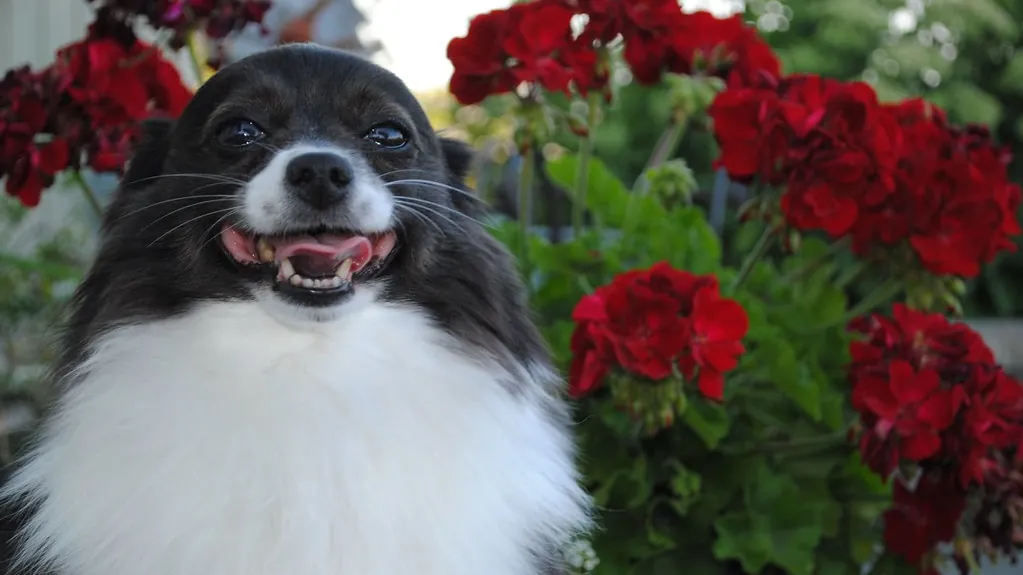
A Chihuahua Pomeranian mix dog, usually called a Pomchi, is a cross between two of the smallest companion breeds. Expect a tiny, alert, affectionate dog (both parent breeds top out at 7 pounds or less on paper), with anything from a smooth Chihuahua coat to a fluffy Pomeranian one, and a fair amount of barking. It isn’t a recognized breed, so the honest guide is what each parent is like, plus the dog in front of you.
You’ll also see Pom-Chi, Chi-Pom or Chiranian. Below is what the American Kennel Club (AKC), veterinary schools and published research can tell you, where the answer is “not well documented,” and how to tell whether a Pomchi fits your life.
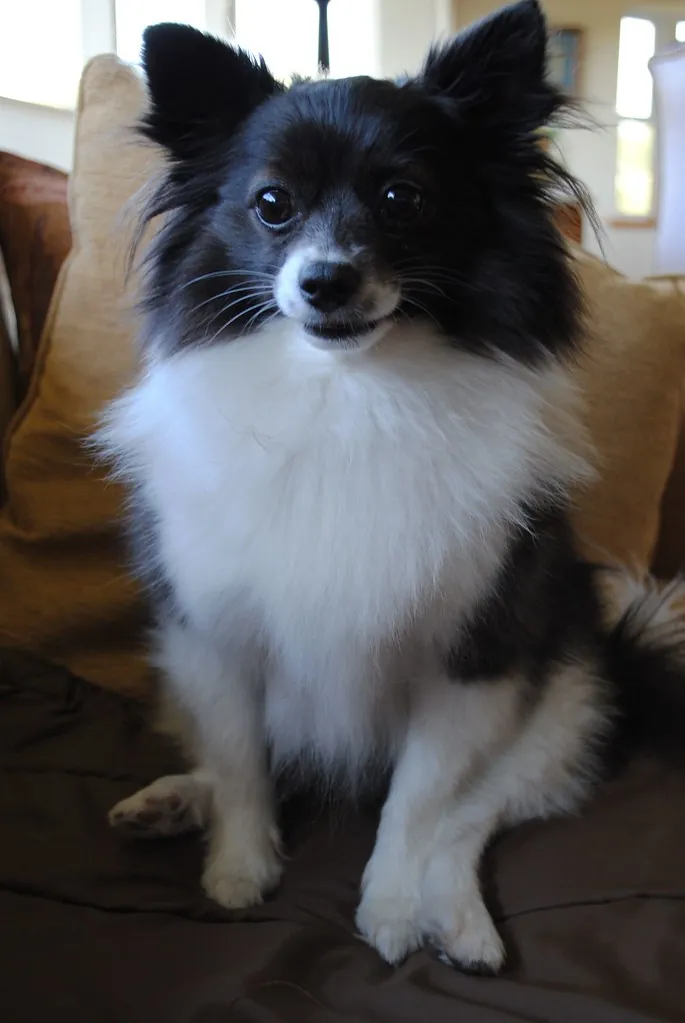
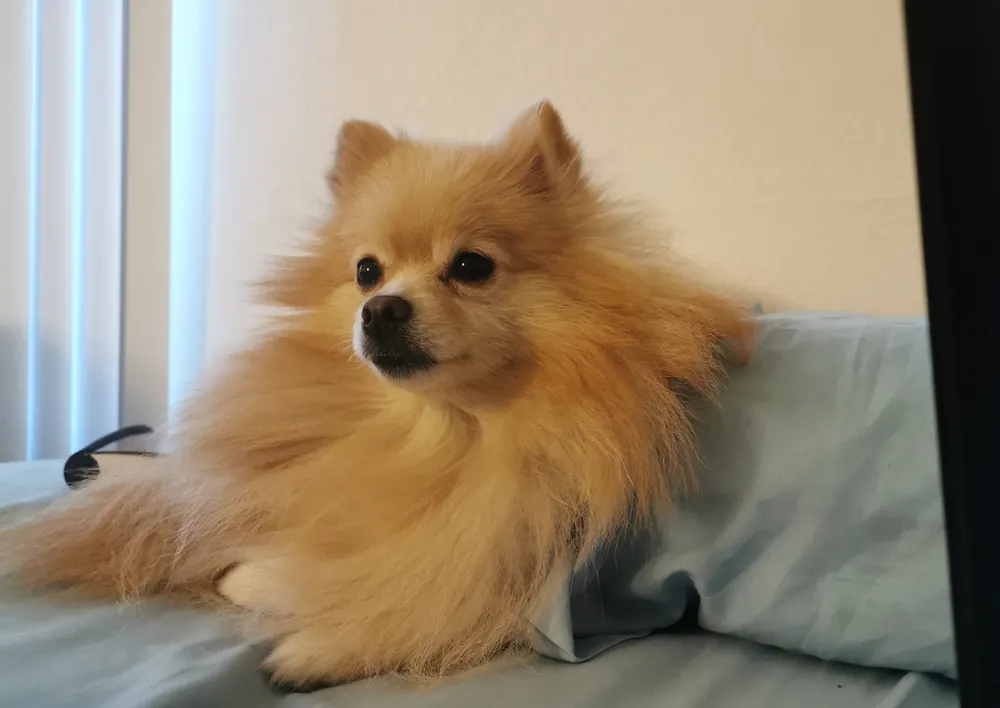
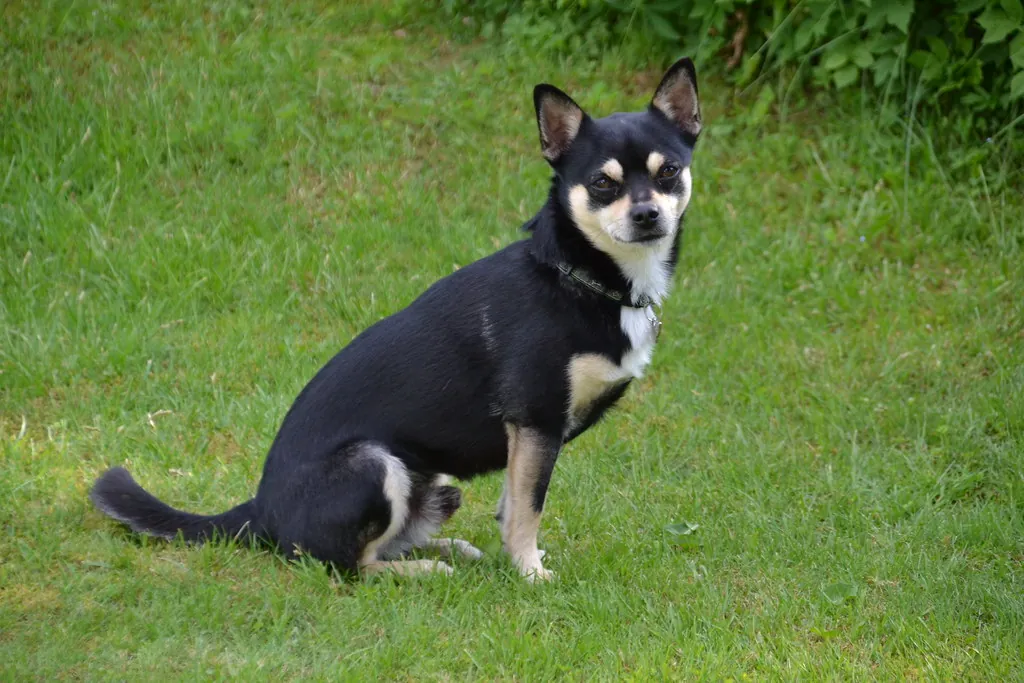
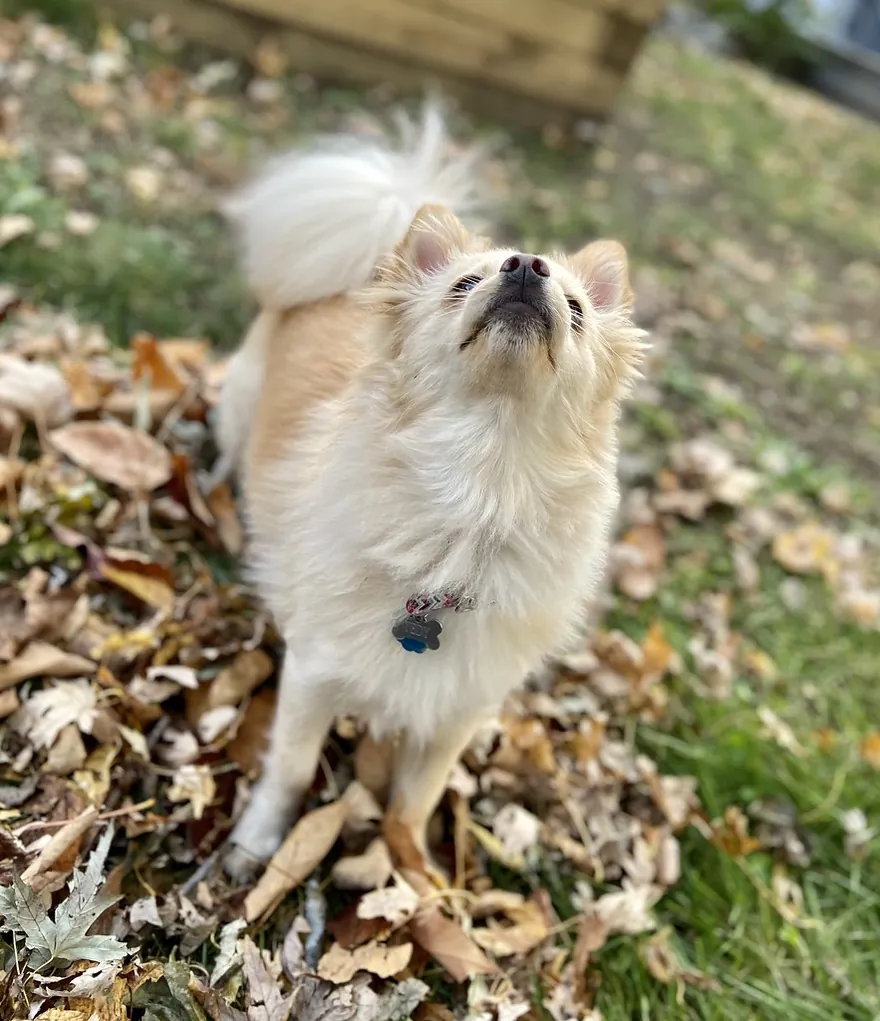
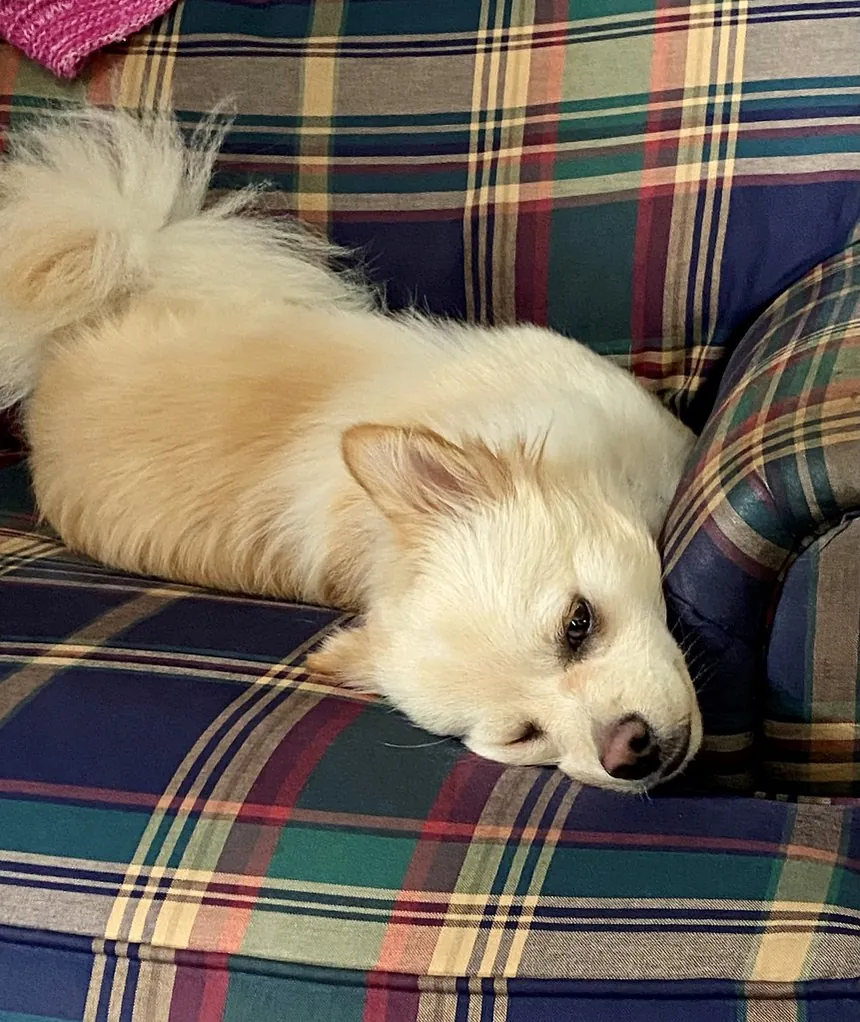
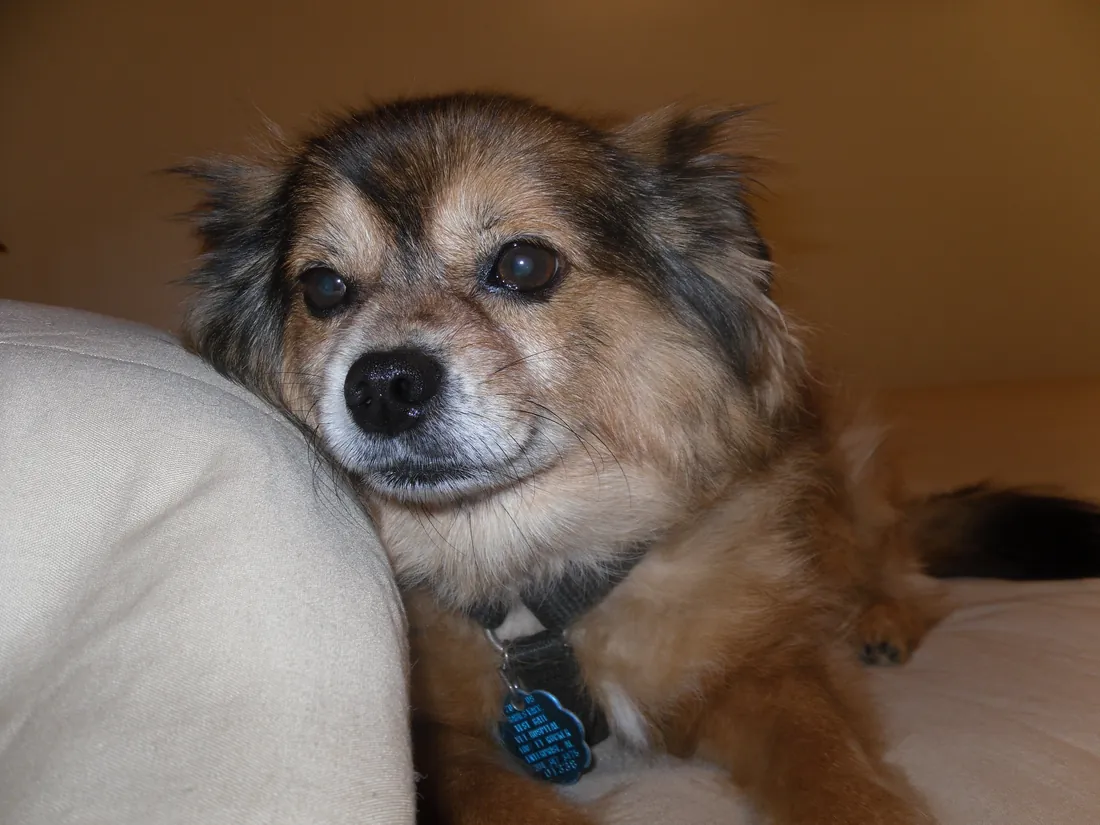
A note on our photos: every dog on this page was described by its owner or photographer as a Pomchi or a Pomeranian and Chihuahua mix. You’ll meet Hitomi, Doodles, Genevieve, Mickey and others. Nobody has shown us their DNA tests, but they do show how differently the same cross can turn out.
Pomchi quick facts
Figures here are for the parent breeds unless we say otherwise. They are not measurements of Pomchis.
- Also called: Pomchi, Pom-Chi, Chi-Pom, Chiranian. Informal names, not a recognized breed.
- Height (parent breeds): Chihuahua 5 to 8 inches (AKC); Pomeranian 6 to 7 inches (AKC).
- Weight (parent breeds): Chihuahua no more than 6 pounds (AKC); Pomeranian 3 to 7 pounds (AKC). The mix itself is not well documented.
- Lifespan (parent breeds): Chihuahua 14 to 16 years (AKC); Pomeranian 12 to 16 years (AKC). A large UK study found lower medians, 11.8 and 12.2 years (McMillan et al., 2024). The mix has not been studied.
- Energy (AKC ratings): Chihuahua 4 out of 5, Pomeranian 3.
- Barking (AKC ratings): Chihuahua 5 out of 5, Pomeranian 4.
- Shedding (AKC ratings): 2 out of 5 for both.
- Grooming (AKC ratings): Chihuahua 1 out of 5, Pomeranian 3. It depends on the coat your dog inherits.
- Good with young children (AKC ratings): Chihuahua 1 out of 5, Pomeranian 3. Best with adults or calm, older children.
- Good with other dogs (AKC ratings): 3 out of 5 for both.
- Health to ask about: kneecaps, teeth, windpipe, heart, eyes, and low blood sugar in tiny puppies. Details and sources below.
- Good fit for: someone home much of the day who wants a small, devoted dog, doesn’t mind barking, and will brush teeth.
What a Pomchi actually is
A Pomchi has a Chihuahua on one side of the family and a Pomeranian on the other. Some are first-generation crosses of two purebred dogs. Others come from Pomchi parents, or are mixes of mixes given the label because they look the part.
Is the Pomchi a recognized breed?
Not by the AKC, which recognizes the Chihuahua and the Pomeranian as two separate Toy Group breeds. Other websites say that several designer-dog registries list the cross as “Pomchi” or “Chiranian,” and that a Pomchi club once wrote a standard. We tried to confirm that with the registries, but none of their sites would load when we checked in November 2026, so we won’t repeat it as fact.
Where did it come from?
We found no reliable record of who first crossed the two on purpose, or when. The parents’ histories are better known.
The Chihuahua side
The AKC calls the Chihuahua “a tiny dog with a huge personality” and “a national symbol of Mexico.” It says that about a thousand years ago the Toltecs kept the Techichi, “a larger, heavier ancestor of today’s Chi,” and lists 1904 as the year the breed was recognized. It describes a “balanced, graceful dog of terrier-like demeanor, weighing no more than 6 pounds,” with a rounded “apple” head and a coat that can be long or short (AKC Chihuahua). Our Chihuahua guide and long-haired Chihuahua guide have more.
The Pomeranian side
The AKC calls the Pomeranian “a miniaturized relation of the powerful spitz-type sled dogs of the Arctic,” named for Pomerania, an area that is now part of Poland and western Germany. Queen Victoria fell for the breed in Florence, Italy, and is credited with reducing its size from about 30 pounds to today’s toy. The AKC lists 1888 as the year it was recognized, and describes “a tiny body (no more than seven pounds) and a commanding big-dog demeanor” with an abundant double coat (AKC Pomeranian).
So one side of the family comes from warm Mexico and the other from Arctic sled dogs. Coat is where the two differ most.
Pomchi vs Chihuahua vs Pomeranian
The numbers are registry figures and the AKC’s 1 to 5 trait ratings (5 = most). The Pomchi column is just the space between the parents, not measured data. Any one dog can land anywhere in it, or outside it.
| Chihuahua | Pomchi (mix) | Pomeranian | |
|---|---|---|---|
| AKC status | Toy Group, 1904 | Not recognized | Toy Group, 1888 |
| Height | 5 to 8 in | Not documented; parents span 5 to 8 in | 6 to 7 in |
| Weight | No more than 6 lb | Not documented; parents span up to 7 lb | 3 to 7 lb |
| Life expectancy (AKC) | 14 to 16 yrs | Not studied | 12 to 16 yrs |
| Median survival (UK study) | 11.8 yrs | Not studied; 12.0 for all crossbreeds | 12.2 yrs |
| Coat | Smooth or long | Anywhere between | Long double coat |
| Affectionate with family | 4 | 4 to 5 | 5 |
| Good with young children | 1 | 1 to 3 | 3 |
| Good with other dogs | 3 | 3 | 3 |
| Openness to strangers | 2 | 2 to 3 | 3 |
| Watchdog nature | 4 | 4 | 4 |
| Energy | 4 | 3 to 4 | 3 |
| Barking | 5 | 4 to 5 | 4 |
| Trainability | 3 | 3 | 3 |
| Adaptability | 4 | 4 | 4 |
| Shedding | 2 | 2 | 2 |
| Grooming needs | 1 | 1 to 3 | 3 |
| Breed health tests (AKC) | Kneecaps, heart, eyes | Ask what the parents had | Kneecaps, heart, eyes |
Sources: AKC Chihuahua, AKC Pomeranian, and McMillan et al., 2024 (with its Supplementary Table S3) for median survival.
Two things stand out. The parents are so alike in size, barking, trainability and watchfulness that those traits are the safer guesses. And they differ most on coat and on young children, so those are the questions to ask about a particular dog.
Size: how big does a Pomchi get?
Both parents are toy breeds, and the published figures top out at 7 pounds. Real pet dogs don’t always read the standard, though. In a UK study of 11,647 Chihuahuas under veterinary care, the median adult weight was 3.4 kg (about 7.5 pounds), already over the AKC’s 6-pound limit, and adults ranged from 0.8 to 9.8 kg, about 2 to 22 pounds (O’Neill et al., 2020).
So don’t be startled by a 10-pound Pomchi, and be cautious with sellers promising “teacup” sizes. Mickey, further down this page, was a five-pound adult. If size matters for your lap, your lease or lifting a dog into the car, adopt an adult and you’ll know.
Looks: which side of the family is showing?
A Pomchi’s head, ears, coat and tail can each take after either parent. This is what the two AKC breed standards ask for. Use it to enjoy your dog’s features, not to prove its ancestry.
| Feature | Chihuahua standard | Pomeranian standard |
|---|---|---|
| Skull | ”Apple dome,” with or without a molera (a soft spot on top) | Closed, slightly round but not domed |
| Eyes | Full and round, but not protruding | Medium sized and almond shaped |
| Ears | Large and erect | Small, set high and carried erect |
| Coat | Smooth (soft, close, glossy) or long (soft, flat or slightly wavy) | Dense undercoat with a longer, harsh outer coat and a neck ruff |
| Tail | Carried up, out or in a loop over the back | Heavily plumed, lying flat and straight on the back |
| Outline | Slightly longer than tall | Square, with a short back |
Sources: AKC Chihuahua standard; AKC Pomeranian standard.
Colors are wide open. The AKC says Chihuahua coats “come in many colors and patterns,” and that Pomeranians come in “almost two dozen colors,” most commonly orange or red (AKC; AKC). The dogs on this page are black and white, black and tan, orange, cream, white, brown and white, and tan with gray.

Temperament: what to realistically expect
These are descriptions of the parent breeds, not promises about a mix.
The Chihuahua side. The AKC describes a dog that is “alert and amusing” with a “terrier-like” attitude. It rates the breed 4 out of 5 for affection, 2 for openness to strangers and 1 for being good with young children, and notes that Chihuahuas are “clannish,” preferring their own kind (AKC Chihuahua).
The Pomeranian side. The AKC calls Poms “inquisitive,” “lively” and “bold,” and says they “make fine watchdogs and perky pets for families with children old enough to know the difference between a toy dog and a toy.” It rates them 5 out of 5 for affection and 3 for openness to strangers (AKC Pomeranian).
What breed can’t tell you. A 2022 study in Science surveyed owners of 18,385 dogs and found that breed explains just 9% of the differences in behavior between individual dogs (Morrill et al., 2022). That’s good news if you’re adopting an adult, because you can meet the actual dog.
Put together, here is what to ask about or plan for:
- Attachment. Both parents rate high for affection. Ask how the dog copes when left alone.
- Visitors. Neither parent rates above 3 for strangers. Let the dog approach in its own time, and ask guests not to reach down and scoop it up.
- Children. A dog this small can be hurt by a fall or a hug, and a frightened dog may snap. Supervise every visit with young grandchildren.
- Other pets. Both parents rate 3 out of 5 with other dogs. The AKC warns that other dogs who aren’t controlled “can easily hurt your Pom” (AKC), so be choosy about playmates.

Exercise needs
Modest, but not zero. The AKC says Poms “are active but can be exercised with indoor play and short walks,” and that the Chihuahua “can usually get enough exercise in a very small space,” with “short, slow walks” to keep in condition. It adds a useful stop sign: “If your dog is panting and working hard to keep up, it’s time to pick him up and carry him home” (AKC Pomeranian; AKC Chihuahua). Short walks, sniffing time, indoor fetch and a few minutes of tricks make a good day. Ask your vet what’s right for your dog.
Outdoor safety matters more than distance. The AKC says Pomeranians are “notorious for escaping through small crevices or gaps in fencing,” and that small dogs can be mistaken for prey by hawks and owls, so stay with them outside (AKC). Walk your fence line at ground level.
Harness over collar. Cornell lists switching from neck collars to harnesses among the lifestyle changes for dogs with tracheal collapse, which is common in toy breeds (Cornell). Ask your vet whether a harness makes sense for yours.
Grooming
Look at the coat your dog has, not the label.
- Fluffy, Pomeranian-type coat. The AKC advises brushing down to the skin with a pin brush and slicker brush once a week to prevent mats, and suggests a full groom every four to six weeks, by a groomer if you’d rather not do it yourself (AKC).
- Long Chihuahua coat. Brush at least once a week (AKC).
- Smooth Chihuahua coat. Occasional brushing and regular baths (AKC).
Keep nails short, check ears, and brush teeth (more on teeth below). In winter, the ASPCA advises never shaving a dog down to the skin, and a coat or sweater for short-haired dogs (ASPCA).
Are Pomchis hypoallergenic? No. The AKC says there are no 100% hypoallergenic dogs, breeds or mixes (AKC). If you have allergies, spend time with the actual dog and talk to your doctor. Our hypoallergenic dog breeds guide covers other options.
Training: barking, house training and handling
Both parents are bright, and both are rated 3 out of 5 for trainability. The AKC says Chihuahuas respond “well to positive training practices” and Poms are “alert and highly intelligent,” able to do well in agility, rally and obedience or as therapy dogs (AKC; AKC). You may read that bossy little dogs need a “pack leader.” The American Veterinary Society of Animal Behavior disagrees: it recommends reward-based methods and says “there is no evidence that aversive training is necessary” (AVSAB, 2021).
Barking. The ASPCA describes alarm and territorial barking as a response to the sights and sounds of people or animals nearby. It suggests blocking the view with window film, and teaching “quiet.” Of the methods it describes, we’d use the treat version: when the dog barks, calmly say “Quiet,” then feed a steady stream of pea-sized treats so silence pays off (ASPCA). If you share walls with neighbors, start on day one.
House training. The AKC says housebreaking a Pomeranian “can be a challenge, so consistency and patience are key” (AKC). A steady schedule, frequent trips and a treat the moment the dog finishes outside all help. The AKC says puppy pads can be useful for people with very small dogs in areas with severe winter weather (AKC potty training). Our potty training guide has a step-by-step plan.
Handling a tiny dog.
- No big jumps. The AKC says to keep a Pom “from jumping on and off couches or beds, as they can injure joints or even break a bone” (AKC). Use a ramp or steps, or lift the dog.
- Lift with two hands, one under the chest and one under the rear, and sit down before handing the dog to someone else.
- Ask first. Teach a word like “up” before you lift, so being picked up isn’t a surprise.
- Pair handling with treats: paws, ears, mouth, brush, harness.
Diet basics
There’s no special Pomchi diet. For both parents, the AKC advises a high-quality food suited to the dog’s age, attention to calories and weight, and not too many treats (AKC; AKC). On a seven-pound dog, a few extra treats are a big share of the day’s food, so count them. Tiny puppies need more frequent meals (see low blood sugar, next). Ask your vet how much and how often to feed yours.
Health: what to know and what to ask
We found no study of Pomchi health, so everything below is about the parent breeds or small dogs in general. Most dogs won’t have most of these problems. The list is here so you know what to ask your vet.
Being a mix isn’t a guarantee of health. A University of California, Davis study of 27,254 dogs with inherited disorders found purebreds more likely to have 10 of the 24 disorders studied, with no difference for 13 of them, including loose kneecaps (Bellumori et al., 2013). Here that matters, because both of a Pomchi’s parents are prone to loose kneecaps.
| Condition | Parent-breed note | What the source says |
|---|---|---|
| Loose kneecaps (patellar luxation) | Both | In a study of 210,824 dogs in England, it was diagnosed in 6.5% of Pomeranians and 4.9% of Chihuahuas, against 1.2% of crossbreds, so most dogs of both breeds were not affected (O’Neill et al., 2016). Dogs may “skip” on a back leg for a few steps (ACVS). |
| Dental disease | Both; small dogs generally | Gum disease was the most common problem recorded in UK Chihuahuas, at 13.5%, and 5.7% had retained baby teeth (O’Neill et al., 2020). Cornell says gum disease is worse in smaller breeds (Cornell). |
| Tracheal collapse | Pomeranian; toy breeds | A weakening windpipe, common in toy and small breeds that are middle-aged or older, with a “goose-honking” cough. Many dogs respond well to medical management (Cornell). |
| Low blood sugar (hypoglycemia) | Toy-breed puppies | Young toy puppies can’t store enough glycogen and can run low between meals, especially if active, cold or stressed (AKC). A veterinary review also lists toy and miniature juveniles as at increased risk (Idowu & Heading, 2018). |
| Heart disease | Both | The AKC lists patent ductus arteriosus and mitral valve disease for Chihuahuas, congestive heart failure for Poms, and a cardiac exam for both (AKC; AKC). |
| Eye disease | Both | An eye exam is on the AKC test list for both breeds (AKC; AKC). |
| Hair loss (alopecia X) | Pomeranian | VCA describes symmetrical hair loss that typically begins in young adulthood, and lists the Pomeranian among commonly affected breeds (VCA). |
| Seizures | Both | The AKC mentions idiopathic epilepsy in Chihuahuas and seizures in Poms (AKC; AKC). |
| Low thyroid (hypothyroidism) | Pomeranian | On the AKC’s list of conditions breeders screen for (AKC). |
| Extra weight | Both | Obesity was recorded in 5.9% of UK Chihuahuas (O’Neill et al., 2020). |
| Molera (soft spot on the skull) | Chihuahua | The AKC standard allows a skull “with or without molera” (AKC standard). Ask your vet to check, and what it means for handling. |
For puppies, know the signs of low blood sugar. The AKC article describes extreme lethargy, incoordination, unconsciousness or seizures, often in puppies under 12 weeks. It says light corn syrup or honey can temporarily stabilize a small puppy, which should then go to a veterinarian immediately (AKC). Ask your vet for a feeding schedule and an emergency plan before the puppy comes home.
Day to day: Cornell calls daily tooth brushing with a veterinary paste the mainstay of a home dental program, with annual professional evaluation (Cornell). Our page on professional dental cleanings explains that visit. Call your vet about a skipping back leg, a honking cough, tiring easily, or thinning hair. A cough with labored breathing, blue gums or tongue, or fainting is an emergency.

Lifespan: why the numbers disagree
Most pages give one cheerful range for the Pomchi. No study has measured it. Here is the fuller picture for the parents:
- The AKC lists 14 to 16 years for the Chihuahua and 12 to 16 for the Pomeranian (AKC; AKC).
- A 2024 study of 584,734 UK dogs estimated median survival at 11.8 years for Chihuahuas, 12.2 for Pomeranians, and 12.0 for crossbreeds of every kind (McMillan et al., 2024).
A median is a midpoint, so about half of dogs live longer. Plan for a companion that may be with you into its teens, keep it lean, look after its teeth, and see your vet regularly.
Pomchi puppies: pretty and unpredictable
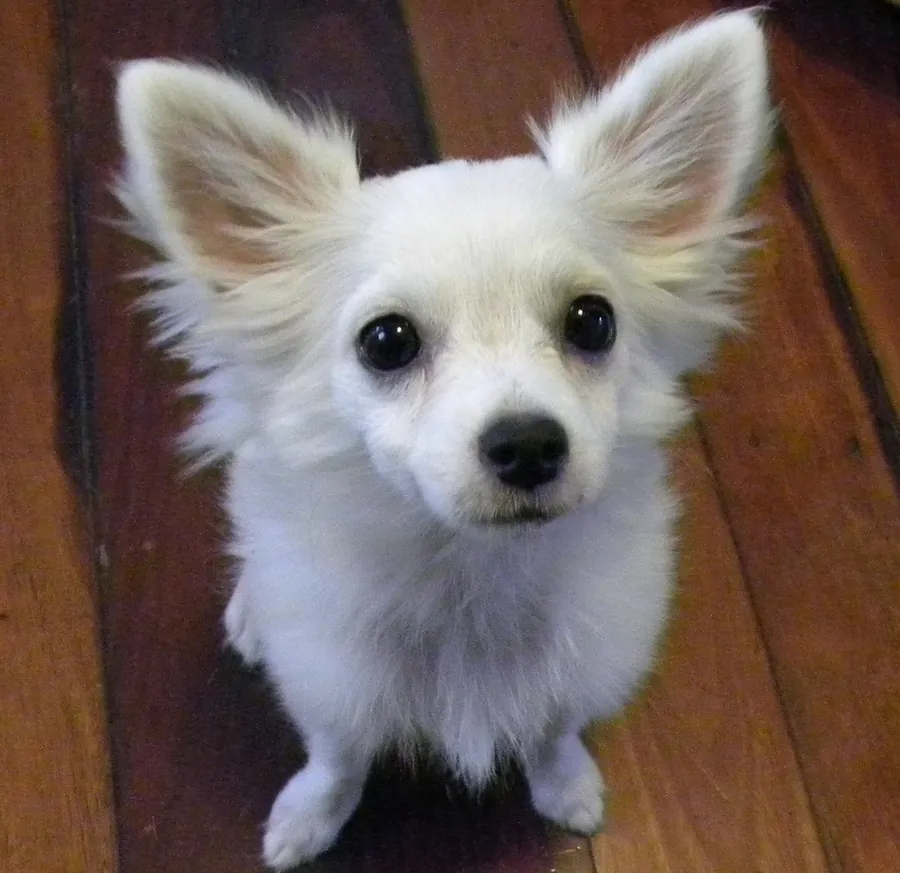
A puppy’s adult coat, size and temperament are hard to call. Genevieve, the white puppy below, was described by her owner as a long-haired Chihuahua crossed with a Pomeranian. She has big Chihuahua-style ears. The brown and white puppy has a rounder, fluffier look. Both carry the same label.
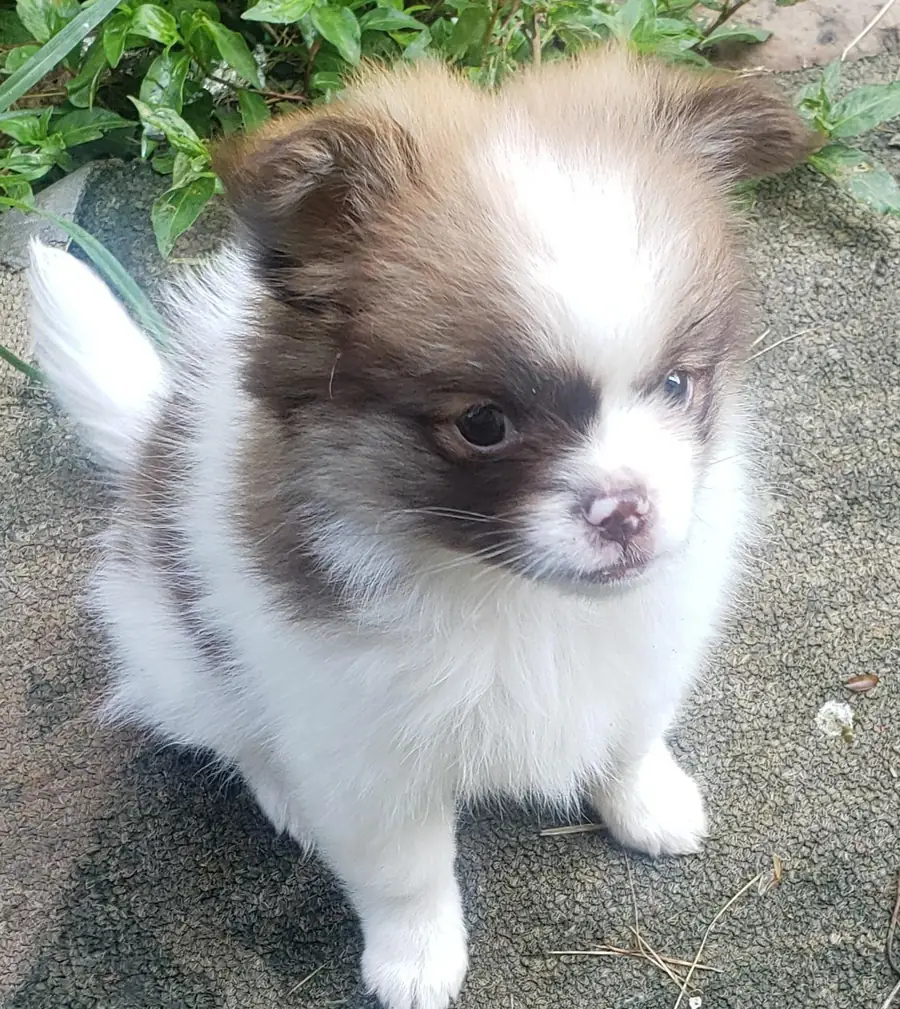

If you do buy a puppy, meet the mother where the puppies live. Ask for proof of the tests the AKC lists for both parent breeds: kneecaps, heart and eyes. Be wary of “teacup” sales talk and of claims that a mix is automatically healthier. For many people, an adult from a foster home is the easier start.
Is that shelter dog really a Pomchi?
Maybe. Labels are often a guess from looks. In one study, DNA testing found the breed an adoption agency had named as a main breed in only 4 of 16 dogs, or 25% (Voith et al., 2009). In a larger study of shelter dogs, staff’s main breed label matched the main breed in the DNA for 56.7% of 384 dogs (Gunter et al., 2018).
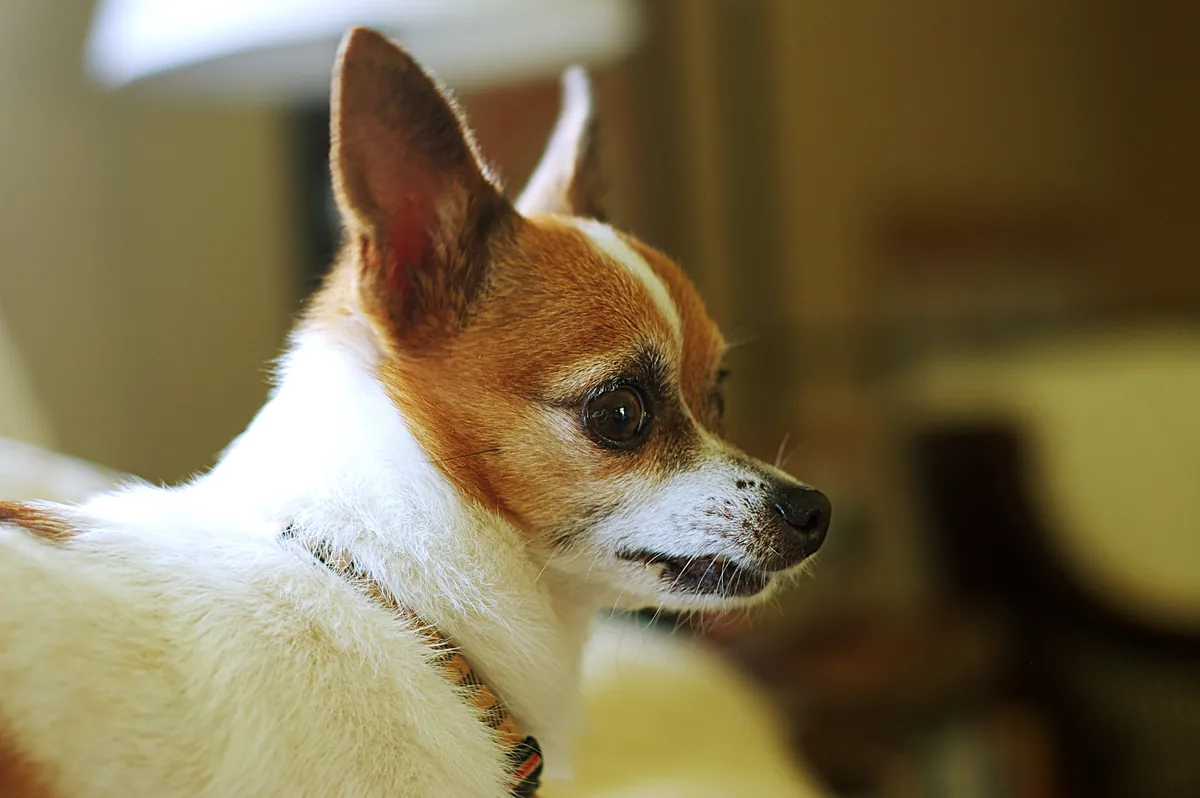
So a fluffy little dog with big ears may be a Pomchi, or may have Papillon, Spitz, terrier or something else in the family. The reverse is true too: Mickey, below, came from a humane society as a Chihuahua Pomeranian mix, though to our eyes he looks nearly all Chihuahua. Meet the dog, not the label. If you’re curious later, our guide to figuring out your dog’s breed explains the options.

Is a Pomchi right for me? A checklist for 50+ adopters
A few “no” answers don’t rule you out. They tell you what to plan for, or which dog to ask about.
- Yes / No: I’d enjoy a little dog that follows me from room to room.
- Yes / No: Barking at the door won’t cause trouble with my neighbors or lease, or I’m ready to work on it.
- Yes / No: I can watch where I step. A night light, a bell on the harness or a bed in each room would be easy to add.
- Yes / No: I can bend or reach to clip a harness, or I have a spot to lift the dog to safely.
- Yes / No: I’m willing to brush tiny teeth daily and budget for professional dental care.
- Yes / No: I can brush a fluffy coat weekly, or pay a groomer, or choose a smooth-coated dog.
- Yes / No: Young grandchildren who visit can follow “sit on the floor, gentle hands” rules, with me right there.
- Yes / No: I’ll stay outside with the dog, in a yard with no small gaps.
- Yes / No: I’ve thought about who would care for this dog if I ever couldn’t.
A Pomchi may suit you if you’re home a lot, like short walks, want a dog that’s easy to lift and travel with, and smile at a big personality in a small package.
Consider a different dog if you need quiet, have toddlers in the house, want a rugged hiking partner, or have large dogs that play rough. A sturdier small dog may fit better; see our best small dog breeds.
One safety note: a tiny dog underfoot can be a tripping hazard. Teach a “wait” at stairs and doors, keep walkways lit, and give the dog its own place to settle while you cook.
Costs to plan for
We found no reliable cost figures for Pomchis, and we don’t quote puppy prices. The ASPCA estimates $1,391 a year for a dog, and $3,221 in the first year with one-time costs (ASPCA). For this mix, leave room for dental cleanings, knee or heart checks, grooming if the coat is fluffy, and pet insurance or an emergency fund.
Adopting a Pomchi
Where to look
Search “Chihuahua mix” and “Pomeranian mix” as well as “Pomchi,” since labels vary. Two rescues whose own websites we checked in November 2026:
- Chihuahua Rescue & Transport is a nonprofit that rescues Chihuahuas and Chihuahua mixes across the Midwest, Southeast and Southwest. It keeps its dogs in foster homes rather than shelters. Its adoption page describes reference checks and a home visit.
- Recycled Pomeranians and Schipperkes takes in Pomeranians, Schipperkes and other small breeds. Its Seniors for Seniors program, in the Dallas-Fort Worth area, matches people 65 and older with senior dogs as permanent fosters. The rescue pays the dog’s vet bills, and you provide food, supplies and love.
Listing a group here isn’t an endorsement. Ask your own questions, and check that they cover your area. Our page on small dogs for adoption has more places to look.
Questions to ask the rescue
The ASPCA suggests leaning on shelter staff to help you find a match for your lifestyle (ASPCA). For a Pomchi, ask:
- What is the “Pomchi” label based on: known parents, a DNA test, or looks?
- How much does this dog bark, and what sets it off?
- Is it house trained, and is that outdoors or on pads?
- How does it do with strangers, being picked up, and having its mouth and paws touched?
- How has it done with other dogs, cats and children, in a home?
- What did the vet find on its knees, teeth, heart, eyes and windpipe? Any dental work done or due?
- Does it cough, skip on a back leg, or have thinning hair?
- How does it handle being left alone?
- Is there a foster-to-adopt or trial period, and will you take the dog back if it doesn’t work out?
Our 9 questions to ask when adopting a dog covers the general ones.
Give your dog a backup plan
A young Pomchi may be with you for many years. Naming a backup caregiver now, someone who knows your dog and has agreed to step in, helps make sure your dog never has to go to a shelter. Our guide What Happens to Your Dog When You Die walks you through it, and the free My Dog’s Backup Plan worksheet records your dog’s routine, vet, quirks and favorite things. Bone Voyage is also building the pledge: a promise by a volunteer to adopt a specific older adult’s dog if that person dies or can no longer care for it. You can join the free list on that same page.
Similar dogs to compare
- Chihuahua and long-haired Chihuahua, for one side of the family.
- Jack Russell Chihuahua mix, a bigger, busier Chihuahua cross.
- Chihuahua terrier mix breeds, comparing the common Chihuahua and terrier crosses.
- Pitbull and Chihuahua mix, the Chipit, a Chihuahua cross whose size is hard to predict.
- Pomeranian Poodle mix, a curlier Pomeranian cross.
- Teddy bear dogs, a look at other small, fluffy mixes.
Frequently Asked Questions
What is a Chihuahua Pomeranian mix called?
Most often a Pomchi, also written Pom-Chi or Chi-Pom. Chiranian is another nickname you may see. These are informal names for a cross, not a recognized breed. The AKC recognizes the Chihuahua and the Pomeranian separately, and it has no breed standard for a mix of the two, so size, coat and temperament vary from dog to dog.
How big do Pomchis get full grown?
There is no official size. The AKC lists the Chihuahua at 5 to 8 inches and no more than 6 pounds, and the Pomeranian at 6 to 7 inches and 3 to 7 pounds (AKC; AKC). Pet dogs can be heavier than show standards: in a UK study of 11,647 Chihuahuas, adult weights ran from about 2 to 22 pounds, with a median of about 7.5 (O’Neill et al., 2020). An adult dog lets you see the size instead of guessing.
Do Pomchis shed a lot?
Usually not a lot, going by the parents. The AKC rates both the Chihuahua and the Pomeranian 2 out of 5 for shedding (AKC; AKC). Coat type makes the difference in brushing: a Pomchi with the Pomeranian’s thick double coat needs brushing down to the skin at least weekly, while one with a smooth Chihuahua coat needs only occasional brushing.
Do Pomchis bark a lot?
Plan on a dog with plenty to say. The AKC rates the Chihuahua 5 out of 5 for barking and the Pomeranian 4, and rates both 4 as watchdogs (AKC; AKC). No study has measured barking in the mix, and individual dogs differ, so ask the shelter or foster how vocal a particular dog is. Reward-based training can teach a quiet cue.
How long do Pomchis live?
No study has measured the mix. The AKC lists 14 to 16 years for the Chihuahua and 12 to 16 for the Pomeranian (AKC; AKC). A 2024 study of 584,734 UK dogs put median survival lower, at 11.8 years for Chihuahuas, 12.2 for Pomeranians and 12.0 for crossbreeds of all kinds (McMillan et al., 2024). About half of dogs live past a median.
What is a Chihuahua Pomeranian terrier mix?
It’s usually a shelter or owner’s description of a small dog thought to have Chihuahua, Pomeranian and some kind of terrier in its family. It isn’t a breed. Unless the dog’s parents were known or it has had a DNA test, the label is a guess from looks, so ask what it’s based on and get to know the dog itself.
How much is a Pomeranian Chihuahua?
There’s no standard price. The AKC doesn’t recognize the cross and sellers set their own prices, so we don’t quote one. Rescues set their own adoption fees; Chihuahua Rescue & Transport, for example, lists a minimum adoption donation of $250, and more for puppies (CRT). The ASPCA estimates $1,391 a year to own a dog, or $3,221 in the first year (ASPCA).
Is a Pomchi a good dog for an older adult?
Often, if you like a lively little shadow. The AKC describes both parents as small dogs that can get their exercise from indoor play and short walks, and both rate high for affection (AKC; AKC). Think about barking, daily tooth brushing, a dog underfoot, and who would step in if you couldn’t care for the dog. A calm adult from a foster home is a good place to start.
Before you go
The Pomchi you meet will be one particular dog with its own history and quirks. Trust what you see, and what its foster family tells you, over anything on this page. And whichever dog comes home with you, decide now who would step in if you ever couldn’t.
Sources
- American Kennel Club, Chihuahua and Pomeranian breed pages (size, life expectancy, trait ratings, history, exercise, training, grooming, nutrition, health and recommended tests), Official Standard of the Chihuahua, Official Standard of the Pomeranian, Hypoallergenic Dogs, Hypoglycemia in Dogs and How to Potty Train a Puppy
- McMillan KM et al. (2024). Longevity of companion dog breeds: those at risk from early death. Scientific Reports 14:531 (breed medians in Supplementary Table S3).
- O’Neill DG et al. (2020). Demography and commonly recorded clinical conditions of Chihuahuas under primary veterinary care in the UK in 2016. BMC Veterinary Research 16:42.
- O’Neill DG et al. (2016). The epidemiology of patellar luxation in dogs attending primary-care veterinary practices in England. Canine Genetics and Epidemiology 3:4.
- Bellumori TP et al. (2013). Prevalence of inherited disorders among mixed-breed and purebred dogs: 27,254 cases (1995-2010). JAVMA 242(11):1549-55.
- Morrill K et al. (2022). Ancestry-inclusive dog genomics challenges popular breed stereotypes. Science 376(6592):eabk0639.
- Voith VL et al. (2009). Comparison of adoption agency breed identification and DNA breed identification of dogs. Journal of Applied Animal Welfare Science 12(3):253-62.
- Gunter LM et al. (2018). A canine identity crisis: Genetic breed heritage testing of shelter dogs. PLOS ONE 13(8):e0202633.
- Idowu O, Heading K (2018). Hypoglycemia in dogs: Causes, management, and diagnosis. The Canadian Veterinary Journal 59(6):642-649.
- American College of Veterinary Surgeons, Patellar Luxations
- Cornell University Riney Canine Health Center, Tracheal Collapse and Periodontal Disease
- VCA Animal Hospitals, Alopecia X in Dogs
- American Veterinary Society of Animal Behavior, Position Statement on Humane Dog Training (2021)
- ASPCA, Barking, Cold Weather Safety Tips, Cutting Pet Care Costs and Finding your Fido
- Chihuahua Rescue & Transport and Recycled Pomeranians and Schipperkes (their own websites)
- Photos: Flickr and Wikimedia Commons photographers credited under each image, under Creative Commons licenses, CC0 or public domain. Full license records are kept in this site’s image-credits file.