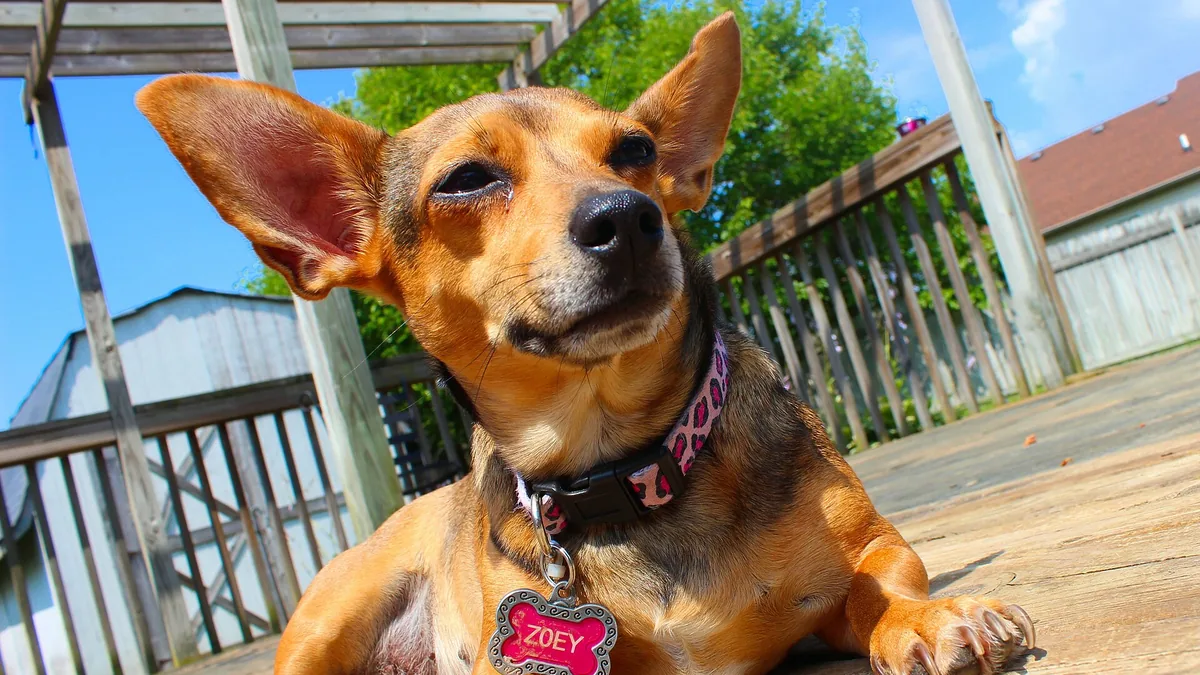

A Chihuahua weiner dog mix, usually called a Chiweenie, is a cross between a Chihuahua and a Dachshund. Most are small dogs of roughly 5 to 12 pounds with a longish body, short legs, a big personality and a loud bark, and their parents’ long lifespans (12 to 16 years for Dachshunds, 14 to 16 for Chihuahuas). The two things to plan for are the Dachshund’s back risk and the dental problems both parents are prone to.
That’s the short answer. A Chiweenie isn’t a breed, so no two are guaranteed to be alike. This guide explains both parent breeds, the realistic range of what you might get, and what living with one is like, using the American Kennel Club (AKC), veterinary school guidance and peer-reviewed studies. Where the evidence runs out, we say so.
Chiweenie quick facts
- Also called: Chiweenie, Chiweeni, Chiwinnie, Chiwee, Doxihuahua, “Mexican hotdog.” None is official.
- Is it a recognized breed? No. It’s a mix. The AKC registers the purebred parents and lets mixed breeds enroll in its Canine Partners program.
- Height: parents span 5 to 9 inches at the shoulder (AKC Chihuahua; AKC Dachshund).
- Weight: depends on the Dachshund parent. Chihuahua: no more than 6 lb. Miniature Dachshund: 11 lb and under. Standard Dachshund: 16 to 32 lb. Our estimate for a mix from a miniature Dachshund is about 5 to 12 lb.
- Lifespan: not studied for the mix. AKC figures: 14 to 16 years (Chihuahua), 12 to 16 years (Dachshund).
- Energy (AKC rating): 4 out of 5 (Chihuahua), 3 out of 5 (Dachshund). Short daily walks and play suit most.
- Grooming (AKC rating): 1 (Chihuahua), 2 (Dachshund). Smooth coats are easy; long and wiry coats need weekly brushing.
- Barking (AKC rating): 5 out of 5 for both parents.
- Good with young children (AKC rating): 1 (Chihuahua), 3 (Dachshund).
- Good with other dogs (AKC rating): 3 (Chihuahua), 4 (Dachshund).
- Health to know about: back disease (IVDD) from the Dachshund side, dental disease from both sides, plus the kneecap, heart and eye checks the AKC lists for both parents.
- Good fit for: a calm adult home, people who are home a lot, and anyone who wants a lap dog with opinions.

What is a Chiweenie? Where the mix comes from
A Chiweenie is any dog with one Chihuahua parent and one Dachshund parent. You’ll also meet second-generation dogs (two Chiweenie parents) and dogs that are mostly one breed with some of the other. No one has documented when people first crossed the two on purpose, and it has no breed club, written standard or health-testing program of its own, so we’ll skip the origin stories you’ll read elsewhere.
What we can describe is where the parents come from.
The Chihuahua side
The AKC calls the Chihuahua “a national symbol of Mexico” and one of the oldest breeds of the Americas, “a balanced, graceful dog of terrier-like demeanor, weighing no more than 6 pounds,” with “loyalty, charm, and big-dog attitude.” The AKC adds that Chihuahuas “are too small for roughhousing with kids, and special care must be taken in cold weather” (AKC Chihuahua). Coats are smooth or long. Our Chihuahua breed guide and long-haired Chihuahua guide go deeper.
The Dachshund side (the “weiner dog”)
The Dachshund is the “wiener dog” of the search term. The AKC describes a German hunting breed with an “unmistakable long-backed body, little legs, and big personality,” in two sizes (standard and miniature) and three coats (smooth, wirehaired and longhaired). It says Dachshunds are “smart and vigilant, with a big-dog bark,” “brave to the point of rashness, and a bit stubborn,” and that they “aren’t built for distance running, leaping, or strenuous swimming” (AKC Dachshund). See our Dachshund guide and long-haired miniature Dachshund guide.
Chihuahua vs Dachshund vs Chiweenie: comparison table
Here’s how the parents compare, using AKC figures and the AKC’s 1 to 5 trait ratings (5 = most). The Chiweenie column is a realistic range between the parents, not measured data. Any single dog can land anywhere in it.
| Chihuahua | Miniature Dachshund | Standard Dachshund | Chiweenie (mix) | |
|---|---|---|---|---|
| Registry | AKC Toy Group | AKC Hound Group (a size class of the Dachshund) | AKC Hound Group | None; a mix (AKC Canine Partners for enrollment) |
| Height | 5 to 8 in | 5 to 6 in | 8 to 9 in | Roughly 5 to 9 in |
| Weight | Not over 6 lb | 11 lb and under | 16 to 32 lb | About 5 to 12 lb with a mini parent; heavier possible with a standard |
| Life expectancy | 14 to 16 yrs | 12 to 16 yrs | 12 to 16 yrs | Not studied; parents’ range is a fair guide |
| Coat | Smooth or long | Smooth, long or wire | Smooth, long or wire | Smooth, long or wiry |
| Ears | Large, erect | Long, hanging | Long, hanging | Up, down, or one of each |
| Affectionate with family | 4 | 5 | 5 | Usually high |
| Good with young children | 1 | 3 | 3 | Supervise; better with older kids |
| Good with other dogs | 3 | 4 | 4 | Varies; ask about the dog’s history |
| Openness to strangers | 2 | 4 | 4 | Often wary at first |
| Energy | 4 | 3 | 3 | Moderate |
| Barking | 5 | 5 | 5 | Expect a vocal dog |
| Trainability | 3 | 4 | 4 | Moderate; patience needed |
| Shedding | 2 | 2 | 2 | Low to moderate |
| Health tests the AKC lists | Kneecaps, heart, eyes | Kneecaps, heart, eyes | Kneecaps, heart, eyes | Ask the rescue or breeder for parents’ results |
| Biggest health watch-outs | Teeth, kneecaps, heart | Back (IVDD), teeth | Back (IVDD) | Back and teeth |
Sources: AKC Chihuahua and AKC Dachshund breed pages and trait ratings (the AKC rates the Dachshund as one breed across both sizes); Cornell; O’Neill et al., 2021.
Size and appearance: what a full-grown Chiweenie looks like
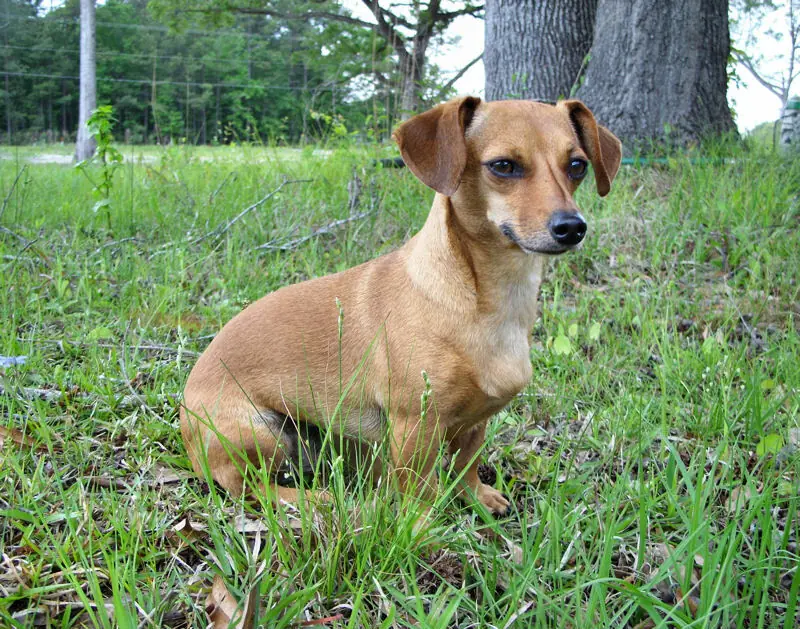
Most adult Chiweenies are small, a little longer than they are tall, with short legs. Beyond that, they vary a lot, even within one litter. Here’s the realistic range:
- Size. The Dachshund parent decides most of it. Two parents of 11 pounds or less (a Chihuahua and a miniature Dachshund) will usually produce small adults. A standard Dachshund parent, at up to 32 pounds, widens the range. Ask which size the Dachshund parent was.
- Body. Somewhere between the Chihuahua’s compact square frame and the Dachshund’s long, low one.
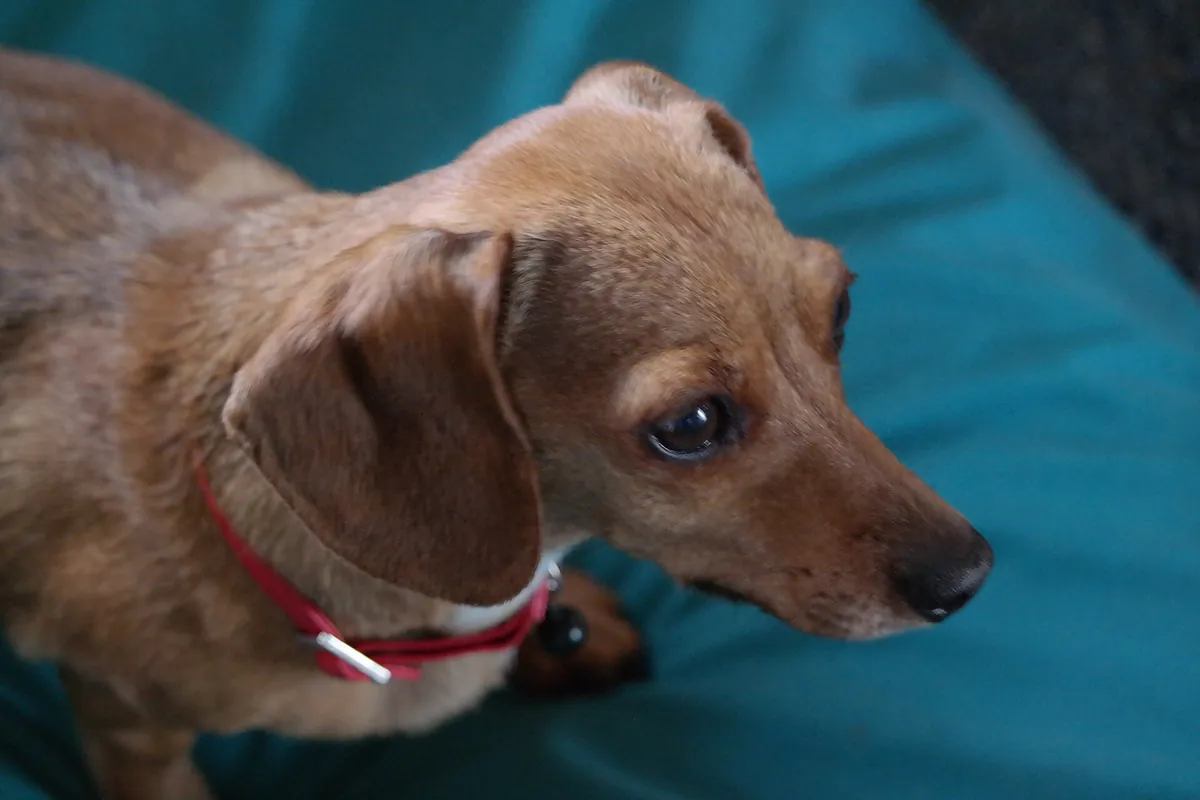
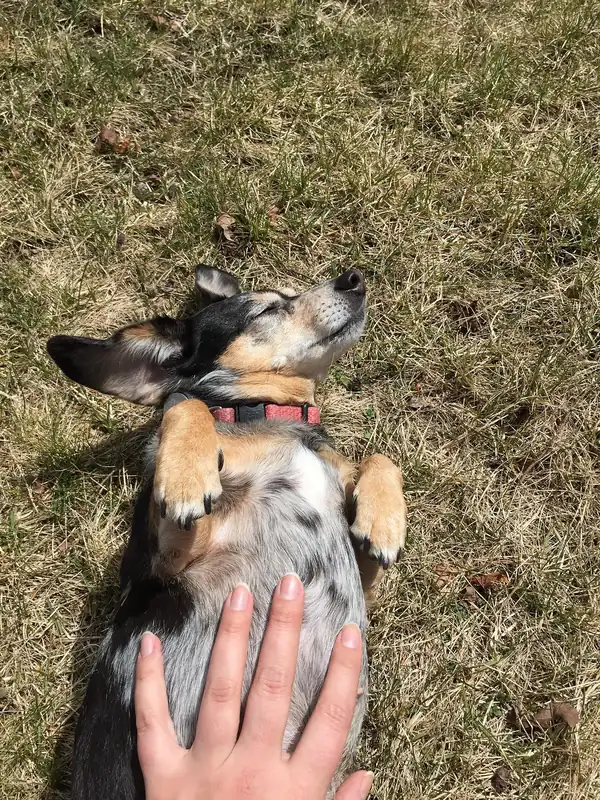
- Head and ears. Some have the Chihuahua’s rounded “apple” head and big upright ears; others have the Dachshund’s longer muzzle and soft hanging ears. Many have ears that do their own thing.
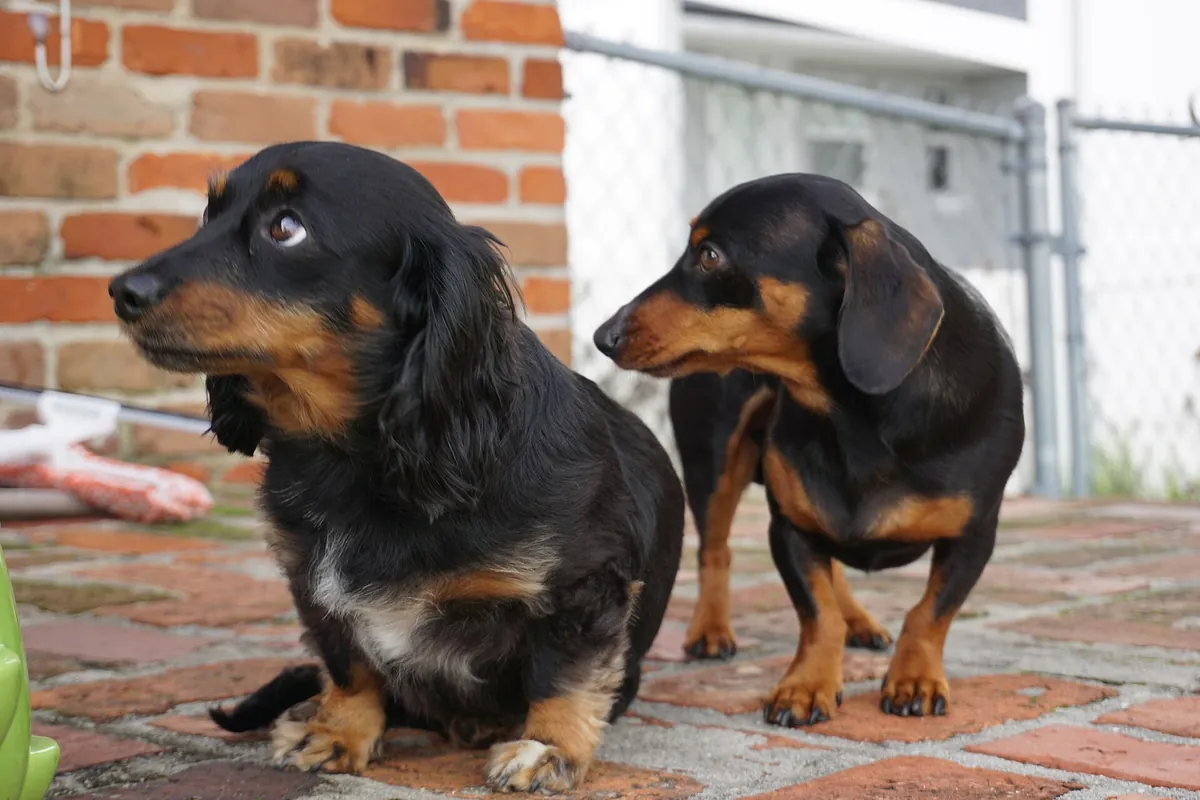
- Coat. Smooth, long or wiry, depending on what the parents carried. A Chiweenie with a wirehaired Dachshund parent can look scruffy and terrier-like (see the photo below).
- Color. Both parent breeds come in many colors and patterns, so a Chiweenie can be almost any of them: tan, red, cream, black and tan, chocolate, dappled and more.


Temperament: what a Chiweenie is like to live with
Both parents are devoted, alert little dogs with strong opinions. The AKC rates the Chihuahua 4 out of 5 and the Dachshund 5 out of 5 for affection with family, and both 5 out of 5 for barking and 4 out of 5 for watchdog instincts. The two differ most on strangers: the Chihuahua scores 2 out of 5 for openness to strangers, the Dachshund 4 (AKC Chihuahua; AKC Dachshund).
So a realistic picture of a Chiweenie is:
- A people dog. Most want to be with you, often on you. The AKC says Dachshunds “don’t do well as outdoor dogs” because they want to be with their humans.
- A doorbell with legs. Expect barking at visitors, delivery drivers and squirrels.
- Cautious with strangers. Some warm up fast; others take time. Let new people ignore the dog until it comes to them.
- Not a rough-play dog. The AKC rates the Chihuahua 1 out of 5 with young children. Small, long-backed dogs can be hurt by being dropped or squeezed, and a hurt or frightened dog may snap. A home with adults or calm older children is usually easiest.
- Mixed with other dogs. Many live happily with other pets, especially dogs they grew up with. Big-dog play can injure a small dog, so supervise and give the Chiweenie a safe retreat.
Breed is only part of the story. A genetic study of 18,385 dogs found that breed explains about 9% of the variation in behavior between individual dogs (Morrill et al., 2022). The dog in front of you matters more than the label.
Exercise needs
Small doesn’t mean no exercise. The AKC says Dachshunds need regular exercise “not only to stay fit, but also to build strong muscles to support and protect their back,” and that “two walks every day of moderate length should be sufficient.” For Chihuahuas, short, slow walks are enough, and the AKC says that if your dog is panting and struggling to keep up, “it’s time to pick him up and carry him home” (AKC Dachshund; AKC Chihuahua).
For most Chiweenies, that means two short-to-moderate walks a day, plus indoor games: sniffing games, food puzzles and short training sessions. A Dachshund nose loves a scent trail. In a UK survey of Dachshunds, dogs that got more than an hour of exercise a day had lower odds of back disease, and those that got under 30 minutes had higher odds (Packer et al., 2016). That study shows a link, not proof, but it’s a good reason to keep a Chiweenie moving.


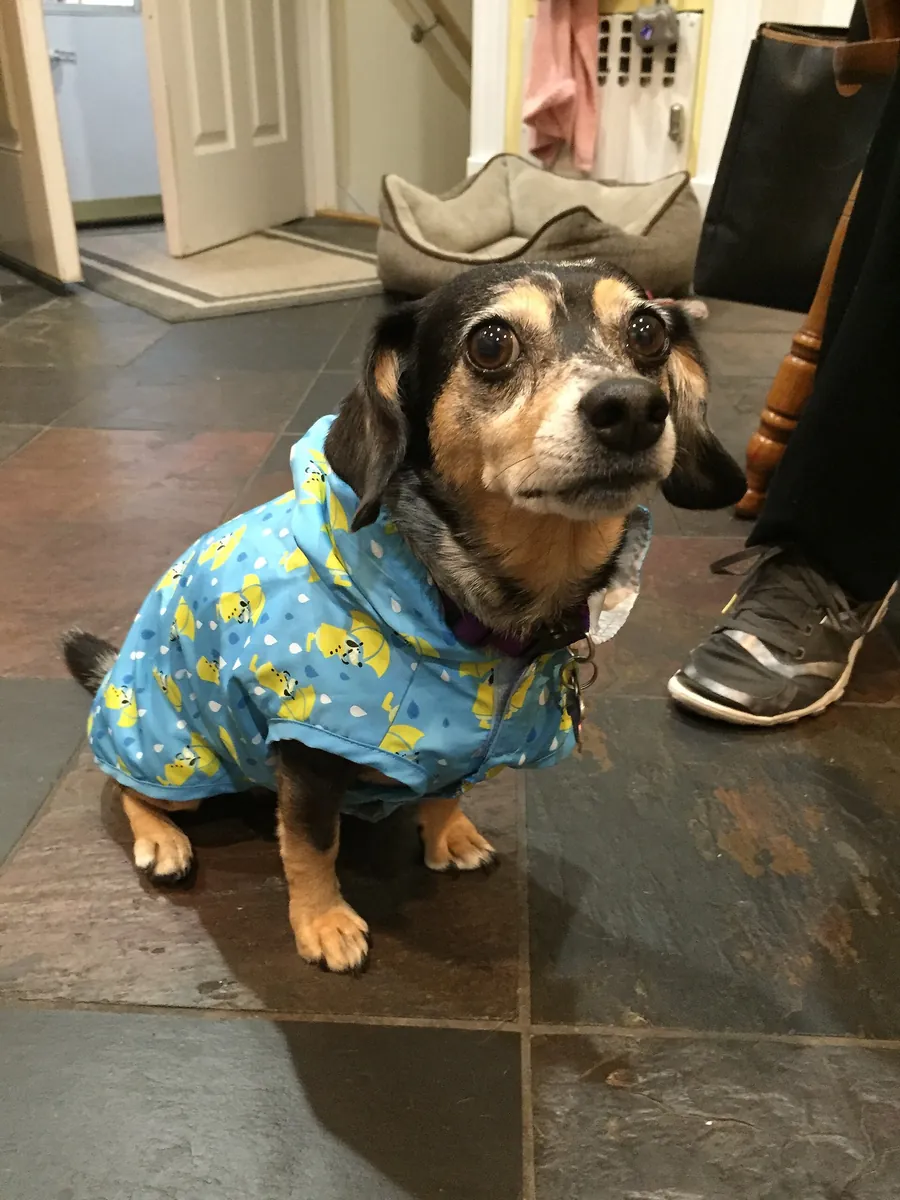
Cold and heat. The AKC says Chihuahuas need “special care” in cold weather. A short-coated Chiweenie may appreciate a sweater or coat outdoors in winter. Keep summer walks to the cooler parts of the day.
Grooming
Grooming is simple for most Chiweenies. It depends on the coat:
- Smooth coat: occasional brushing and a bath when needed. The AKC calls smooth Dachshunds “wash and wear.”
- Long coat: brush at least once a week to prevent tangles, as the AKC advises for long-haired Chihuahuas.
- Wiry coat: brush or comb once or twice a week and trim the beard and eyebrows now and then. A groomer can hand-strip it a few times a year if you like a tidy look.
- All coats: trim nails regularly (the AKC says monthly for Dachshunds), check and clean ears (drop ears can get infections), and brush teeth. More on teeth below.
Both parents get low shedding scores from the AKC (2 out of 5). No dog is truly hypoallergenic.


Health: back, teeth and the rest
There’s no published health study of Chiweenies themselves. What we know comes from the parents. Mixing two breeds doesn’t cancel out their risks; a Chiweenie can inherit problems from either side, or neither. And mixes aren’t automatically longer-lived: a 2024 UK study of more than 584,000 dogs found that 47.1% of purebred breeds had a longer median lifespan than crossbreds (McMillan et al., 2024). Tell your vet your dog is part Chihuahua and part Dachshund, and ask what to watch for.
Back disease (IVDD): the Dachshund side
Intervertebral disc disease (IVDD) is the big one. Cornell University’s College of Veterinary Medicine explains that the discs between the vertebrae cushion the spine, and that a disc can rupture and press on the spinal cord, with effects ranging “from mild discomfort to paralysis.” Dachshunds are first on Cornell’s list of commonly affected breeds (Cornell).
How common is it? In a survey of 2,031 Dachshunds led by the Royal Veterinary College, 15.7% had a vet-diagnosed case of IVDD. The rate varied by type, from 7.1% in standard wirehaired Dachshunds to 24.4% in standard smooth-haired ones, with miniature smooth and wirehaired Dachshunds at about 17% (Packer et al., 2016).
Why short legs matter: researchers at the University of California, Davis vet school found that one gene variant (an extra copy of a gene called FGF4) causes both short legs and early disc degeneration in dogs, and dogs carrying it had much higher odds of IVDD (Brown et al., 2017). A Chiweenie with short Dachshund legs may well carry it; one with longer Chihuahua legs may not. You can’t tell for sure by looking.
Signs to know. Cornell lists avoiding turning the head, walking to the food bowl but not bending to eat, a wobbly walk or weak back legs, and in severe cases being unable to use the back legs or losing bladder control. Call your vet the same day if you see these; Cornell says that if surgery is recommended, “don’t wait” (Cornell).
What helps, honestly. The advice isn’t settled:
- Keep your dog lean. The AKC calls this “extremely important” for Dachshunds, to avoid strain on the long back (AKC Dachshund).
- Keep your dog active. In the Dachshund survey, more daily exercise was linked with lower odds of IVDD (Packer et al., 2016).
- Stairs and furniture: ask your vet. The AKC advises never letting a Dachshund run up and down stairs or jump on and off furniture. The survey didn’t find that banning furniture-jumping protected dogs (dogs not allowed to jump actually had higher odds, a finding the authors call a starting point for more research, not advice). Many owners use pet ramps or steps anyway, and your vet can tell you what suits your dog.
- Lift with support. Support the chest and the back end together when you pick your dog up, so the long back isn’t left dangling.
Dental disease: both sides
Both parents are on the high-risk list for gum disease. In a study of 22,333 dogs under UK veterinary care, Chihuahuas had 2.09 times the odds and miniature Dachshunds 1.80 times the odds of periodontal (gum) disease compared with crossbred dogs, and smaller dogs generally had higher odds than bigger ones (O’Neill et al., 2021). The AKC says good dental care for Chihuahuas “is necessary and should include brushing your dog’s teeth” (AKC Chihuahua).
In plain terms: plan to brush a Chiweenie’s teeth, ideally daily, starting slowly with lots of praise, and ask your vet how often your dog needs a professional cleaning.
Other conditions the parents carry
| Chihuahua | Dachshund | |
|---|---|---|
| Conditions the AKC names | Heart problems (patent ductus arteriosus, mitral valve disease), eye disease, patellar luxation (loose kneecaps), idiopathic epilepsy | Back disc damage; ear infections (drop ears) |
| Health tests the AKC lists for breeding dogs | Patella (kneecap) evaluation, cardiac exam, eye exam | Patella evaluation, cardiac exam, eye exam |
| Weight | ”Some Chihuahuas are prone to getting overweight” | Must “not be allowed to become overweight” |
Sources: AKC Chihuahua; AKC Dachshund. Because both breeds share the same three recommended tests, ask any breeder for both parents’ kneecap, heart and eye results.
Training a Chiweenie
Expect a smart dog with its own agenda. The AKC calls Chihuahuas eager to please and responsive to “positive training practices,” and Dachshunds “very intelligent but also independent and often stubborn,” adding that they “do best with positive, reward-based training” and “will not react well to harsh commands or punishment” (AKC Chihuahua; AKC Dachshund). The American Veterinary Society of Animal Behavior recommends reward-based methods for all dogs and says “there is no evidence that aversive training is necessary” (AVSAB).
What helps most with this mix:
- Short, tasty sessions. A few minutes at a time, with tiny treats (count them in the day’s food).
- A “quiet” cue. Reward the pause after a bark rather than shouting over it.
- House training with patience. Take a small dog out often, especially after meals and naps, and reward outdoor success. A pee pad or indoor spot can help in bad weather.
- A reliable recall and “leave it.” That Dachshund nose can lead a Chiweenie off on a scent trail, so keep it leashed in unfenced areas.
- Gentle handling practice. Get your dog used to having its mouth, paws and back touched. It makes tooth brushing, nail trims and vet visits far easier.

Diet basics
Feed a complete food suited to your dog’s life stage and size, and measure every meal. Weight matters more for this mix than most, because of the back. The AKC says it’s “extremely important” that a Dachshund not become overweight, warns that “some Chihuahuas are prone to getting overweight,” and suggests giving table scraps sparingly, if at all, and avoiding cooked bones and high-fat foods (AKC Dachshund; AKC Chihuahua). Ask your vet what a healthy weight and body shape look like for your dog.
Chiweenie puppies: what to expect
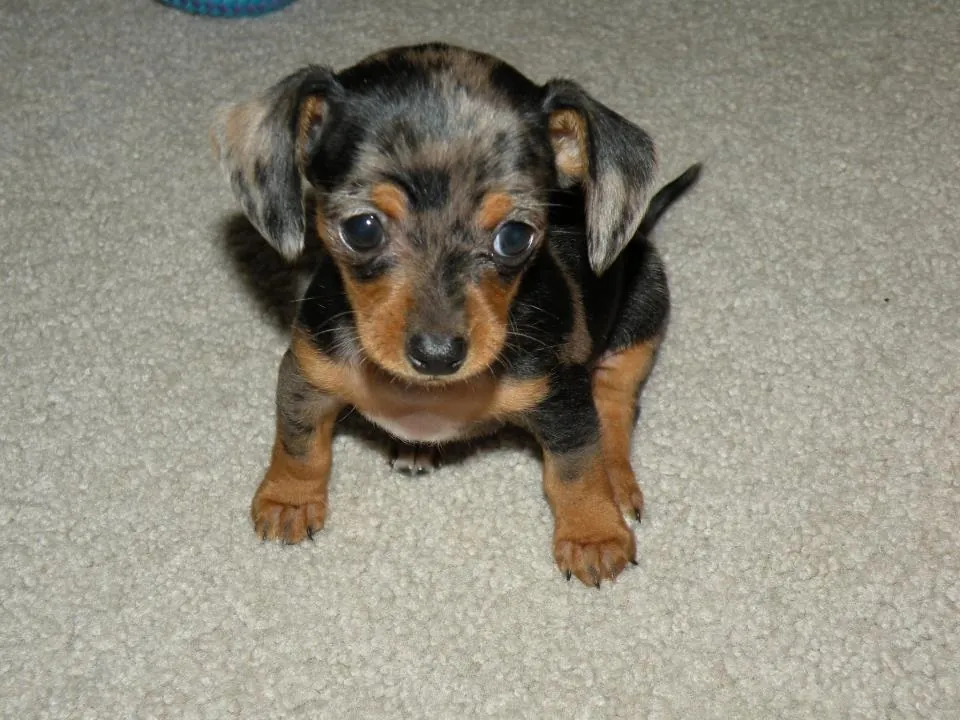

A puppy’s adult size, coat and ears are hard to predict, so a puppy is a bit of a surprise package. A few things to know:
- Meet the parents if you can, especially the Dachshund. Ask whether it is a miniature or a standard, and whether either parent has had back, knee, heart or eye problems.
- Puppies are tiny and fragile. Supervise them around children and bigger dogs, and set up a puppy-proof space.
- Start good habits early: gentle handling, tooth brushing, crate or bed training, and being carried with the back supported.
- Be wary of anyone selling “rare” colors or “teacup” Chiweenies. Selling on looks is a red flag (see the puppy-mill checklist below).
Who a Chiweenie suits, and who should skip it
Often a good fit if you:
- Want a small companion that’s easy to pick up and travel with.
- Are home much of the day. Both parents are people-focused.
- Enjoy short daily walks and a dog on your lap in the evening.
- Can handle some barking, or are willing to train around it.
- Will commit to daily tooth care and keeping your dog slim.
Maybe skip it if you:
- Have toddlers or young children who’d want to carry or roughhouse with the dog.
- Need a quiet dog for an apartment with thin walls.
- Are away long hours most days.
- Want a running or hiking partner for long distances. The AKC says Dachshunds aren’t built for distance running.
- Would struggle with possible vet costs for back or dental problems.
Is a Chiweenie right for me? A checklist for adopters 50+
Answer each one honestly. A “no” doesn’t rule you out; it tells you what to plan for.
- Yes / No: I can bend down or kneel to clip a leash, brush teeth and pick up a small dog safely, or I have a raised spot (a grooming table or bench) to do it on.
- Yes / No: I’m comfortable with a dog that may bark at the door and at noises.
- Yes / No: I’ll keep my dog lean and walk it every day, for its back’s sake.
- Yes / No: I’m willing to brush its teeth most days and budget for dental cleanings.
- Yes / No: I can set up my home to keep the dog from getting underfoot on stairs and at doorways (gates, a bed in a safe spot, a nightlight).
- Yes / No: My housing or HOA allows a dog.
- Yes / No: I’ve thought about who would care for my dog if I couldn’t, and I’ve asked them.
A word on falls
Small dogs and our own balance don’t always mix. Researchers at the US Centers for Disease Control and Prevention (CDC) estimated more than 86,000 fall injuries a year in the US involving pets, mostly dogs, with the highest rates in people 75 and older. For dogs, 31.3% of those falls came from tripping over the dog (Stevens et al., 2010). A 9-pound Chiweenie that follows you everywhere is exactly the kind of dog that ends up underfoot. Some simple habits help:
- Teach “wait” at doors and stairs, so you go first.
- Use a short, non-retractable leash, and don’t wrap it around your wrist.
- Put a bell on the dog’s collar and switch on a light before you get up at night.
- Give the dog a bed or mat in a spot that isn’t on your walking path.
These habits help your dog too: fewer leaps and tumbles on stairs is easier on that long back.

Costs to plan for
We couldn’t find a reputable source for Chiweenie puppy prices, so we don’t quote one. Adoption fees vary by shelter and rescue. For any dog, the ASPCA estimates about $1,391 a year in ongoing costs, more in the first year once one-time costs are added (ASPCA). For this mix, add room in the budget for dental care and the possibility of back treatment, and ask your vet whether pet insurance makes sense for you.
Adopting a Chiweenie: rescue tips and questions to ask
Bone Voyage is a publisher now and doesn’t place dogs, but we love helping people find the right one. Chiweenies and Chihuahua mixes turn up in shelters and rescues regularly. In a DNA study of 919 shelter dogs in Arizona and California, the Chihuahua was the second most common breed signature found (Gunter et al., 2018). Start with your local shelters and online adoption listings (search “Chiweenie,” “Chihuahua mix” and “Dachshund mix”), and check Chihuahua and Dachshund breed rescues through the AKC Rescue Network.
Shelter breed labels are often guesses. In the same study, when staff at one of the shelters guessed breed by looks, they identified more than one of a dog’s breeds correctly only 10.4% of the time (Gunter et al., 2018). So a dog listed as a “Chihuahua/Dachshund” may be something else, and a “Chihuahua mix” may turn out to be a Chiweenie. What matters is the dog: its size, health and temperament. Our guide to figuring out what breed your dog is explains DNA tests.
An adult Chiweenie has a real advantage: you can see its size, coat, energy and personality today.
Questions to ask a shelter or rescue
- Has this dog had any back pain, trouble with stairs, or a disc problem?
- When were its teeth last checked or cleaned? Any extractions?
- How does it react to being picked up and handled? To nail trims and tooth brushing?
- How much does it bark, and at what?
- How is it with visitors, children, other dogs and cats?
- Is it house-trained?
- Why was it given up, and will you take it back if it doesn’t work out?
Our 9 questions to ask when adopting a dog covers the general ones.
If you go to a breeder: how to avoid a puppy mill
- You can visit and meet the mother (and ideally the father) where the puppies are raised.
- The breeder tells you whether the Dachshund parent is a miniature or a standard.
- The breeder shows you the parents’ kneecap, heart and eye results, the tests the AKC lists for both breeds, and discusses any back problems in the family.
- Puppies aren’t sold before they’re weaned, and the breeder asks you questions too.
- The breeder will take the dog back at any age if you can’t keep it.
- No pressure, no “rare color” or “teacup” upcharges, and no handing over a puppy in a parking lot.
If a seller can’t tick these boxes, walk away.
Other Chihuahua and Dachshund mixes
- Jack Russell Chihuahua mix (Jack Chi), a lively small terrier cross.
- Chihuahua terrier mixes, several small crosses compared.
- Chihuahua Pomeranian mix (Pomchi), a fluffy toy-sized cross.
- Chihuahua Corgi mix, another long-backed Chihuahua cross.
- Maltese Chihuahua mix (Malchi), a soft-coated toy cross.
- Pitbull Chihuahua mix, a much bigger, sturdier cross.
- Golden Retriever Dachshund mix, a Dachshund cross on the bigger side.
For more small companions, see our small dog breeds guide and dog breeds for people over 50.
Give your dog a backup plan
A Chiweenie can easily live into its mid-teens, so it’s worth planning for who would care for your dog if you couldn’t. Small, bonded dogs can find a sudden move to strangers hard. Our guide What Happens to Your Dog When You Die walks you through it, and the free My Dog’s Backup Plan worksheet records your dog’s routine, vet, food, and quirks like “won’t use the stairs” or “barks at the mail carrier.” Bone Voyage is also building the pledge: a volunteer pledges to adopt a specific older adult’s dog if that person dies or can no longer care for it. A plan like this makes it far less likely that a beloved dog ends up in a shelter.
Frequently Asked Questions
What is a Chihuahua mixed with a Dachshund called?
Most people call it a Chiweenie, a blend of Chihuahua and wiener dog. You will also see Chiweeni, Chiwinnie, Chiwee, Doxihuahua and the joke name Mexican hotdog. It is a mix, not a breed, so none of these names is official. The AKC registers purebred Chihuahuas and Dachshunds, and mixed-breed dogs like a Chiweenie can be enrolled in its separate Canine Partners program.
What does a full-grown Chiweenie look like?
Usually a small dog with a body a little longer than it is tall, short legs, and either the Chihuahua’s big upright ears or the Dachshund’s soft drop ears, sometimes one of each. The coat can be smooth, long or wiry, because Chihuahuas come in smooth and long coats and Dachshunds in smooth, long and wirehaired (AKC Chihuahua; AKC Dachshund). Littermates can look quite different, so the only way to know what an adult will look like is to meet an adult.
How much do Chiweenies cost?
We could not find a reputable source for Chiweenie puppy prices, so we will not guess. Adoption fees are set by each shelter or rescue. The bigger cost is the life of the dog: the ASPCA estimates about $1,391 a year to care for a dog, plus one-time costs in the first year (ASPCA). A small dog with a long back and crowded teeth may also need dental cleanings and, sometimes, back care, so budget for the vet.
How big does a Chihuahua weiner dog mix get?
It depends mostly on the Dachshund parent. The AKC lists Chihuahuas at 5 to 8 inches tall and no more than 6 pounds, miniature Dachshunds at 5 to 6 inches and 11 pounds and under, and standard Dachshunds at 8 to 9 inches and 16 to 32 pounds. A Chiweenie from a miniature Dachshund will most likely stay under about 12 pounds; one from a standard Dachshund could be heavier. These are estimates from the parents, not measurements of the mix (AKC Chihuahua; AKC Dachshund).
How long do Chiweenies live?
No study has measured the mix. The AKC gives Chihuahuas a life expectancy of 14 to 16 years and Dachshunds 12 to 16 years, so a healthy Chiweenie can reasonably be expected to share that long small-dog lifespan. Being a mix does not guarantee a longer life (McMillan et al., 2024). Keeping the dog lean, caring for its teeth and seeing the vet regularly all help.
Do Chiweenies have back problems?
They can. The Dachshund parent carries a high risk of intervertebral disc disease (IVDD), where a disc in the spine bulges or ruptures. In a UK survey of 2,031 Dachshunds, 15.7% had a vet-diagnosed case (Packer et al., 2016), and a UC Davis study linked IVDD to a gene variant that also causes short legs (Brown et al., 2017). A Chiweenie may or may not inherit it. Keep the dog slim, keep it active, and call your vet at the first sign of back pain.
Do Chiweenies bark a lot?
Many do. The AKC gives both the Chihuahua and the Dachshund its top barking score of 5 out of 5, and both are alert watchdogs. Reward-based training can teach a quieter routine, but if you live with thin walls or neighbors close by, expect a vocal little dog and plan for it.
Is a Chiweenie a good dog for someone over 50?
Often, yes, if the fit is right. A Chiweenie is light to lift, happy with short walks, and devoted to its people. The cautions are real: a small dog underfoot is a trip risk (Stevens et al., 2010), the long back needs care, and the teeth need daily attention. A puppy can be a great fit if you have the time and energy for training, and an adult Chiweenie from a rescue lets you see its size, back and temperament today.
Before you go
A Chiweenie packs two famously big personalities into one small, devoted dog. Go in knowing it will probably bark, will certainly have opinions, and needs you to look after its back and teeth. Do that, and you may have a loyal lap dog for well over a decade.
Sources
- American Kennel Club, Chihuahua and Dachshund breed pages (sizes, life expectancy, trait ratings, health, care and recommended tests), AKC Canine Partners and the AKC Rescue Network
- Cornell University College of Veterinary Medicine, Riney Canine Health Center, Intervertebral disc disease
- Packer RMA, Seath IJ, O’Neill DG, De Decker S, Volk HA (2016). DachsLife 2015: an investigation of lifestyle associations with the risk of intervertebral disc disease in Dachshunds. Canine Genetics and Epidemiology 3:8. doi:10.1186/s40575-016-0039-8
- Brown EA et al. (2017). FGF4 retrogene on CFA12 is responsible for chondrodystrophy and intervertebral disc disease in dogs. PNAS 114(43):11476-11481. doi:10.1073/pnas.1709082114
- O’Neill DG et al. (2021). Epidemiology of periodontal disease in dogs in the UK primary-care veterinary setting. Journal of Small Animal Practice 62(12):1051-1061. doi:10.1111/jsap.13405
- McMillan KM et al. (2024). Longevity of companion dog breeds: those at risk from early death. Scientific Reports 14:531.
- Morrill K et al. (2022). Ancestry-inclusive dog genomics challenges popular breed stereotypes. Science 376(6592):eabk0639.
- Gunter LM, Barber RT, Wynne CDL (2018). A canine identity crisis: Genetic breed heritage testing of shelter dogs. PLOS ONE 13(8):e0202633.
- Stevens JA, Teh SL, Haileyesus T (2010). Dogs and cats as environmental fall hazards. Journal of Safety Research 41(1):69-73.
- American Veterinary Society of Animal Behavior, Position Statement on Humane Dog Training (2021)
- ASPCA, Cutting Pet Care Costs