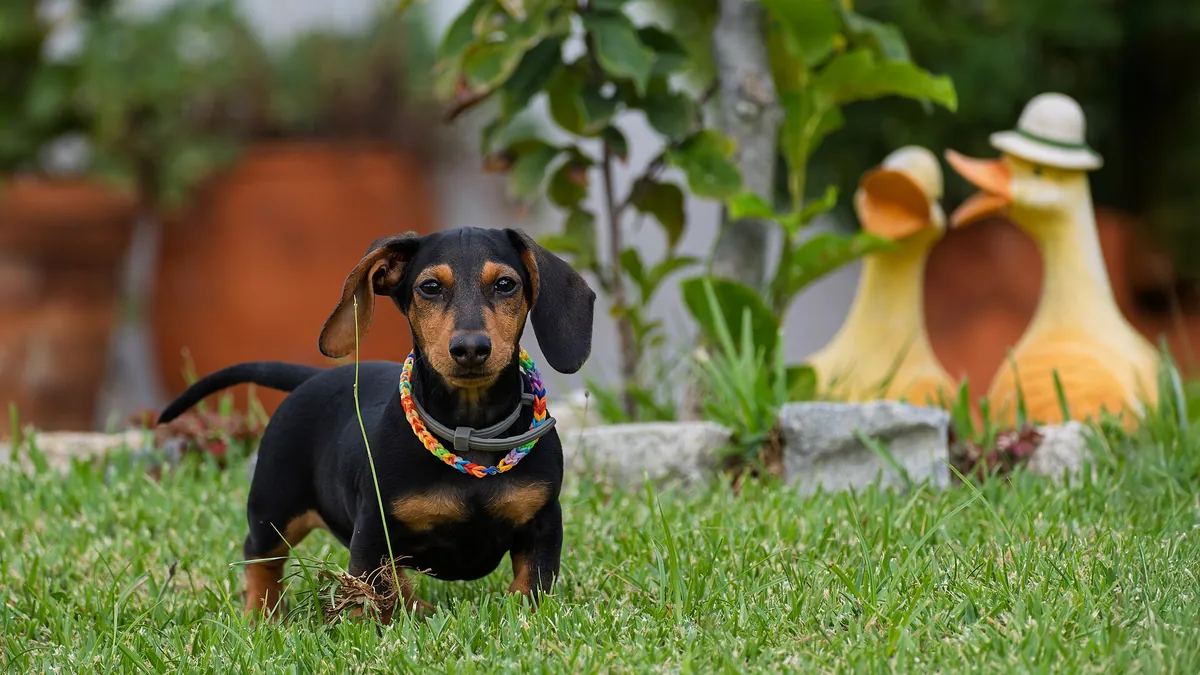

The Dachshund is the long, low, bold little hound most people know as the wiener dog or sausage dog. It comes in two sizes, standard and miniature, and three coats: smooth, wirehaired and longhaired. Under that comic silhouette is a real hunting dog with a big voice, a keen nose and a lot of opinions.
That mix of charm and backbone is why so many people over 50 fall for them, and why it pays to understand the breed before one comes home, whether from a breeder or a shelter. Here’s what the American Kennel Club, the Dachshund Club of America and veterinary researchers actually say about size, temperament, health and puppy care, so you know what you’re signing up for.
At a glance
- Sizes: standard, 8 to 9 inches tall and 16 to 32 pounds; miniature, 5 to 6 inches tall and 11 pounds and under (AKC Dachshund).
- Coats: smooth, wirehaired and longhaired (Dachshund Club of America breed standard).
- Life expectancy: 12 to 16 years, per both the AKC and the Dachshund Club of America.
- Popularity: the AKC ranks the Dachshund 6 of 210 breeds (AKC Dachshund).
- Biggest health issue to know about: back disease (IVDD). Keeping the dog lean and off stairs and furniture matters (Cornell).
- Recommended health tests: patella evaluation, cardiac exam and an ophthalmologist evaluation (AKC Dachshund).
- Good fit for: someone who wants a small, affectionate, funny companion and is home a good deal of the day.
Wiener dog, sausage dog, Doxie: what’s in a name
Yes, they’re all the same dog. An AKC article notes the Dachshund is “lovingly referred to as the ‘hot dog dog’, the ‘wiener dog,’ and the ‘sausage dog’,” and AKC writers also call the breed “Doxie” (AKC).
The real name is German. According to the AKC, “Dachshund” means “badger dog,” and the breed was developed to dig into a badger’s den, a job its long, low body was “custom-made” for (AKC Dachshund). The Dachshund Club of America’s history adds that the breed’s standard took shape in Germany in the late 1800s, that the club itself was formed in 1895, and that it is the eighth oldest member club of the AKC (DCA history). The club also describes the breed as one of very few hunting breeds that “can do it all – go to ground, track, flush game and retrieve.”
Two sizes, three coats
Standard and miniature
| Standard | Miniature | |
|---|---|---|
| Height | 8 to 9 inches | 5 to 6 inches |
| Weight | 16 to 32 pounds | 11 pounds and under |
| Life expectancy | 12 to 16 years | 12 to 16 years |
Source: AKC Dachshund breed page.
The breed standard is clear that the miniature is not a separate breed. Miniatures compete in a class division for dogs “11 pounds and under at 12 months of age and older,” and the standard size is “usually between 16 and 32 pounds” (DCA breed standard).
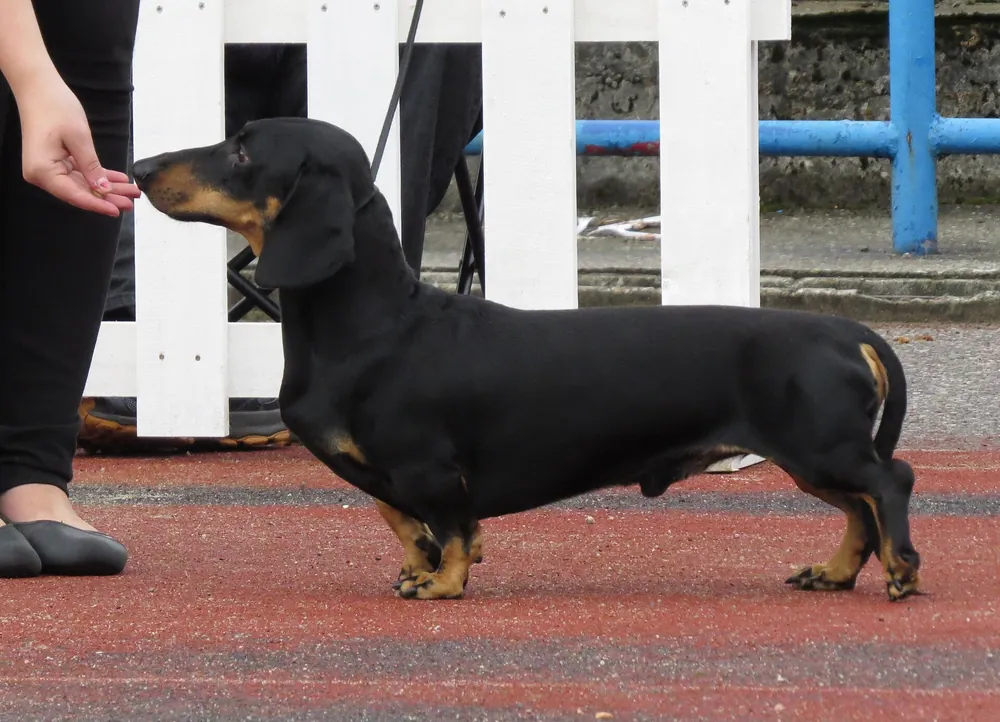

Smooth, wirehaired and longhaired
According to the breed standard (DCA):
- Smooth: “short, smooth and shining.”
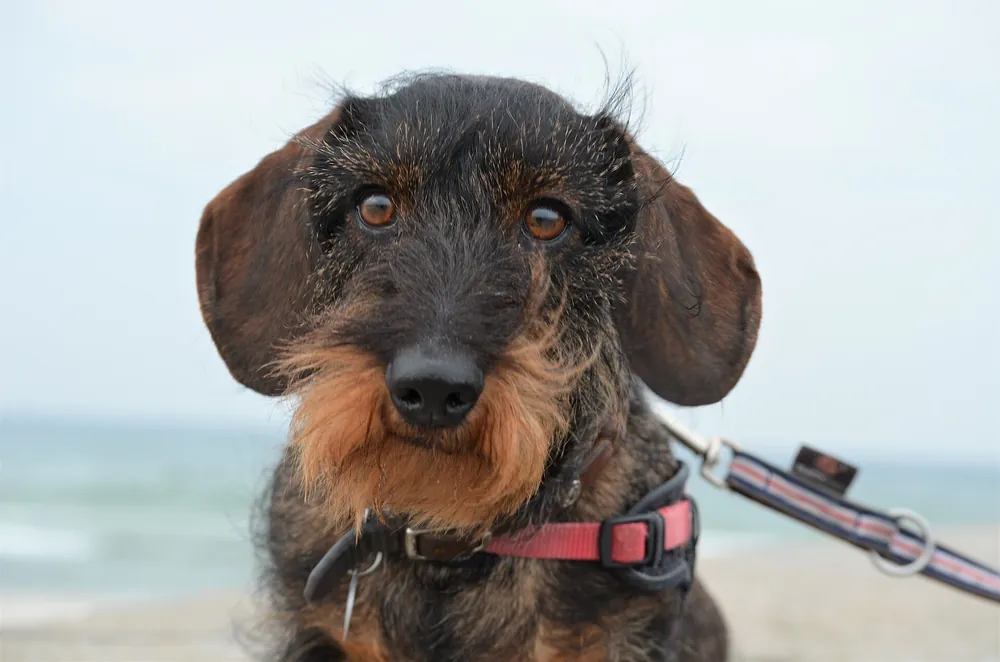
- Wirehaired: a tight, short, thick, rough, hard outer coat with a softer undercoat, plus a beard and eyebrows.
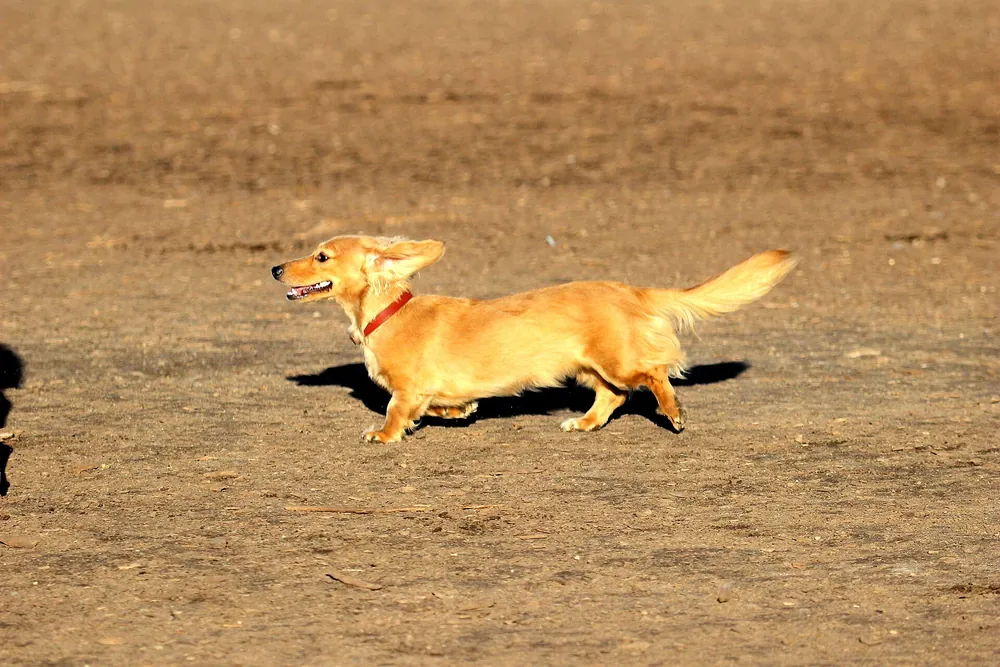
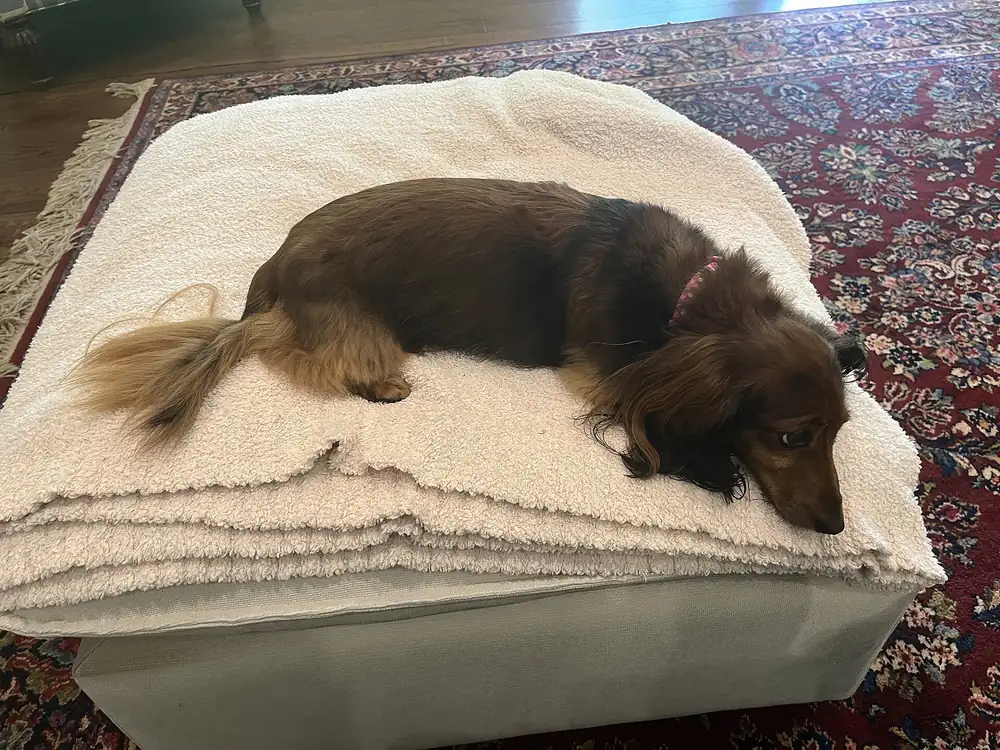
- Longhaired: sleek, glistening, often slightly wavy hair that is longer under the neck, on the chest, the ears and behind the legs, with a tail that forms “a veritable flag.”
If you’ve got your heart set on the long coat, our guide to the long-haired mini Dachshund goes deeper on that one variety.

Colors and patterns
The standard lists one-colored Dachshunds (red and cream), two-colored Dachshunds (black, chocolate, wild boar, gray or blue, and fawn or Isabella, each with tan or cream markings), and patterns including dapple (merle), brindle, piebald and sable (DCA breed standard). The standard also notes that partly or wholly blue eyes are acceptable in dapples, while they are a disqualification in piebalds. For a pet owner, color is a matter of taste. For a puppy buyer, it’s a reason to ask a breeder plenty of questions; see the red flags below.
Temperament: big dog in a small body
The breed standard describes the Dachshund as “clever, lively and courageous to the point of rashness,” and the club’s own summary for the public calls them “clever, a bit stubborn, and courageous to the point of rashness” (DCA breed standard, DCA public education). The AKC sums up the breed’s “bold, vivacious personality” (AKC Dachshund).
What that looks like at home:
- People-focused. The AKC says Dachshunds are very social and don’t do well as outdoor dogs, because they want to be with their humans.
- Independent thinkers. They’re “very intelligent but are also independent and often stubborn, so they can be a challenge to train” (AKC).
- Nose first. They have an excellent sense of smell and a strong prey drive. Bred to follow a trail without distraction, they may tune you out when something more interesting is going on. A secure leash or fence is your friend.
- Sensitive. The AKC notes they love to give and receive affection, do best with positive, reward-based training, and “will not react well to harsh commands or punishment.” Patience and consistency are the key.
The standard says “any display of shyness is a serious fault,” so a well-bred Dachshund should be confident. A rescue Dachshund with a rough past may need time to get there, and that’s fine.

Health: the back comes first
The AKC calls the Dachshund “generally a healthy breed,” and the club lists the most common health issues as intervertebral disc disease, hemangiosarcoma (a cancer of blood vessel cells) and mitral valve disease (a heart valve condition) (DCA health). The AKC also notes that, like most dogs with drop ears, Dachshunds can get ear infections if their ears aren’t kept clean. Its recommended screening tests are a patella evaluation, a cardiac exam and an ophthalmologist evaluation (AKC).
Intervertebral disc disease (IVDD)
IVDD is the one every Dachshund owner should understand. Cornell University’s College of Veterinary Medicine explains that the discs between the vertebrae cushion the spine, and that a disc can rupture and push into the spinal cord, often called a disc herniation. Effects range “from mild discomfort to paralysis” (Cornell).
Cornell reports that the American College of Veterinary Surgeons “estimates that Dachshunds alone account for 40 to 75% of all cases of IVDD,” and that these dogs may be affected by 3 to 6 years of age.
Signs Cornell describes: avoiding turning the head, walking to the food bowl but not bending to eat, a wobbly walk or weakness in the back legs, and in severe cases being unable to use the back legs or losing bladder control. A dog in back pain may also snap or growl, even a sweet one. At the first sign of back discomfort, call your vet. Cornell is blunt that if surgery is recommended, “don’t wait,” because delay lowers the chance the spinal cord recovers.
What you can do every day (from the AKC, DCA and Cornell):
- Keep your Dachshund lean. The AKC calls this “extremely important,” to avoid strain on the long back that can lead to slipped or ruptured discs.
- Limit stairs and jumping. The AKC says never allow your Dachshund to run up and down stairs or jump on or off furniture. Ramps and pet steps can help.
- Build muscle with walking. Regular exercise builds the muscles that support the back. Cornell notes that “walking is safe for any dog. Leaping for a thrown toy, not so much.”
None of this means your Dachshund will have back trouble. It means you can tilt the odds, and you’ll know what to watch for.
Exercise, grooming and daily care
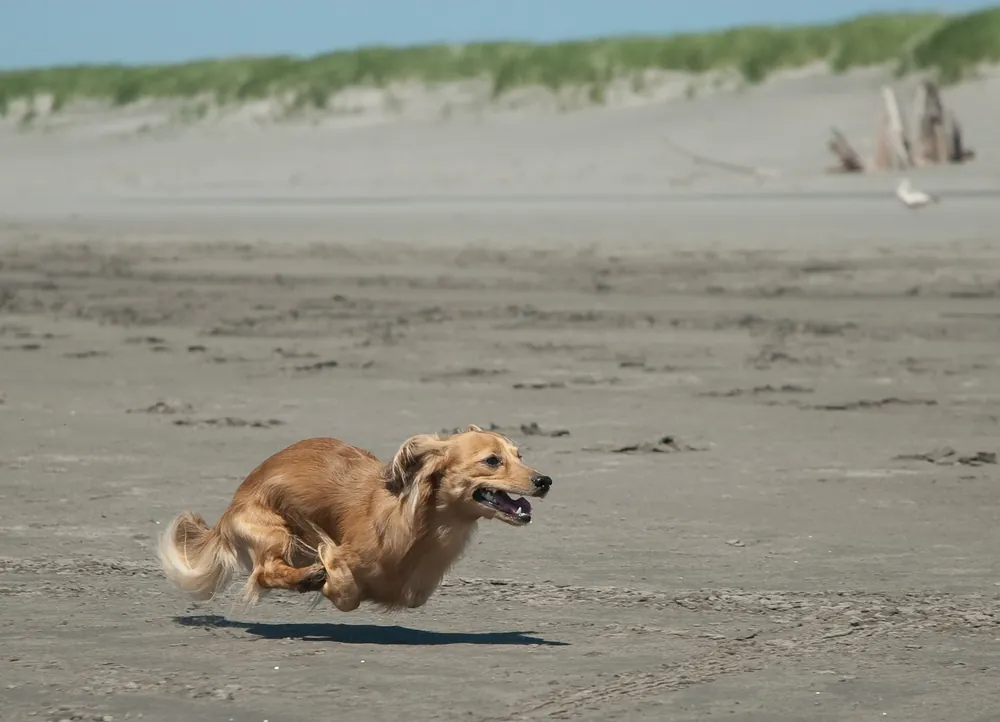
Exercise. Small doesn’t mean sedentary. The AKC says two walks a day of moderate length should be enough, and the club recommends a daily routine of on-leash walks and free play, with less exercise for seniors (AKC, DCA health).

Food. The club says Dachshunds “should always be fed on a schedule and never allowed to free feed,” because their “ravenous appetites” make weight gain easy. The AKC’s advice is to “ignore the pleading eyes,” go easy on table scraps, and keep food well out of reach of that nose.
Grooming. The AKC calls Dachshunds moderate shedders with little or no body odor (AKC). Grooming depends on the coat:
- Smooth: “somewhat ‘wash and wear,’” just a wipe with a towel or hound glove.
- Longhaired: more frequent brushing, depending on the coat’s thickness.
- Wirehaired: brushing or combing once or twice a week, a trim of the beard and eyebrows, and plucking or hand-stripping a few times a year to look its best.
- All coats: trim nails every month and keep ears clean. The club recommends cleaning teeth at least once a week and a vet wellness exam at least once a year (DCA health).
Bringing home a Dachshund puppy
If you’re searching for a Dachshund puppy, here’s what the breed’s experts emphasize for the first year:
- Go gently on growing bodies. The club advises caution exercising a puppy and building activity up gradually until about a year old, when bones and muscles are more developed (DCA health).
- Start the no-jumping habit early. It is much easier to teach a puppy to use a ramp than to retrain an adult.
- Socialize and train with rewards. Use positive, reward-based training from the start, and keep sessions short and fun. Harsh corrections backfire with this sensitive breed (AKC).
- Feed on a schedule and keep the puppy lean from the start.
Puppies are a lot of work for anyone. An adult or senior Dachshund from a shelter or breed rescue often comes with its personality and size already settled, and some are already house-trained. That’s worth weighing honestly.
Lifespan
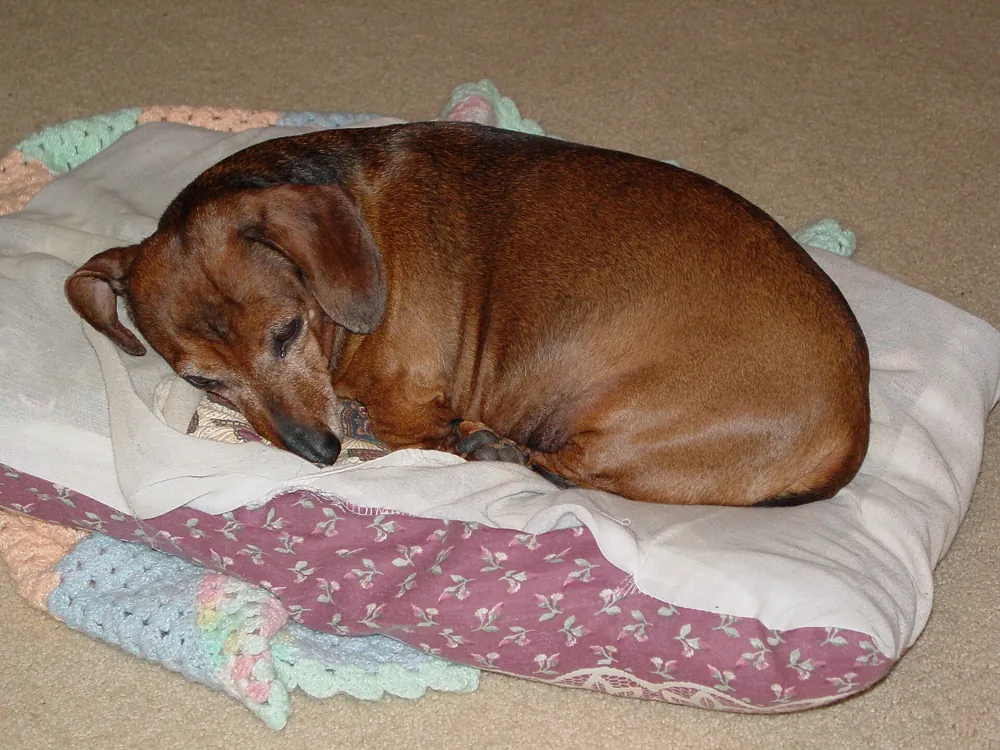
Both the AKC and the Dachshund Club of America give a life expectancy of 12 to 16 years (AKC, DCA health). The club ties that to good regular veterinary care, a quality diet, and moderate exercise to maintain muscle tone. That range covers both sizes; we found no separate official figure for miniatures versus standards. A long-lived breed is good news, and it’s also a reason to plan for your dog’s later years, and for who would care for them if you couldn’t.

Adopting a Dachshund
Rescue or breeder?
Dachshunds are popular, and some do end up in shelters and breed rescues, including adults and seniors. Search shelter listings for “Dachshund” and “Dachshund mix,” since breed labels are a best guess. If you’re curious what your shelter dog really is, our guide to figuring out your dog’s breed walks through the options.

If you go to a breeder, the Dachshund Club of America keeps a breeder directory, and you should ask to see the parents’ results for the AKC’s recommended tests: patella, cardiac and eye exams.
Questions to ask a shelter or rescue
- Has this dog ever had back pain, a disc problem, or trouble with stairs?
- What does the dog weigh now, and what does the vet think it should weigh?
- How does it do with children, cats, other dogs and visitors? Does it bark a lot?
- Is it house-trained, and how does it handle being left alone?
- Any known health problems, and what does the adoption fee include?
- Is there a foster-to-adopt option, and what happens if it doesn’t work out?
Red flags in “Dachshund puppies for sale” ads
- No chance to meet the mother or see where the puppies are raised.
- No health screening on either parent, or vague answers about it.
- Pushy marketing of “rare” colors. The breed standard sets specific rules for dapples and piebalds, including eye color, and a breeder chasing color alone may not be screening for health.
- “Teacup” or “micro” claims. The standard has two sizes, standard and miniature.
- Pressure to pay a deposit right away, or an offer to ship a puppy sight unseen.
Is a Dachshund the right dog for you?
Probably a great fit if:
- You want a small, affectionate dog that wants to be with you.
- You enjoy a couple of moderate walks a day.
- You can be patient and consistent with a clever, sometimes stubborn dog.
- You can set up your home with ramps or steps and keep the dog off the stairs.
Think it over carefully if:
- Barking would be a problem where you live. The breed standard credits the Dachshund with a “loud tongue,” hunting-speak for a big voice.
- Lifting and carrying a dog up and down stairs would be hard for you, especially if your home has a lot of them.
- A big vet bill would be a crisis. Back surgery is a real possibility in this breed, so price pet insurance early.
- You’d like an off-leash dog. That nose and prey drive make a leash or fence a must.
Love the look but want something different? Our guide to the Daug, a Dachshund and Pug mix, covers one of the most common Dachshund crosses. If it’s a softer, Golden-style face you’re after, see our guide to the Golden Retriever Doxie mix, or Golden Dox.
Frequently Asked Questions
Is a wiener dog the same as a Dachshund?
Yes. “Wiener dog,” “sausage dog” and “Doxie” are affectionate nicknames for the Dachshund, and the AKC uses them too. The breed’s real name comes from German: the AKC explains that Dachshund means “badger dog,” because the breed was developed to hunt badgers underground.
How big do Dachshunds get?
The AKC lists two sizes. Standard Dachshunds are 8 to 9 inches tall and weigh 16 to 32 pounds. Miniatures are 5 to 6 inches tall and weigh 11 pounds and under. The breed standard says miniatures are not a separate breed, just a class division for dogs 11 pounds and under at 12 months of age and older.
How long do Dachshunds live?
Both the AKC and the Dachshund Club of America give a life expectancy of 12 to 16 years. The club says good regular veterinary care, a quality diet and moderate exercise to keep good muscle tone are critical to reaching it.
Why do Dachshunds have back problems?
Their long back makes them prone to intervertebral disc disease, or IVDD, where a disc between the vertebrae ruptures or bulges and presses on the spinal cord. Cornell’s veterinary college reports an American College of Veterinary Surgeons estimate that Dachshunds alone account for 40 to 75% of all IVDD cases. Keeping your Dachshund lean and limiting stairs and jumping off furniture are the everyday steps the AKC and Cornell recommend.
Are Dachshunds easy to train?
Not always. The AKC calls them very intelligent but independent and often stubborn, with a strong nose and prey drive. They do best with patient, positive, reward-based training, and the AKC notes they are sensitive and do not react well to harsh commands or punishment.
What should I know before getting a Dachshund puppy?
Plan to protect that long back from day one. The Dachshund Club of America advises building a puppy’s activity up gradually until about a year old, feeding on a schedule rather than leaving food out, and keeping your Dachshund from getting overweight. The AKC adds that Dachshunds should not run up and down stairs or jump on and off furniture.
Before you go
A Dachshund can easily be with you for well over a decade, which is a wonderful thing. It’s also a good reason to decide now who would step in for your dog if you ever couldn’t. That’s what our A Home for Life guide is about, and the free My Dog’s Backup Plan profile helps you write down everything that person would need to know, including your Dachshund’s back-care routine. For more breed profiles, browse our breeds and adoption guides.
Sources
- American Kennel Club, Dachshund breed page (height, weight, life expectancy, popularity rank, recommended tests, history, health, nutrition, grooming, exercise, training)
- American Kennel Club, Dachshund Names: What to Name Your Dachshund Puppy (the “wiener dog,” “sausage dog” and “Doxie” nicknames)
- Dachshund Club of America, Breed standard (sizes, coat varieties, colors and patterns, temperament)
- Dachshund Club of America, Health (life expectancy, diet, exercise, dental care, wellness exams, common health issues)
- Dachshund Club of America, Dachshund history and public education (history, club founding, temperament summary)
- Cornell University College of Veterinary Medicine, Riney Canine Health Center, Intervertebral disc disease (how IVDD works, signs, treatment, prevention, ACVS estimate for Dachshunds)