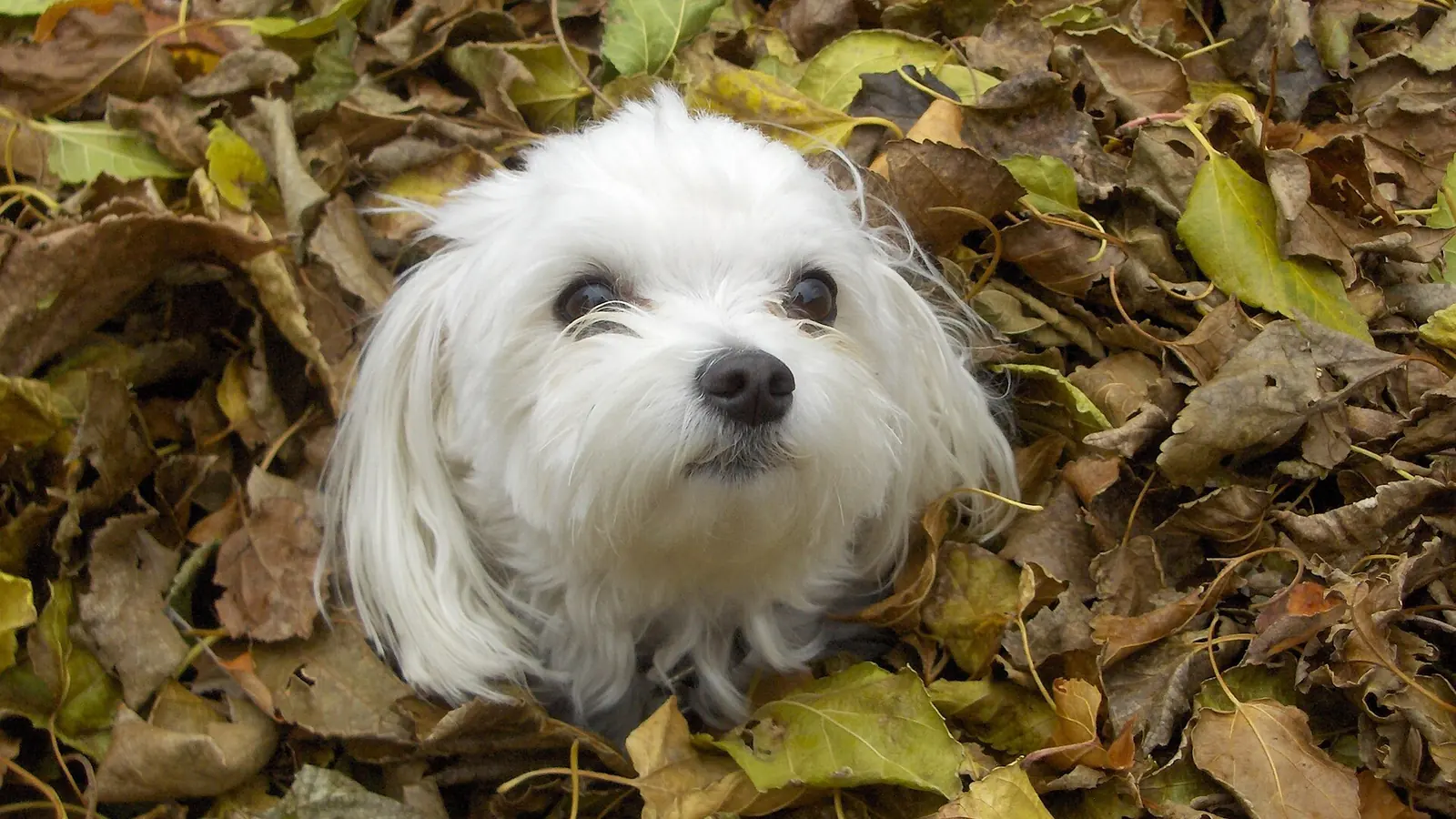

A Maltese and Chihuahua mix dog, usually called a Malchi, is a cross between two of the smallest toy breeds: the silky white Maltese and the alert, big-eared Chihuahua. Expect a very small companion, usually somewhere under about 9 inches tall and in the single-digit pounds, who wants to be wherever you are. It isn’t a recognized breed, so size, coat, color and personality can land anywhere between the two parents. Plan on daily tooth care, regular brushing, some barking, and gentle handling.
You’ll also see it spelled Mal-Chi or Malchihuahua, or listed simply as a “Maltese mix” or “Chihuahua mix” at a shelter. Most pages about the Malchi repeat size and weight figures with no source behind them. This guide sticks to what the AKC, veterinary researchers and animal-welfare groups actually say about the two parent breeds, is honest about what nobody can predict, and covers adopting a Malchi, with a frank checklist for people over 50. Bone Voyage exists to help people 50+ adopt, keep, and thrive with dogs, and tiny dogs like this one are a common choice for exactly that stage of life.
Malchi quick facts
Every figure below is for a parent breed, from the AKC or a cited study. None is a measurement of the mix itself.
- Also called: Malchi, Mal-Chi, Malchihuahua, Maltese Chihuahua mix. Informal names, not a recognized breed.
- Size (parent breeds): Maltese 7 to 9 in, under 7 lb (AKC); Chihuahua 5 to 8 in, no more than 6 lb (AKC).
- Lifespan (parent breeds): 12 to 15 years for the Maltese, 14 to 16 for the Chihuahua (AKC). Not documented for the mix.
- Energy (AKC ratings): 3 out of 5 for the Maltese, 4 for the Chihuahua.
- Barking (AKC ratings): 3 out of 5 for the Maltese, 5 for the Chihuahua.
- Shedding (AKC ratings): 1 out of 5 for the Maltese, 2 for the Chihuahua. Low shedding is not the same as allergy-free.
- Coat grooming (AKC ratings): 4 out of 5 for the Maltese, 1 for the Chihuahua. Your Malchi’s coat decides how much brushing it needs.
- Good with young children (AKC ratings): 3 for the Maltese, 1 for the Chihuahua. Tiny dogs need gentle handling.
- Health to ask about: teeth, kneecaps, the windpipe, a liver shunt, a soft spot on the skull, and low blood sugar in tiny puppies. Sources below.
- Good fit for: someone home much of the day who wants a lap-sized shadow and will brush its teeth every day.
Where the Malchi comes from
The Malchi is a deliberate cross, usually sold as a “designer” dog. It isn’t on the AKC’s list of recognized breeds, and there is no breed standard, parent club or health-testing program for it. Some sites say Maltese and Chihuahuas were first crossed on purpose about 20 years ago, but none of them cites a source, and we couldn’t find a reliable record, so we don’t guess. What we can describe well is the two parents.
The Maltese side
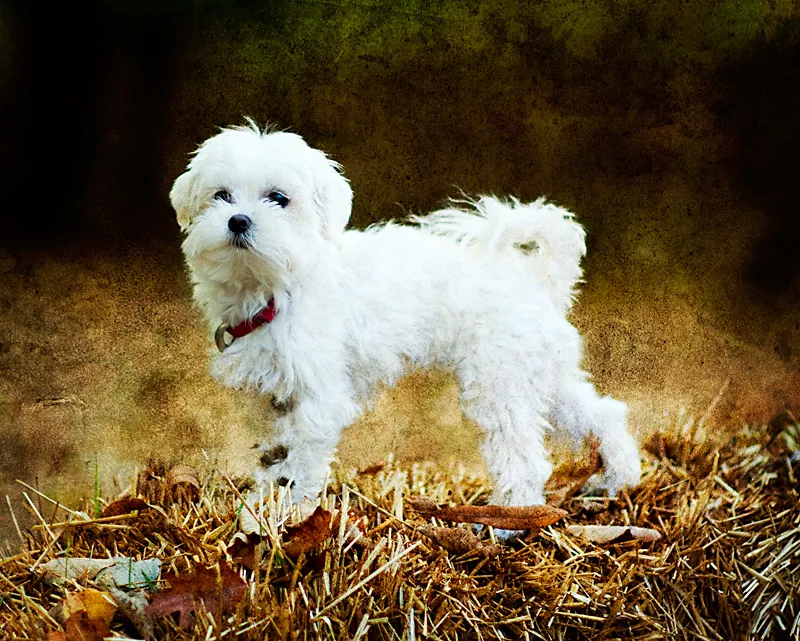
The Maltese is one of the oldest toy breeds. The AKC says it was likely brought to the Mediterranean island of Malta by the Phoenicians, that the Greeks depicted it on pottery and Aristotle called it “perfectly proportioned,” and that it was a favorite lapdog of Roman ladies (AKC Maltese). The AKC recognized it in 1888. The standard describes a dog “covered from head to foot with a mantle of long, silky, white hair,” weighing under 7 pounds, “with from 4 to 6 pounds preferred,” and a temperament that is “gentle-mannered and affectionate” (AKC Maltese standard). Our Maltese dog guide covers the breed in more depth.
The Chihuahua side
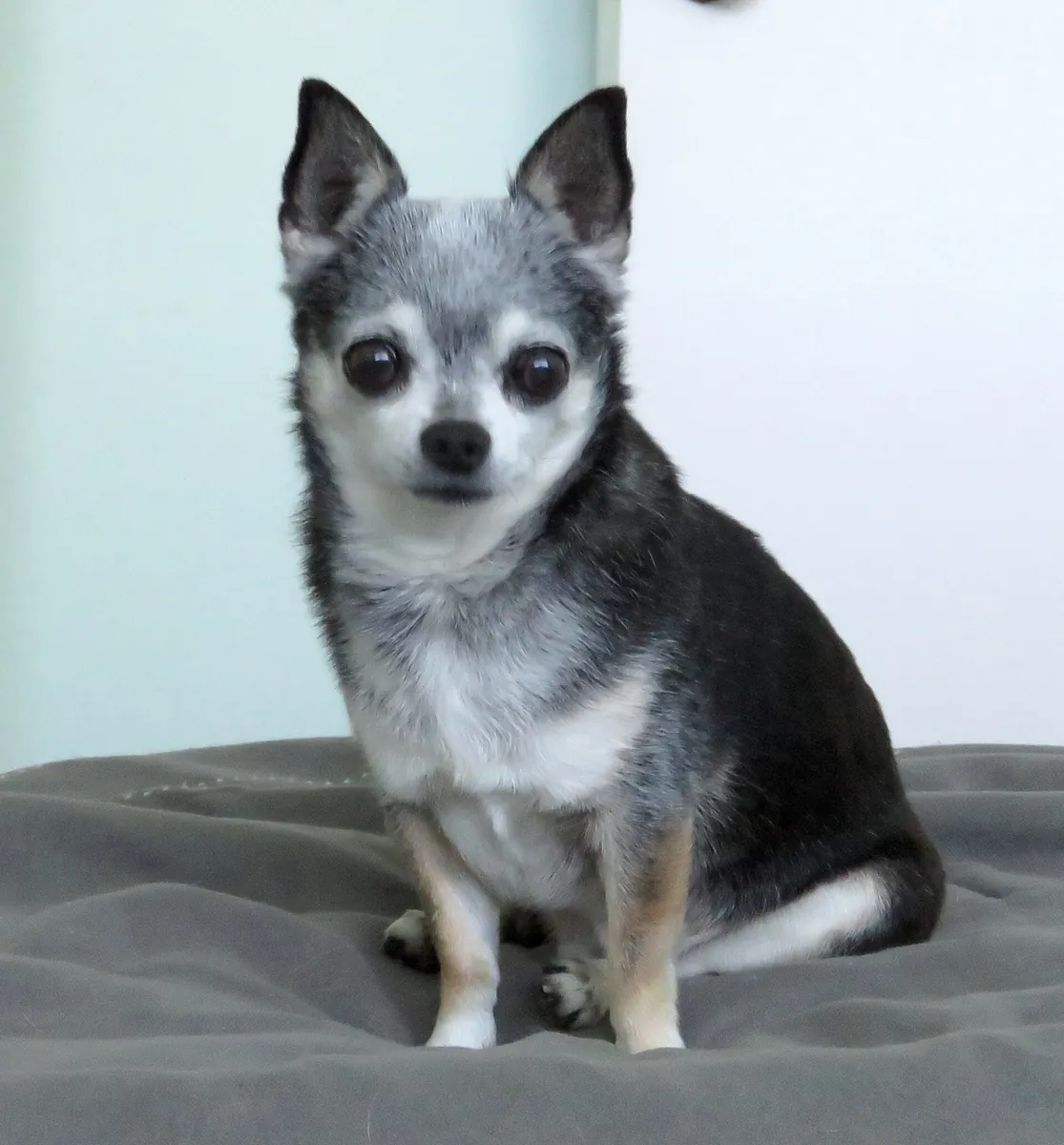
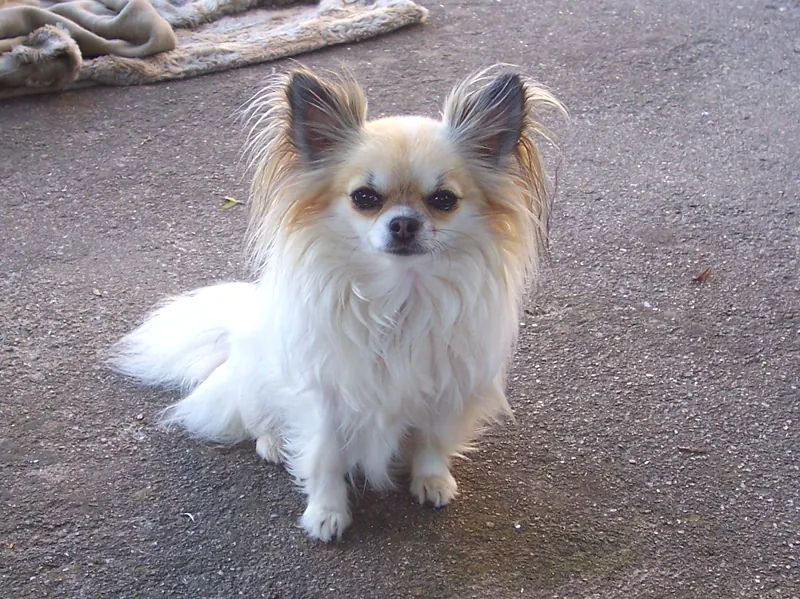
The AKC says that about a thousand years ago the Toltecs of Mexico kept the Techichi, “a larger, heavier ancestor of today’s Chi,” that the Aztecs later refined it into a smaller dog, and that Americans found many of the little dogs in the Mexican state of Chihuahua in the mid-1800s. The first AKC-registered Chihuahua was recorded in 1908, and the breed was recognized in 1904 (AKC Chihuahua). The standard calls for a “well rounded ‘apple dome’ skull, with or without molera,” and disqualifies any dog over 6 pounds. Chihuahuas come in two coats, smooth and long, and in many colors (AKC Chihuahua standard). Our Chihuahua guide and long-haired Chihuahua guide have more.

Maltese vs Chihuahua vs Malchi
AKC registry figures and the AKC’s 1 to 5 trait ratings (5 = most). The Malchi column is the range between its parents, not measured data.
| Maltese | Chihuahua | Malchi (Maltese x Chihuahua) | |
|---|---|---|---|
| AKC recognized | Yes (1888) | Yes (1904) | Not a recognized breed |
| Height | 7 to 9 in | 5 to 8 in | Varies; parent span about 5 to 9 in |
| Weight | Under 7 lb (4 to 6 preferred) | No more than 6 lb | Varies; parent standards top out near 7 lb, pet dogs often heavier |
| Life expectancy | 12 to 15 yrs | 14 to 16 yrs | Not studied |
| Coat | Long, silky, single, white | Smooth or long; many colors | Anywhere from smooth to long and silky; white or colored |
| Skull | Slightly rounded | ”Apple dome,” with or without molera | Anywhere in between |
| Affectionate with family | 5 | 4 | Not rated |
| Good with young children | 3 | 1 | Not rated; supervise |
| Good with other dogs | 3 | 3 | Not rated; ask |
| Openness to strangers | 3 | 2 | Not rated |
| Watchdog / protective | 4 | 4 | Not rated |
| Playfulness | 3 | 4 | Not rated |
| Energy | 3 | 4 | Not rated |
| Trainability | 3 | 3 | Not rated |
| Barking | 3 | 5 | Not rated |
| Shedding | 1 | 2 | Not rated |
| Coat grooming | 4 | 1 | Not rated |
Sources: AKC Maltese, AKC Chihuahua, AKC Maltese standard, AKC Chihuahua standard.
The pattern to notice: both parents are tiny, affectionate and quick to sound the alarm (both rate 4 as watchdogs). Where they differ is coat and chattiness. The Maltese needs far more grooming; the Chihuahua rates higher for barking and is warier of strangers and young children. So one Malchi may be a silky, easygoing lapdog and its littermate a smooth-coated little sentry.

Appearance and size
How big does a Malchi get?
Put the AKC parent figures together and you get a dog roughly 5 to 9 inches at the shoulder, with both parent standards topping out around 6 to 7 pounds (AKC Maltese; AKC Chihuahua). Pet dogs don’t always read the standard, though. In a UK study of 11,647 Chihuahuas under veterinary care, the median adult weight was 3.4 kg (about 7.5 pounds), and adults ranged from 0.8 to 9.8 kg, about 2 to 22 pounds (O’Neill et al., 2020). Other websites quote Malchi ranges such as “5 to 12 pounds” or “6 to 12 inches.” We found no study behind those numbers.
If size matters for your lap, your lease, your car or your arms, adopt an adult. You can see exactly what you’re getting.
Coat and color
The parents’ coats are very different. The Maltese has a single coat, with no undercoat, that hangs long, flat and silky, and it is always white (AKC Maltese standard). The Chihuahua comes in a smooth coat or a long coat, in “many colors and patterns” (AKC Chihuahua). A Malchi can have a short, smooth coat, a soft medium coat, or a longer silky one, in white, cream, fawn, black, brown or a mix. A fluffy puppy coat is not a firm preview of the adult coat, so ask to see both parents.
Head and face
The Chihuahua standard calls for an “apple dome” skull and a muzzle that is “moderately short, slightly pointed” (AKC Chihuahua standard). You’ll also hear “deer-head” used for Chihuahuas with a longer face and flatter skull; that’s an informal pet-owner term, not a type in the AKC standard. The Maltese has a medium-length, fine, tapered muzzle (AKC Maltese standard). A Malchi’s face can land anywhere in between.

Temperament: what to realistically expect
These are registry descriptions of the purebred parents, not predictions for any one mix.
The Maltese side. The AKC describes the Maltese as playful, charming and adaptable, rates it 5 out of 5 for affection with family, and says that in centuries as companions Maltese “have learned how to get exactly what they want from their people” (AKC Maltese).
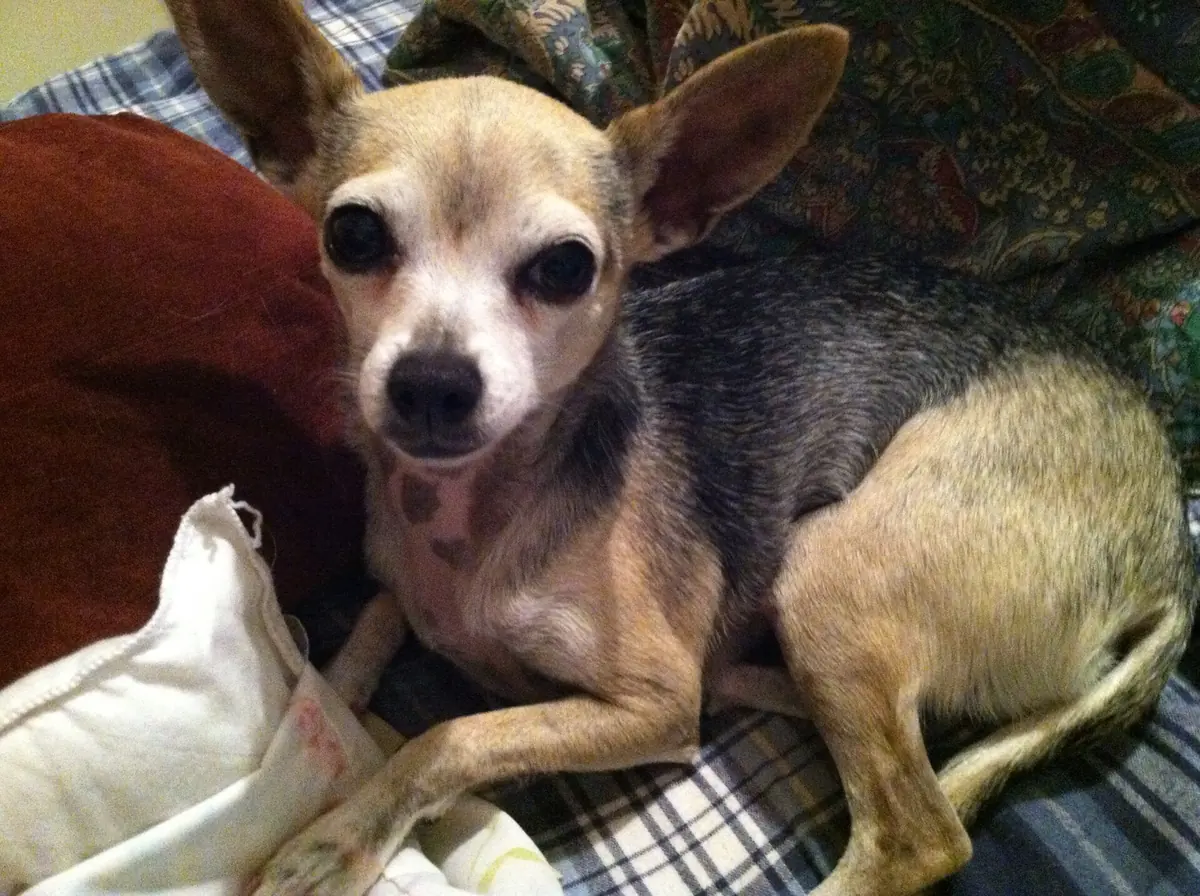
The Chihuahua side. The AKC describes “loyalty, charm, and big-dog attitude” in a dog of “terrier-like demeanor,” rates it 4 out of 5 for affection, 2 for openness to strangers and 1 for being good with young children, and says Chihuahuas are “too small for roughhousing with kids” (AKC Chihuahua).
What the science says about breed and behavior. A 2022 study in Science surveyed owners of 18,385 dogs and genotyped 2,155. Breed explained just 9% of the behavioral differences between individual dogs (Morrill et al., 2022). A label is a weak guide to the dog in front of you.
In daily life:
- Family: expect a little shadow who wants your lap.
- Strangers: many Malchis are wary of new people at first and announce every visitor. Let the dog choose to approach.
- Children: a very small dog can be hurt if it’s dropped or stepped on. Supervise visiting grandchildren and teach them to sit on the floor to cuddle.
- Other pets: both parents rate 3 out of 5 with other dogs. Ask how this dog has done with dogs and cats, and be careful around much larger dogs.
- Barking: the Chihuahua side rates 5 out of 5. Ask a foster home how vocal this particular dog is.
Exercise needs
Modest, but not zero. The AKC says Maltese “require only occasional exercise,” with daily walks or play in a fenced yard, or even indoors, usually enough (AKC Maltese). It says the Chihuahua “can usually get enough exercise in a very small space,” that short, slow walks keep it in condition, and adds a useful stop sign: “If your dog is panting and working hard to keep up, it’s time to pick him up and carry him home” (AKC Chihuahua).
In practice, most Malchis do well with:
- Two short walks a day, at the dog’s pace. Sniffing counts.
- Indoor play: fetch down a hallway, gentle tug, hide-and-seek with treats.
- Five or ten minutes of training games, which tire a small dog’s brain as much as a walk.
Harness over collar. Cornell lists switching from neck collars to harnesses among the lifestyle changes for dogs with tracheal collapse, which is common in toy and small breeds (Cornell). Ask your vet whether a harness makes sense for yours.
Cold weather. The AKC says “special care must be taken in cold weather” with Chihuahuas (AKC Chihuahua). The ASPCA suggests a coat or sweater for short-haired dogs and advises never shaving a dog down to the skin in winter (ASPCA).
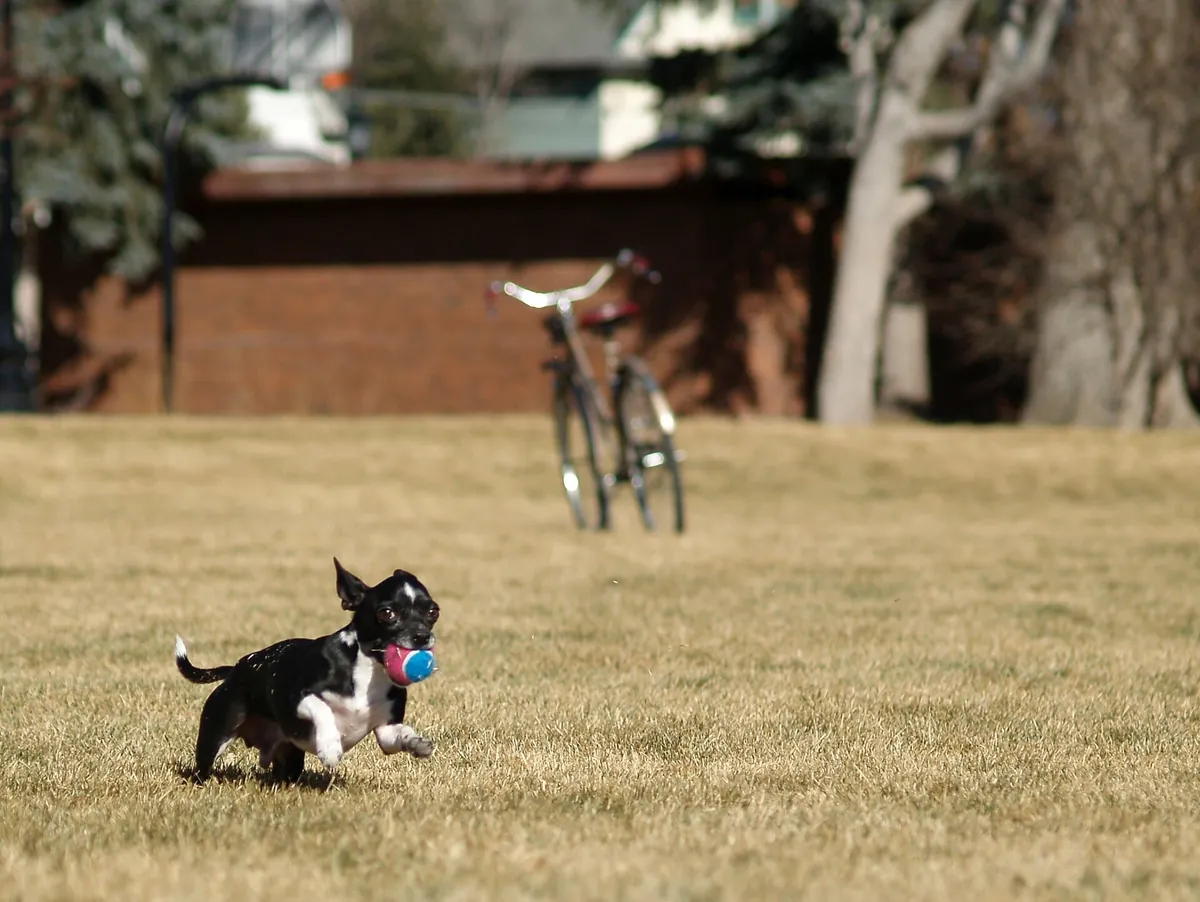

Grooming: coat, eyes and teeth
How much brushing a Malchi needs depends on which coat it inherits. The AKC says a Maltese needs “daily gentle brushing and combing to the skin to prevent mats and tangles,” while a smooth Chihuahua needs only occasional brushing and regular baths, and a long-coated one should be brushed at least once a week (AKC Maltese; AKC Chihuahua).
Plan for:
- Brushing: daily for a long, silky Maltese-type coat, weekly for a long Chihuahua-type coat, occasionally for a smooth coat. Comb right to the skin behind the ears and under the legs.
- A short trim if daily brushing is hard on your hands. It’s a perfectly good choice, and many Maltese owners use one.
- Tear staining: reddish-brown streaks under the eyes show up easily on a white face. The AKC recommends a vet visit to look for a cause if a Maltese has excessive tear staining (AKC Maltese). Don’t just scrub it away; ask your vet first.
- Ears: check weekly and remove excess hair, wax or debris (AKC Maltese; AKC Chihuahua).
- Nails: both breeds need regular trims, and the AKC says Maltese nails grow fast.
- Teeth, every day. This is the big one for a Malchi. The AKC says Maltese “should have their teeth brushed daily with a toothpaste specially formulated for dogs, as well as routine cleanings at the vet,” and that good dental care for a Chihuahua includes brushing (AKC Maltese; AKC Chihuahua). Cornell’s vet college suggests starting slowly: run a finger along the lips and reward, then along the gums, then add dog toothpaste, then a brush (Cornell). Never use human toothpaste.


Is a Malchi hypoallergenic?
No dog is. The Maltese rates 1 out of 5 for shedding and the Chihuahua 2 (AKC Maltese; AKC Chihuahua), but shedding isn’t the whole story. A 2012 study measured the main dog allergen in coats and homes and found “no evidence” for calling any breed hypoallergenic (Vredegoor et al., 2012). The AKC is blunt about mixes: mixed breeds marketed as hypoallergenic are “just that – marketing” (AKC). If you have allergies, spend time with the specific dog and talk to your doctor first. Our hypoallergenic dog breeds page has more.
Health issues to know about
There is no published health study of Malchis. A University of California, Davis study found purebred dogs more likely to have some inherited conditions, but no difference for 13 others, including patellar luxation (Bellumori et al., 2013). Being a mix isn’t a guarantee of good health, so learn both parents’ lists.
| Condition | Which parent breed | What the source says |
|---|---|---|
| Dental (periodontal) disease | Both | The most common problem recorded in UK Chihuahuas, at 13.5%; 5.7% had retained baby teeth (O’Neill et al., 2020). The AKC says Maltese are prone to dental disease as they age (AKC). Cornell says it’s worse in smaller breeds (Cornell). |
| Slipping kneecaps (patellar luxation) | Both | Chihuahuas had 5.9 times the odds of crossbreds in English vet records (O’Neill et al., 2016). Patella evaluation is on both breeds’ AKC screening lists. ACVS says it mainly affects small dogs (ACVS). |
| Tracheal collapse | Toy breeds generally | A weakening windpipe that causes a harsh “goose-honking” cough, common in toy and small breeds that are middle-aged or older. There is no cure, but medical management can help (Cornell). |
| Liver shunt (portosystemic shunt) | Maltese | Maltese had one of the highest rates (1.6%) in 2,400 US cases (Tobias & Rohrbach, 2003). The AKC recommends bile-acid testing Maltese puppies (AKC). |
| Soft spot on the skull (molera, or persistent fontanelle) | Chihuahua | The AKC standard allows a skull “with or without molera” (AKC standard). In a Finnish study, 46 of 50 Chihuahuas (92%) had at least one (Kiviranta et al., 2021, Part I). |
| Enlarged fluid spaces in the brain; hydrocephalus | Chihuahua; toy breeds | In Chihuahuas, more and larger soft spots went with smaller body size, enlarged brain ventricles and syringomyelia (Kiviranta et al., 2021, Part II). A study of 564 dogs with congenital hydrocephalus found 8 toy breeds among the 11 at high risk, and the smaller the mother, the higher the risk (Selby et al., 1979). |
| Low blood sugar (hypoglycemia) | Toy-breed puppies | Young toy puppies can’t store enough glycogen and can run low between meals, especially if active, cold or stressed (AKC). |
| Heart disease | Both | The AKC lists patent ductus arteriosus (PDA) for both breeds and mitral valve disease for Chihuahuas; a cardiac exam is on both screening lists (AKC; AKC). |
| Encephalitis (GME) | Maltese | Reported in the breed; the AKC says there is no screening test yet (AKC). |
| Eye disease; epilepsy | Chihuahua | The AKC mentions eye disease and idiopathic epilepsy; an eye exam by a veterinary ophthalmologist is on its screening list (AKC). |
| Extra weight | Both | Obesity was recorded in 5.9% of UK Chihuahuas (O’Neill et al., 2020). |
Teeth come first. Cornell says 80 to 90% of dogs over age 3 have some periodontal disease, that it’s worse in smaller breeds, and that it usually isn’t recognized until it is advanced (Cornell). Daily brushing and regular dental checks are the single best health habit for this mix.
Handle the head gently. If your Malchi has a soft spot on top of its skull, ask your vet to check it and explain what it means for your dog. Most dogs in the Finnish study had one, so it’s common, not a diagnosis. But a dome-shaped head with seizures, circling, wobbliness or behavior changes needs a prompt vet visit.
Listen for a honk. A dry, goose-like cough, especially when excited or pulling on a collar, is worth mentioning to your vet (Cornell).
Watch for a skip. The ACVS says many dogs with a slipping kneecap will suddenly carry a back leg for a few steps, then carry on (ACVS).
Tiny puppies. The AKC says emergency vets often see hypoglycemia in puppies that are “very young (under 12 weeks), newly acquired, and often toy breed-type puppies” (AKC). If a puppy is weak, wobbly, shaky or unusually sleepy, call a vet right away. Our senior dog care guide covers keeping an older small dog comfortable.
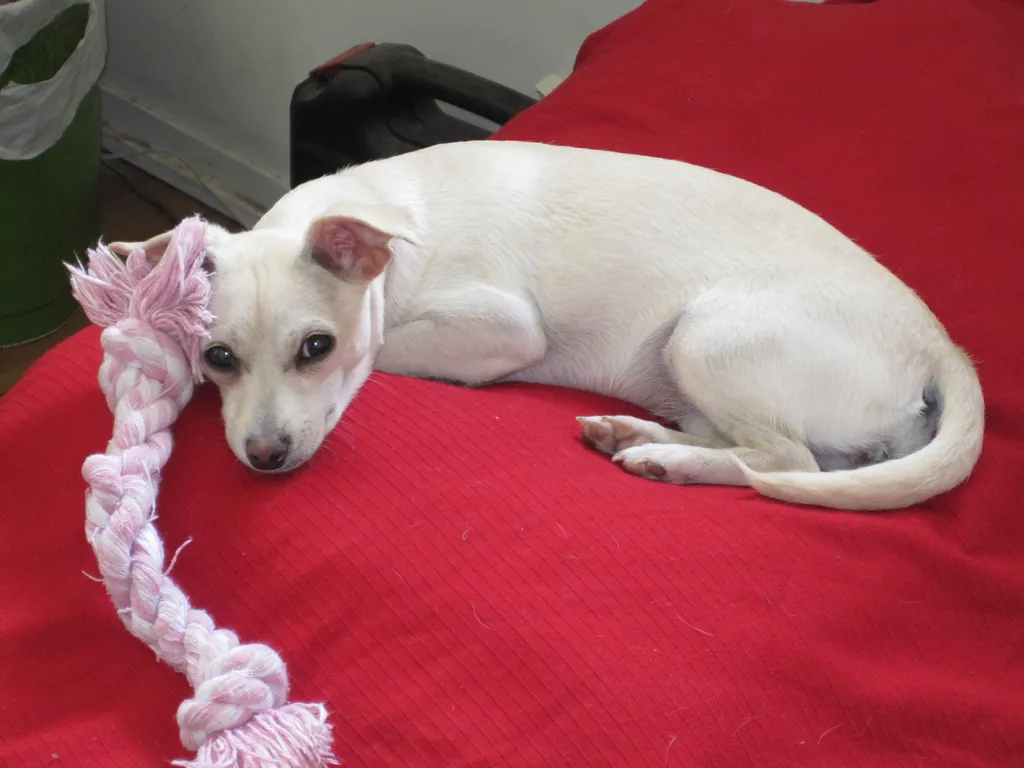

Lifespan
We found no study of the Malchi’s lifespan, so any single number you see for “the Malchi” is a guess. The AKC lists 12 to 15 years for the Maltese and 14 to 16 years for the Chihuahua (AKC Maltese; AKC Chihuahua), and says the Maltese “will usually live well into the double digits.” Those are breed figures, not a forecast for your dog.
A long-lived small dog may well outlive its first home. The American Maltese Association’s rescue says its dogs come from shelters, the “death of the primary caretaker, people whose health has changed, and those facing loss of home” (AMA Rescue). That’s why we encourage every dog owner to make a backup plan (more on that below).
Training
Both parents rate 3 out of 5 for trainability. The AKC says the Chihuahua is “a very alert little dog of high intelligence” that “responds well to positive training practices,” and that Maltese “can be stubborn and determined, but they respond well to positive training methods” (AKC Chihuahua; AKC Maltese). You may read that small, bossy dogs need you to show them who’s in charge. The American Veterinary Society of Animal Behavior recommends reward-based methods for all dog training and says “there is no evidence that aversive training is necessary” (AVSAB, 2021).
What to work on first:
- Toilet training. Tiny bladders need frequent trips out and lots of praise. Many small-dog owners also use an indoor potty spot for bad weather.
- Quiet on cue. Reward the pause after one or two barks. The ASPCA’s barking guide explains how to work out why your dog is barking and what to do about each kind (ASPCA).
- Handling. Pair tooth brushing, brushing, nail trims and ear checks with treats from day one.
- Being picked up. Teach a cue such as “up” so you’re not swooping in from above, and always support the chest and back end.
- Settle on a bed, and a calm “wait” at doors and stairs.
If you see growling, snapping or guarding that worries you, ask your vet for a referral to a qualified behavior professional.
Diet basics
There’s no special Malchi diet. For both parents, the AKC advises a high-quality food suited to the dog’s age (puppy, adult or senior), watching calories and weight, and not too many treats (AKC Maltese; AKC Chihuahua). Three practical points:
- Count every treat. On a dog that weighs a few pounds, a few extra treats are a big share of the day’s food. Use tiny pieces or part of the daily kibble.
- Tiny puppies, small frequent meals. Toy puppies can run low on blood sugar between meals (AKC hypoglycemia). Follow your vet’s feeding schedule.
- “Natural” doesn’t mean safe. The ASPCA lists foods that are dangerous to dogs, including grapes and raisins, onions and garlic, and xylitol, a sweetener found in some sugar-free products (ASPCA).
Your vet can tell you what a healthy weight looks like on your dog’s frame.
Who a Malchi suits, and who should skip one
A Malchi may suit you if you want a very small, affectionate companion, you’re home a good part of the day, you’ll brush its teeth daily, and you’d like a dog that is easy to lift into the car, carry up stairs or take along in a carrier.
Consider another dog if alert-barking would bother you or your neighbors, if the dog would be alone for long days, if young grandchildren visit often and can’t be supervised, if you’d rather not do daily dental care, or if you have dog allergies and haven’t tested your reaction to this particular dog.
Is a Malchi right for me? A checklist for adopters over 50
A few “no” answers don’t rule you out; they tell you what to plan for, or which dog to ask about.
- Yes / No: I can brush a small dog’s teeth every day, and budget for dental cleanings.
- Yes / No: I can brush its coat as often as it needs, or keep it in a short trim.
- Yes / No: Someone is home much of the day, or I can arrange company for the dog.
- Yes / No: I’m OK with alert barking, and willing to train “quiet.”
- Yes / No: I’ve thought about a tiny dog underfoot: night lights, a bell on the collar, a bed in a set spot.
- Yes / No: I can keep a small dog warm in winter, with a sweater if it’s smooth-coated.
- Yes / No: Visiting grandchildren can be supervised and taught to handle a small dog gently.
- Yes / No: I can budget for vet care, including possible dental, kneecap or windpipe treatment.
- Yes / No: I’ve thought about who would care for this dog if I ever couldn’t.
A word on trips and falls
Small dogs bring their own kind of safety planning. A US study estimated that emergency visits for fractures linked to walking leashed dogs among people 65 and older rose from 1,671 in 2004 to 4,396 in 2017 (Pirruccio et al., 2019). A Malchi won’t pull you over, but a tiny, fast dog can get under your feet. Practical steps: hold the leash in your hand rather than wrapping it around your wrist, wear sturdy shoes, keep a light on at night, and teach a “wait” at doors and stairs.

What a Malchi costs
We don’t quote puppy prices: we found no independent, verifiable survey of what Malchi puppies sell for, and seller prices vary enormously. A very cheap, always-available puppy offered online is a reason for caution, not a bargain (see below).
What we can source is the cost of keeping a dog. The ASPCA’s 2021 estimate is $1,391 a year, and $3,221 for the first year once one-time costs, professional grooming ($300) and dental care ($500) are included (ASPCA). For a Malchi, budget specifically for:
- Dental care. Toy breeds may need cleanings, and sometimes extractions, more often than the ASPCA’s first-year figure.
- Grooming, if your dog has a long, silky coat or you choose a regular short trim. Ask local groomers.
- Warm gear: a sweater or coat and a harness.
- Pet insurance or an emergency fund, priced before anything becomes a pre-existing condition.
- The adoption fee, if you adopt, and what it includes. Each rescue sets its own.
How to avoid puppy mills
Humane World for Animals (formerly the Humane Society of the United States) is direct: “You don’t want to buy a puppy from a pet store or a website. Most of those puppies come from mass breeding facilities—better known as puppy mills” (Humane World). It recommends checking shelters and rescues first, and says to “always personally visit a dog breeder’s facility before buying a puppy.”
If you do buy, ask:
- Can I meet the mother, and see the father or his records?
- What health tests have the parents had? The AKC’s screening lists are patella evaluation, a cardiac exam and serum bile acids for the Maltese, and patella evaluation, a cardiac exam and an ophthalmologist evaluation for the Chihuahua (AKC Maltese; AKC Chihuahua). Ask to see results.
- Has the puppy had a vet check, and a bile-acid test?
- How old will the puppy be when it comes home, and how is it fed? Tiny puppies need frequent meals (AKC hypoglycemia).
- Will you take the dog back at any age if I can’t keep it?
Red flags: “teacup” sizes sold as a premium, puppies always available, no chance to visit, pressure to pay a deposit fast, or a puppy shipped or handed over in a parking lot.
Adopting a Malchi
Small Maltese and Chihuahua mixes turn up in rescues and shelters, often as adults whose size, coat and personality you can see before you commit. That’s a real advantage. (Bone Voyage itself is no longer a rescue and doesn’t place dogs.)
Where to look
- Local shelters and all-breed rescues. Search for “Malchi,” “Maltese mix” and “Chihuahua mix,” since labels are often a guess.
- Chihuahua rescue. Chihuahua Rescue & Transport places its dogs from foster homes; its adoption page explains the process. Ask whether it has Chihuahua mixes.
- Maltese rescue. American Maltese Association Rescue is a volunteer national nonprofit whose dogs live with foster families. Ask whether it takes Maltese mixes.
Foster-based groups are especially helpful, because a foster family can tell you how the dog behaves in a real home. The ASPCA’s adoption tips suggest leaning on shelter staff to help match a dog to your lifestyle, and being patient while a new dog settles in (ASPCA).
Is that shelter dog really a Malchi?
Maybe. A small white or cream dog with big ears is easy to label “Malchi,” and many other small mixes look similar. In a study of 919 shelter dogs, staff matched at least one breed in 67.7% of the dogs tested, but both named breeds in only 10.4% (Gunter et al., 2018). So meet the dog, not the label. Our guide to figuring out your dog’s breed explains what DNA tests can and can’t tell you.
Questions to ask the shelter or rescue
- How was the breed label decided? Is either parent known?
- How old is the dog, and what does it weigh?
- How much does it bark, and at what?
- How does it handle being picked up, brushed, and having its teeth touched?
- When were its teeth last cleaned? Any extractions?
- Any cough, limping, or skipping on a back leg? Does it have a soft spot on its skull?
- How has it done with dogs, cats and children, and in what setting?
- How does it handle being left alone?
- Is there a foster-to-adopt or trial period?
Our list of 9 questions to ask when adopting a dog covers the general ones.
Give your dog a backup plan
A tiny dog who could live into its teens deserves a plan for every stage of life, including one where you can’t be there. Naming a backup caregiver now, someone the dog already knows, makes it far less likely your dog will end up in a shelter. Our guide What Happens to Your Dog When You Die walks you through it, and the free My Dog’s Backup Plan worksheet records your dog’s routine, vet, food and quirks. Bone Voyage is also building the backup-adopter pledge: a volunteer pledges to adopt a specific older adult’s dog if that person dies or can no longer care for it. You can join the free list on the guide page.
Similar dogs to compare
- Maltese, Chihuahua and long-haired Chihuahua, the parent breeds.
- Pomchi, Chihuahua Corgi mix and Jack Russell Chihuahua mix, more Chihuahua crosses.
- Maltipoo, Yorkinese and Shih-Poo, more small companion crosses.
- Best dog breeds for seniors, if you’re still deciding.
Frequently Asked Questions
What is a Malchi dog?
A Malchi is a cross between a Maltese and a Chihuahua, usually a first-generation mix of two purebred parents. It isn’t a recognized breed, so there is no breed standard, and puppies can differ in size, coat, color and head shape. Both parents are AKC Toy Group breeds that weigh under about 7 pounds (AKC Maltese; AKC Chihuahua), so most Malchis are very small, affectionate companion dogs.
How much is a Maltese Chihuahua mix?
We found no independent, verifiable survey of Malchi puppy prices, so we don’t quote one. Rescue adoption fees are set by each group. What we can source is the cost of keeping a dog: the ASPCA’s 2021 estimate is $1,391 a year, and $3,221 for the first year including one-time costs, grooming and dental care (ASPCA). Very cheap, always-available puppies online are a warning sign, not a bargain.
How big will a Maltese Chihuahua get?
There’s no standard size. The AKC lists the Maltese at 7 to 9 inches and under 7 pounds, and the Chihuahua at 5 to 8 inches and no more than 6 pounds (AKC Maltese; AKC Chihuahua), so a Malchi will usually be a toy-sized dog. Pet dogs can be heavier than show limits: in a UK study of 11,647 Chihuahuas, adult weights ran from about 2 to 22 pounds (O’Neill et al., 2020). Adopting an adult is the only sure way to know.
Are Chihuahua mixes good dogs?
Many are wonderful companions, but a mix is still an individual. The AKC rates the Chihuahua 4 out of 5 for affection with family, 5 out of 5 for barking and 1 out of 5 for being good with young children (AKC Chihuahua). A 2022 study of more than 18,000 dogs found breed explained only about 9% of differences in behavior between individual dogs (Morrill et al., 2022), so meet the dog and ask how it behaves in a home.
Is a Malchi hypoallergenic?
No. No dog is truly hypoallergenic, and the AKC says mixed breeds marketed that way are just marketing (AKC). The Maltese rates 1 out of 5 for shedding and the Chihuahua 2 out of 5, but a 2012 study found no breed called hypoallergenic had lower allergen levels in the home (Vredegoor et al., 2012). If you have allergies, spend time with the specific dog and talk to your doctor first.
How long does a Malchi live?
No study has measured the Malchi’s lifespan. The AKC lists 12 to 15 years for the Maltese and 14 to 16 years for the Chihuahua (AKC Maltese; AKC Chihuahua). Those are parent-breed figures, not a forecast for any one dog. Daily tooth brushing, a healthy weight and regular vet checks matter more than the label, and it’s wise to plan for a dog who could live well into its teens.
Is a Malchi a good dog for someone over 50?
It can be a lovely match if you want a tiny lap dog, are home much of the day, and can keep up with brushing and daily tooth care. A Malchi is easy to lift and carry, but a small dog underfoot is a trip risk, and the Chihuahua side tends to bark. A calm adult Malchi from a foster-based rescue is often the easiest start.
Before you go
Whatever the seller’s ad or the kennel card says, the dog in front of you is one specific dog with its own coat, size and quirks. Weigh what you learn about that dog more heavily than anything on this page. And whatever dog you bring home, it’s worth deciding now who would step in if you ever couldn’t.
Sources
- American Kennel Club, Maltese breed page and Official Standard of the Maltese
- American Kennel Club, Chihuahua breed page and Official Standard of the Chihuahua
- American Kennel Club, Hypoglycemia in Dogs and Do Hypoallergenic Dogs Exist?
- American Maltese Association, American Maltese Rescue Organization
- Chihuahua Rescue & Transport, home page and adoption information
- Humane World for Animals (formerly HSUS), How to find a responsible dog breeder
- ASPCA, Cutting Pet Care Costs (2021 cost update), Barking, Cold Weather Safety Tips, Finding Your Fido: Tips for Adopting and People Foods to Avoid Feeding Your Pets
- O’Neill DG et al. (2020). Demography and commonly recorded clinical conditions of Chihuahuas under primary veterinary care in the UK in 2016. BMC Veterinary Research 16:42.
- O’Neill DG et al. (2016). The epidemiology of patellar luxation in dogs attending primary-care veterinary practices in England. Canine Genetics and Epidemiology 3:4.
- Tobias KM, Rohrbach BW (2003). Association of breed with the diagnosis of congenital portosystemic shunts in dogs: 2,400 cases (1980-2002). JAVMA 223(11):1636-9.
- Kiviranta AM et al. (2021). Persistent fontanelles in Chihuahuas. Part I. Distribution and clinical relevance. Journal of Veterinary Internal Medicine 35(4):1834-1847.
- Kiviranta AM et al. (2021). Persistent fontanelles in Chihuahuas. Part II: Association with craniocervical junction abnormalities, syringomyelia, and ventricular volume. Journal of Veterinary Internal Medicine 35(4):1848-1856.
- Selby LA, Hayes HM Jr, Becker SV (1979). Epizootiologic features of canine hydrocephalus. American Journal of Veterinary Research 40(3):411-3.
- Vredegoor DW et al. (2012). Can f 1 levels in hair and homes of different dog breeds: lack of evidence to describe any dog breed as hypoallergenic. Journal of Allergy and Clinical Immunology 130(4):904-9.
- Bellumori TP et al. (2013). Prevalence of inherited disorders among mixed-breed and purebred dogs. JAVMA 242(11):1549-55.
- Morrill K et al. (2022). Ancestry-inclusive dog genomics challenges popular breed stereotypes. Science 376(6592):eabk0639.
- Gunter LM et al. (2018). A canine identity crisis: genetic breed heritage testing of shelter dogs. PLOS ONE 13(8):e0202633.
- Pirruccio K et al. (2019). Fractures in elderly Americans associated with walking leashed dogs. JAMA Surgery 154(5):458-459.
- Cornell Riney Canine Health Center, Tracheal Collapse and Periodontal Disease
- American College of Veterinary Surgeons, Patellar Luxations
- American Veterinary Society of Animal Behavior, Position Statement on Humane Dog Training (2021)
- Photos: Wikimedia Commons contributors, credited under each image. All photos on this page show the parent breeds, not Malchis. Full license records are kept in this site’s image-credits file.