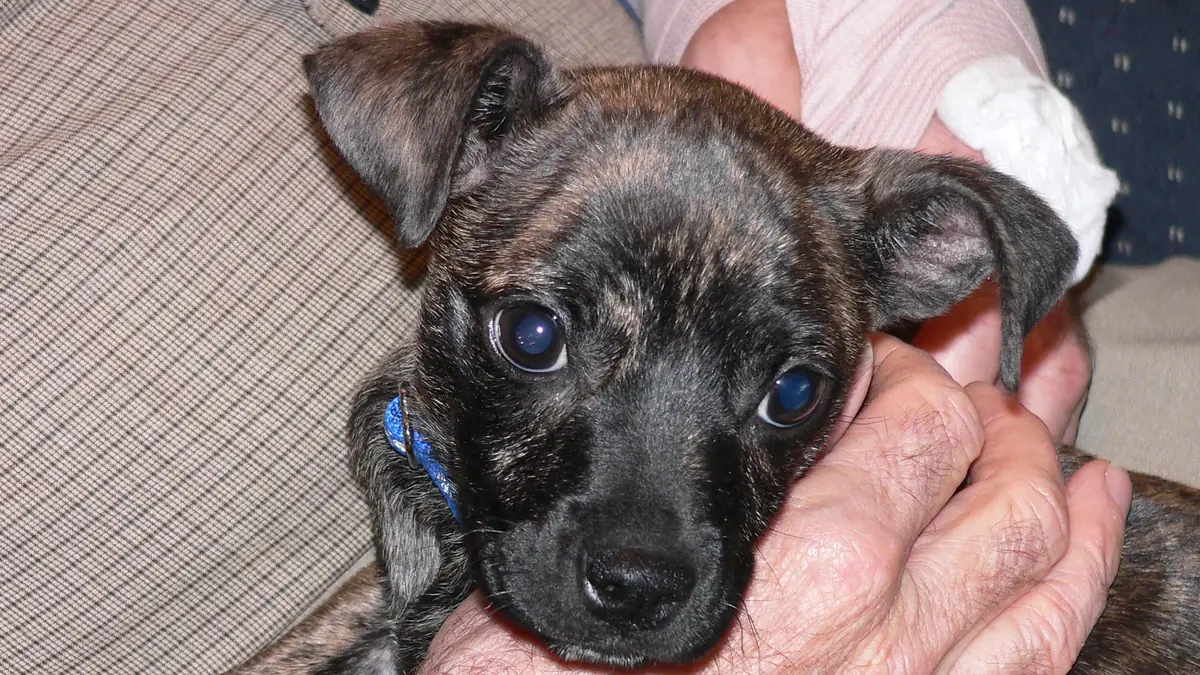
A pitbull and Chihuahua mix, often called a Chipit, is a cross between a Chihuahua and a pit bull-type dog, usually an American Pit Bull Terrier or American Staffordshire Terrier. Expect a short-coated, people-focused dog whose size is hard to predict, because the Chihuahua breed standard tops out at 6 pounds and pit bull-type breeds start around 30. It isn’t a recognized breed, so the dog in front of you matters far more than the name.
You’ll also see it called a Pithuahua. Below is what the American Kennel Club (AKC), the United Kennel Club (UKC), veterinary schools and published research can tell you about each parent, where the honest answer is “not documented,” and how to tell whether a particular dog fits your home.
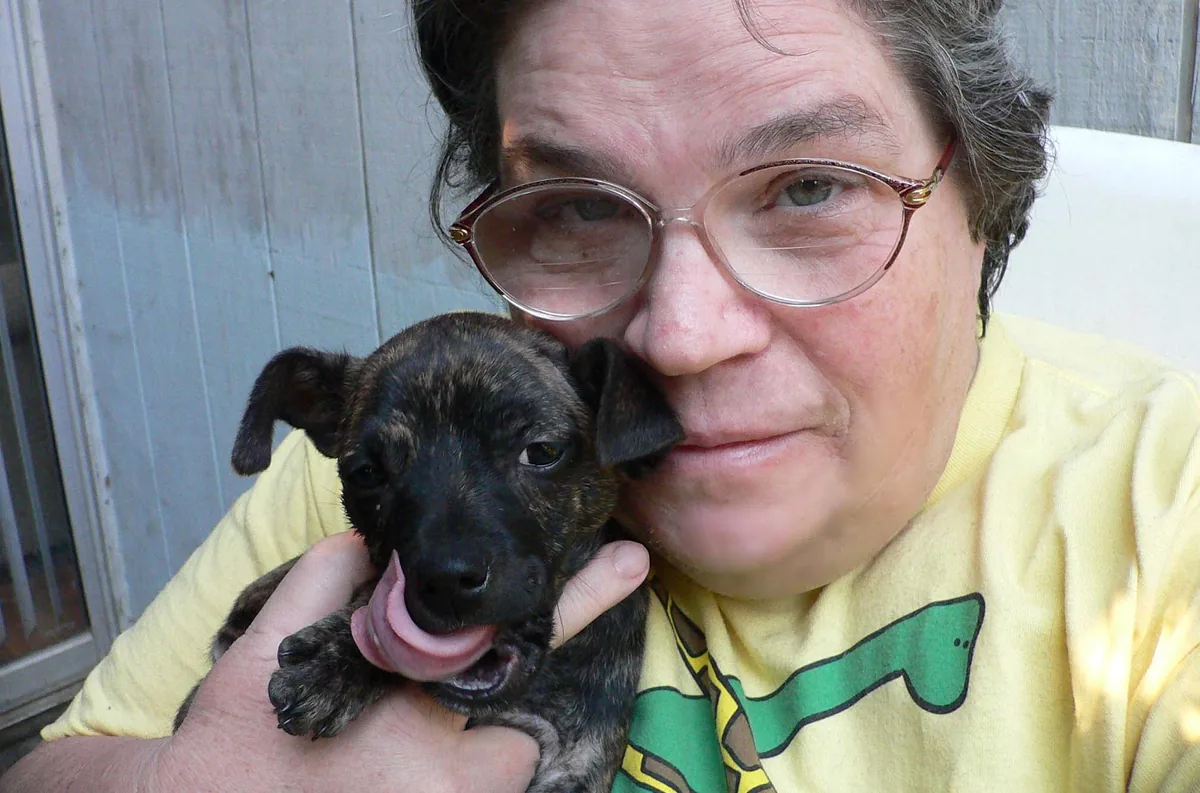
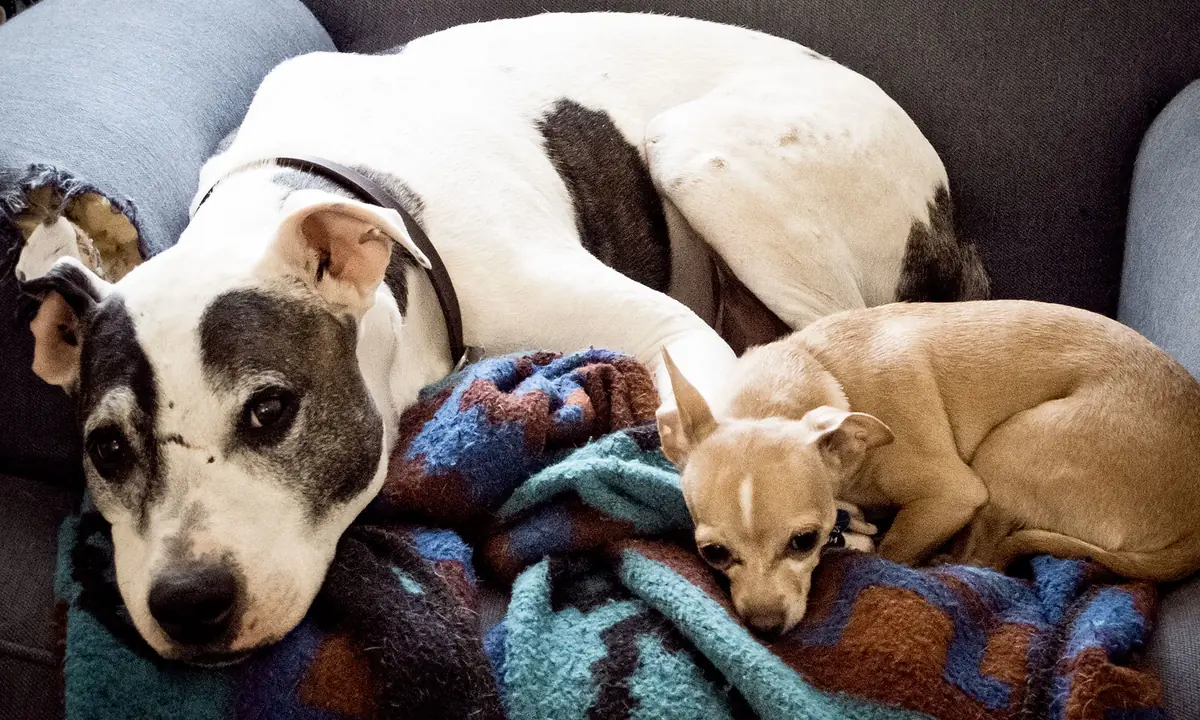
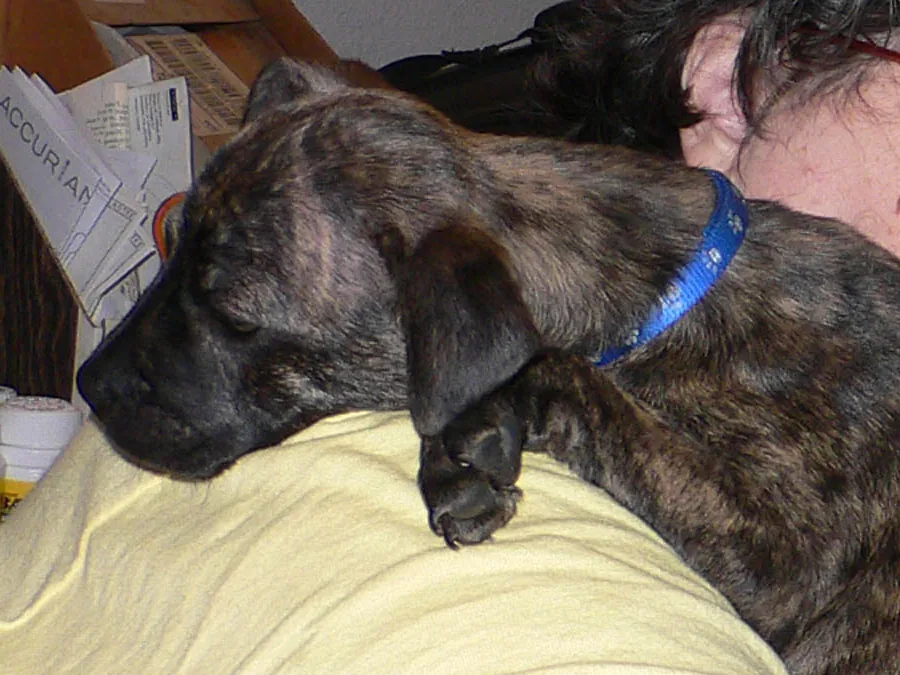
A note on our photos: openly licensed pictures of this mix are scarce. The puppy you’ll meet, Rupert, was described by the photographer as a Chihuahua and pit bull mix, with the honest note “it’s a guess.” Every other photo is a parent breed or a pit bull-type dog, and is labeled that way.
Pitbull Chihuahua mix quick facts
These are figures for the parent breeds unless we say otherwise. None is a measurement of Chipits.
- Also called: Chipit, Pithuahua, pit Chihuahua mix. Informal names, not a recognized breed.
- Chihuahua size: 5 to 8 inches and no more than 6 pounds (AKC). Pet Chihuahuas in a UK study ranged from about 2 to 22 pounds as adults (O’Neill et al., 2020).
- Pit bull-type size: American Pit Bull Terrier about 17 to 21 inches and 30 to 60 pounds (UKC); American Staffordshire Terrier (AmStaff) 17 to 19 inches and 40 to 70 pounds (AKC).
- Size of the mix: not documented. It can land almost anywhere between the parents.
- Lifespan (parent breeds, AKC): 14 to 16 years for the Chihuahua (AKC) and 12 to 16 for the AmStaff (AKC). Not studied for the mix.
- Energy (AKC ratings): Chihuahua 4 out of 5, AmStaff 3.
- Grooming and shedding (AKC ratings): coat care 1 out of 5 and shedding 2 for both. Easy, unless the dog gets a long Chihuahua coat.
- Good with young children (AKC ratings): Chihuahua 1 out of 5, AmStaff 3. The UKC says American Pit Bull Terriers “have always been noted for their love of children” (UKC). Supervise either way.
- Good with other dogs (AKC ratings): 3 out of 5 for both, and the UKC says most American Pit Bull Terriers “exhibit some level of dog aggression.” Ask dog by dog.
- Health to ask about: knees, teeth, heart, eyes, skin, weight, and hips in larger dogs.
What a Chipit actually is
We found no reliable record of when or where this cross began. Neither the AKC nor the UKC lists it as a breed, so there is no standard, no breed club and no health-testing program. A mixed-breed dog can still enroll in AKC Canine Partners and take part in sports such as agility, obedience and rally (AKC Canine Partners). The best place to start is the two parents.
The Chihuahua side
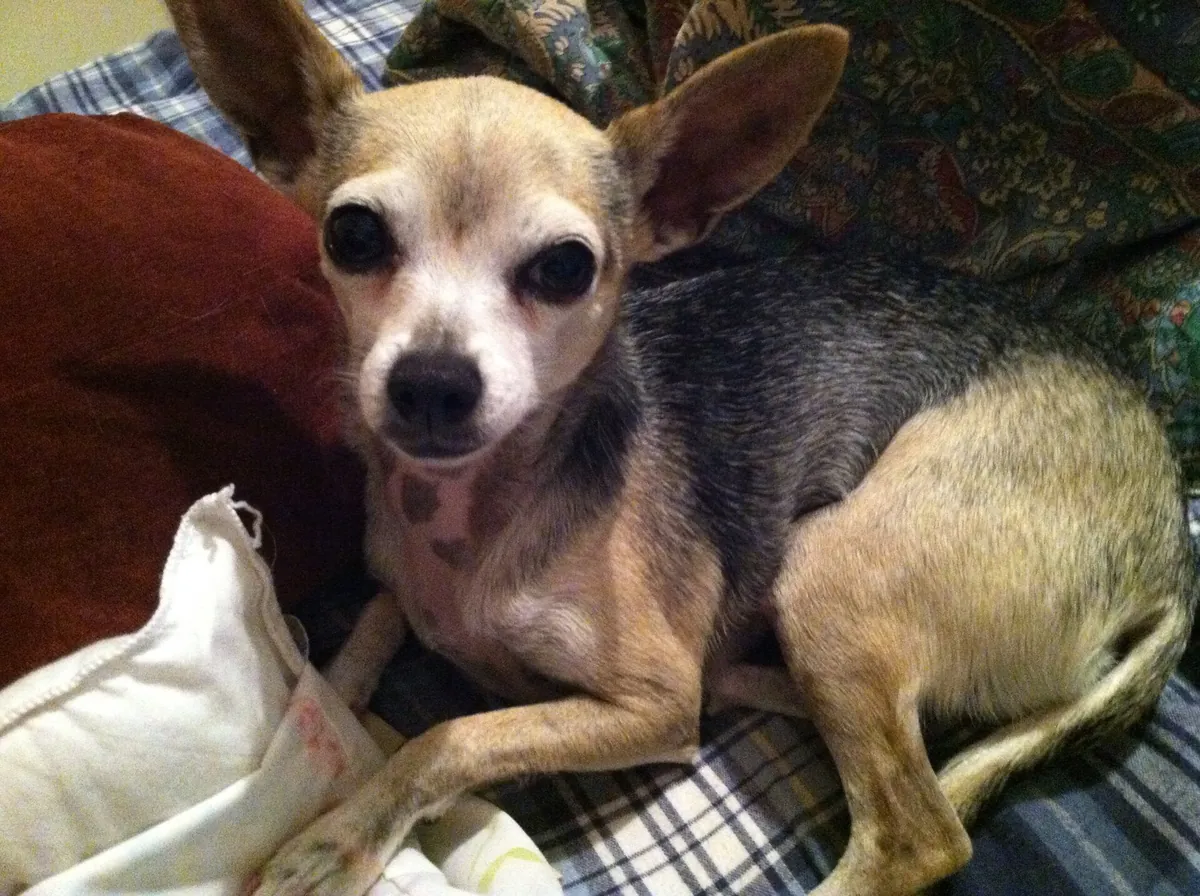
The AKC calls the Chihuahua “a tiny dog with a huge personality” and says the Techichi, a dog kept by the Toltecs of Mexico about a thousand years ago, was “a larger, heavier ancestor of today’s Chi.” It describes a “balanced, graceful dog of terrier-like demeanor” that comes in smooth and long coats (AKC Chihuahua). Our Chihuahua guide has more.

The pit bull side: a type, not one breed
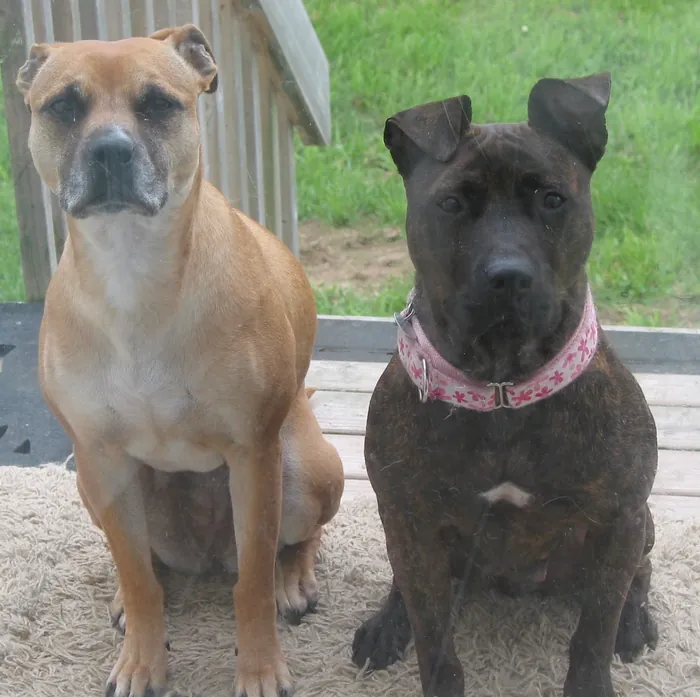
“Pit bull” is a loose label. One shelter study used it for the American Pit Bull Terrier, the American Staffordshire Terrier, the Staffordshire Bull Terrier, “pit bull,” and their mixes (Olson et al., 2015).
- American Pit Bull Terrier (APBT). Recognized by the UKC, which says it was the first registry to do so, with a first registration in 1898. The AKC does not register it as a breed. The UKC calls it “eager to please and brimming over with enthusiasm” (UKC).
- American Staffordshire Terrier (AmStaff). The AKC’s closely related breed, accepted into its stud book in 1936. The AKC is candid that its ancestors came out of long-outlawed blood sports, and describes today’s AmStaffs as “smart, confident, good-natured companions” (AKC AmStaff).
Our American Bully vs Pit Bull guide sorts out the lookalikes.

How can such different-sized dogs have puppies?
It’s possible, but size matters for the mother’s safety. Cornell’s veterinary college lists oversized puppies among the causes of a difficult birth and names Chihuahuas among the dogs at higher risk (Cornell); so does the Merck Veterinary Manual (Merck). We found no study of how Chipit litters come about. Common sense says the mother is usually the larger dog, or that the parents are themselves mixes closer in size. If a Chihuahua may have mated with a much larger dog, call a vet right away.
Chipit vs Chihuahua vs pit bull
The numbers are registry figures and the AKC’s 1 to 5 trait ratings (5 = most). The UKC doesn’t publish ratings for the APBT. The Chipit column is the space between the parents, not measured data, and any one dog can fall outside it.
| Chihuahua | Chipit (mix) | American Pit Bull Terrier | American Staffordshire Terrier | |
|---|---|---|---|---|
| Registry | AKC, Toy Group | Not a recognized breed | UKC (1898); not AKC | AKC (1936), Terrier Group |
| Height | 5 to 8 in | Not documented; parents span 5 to 21 in | About 17 to 21 in | 17 to 19 in |
| Weight | No more than 6 lb | Not documented; parents span up to 70 lb | 30 to 60 lb | 40 to 70 lb |
| Life expectancy | 14 to 16 yrs (AKC) | Not studied | Not given in UKC standard | 12 to 16 yrs (AKC) |
| Coat | Smooth or long | Usually short; not documented | Short, glossy, smooth | Short, stiff |
| Color | Any color | Wide open | Any except merle | Many colors and patterns |
| Affectionate with family | 4 | Not rated | Not rated | 5 |
| Good with young children | 1 | Not rated; supervise | Noted for love of children (UKC) | 3 |
| Good with other dogs | 3 | Not rated; ask | Most show some dog aggression (UKC) | 3 |
| Openness to strangers | 2 | Not rated | ”extremely friendly, even with strangers” (UKC) | 4 |
| Watchdog nature | 4 | Not rated | ”Not the best choice for a guard dog” (UKC) | 5 |
| Energy | 4 | Not rated | Not rated | 3 |
| Barking | 5 | Not rated | Not rated | 3 |
| Trainability | 3 | Not rated | Not rated | 3 |
| Mental stimulation needs | 3 | Not rated | Not rated | 3 |
| Shedding | 2 | Not rated | Not rated | 2 |
| Drooling | 1 | Not rated | Not rated | 1 |
Sources: AKC Chihuahua, AKC Chihuahua standard, UKC American Pit Bull Terrier standard, AKC American Staffordshire Terrier.
Size, children, strangers and barking are where the parents differ most, so those are the questions to ask about a particular dog. Affection, easy coat care and average trainability are the safer bets.
Size: how big does a Chipit get?
Nobody has measured enough of them to say. You’ll see ranges from 15 pounds to 50 quoted online, and the published numbers don’t agree with each other. We couldn’t find a study behind any of them.
What we do know:
- Show standards are only part of the story. In a UK study of 11,647 Chihuahuas, the median adult weight was 3.4 kg (about 7.5 pounds), already over the AKC limit, and adults ranged from 0.8 to 9.8 kg, about 2 to 22 pounds (O’Neill et al., 2020).
- Size is inherited in pieces. Researchers found that a handful of gene variants explain about half of the size differences between dog breeds, and that most breeds carry several combinations (Rimbault et al., 2013). A cross between a tiny and a medium breed reshuffles those pieces, so littermates may not match.
- Males often run bigger. Both pit bull-type standards list larger ranges for males, and male Chihuahuas outweighed females in the UK study.
If size matters for your lease, your lap or your strength on the leash, adopt a grown dog. You’ll know the answer on day one.
Plan by size, not by label
A 12-pound Chipit and a 45-pound Chipit need different homes, even with the same name on the kennel card.
| Under about 15 lb | About 15 to 30 lb | Over about 30 lb | |
|---|---|---|---|
| Lifting into a car or tub | Most people can; use two hands | Ask for help or use a ramp | Plan on a ramp |
| On the leash | Harness; watch for bigger dogs | Harness; loose-leash practice | Front-clip harness and a class |
| Underfoot | Tripping hazard; consider a bell or night lights | Teach “wait” at doors and stairs | Teach calm greetings |
| With other dogs | Choose playmates near its own size | Meet dog by dog | Meet dog by dog |
| Vet questions first | Kneecaps, teeth, windpipe | Kneecaps, teeth, weight | Knee ligaments, hips, skin |
| Spay or neuter timing | Study found no added joint risk; ask your vet | Study found no added joint risk; ask your vet | More joint risk seen from 44 lb up; ask your vet |
The last row comes from a study of mixed-breed dogs. Neutering before one year was generally linked to more joint disorders in dogs of 20 kg (about 44 pounds) or more, with no increase found in smaller dogs (Hart et al., 2020). Many shelter dogs are already altered, and that’s fine. The rest of the table is our practical advice, based on the health notes below.
What does a pitbull Chihuahua mix look like?
It may have a broad head on a small body, big upright or folded ears, and a smooth, close coat. Or it may look nearly all one parent. Here is what each breed standard asks for. Use it to enjoy your dog’s features, not to prove its ancestry.
| Feature | Chihuahua standard (AKC) | American Pit Bull Terrier standard (UKC) |
|---|---|---|
| Head | Rounded “apple” head | Large and broad, like a blunt wedge |
| Ears | Large and erect | Small to medium, set high; prick ears “not desired” |
| Body | Small, slightly longer than tall | Medium, solid, well-defined muscle |
| Coat | Smooth (soft, close, glossy) or long | Glossy, smooth, close; long coat disqualified |
| Color | Any color, solid, marked or splashed | Any color or pattern except merle |
Sources: AKC Chihuahua, AKC Chihuahua standard, UKC.
Rupert shows one version: a brindle coat with folded ears and a dark muzzle. At 10 weeks old, his adult size and shape were anyone’s guess.
Temperament: what to realistically expect
These are registry descriptions of purebred parents, not promises about a mix.
The Chihuahua side. The AKC describes an “alert and amusing” dog of “high intelligence” that is “eager to please.” It rates the breed 4 out of 5 for affection, 2 for openness to strangers and 1 for being good with young children, and says Chihuahuas are “clannish,” preferring their own breed (AKC Chihuahua).
The pit bull side. The UKC says APBTs “make excellent family companions” and that “aggressive behavior toward humans is uncharacteristic of the breed and highly undesirable.” It also says “most APBTs exhibit some level of dog aggression,” so the breed needs an owner who will “carefully socialize and obedience train the dog” (UKC). The AKC says an AmStaff “should never under any circumstances be left alone with other dogs” (AKC AmStaff).
What breed can’t tell you. A 2022 study in Science surveyed owners of 18,385 dogs and found that breed explains just 9% of the differences in behavior between individual dogs (Morrill et al., 2022). If you’re adopting an adult, that’s good news: you can meet the actual dog.
In daily life, plan for:
- A shadow. Both sides rate high for affection. Ask how the dog copes when left alone.
- An opinion about visitors. The Chihuahua side tends to be reserved; the pit bull side tends to say hello. Let the dog choose to approach, and ask guests not to scoop it up.
- Supervised time with children. A small dog can be hurt by a fall or a hug, and a frightened dog may snap. A sturdy one can bowl over a toddler.
- Careful introductions. Ask whether this dog has lived with dogs, cats or other small pets. Introduce slowly, and separate animals when you can’t watch.
One myth to drop. The American Veterinary Society of Animal Behavior calls the idea that pit bull-type dogs have “locking jaws” an “often repeated fallacy” (AVSAB).
Exercise needs
The parents ask for different things. The AKC says a Chihuahua “can usually get enough exercise in a very small space,” with “short, slow walks,” and if it is panting and working hard to keep up, “it’s time to pick him up and carry him home” (AKC Chihuahua). It says an AmStaff “requires a lot of exercise,” but that leaving one in the yard all day “is not the right approach,” because it “thrives when he is made part of the family” (AKC AmStaff).
So let the dog tell you. Start with one or two daily walks plus indoor play and a few minutes of training, then adjust. Sniffing, food puzzles and fetch in the hallway count. Ask your vet what’s right for your dog’s age and build.
Fencing. The UKC calls the APBT “one of the most capable canine climbers so good fencing is a must” (UKC). A small Chipit may instead find the gap under the gate, so check both top and bottom.
Training
Both parents are rated 3 out of 5 for trainability. The AKC says Chihuahuas respond “well to positive training practices” (AKC Chihuahua) and that the AmStaff’s “intelligence and desire to please make training a fun, easy process,” while calling early socialization and puppy classes “a necessity” (AKC AmStaff).
Some guides say a Chipit needs a “firm hand” or an “alpha.” The American Veterinary Society of Animal Behavior recommends reward-based methods and says “there is no evidence that aversive training is necessary” (AVSAB, 2021).
- House training. A steady schedule, frequent trips and a treat the moment the dog finishes outside. The AKC says puppy pads may be useful for very small dogs in severe winter weather (AKC potty training). Our potty training guide has a step-by-step plan.
- Barking. The ASPCA suggests blocking the view of people and animals going by. To teach quiet, calmly say “Quiet” when the dog barks, then feed a steady stream of pea-sized treats (ASPCA).
- Calm greetings and “drop it.” Useful at any size.
- Handling. Pair paws, ears, mouth and harness with treats. For a little dog, teach a word like “up” before you lift.
- Same rules at every size. It’s easy to laugh off jumping or growling in a 10-pound dog. Teach the manners you’d want in a 45-pound one.
Grooming
Usually simple. A smooth Chihuahua coat needs “only occasional brushing and regular baths,” and a long coat a brushing at least once a week (AKC Chihuahua). For an AmStaff’s coat, “a quick once-over with a soft bristle brush every week is usually enough” (AKC AmStaff). Trim nails, check ears and brush teeth. In cold weather, the ASPCA suggests a coat or sweater for short-haired dogs (ASPCA).
Is the mix hypoallergenic? No. The AKC says there are no 100% hypoallergenic dogs, breeds or mixes (AKC). Our hypoallergenic dog breeds guide covers lower-shedding options.
Diet basics
There’s no special Chipit diet. For both parents the AKC advises food suited to the dog’s age, an eye on weight, and not too many treats (AKC Chihuahua; AKC AmStaff). On a small dog a few extra treats add up fast, so count them. Tiny puppies need frequent meals (see low blood sugar, below). Ask your vet how much to feed and what a healthy weight looks like on your dog’s frame.
Health: what to know and what to ask
We found no study of Chipit health, so this section is about the parent breeds or about dogs of similar size. Most dogs won’t have most of these problems. Use it as a list of questions for your vet.
You may read that mixes are automatically healthier. A University of California, Davis study of 27,254 dogs with inherited disorders found purebreds more likely to have 10 of 24 disorders, with no difference for 13, including hip dysplasia and loose kneecaps. Mixed-breed dogs were more likely to have one, a torn cranial cruciate ligament in the knee (Bellumori et al., 2013).
| Condition | Which side | What the source says |
|---|---|---|
| Loose kneecaps (patellar luxation) | Chihuahua | Diagnosed in 4.9% of Chihuahuas, 1.2% of crossbreeds and 0.5% of Staffordshire Bull Terriers (a pit bull relative) in a study of 210,824 dogs in England (O’Neill et al., 2016). Dogs may “skip” on a back leg (ACVS). |
| Dental disease | Chihuahua; small dogs | Gum disease was the most common problem recorded in UK Chihuahuas, at 13.5%, and 5.7% kept baby teeth (O’Neill et al., 2020). Cornell says gum disease is worse in smaller breeds (Cornell). |
| Heart disease | Both | The AKC lists patent ductus arteriosus and mitral valve disease for Chihuahuas (AKC) and “some types of cardiac disease” for AmStaffs (AKC). |
| Eye disease | Chihuahua | Among the issues the AKC lists for the breed (AKC). |
| Tracheal collapse | Toy and small dogs | A weakening windpipe with a “goose-honking” cough; switching from a neck collar to a harness is among the lifestyle changes (Cornell). |
| Low blood sugar | Very small puppies | Young toy puppies can run low between meals, especially if active, cold or stressed (AKC). A veterinary review also lists toy and miniature juveniles as at increased risk (Idowu & Heading, 2018). |
| Cruciate ligament (knee) disease | Pit bull | ACVS names the Staffordshire Terrier among breeds with a higher incidence (ACVS), and a study of dogs under two found a predisposition in AmStaffs (Duval et al., 1999). |
| Hip dysplasia | Pit bull; larger dogs | Most common in large breeds (ACVS); the AKC notes “some instances of mild hip dysplasia” in AmStaffs (AKC). |
| Skin and coat allergies | Pit bull | Instances have been found in AmStaffs (AKC). |
| Cerebellar ataxia (NCL-A) | Pit bull | An inherited loss of coordination, usually first seen between ages 3 and 5 in AmStaffs; a DNA test exists (AKC). |
| Thyroid disease | Pit bull | The AmStaff club recommends thyroid testing for breeding dogs (STCA). |
| Extra weight | Both | Obesity was recorded in 5.9% of UK Chihuahuas (O’Neill et al., 2020); the AKC warns about overfeeding for both parents. |
The UKC’s APBT standard doesn’t list health tests, so pit bull-side notes come from the AmStaff unless we say otherwise.
For small puppies, know the signs of low blood sugar. The AKC article describes extreme lethargy, incoordination, unconsciousness or seizures, often in toy puppies under 12 weeks, and says a puppy should be taken to a veterinarian immediately (AKC). Ask your vet for a feeding schedule before the puppy comes home.
Day to day: Cornell calls daily tooth brushing with a veterinary paste the mainstay of home dental care (Cornell). Our page on professional dental cleanings explains that visit. Call your vet about a skipping or sore back leg, a honking cough, itching, or tiring easily. Trouble breathing, blue gums or collapse is an emergency.
Lifespan: what we can and can’t say
No study has measured the Chipit. Here is the fuller picture for its relatives:
- The AKC lists 14 to 16 years for the Chihuahua and 12 to 16 for the AmStaff (AKC; AKC).
- A 2024 study of 584,734 UK dogs estimated median survival at 11.8 years for Chihuahuas, 12.5 for American Staffordshire Terriers (from only 142 dogs), 12.0 for Staffordshire Bull Terriers and 12.0 for crossbreeds of every kind (McMillan et al., 2024, Supplementary Table S3).
A median is a midpoint, so about half of dogs live longer. Keep your dog lean, look after its teeth, and see your vet regularly.
Chipit puppies
A puppy’s grown-up size is the big unknown. If someone offers you a puppy, meet the mother where the puppies live, ask her weight, and ask whether the father is known or a guess. Ask for proof of the health tests recommended for the parents: knees, heart and eyes for the Chihuahua side (AKC lists those as the breed’s issues), and hips, heart, thyroid and NCL-A for the AmStaff side (STCA). Be wary of promises about adult weight. For many people over 50, a grown dog from a shelter or foster home is the easier start.
Is that shelter dog really a Chipit?
Here’s a surprise: the two ancestries are more common in American mixed-breed dogs than almost any others. Finding both in one dog is believable. Finding only those two is rare.
- In DNA tests of 919 dogs at shelters in Phoenix and San Diego, American Staffordshire Terrier was the most common breed signature and Chihuahua the second (Gunter et al., 2018).
- In the Science study, American Pit Bull Terrier was the most common ancestry in mixed-breed dogs (9.9%) and Chihuahua the third (5.1%). Only 17% of mutts were mixes of just two breeds (Morrill et al., 2022).
- In the shelter study, only 1.3% of the 919 dogs had two purebred parents of different breeds, which is what “half pit bull, half Chihuahua” would mean. Dogs with some Chihuahua in them averaged 38% to 39% Chihuahua (Gunter et al., 2018).
Guesses by eye are shakier still:
- At the San Diego shelter, staff’s main breed label matched the DNA for 56.7% of 384 dogs. Naming at least one breed correctly was easier (67.7%); getting both the first and second breed right happened for 10.4% (Gunter et al., 2018).
- In a University of Florida study at four shelters, staff labeled 52% of 120 dogs pit bull-type by sight; DNA identified 21%. The authors called visual identification “unreliable” (Olson et al., 2015).
- In a study of 20 adopted dogs, the breed an agency had named was one of the main breeds in the DNA for only 4 of 16 dogs, or 25% (Voith et al., 2009).
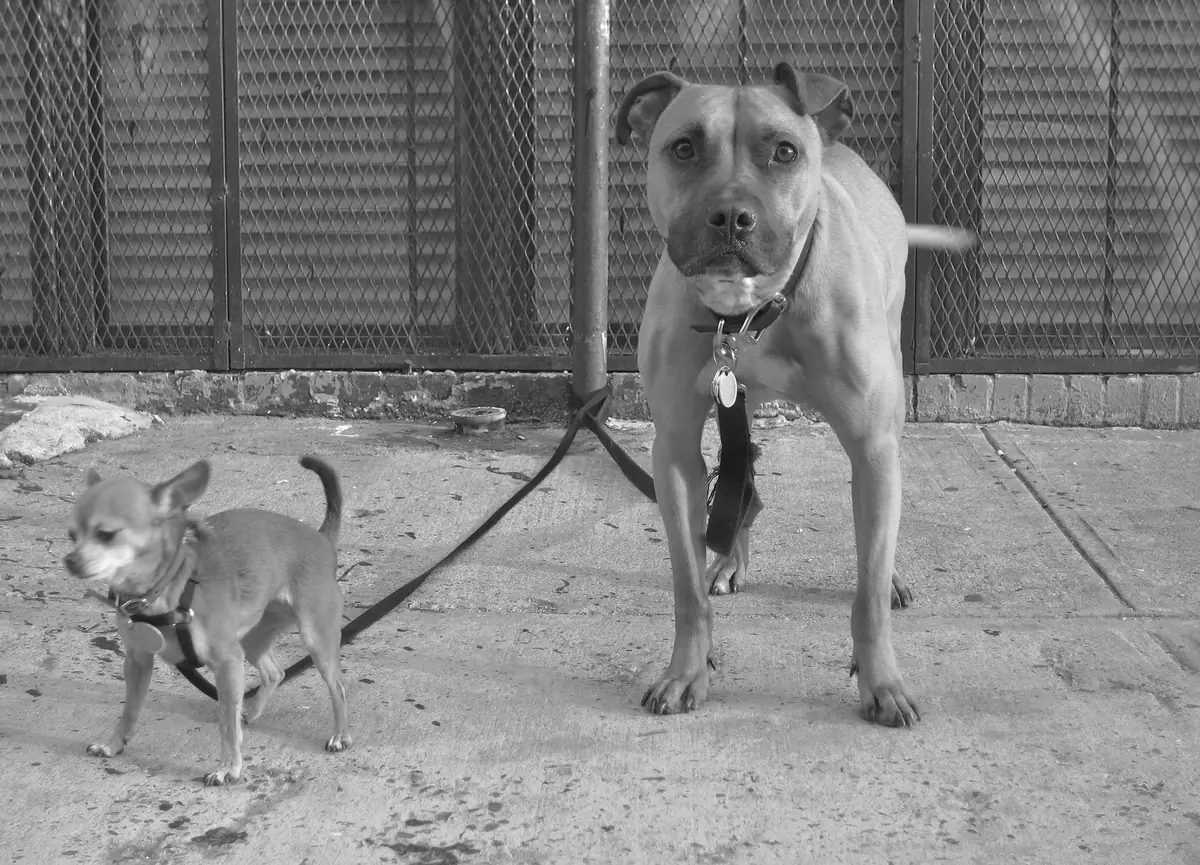
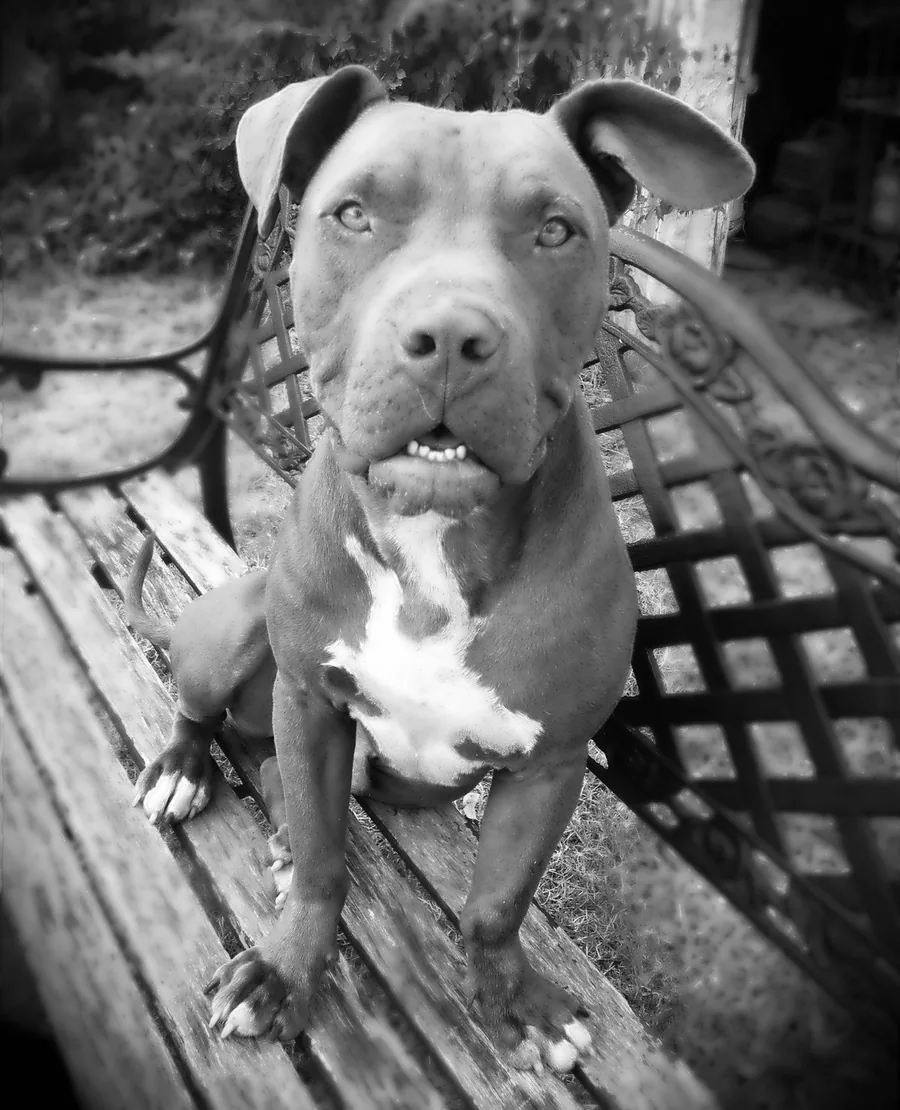
The mistake runs both ways. The sturdy fellow below was, his photographer wrote, sold as a Chihuahua puppy. The photo is tagged bulldog, pit bull and mongrel.
Labels have consequences. At those two shelters, dogs with any pit bull-type ancestry waited an average of 37.5 days for a home, compared with 19.7 days for dogs with none (Gunter et al., 2018). An earlier study concluded that removing breed labels “is a relatively low-cost strategy that will likely improve outcomes” for shelter dogs (Gunter et al., 2016). If a dog marked “pit mix” makes you smile, it may have been waiting a while. Our guide to figuring out your dog’s breed explains what DNA tests can tell you.
Housing, insurance and local rules: a short checklist
Nothing here is a reason to pass up a good dog. Most of it is a phone call or two, and it’s easier before adoption than after.
- The paperwork. Ask how the label was decided. If parentage is a guess, ask whether the records can say “mixed breed.” AVSAB says visual identification of breed is not reliable (AVSAB). Answer applications truthfully and keep any DNA report.
- Your lease, HOA or retirement community. Read the pet policy for both weight and breed limits, and get approval in writing. A small Chipit may pass a weight limit and still trip a breed rule.
- Insurance. The Insurance Information Institute says some insurers won’t cover certain breeds such as pit bulls, some decide case by case, and some don’t ask about breed. Pennsylvania and Michigan bar insurers from denying or canceling coverage for owners of particular breeds in some policies (Triple-I). If one says no, ask another.
- Local law. Where breed rules exist, they commonly cover pit bull-type dogs, and may require things like muzzling, spay or neuter surgery, or extra insurance (AVSAB). Several states don’t allow local breed-specific ordinances (Triple-I). Ask your city or county animal services how they treat mixes.
Both AVSAB and the ASPCA oppose breed-specific laws. The ASPCA supports breed-neutral laws that look at behavior and responsible ownership (AVSAB; ASPCA).
Is a Chipit right for me? A checklist for 50+ adopters
A few “no” answers don’t rule you out. They tell you what to plan for, or which dog to ask about.
- Yes / No: I know how big this particular dog is, or I’d be happy with a puppy at any size it reaches.
- Yes / No: I can lift this dog, or I have a ramp or a helper.
- Yes / No: I’ve walked this dog myself and felt steady.
- Yes / No: I’d enjoy a dog that wants to be in the room with me.
- Yes / No: Some barking at the door won’t cause trouble, or I’m ready to work on it.
- Yes / No: I’m willing to brush teeth daily and budget for dental care.
- Yes / No: I can introduce a new dog slowly to my other pets, or I have none.
- Yes / No: Visiting grandchildren can follow gentle-hands rules, with me right there.
- Yes / No: I’ve checked my lease, insurance and local rules.
- Yes / No: I’ve thought about who would care for this dog if I ever couldn’t.
A Chipit may suit you if you’re home a lot, like a daily walk, want an affectionate dog that’s easy to groom, and don’t need to know its exact recipe.
Consider a different dog if you need a guaranteed size, have toddlers or small pets this dog hasn’t been tested with, or need a very quiet home. Our best small dog breeds guide has other ideas.
One safety note: a little dog underfoot can be a trip hazard and a strong one can pull. Keep walkways lit, teach “wait” at stairs and doors, hold the leash in your hand rather than wrapping it around your wrist, and do a test walk before you adopt.
Costs to plan for
We found no reliable price data for this mix, so we don’t quote puppy prices. The ASPCA’s 2021 estimate for a dog is $1,391 a year, and $3,221 in the first year with one-time costs (ASPCA). Leave room for dental cleanings, a possible knee problem, training classes, and pet insurance or an emergency fund. Ask any pet insurer how it treats breed and mixes.
Adopting a Pitbull Chihuahua mix
Where to look
Search shelters for “Chihuahua mix,” “pit bull mix,” “terrier mix” and plain “mixed breed,” since labels vary. One rescue whose own website we checked in November 2026:
- Chihuahua Rescue & Transport is a nonprofit dedicated to rescuing Chihuahuas and Chihuahua mixes across the Midwest, Southeast and Southwest. Its adoption page says a home visit is required and that it doesn’t adopt outside its regions.
Listing a group here isn’t an endorsement, so ask your own questions. Foster-based rescues are especially helpful, because a foster family can tell you how the dog behaves in a real home. Our page on small dogs for adoption has more places to look.
Questions to ask the shelter or rescue
The ASPCA suggests leaning on shelter staff to help you find a good match (ASPCA). For a Chipit, ask:
- What is the label based on: known parents, a DNA test, or looks?
- What does the dog weigh now, and is it fully grown?
- How does it walk on a leash, and may I walk it myself?
- How is it with strangers, visitors and the doorbell? How much does it bark?
- How has it done with dogs, cats and children, in a home rather than a kennel?
- How does it feel about being picked up, and having its mouth and paws touched?
- Any history of guarding food, or of a bite or scuffle? What happened?
- What did the vet find on its knees, teeth, heart, eyes and skin?
- How does it handle being left alone?
- Is there a foster-to-adopt or trial period, and will you take the dog back if it doesn’t work out?
Give your dog a backup plan
A dog whose label can slow down rehoming is exactly the dog worth planning for. Naming a backup caregiver now, someone who knows your dog, has checked their own lease and insurance, and has agreed to step in, helps make sure your dog never has to go to a shelter. Our guide What Happens to Your Dog When You Die walks you through it, and the free My Dog’s Backup Plan worksheet records your dog’s routine, vet, quirks and favorite things. Bone Voyage is also building the pledge: a promise by a volunteer to adopt a specific older adult’s dog if that person dies or can no longer care for it. You can join the free list on the guide page.
Similar dogs to compare
- Chihuahua and American Bully vs Pit Bull, for each side of the family.
- Chihuahua Pomeranian mix and Jack Russell Chihuahua mix, two more Chihuahua crosses.
- Chihuahua terrier mix breeds, comparing the smaller Chihuahua and terrier crosses.
- Pitbull Lab mix, Boxer Pitbull mix, Shepherd and Pitbull mix and Rottweiler Pitbull mix, four more pit bull crosses.
Frequently Asked Questions
What do a pitbull and a Chihuahua look like mixed?
Looks vary a lot. Many people picture a broad head on a small, sturdy body with big ears and a short coat, but a mix can look nearly all one parent. The Chihuahua standard calls for a rounded head and large, erect ears in any color (AKC), while the American Pit Bull Terrier standard calls for a large, broad head and a smooth coat in any color except merle (UKC). Rupert, the puppy in our photos, is brindle with folded ears.
How big does a pitbull and Chihuahua mix get?
There is no documented size. The AKC lists the Chihuahua at 5 to 8 inches and no more than 6 pounds (AKC), the UKC gives American Pit Bull Terriers about 17 to 21 inches and 30 to 60 pounds (UKC), and the AKC lists American Staffordshire Terriers at 17 to 19 inches and 40 to 70 pounds (AKC). A mix can land almost anywhere between. Adopting an adult lets you see the size instead of guessing.
Are pitbull terrier mixes good dogs?
Many are. The UKC says American Pit Bull Terriers make excellent family companions and calls aggression toward people uncharacteristic of the breed, but says most show some dog aggression (UKC). A large study in Science found breed explains only about 9% of behavior differences between individual dogs (Morrill et al., 2022). Meet the dog, ask how it has lived with people and animals, and use reward-based training.
How much is a pitbull Chihuahua mix?
We found no reliable price data, so we don’t quote puppy prices. Adoption fees vary by shelter; Chihuahua Rescue & Transport, for example, lists a minimum adoption donation of $250 (CRT). Care costs more than the fee: the ASPCA’s 2021 estimate for a dog is $1,391 a year, and $3,221 in the first year (ASPCA).
Do Chipits bark a lot?
No study has measured it. The AKC rates the Chihuahua 5 out of 5 for barking (AKC) and the American Staffordshire Terrier 3 (AKC), so a Chipit that takes after the Chihuahua side may have plenty to say. Ask the shelter or foster how vocal a particular dog is. Blocking the view of passersby and rewarding quiet with small treats can help (ASPCA).
How long does a Chipit live?
No study has measured the mix. The AKC lists 14 to 16 years for the Chihuahua (AKC) and 12 to 16 for the American Staffordshire Terrier (AKC). A 2024 study of UK dogs put median survival at 11.8 years for Chihuahuas and 12.0 for crossbreeds of all kinds (McMillan et al., 2024). About half of dogs live past a median.
Can a pit bull and a Chihuahua have puppies together?
Yes, it’s possible, but the size gap makes the mother’s safety the main concern. Cornell’s veterinary college lists oversized puppies as a cause of difficult births and Chihuahuas among the dogs at higher risk (Cornell). We don’t suggest planning this pairing. If a Chihuahua may have mated with a much larger dog, call a vet right away.
Do pit bull rules apply to a Chihuahua pit bull mix?
They can. Where breed rules exist, they commonly cover dogs with a pit bull look (AVSAB), and some insurers won’t cover certain breeds such as pit bulls while others don’t ask about breed (Triple-I). Several states bar local breed-specific ordinances. Check with animal services, your landlord or HOA, and your insurer before you adopt, and ask how the dog’s label was decided.
Before you go
Whatever the kennel card says, you’ll be living with one particular dog, with its own size, history and sense of humor. Trust what you see, and what its foster family tells you, over anything on this page. And whichever dog comes home with you, decide now who would step in if you ever couldn’t.
Sources
- American Kennel Club, Chihuahua and American Staffordshire Terrier breed pages, Official Standard of the Chihuahua, Canine Partners, Hypoallergenic Dogs, Hypoglycemia in Dogs and How to Potty Train a Puppy
- United Kennel Club, American Pit Bull Terrier standard
- Staffordshire Terrier Club of America, Health Statement
- O’Neill DG et al. (2020). Demography and commonly recorded clinical conditions of Chihuahuas under primary veterinary care in the UK in 2016. BMC Veterinary Research 16:42.
- O’Neill DG et al. (2016). The epidemiology of patellar luxation in dogs attending primary-care veterinary practices in England. Canine Genetics and Epidemiology 3:4.
- Rimbault M et al. (2013). Derived variants at six genes explain nearly half of size reduction in dog breeds. Genome Research 23(12):1985-95.
- McMillan KM et al. (2024). Longevity of companion dog breeds: those at risk from early death. Scientific Reports 14:531 (breed medians in Supplementary Table S3).
- Hart BL et al. (2020). Assisting decision-making on age of neutering for mixed breed dogs of five weight categories. Frontiers in Veterinary Science 7:472.
- Bellumori TP et al. (2013). Prevalence of inherited disorders among mixed-breed and purebred dogs: 27,254 cases (1995-2010). JAVMA 242(11):1549-55.
- Duval JM et al. (1999). Breed, sex, and body weight as risk factors for rupture of the cranial cruciate ligament in young dogs. JAVMA 215(6):811-4.
- Idowu O, Heading K (2018). Hypoglycemia in dogs: Causes, management, and diagnosis. The Canadian Veterinary Journal 59(6):642-649.
- American College of Veterinary Surgeons, Patellar Luxations, Canine Hip Dysplasia and Cranial Cruciate Ligament Disease
- Cornell Riney Canine Health Center, Dystocia in dogs, Tracheal Collapse and Periodontal Disease
- Merck Veterinary Manual, Dystocia in Small Animals
- Morrill K et al. (2022). Ancestry-inclusive dog genomics challenges popular breed stereotypes. Science 376(6592):eabk0639.
- Gunter LM et al. (2018). A canine identity crisis: Genetic breed heritage testing of shelter dogs. PLOS ONE 13(8):e0202633.
- Gunter LM et al. (2016). What’s in a name? Effect of breed perceptions & labeling. PLOS ONE 11(3):e0146857.
- Olson KR et al. (2015). Inconsistent identification of pit bull-type dogs by shelter staff. The Veterinary Journal 206(2):197-202.
- Voith VL et al. (2009). Comparison of adoption agency breed identification and DNA breed identification of dogs. Journal of Applied Animal Welfare Science 12(3):253-62.
- American Veterinary Society of Animal Behavior, Position Statement on Humane Dog Training (2021) and Position Statement on Breed-Specific Legislation (2014)
- Insurance Information Institute, Spotlight on: Dog bite liability
- ASPCA, Barking, Cold Weather Safety Tips, Cutting Pet Care Costs (2021 cost update), Position Statement on Breed-Specific Legislation and Finding your Fido
- Chihuahua Rescue & Transport (its own website)
- Photos: Flickr and Wikimedia Commons contributors, credited under each image. Full license records are kept in this site’s image-credits file.