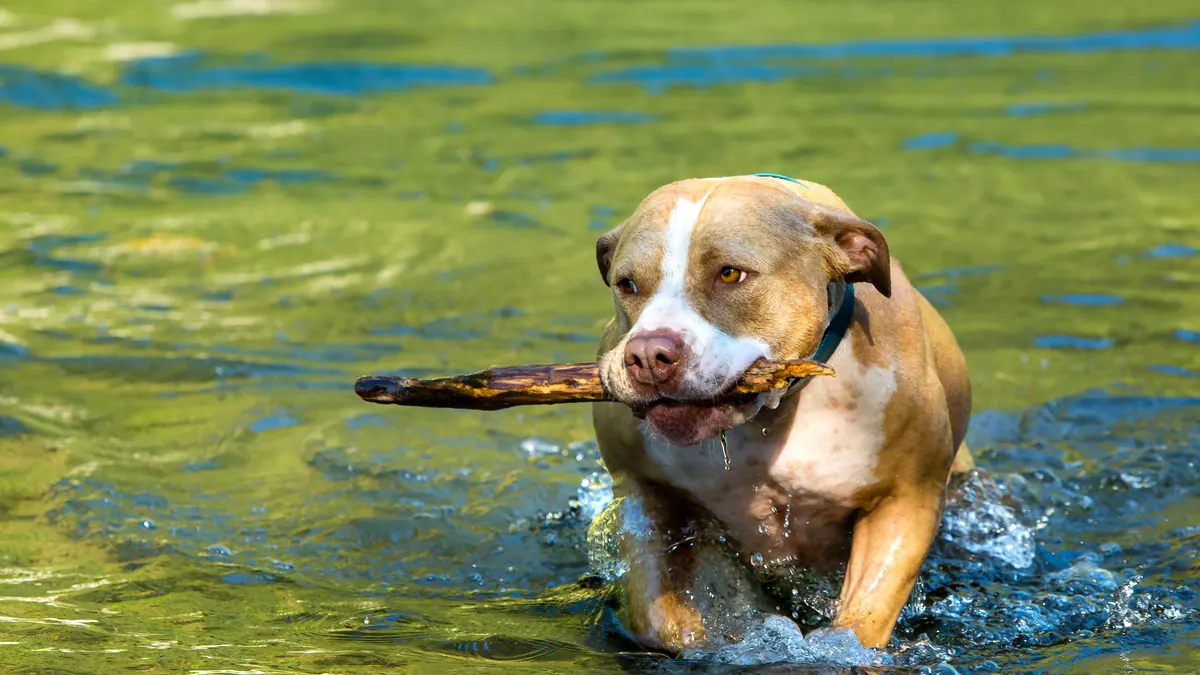
Top photo: a Labrabull its owner calls “our pitador” fetching a stick. Photo by Sheila Sund, CC BY 2.0, cropped.

A Pitbull Lab mix is a cross between a Labrador Retriever and a pit bull-type dog such as an American Pit Bull Terrier or American Staffordshire Terrier. You’ll hear it called a Labrabull or a Pitador. It’s typically a medium to large, short-coated, strong and energetic dog, but because no kennel club recognizes the cross, there’s no standard for how one should look or act.
You’ll often meet one through a shelter or rescue, with “Lab/Pit mix” written on the kennel card. Here’s what the parent breeds’ official sources and veterinary research can tell you about size, health, temperament and care, and where the honest answer is “it depends on the dog.”
At a glance
- Also called: Labrabull, Pitador, Lab Pit, Bullador. Informal names, not a recognized breed.
- Adult size: medium to large. Labradors are 21.5 to 24.5 inches and 55 to 80 pounds (AKC Labrador). American Pit Bull Terriers have a desirable weight of 30 to 60 pounds and height of about 17 to 21 inches (UKC standard).
- Lifespan frame of reference: the AKC lists 11 to 13 years for Labradors and 12 to 16 years for American Staffordshire Terriers (AKC AmStaff). There is no published figure for the mix.
- Energy: high. The AKC says both parent breeds need a lot of exercise.
- Grooming: easy, but expect shedding. Labs have a double coat that sheds; AmStaffs have a short, stiff coat that needs a weekly brush.
- With kids and other pets: often good with people; some pit bull-type dogs are selective with other dogs. Ask about the individual dog.
- Health to know about: hip and elbow problems, weight gain, skin allergies and ear infections, plus a handful of inherited conditions each parent breed screens for. Details and sources below.
- Good fit for: an active person or household with time for daily exercise and training, a secure fence, and a landlord and insurer who are fine with a pit bull-type mix.
What a Labrabull actually is
A Labrabull is a first-generation cross, or a dog a few generations removed, with a Labrador Retriever on one side and a pit bull-type dog on the other. “Pit bull” itself isn’t one breed. The ASPCA describes the “pit bull” class of dogs as including American Pit Bull Terriers and several related breeds (ASPCA), and researchers studying shelter labels counted the American Pit Bull Terrier, American Staffordshire Terrier, Staffordshire Bull Terrier, “pit bull” and their mixes as pit bull-type breeds (Olson et al., 2015).
The two sides of the family were bred for very different jobs:
- The Labrador Retriever is, in the AKC’s words, “the traditional waterdog of Newfoundland, long employed as a duck retriever and fisherman’s mate.” The breed’s standard describes the ideal disposition as “kindly, outgoing, tractable,” eager to please and nonaggressive (AKC Labrador). Our profile Meet the Labrador Retriever covers the breed in depth.
- The pit bull-type breeds descend from bulldog and terrier crosses made in England, Ireland and Scotland in the nineteenth century (UKC standard). The AKC is frank that these bull-type terriers got their start in the blood sports of the 1700s and 1800s, long since outlawed, and that by the mid-1800s they had arrived in America (AKC AmStaff). Today the UKC standard calls the breed’s essential characteristics “strength, confidence, and zest for life.”
A Labrabull can inherit any blend of those traits. Two puppies from the same litter can look and behave quite differently, so there’s no “correct” Labrabull, only individual dogs.


How big does a Pitbull Lab mix get?
The honest way to estimate size is to look at the parents’ published ranges. Here’s how the Labrador compares with the two pit bull-type breeds that have official breed standards:
Size and lifespan
| Height | Weight | Lifespan | |
|---|---|---|---|
| Labrador | 21.5 to 24.5 in | 55 to 80 lb | 11 to 13 yrs |
| Pit Bull (UKC) | about 17 to 21 in | 30 to 60 lb | Not listed |
| AmStaff (AKC) | 17 to 19 in | 40 to 70 lb | 12 to 16 yrs |
| Labrabull | Varies | Varies | Not studied |
By sex: male Labs are 22.5 to 24.5 inches and 65 to 80 pounds, females 21.5 to 23.5 inches and 55 to 70 pounds. The UKC’s desirable weight for American Pit Bull Terriers is 35 to 60 pounds for males and 30 to 50 for females, with heights of about 18 to 21 inches for males and 17 to 20 for females. AmStaff males are 18 to 19 inches and 55 to 70 pounds, females 17 to 18 inches and 40 to 55 pounds.
Traits (AKC ratings, 1 = low, 5 = high)
| AKC rating | Lab | AmStaff |
|---|---|---|
| Shedding | 4 | 2 |
| Energy | 5 | 3 |
| Good with young kids | 5 | 3 |
| Good with other dogs | 5 | 3 |
A Labrabull can land anywhere between the two on each of these.
The UKC doesn’t rate traits, but its American Pit Bull Terrier standard says the breed is “noted for their love of children” and that “most APBTs exhibit some level of dog aggression.”
Coat, colors and health screening
- Labrador: thick, water-repellent double coat in yellow, black or chocolate. AKC-recommended screening: hips, elbows, eyes, plus DNA tests for centronuclear myopathy (CNM), progressive retinal atrophy (PRA-prcd) and exercise-induced collapse (EIC).
- American Pit Bull Terrier: glossy, smooth, close coat in any color or pattern except merle. The UKC standard doesn’t list health tests.
- American Staffordshire Terrier: short, stiff, glossy coat in many colors and patterns. AKC-recommended screening: hips, heart, thyroid, plus a DNA test for NCL4A (cerebellar ataxia).
- Labrabull: short coat in almost any color; how much undercoat varies. Ask the shelter or your vet what screening makes sense.
Sources: AKC Labrador, UKC American Pit Bull Terrier standard, AKC American Staffordshire Terrier. The UKC notes its height figures are “a general and approximate guideline only.”
Put together, the parents’ published weights run from about 30 pounds (a small female pit bull) to 80 pounds (a big male Lab). A Labrabull can land anywhere in that span, and the occasional dog lands outside it, especially if other breeds are in the family tree. Siblings can differ a lot. If you’re adopting a puppy, ask what the shelter knows about the parents. With an adult dog, what you see is what you get.
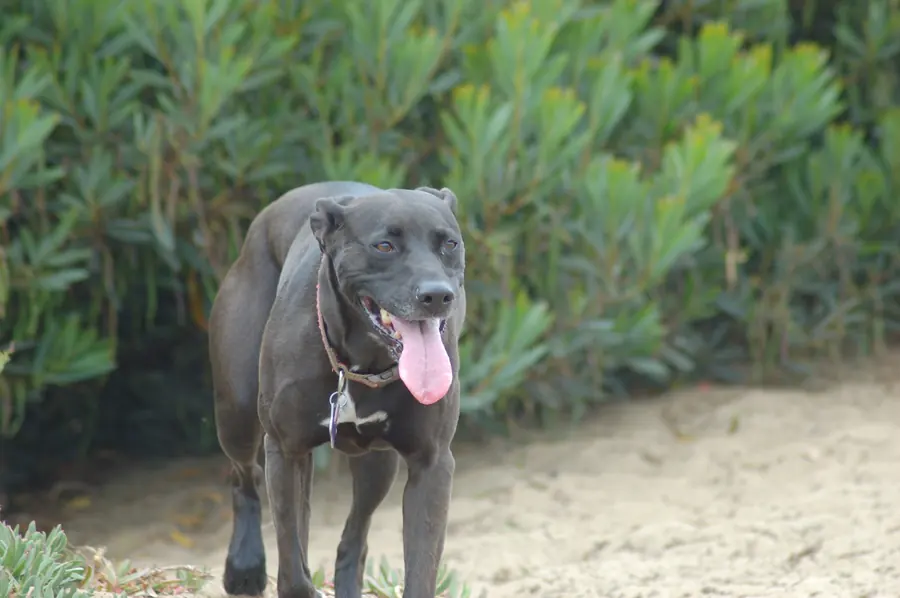

Coat and color: the black Lab pitbull mix and others
Labs come in three colors: yellow, black and chocolate (AKC Labrador). In a UK study of Labradors under veterinary care, black was the most commonly recorded color, at 44.6% of dogs, ahead of yellow and chocolate (McGreevy et al., 2018). The UKC accepts American Pit Bull Terriers in any color or pattern except merle. So a Labrabull can come out in almost any color, sometimes with white on the chest or toes. A black Lab pitbull mix is the version many people picture, but chocolate, tan, fawn, brindle and gray-coated Labrabulls are all out there.
The coat is short either way. How much undercoat, and how much shedding, depends on which parent the dog takes after. The AKC describes the Lab’s coat as a “thick, water-repellant double coat that sheds” and rates Labs 4 out of 5 for shedding, while the AmStaff’s “short, stiff coat” rates 2 out of 5.
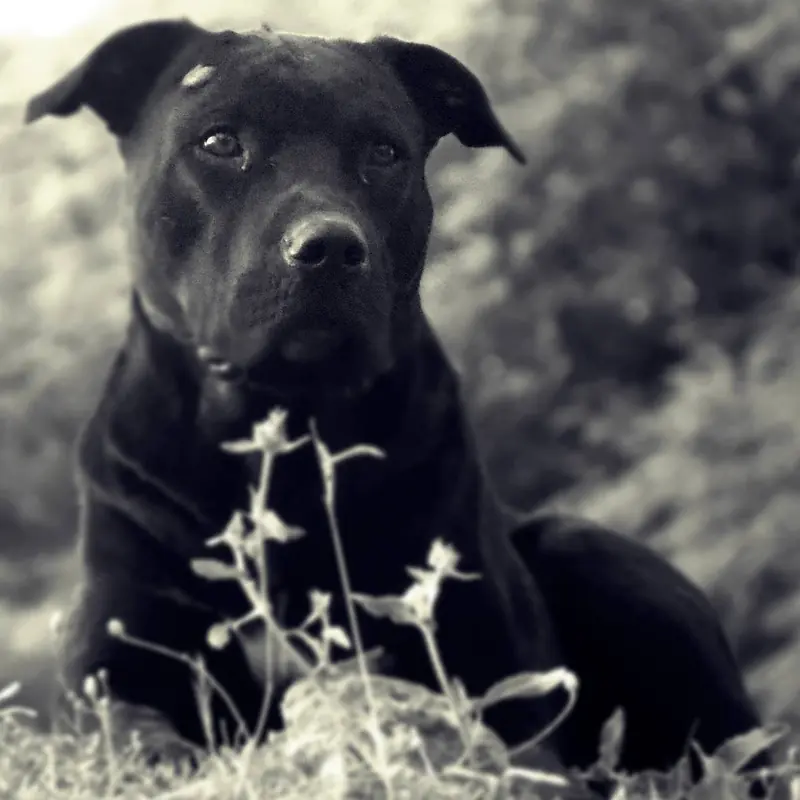

Temperament: what to realistically expect
The Lab side. The AKC calls Labs “friendly, outgoing, and high-spirited companions” who “bond with the whole family” and “socialize well with neighbor dogs and humans alike.” It rates them 5 out of 5 for being good with young children and with other dogs (AKC Labrador).
The pit bull side. The UKC standard says American Pit Bull Terriers “make excellent family companions and have always been noted for their love of children,” and that they are “extremely friendly, even with strangers,” which makes them “not the best choice for a guard dog.” The same standard is candid that “most APBTs exhibit some level of dog aggression,” and that because of that and the breed’s “powerful physique,” the dog needs an owner who will carefully socialize and train it (UKC standard). The AKC describes AmStaffs as “smart, confident, good-natured companions,” and also warns that dog aggression “can develop even in well-socialized Am Staffs” (AKC AmStaff).
Put together, many Labrabulls are affectionate, people-loving dogs with a lot of energy and a strong body. What varies most from dog to dog is how they get along with other dogs and how much they pull and jump. In daily life:
- People: most are friendly and want to be part of everything. Neither parent breed is a good pick if you want a guard dog.
- Other dogs: some Labrabulls are social butterflies, others prefer to be the only dog. Introductions should be slow and supervised.
- Cats and small pets: ask whether this specific dog has lived with them.
- Children: many do well with kids, but a strong, bouncy dog can knock a small child, or an older adult, off their feet. Supervise, and teach “sit” for greetings early.
Breed alone is a weak guide to any one dog’s behavior. That’s partly because shelter breed labels are often wrong (more on that below), and partly because upbringing and experience matter. The ASPCA opposes laws that regulate dogs by breed and says such laws “do not achieve” their public-safety aims (ASPCA).
Exercise needs
Plan for an active dog. The AKC describes the Lab as “an exuberant, very energetic breed that needs lots of exercise every day,” adding that a Lab who doesn’t get enough “is likely to engage in hyperactive and/or destructive behavior.” Retrieving and swimming are the breed’s favorite activities. For the AmStaff, the AKC says the breed “requires a lot of exercise,” and that leaving the dog in the yard all day “is not the right approach” because the AmStaff “is a people-oriented dog who thrives when he is made part of the family” (AKC Labrador, AKC AmStaff).
For most Labrabulls that means daily walks plus real play: fetch, swimming, a flirt pole, or a dog sport. The AKC notes both parent breeds take part in sports such as obedience, agility and dock diving. Puzzle toys and short training games help tire the mind as well as the body.
A fence matters too. The UKC calls the American Pit Bull Terrier “one of the most capable canine climbers,” so “good fencing is a must.”
Training
Both parents are smart and want to please, and both are strong. The AKC says early socialization and puppy classes are “vital” for Labs, ideally with gentle exposure to many people, places and situations between 7 weeks and 4 months of age. For AmStaffs it calls them “a necessity,” given the breed’s “strong will, physical strength, and exuberance,” while noting that its “intelligence and desire to please make training a fun, easy process.” Chewing and digging can be stubborn habits (AKC Labrador, AKC AmStaff).
What works well with this mix:
- Short, upbeat sessions using food and toys as rewards. Labs in particular are food-motivated (see diet below), so count training treats as part of the day’s food.
- Loose-leash walking first. A 60-pound dog that pulls is a real risk to your balance. Practice before you need it, and ask a trainer about harness options.
- Calm greetings. Teach “sit to say hello” early so a happy dog doesn’t jump on visitors.
- Dog-to-dog skills. Go slow with new dogs, watch body language, and don’t leave a Labrabull alone with other dogs until you know how it does.
We recommend kind, reward-based methods. If you hit a wall, a certified trainer who uses positive reinforcement is money well spent.
Grooming
Easy. A weekly brush keeps the coat in good shape, more often during heavy shedding if your dog has the Lab’s double coat. The AKC suggests occasional baths for Labs and a quick weekly once-over with a soft bristle brush for AmStaffs, plus regular nail trims and frequent tooth brushing for both (AKC Labrador, AKC AmStaff). Check the ears regularly too; ear infections are among the most common problems recorded in Labs (see the health section).
Diet basics
Labs are famous for their appetites, and the research backs that up. Cambridge researchers found a deletion in a gene called POMC in about 12% of the Labrador gene pool they studied, and it was associated with higher body weight, more body fat and “greater food motivation” (Raffan et al., 2016). In a UK study of Labradors’ veterinary records, overweight and obesity was the single most common problem recorded (McGreevy et al., 2018). The AKC’s feeding advice for both parent breeds is the same: a good-quality diet suited to the dog’s age, watch calories and weight, and don’t overdo treats.
In practice: measure meals, count treats, and ask your vet what a healthy weight looks like for your dog. A lean Labrabull is easier on its joints at every age.
Health issues to know about
A mix can inherit health problems from either parent, and where both parents share a problem, the mix can still get it. Being a mix is not a guarantee of better health. The conditions below are documented for the parent breeds by the AKC, the breed clubs and veterinary research. This is not a diagnosis checklist; if something worries you, talk to your vet.
- Hips and elbows. Hip and elbow screening is recommended for Labs; hip screening for AmStaffs (AKC Labrador, AKC AmStaff). Large dogs in general are at higher risk (Witsberger 2008).
- Weight gain. A POMC gene variant is linked to appetite and weight in Labs, and overweight was the most common recorded problem in UK Labs (Raffan 2016, McGreevy 2018). The AKC warns that some AmStaffs are prone to getting overweight too.
- Skin. Labs are predisposed to atopic dermatitis, or skin allergies (Mazrier 2016). AmStaff breeders screen for skin and coat allergies, and AmStaffs have a high risk of juvenile generalized demodicosis, a mange-mite disease (AKC AmStaff, Plant 2011).
- Ears. Ear infections (otitis externa) are among the most common problems in UK Labs (McGreevy 2018). The AKC advises checking AmStaff ears regularly.
- Joints in general. Degenerative joint disease is among the most common problems recorded in UK Labs (McGreevy 2018).
- Heart. Lab breeders screen for heart disorders; a cardiac exam is recommended for AmStaffs (AKC breed pages).
- Muscles and collapse (Lab side). Exercise-induced collapse (EIC) and centronuclear myopathy (CNM) are inherited conditions in Labs (Patterson 2008, Gentilini 2011).
- Eyes (Lab side). Progressive retinal atrophy (PRA) is on the AKC’s Lab screening list.
- Nervous system (AmStaff side). Cerebellar ataxia is a progressive loss of muscle coordination that the AKC says first appears between ages 3 and 5; a DNA test (NCL4A) is available (AKC AmStaff, Abitbol 2010).
- Thyroid (AmStaff side). A thyroid evaluation is on the AKC’s AmStaff screening list.
- Bloat (Lab side). “Like other large, deep-chested dogs, Labs can develop a life-threatening stomach condition called bloat” (AKC Labrador). Learn the signs, and call a vet right away if you see them.
Joints: the shared concern
Both parent breeds have hip screening on the AKC’s recommended test list. A study of more than 1.2 million dogs in a US veterinary medical database found that “large- and giant-breed dogs were more likely than other dogs” to have hip dysplasia, cruciate ligament disease, or both (Witsberger et al., 2008). Keeping a Labrabull lean, building muscle with regular exercise, and calling your vet about any limping, stiffness or trouble getting up are the practical takeaways.
Skin: watch the itch
Skin trouble shows up on both sides of the family. An Australian study of breed risk noted that the Labrador Retriever is one of five breeds recognized worldwide as predisposed to atopic dermatitis (Mazrier et al., 2016). The AKC lists skin and coat allergies among the conditions AmStaff breeders screen for. A study of juvenile-onset generalized demodicosis, a mange-mite skin disease in young dogs, found the American Staffordshire Terrier had the strongest association of any breed identified (Plant et al., 2011). Constant licking, scratching, hair loss or red skin are all worth a vet visit.
Exercise-induced collapse
Exercise-induced collapse (EIC) is an inherited condition in Labs, linked to a change in the dynamin 1 (DNM1) gene, that causes “muscle weakness, incoordination and life-threatening collapse after intense exercise” (Patterson et al., 2008; University of Minnesota). A DNA test is available. If your Labrabull ever wobbles or collapses during hard play, stop, cool the dog down, and call your vet.
Lifespan
No study has measured the Labrabull’s lifespan, so any single number you see online is a guess. As a frame of reference, the AKC lists 11 to 13 years for Labradors and 12 to 16 years for American Staffordshire Terriers. A study of UK veterinary records estimated life expectancy at birth of about 11.8 years for Labradors and 11.3 years for Staffordshire Bull Terriers, another pit bull-type breed (Teng et al., 2022). In a separate UK study, chocolate Labradors had a shorter median lifespan than Labs of other colors, 10.7 years versus 12.1 (McGreevy et al., 2018).
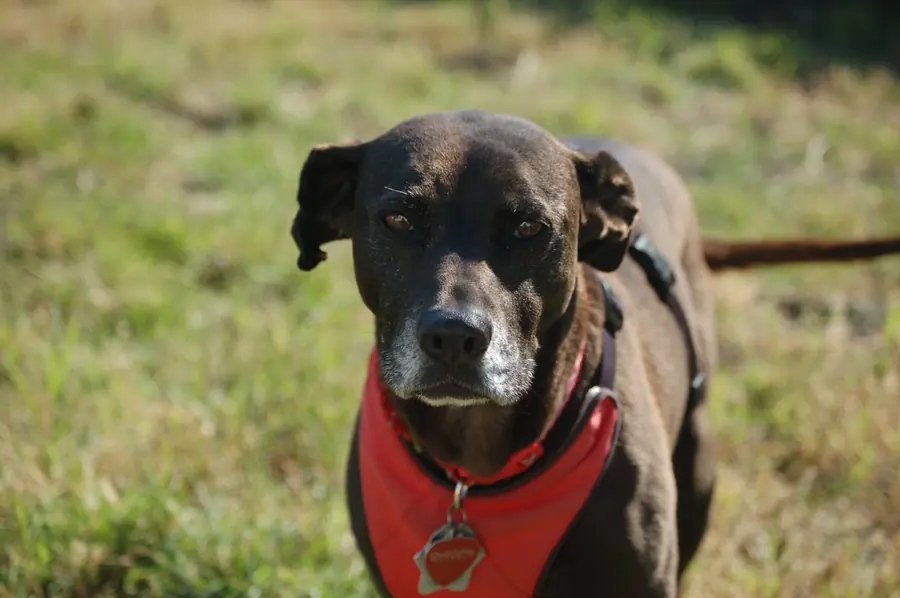
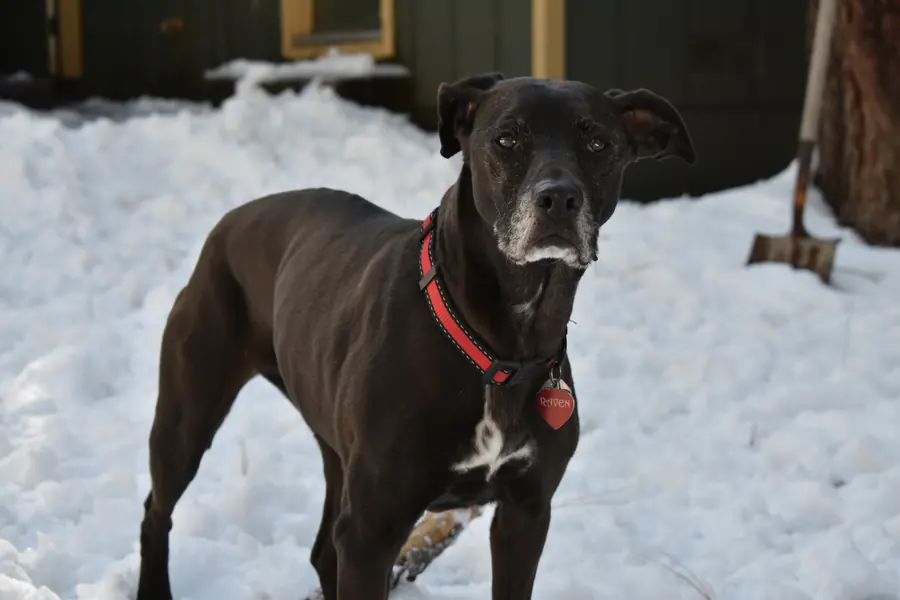
Labrabulls can make wonderful seniors, like the gray-muzzled dog pictured below. Weight, joint care, dental care and regular checkups will shape any one dog’s years more than its breed label.


Pitbull Lab mix puppies
If you’re looking at a Lab mix with pitbull puppy, know that adult size and temperament are especially hard to predict from a young puppy. You’re guessing from two parents who may themselves be mixes. Puppies also mean house training, chewing, and the socialization period the AKC highlights, between 7 weeks and 4 months.
There’s no breed club or recognized health-testing program for this cross, so be cautious with anyone selling “Labrabull puppies.” Red flags include not being able to meet the mother, no health screening on the parents, claims that the mix is “healthier” than either parent, and pressure to pay a deposit or ship a puppy sight unseen.
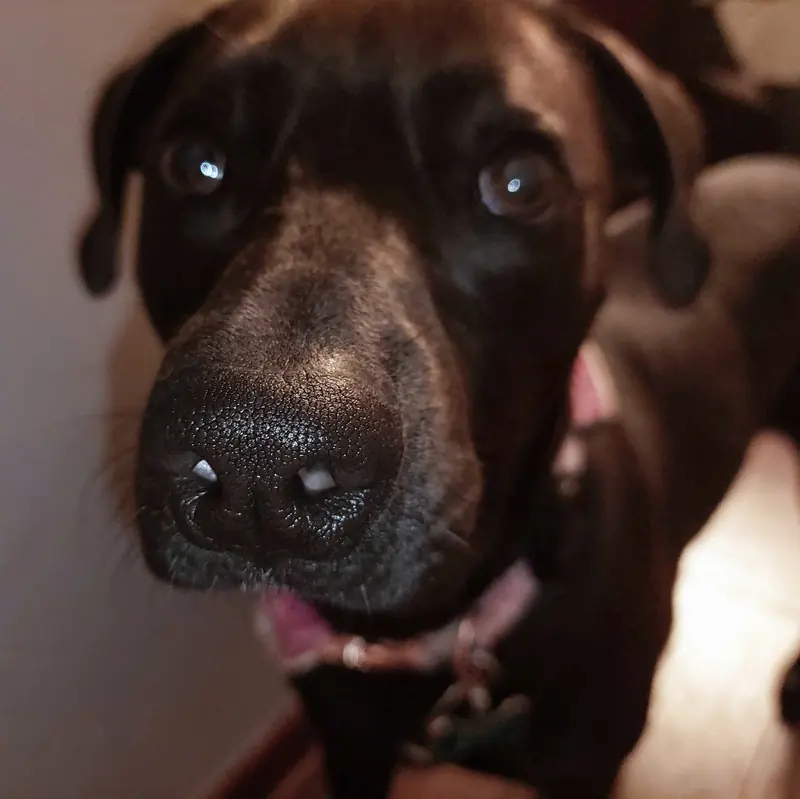

For many people, especially first-time owners or anyone over 50, an adult Labrabull from a shelter or foster home is the easier path. You can see the dog’s actual size, energy level and manners before you commit.
Is that shelter dog really a Lab pit mix?
Maybe, maybe not. Shelter breed labels are often a staff member’s best guess from looks, and research shows those guesses are often wrong:
- In a study of 120 shelter dogs, staff identified 52% as pit bull-type by looks, but DNA identified only 21%. The authors concluded that “visual identification of pit bull-type dogs was unreliable” (Olson et al., 2015).
- An earlier study comparing adoption-agency breed labels with DNA results found that only 25% of the dogs (4 of 16) actually had genetic evidence of the breed the agency had named (Voith et al., 2009).
- Labels change outcomes, too. At one shelter, dogs labeled pit bull-type stayed a median of 35 days before adoption, compared with 6 days for similar-looking dogs labeled as other breeds. When the shelter stopped listing breed on kennel cards, the share of pit bull-type dogs adopted rose from 52% to 64% (Gunter, Barber and Wynne, 2016).
The takeaway: meet the dog, not the label. A DNA test can satisfy your curiosity later; our guide to figuring out your dog’s breed explains the options.
Housing, insurance and local laws: check before you adopt
This is the part most Pitbull Lab mix guides skip, and it can decide whether you get to keep the dog. Because a Labrabull may look like, or be labeled as, a pit bull-type dog, check these before you sign adoption papers:
- Your lease or HOA. Some rental and community rules restrict pit bull-type dogs. Ask your landlord or HOA in writing, and ask how they decide what counts as a pit bull.
- Your homeowners or renters insurance. The Insurance Information Institute says “some insurance companies will not insure homeowners who own certain breeds of dogs categorized as dangerous, such as pit bulls,” while others decide case by case based on the individual dog. It also notes that at least two states, Pennsylvania and Michigan, have laws that prohibit insurers from canceling or denying coverage based on breed in some policies (Insurance Information Institute). Call your insurer before adopting.
- Local ordinances. Rules vary by city and county. The ASPCA reports that 18 states have expressly banned laws that single out particular breeds, and it opposes breed-specific laws (ASPCA). Its statement on breed laws describes how, in Ohio under a former state law, pit bull guardians had “great difficulty locating housing and obtaining homeowners’ or renters’ liability insurance” (ASPCA). Check your own city or county’s animal ordinance.
None of this is a reason not to adopt. It’s a reason to sort out the paperwork first, so you never have to choose between your home and your dog.
Is a Labrabull right for you?
Probably a great fit if:
- You want an affectionate, people-loving dog that wants to be part of your day.
- You can give a strong, energetic dog daily exercise and play, rain or shine.
- You have a secure fence or are happy to do every outing on leash.
- You’re up for training, especially loose-leash walking and polite greetings.
- Your lease, HOA and insurer are fine with a pit bull-type mix.
Think it over carefully if:
- Your balance or grip isn’t what it used to be and a 60-pound dog pulling on the leash would be a real fall risk. Consider an older, calmer adult dog you’ve walked first.
- You already have a dog or cat and can’t do slow, supervised introductions.
- The dog would be alone for long stretches most days.
- You rent, and your landlord or insurer restricts pit bull-type dogs.
- A big vet bill would be a crisis. Joint and skin problems can be costly, so price pet insurance early.
Adopting a Pitbull Lab mix
Where to look
Start with shelters and rescues. Search for “Lab mix,” “Labrador mix,” “pit bull mix” and “terrier mix,” since labels are often a best guess. It’s also worth checking Lab rescues and pit bull rescues, which may list mixes. Ask about foster-based rescues too: a foster family can tell you how the dog behaves in a real home.
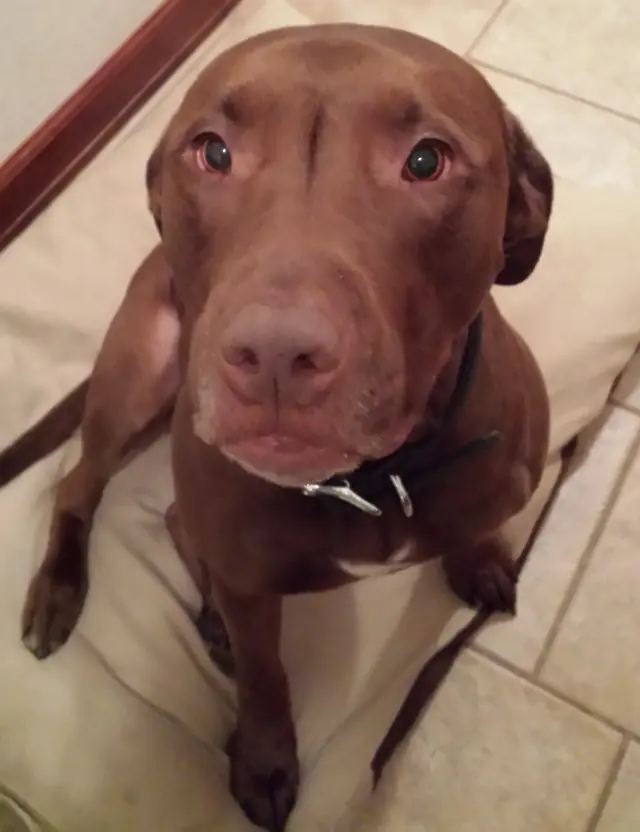

Questions to ask the shelter or rescue
The ASPCA suggests leaning on shelter staff “to help play matchmaker” and making sure the dog’s personality and your lifestyle match (ASPCA). For a Labrabull, ask:
- How does the dog walk on a leash? Can I walk it myself before deciding?
- How has it done with other dogs, cats, children and visitors? In a foster home or only in the kennel?
- Any history of guarding food or toys, or of a bite or scuffle? What happened?
- How does it handle being left alone, and being handled for nail trims and baths?
- Any known skin, ear, joint or weight issues? What do the vet records show?
- What does the adoption fee include (spay or neuter, vaccines, microchip)?
- Is there a foster-to-adopt or trial period, and what happens if it doesn’t work out?
Our list of 9 questions to ask when adopting a dog covers the general ones.
Make a plan for the long haul
The ASPCA also asks adopters a question worth sitting with: “If your circumstances change, will you still be able to care for your pet?” A healthy Labrabull may be with you for a decade or more. Naming a backup caregiver now, someone who knows your dog and has agreed to step in, helps make sure your dog never has to go back to a shelter. Our guide What Happens to Your Dog When You Die and the free My Dog’s Backup Plan worksheet walk you through it.
Similar dogs to compare
If a Labrabull isn’t quite right, these related guides may help:
- Meet the Labrador Retriever, the Lab side of the family on its own.
- Boxer Lab mix, another strong, high-energy Lab cross.
- Labrador German Shepherd mix, the Sheprador, a bigger Lab cross with a herding-dog side.
- Weimaraner Pit Bull mix, a taller, hunting-dog take on the pit bull mix.
- Mountain Cur Pit Bull mix and Vizsla Pit Bull mix, two more working-dog pit crosses.
- Pitsky, the Pit Bull and Siberian Husky mix.
- Rottweiler Pitbull mix, the Pitweiler, a Rottweiler and pit bull cross.
- Pitbull and Chihuahua mix, the Chipit, a pit bull cross whose size is hard to predict.
- American Bully vs Pit Bull, how the American Pit Bull Terrier compares with the American Bully.
- Our Lab mixes directory for other Labrador crosses.
Frequently Asked Questions
What is a Pitbull Lab mix called?
A Pitbull Lab mix is most often called a Labrabull or a Pitador, and you’ll also see Lab Pit or Bullador. These are informal nicknames. No major kennel club recognizes the cross and there is no breed standard for it, so looks, size and temperament vary from dog to dog.
How big do Pitbull Lab mixes get?
There is no official size for the mix. As a frame of reference, the AKC lists Labrador Retrievers at 21.5 to 24.5 inches and 55 to 80 pounds, and the UKC standard gives American Pit Bull Terriers a desirable weight of 30 to 60 pounds and height of about 17 to 21 inches. Most Labrabulls land somewhere in that overall span, and individual dogs can fall outside it.
How long do Pitbull Lab mixes live?
No study has measured the mix’s lifespan. The AKC lists 11 to 13 years for Labradors and 12 to 16 years for the American Staffordshire Terrier, one of the pit bull-type breeds. A large UK veterinary-records study estimated a life expectancy of about 11.8 years for Labradors. Weight, exercise and regular vet care will shape any individual dog’s years more than its label.
Are Pitbull Lab mixes good family dogs?
Many are. The AKC describes Labs as friendly, outgoing companions, and the UKC standard says American Pit Bull Terriers make excellent family companions. But both parents are strong, energetic dogs, and pit bull-type breeds can be selective with other dogs. Judge the individual dog: ask the shelter how it has done with children, visitors, dogs and cats.
Are Pitbull Lab mixes aggressive?
Not as a rule. The UKC standard says aggressive behavior toward humans is uncharacteristic of the American Pit Bull Terrier, and the AKC calls the ideal Labrador nonaggressive. The UKC and AKC both note that some pit bull-type dogs are not good with other dogs, so careful socialization matters. A specific dog’s history tells you far more than its breed label.
Do Lab pit mixes shed?
Yes. The AKC rates Labradors 4 out of 5 for shedding and American Staffordshire Terriers 2 out of 5, so expect a Labrabull to shed somewhere in that range. Neither parent is a low-shedding breed, so this mix isn’t a good pick if you need a dog that leaves no hair.
How much exercise does a Labrabull need?
A lot. The AKC says Labs need lots of exercise every day and that American Staffordshire Terriers require a lot of exercise and thrive when they’re part of the family. Plan on daily walks plus play such as fetch or swimming, and adjust for your dog’s age and health with your vet.
Is my shelter dog really a Lab pit mix?
Maybe not. In one study, shelter staff labeled 52% of dogs as pit bull-type by looks, but DNA identified only 21% as pit bull-type. Only a DNA test can tell you, and the dog in front of you matters more than the label either way.
Before you go
Whatever its kennel card says, the Labrabull in front of you is one specific dog with its own history and quirks, so weigh what you learn about that dog more heavily than anything on this page. And whatever dog you bring home, it’s worth deciding now who would care for it if you ever couldn’t. That’s what our A Home for Life guide is about. For more breed profiles, browse our breeds and adoption guides.
Sources
- American Kennel Club, Labrador Retriever breed page (height, weight, life expectancy, trait ratings, colors, history, temperament, exercise, training, grooming, nutrition, health and recommended tests)
- American Kennel Club, American Staffordshire Terrier breed page (height, weight, life expectancy, trait ratings, history, temperament, exercise, training, grooming, health and recommended tests)
- United Kennel Club, American Pit Bull Terrier breed standard (history, temperament, coat, colors, weight and height guidelines)
- ASPCA, What is breed-specific legislation?, Position statement on pit bulls, Position statement on breed-specific legislation and Tips for adopting
- Insurance Information Institute, Spotlight on dog bite liability (breed restrictions in homeowners insurance; state laws)
- Olson KR et al. (2015). Inconsistent identification of pit bull-type dogs by shelter staff. The Veterinary Journal.
- Gunter LM, Barber RT, Wynne CDL (2016). What’s in a name? Effect of breed perceptions and labeling on attractiveness, adoptions and length of stay for pit-bull-type dogs. PLoS One.
- Voith VL et al. (2009). Comparison of adoption agency breed identification and DNA breed identification of dogs. Journal of Applied Animal Welfare Science (summary via Purdue University Center for Animal Welfare Science).
- McGreevy PD et al. (2018). Labrador retrievers under primary veterinary care in the UK: demography, mortality and disorders. Canine Genetics and Epidemiology.
- Teng KT et al. (2022). Life tables of annual life expectancy and mortality for companion dogs in the United Kingdom. Scientific Reports.
- Raffan E et al. (2016). A deletion in the canine POMC gene is associated with weight and appetite in obesity-prone Labrador retriever dogs. Cell Metabolism.
- Witsberger TH et al. (2008). Prevalence of and risk factors for hip dysplasia and cranial cruciate ligament deficiency in dogs. JAVMA.
- Mazrier H et al. (2016). Canine atopic dermatitis: breed risk in Australia and evidence for a susceptible clade. Veterinary Dermatology.
- Plant JD et al. (2011). A case-control study of the risk factors for canine juvenile-onset generalized demodicosis in the USA. Veterinary Dermatology.
- Patterson EE et al. (2008). A canine DNM1 mutation is highly associated with the syndrome of exercise-induced collapse. Nature Genetics. See also the University of Minnesota Canine Genetics Lab.
- Gentilini F et al. (2011). Frequency of the allelic variant of the PTPLA gene responsible for centronuclear myopathy in Labrador Retriever dogs as assessed in Italy. Journal of Veterinary Diagnostic Investigation.
- Abitbol M et al. (2010). A canine Arylsulfatase G (ARSG) mutation leading to a sulfatase deficiency is associated with neuronal ceroid lipofuscinosis. PNAS.
- Photos: Wikimedia Commons contributors, credited under each image. Full license records are kept in this site’s image-credits file.