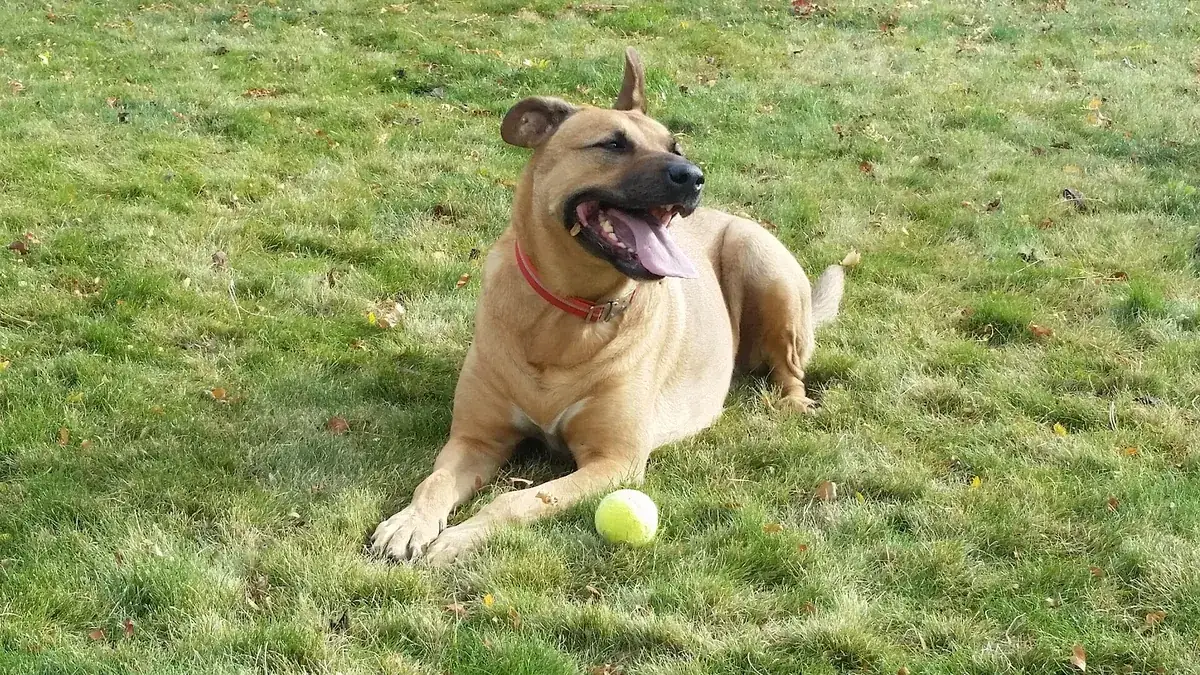

A Labrador German Shepherd mix, usually called a Sheprador, is a cross between a Labrador Retriever and a German Shepherd Dog. Expect a large, smart, high-energy dog with a double coat that sheds. Because it isn’t a recognized breed, size, looks and temperament vary from dog to dog, so the most honest guide is what each parent breed is like, plus the dog in front of you.
You’ll often meet one in a shelter or rescue with “Lab/Shepherd mix” on the kennel card. Here’s what the AKC and veterinary research can tell you about size, health, temperament and care, where the honest answer is “it depends on the dog,” and how to tell whether a Sheprador fits your life.
At a glance
- Also called: Sheprador, German Sheprador, Labrashepherd, Lab Shepherd mix. Informal names, not a recognized breed.
- Adult size: large. Labradors are 21.5 to 24.5 inches and 55 to 80 pounds (AKC Labrador). German Shepherds are 22 to 26 inches and 50 to 90 pounds (AKC German Shepherd).
- Lifespan frame of reference: the AKC lists 11 to 13 years for Labs and 12 to 14 years for German Shepherds. There is no published figure for the mix.
- Energy: high. The AKC rates both parents 5 out of 5 for energy.
- Grooming: easy, but expect a lot of hair. Both parents have double coats and rate 4 out of 5 for shedding.
- With kids and other pets: both parents rate 5 out of 5 with young children. Labs rate 5 with other dogs, German Shepherds 3. Ask about the individual dog.
- Health to know about: hips and elbows, weight gain, ear infections, bloat, plus inherited conditions each parent breed screens for. Details and sources below.
- Good fit for: an active person or household with time for daily exercise, training and company, and room for a big dog.
What a Sheprador actually is
A Sheprador is a first-generation cross, or a dog a few generations removed, with a Labrador Retriever on one side and a German Shepherd Dog on the other. The two sides of the family were bred for very different jobs:
- The Labrador Retriever is, in the AKC’s words, “the traditional waterdog of Newfoundland, long employed as a duck retriever and fisherman’s mate.” British breeders refined and standardized the breed in the late 1800s, and the AKC recognized it in 1917. The breed standard calls the ideal disposition “kindly, outgoing, tractable” and “eager to please” (AKC Labrador). Our profile Meet the Labrador Retriever goes deeper.
- The German Shepherd Dog descends from German herding dogs. In the late 1800s, a cavalry officer, Captain Max von Stephanitz, set out to develop the ideal German herder, and the AKC notes that the breed’s famous intelligence and agility “were forged not in the police academy but in the sheep pasture.” The AKC recognized the breed in 1908 and calls it “dogkind’s finest all-purpose worker” (AKC German Shepherd).
So a Sheprador blends a friendly, people-loving retriever with a watchful, loyal herder. A puppy can take after either side, or land anywhere in between, and littermates can differ a lot. There’s no “correct” Sheprador, only individual dogs.

Sheprador vs Labrador vs German Shepherd
Here’s how the two parents compare, using the AKC’s published figures and its 1 to 5 trait ratings (5 = most). A Sheprador can land anywhere between the two on each line.
| Labrador Retriever | German Shepherd Dog | Sheprador | |
|---|---|---|---|
| Height | 21.5 to 24.5 in | 22 to 26 in | Varies |
| Weight | 55 to 80 lb | 50 to 90 lb | Varies |
| AKC life expectancy | 11 to 13 yrs | 12 to 14 yrs | Not studied |
| Coat | Short, thick double coat | Medium-length double coat | Short to medium, double |
| Affectionate with family | 5 | 5 | Usually high |
| Good with young children | 5 | 5 | Usually high, supervise |
| Good with other dogs | 5 | 3 | 3 to 5 |
| Openness to strangers | 5 | 3 | 3 to 5 |
| Watchdog / protective | 3 | 5 | 3 to 5 |
| Energy | 5 | 5 | High |
| Mental stimulation needs | 4 | 5 | High |
| Trainability | 5 | 5 | High |
| Shedding | 4 | 4 | High |
| Barking | 3 | 3 | Moderate |
| AKC-recommended screening | Hips, elbows, eyes; DNA tests for CNM, PRA-prcd, EIC, dilute | Hips, elbows, temperament test | Ask the shelter or your vet |
By sex: male Labs are 22.5 to 24.5 inches and 65 to 80 pounds, females 21.5 to 23.5 inches and 55 to 70 pounds. Male German Shepherds are 24 to 26 inches and 65 to 90 pounds, females 22 to 24 inches and 50 to 70 pounds. Sources: AKC Labrador, AKC German Shepherd.
The biggest differences between the parents are social: the Lab side tends to love everyone, while the Shepherd side tends to be more reserved with strangers, more protective and pickier about other dogs. Where your Sheprador falls on that line matters more for daily life than its coat color.
How big does a Labrador German Shepherd mix get?
Put the parents’ published ranges together and you get roughly 50 to 90 pounds and 21.5 to 26 inches at the shoulder. Most Shepradors land in that span, with males usually larger than females. The occasional dog falls outside it, especially if other breeds are in the family tree.
You may see claims online that the mix “usually grows to 100 pounds or more.” Neither parent breed’s AKC range goes that high, so treat any such number as a guess about a particular dog, not the mix. If you’re adopting a puppy, ask what the shelter knows about the parents. With an adult, what you see is what you get.
Coat and colors
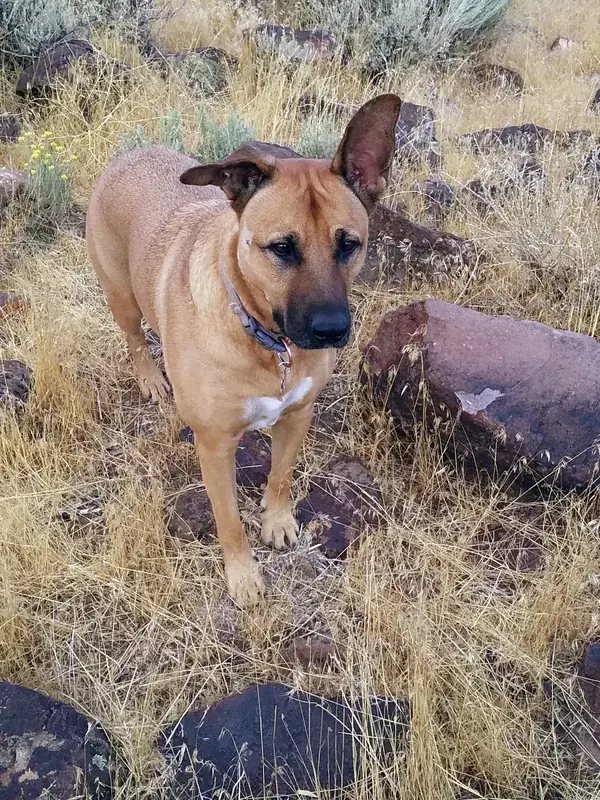
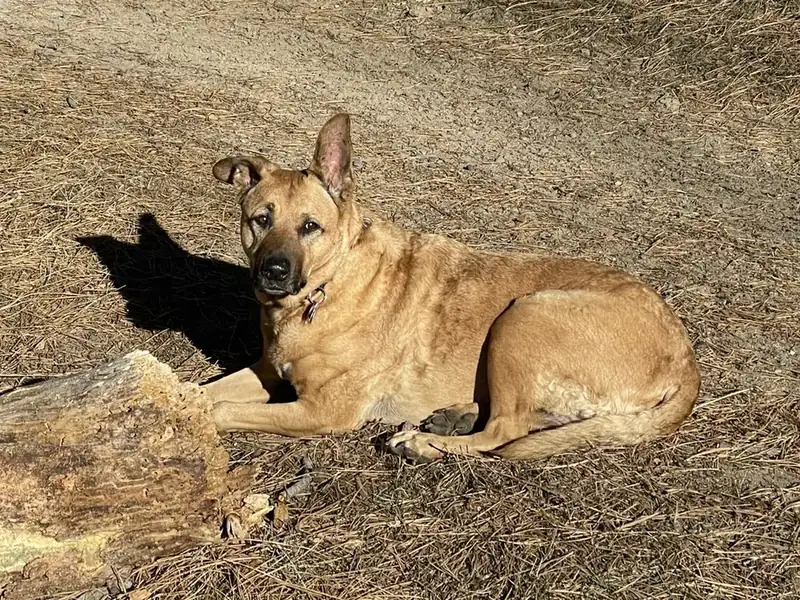
Both parents have double coats. The AKC describes the Lab’s coat as a “thick, water-repellant double coat that sheds” in yellow, black or chocolate, and the German Shepherd’s as a “medium-length, double coat” with a “dense, harsh, and close-lying outer coat” and a softer undercoat. A Sheprador’s coat is usually short to medium length and can be almost any combination: solid black, yellow or cream like a Lab, or tan with a dark muzzle and saddle like a Shepherd. Ears can stand up, flop, or do one of each, like Bella’s in the photo at the top of this page.


Temperament: what to realistically expect
The Lab side. The AKC calls Labs “friendly, outgoing, and high-spirited companions” and rates them 5 out of 5 for openness to strangers and for getting along with other dogs (AKC Labrador).
The Shepherd side. The AKC describes the German Shepherd as “loyal, confident, courageous” and says he is “extremely bonded to his people, so he is happiest when he lives with his family.” It rates the breed 5 out of 5 as a watchdog, and 3 out of 5 for openness to strangers and for getting along with other dogs (AKC German Shepherd).
Put together, many Shepradors are devoted, people-focused dogs with a strong desire for a job. In daily life:
- Family: usually affectionate and wants to be wherever you are. Neither parent breed does well shut away from the family.
- Strangers: some greet everyone like a Lab; others are watchful and bark at visitors like a Shepherd. Early, gentle socialization helps either way.
- Other dogs and cats: varies. Ask whether this specific dog has lived with them, and plan slow, supervised introductions.
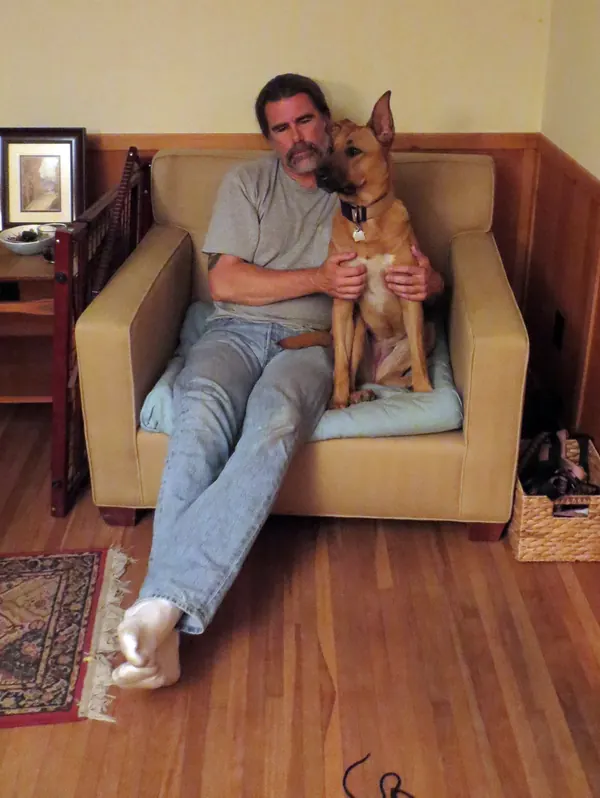
- Children: both parents are rated highly with kids, but a big, bouncy dog can knock over a small child, or an older adult. Supervise, and teach “sit” for greetings early.
Breed is only part of the story. Upbringing, training and the individual dog’s history matter a lot, which is why meeting the dog, ideally in a foster home, beats any breed description.

Exercise needs
Plan for a very active dog. The AKC describes the Lab as “an exuberant, very energetic breed that needs lots of exercise every day,” and warns that a Lab without enough exercise “is likely to engage in hyperactive and/or destructive behavior.” It says the German Shepherd “requires lots of exercise for his physical and mental well-being,” and that a dog who isn’t exercised enough “will become frustrated and likely to develop undesirable behaviors.”
For most Shepradors that means daily walks plus real play: fetch, swimming, hiking, or a dog sport. The AKC lists agility, tracking and dock diving as good outlets for both parents, plus herding for Shepherds and retrieving and swimming as Labs’ favorite activities. Because the Shepherd side rates 5 out of 5 for mental stimulation needs, add brain work too: puzzle feeders, scent games and short training sessions.
The AKC also advises keeping German Shepherds on leash in unfenced areas, “as even the best-trained dog can become distracted and not follow every command.” That’s sensible for a Sheprador as well.

Training
Both parents are rated 5 out of 5 for trainability by the AKC, and both are big and strong, so training isn’t optional. For Labs, the AKC calls early socialization and puppy classes “vital,” ideally with gentle exposure to many people, places and situations between 7 weeks and 4 months of age. For German Shepherds, it says “consistency and positive, reward-based training will yield excellent results.”
What works well with this mix:
- Short, upbeat sessions using food and toys as rewards. Count training treats as part of the day’s food (see diet below).
- Loose-leash walking first. A 70-pound dog that pulls is a real risk to your balance. Practice before you need it, and ask a trainer about harness options.
- Calm greetings. Teach “sit to say hello” so a happy dog doesn’t jump on visitors.
- Plenty of positive experiences with strangers and other dogs, especially if your Sheprador leans toward the watchful Shepherd side.
- A job. Tricks, scent work, carrying a toy on walks. A bored Sheprador will invent its own job.
We recommend kind, reward-based methods. If you hit a wall, a certified trainer who uses positive reinforcement is money well spent.
Grooming
Easy, but hairy. The AKC says the German Shepherd needs “a quick brushing every few days or so,” and sheds “more profusely once or twice a year,” when more frequent brushing helps. For Labs, the AKC advises occasional baths, regular nail trims and frequent tooth brushing; for Shepherds, a nail trim every month if the nails aren’t worn down naturally. For a Sheprador, plan on brushing a few times a week, daily during heavy sheds, plus nails, teeth and ear checks.
Diet basics
The AKC’s feeding advice for both parents is the same: a high-quality food suited to the dog’s age, few table scraps, and a close eye on weight. It warns that some Labs “are prone to getting overweight” and that too many treats “can cause obesity.”
The research backs that up on both sides. Cambridge researchers found a deletion in a gene called POMC in about 12% of the Labrador gene pool they studied, associated with higher body weight and “greater food motivation” (Raffan et al., 2016). In UK veterinary-records studies, overweight or obesity was among the most common problems recorded in both Labradors (McGreevy et al., 2018) and German Shepherds (O’Neill et al., 2017).
In practice: measure meals, count treats, and ask your vet what a healthy weight looks like for your dog. A lean Sheprador is easier on its joints at every age.
Health issues to know about
A mix can inherit health problems from either parent, and where both parents share a problem, the mix can still get it. A large University of California, Davis study found no difference between mixed-breed and purebred dogs in how often 13 inherited conditions turned up, including hip dysplasia, while purebreds were more likely to have 10 others, including elbow dysplasia (Bellumori et al., 2013). So being a mix may help with some conditions, but it’s no guarantee of good health.
The overlap: where to focus
Two UK studies of dogs under everyday veterinary care, both run by the Royal Veterinary College’s VetCompass program, are the best picture we have of what each parent breed actually sees the vet for:
- German Shepherds: the most common problems were ear infections (otitis externa), osteoarthritis, diarrhea, overweight/obesity and aggression. The most common causes of death were musculoskeletal disorders and “inability to stand” (O’Neill et al., 2017).
- Labradors: the most common problems were ear infections, overweight/obesity and degenerative joint disease (McGreevy et al., 2018).
Ears, weight and joints show up on both lists. For a Sheprador, that means weekly ear checks, keeping the dog lean, and talking to your vet early about any stiffness or limping.
Hips and elbows
Hip and elbow evaluations are on the AKC’s recommended screening list for both parent breeds. A study of more than 1.2 million dogs in a US veterinary database found that “large- and giant-breed dogs were more likely than other dogs” to have hip dysplasia, cruciate ligament disease or both (Witsberger et al., 2008). Keeping your dog lean helps.
Bloat
The AKC warns that both parent breeds can develop bloat, which it describes for German Shepherds as “a sudden and life-threatening swelling of the abdomen,” and advises owners to learn its symptoms and what to do if it happens. Ask your vet to walk you through the warning signs, and treat a suspected case as an emergency.
Degenerative myelopathy (Shepherd side)
The AKC says German Shepherd breeders screen for degenerative myelopathy (DM), a progressive disease of the spinal cord. Researchers at the University of Missouri linked DM to a change in the SOD1 gene in several breeds, including the German Shepherd, and noted that early signs, such as weakness and wobbliness in the hind legs, typically begin at 8 years of age or older (Awano et al., 2009). If an older Sheprador starts scuffing or wobbling its back legs, see your vet.
Lab-side conditions
The AKC lists DNA tests for Labs for exercise-induced collapse (EIC), centronuclear myopathy (CNM, a muscle weakness) and progressive retinal atrophy (PRA, an inherited eye disease). EIC causes “muscle weakness, incoordination and life-threatening collapse after intense exercise” (Patterson et al., 2008; University of Minnesota). If your Sheprador ever wobbles or collapses during hard play, stop, cool the dog down and call your vet.
None of this is a reason to avoid the mix. It’s a list of things to ask about and watch for. Your vet is the right person for anything specific to your dog.
Lifespan
No study has measured the Sheprador’s lifespan, so any single number you see online is a guess. As a frame of reference:
- The AKC lists 11 to 13 years for Labradors and 12 to 14 years for German Shepherds.
- In the UK studies above, the median lifespan was 12.0 years for Labradors (McGreevy et al., 2018) and 10.3 years for German Shepherds (O’Neill et al., 2017).
Shepradors can make wonderful seniors. Weight, joint care, dental care and regular checkups will shape any one dog’s years more than its breed label.

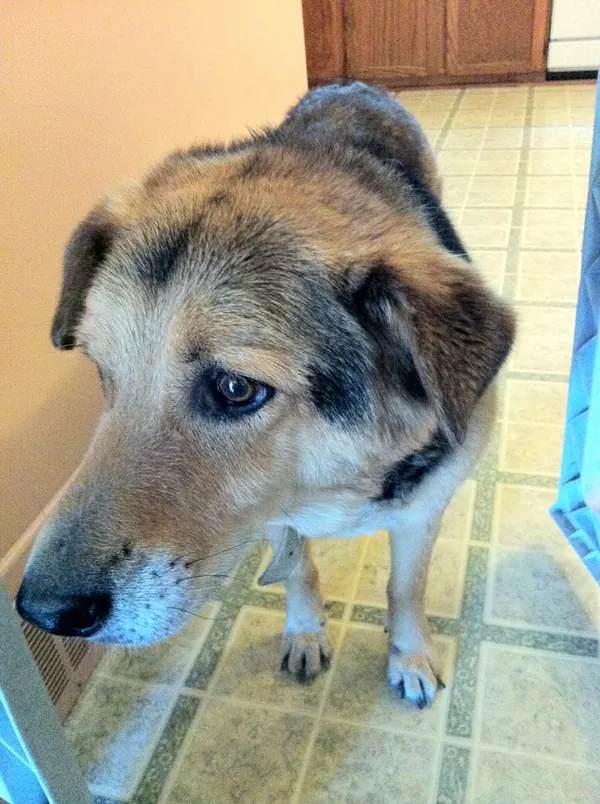

Labrador German Shepherd mix puppies
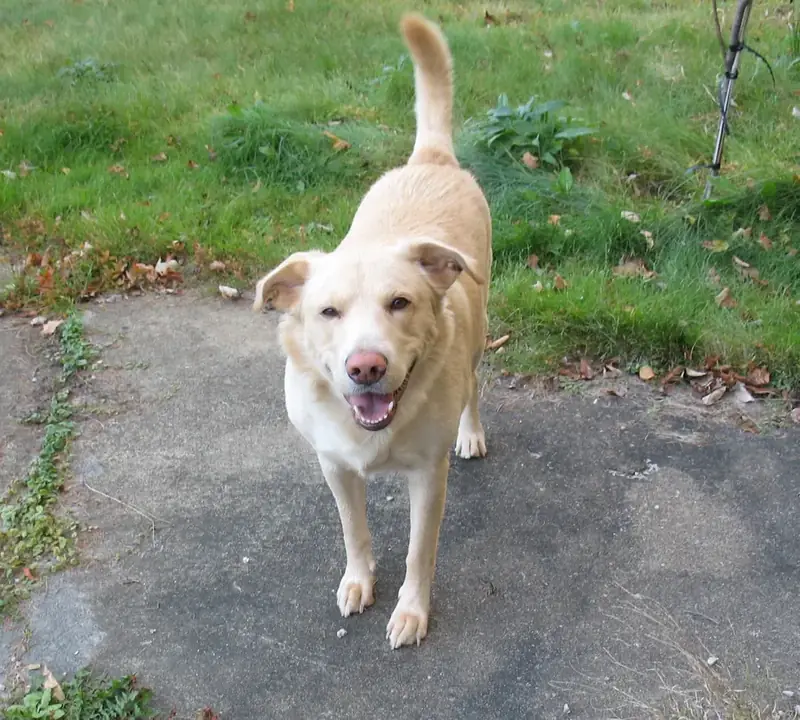
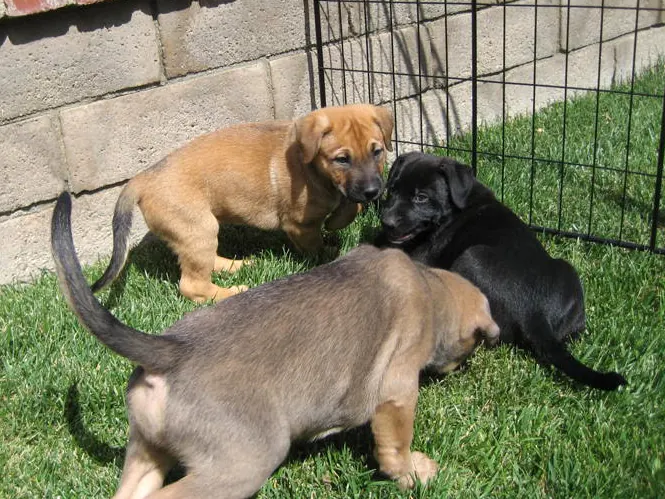
Adult size and temperament are especially hard to predict from a young puppy, since you’re guessing from two parents who may themselves be mixes. Look at the litter below: Bella’s brothers and sisters ranged from tan to gray to black. Puppies also mean house training, chewing, and months of socialization before you know who the adult will be.

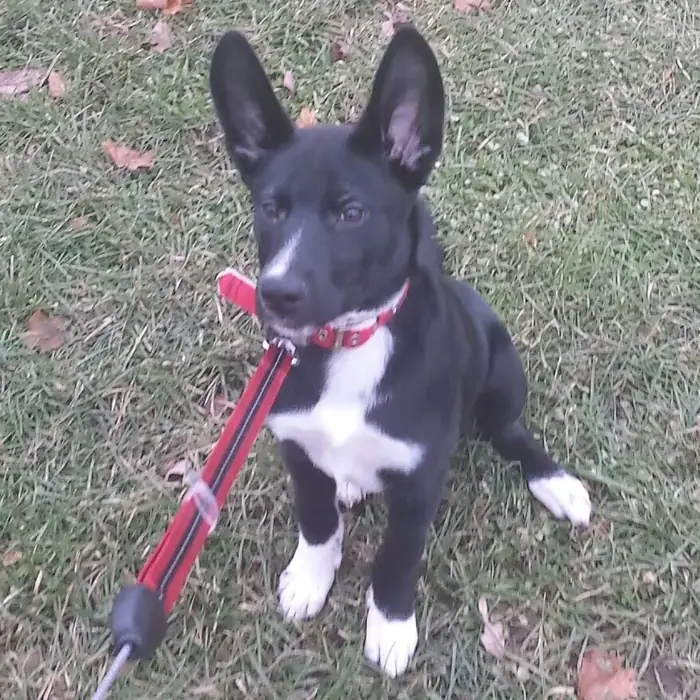

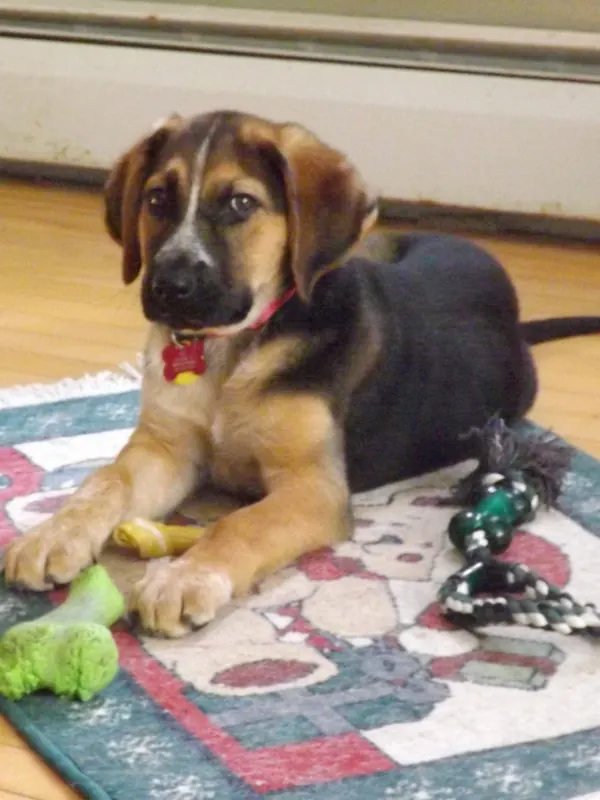

There’s no breed club or recognized health-testing program for this cross, so be cautious with anyone selling “Sheprador puppies.” Red flags include not being able to meet the mother, no hip, elbow or eye screening on the parents, and claims that the mix is “healthier” or “won’t shed.” For many people, especially first-time owners or anyone over 50, an adult Sheprador from a shelter or foster home is the easier path. You can see the dog’s actual size, energy level and manners before you commit.
Is that shelter dog really a Lab Shepherd mix?
Maybe, maybe not. Shelter breed labels are usually a staff member’s best guess from looks, and research shows those guesses are often wrong. A study comparing adoption-agency breed labels with DNA results found that only 25% of the dogs (4 of 16) actually had genetic evidence of the breed the agency had named (Voith et al., 2009).
The takeaway: meet the dog, not the label. A dog with Shepherd ears and a Lab’s coat could be a Sheprador, or it could have Malinois, Husky or something else entirely in the mix. A DNA test can satisfy your curiosity later; our guide to figuring out your dog’s breed explains the options.
Is a Sheprador right for you?
Probably a great fit if:
- You want a devoted dog that wants to be part of your day, every day.
- You can give a big, energetic dog an hour or more of activity and play daily, rain or shine. (The AKC doesn’t set a number; ask your vet what suits your dog’s age and health.)
- You enjoy training and want a dog that learns fast.
- You have room for a large dog and don’t mind hair on the furniture.
- You like the idea of a dog that will let you know when someone’s at the door.
Think it over carefully if:
- Your balance or grip isn’t what it used to be and a 70-pound dog pulling on the leash would be a fall risk. Consider an older, calmer adult dog you’ve walked first.
- The dog would be alone for long stretches most days. Both parent breeds were developed as working partners to people, and the AKC says both need to be included in family life.
- You have frequent visitors or other dogs at home and the dog you’re considering leans toward the reserved, protective Shepherd side.
- Someone in the home needs a low-shedding dog.
- A big vet bill would be a crisis. Joint problems and bloat can be costly, so price pet insurance early.
Costs to plan for
We found no reliable published cost figures for this mix, so here are the categories to budget for. Get local quotes, since prices vary widely.
- Adoption fee, which at shelters and rescues often includes vaccines, a microchip and spay or neuter surgery. Ask what’s included.
- Food for a large, active dog. Ask your vet how much keeps your dog lean.
- Routine vet care: exams, vaccines, parasite prevention, dental care.
- Pet insurance or an emergency fund. With joint risk and bloat on both sides of the family, it’s worth pricing insurance before any condition becomes pre-existing.
- Training classes and gear: a large crate, bed, harness, a good deshedding brush, and care when you’re away.
Adopting a Labrador German Shepherd mix
Where to look
Start with shelters and rescues. Search for “Lab mix,” “Labrador mix,” “Shepherd mix” and “German Shepherd mix,” since labels are often a best guess. Lab rescues and German Shepherd rescues sometimes list mixes too. Foster-based rescues are especially helpful, because a foster family can tell you how the dog behaves in a real home.
Questions to ask the shelter or rescue
The ASPCA suggests leaning on shelter staff “to help play matchmaker” and making sure the dog’s personality fits your lifestyle (ASPCA). For a Sheprador, ask:
- How does the dog walk on a leash? Can I walk it myself before deciding?
- How does it react to strangers, visitors and the doorbell?
- How has it done with other dogs, cats and children? In a foster home or only in the kennel?
- Any history of guarding food or toys, or of a bite or scuffle? What happened?
- How does it handle being left alone, and being handled for nail trims, brushing and baths?
- Any known ear, skin, joint, stomach or weight issues? What do the vet records show?
- What does the adoption fee include (spay or neuter, vaccines, microchip)?
- Is there a foster-to-adopt or trial period, and what happens if it doesn’t work out?
Our list of 9 questions to ask when adopting a dog covers the general ones.
Make a plan for the long haul
The ASPCA also asks adopters a question worth sitting with: “If your circumstances change, will you still be able to care for your pet?” A healthy Sheprador may be with you for a decade or more. Naming a backup caregiver now, someone who knows your dog and has agreed to step in, helps make sure your dog never has to go back to a shelter. Our guide What Happens to Your Dog When You Die and the free My Dog’s Backup Plan worksheet walk you through it.
Similar dogs to compare
If a Sheprador isn’t quite right, these related guides may help:
- Meet the Labrador Retriever, the Lab side of the family on its own.
- Siberian Husky Shepherd mix, another high-energy German Shepherd cross.
- German Shepherd Doberman mix, the Doberman Shepherd, another athletic German Shepherd cross.
- Pitbull Lab mix, a shorter, stockier Lab cross.
- Shepherd and Pitbull mix, the German Shepherd crossed with a pit bull-type dog.
- Golden Retriever Rottweiler mix, another big, loyal family mix.
- Boxer Lab mix and Weimaraner German Shepherd mix, two more working-dog crosses.
- Blue German Shepherd and Dutch Shepherd, for the Shepherd side of the family.
- Our Lab mixes directory for other Labrador crosses.
Frequently Asked Questions
What is a German Shepherd and Labrador Retriever mix called?
Most people call it a Sheprador or German Sheprador. You’ll also see Labrashepherd, Lab Shepherd mix or German Shepherd Lab mix. These are informal nicknames. The cross isn’t a recognized breed and has no breed standard, so looks, size and temperament vary from dog to dog.
What is a Sheprador dog breed?
A Sheprador isn’t a breed in its own right. It’s a mixed-breed dog with a Labrador Retriever on one side and a German Shepherd Dog on the other, sometimes several generations back. Each parent breed has an AKC standard, but the mix doesn’t, which is why two Shepradors can look and act quite differently.
How big does a Labrador German Shepherd mix get?
Usually large. The AKC lists Labradors at 21.5 to 24.5 inches and 55 to 80 pounds, and German Shepherds at 22 to 26 inches and 50 to 90 pounds. Most Shepradors land somewhere in that overall range, with males usually bigger than females. Claims that the mix routinely tops 100 pounds aren’t backed by either parent’s published range.
How long do German Shepherd Lab mixes live?
No study has measured the mix’s lifespan. The AKC lists 11 to 13 years for Labradors and 12 to 14 years for German Shepherds. UK veterinary-records studies found a median lifespan of 12.0 years for Labradors and 10.3 years for German Shepherds. Weight, exercise and regular vet care shape any one dog’s years more than its label.
Are Shepradors good family dogs?
Many are. The AKC rates both Labradors and German Shepherds 5 out of 5 for being affectionate with family and good with young children. But this is a big, strong, energetic dog that can knock over a toddler or an unsteady adult, and the Shepherd side tends to be more reserved with strangers and other dogs. Judge the individual dog and supervise.
Do German Shepherd Lab mixes shed a lot?
Yes. The AKC rates both parent breeds 4 out of 5 for shedding, and both have double coats. German Shepherds shed more heavily once or twice a year. Expect to brush a Sheprador at least weekly, and more often during heavy shedding seasons.
Is a German Shepherd Lab mix a good dog for a first-time owner?
It can be, if you have the time and energy. The AKC rates both parents 5 out of 5 for trainability and 5 out of 5 for energy. That means a smart, willing dog that also needs a lot of daily exercise, training and company. An adult Sheprador whose energy level you’ve already seen is often an easier first dog than a puppy.
Which dog loves its owner the most?
No study ranks breeds by how much they love their owners, and every dog is an individual. For what it’s worth, the AKC rates both Labradors and German Shepherds 5 out of 5 for being affectionate with family, and says the German Shepherd is extremely bonded to his people. Shepradors often become devoted companions.
Before you go
Whatever its kennel card says, the Sheprador in front of you is one specific dog with its own history and quirks, so weigh what you learn about that dog more heavily than anything on this page. And whatever dog you bring home, it’s worth deciding now who would step in for them if you ever couldn’t.
Sources
- American Kennel Club, Labrador Retriever breed page (height, weight, life expectancy, trait ratings, colors, history, temperament, exercise, training, grooming, nutrition, health and recommended screening)
- American Kennel Club, German Shepherd Dog breed page (height, weight, life expectancy, trait ratings, history, temperament, exercise, training, grooming, nutrition, health and recommended screening)
- O’Neill DG et al. (2017). Demography and disorders of German Shepherd Dogs under primary veterinary care in the UK. Canine Genetics and Epidemiology.
- McGreevy PD et al. (2018). Labrador retrievers under primary veterinary care in the UK: demography, mortality and disorders. Canine Genetics and Epidemiology.
- Bellumori TP et al. (2013). Prevalence of inherited disorders among mixed-breed and purebred dogs: 27,254 cases (1995-2010). JAVMA.
- Witsberger TH et al. (2008). Prevalence of and risk factors for hip dysplasia and cranial cruciate ligament deficiency in dogs. JAVMA.
- Awano T et al. (2009). Genome-wide association analysis reveals a SOD1 mutation in canine degenerative myelopathy that resembles amyotrophic lateral sclerosis. PNAS.
- Raffan E et al. (2016). A deletion in the canine POMC gene is associated with weight and appetite in obesity-prone Labrador retriever dogs. Cell Metabolism.
- Patterson EE et al. (2008). A canine DNM1 mutation is highly associated with the syndrome of exercise-induced collapse. Nature Genetics. See also the University of Minnesota Canine Genetics Lab.
- Voith VL et al. (2009). Comparison of adoption agency breed identification and DNA breed identification of dogs. Journal of Applied Animal Welfare Science.
- ASPCA, Finding your Fido: tips for adopting your new BFF (adoption advice)
- Photos: Wikimedia Commons contributors, credited under each image. Full license records are kept in this site’s image-credits file.