
A Rottweiler Pitbull mix, often called a Pitweiler, is a cross between a Rottweiler and a pit bull-type dog, usually an American Pit Bull Terrier or American Staffordshire Terrier. Expect a medium-to-large, muscular, short-coated dog that is often deeply attached to its people and needs daily exercise, kind training and company. It isn’t a recognized breed, so size, looks and temperament vary from dog to dog.
If you searched for a “Rottweiler mix Pitbull” because you met one at a shelter, or because your own dog came with that label, this guide is for you. Below is what the AKC, the UKC and veterinary research can tell you about each parent breed, what nobody can promise about the mix, and a practical checklist for leases, insurance and local rules.
Rottweiler Pitbull mix quick facts
Every figure here is for a parent breed, from that breed’s registry or a cited study. None is a measurement of the mix itself.
- Also called: Pitweiler, Rottie Pit, Rott-N-Pit, Rottbull, Bullrott. Informal names, not a recognized breed.
- Size (parent breeds): Rottweiler 22 to 27 in and 80 to 135 lb (AKC); American Pit Bull Terrier about 17 to 21 in and 30 to 60 lb (UKC); American Staffordshire Terrier 17 to 19 in and 40 to 70 lb (AKC).
- Lifespan (parent breeds): 9 to 10 years for the Rottweiler (AKC) and 12 to 16 years for the AmStaff (AKC); the UKC’s American Pit Bull Terrier standard gives no lifespan. Not documented for the mix.
- Energy (AKC ratings): 3 out of 5 for both the Rottweiler and the AmStaff. Mental stimulation needs: 5 for the Rottweiler, 3 for the AmStaff.
- Grooming and shedding (AKC ratings): coat care 1 out of 5 for both; shedding 3 for the Rottweiler and 2 for the AmStaff. Easy coat, some hair.
- Good with young children (AKC ratings): 3 out of 5 for both, which the AKC labels “With Supervision.” The UKC says American Pit Bull Terriers “have always been noted for their love of children” (UKC).
- Good with other dogs (AKC ratings): 3 out of 5 for both, and the UKC says “most APBTs exhibit some level of dog aggression.” Ask dog by dog.
- Health to ask about: hips, elbows, knees, bloat, heart, skin, weight, and cancer on the Rottweiler side. Details and sources below.
- Good fit for: a person or household with time for daily exercise and training, comfortable handling a strong dog, in a home where the dog is allowed.
What a Pitweiler actually is
A Pitweiler has a Rottweiler on one side of the family and a pit bull-type dog on the other, sometimes several generations back. We found no reliable record of when the cross was first bred, and it’s not recognized by the AKC or the UKC. Some websites say online designer-dog registries list it; we couldn’t confirm that with the registries themselves. Either way, the best place to start is the two parents.
The Rottweiler side
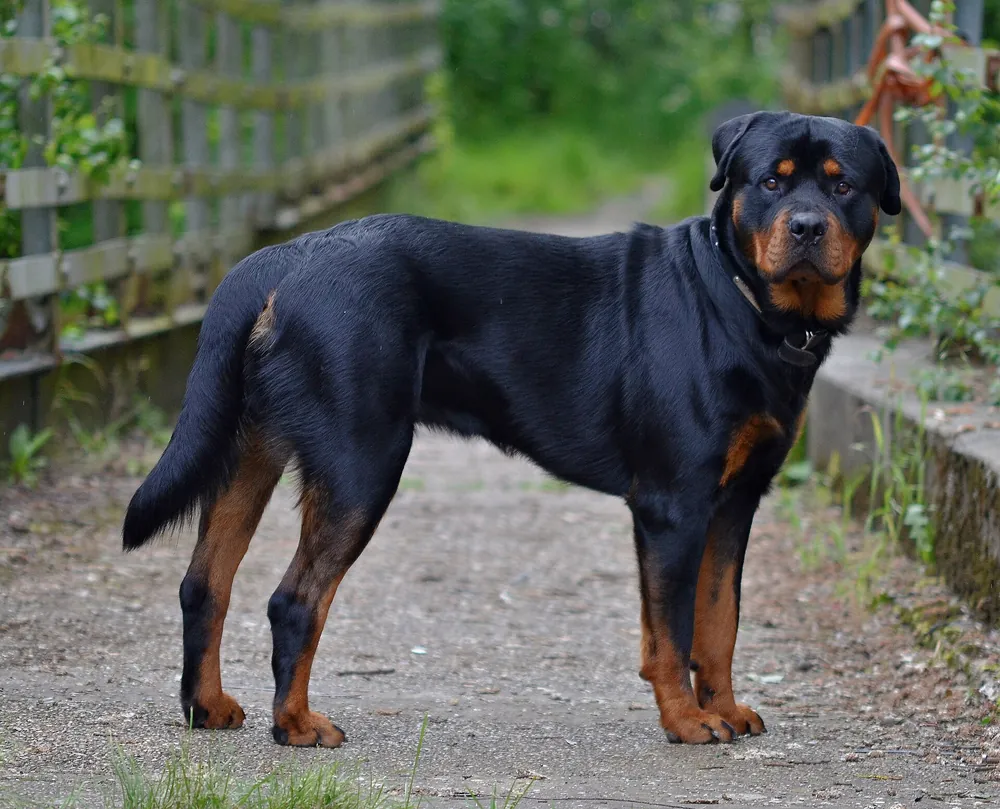
The AKC calls the Rottweiler “a robust working breed of great strength descended from the mastiffs of the Roman legions,” and “a gentle playmate and protector within the family circle” who watches the outside world “with a self-assured aloofness.” When railroads ended the breed’s cattle-driving work, Rottweilers became police dogs and all-around workers, and they were “among the first guide dogs for the blind.” The AKC recognized the breed in 1931 (AKC Rottweiler). Our Rottweiler puppy guide covers the early months.

The pit bull side: a type, not one breed
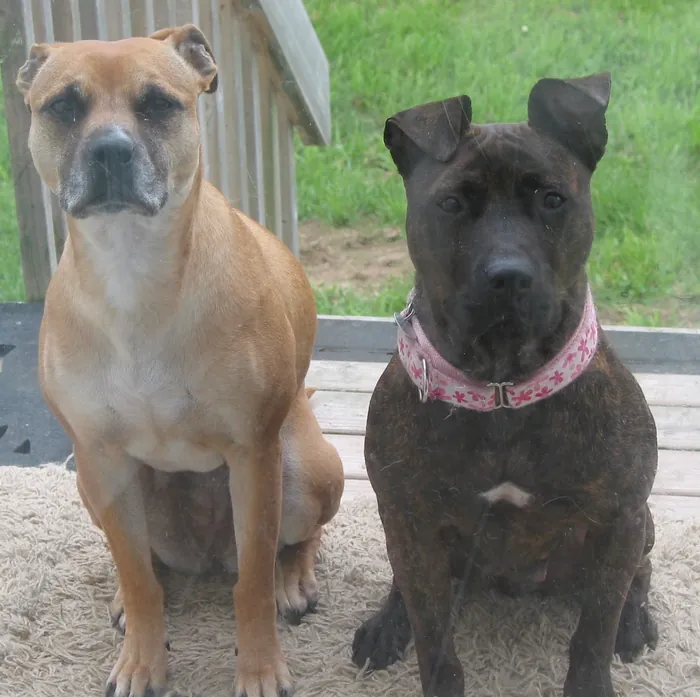
“Pit bull” isn’t one breed. It’s a loose label for several related breeds and look-alike mixes. One shelter study defined “pit bull-type” as the American Pit Bull Terrier, the American Staffordshire Terrier, the Staffordshire Bull Terrier, “pit bull,” and their mixes (Olson et al., 2015).
- The American Pit Bull Terrier (APBT) is recognized by the United Kennel Club, which says it was the first registry to do so, with its first registration in 1898. The AKC does not register it as a breed. The UKC describes it as “eager to please and brimming over with enthusiasm” (UKC).
- The American Staffordshire Terrier (AmStaff) is the AKC’s closely related breed, in its stud book since 1936. The AKC is candid that its ancestors came out of long-outlawed British blood sports, and describes today’s AmStaffs as “smart, confident, good-natured companions” (AKC AmStaff).
For how pit bull types differ from their stockier relatives, see American Bully vs Pit Bull.

Pitweiler vs Rottweiler vs pit bull
Here’s how the parents compare, using registry figures and the AKC’s 1 to 5 trait ratings (5 = most). The UKC doesn’t publish trait ratings for the APBT, so the AmStaff stands in for the pit bull side on those lines.
| Rottweiler | American Pit Bull Terrier | American Staffordshire Terrier | Pitweiler | |
|---|---|---|---|---|
| Registry | AKC (1931), UKC (1950) | UKC (1898); not AKC | AKC (1936) | Not a recognized breed |
| Height | 24 to 27 in (M), 22 to 25 in (F) | about 18 to 21 in (M), 17 to 20 in (F) | 18 to 19 in (M), 17 to 18 in (F) | Varies; parent span about 17 to 27 in |
| Weight | 95 to 135 lb (M), 80 to 100 lb (F) | 35 to 60 lb (M), 30 to 50 lb (F) | 55 to 70 lb (M), 40 to 55 lb (F) | Varies; parent span about 30 to 135 lb |
| Life expectancy | 9 to 10 yrs | Not given in UKC standard | 12 to 16 yrs | Not studied |
| Coat | Straight, coarse, dense, medium-length outer coat with undercoat | Short, glossy, smooth, close | Short, stiff | Usually short; not documented |
| Color | Always black with rust to mahogany markings | All colors and patterns except merle | Many colors and patterns | Varies |
| Affectionate with family | 5 | Not rated | 5 | Not rated |
| Good with young children | 3 | Not rated | 3 | Not rated; supervise |
| Good with other dogs | 3 | Not rated; most show some dog aggression (UKC) | 3 | Not rated; ask |
| Openness to strangers | 3 | ”Extremely friendly, even with strangers” (UKC) | 4 | Not rated |
| Watchdog / protective | 5 | ”Not the best choice for a guard dog” (UKC) | 5 | Not rated |
| Energy | 3 | Not rated | 3 | Not rated |
| Trainability | 5 | Not rated | 3 | Not rated |
| Mental stimulation needs | 5 | Not rated | 3 | Not rated |
| Shedding | 3 | Not rated | 2 | Not rated |
| Drooling | 3 | Not rated | 1 | Not rated |
| Barking | 1 | Not rated | 3 | Not rated |
Sources: AKC Rottweiler, AKC Rottweiler standard, UKC Rottweiler standard, UKC American Pit Bull Terrier standard, AKC American Staffordshire Terrier. The UKC calls its APBT heights “a general and approximate guideline only.” The mix column is the range between the parents, not measured data.
The two biggest differences are size and first impressions. A Rottweiler can weigh twice as much as a pit bull, and the AKC standard says the breed has an aloofness that “does not lend itself to immediate and indiscriminate friendships” (AKC standard). The UKC says the APBT is “extremely friendly, even with strangers” (UKC). A mix can take after either parent, or land anywhere in between.
How big does a full-grown Pitweiler get?
Put the parents’ published ranges together and you get roughly 17 to 27 inches at the shoulder and 30 to 135 pounds. That’s a huge span, and it’s the honest one. In every parent standard the female range is lower than the male’s.
Real-world weights back up the spread on the Rottweiler side. In a study of UK veterinary records, adult male Rottweilers had a median weight of 48.5 kg (about 107 pounds) and females 41.5 kg (about 91 pounds) (O’Neill et al., 2017). You may see “40 to 100 pounds” quoted for the mix. We couldn’t find a study behind it. If size matters for your lease, your car or your own strength on the leash, an adult dog lets you see it instead of guessing. The American Rottweiler Club makes the same point about adopting adults: “you will know what they look like, how large (or small) they are or will be” (ARC).
Coat, colors and looks
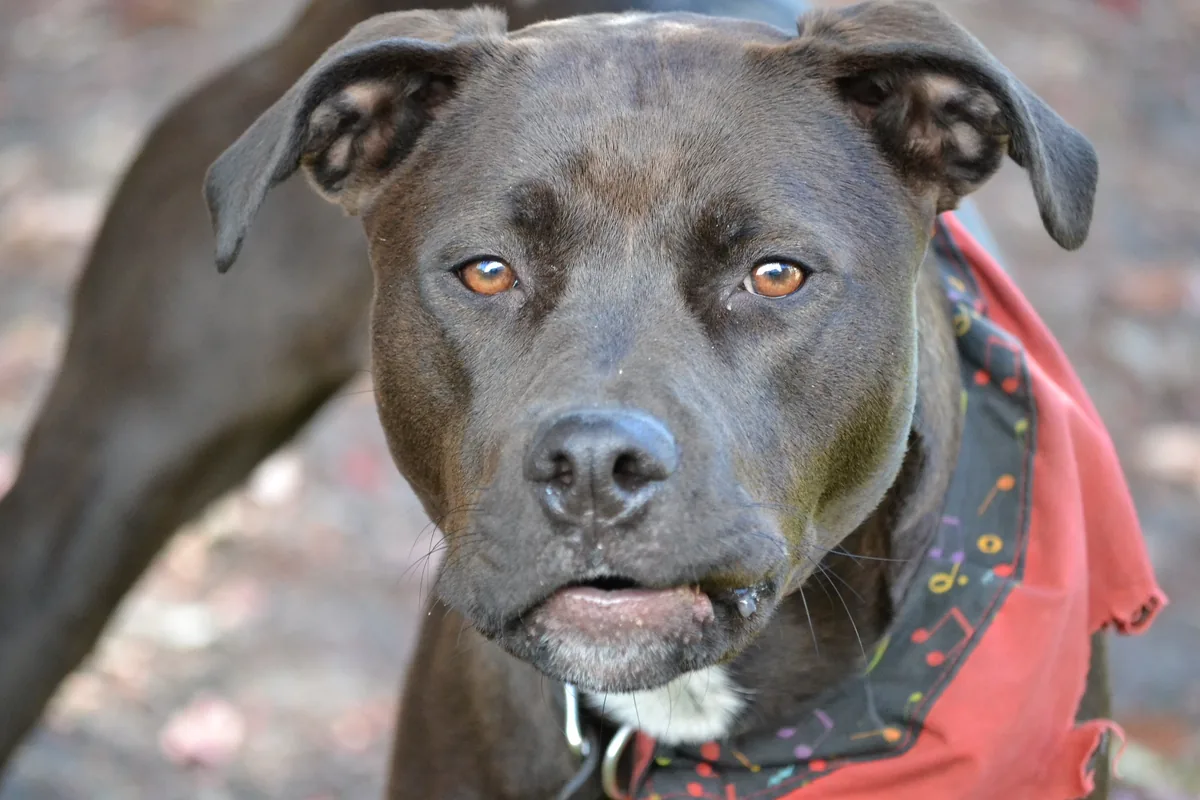
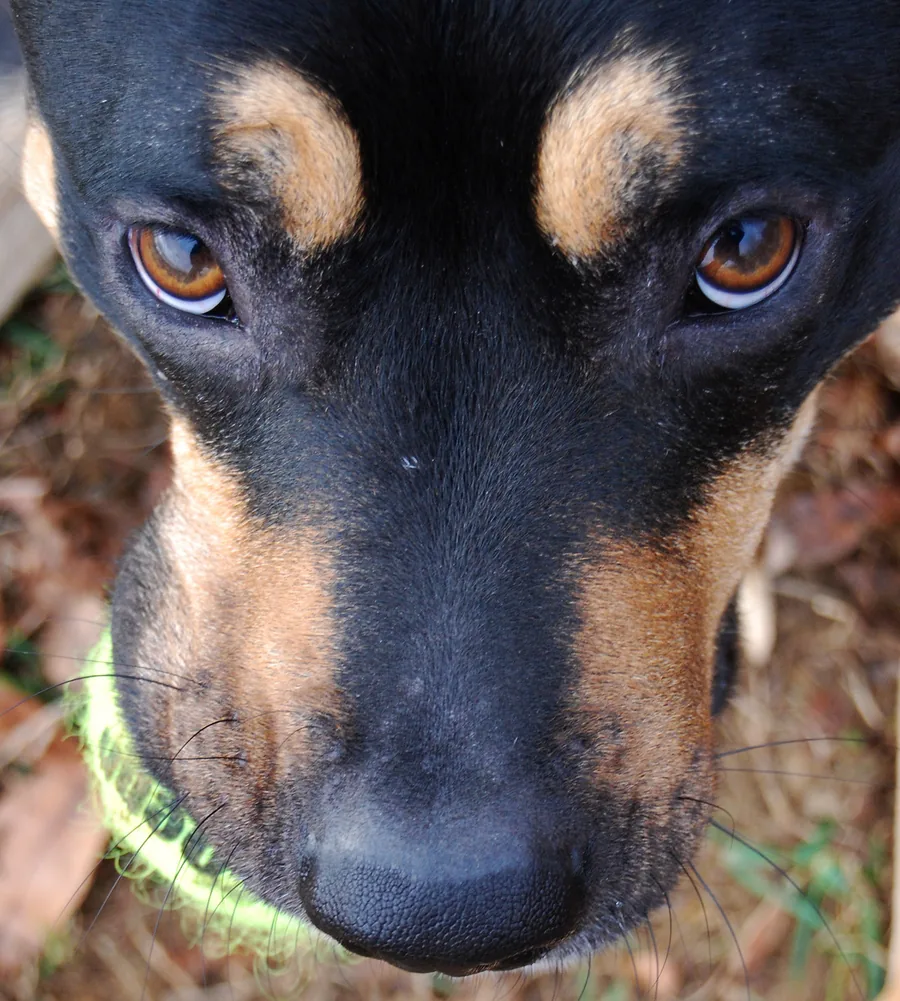
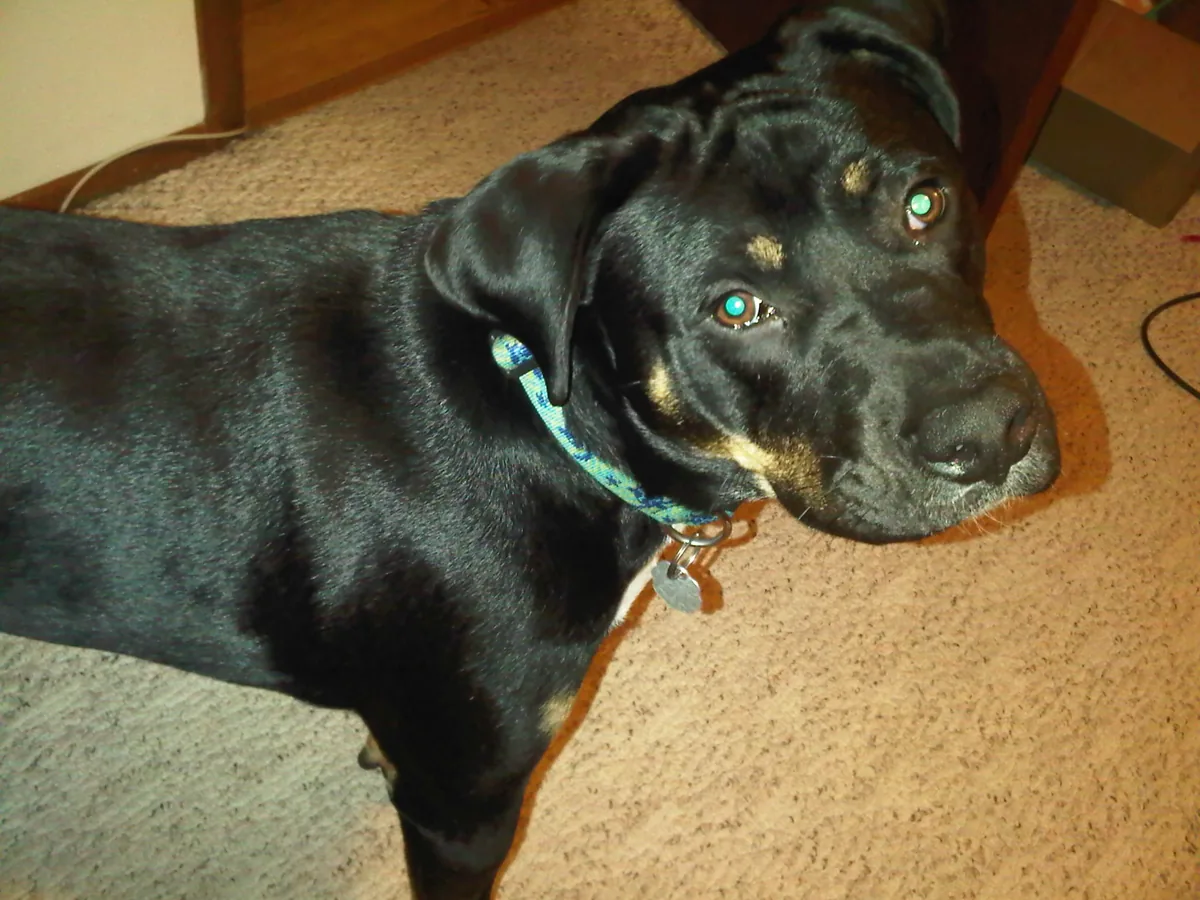
A Rottweiler’s outer coat is “straight, coarse, dense, of medium length and lying flat,” with an undercoat, and it is “always black with rust to mahogany markings” (AKC standard). The APBT’s coat is “glossy and smooth, close,” and it comes in “all colors and color patterns except merle” (UKC). So a Pitweiler may be black and tan with eyebrow spots, or brown, blue-gray or brindle with a white chest, with no Rottweiler markings at all.
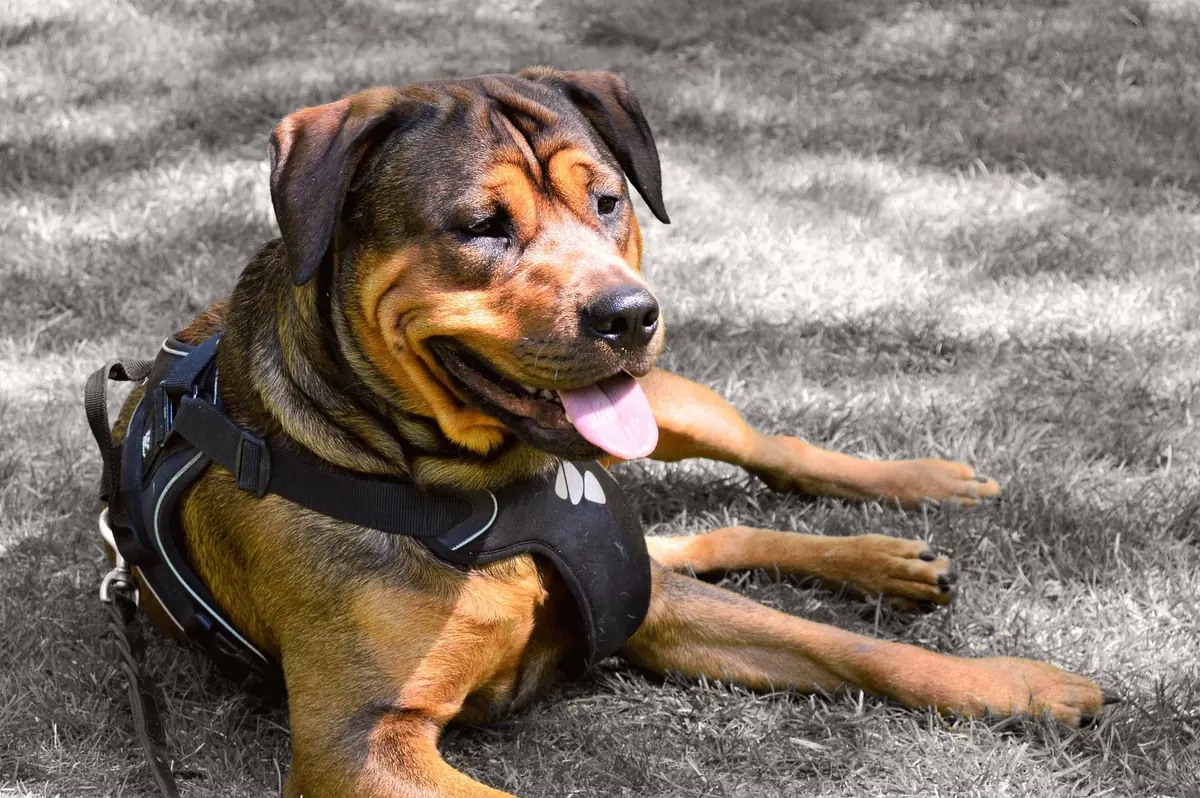
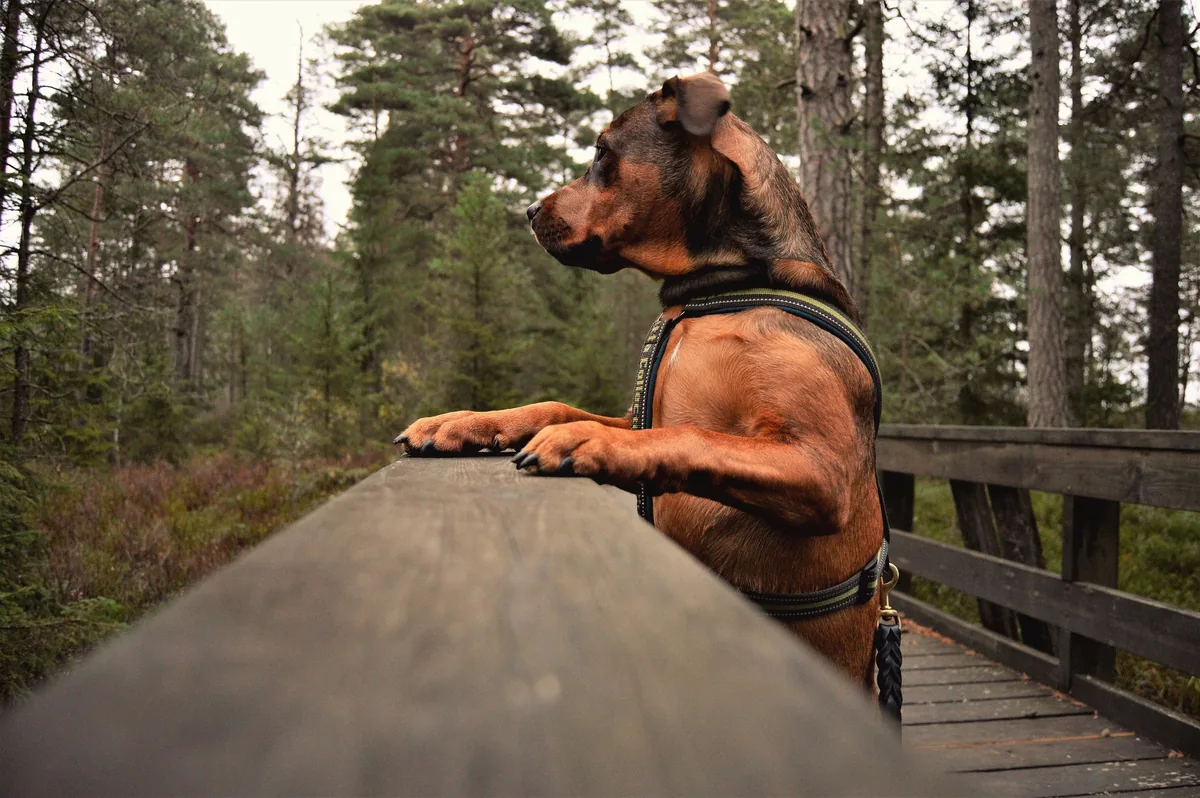
The photos on this page show it. The dog with the tennis ball looks like a Rottweiler at first glance. Bella, below, has the same mix on her label and looks nothing like one.
Temperament: what to realistically expect
These are registry descriptions of purebred parents, not predictions for any one mix.
The Rottweiler side. The AKC standard describes “a calm, confident and courageous dog” that “responds quietly and with a wait-and-see attitude” and has “an inherent desire to protect home and family” (AKC standard). The AKC adds that Rottweilers are “people dogs” who “do not do well isolated from humans and life experiences” (AKC Rottweiler).
The pit bull side. The UKC says APBTs “make excellent family companions,” and that “aggressive behavior toward humans is uncharacteristic of the breed and highly undesirable.” The same standard says “most APBTs exhibit some level of dog aggression,” so the breed “requires an owner who will carefully socialize and obedience train the dog” (UKC). The AKC says dog aggression can develop even in well-socialized AmStaffs, and that an AmStaff “should never under any circumstances be left alone with other dogs” (AKC AmStaff).
What the science says about breed and behavior. A 2022 study in Science surveyed owners of 18,385 dogs and genotyped 2,155 of them. Breed explained just 9% of the behavioral variation between individual dogs (Morrill et al., 2022). In plain English, a label is a weak guide to the dog in front of you.
One more number, with context. In that UK study of Rottweilers, aggression was the most commonly recorded problem, in 7.5% of the dogs studied over one year, closely followed by being overweight, at 7.1% (O’Neill et al., 2017). That means it wasn’t recorded for more than nine in ten.
In daily life:
- Family: both parents rate 5 out of 5 for affection with family. Plan on a dog who wants to be in the room with you.
- Strangers: some greet everyone like a friendly pit bull; others hang back and watch like a Rottweiler. Let the dog choose to approach.
- Other dogs and cats: the area to be most careful about. Ask whether this dog has lived with other animals, introduce slowly, and separate dogs when you can’t supervise.
- Children: a strong, bouncy dog can knock over a small child or an unsteady adult. Supervise, and teach calm greetings early.
Two myths worth dropping
- “Locking jaws.” The American Veterinary Society of Animal Behavior calls the idea that pit bull-type dogs have locking jaws an “often repeated fallacy” (AVSAB).
- Bite-force numbers for the mix. We found no peer-reviewed measurement for Pitweilers, so we don’t repeat the figures you’ll see online.
Exercise needs
The AKC says Rottweilers “love swimming, walking, and trotting, especially with their people,” and should have the chance to exercise daily (AKC Rottweiler). It says AmStaffs require “a lot of exercise,” but that leaving one out in the yard all day “is not the right approach,” because the breed “thrives when he is made part of the family” (AKC AmStaff).
For most Pitweilers, plan on daily walks plus play, and some brain work: sniff walks, food puzzles, short training games. The Rottweiler side rates 5 out of 5 for mental stimulation needs. How much a particular dog needs is a question for the shelter or foster family, who have seen it. Ask your vet before starting running or other high-impact exercise, especially with a growing puppy or a dog with stiff joints.
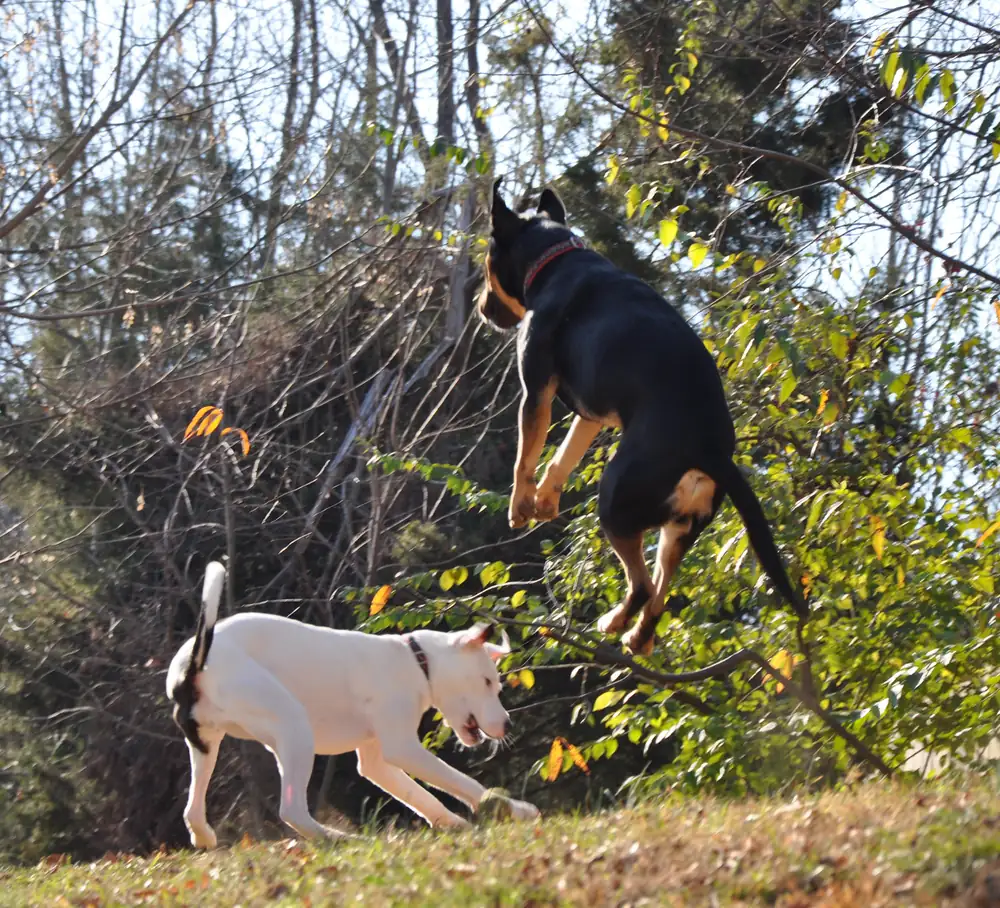
Fencing. Crow isn’t the only one who can fly. The UKC calls the APBT “one of the most capable canine climbers so good fencing is a must for this breed” (UKC). Walk your fence line for gaps and climbable spots, and make sure gates latch on their own.
Training
The AKC calls the Rottweiler “intelligent, highly trainable,” rates it 5 out of 5 for trainability, and says training should start early. It advises against roughhousing, which it says “may encourage aggression” (AKC Rottweiler). For AmStaffs, it calls early socialization and puppy classes “a necessity” given the breed’s “strong will, physical strength, and exuberance,” and says intelligence and a desire to please make training “a fun, easy process” (AKC AmStaff).
Some guides say this mix needs an “alpha” or a firm hand. The American Veterinary Society of Animal Behavior says reward-based methods should be used for all dog training, that “there is no evidence that aversive training is necessary,” and it advises against intimidation such as “alpha rolls” or “dominance downs” (AVSAB, 2021).
What works well with this mix:
- Loose-leash walking first. Practice indoors and in quiet places, and ask a trainer to help fit a front-clip harness.
- Calm greetings. Teach “sit to say hello” so a happy dog doesn’t jump on visitors.
- “Drop it,” “leave it” and settling on a mat. Useful every day with a strong, curious dog.
- Handling practice. Pair nail trims, ear checks and being touched with treats, so vet visits are easier.
- Slow, supervised dog introductions, on neutral ground, with distance and treats.
New to dogs? Don’t assume you’re ruled out, but choose an easygoing adult whose foster knows it well, and line up a reward-based class before the dog comes home.
Grooming
This is the easy part. The AKC says a Rottweiler “should be brushed weekly and bathed regularly,” sheds “only very moderately for most of the year,” and sheds more “twice a year, usually in the spring and fall” (AKC Rottweiler). For an AmStaff’s coat, “a quick once-over with a soft bristle brush every week is usually enough” (AKC AmStaff). Add regular nail trims, tooth brushing and ear checks. If your dog takes after the Rottweiler side, keep a towel handy for drool.
Diet basics
There’s no special Pitweiler diet. The AKC’s advice for both the Rottweiler and the AmStaff is a high-quality food suited to the dog’s age, with an eye on weight, since some dogs “are prone to getting overweight” and too many treats “can cause obesity” (AKC Rottweiler; AKC AmStaff). Three practical points from vet sources:
- Split meals. To lower bloat risk, Cornell’s veterinary college suggests two or more meals a day, limited activity after meals, and no raised bowls (Cornell).
- Grow slowly. The American College of Veterinary Surgeons says rapid weight gain and growth from too much food can complicate hip dysplasia (ACVS hips). Ask your vet about a large-breed puppy food and measured portions.
- Stay lean. Excess weight is a risk factor for cruciate ligament disease (ACVS knees).
Ask your vet what a healthy weight looks like for your dog’s frame.
Health issues to know about
A mix can inherit health problems from either parent. A large University of California, Davis study found no difference between mixed-breed and purebred dogs for 13 inherited conditions, including hip dysplasia. Purebreds were more likely to have 10 others, including elbow dysplasia, and mixed-breed dogs were more likely to have a ruptured cranial cruciate ligament, a knee injury (Bellumori et al., 2013). So being a mix may help with some conditions, but it’s no guarantee.
| Condition | Which parent breed | What the source says |
|---|---|---|
| Hip dysplasia | Both | Occurs most commonly in large breeds (ACVS). The AKC lists it for Rottweilers (AKC) and notes “some instances of mild hip dysplasia” in AmStaffs (AKC). |
| Elbow dysplasia | Rottweiler | The AKC lists it for the breed (AKC); it is most common in large to giant breeds (ACVS). |
| Cruciate ligament (knee) disease | Both | ACVS names the Rottweiler and Staffordshire Terrier among breeds with a higher incidence (ACVS), and a study of dogs under two found a predisposition in Rottweilers and AmStaffs (Duval et al., 1999). |
| Bloat (GDV) | Rottweiler | A life-threatening emergency; large, deep-chested dogs are most at risk (Cornell). |
| Cancer, including bone cancer | Rottweiler | Neoplasia (tumors) was the most common cause of death in a UK study, at 33% (O’Neill et al., 2017). Rottweilers had higher odds of osteosarcoma than crossbred dogs, though it was recorded in under 1% of Rottweilers in a year (O’Neill et al., 2023). |
| Heart disease | Both | The Rottweiler club lists subaortic stenosis and requires cardiac exams for breeding dogs (ARC); the AKC mentions “some types of cardiac disease” in AmStaffs (AKC). |
| JLPP (inherited nerve disease) | Rottweiler | Juvenile laryngeal paralysis and polyneuropathy; a DNA test exists (ARC). |
| Cerebellar ataxia (NCL-A) | AmStaff | An inherited loss of coordination, usually first seen between ages 3 and 5; a DNA test exists (AKC). |
| Skin and coat allergies | AmStaff | Instances have been found in the breed (AKC). |
| Ear infections, weight, arthritis | Rottweiler | Among the most commonly recorded problems in UK Rottweilers: overweight 7.1%, ear infection 6.1%, degenerative joint disease 4.7% (O’Neill et al., 2017). |
| Thyroid disease | AmStaff | The breed club recommends thyroid testing for breeding dogs (STCA). |
The UKC’s APBT standard doesn’t list health tests, so the pit bull-side information above comes from the AmStaff.
Signs of bloat to learn now. Cornell lists retching without bringing anything up, drooling, panting, a swollen or painful belly, restlessness, pale gums, and weakness or collapse. Treat it as an emergency. With treatment, more than 80% survive (Cornell). Ask your vet whether a preventive gastropexy, often done during spay or neuter surgery for at-risk dogs, makes sense.
Spay and neuter timing. In a study of mixed-breed dogs, neutering before one year of age was generally linked to a higher risk of joint disorders in dogs of 20 kg (about 44 pounds) or more (Hart et al., 2020). Many shelter dogs are already altered, and that’s fine. If you have a puppy, ask your vet about timing.
Adopting? You may not have parent test results. Get the shelter’s vet records, book a checkup soon after adoption, and share this list with your vet.
Lifespan
We found no study of this mix’s lifespan, so any single number you see online is a guess. As a frame of reference, the AKC lists 9 to 10 years for Rottweilers (AKC) and 12 to 16 years for AmStaffs (AKC). The UK study found a median of 9.0 years for Rottweilers: 9.5 for females and 8.7 for males (O’Neill et al., 2017). Those are breed averages, not a forecast for your dog.

Rottweiler Pitbull mix puppies
A puppy’s adult size and looks are hard to predict, since you’re guessing from two parents who may themselves be mixes. The Rottweiler side can mean a lot of growing, fast.
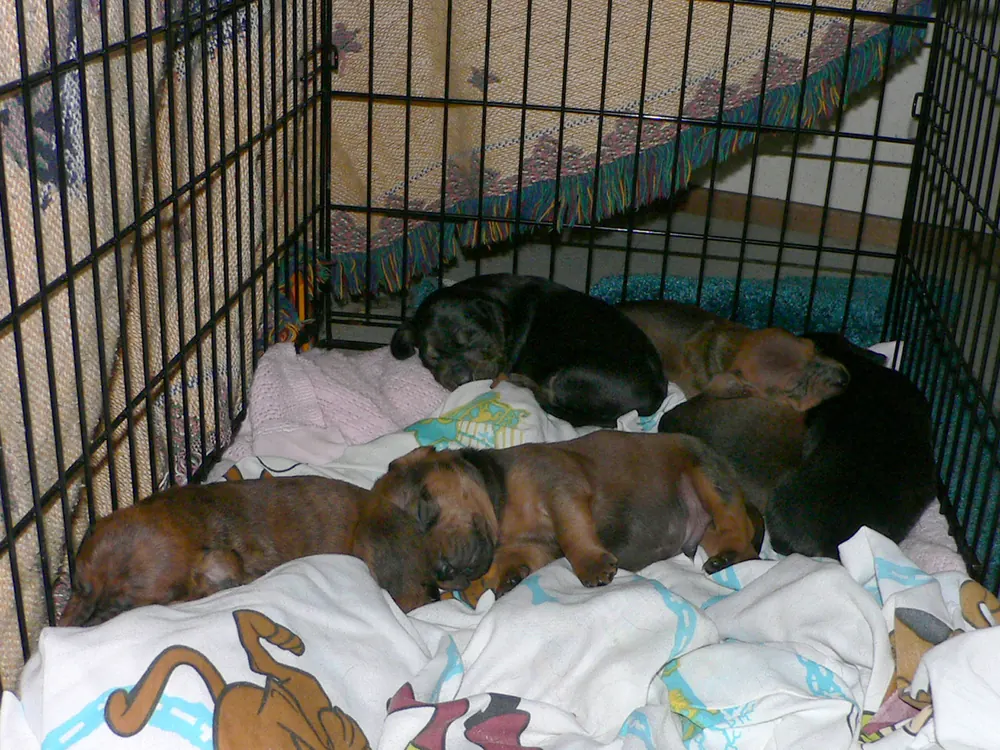
There’s no breed club or health-testing program for this cross. If you’re talking with someone who has a litter, ask to meet the mother and to see results for the tests the parent clubs list: hips, elbows, eyes, heart and JLPP for the Rottweiler (ARC); hips, heart, thyroid and NCL-A for the AmStaff (STCA). For many people over 50, an adult from a shelter or foster home is the easier path.
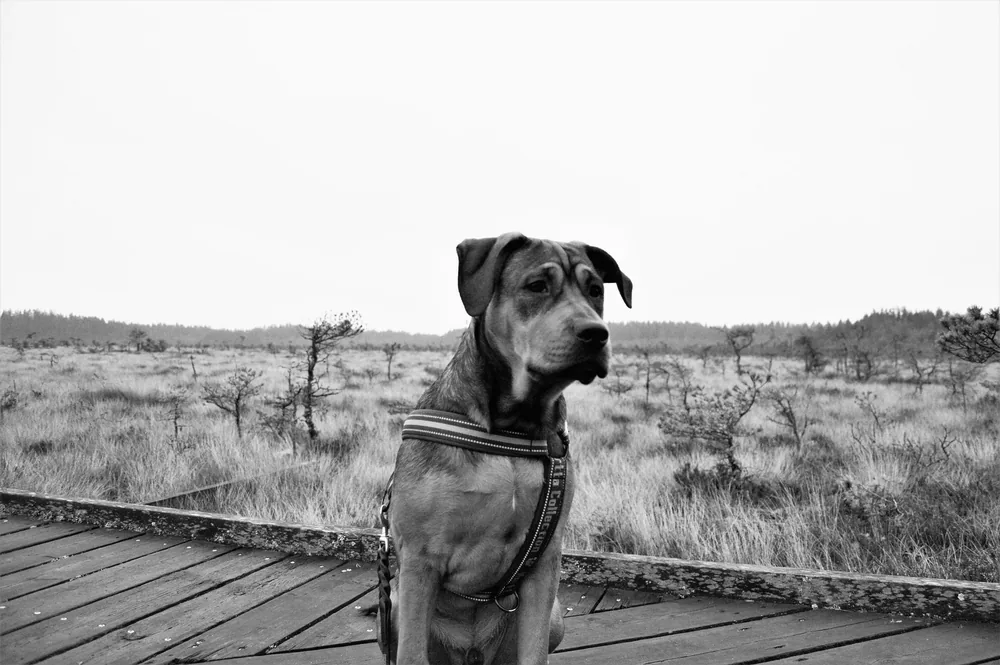
Is that shelter dog really a Pitweiler?
Maybe, maybe not. A black and tan dog with a broad head is easy to label “Rottie/Pit mix,” but the research on those guesses is humbling:
- In a University of Florida study at four shelters, staff collectively labeled 52% of 120 dogs as pit bull-type by sight. DNA identified only 21% as pit bull-type, and the authors called visual identification “unreliable” (Olson et al., 2015).
- In a study of 919 dogs at two shelters, staff at one matched at least one breed in 67.7% of the dogs tested, but only 10.4% when asked to name more than one. And just 1.3% of all the dogs had two purebred parents of different breeds, which is what “half Rottweiler, half pit bull” would mean (Gunter et al., 2018).
- In a study of 20 adopted dogs, 87.5% of those that agencies had assigned specific breeds did not have all of those breeds detected by DNA (Voith et al., 2009).
- In a US and UK survey, shelter workers disagreed widely about which dogs were pit bulls (Hoffman et al., 2014).
Labels have consequences. At the two shelters in the 919-dog study, dogs with any pit bull-type ancestry waited an average of 37.5 days for a home, compared with 19.7 days for dogs with none (Gunter et al., 2018). An earlier study concluded that removing kennel breed labels is a relatively low-cost way to improve outcomes (Gunter et al., 2016).
So meet the dog, not the label. Our guide to figuring out your dog’s breed explains DNA tests and what they can and can’t tell you.
Housing, insurance and local rules: a checklist for adopters
Nothing here is a reason to pass up a good dog. A few phone calls before you adopt can spare you a hard surprise later. Both sides of this mix turn up on restriction lists, so check for both words, “pit bull” and “Rottweiler.”
- Local law. Ask your city or county animal services whether any breed-specific rules apply where you live or plan to move. AVSAB notes that such laws commonly name pit bull-type breeds, often include Rottweilers and other breeds, and may ban dogs outright or require things like muzzling in public, spay or neuter surgery or extra liability insurance (AVSAB). Several states don’t allow local breed-specific ordinances (Triple-I).
- Your lease or HOA. Read the pet policy for breed and weight limits, and get approval in writing.
- Homeowner’s or renter’s insurance. The Insurance Information Institute says some insurers won’t cover certain breeds such as pit bulls, some charge more for breeds such as pit bulls and Rottweilers, some decide case by case, and some don’t ask about breed at all. Pennsylvania and Michigan have laws that bar insurers from denying or canceling coverage to owners of particular breeds in some policies (Triple-I). If one company says no, ask another.
- Retirement communities. If you live in one, or may later, check its pet rules now, including weight limits.
- The paperwork. Ask the shelter how the breed label was decided and whether parentage is known. AVSAB notes that breed guesses get written into vet reports and adoption papers (AVSAB). Answer applications truthfully, and say “mixed breed, parentage unknown” if that is what the records show.
- Helpful extras. Training certificates, vet records and a reference from a past landlord or trainer can help when a decision is case by case.
Both AVSAB and the ASPCA oppose breed-specific laws, citing in part how hard it is to identify breeds by eye. The ASPCA supports breed-neutral laws that look at the behavior of the individual dog and owner (AVSAB; ASPCA).
Is a Pitweiler right for me? A quick checklist
Written with adopters over 50 in mind. A few “no” answers don’t rule you out; they tell you what to plan for, or which dog to ask about.
- Yes / No: I (or someone at home) can give a dog daily walks, play and training, in the amount the shelter or foster says this dog needs.
- Yes / No: I’ve walked this dog myself and can comfortably hold it, or I’m ready to use a front-clip harness and take a class.
- Yes / No: I could get a dog this size into the car, with a ramp or a helper if needed.
- Yes / No: My yard is securely fenced, or I’m happy to keep the dog leashed outdoors.
- Yes / No: Someone is home much of the day, or I can arrange a walker or daycare.
- Yes / No: I can introduce a new dog slowly to my other pets, or I have none.
- Yes / No: I’ve checked my lease, insurance and local rules.
- Yes / No: I’ve thought about who would care for this dog if I ever couldn’t.
A Pitweiler may suit you if you’re home a lot, enjoy walking and training, and want a devoted dog that wants to be part of your day.
Consider a smaller or mellower dog if a strong puller would be a fall risk for you, if the dog would be alone most of the day, or if you have a busy home with other animals and this particular dog is selective. A calm, leash-trained adult can be the exception.
A word on leash safety
This isn’t a reason to skip a big dog, but it’s worth planning for. A study of US emergency visits estimated that fractures linked to walking leashed dogs among people 65 and older rose from 1,671 in 2004 to 4,396 in 2017. The authors suggested obedience training so dogs don’t lunge on leash (Pirruccio et al., 2019). Practical steps: do a test walk before adopting, hold the leash in your hand rather than wrapping it around your wrist, wear sturdy shoes, and start in quiet places.
Costs to plan for
We found no reliable cost figures for this mix. The ASPCA’s 2021 estimate for a dog is $1,391 a year, and $3,221 for the first year once one-time costs are included (ASPCA). Budget for:
- Adoption fee, and what it covers, such as vaccines, a microchip and spay or neuter surgery. Ask.
- Food for what may be a large dog.
- Routine vet care, plus pet insurance or an emergency fund. Knees, hips and bloat are on the parent-breed lists, so price insurance before anything becomes pre-existing, and ask how the insurer treats breed.
- Training classes and gear: a front-clip harness, a sturdy crate, a car ramp.
Adopting a Rottweiler Pitbull mix
Where to look
Search shelters and rescues for “Rottweiler mix,” “Pit Bull mix,” “Terrier mix” and “Mastiff mix,” since labels are often a guess. The Rottweiler Rescue Foundation says it supports more than 45 Rottweiler rescue groups in the United States and has a directory of them (RRF). Ask each group whether it takes mixes. The American Rottweiler Club also suggests contacting local clubs and scanning humane society websites (ARC). Foster-based rescues are especially helpful, because a foster family can tell you how the dog behaves in a real home.
Questions to ask the shelter or rescue
The ASPCA suggests leaning on shelter staff “to help play matchmaker” (ASPCA). For a Rottweiler pit mix, ask:
- How was the breed label decided? Is either parent known, or has there been a DNA test?
- How does the dog walk on a leash? Can I walk it myself before deciding?
- How does it react to strangers, visitors and the doorbell?
- How has it done with dogs, cats and children? In a home, in playgroups, or only in the kennel?
- Any history of guarding food or toys, or of a bite or scuffle? What happened?
- How does it handle being left alone, and being touched for nails, ears and paws?
- Any limping, stiffness, skin, ear or stomach problems? What do the vet records show?
- Is there a foster-to-adopt or trial period, and what happens if it doesn’t work out?
Our list of 9 questions to ask when adopting a dog covers the general ones.
Give your dog a backup plan
A dog whose label can make rehoming slower is exactly the dog worth planning for. Naming a backup caregiver now, someone who knows your dog, has checked their own lease and insurance, and has agreed to step in, helps make sure your dog never has to go back to a shelter. Our guide What Happens to Your Dog When You Die walks you through it, and the free My Dog’s Backup Plan worksheet records your dog’s routine, vet, quirks and favorite things. Bone Voyage is also building the pledge: a promise by a volunteer to adopt a specific older adult’s dog if that person dies or can no longer care for it. You can join the free list on the guide page.
Similar dogs to compare
- Golden Retriever Rottweiler mix and Cane Corso Rottweiler mix, two more Rottweiler crosses.
- Boxer Pitbull mix, Pitbull Lab mix and Shepherd and Pitbull mix, three more pit bull crosses.
- Pitsky, the pit bull and Siberian Husky cross.
- Pitbull and Chihuahua mix, the Chipit, a pit bull cross whose size is hard to predict.
- American Bully vs Pit Bull and the Rottweiler puppy guide, for each side of the family.
Frequently Asked Questions
Is a Rottweiler Pitbull mix a good dog?
Many are devoted family dogs, but it depends on the individual. As parent-breed context, the AKC rates both the Rottweiler and the American Staffordshire Terrier 5 out of 5 for affection with family (AKC Rottweiler, AKC AmStaff), and the UKC says American Pit Bull Terriers make excellent family companions (UKC). Both sides are strong dogs that need training, daily exercise and company, so meet the dog and ask about its history.
What is a Rottweiler Pitbull mix called?
Pitweiler is the most common nickname. You’ll also see Rottie Pit, Rott-N-Pit, Rottbull, Bullrott and American Pitweiler. These are informal names. Neither the AKC nor the UKC recognizes the cross as a breed and there is no breed standard for it, so looks, size and temperament vary from dog to dog.
How big does a Rottweiler Pitbull mix get?
There is no official size for the mix. The parent breeds together span about 17 to 27 inches at the shoulder and 30 to 135 pounds: the AKC lists Rottweilers at 22 to 27 inches and 80 to 135 pounds (AKC), the UKC gives American Pit Bull Terriers about 17 to 21 inches and 30 to 60 pounds (UKC), and the AKC lists American Staffordshire Terriers at 17 to 19 inches and 40 to 70 pounds (AKC). An adult dog lets you see the size instead of guessing.
How long do Pitweilers live?
We found no study that has measured the mix’s lifespan. The AKC lists 9 to 10 years for Rottweilers (AKC) and 12 to 16 years for American Staffordshire Terriers (AKC), and a UK veterinary-records study found a median of 9.0 years for Rottweilers (O’Neill et al., 2017). No one can promise where an individual mix will land, so keep your dog lean and keep up with vet visits.
Are Pitweilers aggressive?
Not as a rule, and breed is a weak guide: a large study in Science found breed explains only about 9% of behavior differences between individual dogs (Morrill et al., 2022). The UKC calls aggression toward people uncharacteristic of the American Pit Bull Terrier but says most show some dog aggression (UKC), and the AKC standard describes the Rottweiler as calm and confident, with an instinct to protect home and family (AKC standard). Ask for this dog’s behavior notes and introduce other animals slowly.
Is it illegal to own a Rottweiler Pitbull mix?
In most of the United States the answer is set locally, so check with your city or county animal services. Where breed-specific rules exist, they commonly cover pit bull-type dogs and often other breeds, including Rottweilers, and their mixes (AVSAB). Several states bar local breed-specific ordinances (Triple-I). Check your lease, HOA and insurance policy separately, since those rules are private.
How much is a Pitbull Rottweiler mix worth?
We found no reliable price data for this mix, so we don’t quote puppy prices. Adoption fees vary, so ask the shelter what its fee covers. The bigger number is care: the ASPCA’s 2021 estimate for a dog is $1,391 a year, and $3,221 in the first year (ASPCA).
Why do police no longer use Rottweilers?
We couldn’t find a reputable source confirming that police have stopped using Rottweilers, so we can’t give a reason. The AKC says Rottweilers found work as police dogs after their cattle-driving days ended and were among the first guide dogs for the blind, and later served as search-and-rescue dogs (AKC). Whether a breed is used by police tells you little about how one adopted mix will be as a pet.
Before you go
Whatever the kennel card says, the dog in front of you is one specific dog with its own history and quirks. Weigh what you learn about that dog more heavily than anything on this page. And whatever dog you bring home, it’s worth deciding now who would step in if you ever couldn’t.
Sources
- American Kennel Club, Rottweiler breed page and official Rottweiler standard (effective 2022)
- American Kennel Club, American Staffordshire Terrier breed page
- United Kennel Club, American Pit Bull Terrier standard and Rottweiler standard
- American Rottweiler Club, Rottweiler Breed Health and Find a Rottweiler: Rescue or Rehome
- Staffordshire Terrier Club of America, Health Statement
- Rottweiler Rescue Foundation, rescue group directory
- O’Neill DG et al. (2017). Rottweilers under primary veterinary care in the UK: demography, mortality and disorders. Canine Genetics and Epidemiology 4:13.
- O’Neill DG et al. (2023). Dog breeds and conformations predisposed to osteosarcoma in the UK. Canine Medicine and Genetics 10:8.
- Duval JM et al. (1999). Breed, sex, and body weight as risk factors for rupture of the cranial cruciate ligament in young dogs. JAVMA 215(6):811-4.
- Hart BL et al. (2020). Assisting decision-making on age of neutering for mixed breed dogs of five weight categories. Frontiers in Veterinary Science 7:472.
- Bellumori TP et al. (2013). Prevalence of inherited disorders among mixed-breed and purebred dogs. JAVMA 242(11):1549-55.
- American College of Veterinary Surgeons, Canine Hip Dysplasia, Canine Elbow Dysplasia and Cranial Cruciate Ligament Disease
- Cornell Riney Canine Health Center, Gastric dilatation-volvulus (GDV) or “bloat” (2025)
- Morrill K et al. (2022). Ancestry-inclusive dog genomics challenges popular breed stereotypes. Science 376(6592):eabk0639.
- Olson KR et al. (2015). Inconsistent identification of pit bull-type dogs by shelter staff. The Veterinary Journal 206(2):197-202.
- Gunter LM et al. (2018). A canine identity crisis: genetic breed heritage testing of shelter dogs. PLOS ONE 13(8):e0202633.
- Gunter LM et al. (2016). What’s in a name? Effect of breed perceptions & labeling. PLOS ONE 11(3):e0146857.
- Voith VL et al. (2009). Comparison of adoption agency breed identification and DNA breed identification of dogs. Journal of Applied Animal Welfare Science 12(3):253-62.
- Hoffman CL et al. (2014). Is that dog a pit bull? Journal of Applied Animal Welfare Science 17(4):322-39.
- Pirruccio K et al. (2019). Fractures in elderly Americans associated with walking leashed dogs. JAMA Surgery 154(5):458-459.
- American Veterinary Society of Animal Behavior, Position Statement on Humane Dog Training (2021) and Position Statement on Breed-Specific Legislation (2014)
- Insurance Information Institute, Spotlight on: Dog bite liability
- ASPCA, Position Statement on Breed-Specific Legislation, Cutting Pet Care Costs (2021 cost update) and Finding your Fido
- Photos: Flickr and Wikimedia Commons contributors, credited under each image. Full license records are kept in this site’s image-credits file.