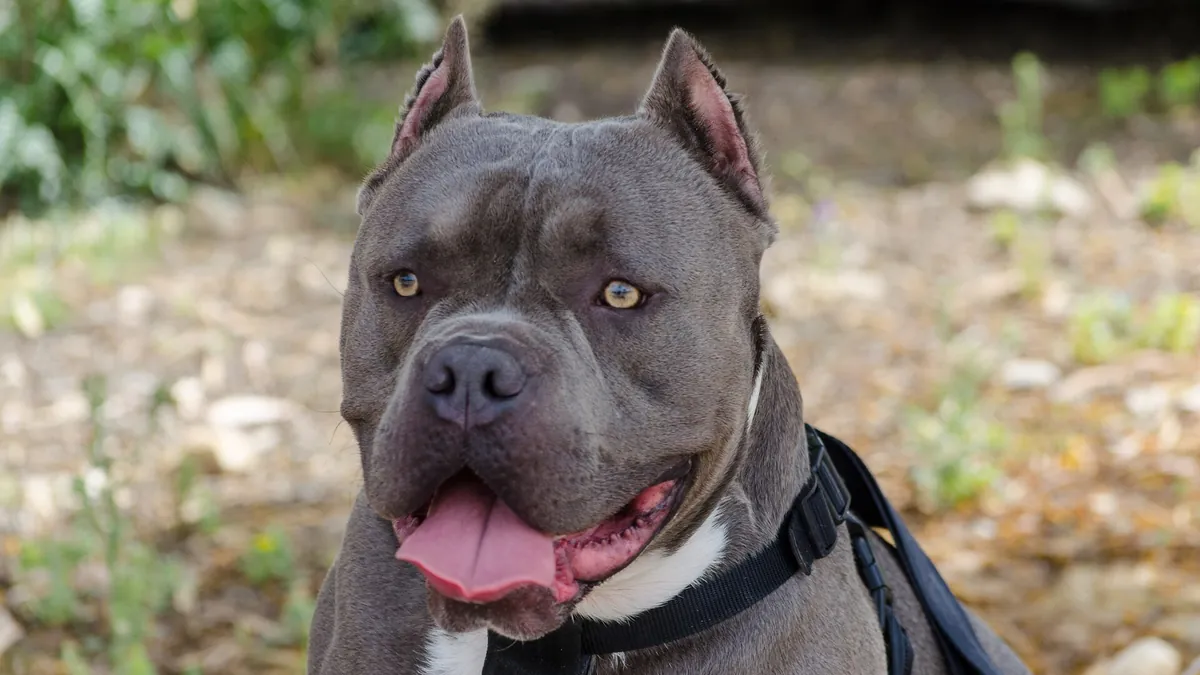

The American Bully and the American Pit Bull Terrier are related but separate breeds. The pit bull is the older, leaner, more athletic dog, first registered in 1898; the American Bully was developed from it and is shorter-coupled, heavier-boned and blockier, bred first as a family companion and recognized by the United Kennel Club in 2013 (UKC American Pit Bull Terrier, UKC American Bully).
If you’re looking at a dog in a shelter labeled “pit bull” or “bully mix,” the label may not tell you much. Here’s what the breed standards, kennel clubs and research actually say, how to tell the two apart, and what to check before you adopt either one.
At a glance
| American Pit Bull Terrier | American Bully | |
|---|---|---|
| Recognized by | UKC (first registry to recognize it; UKC registration No. 1 in 1898) | UKC (since July 15, 2013) and the ABKC |
| UKC group | Terrier Group | Companion Dog Group |
| Height | About 18 to 21 in (males), 17 to 20 in (females), “a general and approximate guideline only” | Four classes: Pocket, Standard, Classic and XL, from 13 in up to 23 in (details below) |
| Weight | 35 to 60 lb (males), 30 to 50 lb (females) | No weight range in the UKC or ABKC standard |
| Build | Powerful and athletic; “should never appear bulky or muscle-bound" | "Compact, strong, thick-set,” with heavy bone and a bulky look |
| Head | Shaped like “a broad, blunt wedge” | Large, broad, “square from the front and side without any wedge appearance” |
| Muzzle | About 2:3 muzzle to skull | 25 to 35 percent of total head length |
| Coat | Glossy, smooth, close and moderately stiff | Same wording in the standard |
| Colors | Any color or pattern except merle | Any color or pattern except merle |
| Temperament in the standard | ”Strength, confidence, and zest for life”; eager to please; “most APBTs exhibit some level of dog aggression" | "First and foremost, a companion”; “gentle and friendly”; “an excellent family dog” |
| Lifespan | Not listed by the UKC | Not listed by the UKC or ABKC |
| AKC status | Not an AKC breed; its AKC cousin is the American Staffordshire Terrier | Not an AKC breed |
Sources: UKC American Pit Bull Terrier standard, UKC American Bully standard, ABKC American Bully standard, AKC: how the AmStaff separated from the pit bull.
Quick take for adopters: both are short-coated, strong, people-loving dogs that need daily exercise, training and an owner who checks local rules first. The pit bull is usually the leaner, bouncier athlete. The American Bully is usually the stockier, heavier-set dog, and how big it gets depends a lot on its size class.
”Pit bull” is a label, not one breed
Part of the confusion is that “pit bull” gets used three different ways:
- A specific breed: the American Pit Bull Terrier, registered by the United Kennel Club.
- A family of related breeds: the ASPCA describes the “pit bull” as a descendant of the English bull-baiting dog, later crossed with terriers (ASPCA). Researchers studying shelter dogs counted the American Pit Bull Terrier, American Staffordshire Terrier, Staffordshire Bull Terrier, “pit bull” and their mixes as pit bull-type breeds (Olson et al., 2015).
- A look: in shelters, leases, insurance forms and some laws, “pit bull” often just means a muscular, short-coated dog with a broad head. That’s how many American Bullies end up being called pit bulls.
So when someone asks “is a bully a pit bull?”, the honest answer is: not by breed, but very often by label.
History: where each breed came from
The American Pit Bull Terrier
According to the UKC, dog fanciers in England, Ireland and Scotland began crossing Bulldogs and Terriers sometime in the nineteenth century, “looking for a dog that combined the gameness of the terrier with the strength and athleticism of the Bulldog.” Immigrants brought these bull-and-terrier crosses to the United States, where farmers and ranchers used them as catch dogs for semi-wild cattle and hogs, for hunting, for driving livestock and as family companions. The UKC was the first registry to recognize the breed: founder C. Z. Bennett gave UKC registration number 1 to his own APBT, Bennett’s Ring, in 1898 (UKC).
The ASPCA is candid that some of these dogs were also bred for dogfighting after bull-baiting was outlawed in the 1800s, while “other pit bulls were specifically bred for work and companionship” and “have long been popular family pets, noted for their gentleness, affection and loyalty” (ASPCA).
Where the American Staffordshire Terrier fits
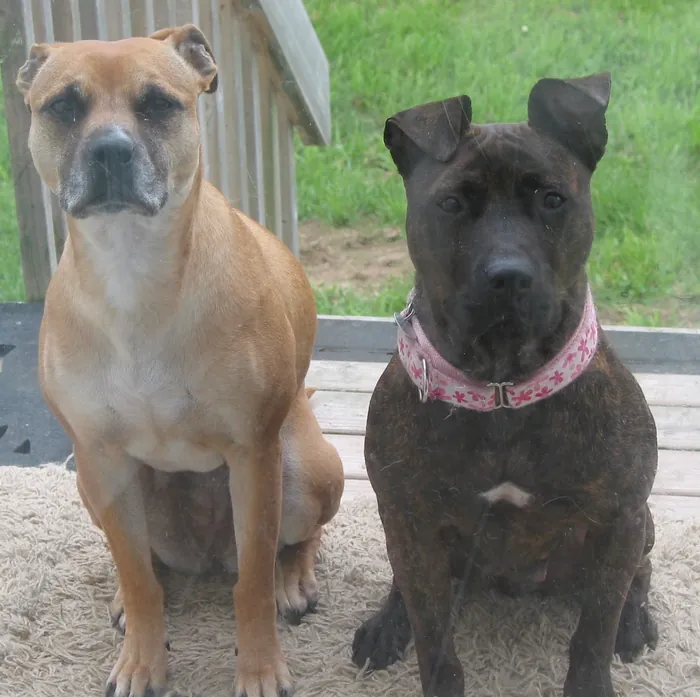
The AKC never registered the American Pit Bull Terrier by that name. Instead, in 1936 it registered a group of these dogs as Staffordshire Terriers, renamed American Staffordshire Terriers in 1972 when the AKC recognized the English Staffordshire Bull Terrier. In the 1970s the AKC closed the AmStaff studbook, so only dogs with AmStaff parents count as AmStaffs today. The AKC notes that the two breeds now generally “look very different,” because pit bull breeders selected for gameness rather than looks, and “even today, pit bulls vary wildly in size and shape” (AKC).

The American Bully
The UKC’s breed history says the American Bully “developed as a natural extension of the American Pit Bull Terrier.” One type of APBT took on “a specific build and structure that is so unique it was wise to recognize it as a different breed altogether.” Other breeds were blended in too: the standard names the American Bulldog, English Bulldog and Olde English Bulldogge, and says the American Bully “is a breed of its own and should not specifically resemble any one in particular.” The UKC recognized the breed on July 15, 2013 (UKC). The American Bully Kennel Club (ABKC) also registers the breed and publishes its own standard with four size varieties (ABKC).
In short: the pit bull was shaped by work, and the American Bully was shaped as a companion with a distinctive heavy, muscular look.

Size: how big does each one get?
American Pit Bull Terrier
The UKC gives a desirable weight of 35 to 60 pounds for mature males and 30 to 50 pounds for females in good condition. As “a general and approximate guideline only,” males stand about 18 to 21 inches at the withers and females 17 to 20 inches. The standard stresses that balance matters “far more” than the exact numbers, and that dogs outside these ranges aren’t penalized unless they are “disproportionately massive or rangy” (UKC).
American Bully size classes
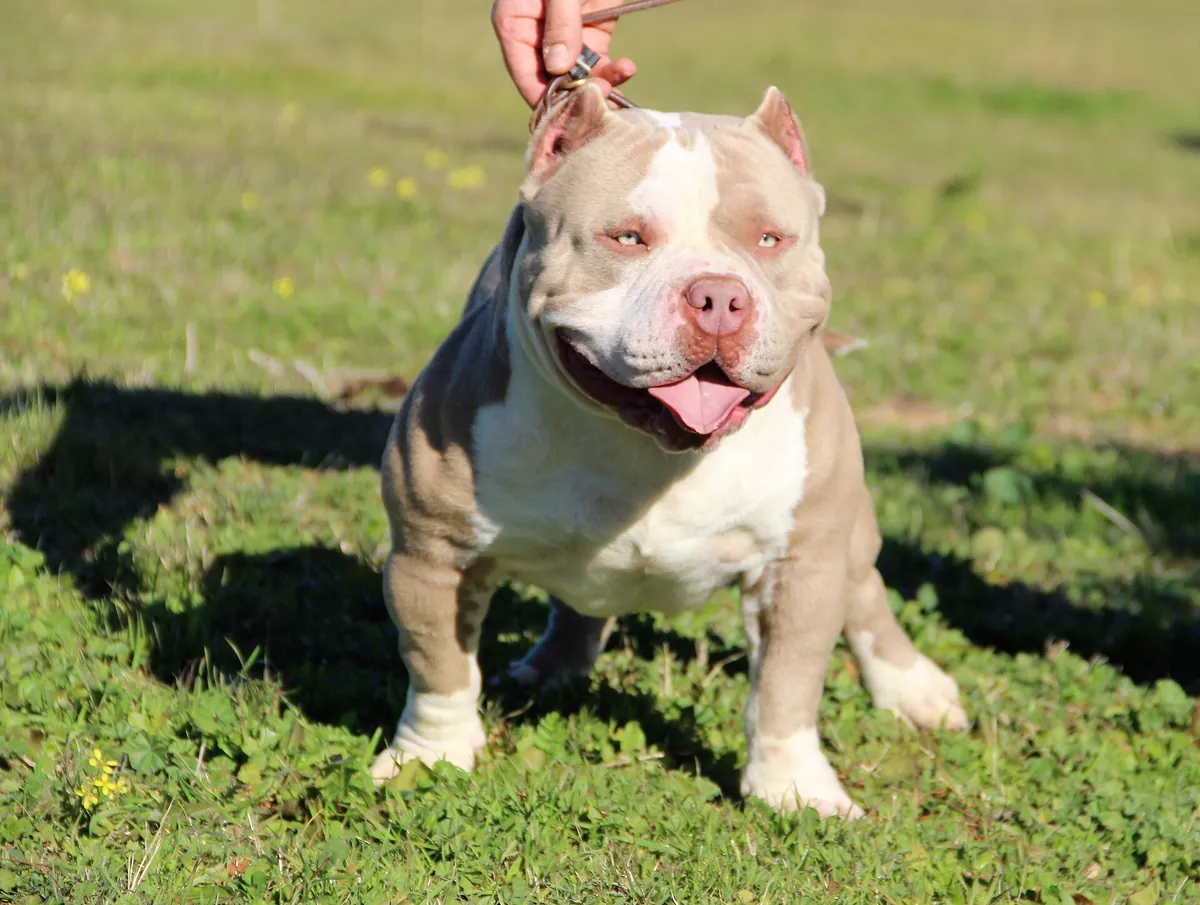
The American Bully is sorted by height, not weight. Both registries use the same height bands:
| Class | Males | Females | Notes |
|---|---|---|---|
| 14 to under 17 in | 13 to under 16 in | Same build as the Standard, just shorter | |
| Standard | 17 to 20 in | 16 to 19 in | The reference type |
| Classic | 17 to 20 in | 16 to 19 in | Lighter frame and less body mass than the Standard |
| XL | Over 20 to 23 in | Over 19 to 22 in | Same build as the Standard, just taller |
Sources: UKC American Bully standard, ABKC American Bully standard. The UKC lists the Standard and Classic together as one size. The ABKC says Pocket and XL dogs “share the same build, body type, and breed type” as the Standard.
Neither standard gives a weight range for the breed, so treat any single “American Bully weight” you see online with caution. Our American Bully XL guide covers the tallest class in more detail.
One more thing worth knowing: the UKC is openly wary of extremes. Its American Bully standard says “quality is never to be sacrificed in favor of size and mass” and lists “overly massive dogs” and dwarfism as disqualifications (UKC).

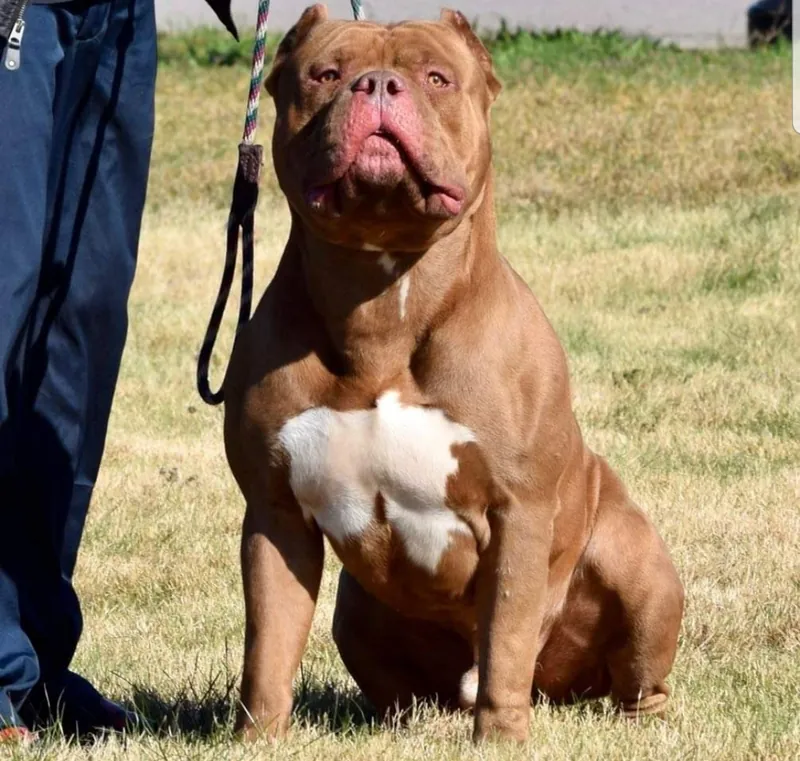

How to tell them apart: a side-by-side checklist
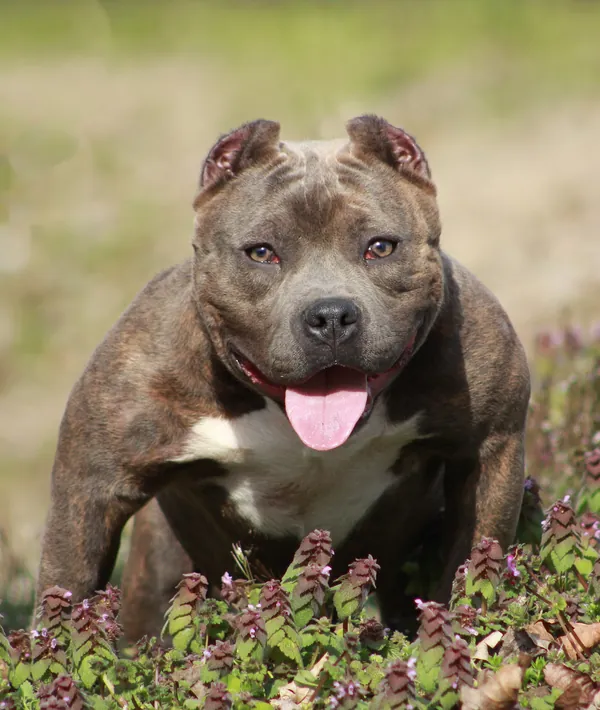
Breed standards describe the ideal dog. Real dogs, and especially mixes, can fall anywhere in between. But if you’re trying to read the dog in front of you, these are the differences the two UKC standards emphasize:
| Look at | Pit bull (APBT) | American Bully |
|---|---|---|
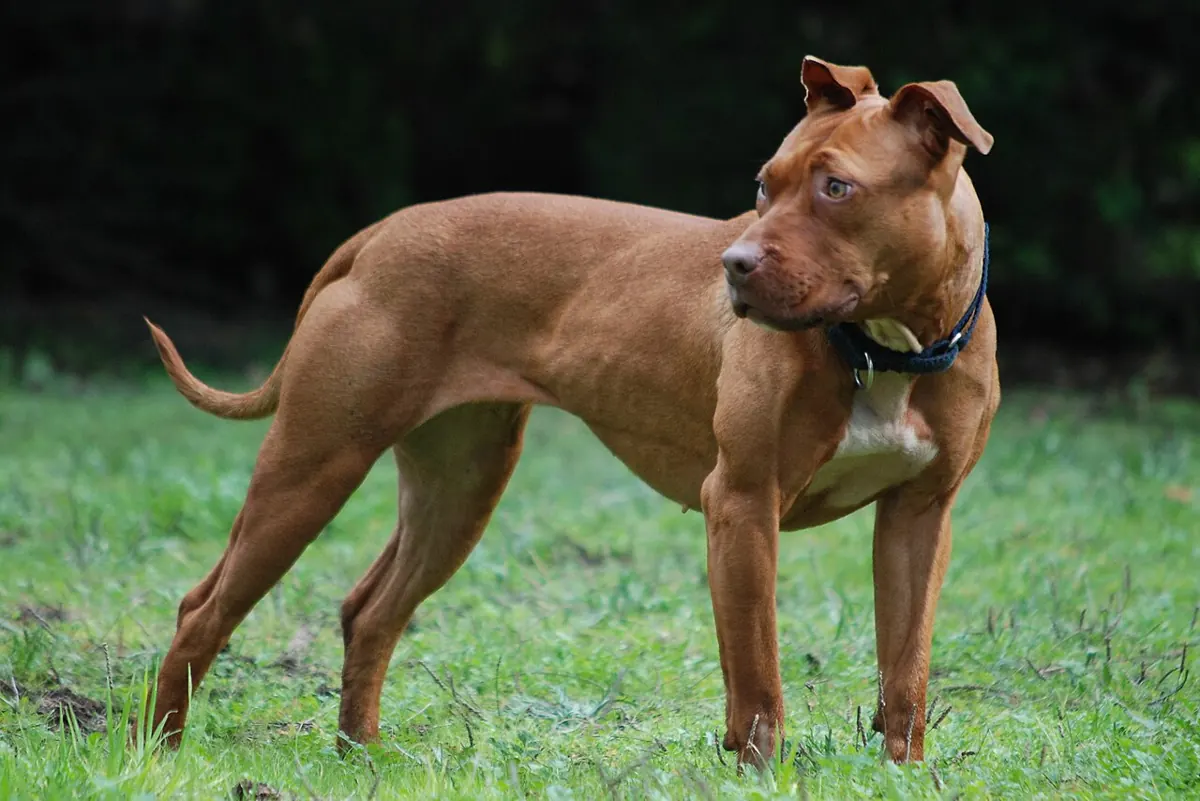
| Overall outline | Body “just slightly longer than tall”; athletic, never bulky | Body “close-coupled” and appears square; compact and thick-set |
| Head shape | ”A broad, blunt wedge” from the front | Square from the front and side, “without any wedge appearance” |
| Muzzle | Muzzle to skull about 2:3, with a slight taper | Shorter: 25 to 35 percent of head length, “broad and blocky” |
| Chest | Deep, “never wider than it is deep” | Broad and deep; “may be wider than it is deep” |
| Legs | Front leg about half the dog’s height at the withers | Strong, “large or round bone”; a “leggy, terrier like structure” is a serious fault |
| Neck | Tight skin, no dewlap | Without “excessive” dewlap |
| Tail | Short, low-set, tapering | Often a “crank or pump handle tail”; straight is fine |
| Eyes | Round | Oval to almond |
Sources: UKC APBT standard, UKC American Bully standard.
What’s the same? Coat (short, glossy, moderately stiff), colors (anything but merle) and high-set ears that may be natural or cropped. Neither standard wants blue eyes: they disqualify an American Bully and are a serious fault in an APBT.
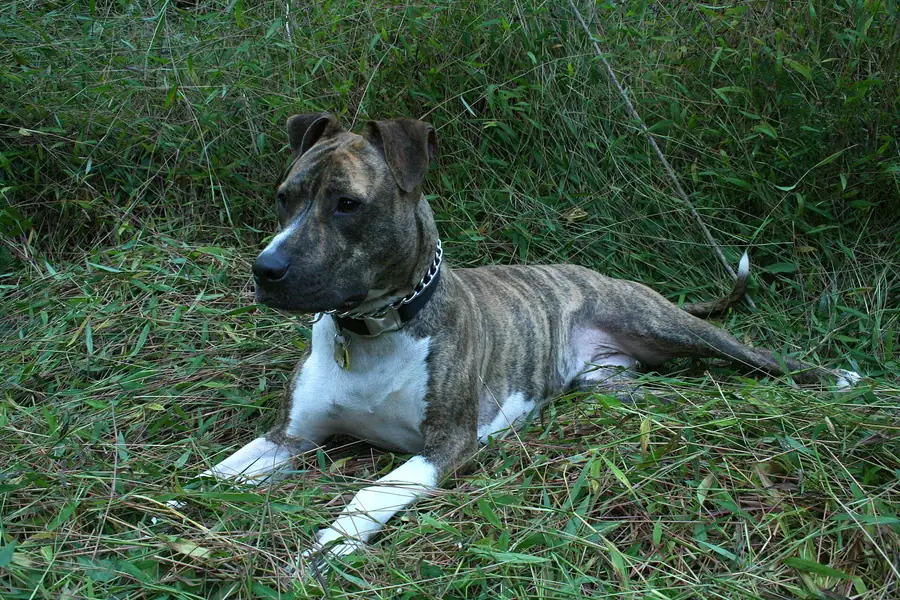

Temperament: what the standards say, and what that means for you
American Pit Bull Terrier. The UKC says the breed is “eager to please and brimming over with enthusiasm,” that APBTs “make excellent family companions and have always been noted for their love of children,” and that they are “not the best choice for a guard dog since they are extremely friendly, even with strangers.” It is also frank that “most APBTs exhibit some level of dog aggression,” so the breed “requires an owner who will carefully socialize and obedience train the dog” (UKC).
American Bully. The UKC calls the breed “first and foremost, a companion,” whose “demeanor is gentle and friendly” and which “makes an excellent family dog” (UKC). The ABKC goes further, describing the ideal Bully as “great with kids, and extremely friendly with strangers, other dogs, and other animals” (ABKC).
Both standards say aggression toward people is uncharacteristic and highly undesirable, and both disqualify “viciousness or extreme shyness.”
Keep in mind that a breed standard describes the goal breeders aim for, not a promise about a particular dog. The ASPCA points out that most pit bull-type dogs today come from “random breeding,” producing “a wide range of behavioral predispositions,” which is why “it is important to evaluate and treat each dog, no matter its breed, as an individual” (ASPCA). In practice:
- People: both breeds are usually people-oriented. Neither is a good pick if you want a guard dog.
- Other dogs: go slowly with either breed. Some love dog company; others do best as an only dog.
- Children and older adults: a happy, strong dog can knock someone over. Teach a polite “sit” for greetings and supervise.
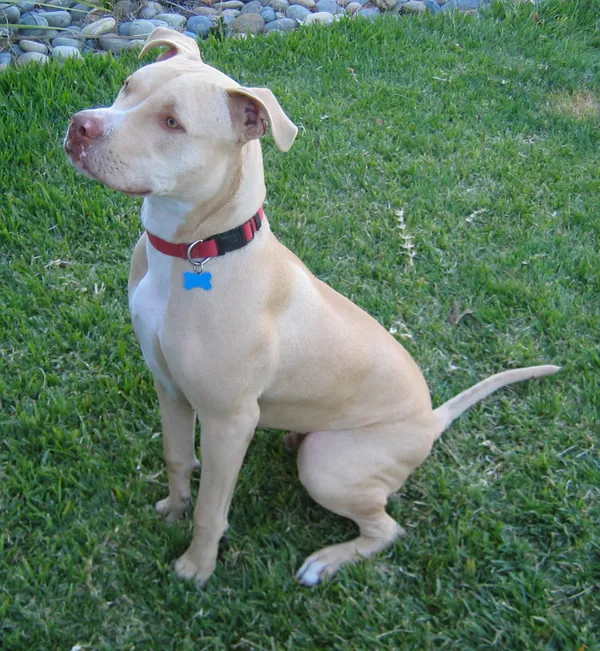

Exercise and training
Exercise. Both are active dogs. The UKC says the APBT does very well in performance events “because of its high level of intelligence and its willingness to work,” and that its natural agility makes it “one of the most capable canine climbers so good fencing is a must.” The UKC wants the ideal American Bully to have “the athleticism to do well in performance events,” too. For the closely related AmStaff, the AKC says the breed “requires a lot of exercise,” but that leaving the dog in the yard all day “is not the right approach” because it thrives as part of the family (UKC APBT, UKC American Bully, AKC AmStaff).
As a practical rule of thumb, a lean, leggy pit bull often needs more running and play. A heavier American Bully still needs daily walks and play, but watch for overheating and go easy on joints, especially with heavier-built dogs. Ask your vet what’s right for your dog’s age and build.
Training. The AKC says early socialization and puppy classes are “a necessity” for AmStaffs given the breed’s “strong will, physical strength, and exuberance,” while its “intelligence and desire to please make training a fun, easy process.” It also warns that dog aggression “can develop even in well-socialized Am Staffs” (AKC AmStaff). The same advice fits pit bulls and bullies:
- Short, upbeat, reward-based sessions. Food and toys work well.
- Loose-leash walking first. A strong dog that pulls is a real fall risk, at any age.
- Calm greetings so a friendly dog doesn’t jump on visitors.
- Careful dog-to-dog introductions, and no unsupervised time with new dogs until you know how it goes.
If you get stuck, a certified trainer who uses positive reinforcement is worth every penny.
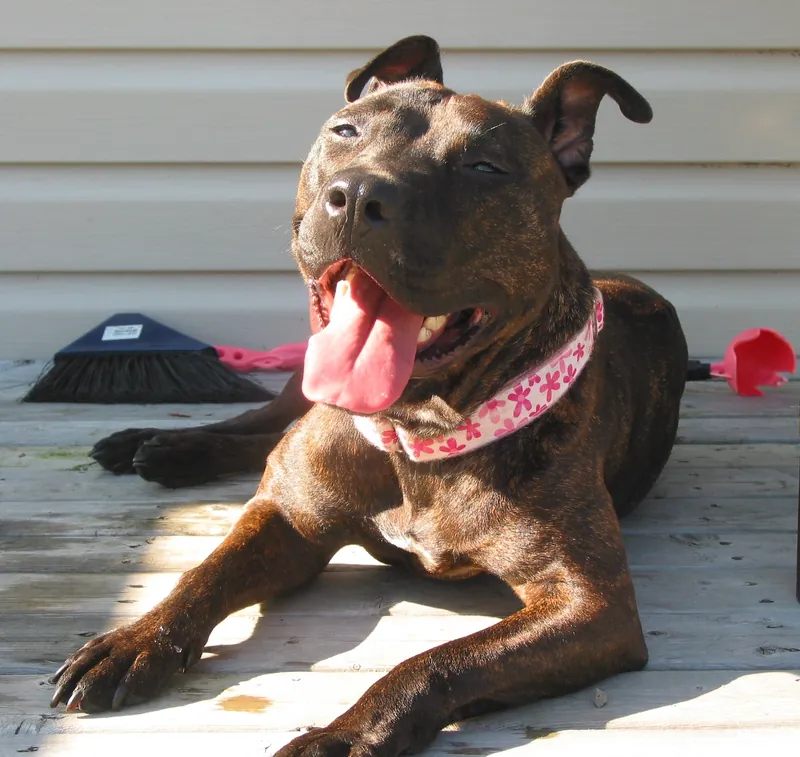

Grooming and diet basics
Grooming is easy for both. The UKC describes the identical coat for each breed: “glossy and smooth, close, and moderately stiff to the touch.” Expect some shedding; a quick weekly brush, regular nail trims and ear checks cover most of it.
For diet, the AKC’s advice for the AmStaff applies to both: feed a high-quality food suited to the dog’s age, and “some dogs are prone to getting overweight, so watch your dog’s calorie consumption and weight level” (AKC AmStaff). Count training treats as part of the day’s food. Extra weight is hard on joints in any muscular dog.
Health: what’s known (and what isn’t)
Pit bull-type breeds. The American Pit Bull Terrier standard doesn’t list health tests, so the best guide comes from its closest AKC relative. For American Staffordshire Terriers, the AKC recommends a hip evaluation, cardiac exam, thyroid evaluation and a DNA test for NCL4A. The breed club’s health statement, shared by the AKC, notes “some instances of mild hip dysplasia and some types of cardiac disease,” skin and coat allergies, and an inherited cerebellar ataxia that “shows first signs of appearing usually between 3 and 5 years of age” (AKC AmStaff, Abitbol et al., 2010). A US study of juvenile-onset generalized demodicosis, a mange-mite skin disease of young dogs, found the American Staffordshire Terrier had the strongest association of any breed identified (Plant et al., 2011).
American Bully. Honestly, very little peer-reviewed research looks at this breed’s health. What exists is mostly individual case reports, such as an American Bully diagnosed with a genetic scaling skin disease (ichthyosis) caused by a gene variant previously described in the American Bulldog, one of the breed’s ancestors (Briand et al., 2019). A DNA test for that variant exists, so it’s worth asking a breeder or rescue whether the dog’s parents were tested.
The clearest health guidance comes from the UKC standard itself, which warns breeders against exaggeration. It lists as eliminating faults a “muzzle so short and blunt as to interfere with normal breathing,” “front legs so bowed as to interfere with normal movement” and a “chest so wide as to interfere with normal movement” (UKC). In plain English: a moderate, athletic American Bully is the healthier goal, not the most massive one.
For both breeds: large, heavy dogs are more likely to have hip dysplasia and cruciate ligament problems, according to a study of more than 1.2 million dogs in a US veterinary database (Witsberger et al., 2008). Keep your dog lean, keep it moving, and call your vet about limping, stiffness, itchy or patchy skin, or noisy breathing.
Lifespan
No registry or study gives a reliable lifespan for the American Pit Bull Terrier or the American Bully specifically, so be skeptical of confident single numbers. As a frame of reference, the AKC lists 12 to 16 years for the American Staffordshire Terrier (AKC), and a large UK study of veterinary records estimated a life expectancy at birth of about 11.3 years for the Staffordshire Bull Terrier, another pit bull-type breed (Teng et al., 2022). A healthy weight, dental care and regular checkups matter more for any one dog than its breed label.
Laws, housing and insurance: check before you adopt
This is where “bully vs pit bull” can matter most, because rules often go by how a dog looks, not by its papers.
In the United States:
- Local laws. Rules vary by city and county. The ASPCA reports there are no statewide laws that discriminate by breed, that 18 states expressly ban laws singling out particular breeds, and that it opposes breed bans because they “create the illusion, but not the reality, of enhanced public safety” (ASPCA). Check your own city or county ordinance.
- Insurance. The Insurance Information Institute says some insurers “will not insure homeowners who own certain breeds of dogs categorized as dangerous, such as pit bulls,” while others look at the individual dog. It notes Pennsylvania and Michigan have laws that limit breed-based cancellations or denials (III). Call your insurer before you adopt.
- Rentals and HOAs. Ask your landlord or HOA in writing whether they restrict pit bull-type dogs and how they decide what counts. An American Bully may well be treated as one.
In the United Kingdom: it’s illegal to own a Pit Bull Terrier type, and since February 1, 2024 it has been a criminal offence to own an XL Bully dog in England and Wales without a Certificate of Exemption. New exemptions now come only through a court. GOV.UK notes that whether a dog is a banned type “depends on what it looks like, rather than its breed or name” (GOV.UK banned dogs, GOV.UK XL Bully ban). If you live outside the US, check your own country’s rules before adopting either breed.
None of this is a reason not to adopt. It’s a reason to sort out the paperwork first, so you never have to choose between your home and your dog.
In the shelter: is it a pit bull, a bully, or neither?
Shelter breed labels are usually a staff member’s best guess from looks, and research shows those guesses are often wrong:
- In a study of 120 shelter dogs, staff labeled 52% as pit bull-type by looks, but DNA identified only 21%. The authors concluded that “visual identification of pit bull-type dogs was unreliable” (Olson et al., 2015).
- Labels change outcomes. At one shelter, dogs labeled pit bull-type waited a median of 35 days to be adopted, compared with 6 days for similar-looking dogs labeled as other breeds. When the shelter removed breed labels from kennel cards, the share of pit bull-type dogs adopted rose from 52% to 64% (Gunter, Barber and Wynne, 2016).
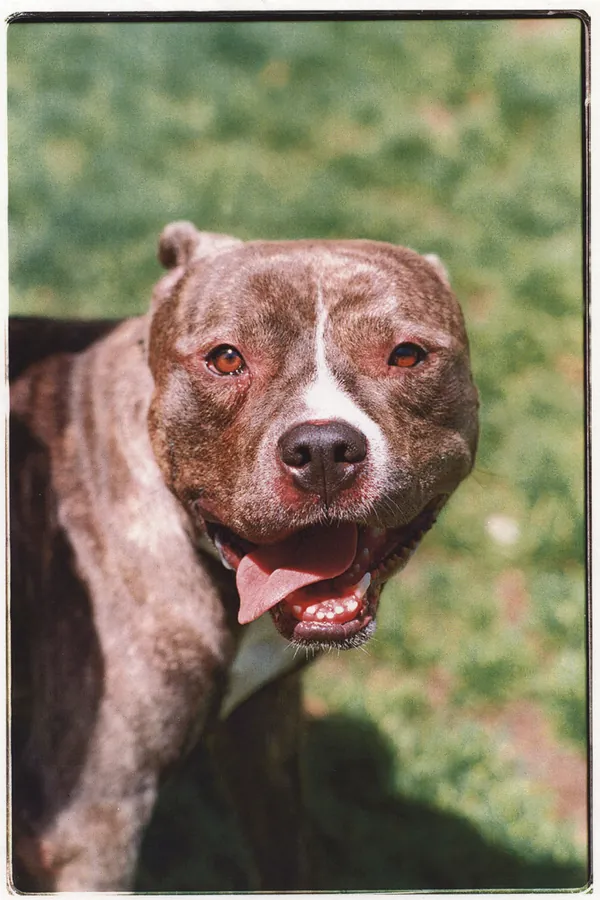
So use the checklist above as a curiosity, not a verdict. A short-legged, heavy-boned dog with a square head and a wide chest probably has some American Bully or bulldog in the mix; a leaner, leggier dog with a wedge-shaped head looks more like a classic pit bull. But the dog’s behavior on a walk and with visitors tells you far more than either label. If you’re curious later, our guide to figuring out your dog’s breed explains DNA testing.

Which one suits you?
A pit bull may suit you if:
- You want an athletic, playful dog for long walks, fetch or dog sports.
- You can give it daily exercise and a secure, climb-proof fence.
- You’re happy to manage dog-to-dog introductions carefully.
An American Bully may suit you if:
- You want a sturdy, people-focused companion with a bit less running in its day.
- You’re comfortable with a heavy, strong dog on the leash, and you’ve checked which size class you’re getting.
- You’ll keep it lean and watch for breathing, joint and skin issues.
Think it over carefully, for either breed, if:
- Your balance or grip isn’t what it used to be. A 50- to 70-pound dog that lunges can pull anyone over. Consider a calmer adult dog you’ve walked yourself first.
- You rent, and your landlord or insurer restricts pit bull-type dogs.
- You already have a dog or cat and can’t do slow, supervised introductions.
- A big vet bill would be a crisis. Price pet insurance early.
Adopting a pit bull or American Bully
Where to look
Start with shelters and foster-based rescues. Search for “pit bull,” “American Bully,” “bully mix,” “terrier mix” and “American Staffordshire,” since labels are guesses. Breed-specific rescues for pit bulls and bully breeds are worth checking too. A foster family can tell you how the dog behaves in a real home.
Questions to ask
The ASPCA suggests leaning on shelter staff “to help play matchmaker” (ASPCA). For a pit bull or bully, ask:
- How does the dog walk on a leash? Can I walk it myself before deciding?
- How has it done with other dogs, cats, children and visitors, in a home or only in the kennel?
- Any history of guarding food or toys, or of a bite or scuffle? What happened?
- Any skin, breathing, joint or weight concerns in the vet records?
- For a Bully: does anyone know its size class or the parents’ size?
- Is there a foster-to-adopt or trial period?
Our list of 9 questions to ask when adopting a dog covers the general ones.
Make a plan for the long haul
The ASPCA asks every adopter: “If your circumstances change, will you still be able to care for your pet?” (ASPCA). For a pit bull-type dog, a backup plan matters even more, because dogs labeled pit bull can wait much longer for a new home (Gunter, Barber and Wynne, 2016). Naming a backup caregiver now, someone who knows your dog and has agreed to step in, helps make sure your dog never has to go back. Our guide What Happens to Your Dog When You Die and the free My Dog’s Backup Plan worksheet walk you through it.

Related breeds and mixes
- American Bully XL: the tallest American Bully class.
- American Bulldog: one of the breeds behind the American Bully.
- Pitbull Lab mix (Labrabull): a pit bull crossed with a Labrador Retriever.
- Pitsky: a pit bull crossed with a Siberian Husky.
- Rottweiler Pitbull mix (Pitweiler): a pit bull crossed with a Rottweiler.
- Pitbull and Chihuahua mix (Chipit): a pit bull crossed with a Chihuahua.
- Weimaraner pit bull mix, Mountain Cur and pit bull mix, Vizsla pit bull mix and Pomeranian pit bull mix.
Frequently Asked Questions
Is an American Bully a pit bull?
Not by breed, but it is a close relative. The United Kennel Club describes the American Bully as a natural extension of the American Pit Bull Terrier and registers it as a separate breed, recognized in 2013. In everyday life, though, shelters, landlords, insurers and some laws group dogs by looks, so an American Bully is often treated as a pit bull-type dog.
What two dogs make an American Bully?
More than two. The UKC standard says the American Bully has a strong American Pit Bull Terrier foundation and was influenced by the American Bulldog, English Bulldog and Olde English Bulldogge. Today it breeds true as its own breed, so two registered American Bullies produce American Bully puppies.
What is the difference between a bully and a pit bull?
Mostly build and purpose. The UKC wants the American Pit Bull Terrier to be an athletic, agile dog that never looks bulky or muscle-bound, with a wedge-shaped head. It wants the American Bully to be compact, thick-set and heavy-boned, with a blockier head and a shorter muzzle, bred first and foremost as a companion. Height ranges overlap a lot.
Are pit bulls easy to train?
Many are quick learners. The UKC standard credits the American Pit Bull Terrier with a high level of intelligence and a willingness to work, and the AKC says the related American Staffordshire Terrier’s desire to please makes training a fun, easy process. Both breeds are strong, so start early with reward-based training, leash manners and careful socialization with other dogs.
What does a pit bull look like?
The UKC describes the American Pit Bull Terrier as a medium-sized, solidly built, short-coated dog with smooth, well-defined muscle, a broad flat skull, a wide deep muzzle and a relatively short tail. It comes in any color except merle. But many dogs called pit bulls are mixes, and studies show shelter staff often misjudge pit bull type by looks.
How big do American Bullies get?
It depends on the size class. In the UKC standard, Pocket males are 14 to under 17 inches tall, Standard and Classic males 17 to 20 inches, and XL males over 20 to 23 inches, with females about an inch shorter in each class. Neither the UKC nor the ABKC sets a weight range for the breed.
Who would win, a pit bull or a bully?
Neither, because neither should ever be put in that position. Both breeds are described by their registries as companions, and the UKC and ABKC both call aggression toward people highly undesirable. Dogfighting is a felony in all 50 US states, according to the ASPCA. A better question is which dog fits your home, energy and other pets.
Are American Bullies aggressive?
Not as a rule. The ABKC standard calls the breed gentle and great with kids, and the UKC standard says aggressive behavior toward humans is uncharacteristic and highly undesirable. Behavior still varies from dog to dog, so judge the individual: ask how it has done with people, dogs and cats, and keep up socialization and training.
Before you go
Pit bull or American Bully, the dog in front of you is one specific dog with its own history and quirks, so weigh what you learn about that dog more heavily than anything on this page. For more breed profiles, browse our breeds and adoption guides.
Sources
- United Kennel Club, American Pit Bull Terrier breed standard (history, first registration, appearance, temperament, coat, colors, height and weight)
- United Kennel Club, American Bully breed standard (history, recognition date, sizes, appearance, temperament, faults and disqualifications)
- American Bully Kennel Club, American Bully breed standard (size varieties, temperament)
- American Kennel Club, American Staffordshire Terrier History: How the AmStaff Separated From the “Pit Bull”
- American Kennel Club, American Staffordshire Terrier breed page (life expectancy, exercise, training, nutrition, health statement and recommended tests)
- ASPCA, Position statement on pit bulls, Dogfighting and Tips for adopting
- Insurance Information Institute, Spotlight on dog bite liability
- GOV.UK, Controlling your dog in public: banned dogs and Ban on XL Bully dogs
- Olson KR et al. (2015). Inconsistent identification of pit bull-type dogs by shelter staff. The Veterinary Journal.
- Gunter LM, Barber RT, Wynne CDL (2016). What’s in a name? Effect of breed perceptions and labeling on attractiveness, adoptions and length of stay for pit-bull-type dogs. PLoS One.
- Briand A et al. (2019). NIPAL4 deletion identified in an American Bully with autosomal recessive congenital ichthyosis and response to topical therapy. Veterinary Medicine and Science.
- Plant JD et al. (2011). A case-control study of the risk factors for canine juvenile-onset generalized demodicosis in the USA. Veterinary Dermatology.
- Abitbol M et al. (2010). A canine Arylsulfatase G (ARSG) mutation leading to a sulfatase deficiency is associated with neuronal ceroid lipofuscinosis. PNAS.
- Witsberger TH et al. (2008). Prevalence of and risk factors for hip dysplasia and cranial cruciate ligament deficiency in dogs. JAVMA.
- Teng KT et al. (2022). Life tables of annual life expectancy and mortality for companion dogs in the United Kingdom. Scientific Reports.
- Photos: Wikimedia Commons contributors, credited under each image. Full license records are kept in this site’s image-credits file.