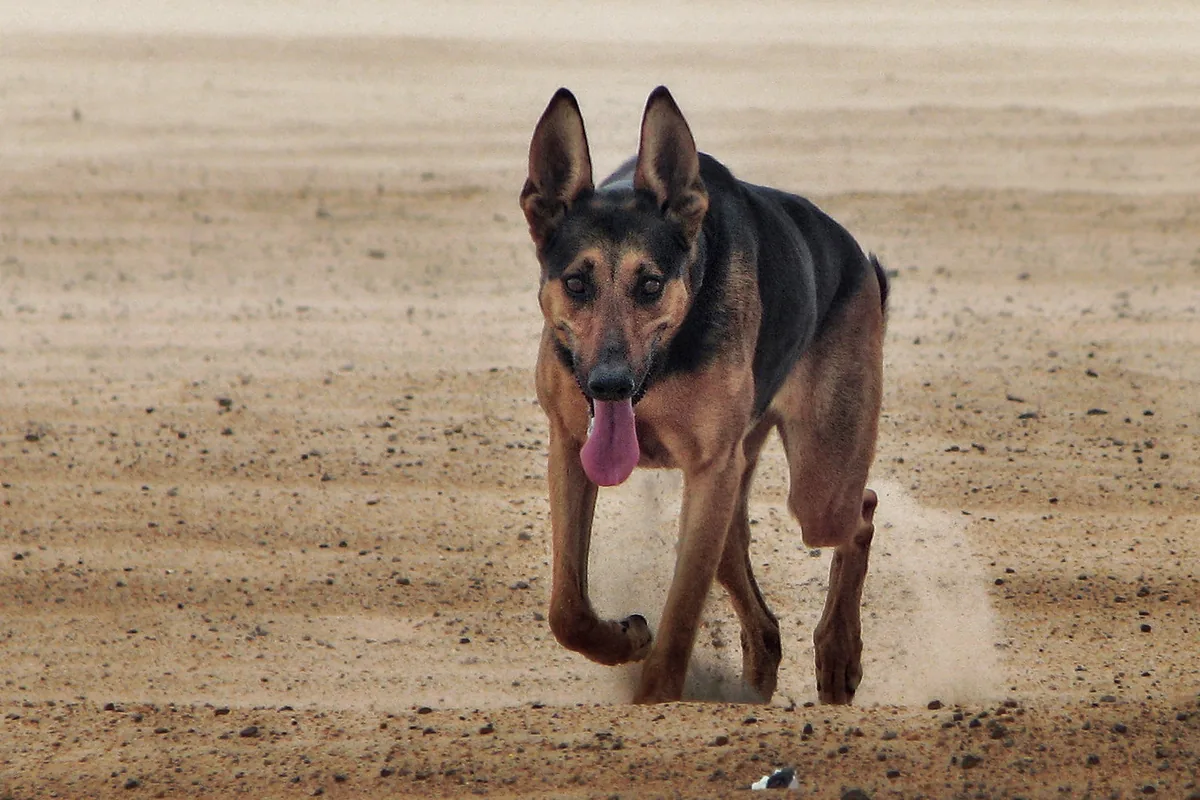
A Doberman GSD mix, usually called a Doberman Shepherd, is a cross between a Doberman Pinscher and a German Shepherd Dog (GSD). Expect a large, athletic, quick-learning dog that bonds hard with its people, watches the door, sheds, and needs real exercise and company every day. It isn’t a recognized breed, so size, coat and temperament vary from dog to dog.
If you searched for a German Shepherd Doberman mix because you met one at a shelter, this guide is for you. Below is what the AKC, the UKC, the Doberman Pinscher Club of America and veterinary researchers say about each parent breed, what nobody can promise about the mix, and a frank checklist for people over 50, because this is a lot of dog.
Doberman GSD mix quick facts
Every figure here is for a parent breed, from its registry or a cited study. None is a measurement of the mix itself.
- Also called: Doberman Shepherd, Dobie Shepherd, German Shepherd Doberman mix. Informal names, not a recognized breed.
- Size (parent breeds): German Shepherd 22 to 26 in and 50 to 90 lb (AKC); Doberman 24 to 28 in and 60 to 100 lb (AKC).
- Lifespan (parent breeds): 12 to 14 years for the German Shepherd (AKC) and 10 to 12 for the Doberman (AKC). Not documented for the mix.
- Energy (AKC ratings): 5 out of 5 for both parents.
- Shedding (AKC ratings): 4 out of 5 for both parents. Plan on hair.
- Coat care (AKC ratings): 2 out of 5 for the German Shepherd, 1 for the Doberman.
- Good with young children (AKC ratings): 5 out of 5 for both. Supervise anyway; these are big, bouncy dogs.
- Good with other dogs (AKC ratings): 3 out of 5 for both, which the AKC labels “With Supervision.” Ask dog by dog.
- Health to ask about: heart (Doberman side), hips, elbows, spine, bloat, a clotting disorder, thyroid. Sources below.
- Good fit for: an active person or household with time for daily exercise and training, who is comfortable handling a strong dog and is home much of the day.
Where the cross comes from, and what it’s called
There’s no documented starting point for this mix. Some sites say it first appeared in the 1970s in the United States; we couldn’t find a reliable record of that, so we leave it out. It’s not recognized by the AKC or the UKC, and there’s no breed standard for it. The name you’ll see most is Doberman Shepherd.
One thing most guides miss: the two breeds may be distant relatives. The AKC names smooth-coated herding dogs among the likely ingredients of the Doberman (AKC Doberman), and the UKC says most authorities include “the old (and now extinct) German Shepherd,” along with the Rottweiler, German Pinscher, Manchester Terrier and Greyhound (UKC Doberman).
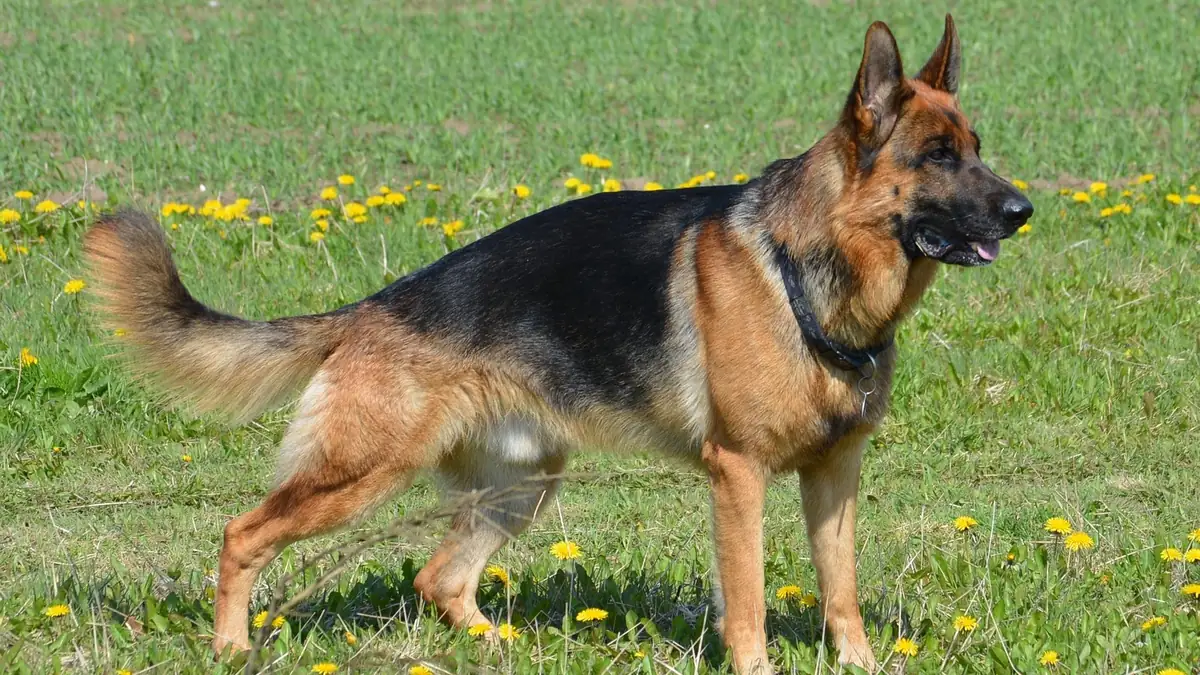
The German Shepherd side
German cavalry officer Max von Stephanitz set out in the late 1800s to develop the ideal German herding dog, and later promoted the breed for police and military work as herding jobs disappeared. The AKC recognized the breed in 1908. In Britain around World War I it was called the Alsatian, a name some British dog lovers still use (AKC German Shepherd). For a color variation of the breed, see our blue German Shepherd guide.

The Doberman side
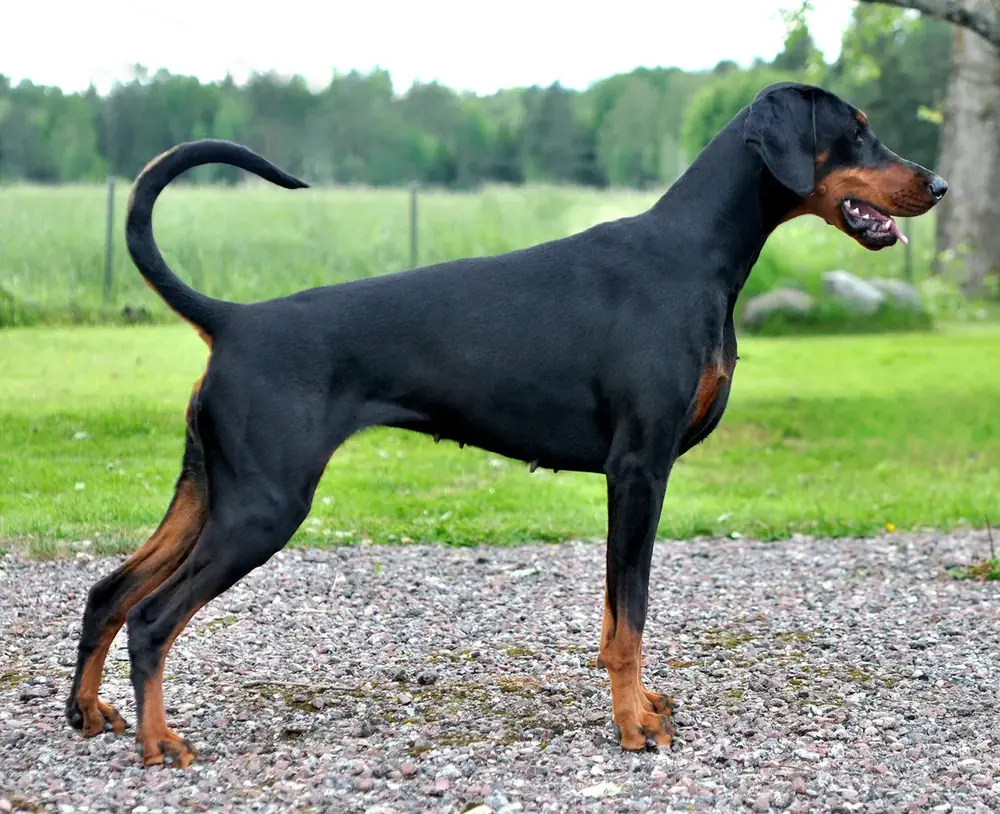
Louis Dobermann, a tax collector in Apolda, Germany, wanted an imposing but dependable protector on his rounds. The AKC recognized the breed in 1908, and Dobermans have since worked in police and military roles, as therapy and service dogs, and in search and rescue (AKC Doberman). Read more in Meet the Energetic Doberman Pinscher.

Doberman Shepherd vs German Shepherd vs Doberman
Registry figures and the AKC’s 1 to 5 trait ratings (5 = most) for the parents. The last column is the range between them, not measured data.
| German Shepherd Dog | Doberman Pinscher | Doberman Shepherd | |
|---|---|---|---|
| Registry | AKC (1908), UKC (1924) | AKC (1908), UKC (1940s) | Not a recognized breed |
| AKC group | Herding | Working | None |
| Height | 24 to 26 in (M), 22 to 24 in (F) | 26 to 28 in (M), 24 to 26 in (F) | Varies; parent span 22 to 28 in |
| Weight | 65 to 90 lb (M), 50 to 70 lb (F) | 75 to 100 lb (M), 60 to 90 lb (F) | Varies; parent span 50 to 100 lb |
| Outline | Longer than tall, smooth curves | Square, compact, muscular | Varies |
| Life expectancy | 12 to 14 yrs | 10 to 12 yrs | Not studied |
| Coat | Double coat, medium length | Short, hard, close-lying | Varies, short to medium |
| Color | Varies; most colors permitted | Black, red, blue or fawn with rust markings | Varies; black and tan is easy to spot in photos |
| Affectionate with family | 5 | 5 | Not rated |
| Good with young children | 5 | 5 | Not rated; supervise |
| Good with other dogs | 3 | 3 | Not rated; ask |
| Openness to strangers | 3 | 4 | Not rated |
| Watchdog / protective | 5 | 5 | Not rated |
| Energy | 5 | 5 | Not rated |
| Trainability | 5 | 5 | Not rated |
| Mental stimulation needs | 5 | 4 | Not rated |
| Barking | 3 | 3 | Not rated |
| Shedding | 4 | 4 | Not rated |
| Drooling | 2 | 2 | Not rated |
| Coat grooming | 2 | 1 | Not rated |
Sources: AKC German Shepherd, AKC German Shepherd standard, AKC Doberman, AKC Doberman standard, UKC German Shepherd, UKC Doberman.
What stands out is how much the parents agree. Both rate 5 out of 5 for energy, trainability, protectiveness and family affection. There’s no low-energy side of the family here, so a mellow Doberman Shepherd is possible but shouldn’t be your plan.
How big does a full-grown Doberman Shepherd get?
Put the parents’ AKC ranges together and you get 22 to 28 inches at the shoulder and 50 to 100 pounds. In both breeds the female range is lower. You may see “90 to 110 pounds” quoted for the mix; we found no study behind it, and it runs past the top of the AKC’s range for either parent.
Real-life German Shepherds can be heavier than the registry range. In UK veterinary records, the median adult weight was 40.1 kg (about 88 pounds) for males and 34.8 kg (about 77 pounds) for females (O’Neill et al., 2017). And if someone offers you a giant “Warlock” Doberman parent, the national breed club calls that a “gimmick used to sell puppies” (DPCA).
If size matters for your car, your lease or your own strength on the leash, adopt an adult. You can see exactly what you’re getting.
Coat, colors and ears
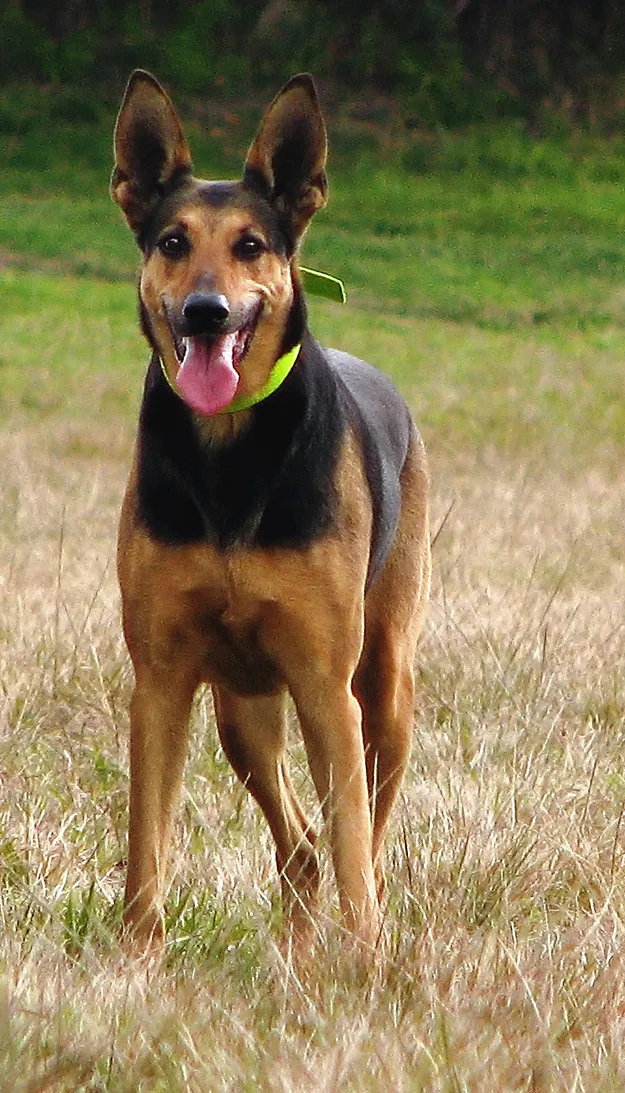
The German Shepherd standard calls for a medium-length double coat with a dense outer coat, and most colors are permitted (AKC standard). The Doberman’s is “smooth-haired, short, hard, thick and close lying,” in black, red, blue or fawn with sharply defined rust markings (AKC standard). A mix can land anywhere in between.
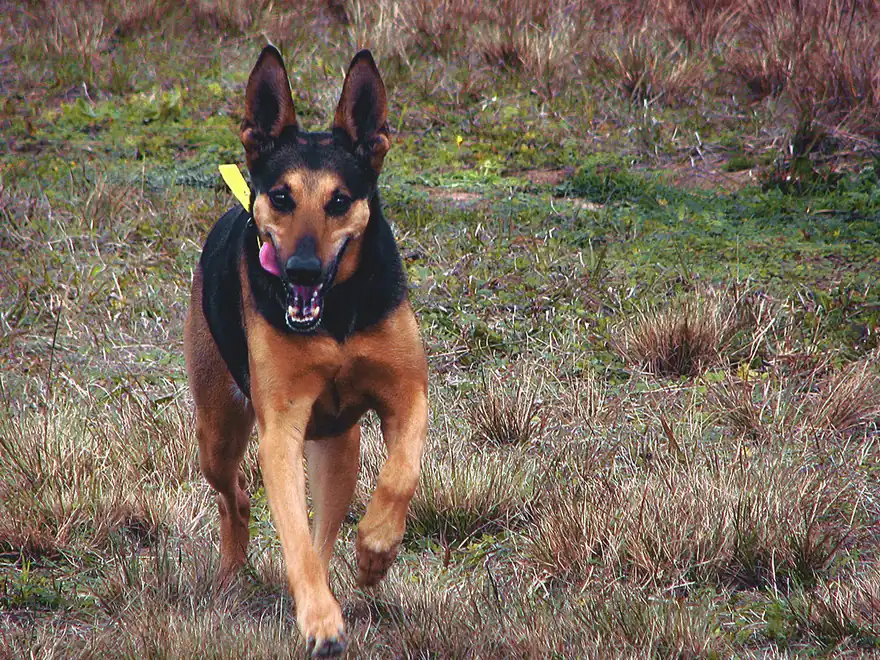
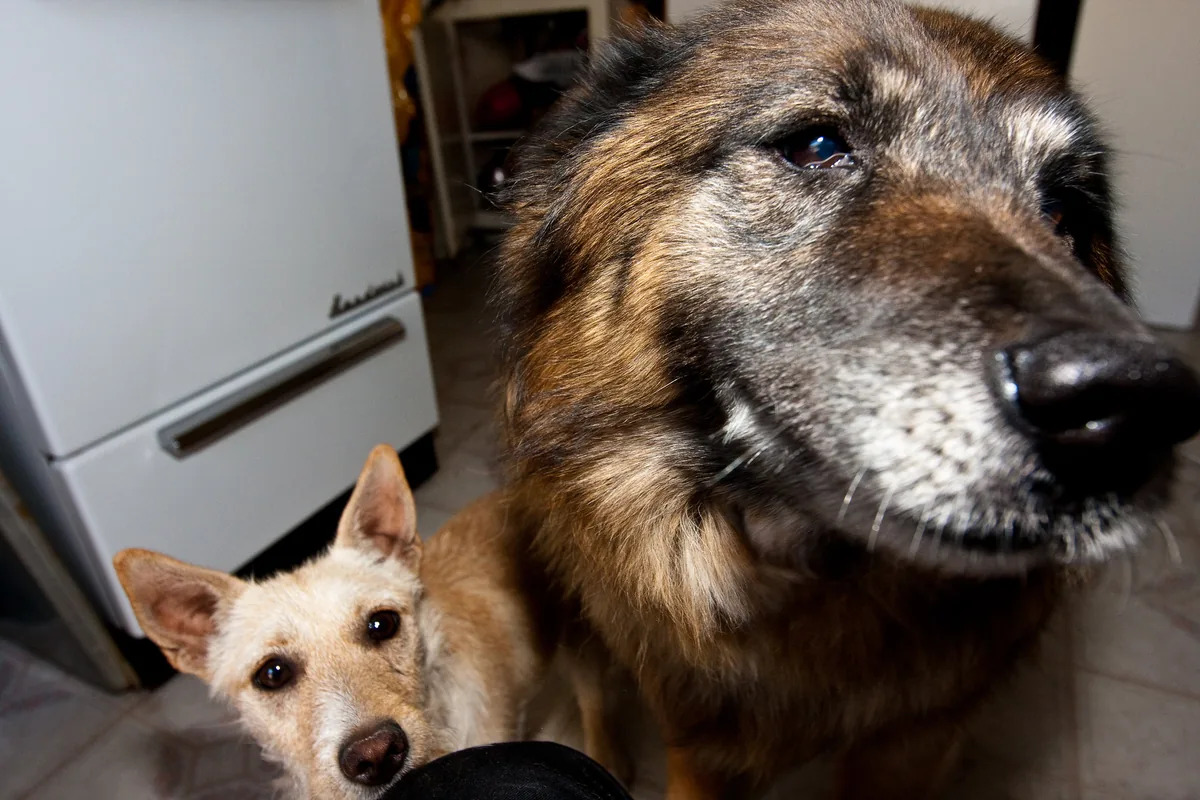
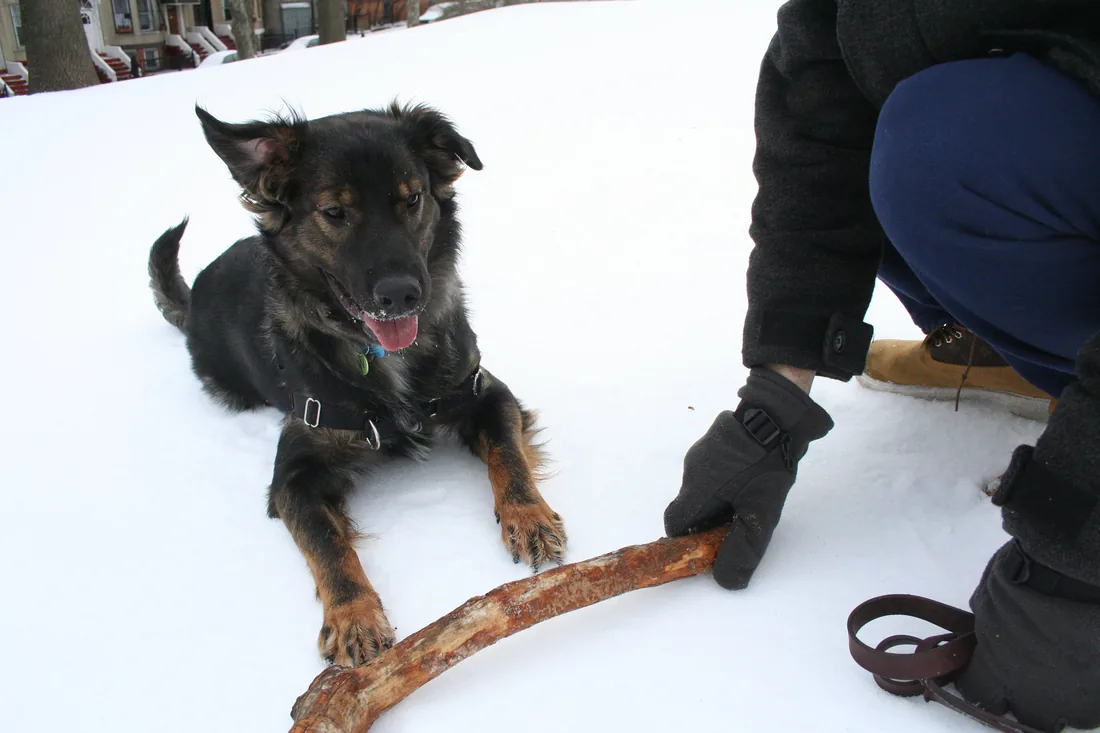
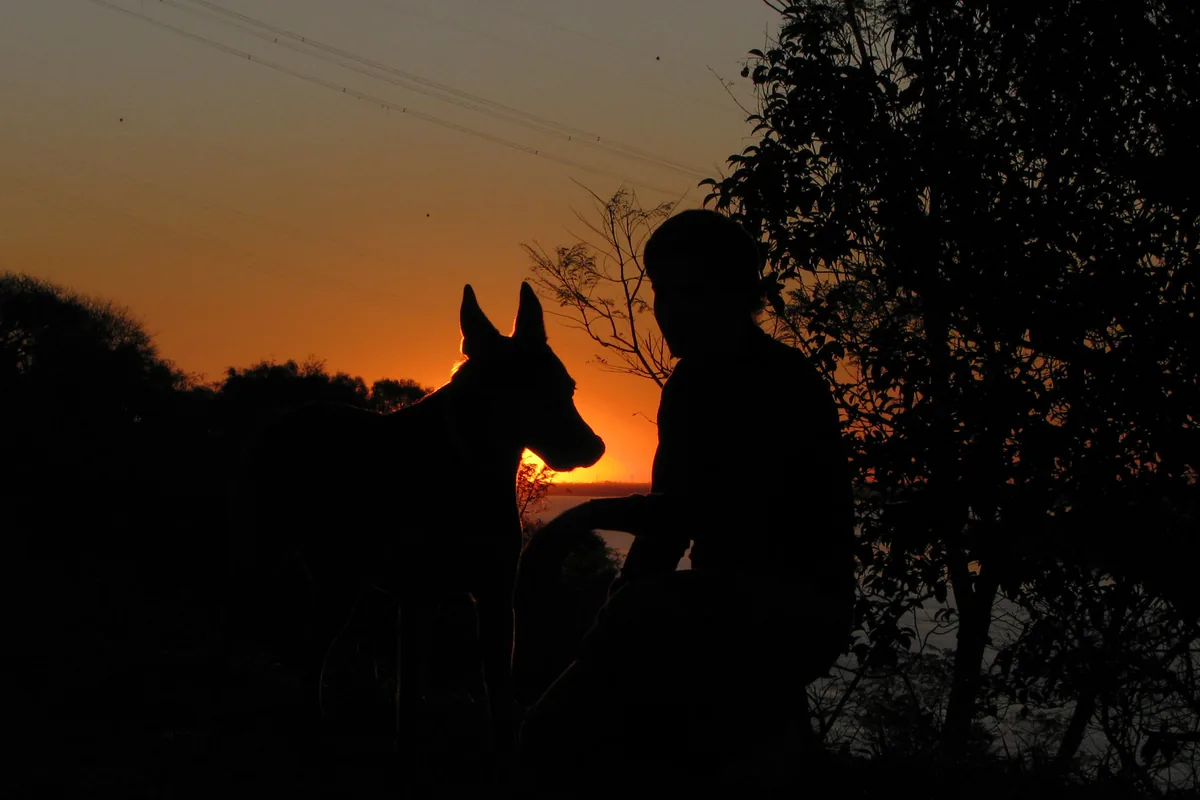
The dogs on this page show the spread. Xara has a short, sleek coat and upright ears. Linus, below, is described by the photographer as half and half, and he has a Doberman’s eyebrow spots and soft, folded ears. Fräulein, further down, is also described as half and half, and she has a thick ruff you’d swear was all Shepherd.
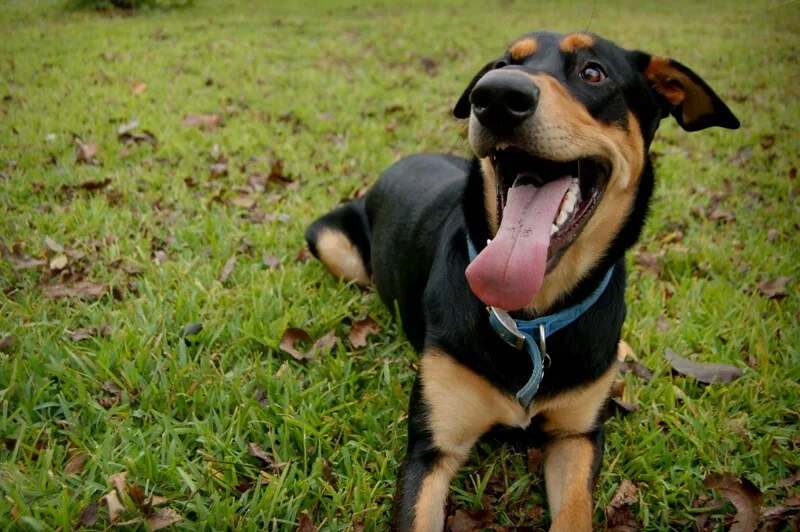
About those ears: the Doberman standard describes ears that are “normally cropped” and a docked tail (AKC standard). Those are surgical changes, not something a puppy inherits, so an uncropped mix may have upright, folded or hanging ears and a full tail. One color note from the Doberman club: blue and fawn Dobermans have more coat and skin problems (DPCA).
Temperament: what to realistically expect
These are registry descriptions of purebred parents, not predictions for any one mix.
The German Shepherd side. The AKC standard describes a “direct and fearless, but not hostile, expression, self-confidence and a certain aloofness that does not lend itself to immediate and indiscriminate friendships” (AKC standard). The AKC adds that the breed “does not give affection lightly” and is known as a “one-man” breed for its loyalty to its main person (AKC German Shepherd).
The Doberman side. The standard’s words are “energetic, watchful, determined, alert, fearless, loyal and obedient” (AKC standard). The Doberman club says the breed “requires intense and close contact with people of his family,” makes itself a central part of family life, and is “NOT a quiet dog” content to ignore what’s going on (DPCA temperament).
What the science says about breed and behavior. A 2022 study in Science surveyed owners of 18,385 dogs and genotyped 2,155. Breed explained just 9% of the behavioral differences between individual dogs (Morrill et al., 2022). A label is a weak guide to the dog in front of you.
In daily life:
- Family: both parents rate 5 out of 5 for affection with family. Expect a shadow.
- Strangers: some will be friendly, others reserved. Let the dog choose to approach.
- Other pets: you’ll read that this mix has little prey drive. We’d test that rather than trust it: the Doberman club warns that a rabbit can override a Doberman’s training (DPCA care). Ask whether this dog has lived with cats or small dogs, and introduce slowly.
- Children: the parents are rated well with kids, but a dog this size can knock over a small child. Some rescues set their own age limits; German Shepherd Rescue of New England, for one, places dogs only where children are 7 or older (GSRNE).
Guarding instinct and socialization
Both parents rate 5 out of 5 on the AKC’s “watchdog/protective nature” scale. You won’t need to teach a Doberman Shepherd to notice a visitor. Your job is the opposite: teaching the dog what’s normal, so it doesn’t treat the mail carrier as an emergency.
The Doberman club suggests taking a young dog to as many different places as possible, so it grows into a steady dog that can tell a real threat from everyday life (DPCA). The AKC calls early socialization “imperative” for Dobermans and “vital” for German Shepherds (AKC Doberman; AKC German Shepherd).
With an adopted adult, socialization looks different but still works:
- Let new people ignore the dog at first. No reaching, no looming.
- Reward calm noticing. Dog sees jogger, dog gets a treat.
- Give the doorbell a job, such as “go to your mat.”
- Skip protection training. A family dog needs manners and confidence, and bite work belongs with specialists.
- If you see growling, lunging or guarding that worries you, ask your vet for a referral to a qualified behavior professional. Asking early is good ownership.
For context, aggression was recorded in 4.8% of German Shepherds in one year of UK veterinary records, more often in males (O’Neill et al., 2017). That means it wasn’t recorded for more than 95 in 100.
Exercise needs
This is the part to be honest with yourself about. The AKC says the German Shepherd needs “lots of exercise for his physical and mental well-being,” and that a dog who doesn’t get enough “will become frustrated and likely to develop undesirable behaviors” (AKC German Shepherd). It calls the Doberman “an energetic athlete who needs a lot of exercise and free play,” and says a large fenced area to run in is vital (AKC Doberman).
You’ll see “90 to 120 minutes a day” quoted for the mix. We couldn’t find a study behind that number, so treat it as a rough idea and ask the foster home what this dog needs. A good day usually mixes:
- a brisk walk or two,
- some free running in a fenced space,
- and brain work: sniffing games, food puzzles, short training sessions, or a class in obedience, agility, tracking or scent work.
Don’t rely on off-leash reliability. The AKC says even the best-trained German Shepherd can be distracted (AKC German Shepherd), and the Doberman club says a running Doberman can miss a recall, so the yard must be “fenced securely” (DPCA temperament). Ask your vet before starting jogging or jumping, especially with a puppy or a stiff older dog.
Training
Both parents rate 5 out of 5 for trainability, so most Doberman Shepherds learn fast. That includes learning things you didn’t mean to teach. The AKC warns that Dobermans “can become pushy, destructive, and unmanageable if not raised properly” (AKC Doberman), and says “consistency and positive, reward-based training will yield excellent results” with German Shepherds (AKC German Shepherd).
Some guides say this mix needs a “strong, confident leader” or the dog will take over. The American Veterinary Society of Animal Behavior disagrees with that whole approach: it says reward-based methods should be used for all dog training and advises against intimidation such as “alpha rolls” or “dominance downs” (AVSAB, 2021).
What to work on first:
- Loose-leash walking. Start indoors, then quiet streets. Ask a trainer to help fit a front-clip harness.
- Settle on a mat. An off switch is the best gift you can give a busy dog.
- Calm greetings. “Sit to say hello” saves wrists, hips and friendships.
- Being alone. The Doberman club says Dobermans don’t much like to be left behind (DPCA). Build up alone time in small steps.
- Handling. Pair nail trims, ear checks and being touched with treats, so vet visits go smoothly.
Grooming and shedding
Plan on a lot of hair. Both parents rate 4 out of 5 for shedding, so ignore any page that says this mix sheds little. The AKC says a German Shepherd needs a quick brushing every few days, with heavier shedding once or twice a year, and only an occasional bath (AKC German Shepherd). A Doberman does well with a quick daily once-over with a short-bristled brush or mitt (AKC Doberman). Add monthly nail trims, regular tooth brushing and ear checks. Ear infections were the most commonly recorded problem in UK German Shepherds, at 7.9% in a year (O’Neill et al., 2017).
Because a Doberman’s coat is short, the Doberman club notes the breed isn’t known for tolerating temperature extremes (DPCA). If your mix has a sleek coat, budget for a winter jacket.
Diet basics
There’s no special Doberman Shepherd diet. The AKC’s advice for both parents is a high-quality food suited to the dog’s age, with care about treats (AKC German Shepherd; AKC Doberman). Three practical points from vet sources:
- Split meals. To lower bloat risk, Cornell’s veterinary college suggests two or more meals a day, limited activity after meals, and no raised bowls (Cornell GDV).
- Grow slowly, if it’s a puppy. Rapid weight gain and growth from too much food can complicate hip dysplasia (ACVS hips). Ask your vet about a large-breed puppy food.
- Ask before going grain-free. Cornell says some dogs have developed heart disease in association with grain-free diets and that the link is still being investigated (Cornell DCM). With Doberman ancestry, that’s a good question for your vet.
You may read that a good diet can fight off this mix’s inherited conditions. We found nothing to support that. Your vet can tell you what a healthy weight is for your dog’s frame.
Health issues to know about
A mix can inherit health problems from either parent. In a large University of California, Davis study, purebred dogs were more likely than mixed-breed dogs to have 10 inherited conditions, including dilated cardiomyopathy, elbow dysplasia and hypothyroidism. But there was no difference for 13 others, including hip dysplasia, and mixed-breed dogs were more likely to have a ruptured cranial cruciate ligament, a knee injury (Bellumori et al., 2013). Being a mix may help with some things. It isn’t a guarantee.
| Condition | Which parent breed | What the source says |
|---|---|---|
| Dilated cardiomyopathy (DCM), a heart muscle disease | Doberman | Cumulative prevalence was 58.2% in a study of 412 Dobermans in Europe (Wess et al., 2010). Early on there may be no signs (Cornell). |
| Von Willebrand disease (vWD), a clotting disorder | Doberman | The most common inherited bleeding disorder in dogs; Dobermans usually have the milder Type I (Cornell). |
| Degenerative myelopathy (DM), a spinal cord disease | German Shepherd | Typically starts around age 8 or later, with hind-leg weakness; no cure (Cornell). |
| Hip dysplasia | Both | The AKC lists it for both breeds (AKC; AKC); it is most common in large breeds (ACVS). |
| Elbow dysplasia | German Shepherd | ACVS names German Shepherds among the predisposed breeds (ACVS). |
| Bloat (GDV) | Both | A life-threatening emergency. Cornell names Dobermans (Cornell) and the AKC warns German Shepherd owners (AKC). |
| Wobbler syndrome, a neck and spinal cord problem | Doberman | Presumed inherited; often later in life, more often in males (DPCA). |
| Thyroid disease | Doberman | Autoimmune thyroid disease is seen in the breed, commonly from about age 2 to 5 (DPCA). |
| Copper-related liver disease | Doberman | Abnormal blood work is often the first and only sign (DPCA). |
| Progressive retinal atrophy, an inherited eye disease | Doberman | Listed by the AKC and the Doberman club (AKC; DPCA). |
| Arthritis, ear infections, weight | German Shepherd | Osteoarthritis 5.5%, ear infection 7.9%, overweight 5.2% in one year of UK records (O’Neill et al., 2017). |
Three inherited risks, explained for a mix
- Heart (DCM). Cornell says two Doberman-associated gene variants, PDK4 and TTN, are dominant, so even one copy can raise a Doberman’s risk, though it’s not a guarantee. It adds that in other breeds, current research suggests these variants don’t raise risk in the same way (Cornell). We found no study of a Doberman Shepherd cross, so nobody can give you a number. For Dobermans, the breed club calls a yearly 24-hour Holter monitor and echocardiogram the gold standard, expected from age 2 (DPCA). Ask your vet whether heart screening makes sense for your mix.
- Clotting (vWD). The Doberman club says this is recessive: a dog needs two copies of the gene to be affected (DPCA). A mix gets only one copy from its Doberman side at most, so a cross with one purebred Doberman parent would need a second copy from the other parent. Tell your vet about the Doberman ancestry before any surgery and ask if a test is worthwhile. With proper care, many affected dogs have a normal lifespan (Cornell).
- Spine (DM). A DNA test shows whether a dog carries the variant. Two copies mean higher risk but not certainty, and Cornell notes a predisposed dog’s overall chance of getting sick may still be low (Cornell).
Signs of bloat to learn now. Cornell lists retching without bringing anything up, drooling, panting, a swollen or painful belly, restlessness, pale gums, and weakness or collapse. Go to an emergency vet. Some guides say bloat is fatal in most cases; Cornell puts survival with medical and surgical treatment at more than 80%, and without it, GDV is fatal (Cornell). Ask your vet whether a preventive gastropexy makes sense.
Spay and neuter timing. In a study of mixed-breed dogs, neutering before one year of age was generally linked to a higher risk of joint disorders in dogs of 20 kg (about 44 pounds) or more (Hart et al., 2020). Many shelter dogs are already altered, and that’s fine. If you have a puppy, ask your vet about timing.
Lifespan
We found no study of this mix’s lifespan, so “10 to 13 years” is a guess. The AKC lists 12 to 14 years for German Shepherds (AKC) and 10 to 12 for Dobermans (AKC). UK veterinary records give a lower real-world figure for German Shepherds: a median of 10.3 years, 11.1 for females and 9.7 for males (O’Neill et al., 2017). Those are breed figures, not a forecast for your dog.
An older Doberman Shepherd can be a lovely match for someone who wants this kind of devotion with fewer zoomies. Ask for recent vet records, especially heart, hips and hind-leg strength.
Doberman Shepherd puppies
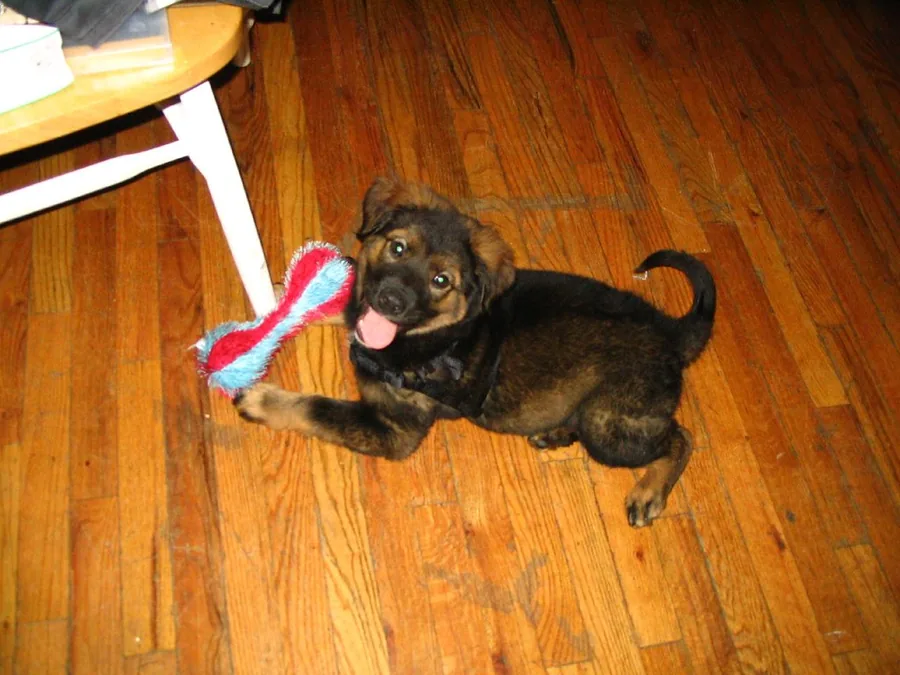
A puppy’s adult size and coat are hard to predict, since you’re guessing from two parents who may themselves be mixes. The Doberman club describes a young Doberman as “very much like a curious toddler” (DPCA temperament), and German Shepherd Rescue of New England says puppy energy often doesn’t level off until a dog is 2 or 3 (GSRNE). For many people over 50, an adult is the easier road.
There’s no breed club or health-testing program for this cross. If you’re talking with someone who has a litter, ask to meet the mother and to see results for the tests the parent clubs list: hips, elbows and temperament for the German Shepherd (GSDCA); hips, heart, eyes, thyroid and vWD for the Doberman (AKC Doberman).
Is that shelter dog really a Doberman Shepherd?
Maybe, maybe not. A black and tan dog with pointed ears is easy to label “Shepherd mix” or “Dobie mix,” but the research on those guesses is humbling:
- In a study of 919 dogs at two shelters, just 1.3% had two purebred parents of different breeds, which is what “half Doberman, half Shepherd” would mean. At one of those shelters, staff matched at least one breed in 67.7% of the dogs tested, but both named breeds in only 10.4% (Gunter et al., 2018).
- In a study of 20 adopted dogs, 87.5% of those that agencies had assigned specific breeds did not have all of those breeds detected by DNA (Voith et al., 2009).
Dogs with any other black and tan breed in the family, such as a Rottweiler, can look much the same. So meet the dog, not the label. Our guide to figuring out your dog’s breed explains what DNA tests can and can’t tell you.
Housing, insurance and local rules: check before you adopt
Nothing here is a reason to pass up a good dog. Both parent breeds turn up on restriction lists, so a few phone calls first can spare you a hard surprise.
- Local law. Ask city or county animal services whether any breed rules apply where you live or plan to move. Breed-specific laws often include the Doberman Pinscher and German Shepherd Dog along with other breeds (AVSAB). Several states don’t allow local breed-specific ordinances (Triple-I).
- Lease, HOA or retirement community. Read the pet policy for breed and weight limits, and get approval in writing.
- Homeowner’s or renter’s insurance. Some insurers won’t cover certain breeds, some decide case by case, and some don’t ask about breed at all. Pennsylvania and Michigan bar insurers from denying or canceling some coverage because of breed (Triple-I). If one company says no, ask another.
- Paperwork. Ask how the breed label was decided. Answer applications truthfully, and say “mixed breed, parentage unknown” if that’s what the records show.
Is a Doberman Shepherd right for me? A quick checklist
Written with adopters over 50 in mind. A few “no” answers don’t rule you out; they tell you what to plan for, or which dog to ask about.
- Yes / No: I (or someone at home) can provide serious daily exercise, in bad weather too.
- Yes / No: I’ve walked this dog myself and can comfortably hold it if it lunges at a squirrel.
- Yes / No: I enjoy training and will take a reward-based class.
- Yes / No: Someone is home much of the day, or I can arrange a walker or daycare.
- Yes / No: I have a securely fenced yard, or a safe fenced place to go.
- Yes / No: I could get a dog this size into the car or up a step, with a ramp or a helper.
- Yes / No: I can budget for vet care, possibly including heart screening.
- Yes / No: I’ve checked my lease, insurance and local rules.
- Yes / No: I’ve thought about who would care for this dog if I ever couldn’t.
A Doberman Shepherd may suit you if you’re active, home a lot, and want a smart, devoted partner who’d rather be with you than anywhere else.
Consider a smaller or mellower dog, or an older Doberman Shepherd, if a strong puller would be a fall risk, if the dog would be alone most of the day, or if quiet evenings are the goal and daily training isn’t. There’s no shame in that. The right match keeps the dog home for life.
A word on leash safety
This isn’t a reason to skip a big dog, but it’s worth planning for. A US study estimated that emergency visits for fractures linked to walking leashed dogs among people 65 and older rose from 1,671 in 2004 to 4,396 in 2017 (Pirruccio et al., 2019). Practical steps: do a test walk before adopting, hold the leash in your hand rather than wrapping it around your wrist, wear sturdy shoes, and start in quiet places.
Costs to plan for
We found no reliable cost figures for this mix, and we don’t quote puppy prices we can’t verify. The ASPCA’s 2021 estimate for a dog is $1,391 a year, and $3,221 for the first year once one-time costs are included (ASPCA). A big, athletic dog can push food, boarding and medication costs higher. Budget for:
- The adoption fee, and what it covers. Ask.
- Routine vet care, plus pet insurance or an emergency fund. Heart, hips and bloat are on the parent lists, so price insurance before anything becomes pre-existing.
- Training classes and gear: a front-clip harness, a sturdy crate, a car ramp, and a jacket for a short coat.
Adopting a German Shepherd Doberman mix
Where to look
Search shelters for “Shepherd mix,” “Doberman mix” and “Rottweiler mix,” since labels are often a guess. Then try breed rescues, and ask each one whether it takes mixes:
- Doberman rescues. The Doberman Pinscher Club of America keeps a state-by-state rescue directory of groups that have signed its code of ethics. The club says it doesn’t regulate or endorse them, so do your own checking. Doberman Rescue Unlimited has served New England since 1988.
- German Shepherd rescues. German Shepherd Rescue of New England uses foster homes and evaluates each dog. It normally requires a fenced area but may waive that for some dogs aged 8 and up, case by case (GSRNE). Virginia German Shepherd Rescue also lists dogs living in foster homes.
- All-breed rescues and shelters. The Doberman club suggests these too (DPCA).
Foster-based groups are especially helpful, because a foster family can tell you how the dog behaves in a real home. (Bone Voyage itself is no longer a rescue and doesn’t place dogs.)
Questions to ask the shelter or rescue
- How was the breed label decided? Is either parent known, or has there been a DNA test?
- How does the dog walk on a leash? Can I walk it myself before deciding?
- How does it react to strangers, visitors and the doorbell?
- How much exercise does it need to settle in the evening?
- How has it done with dogs, cats and children, and in what setting?
- Any history of guarding food or toys, or of a bite or scuffle? What happened?
- How does it handle being left alone?
- Any heart murmur, fainting, limping, hind-leg weakness or unusual bleeding? What do the vet records show?
- Is there a foster-to-adopt or trial period, and what happens if it doesn’t work out?
Our list of 9 questions to ask when adopting a dog covers the general ones.
Give your dog a backup plan
A big, protective-looking, one-person dog is exactly the kind worth planning for. Naming a backup caregiver now, someone the dog already knows and who can handle its strength, helps make sure your dog never has to go to a shelter. Our guide What Happens to Your Dog When You Die walks you through it, and the free My Dog’s Backup Plan worksheet records your dog’s routine, vet, quirks and favorite things. Bone Voyage is also building the pledge: a promise by a volunteer to adopt a specific older adult’s dog if that person dies or can no longer care for it. You can join the free list on the guide page.
Similar dogs to compare
- Labrador German Shepherd mix, Siberian Husky Shepherd mix and Shepherd and Pitbull mix, three more German Shepherd crosses.
- Weimaraner German Shepherd mix and Weimaraner Doberman mix, one cross for each side of the family.
- Doberman Husky mix, Doberman Cane Corso mix and Vizsla Doberman mix, more Doberman crosses.
- Meet the Energetic Doberman Pinscher and blue German Shepherd, for the parent breeds.
- Rottweiler Pitbull mix, another strong cross that is often black and tan.
Frequently Asked Questions
What is a German Shepherd and Doberman mix called?
Most people call it a Doberman Shepherd. You’ll also see Dobie Shepherd, Doberman GSD mix and German Shepherd Doberman mix. These are informal names. Neither the AKC nor the UKC recognizes the cross as a breed, and there is no breed standard, so looks, size and temperament vary from dog to dog.
How big does a Doberman GSD mix get?
There is no official size for the mix. The AKC lists German Shepherds at 22 to 26 inches and 50 to 90 pounds (AKC) and Dobermans at 24 to 28 inches and 60 to 100 pounds (AKC), so the parents together span 22 to 28 inches and 50 to 100 pounds. An adult dog lets you see the size instead of guessing.
Do Doberman Shepherds shed a lot?
Plan on it. The AKC rates both the German Shepherd and the Doberman 4 out of 5 for shedding (AKC German Shepherd, AKC Doberman). A short Doberman-type coat is easier to brush, while a Shepherd-type double coat sheds more heavily once or twice a year.
How long do Doberman Shepherds live?
We found no study that has measured the mix’s lifespan. The AKC lists 12 to 14 years for German Shepherds (AKC) and 10 to 12 years for Dobermans (AKC), and UK veterinary records gave a median of 10.3 years for German Shepherds (O’Neill et al., 2017). No one can promise where an individual mix will land.
Is a Doberman Shepherd a good dog for someone over 50?
It can be, if you are active, home a lot, enjoy training and can safely hold a strong dog. Both parent breeds rate 5 out of 5 for energy with the AKC, so walk the dog yourself before deciding and check your fencing, lease and insurance. A calm adult or older dog that a foster home knows well is often the better match than a puppy.
Where should a Doberman sleep at night?
Indoors, near the family. The Doberman Pinscher Club of America says a Doberman should live inside the home with its people and is not an outside dog under any circumstances (DPCA). Inside, a crate or dog bed with clean bedding, in a warm, quiet spot away from drafts, works well (ASPCA). The same is kind for a Doberman mix, and whether that is in your bedroom is up to you.
What is the #1 most protective dog?
No reputable source we found crowns one breed. The AKC rates breeds on a 1 to 5 scale for watchdog and protective nature, and the German Shepherd and Doberman both get a 5 (AKC German Shepherd, AKC Doberman), but so do other breeds, including the Rottweiler (AKC Rottweiler). Breed explains only about 9% of behavior differences between individual dogs (Morrill et al., 2022), and a safe family protector is a well-socialized, well-trained dog.
Are Doberman pitbull mix good dogs?
They can be. It’s a different cross from the Doberman Shepherd, and it depends on the individual dog. As parent-breed context, the AKC rates Dobermans 5 out of 5 for affection with family (AKC), and the UKC says American Pit Bull Terriers make excellent family companions, though most show some level of dog aggression (UKC). Expect a strong, athletic dog that needs training and exercise, and ask about its history.
Before you go
Whatever the kennel card says, the dog in front of you is one specific dog with its own history and quirks. Weigh what you learn about that dog more heavily than anything on this page. And whatever dog you bring home, it’s worth deciding now who would step in if you ever couldn’t.
Sources
- American Kennel Club, German Shepherd Dog breed page and official standard
- American Kennel Club, Doberman Pinscher breed page and official standard
- American Kennel Club, Rottweiler breed page
- United Kennel Club, German Shepherd Dog standard, Doberman Pinscher standard and American Pit Bull Terrier standard
- Doberman Pinscher Club of America: health, temperament, basic care, living with a Dobe, want a Dobe puppy?, four colors, Warlock myth, adoption and rescue directory
- German Shepherd Dog Club of America, Health Statement (2015)
- German Shepherd Rescue of New England, Should You Get a German Shepherd Dog? and adoption requirements
- O’Neill DG et al. (2017). Demography and disorders of German Shepherd Dogs under primary veterinary care in the UK. Canine Genetics and Epidemiology 4:7.
- Wess G et al. (2010). Prevalence of dilated cardiomyopathy in Doberman Pinschers in various age groups. Journal of Veterinary Internal Medicine 24(3):533-8.
- Bellumori TP et al. (2013). Prevalence of inherited disorders among mixed-breed and purebred dogs. JAVMA 242(11):1549-55.
- Hart BL et al. (2020). Assisting decision-making on age of neutering for mixed breed dogs of five weight categories. Frontiers in Veterinary Science 7:472.
- Cornell Riney Canine Health Center: dilated cardiomyopathy, von Willebrand disease, degenerative myelopathy and GDV or “bloat”
- American College of Veterinary Surgeons, Canine Hip Dysplasia and Canine Elbow Dysplasia
- Morrill K et al. (2022). Ancestry-inclusive dog genomics challenges popular breed stereotypes. Science 376(6592):eabk0639.
- Gunter LM et al. (2018). A canine identity crisis: genetic breed heritage testing of shelter dogs. PLOS ONE 13(8):e0202633.
- Voith VL et al. (2009). Comparison of adoption agency breed identification and DNA breed identification of dogs. Journal of Applied Animal Welfare Science 12(3):253-62.
- Pirruccio K et al. (2019). Fractures in elderly Americans associated with walking leashed dogs. JAMA Surgery 154(5):458-459.
- American Veterinary Society of Animal Behavior, Position Statement on Humane Dog Training (2021) and Position Statement on Breed-Specific Legislation (2014)
- Insurance Information Institute, Spotlight on: Dog bite liability
- ASPCA, Cutting Pet Care Costs (2021 cost update) and General Dog Care
- Photos: Flickr and Wikimedia Commons contributors, credited under each image. Full license records are kept in this site’s image-credits file.