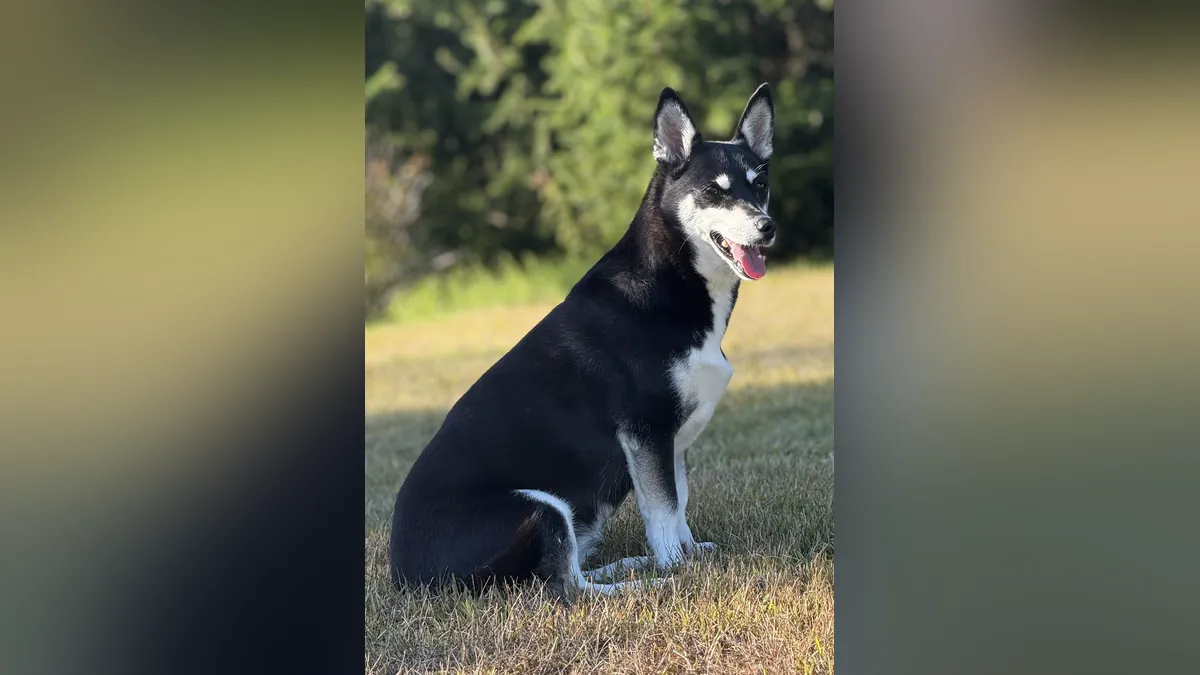

A Husky Corgi mix, usually called a Horgi, is a cross between a Siberian Husky and a Pembroke or Cardigan Welsh Corgi. Expect a friendly, energetic, talkative dog with a heavy double coat, often a Husky face on a longer, lower body. It isn’t a recognized breed, so size and personality vary a lot, and the things to plan for are daily exercise, escape-proofing, shedding and a Corgi-style back.
This guide draws on American Kennel Club (AKC) breed pages, the Siberian Husky Club of America (SHCA), the American College of Veterinary Surgeons (ACVS), Cornell’s Riney Canine Health Center and peer-reviewed genetics research. No one has studied Horgis as a group, so where the evidence is about the parent breeds, we say so.
Husky Corgi mix quick facts
- What it is: a cross of a Siberian Husky and a Pembroke or Cardigan Welsh Corgi. Not an AKC breed; no breed standard.
- Other names: Horgi, Siborgi, Corgsky, Corgski, Corgi Husky mix.
- Height (parent ranges): Siberian Husky 20 to 23.5 inches; Pembroke 10 to 12; Cardigan 10.5 to 12.5 (AKC Husky; AKC Pembroke; AKC Cardigan). The mix can land anywhere between.
- Weight (parent ranges): Husky 35 to 60 pounds; Pembroke up to 30; Cardigan 25 to 38. Our rough estimate for most first-generation Horgis is 20 to 45 pounds, not a measured figure.
- Life expectancy: not studied in the mix. Parents: 12 to 14 years (Husky), 12 to 13 (Pembroke), 12 to 15 (Cardigan), per the AKC.
- Energy: high. The AKC rates Husky energy 5 out of 5 and both Corgis 4.
- Grooming and shedding: heavy shedding. All three parents have double coats; the AKC rates Husky and Pembroke shedding 4 out of 5.
- Voice: often a lot. The AKC rates Husky barking (including howling) 5, Pembroke 4 and Cardigan 5.
- Good with kids and other dogs (AKC, parents): Husky 5 and 5; Pembroke 3 and 4; Cardigan 4 and 3. Supervise, because Corgis may herd and nip.
- Cats and small pets: use caution. The SHCA says “Predatory instincts in the Siberian Husky are strong” (SHCA).
- Biggest health watch-outs: disc disease of the back, hip dysplasia, eye disease, degenerative myelopathy (from the Corgi side) and weight gain.
- Best fit: an active person or family who is home a lot, has a secure fence, and wants a playful, sociable, chatty dog.
What is a Horgi?
A Horgi is any cross between a Siberian Husky and a Welsh Corgi. Some come from deliberate “designer” litters. Others are accidents and turn up in shelters labeled “Husky mix” or “Corgi mix.” There’s no documented origin story for the cross, and the AKC doesn’t recognize it; the AKC says its conformation shows require “a defined breed standard, which does not exist for mixed breeds,” though mixed breeds can compete in many other AKC sports (AKC).
The Husky’s own breed club takes a firm position: “The Siberian Husky Club of America condemns all cross-breeding of the Siberian Husky” (SHCA). That’s aimed at people producing litters, not at the dogs or at anyone who adopts one.
The two parent breeds did very different jobs:
- The Siberian Husky comes from northeastern Asia, where the Chukchi people bred it as a family companion and “endurance sled dog” (AKC Husky; SHCA). Huskies were bred to pull light loads over long distances, in teams, at a steady pace. The AKC recognized the breed in 1930 (SHCA).
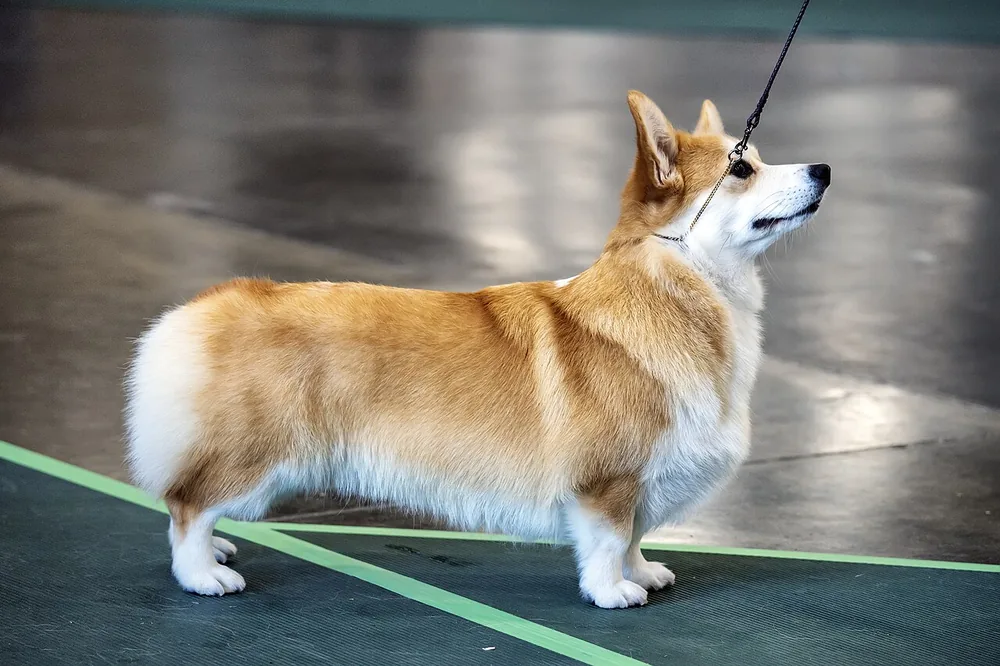
- The Welsh Corgis are cattle-driving herders from Wales. The AKC calls the Pembroke “a strong, athletic, and lively little herder who is affectionate and companionable without being needy,” and says Cardigans were “built low to the ground to best nip at the heels of cattle and avoid being kicked” (AKC Pembroke; AKC Cardigan).
So a Horgi blends a friendly, run-loving pack dog with a bold, vocal little herder. Which parts you get isn’t something anyone can promise.
Husky vs. Corgis vs. Horgi at a glance
| Siberian Husky | Pembroke Welsh Corgi | Cardigan Welsh Corgi | Horgi (mix) | |
|---|---|---|---|---|
| Original job | Endurance sled dog | Herding cattle | Herding cattle | Companion |
| Height | 20-23.5 in. | 10-12 in. | 10.5-12.5 in. | Varies widely |
| Weight | 35-60 lb | Up to 30 lb | 25-38 lb | Estimate: about 20-45 lb |
| AKC life expectancy | 12-14 years | 12-13 years | 12-15 years | Not studied |
| Energy (AKC, out of 5) | 5 | 4 | 4 | High |
| Shedding (AKC) | 4 | 4 | 3 | Expect heavy |
| Barking/howling (AKC) | 5 | 4 | 5 | Often vocal |
| Watchdog (AKC) | 1 | 5 | 3 | Varies: may greet strangers or announce them |
| Good with young children (AKC) | 5 | 3 | 4 | Supervise; may herd |
| Good with other dogs (AKC) | 5 | 4 | 3 | Usually social; meet first |
| Trainability (AKC) | 3 | 4 | 4 | Clever but independent |
| Openness to strangers (AKC) | 5 | 4 | 4 | Usually friendly |
Sources: AKC breed pages for the Siberian Husky, Pembroke and Cardigan, checked November 2026. Mix figures are our estimates from the parents, not measurements.
Appearance and size
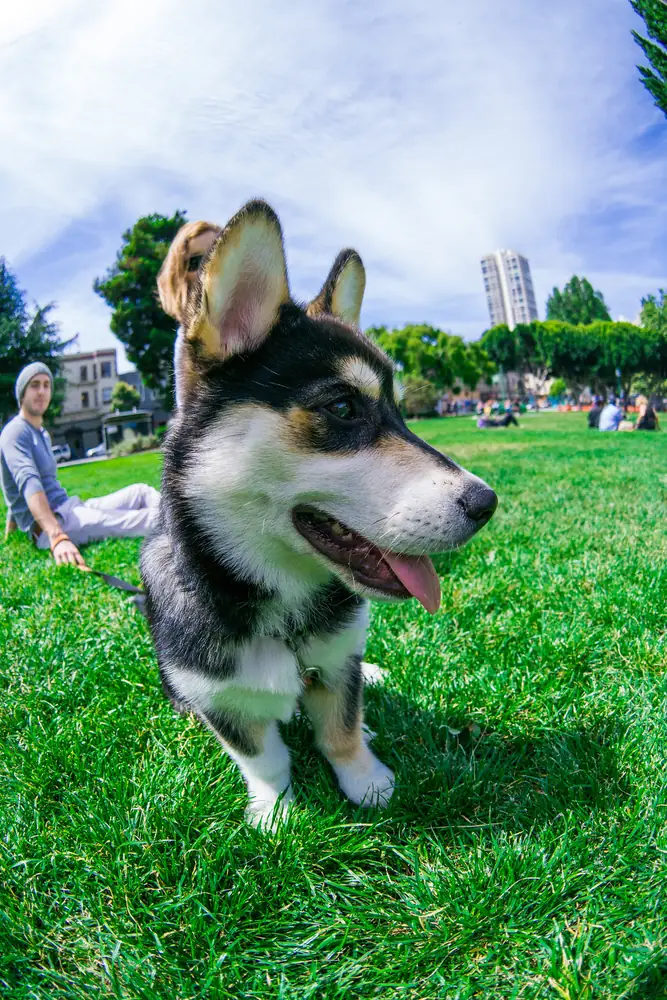
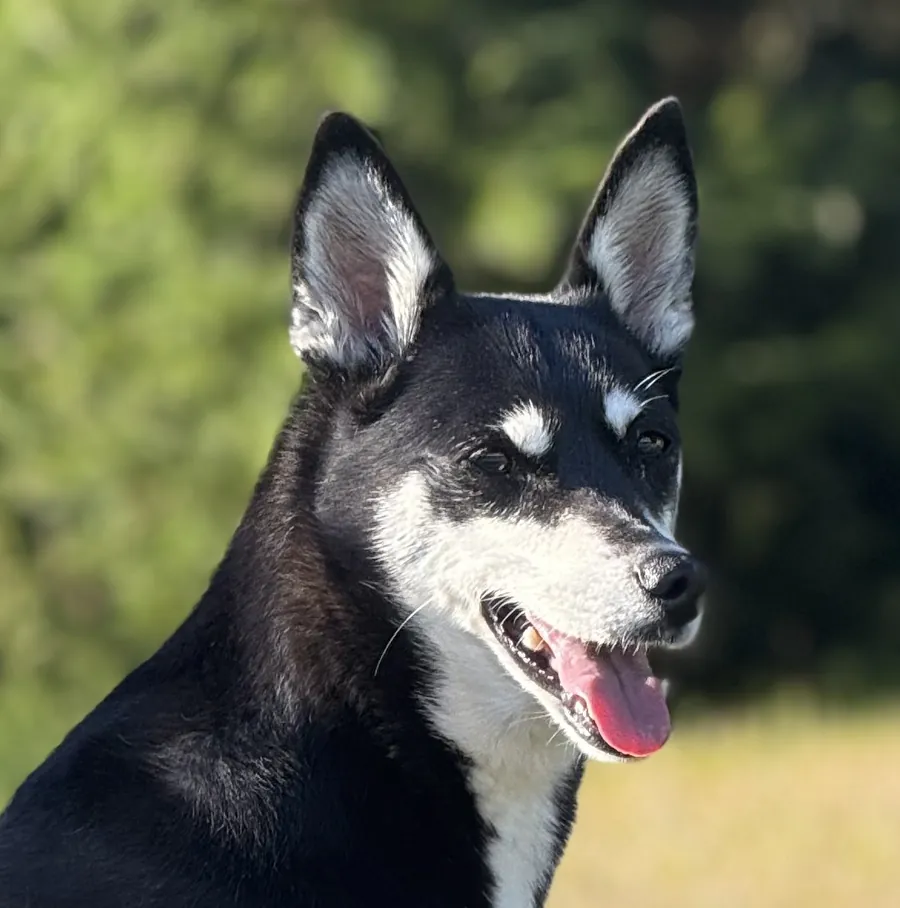
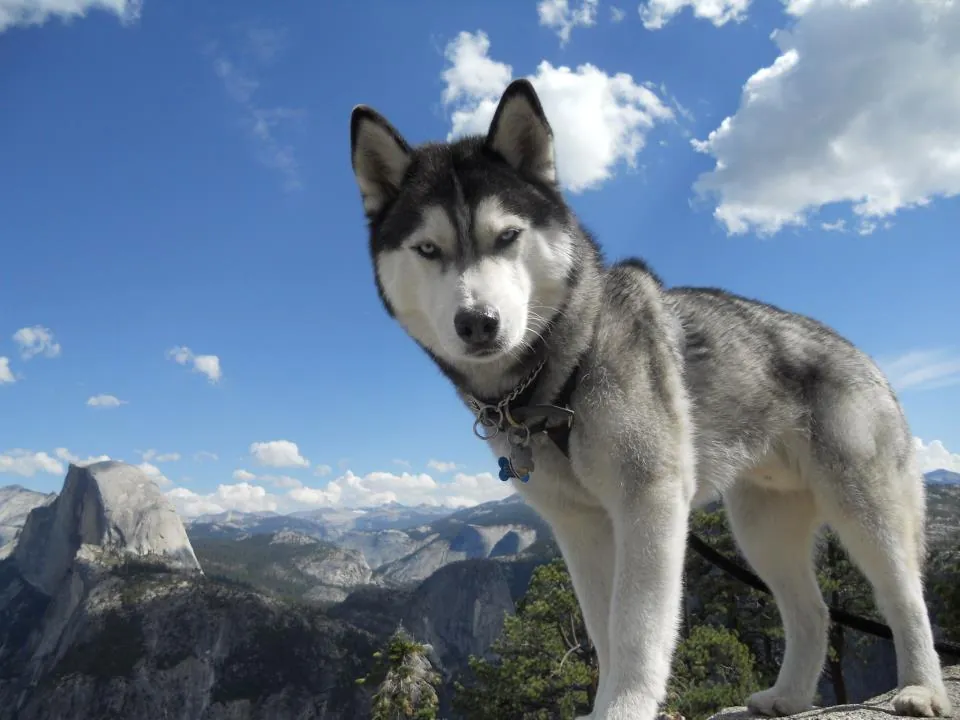
Most Horgis look like a Husky that someone has gently squashed: upright triangle ears, a Husky “mask” on the face, and a body longer than it is tall. Beyond that, expect variety. The AKC lists Husky colors including black, gray, red, sable and agouti, usually with white, and Pembroke colors of red, sable, fawn, and black and tan, often with white markings. Husky eyes “may be brown or blue in color; one of each or parti-colored are acceptable,” so a Horgi’s may be too (AKC Husky; AKC Pembroke).
How big will a Horgi get?
Size is the hardest thing to predict. A male Husky can weigh 60 pounds; a Pembroke tops out around 30 (AKC Husky; AKC Pembroke). The Corgi’s main short-leg gene works even in a single copy; researchers describe it as “semidominant with respect to height” (Brown et al., 2017). So many first-generation Horgis have shortish legs, but a puppy can take after either side or land in between.
Three realistic outcomes:
| What the dog took after | What it tends to look like | What it means for you |
|---|---|---|
| Mostly Corgi | Short legs, Corgi-sized, Husky colors and mask | Easy to lift; protect the back |
| In between | A medium, long-backed dog on short-to-medium legs | The most common look in photos of the mix |
| Mostly Husky | Leggier, 40+ lb, looks like a small Husky | Faster, stronger on the leash, better jumper and escape artist |
This is our summary from the parent breeds and photos of real Horgis, not a measured study. You’ll see “12 to 15 inches and 20 to 50 pounds” quoted on several sites; we found no measurements behind those numbers. If size matters for your home, your car or your own strength, an adult dog lets you see it instead of guessing.
Pembroke or Cardigan parent?
“Welsh Corgi” covers two separate AKC breeds. The Pembroke is far more common, and the dog in our top photo was DNA-tested as half Pembroke. The Cardigan is a bit heavier, has a long tail and comes in more colors, including brindle and blue merle (AKC). In a shelter dog you usually can’t tell which Corgi it was without a DNA test, and it doesn’t change how you care for the dog.

Temperament: what to expect
The two parents agree on some things and disagree on others, which is why Horgis vary.
- Friendly and social. The SHCA says the Husky “exhibits no fear or suspicion of strangers” and “is not usually a one-man dog” (SHCA). The AKC rates both Corgis 4 out of 5 for openness to strangers.
- Watchdog, or not. The SHCA says the Husky’s temperament is “not the temperament of a watchdog,” while the AKC rates the Pembroke 5 out of 5 as a watchdog. A Horgi may greet a stranger with a wagging tail, bark at them, or both.
- Talkative. The AKC rates the Husky 5 out of 5 for barking level, a score that counts howls as well as barks, and the Pembroke 4 and Cardigan 5. Many Horgis have a lot to say.
- Herding habits. Corgis were “built low to the ground to best nip at the heels of cattle” (AKC Cardigan). Circling, nudging and nipping at heels, especially of running children, are herding behaviors, not aggression. They need redirecting, not punishment.
- Needs company. The AKC says Huskies “are very social, and regularly need the company of their people or other dogs; they are not suited to being left alone all day” (AKC Husky).
- Independent. The SHCA warns that the Husky’s “independent spirit may at times challenge your ingenuity,” and the AKC says Pembrokes “often have a mind of their own.”
These are tendencies, not guarantees. A large genetic study found breed explains only a small part of an individual dog’s behavior (Morrill et al., 2022). The dog in front of you, and what its foster family says about it, matters most.
Exercise and escape-proofing
Exercise. Plan on at least an hour of activity a day. The AKC says Huskies “are active, athletic dogs who need a lot of exercise,” and that Pembrokes benefit from “moderate daily exercise” and can do well on long walks or slow jogs, though “their short legs won’t allow them to keep up with a bicycle rider” (AKC Husky; AKC Pembroke). Good outlets that are kind to a long back and to your joints:
- Two brisk walks a day, with time to sniff.
- Nose games, puzzle feeders and hide-and-seek with treats.
- Short training sessions, which tire the brain as well as the body.
- Low-impact dog sports such as rally or scent work; the AKC opens many sports to mixed breeds (AKC).
Go easy on repeated jumping and long stair runs, especially with short-legged dogs and growing puppies (see Health).
Leash and fence: the Husky rule. The AKC says Huskies “were bred to run and will do so at every opportunity; it is vital to keep the dog on a leash, in harness, or in a fenced yard at all times.” The SHCA puts it more bluntly: “one quick lope across a busy street could be the last run that he enjoys, ever,” and it urges “that no Siberian Husky ever be allowed unrestrained freedom” (SHCA). The SHCA’s rescue page adds that “Siberians are known for their escape artistry” (SHCA rescue). Don’t assume short legs make a Horgi less of an escape risk; assume your dog has the Husky urge until it proves otherwise.
Practical escape-proofing:
- Walk the fence line before the dog comes home. Look for gaps and soft ground a dog could dig under.
- Make sure gates latch on their own, and that visitors and grandchildren close them.
- Teach a “wait” at the front door and the car door.
- Use a well-fitted harness the dog can’t back out of, keep ID tags current, and register the microchip in your name.
- Don’t rely on off-leash recall in open areas, however good your training is.
Weather. Both parents carry a heavy coat. The AKC advises avoiding “extreme heat or cold” with Pembrokes (AKC Pembroke). Walk in the cooler parts of the day in summer, bring water and ask your vet about the signs of overheating.

Grooming
- Brushing: at least weekly, and daily during sheds. The AKC says the Husky’s undercoat “is shed twice a year” and the old coat needs to be raked out “using a pin brush and metal comb,” while the Pembroke “sheds a fair amount on a daily basis, and even more so in the late spring/early summer” (AKC Husky; AKC Pembroke). Plan on dog hair year-round. No Horgi is hypoallergenic.
- Don’t shave the coat. The AKC’s Cardigan page notes that a correct coat helps “maintain proper body temperature,” so trimming short for summer isn’t necessary (AKC Cardigan).
- Bathing: occasionally. The AKC calls Huskies “remarkably self-cleaning” and says they “often need only a few baths a year.”
- Nails, ears and teeth: trim nails regularly, check ears weekly and brush teeth with dog toothpaste, as the AKC recommends for Pembrokes.
Health: what the parent breeds tell us
There’s no health data on Horgis themselves. What we know comes from the parent breeds. Being a mix isn’t a health guarantee: in a large UC Davis study, purebred dogs had higher rates of 10 of 24 inherited disorders, but there was no difference for 13 others, including hip dysplasia (Bellumori et al., 2013).
The AKC calls Siberian Huskies “generally a healthy, relatively long-lived breed,” with cancer and arthritis among the issues seen, and says “the incidence of hip dysplasia and eye disease is relatively low” (AKC Husky). It says Pembroke breeders screen for “elbow and hip dysplasia, eye disorders, cardiac issues, degenerative myelopathy, and von Willebrand’s disease,” and Cardigan breeders for hip dysplasia, progressive retinal atrophy and degenerative myelopathy (AKC Pembroke; AKC Cardigan).
| Condition | Where it comes from | What to ask for |
|---|---|---|
| Back and disc disease (IVDD) | Corgi short-leg gene (CDDY) | A UC Davis CDDY test if the dog has short legs; ramps, no jumping |
| Hip dysplasia | Both parents; Pembroke breeders screen for it | OFA or PennHIP hip results for parents, or X-rays if your vet advises |
| Eye disease (cataracts, corneal dystrophy, PRA) | Husky; PRA also in Cardigans | Yearly eye exams; ask about eye-exam records |
| Degenerative myelopathy (DM) | Mainly the Pembroke side | DM DNA test for the dog or its parents |
| Overweight | Any dog, and especially risky for long backs | Measured meals; check body shape monthly |
Sources: AKC breed pages, SHCA eye testing, UC Davis VGL, Cornell DM. This is not a diagnosis checklist; if something worries you, talk to your vet.
Back and disc disease (IVDD)
Corgi short legs come from extra copies of a growth gene called FGF4. The copy on chromosome 12, called CDDY, also makes spinal discs age early. In a UC Davis study, dogs carrying it had an odds ratio of 51 for intervertebral disc disease (IVDD) (Brown et al., 2017). In the UC Davis repository, 92% of Pembroke chromosomes carried it (Batcher et al., 2019), and one copy is enough to raise the risk (UC Davis VGL).
What that likely means: a first-generation Horgi with a Pembroke parent will very often inherit one copy. That’s our inference from the frequencies, not a study of the mix. It doesn’t mean your dog will have a disc problem; it means the risk is real. The AKC’s Cardigan advice applies to any long, low dog: “one must be cognizant of potential back issues. Avoid letting the Cardigan jump down off the bed or couch, and stairs can also be a hazard” (AKC Cardigan). A UC Davis cheek-swab test can tell you whether your dog carries CDDY.
Signs of IVDD include back or neck pain, a hunched back, reluctance to move, crying when picked up and a wobbly walk (ACVS IVDD). If your Horgi suddenly can’t walk normally, call your vet or an emergency clinic right away, and don’t give any medicine without asking your vet.
Hip dysplasia
Hip dysplasia is a loose, malformed hip joint. The ACVS says genetics is “the biggest single risk factor,” that “rapid weight gain and growth through excessive nutritional intake can complicate” it, and that “all dogs with CHD should be kept very slim” (ACVS hip). The SHCA says hip dysplasia “is regarded with utmost concern in our breed,” and cites older OFA figures in which 2.2% of 12,087 Huskies evaluated from 1994 to 1998 were rated dysplastic (SHCA hips). Pembroke breeders screen for it too (AKC Pembroke).
Eye disease
The SHCA says that of the hereditary eye conditions, “only three are of current concern in the Siberian”: juvenile cataracts, corneal dystrophy and progressive retinal atrophy (PRA). In an older study it cites, 8% of 1,345 Huskies examined had cataracts, 3% corneal dystrophy and under 1% PRA (SHCA eyes). Blue eyes are not a disease; ask your vet about a yearly eye check.
Degenerative myelopathy (DM)
DM is a slowly progressive spinal cord disease that causes hind-leg weakness, “typically affecting dogs around eight years of age or older,” according to Cornell (Cornell DM). The landmark study that found the SOD1 gene variant behind DM named the Pembroke Welsh Corgi as one of the first five breeds affected (Awano et al., 2009). Because it’s recessive, a Horgi needs a copy from each parent to be at risk, and the Husky side is not among the breeds named in that study. A DNA test tells you where your dog stands; ask your vet whether it’s worth doing.
Weight and spay/neuter timing
- Weight. The AKC notes Huskies “maintain a healthy weight on less food as compared to other breeds of the same size,” and that a dog “kept at optimum weight… lives a healthier longer life” (AKC Husky). Extra pounds load the hips and a long back.
- Spay/neuter timing. In a study of mixed-breed dogs, neutering before one year was linked to higher joint-disorder risk in dogs over about 44 pounds, but not in smaller weight groups (Hart et al., 2020). Most Horgis are under that, but if you have a big-boned puppy, ask your vet about timing.
Training
Horgis are usually quick to learn and quick to get bored. The AKC rates Huskies 3 out of 5 for trainability and both Corgis 4. It advises making Husky training “fun for both dog and handler,” and says “positive, reward-based training works best” with the sensitive Pembroke (AKC Husky; AKC Pembroke). Use food, toys and praise, and skip punishment: the American Veterinary Society of Animal Behavior recommends reward-based methods only (AVSAB).
Priorities for a Horgi:
- “Wait” at doors and gates, because a bolting Husky-type dog is the biggest everyday risk.
- A “quiet” cue, and rewards for calm, for a dog that loves to talk.
- Redirecting herding. Teach “leave it” and reward calm behavior around running children, bikes and cats.
- Loose-leash walking, early, before a strong, low-slung dog learns to pull.
- Handling practice (paws, mouth, being lifted with support under the chest and rear) so vet visits and back care are easy.
Don’t count on off-leash reliability. The AKC says Huskies “have an overwhelming desire to run, and they should be on leash or in a securely fenced-in area at all times and never allowed off lead” (AKC Husky). If you see growling, guarding or reactivity that worries you, ask your vet for a referral to a qualified behavior professional.
Diet basics
There’s no special Horgi diet. Feed a complete and balanced food for your dog’s life stage, measure every meal and count treats; the WSAVA nutrition guidelines are a good plain-language starting point (WSAVA). You should be able to feel the ribs easily and see a waist from above (WSAVA body condition chart). Because a long back and the hips both suffer from extra weight, a lean Horgi is a healthier Horgi. Ask your vet how much your dog should eat.
Who a Horgi suits, and who should skip it
A good match if you:
- Walk every day and enjoy being outdoors in most weather.
- Have a securely fenced yard, or are happy to use a leash every single time.
- Are home a good part of the day, or have another friendly dog for company.
- Don’t mind howling, “talking,” barking at the door and dog hair on everything.
Think twice if you:
- Want a quiet dog for an apartment with thin walls.
- Want a low-energy couch companion.
- Have cats, rabbits or other small pets and can’t supervise or separate them.
- Can’t lift a 40-pound dog or manage a dog that may bolt through a door.
A 50+ home checklist for a Horgi
Bone Voyage helps people over 50 adopt, keep and thrive with dogs, and this mix brings a few specific things to plan for:
- Walk the dog before you say yes. Notice whether it pulls, lunges at squirrels or tries to slip its harness.
- Check your doors and gates. Could you keep a determined escape artist in? Self-closing gates and a “wait” cue help both of you.
- Plan for lifting. Know how you’d get the dog into the car or to the vet if its back were hurt. Ramps and pet steps help; see our guides to dog ramps for the bed and dog stairs.
- Prevent trips. The CDC estimated more than 86,000 fall injuries a year in the US linked to pets, mostly dogs, with the highest rates in people 75 and older (Stevens et al., 2010). A low, fast dog that circles your feet is easy to trip over. Use rugs on slick floors and add night lights.
- Be honest about the hair. If shedding would wear you down, a Horgi isn’t the dog for you; a robot vacuum and a weekly brushing routine help if it is.
- Budget for the senior years. Back, hip and eye problems mostly show up in middle and old age.
- Write down a backup plan for who would care for your dog if you couldn’t (see the end of this guide).
Realistic costs
We don’t quote Horgi puppy prices. There’s no breed club or health-testing standard behind them, and the prices we found online weren’t verified. For any dog, the ASPCA estimates $1,391 a year in ongoing costs and $3,221 in the first year (ASPCA). Back surgery, hip treatment or eye care can cost far more than a year of routine care. If you’re considering pet insurance, get it early, before any problem is diagnosed and excluded as pre-existing. A CDDY or DM DNA test is an extra one-time cost.
Adopting a Husky Corgi mix
Bone Voyage ran a shelter and rescue from 2019 to 2024. Today it’s an educational resource and backup-plan movement, and it doesn’t place dogs. Here’s where to look.
- Local shelters and adoption sites. Search “Husky mix” and “Corgi mix,” not just “Horgi.” Shelter breed labels are guesses: in one study, shelter staff who labeled dogs by looks matched more than one breed in the dog’s DNA only about 10% of the time (Gunter et al., 2018).
- Breed rescues. Husky and Corgi rescues mainly place purebreds, but many take mixes or can refer you. The SHCA’s locating a Siberian rescue page points to a list of approved Husky rescues; also try the Pembroke Welsh Corgi Club of America rescue page and the AKC Rescue Network.
- Consider an adult or senior Horgi. You’ll know its size, legs, coat, energy, voice and how it does with cats from day one.
Wondering what’s in your own Husky-type mix? Our guide to figuring out what breed your dog is explains how DNA tests work.
If you’re thinking of buying a puppy
Be careful. Cute designer crosses are popular with puppy mills and online sellers. Humane World for Animals (formerly the Humane Society of the United States) says “You don’t want to buy a puppy from a pet store or a website. Most of those puppies come from mass breeding facilities,” and advises: “Always personally visit a dog breeder’s facility before buying a puppy” (Humane World). It adds that “a responsible breeder will never sell her dogs through a pet store or in any other way that does not allow her to meet with and thoroughly interview you.” Our own rule of thumb: if you can’t meet the mother, see where the puppies are raised and see health results for both parents, walk away.
Questions to ask the shelter, rescue or breeder
- How big is the dog now, and is it fully grown? How long are its legs?
- Has it ever escaped a yard, dug under a fence or bolted out a door? Was it found as a stray?
- How does it react to cats, small pets, children and other dogs? Any herding or nipping?
- How much does it bark, howl or “talk,” and when?
- Has it had any limping, back pain, wobbliness or trouble with stairs? Any X-rays, eye exams or vet notes?
- Has it had a CDDY or DM DNA test? (Or for a breeder: can I see hip, eye and DNA results for both parents?)
- How does it handle brushing, nail trims and being picked up?
- Will you take the dog back if it doesn’t work out?
Our 9 questions to ask when adopting a dog covers the general ones.
Other Husky and Corgi mixes to compare
People often ask which Husky mix is “best.” There isn’t one; the best mix is the individual dog whose energy and needs match your life. Some close relatives:
- German Shepherd Corgi mix (Corman), another big-dog-on-short-legs Corgi cross.
- Beagle Corgi mix, a hound-and-herder Corgi cross with a nose to match.
- Dachshund Corgi mix (Dorgi), a long, low cross with even more back risk.
- Chihuahua Corgi mix and Corgidor, a smaller and a bigger Corgi cross.
- Golden Retriever Husky mix (Goberian), Siberian Husky Shepherd mix and Husky Boxer mix, three full-sized Husky crosses.
- Alaskan Huskies, the working sled-dog cousins of the Siberian.

Give your Horgi a backup plan
A Horgi can easily live into its teens. Deciding now who would care for it if you couldn’t makes it far less likely your dog will have to start over in a shelter. Write down its routine, vet, food, health history, escape habits and how it likes to be picked up. Our guide What Happens to Your Dog When You Die walks you through it, and the free My Dog’s Backup Plan worksheet keeps it all in one place. Bone Voyage is also building the pledge: a volunteer’s pledge to adopt a specific older adult’s dog if that person dies or can no longer care for it.
Frequently Asked Questions
What is a Husky Corgi mix called?
Most often a Horgi. You’ll also see Siborgi, Corgsky and Corgski, or just Corgi Husky mix. None of these is an official breed name. The American Kennel Club recognizes the Siberian Husky and both Welsh Corgis, but not the cross, so shelters usually list these dogs as a Husky mix or a Corgi mix.
How big does a Horgi get when fully grown?
There’s no breed standard, so expect a range. The AKC lists Siberian Huskies at 20 to 23.5 inches and 35 to 60 pounds, Pembroke Welsh Corgis at 10 to 12 inches and up to 30 pounds, and Cardigans at 10.5 to 12.5 inches and 25 to 38 pounds. Many Horgis end up as a medium, long-bodied dog on shortish legs, but some look like a small Husky and some like a Corgi in Husky colors. Popular guides quote 20 to 50 pounds; we found no measurements behind that. An adult dog lets you see the size before you commit.
What is the life expectancy of a Husky Corgi mix?
No one has studied the mix’s lifespan. As a guide, the AKC lists 12 to 14 years for the Siberian Husky, 12 to 13 for the Pembroke Welsh Corgi and 12 to 15 for the Cardigan. Planning for a dog that may live into its teens is sensible.
How much does a Husky Corgi mix cost?
We don’t quote puppy prices, because the figures online aren’t backed by any breed club or survey, and the Siberian Husky Club of America condemns all cross-breeding of Huskies. Adoption fees are set by each shelter or rescue. For ongoing care, the ASPCA estimates $3,221 in the first year and $1,391 a year after that for a dog. Health problems such as a back injury can cost much more.
Are Husky Corgi mixes clingy?
Usually affectionate rather than clingy, but they want company. The AKC describes the Pembroke as affectionate and companionable without being needy, and says Huskies are very social and not suited to being left alone all day. A Horgi that is alone for long stretches may howl, dig or chew.
Can a Horgi live with cats?
Some can, but don’t assume it. The Siberian Husky Club of America says the Husky’s predatory instincts are strong and names cats among the small animals at risk, and Corgis may try to herd a cat. Ask the rescue how this particular dog has done with cats in a home, and plan a slow, supervised introduction.
Is a Husky Corgi mix a good dog for someone over 50?
It can be, for an active older adult who walks every day, has a secure fence and doesn’t mind dog hair and a talkative dog. Think twice if you want a quiet, low-energy companion, can’t manage a dog that may bolt through doors, or would struggle to lift a 40-pound dog if its back were hurt. Meeting an adult Horgi through a rescue lets you see its energy, voice and size first.
Before you go
A Horgi packs a sled dog’s energy and a herder’s voice into one friendly, furry, often short-legged dog. Go in knowing it needs daily exercise, a secure fence, lots of brushing and care for its back, and you’ll have a cheerful companion for years.
Sources
- American Kennel Club, Siberian Husky, Pembroke Welsh Corgi and Cardigan Welsh Corgi breed pages (sizes, life expectancy, trait ratings, exercise, grooming, training and health text, checked November 2026); Cardigan Welsh Corgi vs. Pembroke Welsh Corgi; Does the AKC like mixed breeds?; AKC Rescue Network
- Siberian Husky Club of America, The Siberian Husky, home page statement on cross-breeding, Eye testing, Hip screening and Locating a Siberian rescue
- Brown EA et al. (2017). FGF4 retrogene on CFA12 is responsible for chondrodystrophy and intervertebral disc disease in dogs. PNAS 114(43):11476-81.
- Batcher K et al. (2019). Phenotypic effects of FGF4 retrogenes on intervertebral disc disease in dogs. Genes 10(6):435.
- UC Davis Veterinary Genetics Laboratory, Chondrodystrophy (CDDY and IVDD) and Chondrodysplasia (CDPA)
- American College of Veterinary Surgeons, Intervertebral Disc Disease and Canine Hip Dysplasia
- Awano T et al. (2009). Genome-wide association analysis reveals a SOD1 mutation in canine degenerative myelopathy that resembles amyotrophic lateral sclerosis. PNAS 106(8):2794-9.
- Cornell University Riney Canine Health Center, Degenerative myelopathy
- Bellumori TP et al. (2013). Prevalence of inherited disorders among mixed-breed and purebred dogs: 27,254 cases (1995-2010). JAVMA 242(11):1549-55.
- Hart BL et al. (2020). Assisting decision-making on age of neutering for mixed breed dogs of five weight categories. Frontiers in Veterinary Science 7:472.
- Morrill K et al. (2022). Ancestry-inclusive dog genomics challenges popular breed stereotypes. Science 376(6592):eabk0639.
- Gunter LM, Barber RT, Wynne CDL (2018). A canine identity crisis: Genetic breed heritage testing of shelter dogs. PLOS ONE 13(8):e0202633.
- Stevens JA, Teh SL, Haileyesus T (2010). Dogs and cats as environmental fall hazards. Journal of Safety Research 41(1):69-73.
- American Veterinary Society of Animal Behavior, Position Statement on Humane Dog Training (2021)
- World Small Animal Veterinary Association, Global Nutrition Guidelines and Body Condition Score chart
- ASPCA, Cutting Pet Care Costs; Humane World for Animals, How to find an ethical, responsible dog breeder
- Pembroke Welsh Corgi Club of America, Rescue
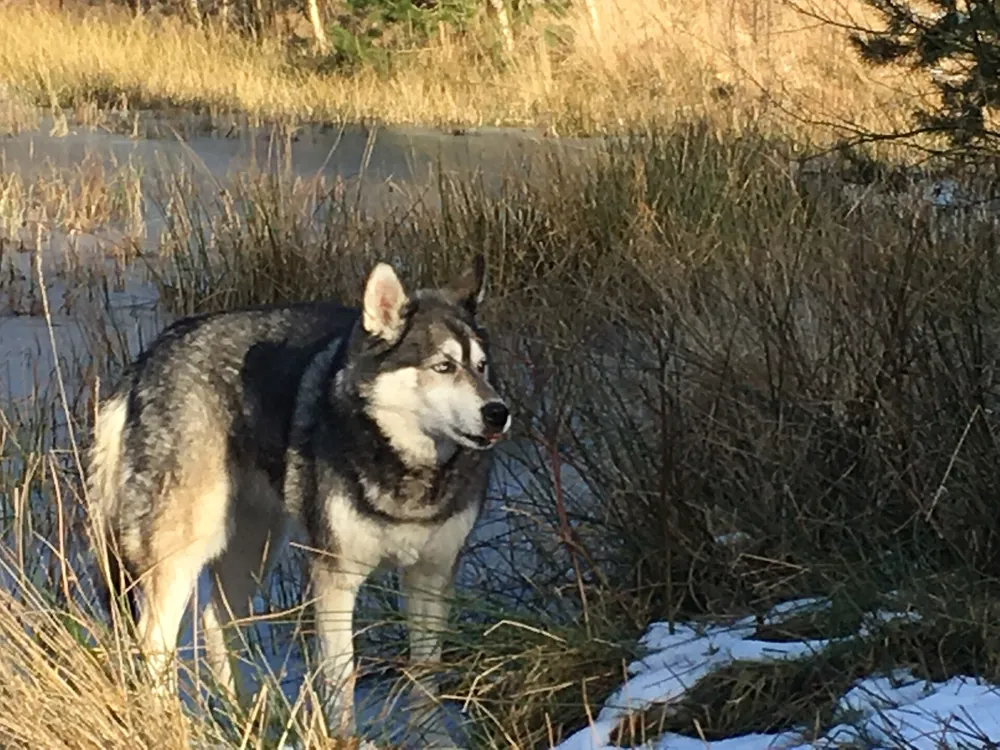
- Photos: the top photo and face close-up show the same DNA-tested Pembroke x Siberian Husky mix (Wikimedia Commons, CC0); Murphy is identified as a Husky Corgi mix by his photographer (Flickr, CC BY 2.0). The Pembroke and Siberian Husky photos show parent breeds and are labeled “Not a Horgi.” Full license records are in this site’s image-credits file.