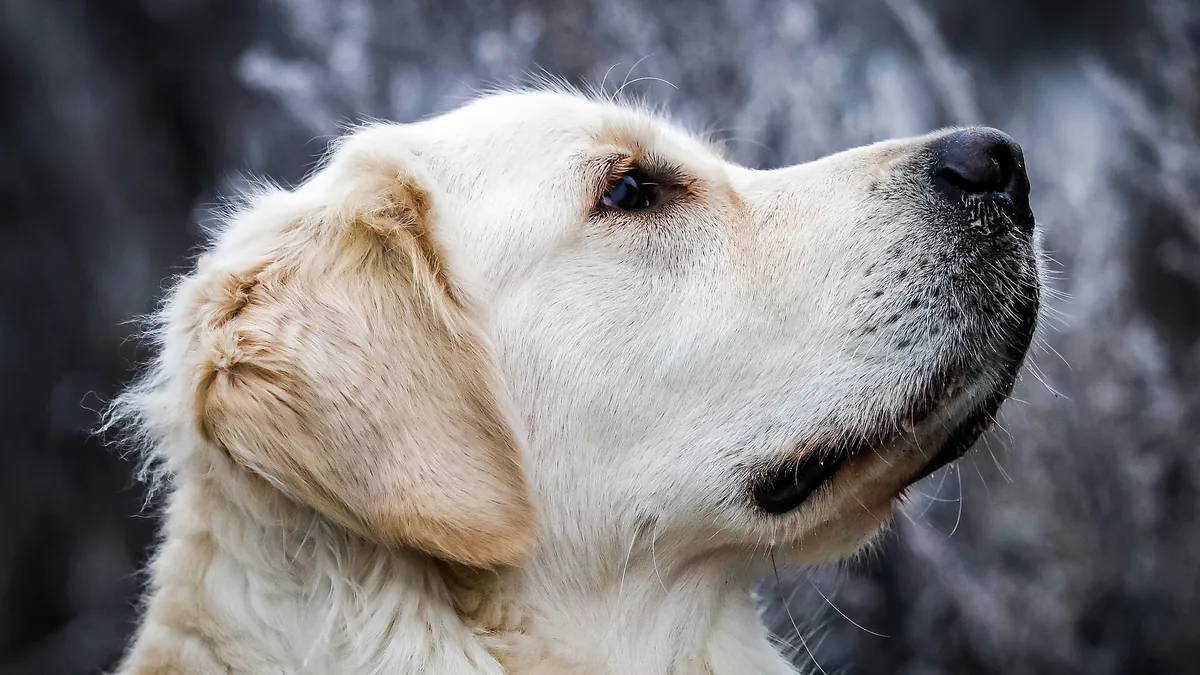

A Golden Retriever Siberian Husky mix, usually called a Goberian, is a cross between a Golden Retriever and a Siberian Husky. Expect a friendly, people-loving, medium-large dog with a lot of energy and a thick double coat that sheds heavily. It isn’t a recognized breed, so size, looks and temperament vary from dog to dog, and the honest guide is what each parent breed is like, plus the dog in front of you.
You’ll also hear it called a Golden Husky or a Husky Golden Retriever mix, and you may meet one in a shelter labeled “Husky/Retriever mix.” Below is what the American Kennel Club (AKC), the United Kennel Club (UKC), the parent-breed clubs and veterinary research can tell you, where the answer is “it depends on the dog,” and how to tell whether one fits your life.
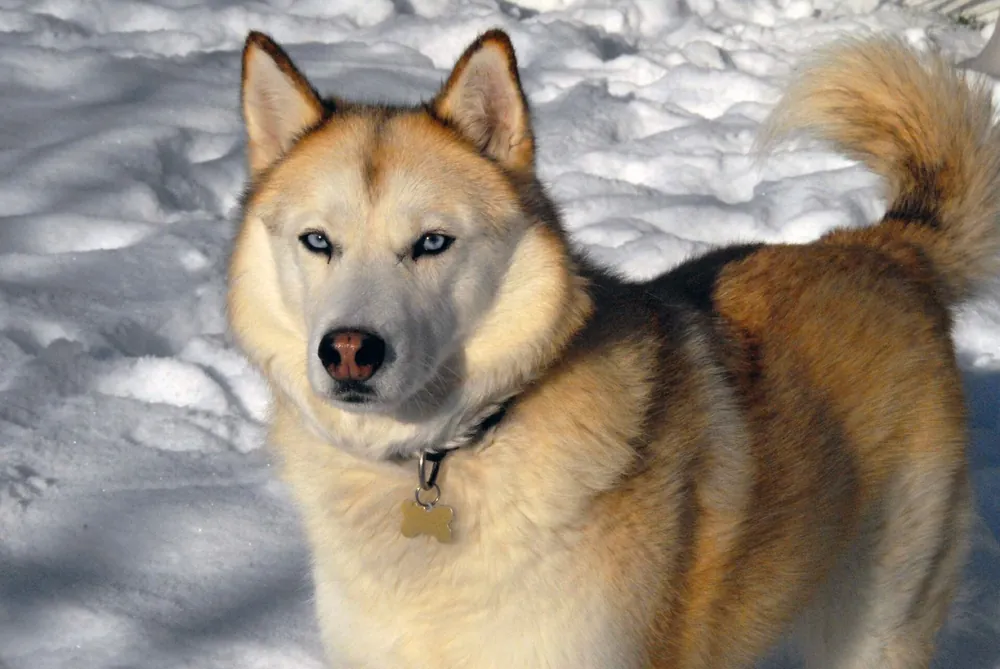
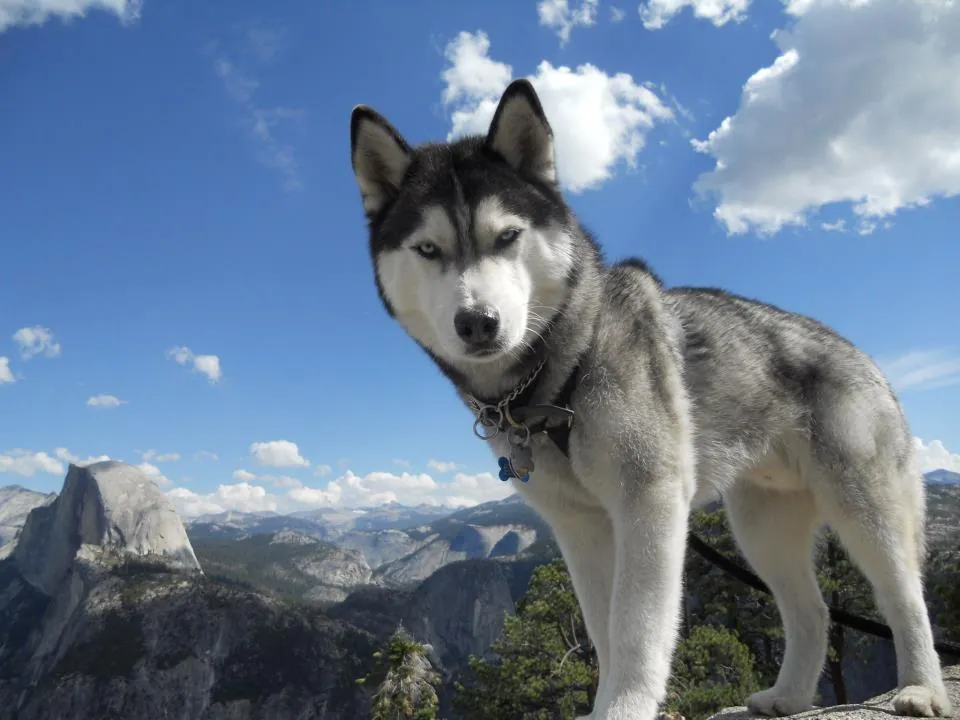
A note on our photos: we searched Wikimedia Commons, Flickr’s Creative Commons collection, Unsplash and Pexels, and found no openly licensed photo that its owner identified as a Golden Retriever and Husky mix. Rather than guess, every photo on this page shows one of the two parent breeds and is labeled that way. If you have a Goberian and would like to share a photo, we’d love to hear from you.
Goberian quick facts
Every figure here is for a parent breed, from that breed’s registry. None is a measurement of the mix itself.
- Also called: Goberian, Golden Husky, Husky Golden Retriever mix. Informal names, not a recognized breed.
- Size (parent breeds): Siberian Husky 20 to 23.5 inches and 35 to 60 pounds (AKC); Golden Retriever 21.5 to 24 inches and 55 to 75 pounds (AKC). Together that’s roughly 20 to 24 inches and 35 to 75 pounds.
- Lifespan (parent breeds): 10 to 12 years for the Golden Retriever and 12 to 14 years for the Siberian Husky (AKC; AKC). There is no published figure for the mix.
- Energy (AKC ratings): Siberian Husky 5 out of 5; Golden Retriever 3 out of 5, though the AKC says Goldens “need plenty of daily exercise.” Plan for an active dog.
- Grooming and shedding (AKC ratings): both parents 4 out of 5 for shedding. Expect hair on everything and weekly brushing, daily during a heavy shed.
- Barking (AKC ratings): Golden Retriever 1 out of 5, Siberian Husky 5 out of 5. Some Goberians are quiet; others howl and “talk.”
- Good with young children (AKC ratings): both parents 5 out of 5. A big, bouncy young dog still needs supervision around small children and unsteady adults.
- Good with other dogs (AKC ratings): both parents 5 out of 5. The Husky club warns of a strong prey drive toward cats and small animals.
- Watchdog (AKC ratings): Golden Retriever 3 out of 5, Siberian Husky 1 out of 5. Don’t count on a guard dog.
- Health to ask about: hip and elbow dysplasia, eye disease, heart disease, and cancer. Details and sources below.
- Good fit for: an active person or household with time for daily exercise, a secure fence, someone home much of the day, and a high tolerance for dog hair.
What a Goberian actually is
A Goberian has a Golden Retriever on one side of the family and a Siberian Husky on the other. Some are first-generation crosses of two purebred parents; others are mixes of mixes, so even the 50/50 assumption isn’t safe. We found no reliable record of when or where the cross was first bred, and because no major registry records Goberian litters, nobody can say how common or rare they are. Here are the two parents, both recognized by the AKC and the UKC.
The Golden Retriever side
The AKC calls the Golden Retriever “an exuberant Scottish gundog of great beauty” and “a sturdy, muscular dog of medium size, famous for the dense, lustrous coat of gold that gives the breed its name.” The breed was developed in the Scottish Highlands by Dudley Marjoribanks, the first Lord Tweedmouth, who between 1840 and 1890 crossed his “Yellow Retriever” with the now-extinct Tweed Water Spaniel, adding Irish Setter and Bloodhound along the way. The AKC first registered a Golden in 1925, places the breed in its Sporting Group, and describes Goldens as “outgoing, trustworthy, and eager-to-please family dogs, and relatively easy to train” (AKC Golden Retriever). The UKC places the breed in its Gun Dog Group (UKC Golden Retriever). Our Golden Retriever puppy guide covers the purebred in more depth.
The Siberian Husky side
The AKC describes the Siberian Husky as graceful and medium-sized, with almond-shaped eyes that can be brown, blue, or one of each. Its ancestors were bred by the Chukchi people of northeastern Asia as family companions and endurance sled dogs, built to haul light loads over long distances “with a minimum expenditure of energy.” The breed became famous in 1925, when relay teams of Siberians helped rush diphtheria serum to Nome, Alaska. The AKC recognized the Siberian Husky in 1930 and places it in its Working Group (AKC Siberian Husky); the UKC places it in its Northern Breed Group (UKC Siberian Husky).
The Siberian Husky Club of America (SHCA), the breed’s AKC parent club, stresses that the Siberian is a purebred dog, “not a wild, half-wolf, cross-bred creature” (SHCA). It also states that it “condemns all cross-breeding of the Siberian Husky” (SHCA). That is a statement aimed at people producing litters, not a judgment on the dogs themselves or on anyone who adopts one. Goberians are here, and they deserve good homes.
Two very different jobs
The two parents were built for different work. A Golden was bred to work closely with a hunter and bring birds back; the AKC notes that “a Golden wants nothing more than to please his human.” A Husky was bred to run long distances in a team, and the SHCA says the breed is “alert, eager to please, and adaptable,” but that “his independent spirit may at times challenge your ingenuity” (SHCA). A Goberian can take after either side, or mix them in ways that surprise you.
Goberian vs Golden Retriever vs Siberian Husky vs Gerberian Shepsky vs Huskador
Here’s how the parents compare with two other popular Husky crosses: the Gerberian Shepsky, a Siberian Husky and German Shepherd Dog cross, and the Huskador, as a Siberian Husky and Labrador Retriever cross is often called. Purebred columns use registry figures and the AKC’s 1 to 5 trait ratings (5 = most). The mix columns are simply the range between each mix’s parents, not measured data, because no registry measures these crosses.
| Golden Retriever | Siberian Husky | Goberian (mix) | Gerberian Shepsky (mix) | Huskador (mix) | |
|---|---|---|---|---|---|
| Registry | AKC Sporting Group (1925); UKC Gun Dog Group | AKC Working Group (1930); UKC Northern Breed Group | None; a mix | None; a mix | None; a mix |
| Height | 21.5 to 24 in | 20 to 23.5 in | Parent span about 20 to 24 in | Parent span about 20 to 26 in | Parent span about 20 to 24.5 in |
| Weight | 55 to 75 lb | 35 to 60 lb | Parent span about 35 to 75 lb | Parent span about 35 to 90 lb | Parent span about 35 to 80 lb |
| Life expectancy | 10 to 12 yrs | 12 to 14 yrs | Not studied | Not studied | Not studied |
| Energy | 3 | 5 | Parents rate 3 and 5 | Both parents rate 5 | Both parents rate 5 |
| Shedding | 4 | 4 | Both parents rate 4 | Both parents rate 4 | Both parents rate 4 |
| Barking | 1 | 5 | Parents rate 1 and 5 | Parents rate 5 and 3 | Parents rate 5 and 3 |
| Trainability | 5 | 3 | Parents rate 5 and 3 | Parents rate 3 and 5 | Parents rate 3 and 5 |
| Watchdog | 3 | 1 | Parents rate 3 and 1 | Parents rate 1 and 5 | Parents rate 1 and 3 |
| Good with other dogs | 5 | 5 | Both parents rate 5 | Parents rate 5 and 3 | Both parents rate 5 |
| AKC-listed health tests | Hips, elbows, cardiac exam, eye exam, NCL5 DNA test | Hips, eye exam, SPS1 and SHPN1 DNA tests | Both parents’ lists; ask the shelter or your vet | Husky list plus German Shepherd: hips, elbows, temperament | Husky list plus Labrador: hips, elbows, eye exam, several DNA tests |
Sources: AKC Golden Retriever, AKC Siberian Husky, AKC German Shepherd Dog, AKC Labrador Retriever, UKC Golden Retriever, UKC Siberian Husky. The AKC lists German Shepherds at 22 to 26 inches and 50 to 90 pounds and Labradors at 21.5 to 24.5 inches and 55 to 80 pounds. Our Siberian Husky Shepherd mix guide covers the Shepsky in detail.
How big does a Goberian get?
Start with the parents’ published ranges:
| Golden Retriever | Siberian Husky | |
|---|---|---|
| Height, male | 23 to 24 inches | 21 to 23.5 inches |
| Height, female | 21.5 to 22.5 inches | 20 to 22 inches |
| Weight, male | 65 to 75 pounds | 45 to 60 pounds |
| Weight, female | 55 to 65 pounds | 35 to 50 pounds |
| Life expectancy | 10 to 12 years | 12 to 14 years |
Sources: AKC Golden Retriever, AKC Siberian Husky.
The two parents are close in height, so most Goberians stand somewhere around 20 to 24 inches. Weight is where they differ: the AKC says Siberians tip the scales at “no more than 60 pounds,” while a male Golden can reach 75. A Goberian that takes after the Husky may be lean and light; one that takes after the Golden will usually be heavier. Females usually run smaller than males. With a puppy, the parents’ sizes are the best clue you’ll get. With an adult from a rescue, you can see exactly what you’re getting.
Coat, colors and eyes
Coat. Both parents have a double coat. The AKC describes the Golden’s coat as “thick, water-repellant” and the Husky’s as an undercoat plus guard hair (AKC Golden Retriever; AKC Siberian Husky). The Golden’s breed standard calls for feathering on the legs, underbody, neck and tail, while the Husky’s standard describes a double coat “medium in length, giving a well furred appearance” (AKC Golden Retriever standard; AKC Siberian Husky standard). A Goberian’s coat can land anywhere between the two.
Colors and markings. The Golden’s standard calls for a “rich, lustrous golden of various shades” (AKC Golden Retriever standard). The Husky’s standard allows black, gray, agouti, sable, red and white, solid or in many markings and patterns (AKC Siberian Husky standard). A Goberian can show any blend of those, and there’s no way to predict it from a litter announcement.
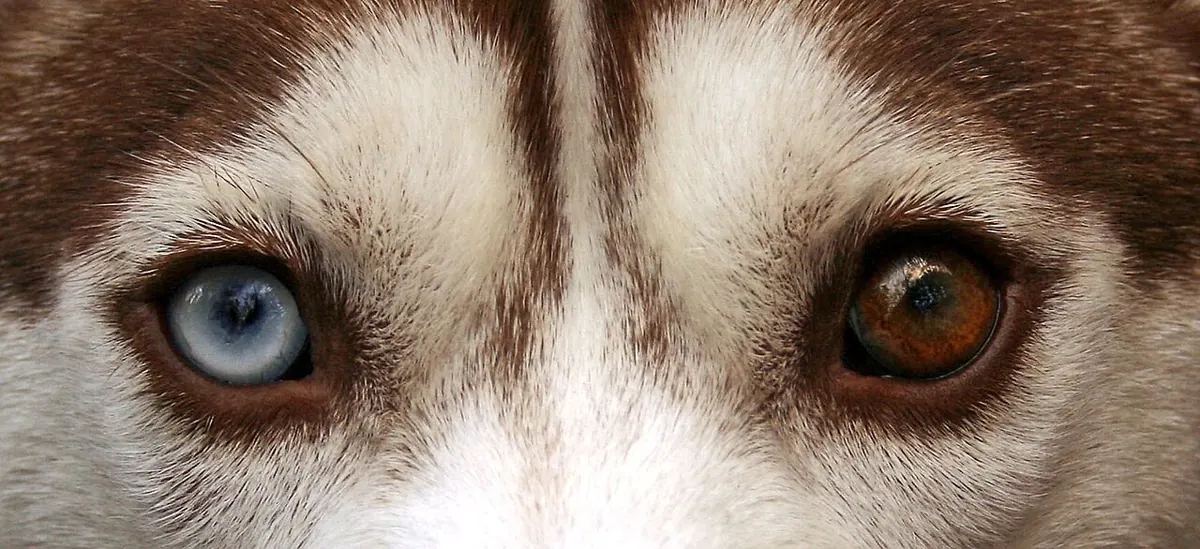

Eyes. The Golden’s standard prefers dark brown eyes (AKC Golden Retriever standard). The Husky’s standard says eyes “may be brown or blue in color; one of each or parti-colored are acceptable” (AKC Siberian Husky standard). So a Goberian may have brown eyes, blue eyes, or two different colors.
Shedding. Plan for a lot. The AKC says Goldens “heavily shed their thick, water-repellant double coat once or twice a year,” and “also shed more moderately on a continuous basis.” Huskies shed their undercoat twice a year, and the old coat needs to be raked out with a pin brush and metal comb. The SHCA jokes that during a shed you’ll want “a comb and a bushel basket” (SHCA).
Allergies. The AKC says there’s no such thing as a 100% hypoallergenic dog (AKC), and both parents shed heavily. If dog allergies are an issue in your home, spend real time with the specific dog first and talk to your doctor.

Temperament: what to realistically expect
The Golden side. The AKC lists the Golden’s temperament as “intelligent, friendly, devoted,” and says Goldens “take a joyous and playful approach to life and maintain this puppyish behavior into adulthood” (AKC Golden Retriever).
The Husky side. The AKC lists the Husky as “loyal, outgoing, mischievous.” The SHCA calls the breed’s temperament “affectionate but not fawning” and says the Husky “is not usually a one-man dog,” “exhibits no fear or suspicion of strangers, and will greet guests cordially.” It adds: “This is not the temperament of a watchdog” (SHCA).
What that can look like in a Goberian:
- Friendly with almost everyone. Both parents rate 5 out of 5 with the AKC for openness to strangers and for getting along with other dogs. That’s lovely for visitors and a poor fit if you want a guard dog.
- Needs company. The AKC says Huskies “are not suited to being left alone all day,” and Goldens want to be part of the family. A bored, lonely Goberian may dig, chew, or howl. The SHCA says Huskies “have been known to do their share” of chewing and digging (SHCA).
- Vocal, or not. The AKC rates Goldens 1 out of 5 for barking and Huskies 5 out of 5. Ask a foster or shelter how much the individual dog talks, howls or barks.
- Cats and small pets. The SHCA warns that small animals, including cats, “are potential victims of their strong predatory instinct” (SHCA). A Goberian may or may not inherit that drive. If you have a cat, ask how the specific dog has done with cats in a home, not just in a kennel.
Exercise and escape-proofing
Exercise. Plan for a lot. The AKC says Huskies “are active, athletic dogs who need a lot of exercise,” and that Goldens “need plenty of daily exercise” and are “likely to engage in undesirable behavior” without it. It also recommends checking with a vet before starting strenuous or high-impact activities with a Golden (AKC Golden Retriever; AKC Siberian Husky). Long walks, hikes, games of fetch, and dog sports like rally, agility or obedience suit this mix. How much is “enough” depends on the dog’s age and health, so ask your vet.
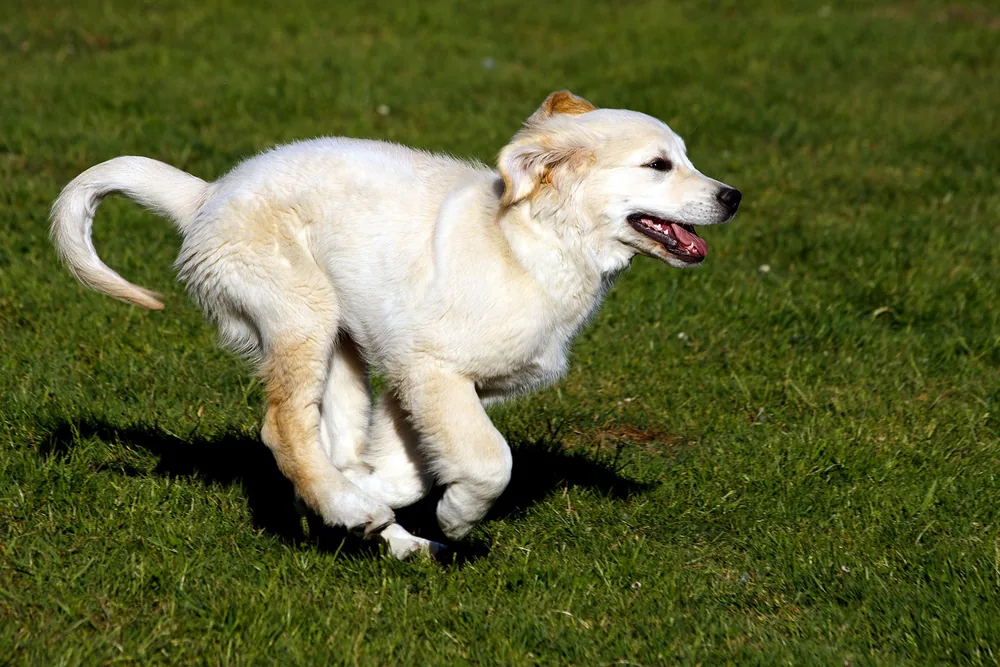

Leash and fence: the Husky rule. This matters more than anything else on this page. The AKC says Huskies “were bred to run and will do so at every opportunity,” and that it is “vital to keep the dog on a leash, in harness, or in a fenced yard at all times.” The SHCA puts it plainly: “one quick lope across a busy street could be the last run that he enjoys, ever,” and urges that no Husky “ever be allowed unrestrained freedom” (SHCA). Assume a Goberian may have that same urge, even if it looks like a Golden.
Practical escape-proofing:
- Walk the fence line before the dog comes home. Look for gaps, loose boards and soft ground a dog could dig under.
- Make sure gates latch on their own, and that everyone in the household (and visiting grandchildren) closes them.
- Teach a “wait” at the front door and the car door, so the dog doesn’t bolt.
- Use a well-fitted harness or collar the dog can’t back out of, keep ID tags current, and make sure the microchip is registered to you.
- Don’t rely on off-leash recall in open areas, however good your training is.
Hot weather. Both parents carry a heavy coat. Walk in the cooler parts of the day, bring water, and ask your vet about signs of overheating.

Training
The AKC rates the Golden Retriever 5 out of 5 for trainability and calls Goldens “outgoing, loyal, and eager to do your bidding, which makes them very easy to train.” It rates the Siberian Husky 3 out of 5, and recommends making all training “fun for both dog and handler” (AKC Golden Retriever; AKC Siberian Husky). A Goberian usually lands in between.
What helps:
- Start early. The AKC recommends gently exposing a Golden puppy to many people, places and situations between about 7 weeks and 4 months of age, plus puppy classes.
- Keep it positive. The American Veterinary Society of Animal Behavior recommends reward-based training and advises against punishment-based methods (AVSAB).
- Keep sessions short and varied. A Husky-type dog may lose interest in repetition.
- Build in a job. Both parents are working dogs. Puzzle feeders, scent games and trick training use the brain as well as the legs.
Grooming
- Brushing: once or twice a week most of the year, daily during a heavy shed. The AKC suggests a slicker brush for Goldens and a pin brush and metal comb to rake out a Husky’s undercoat.
- Bathing: only occasionally. The AKC calls Huskies “remarkably self-cleaning,” often needing only a few baths a year, and says Goldens “only need occasional baths.” Dry the coat completely before brushing.
- Ears and teeth: the AKC recommends checking a Golden’s ears weekly for signs of infection and brushing the teeth often.
- Nails: trim regularly, as the AKC recommends for both parents.
- Don’t shave a double coat without talking to your vet or a professional groomer first.
Diet basics
Feed a high-quality dog food suited to your dog’s age and activity, and keep an eye on its waistline. The AKC notes that some Goldens “can become overweight,” while Huskies “maintain a healthy weight on less food as compared to other breeds of the same size” (AKC Golden Retriever; AKC Siberian Husky). That means a Goberian’s needs can be hard to guess from its size alone. Go easy on treats and table scraps, and ask your vet how much keeps your dog lean.
Health issues to know about
A mix can inherit health problems from either parent. The conditions below are documented for the parent breeds by the AKC, the breed clubs and Morris Animal Foundation. This is not a diagnosis checklist; if something worries you, talk to your vet.
| Condition | Golden Retriever | Siberian Husky | Source |
|---|---|---|---|
| Hip dysplasia | Screened for | Screened for; AKC calls incidence relatively low | AKC breed pages |
| Elbow dysplasia | Screened for | Not on AKC’s recommended test list | AKC Golden Retriever |
| Eye disease | Juvenile cataracts, pigmentary uveitis, progressive retinal atrophy | Juvenile cataracts, corneal dystrophy, progressive retinal atrophy | AKC, SHCA eyes |
| Heart disease | Subvalvular aortic stenosis; cardiac exam recommended | Not on AKC’s recommended test list | AKC Golden Retriever |
| Nervous system disease | NCL5 DNA test | SPS1 and SHPN1 DNA tests | AKC breed pages |
| Cancer | Hemangiosarcoma is the leading cause of cancer death in the Golden Retriever Lifetime Study | AKC lists cancer among health issues seen in the breed | Morris Animal Foundation, AKC Siberian Husky |
Golden Retriever. The AKC says Goldens “are generally healthy dogs,” and that responsible breeders screen breeding stock for elbow and hip dysplasia; eye conditions such as juvenile cataracts, pigmentary uveitis and progressive retinal atrophy; and heart disease including subvalvular aortic stenosis (AKC Golden Retriever). Cancer is the big concern in the breed. In Morris Animal Foundation’s Golden Retriever Lifetime Study, which has followed more than 3,000 Goldens, hemangiosarcoma accounts for about 70% of cancer deaths. The Foundation describes it as one of the most aggressive tumors of dogs, commonly found in the spleen, heart and skin, and most often seen in older dogs, at an average age of 10 (Morris Animal Foundation). We don’t know whether a Goberian carries the same risk, because no one has studied the mix. Ask your vet which signs to watch for as your dog ages.
Siberian Husky. The AKC calls Siberians “a generally healthy, relatively long-lived breed,” with cancer and arthritis among the health issues seen, and a relatively low incidence of hip dysplasia and eye disease (AKC Siberian Husky). The SHCA says the three eye conditions of concern are hereditary (juvenile) cataracts, corneal dystrophy and progressive retinal atrophy, and calls annual eye exams “imperative” because problems can show up over several years (SHCA eyes).
If you’re adopting, ask the shelter or rescue for any vet records, and book a wellness exam soon after the dog comes home.
Lifespan
No study has measured this mix’s lifespan, so any single figure you see online is a guess. As a frame of reference, the AKC lists 10 to 12 years for the Golden Retriever and 12 to 14 years for the Siberian Husky (AKC Golden Retriever; AKC Siberian Husky). The AKC also notes Huskies can stay quite active into their senior years. Keeping your dog lean, active and up to date on checkups gives any dog its best chance.
Goberian puppies
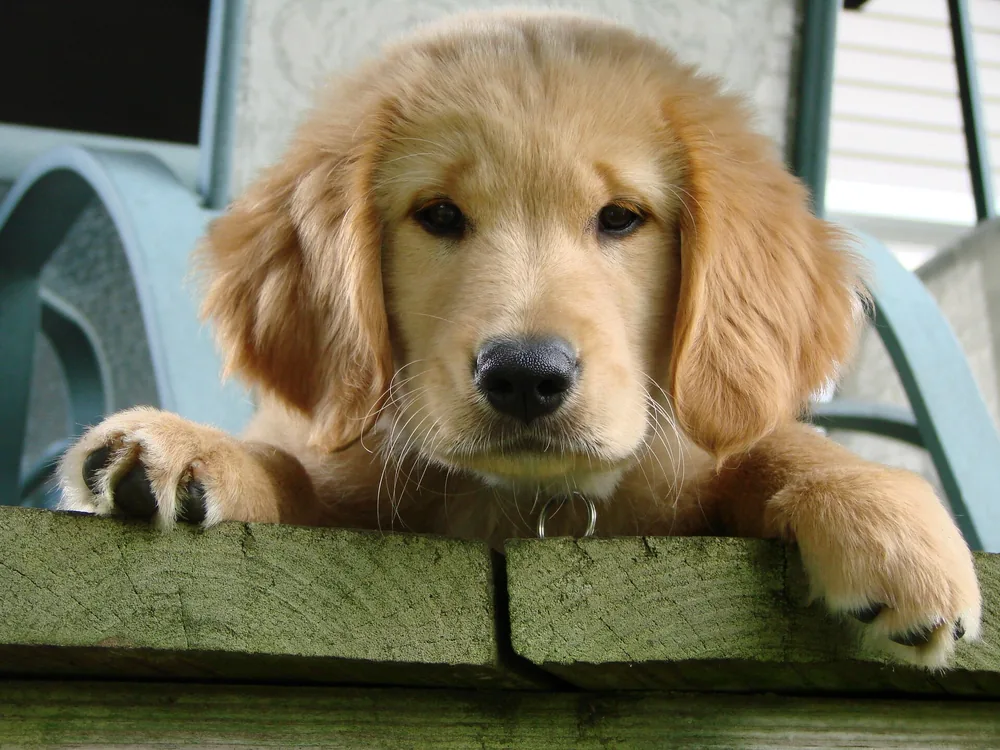

Puppies of any mix are a big commitment: house training, chewing, and months of socialization and classes before you know who the adult will be. With a Goberian, you also won’t know the adult size, coat, energy level or voice until the puppy grows up.
There’s no breed club or health-testing program for this cross, and the Siberian Husky club opposes cross-breeding outright, so be cautious with anyone selling “Goberian puppies.” Ask to meet the mother, ask which health tests both parents have had (the AKC’s parent-breed lists are in the comparison table above: hips, elbows, heart and eyes on the Golden side; hips, eyes and two DNA tests on the Husky side), and be wary of claims that the mix is “healthier” than either parent or of any “wolf” marketing. For many people, especially first-time owners or anyone over 50, an adult from a shelter or foster home is the easier path.
Is that shelter dog really a Goberian?
Maybe, maybe not. Shelter breed labels are usually a staff member’s best guess from looks. In one study of adopted dogs, DNA confirmed the breed the adoption agency had named as a main breed in only 4 of 16 dogs, or 25% (Voith et al., 2009). In a larger study of shelter dogs, staff’s main breed label matched the main breed in the dog’s DNA in 56.7% of cases (Gunter et al., 2018). A fluffy golden dog with blue eyes could be a Goberian, a Husky crossed with something else entirely, or a mix of many breeds.
The takeaway: meet the dog, not the label. A DNA test can satisfy your curiosity later; our guide to figuring out your dog’s breed explains the options.
Is a Goberian right for me? A quick checklist
Written with adopters over 50 in mind. A few “no” answers don’t rule you out; they tell you what to plan for, or which dog to ask about.
- Yes / No: I can give a dog a long walk or active play every day, plus a shorter outing, in the amount the shelter or foster says this dog needs.
- Yes / No: I can comfortably hold a strong, 35- to 75-pound dog on a leash if it lunges after a squirrel.
- Yes / No: My yard has a secure fence with self-closing gates and nothing a dog could dig under, or I’ll walk the dog on leash every time.
- Yes / No: I’m fine with dog hair on my clothes and furniture, and with brushing at least weekly.
- Yes / No: Someone is home much of the day, or I can arrange a dog walker or daycare on long days.
- Yes / No: I don’t have cats or small pets, or I’m ready for slow, careful introductions and the possibility that this dog isn’t safe with them.
- Yes / No: I’m OK with a dog that may howl or “talk,” or my neighbors won’t mind.
- Yes / No: I’ve budgeted for vet care, including checkups as the dog ages, and I’ve thought about who would care for this dog if I ever couldn’t.
A Goberian may suit you if you love long walks or hikes, enjoy a friendly, social dog that greets everyone, are home a lot, and have a secure yard.
Consider a calmer dog if you want a quiet, low-shedding companion, if the dog would be alone most of the day, or if handling a strong, excitable dog on a leash would be difficult. An older, mellower Goberian that a foster knows well can be the exception.
A word on tripping and leash safety
This isn’t a reason to skip a big, bouncy dog, but it’s worth planning for. A dog that lunges after a squirrel or a cat can pull you off balance. A University of Pennsylvania study estimated that fractures among Americans 65 and older linked to walking leashed dogs rose from about 1,671 in 2004 to 4,396 in 2017, and the authors suggested obedience training so dogs don’t lunge on walks (Pirruccio et al., 2019). Practical steps: teach loose-leash walking and a “wait” at doors and stairs, consider a front-clip harness, wear good shoes, and don’t wrap the leash around your wrist.
Costs to plan for
We found no reliable cost figures for this mix specifically, and we don’t quote puppy prices. The ASPCA’s estimate for a dog is $1,391 a year, and $3,221 for the first year once one-time costs are included (ASPCA). Budget for:
- Adoption fee, which at shelters and rescues often includes vaccines, a microchip and spay or neuter surgery. Ask what’s included.
- Routine vet care: exams, vaccines, parasite prevention, and dental care, with more frequent checkups as the dog ages.
- Pet insurance or an emergency fund. With hip, elbow, eye, heart and cancer concerns on the parent-breed lists, it’s worth pricing insurance before any condition becomes pre-existing.
- Fencing repairs, grooming tools and gear: a good vacuum, a deshedding brush, a secure harness, and care when you’re away.
Adopting a Goberian
Where to look
Start with shelters and rescues, and search for “Husky mix,” “Golden Retriever mix” and “Retriever mix,” since labels are often a guess. Breed rescues sometimes take mixes too. The Golden Retriever Club of America’s CARE committee supports Golden rescue efforts, and the AKC Rescue Network lists rescue contacts by breed. Foster-based rescues are especially helpful, because a foster family can tell you how the dog behaves in a real home.
Adopting an adult has a real advantage: you see the dog’s actual size, coat, energy level and temperament instead of guessing.
Questions to ask the shelter or rescue
The ASPCA suggests leaning on shelter staff “to help play matchmaker” and making sure the dog’s personality fits your lifestyle (ASPCA). For a Goberian, ask:
- Has the dog ever escaped a yard, jumped or dug under a fence, or bolted out a door? Was it found as a stray?
- How much exercise has it been getting, and how does it behave when it hasn’t had enough?
- How does it walk on a leash? Does it pull or lunge at squirrels, cats or other dogs?
- How has it done with cats, small pets, other dogs and children? In a foster home, or only in the kennel?
- How does it handle being left alone? Any howling, chewing or digging?
- How does it handle brushing, nail trims, baths and vet visits?
- What do the vet records show about its hips, eyes, heart and weight?
- Is there a foster-to-adopt or trial period, and what happens if it doesn’t work out?
Our list of 9 questions to ask when adopting a dog covers the general ones.
Give your dog a backup plan
A Goberian may be with you for a decade or more. Naming a backup caregiver now, someone who knows your dog and has agreed to step in, helps make sure your dog never has to go back to a shelter. Our guide What Happens to Your Dog When You Die walks you through it, and the free My Dog’s Backup Plan worksheet records your dog’s routine, vet, quirks and favorite things, so the person who steps in knows exactly how to care for them. Bone Voyage is also building the pledge: a promise by a volunteer to adopt a specific older adult’s dog if that person dies or can no longer care for it. You can join the free list on that same page.
Similar dogs to compare
If you’re weighing a Goberian, these related guides may help:
- Siberian Husky Shepherd mix, Doberman Husky mix, Husky Boxer mix and Pitsky, for other Husky crosses.
- Golden Retriever Rottweiler mix and Golden Retriever puppy guide, for the Golden side of the family.
- Bernese Mountain Dog Husky mix, another big, fluffy Husky cross.
Frequently Asked Questions
What is a Golden Retriever Husky mix called?
Most often a Goberian. You’ll also see Golden Husky and Husky Golden Retriever mix. These are informal names. The AKC and UKC recognize both parent breeds but not the cross, and there is no breed standard for it, so looks, size and temperament vary from dog to dog.
How big does a Golden Retriever Husky mix get?
There is no official size for the mix. The AKC lists Siberian Huskies at 20 to 23.5 inches and 35 to 60 pounds, and Golden Retrievers at 21.5 to 24 inches and 55 to 75 pounds (AKC Siberian Husky; AKC Golden Retriever). Most Goberians land somewhere in that span, so plan for a medium-large dog of roughly 35 to 75 pounds, with females usually smaller than males.
How long do Goberians live?
No study has measured the mix’s lifespan. As a frame of reference, the AKC lists 10 to 12 years for the Golden Retriever and 12 to 14 years for the Siberian Husky. Regular checkups, a lean weight and the individual dog’s genes matter more than the label.
Do Goberians shed a lot?
Yes. Both parents have a thick double coat and the AKC rates both 4 out of 5 for shedding. Goldens shed heavily once or twice a year and moderately all the time; Huskies shed their undercoat twice a year. Plan on brushing once or twice a week, and daily during a heavy shed.
Are Goberians easy to train?
Often easier than a Husky, but not guaranteed. The AKC rates the Golden Retriever 5 out of 5 for trainability and the Siberian Husky 3 out of 5, and the Husky club notes the Husky’s independent spirit may challenge your ingenuity (SHCA). Short, upbeat, reward-based sessions suit both sides. Training never makes a Husky-type dog safe off leash in an open area.
How much does a Golden Retriever Husky mix cost?
There’s no set price, because no major kennel club registers the cross and sellers set their own prices, so we don’t quote one. Adopting from a shelter or rescue means an adoption fee that often includes vaccines, a microchip and spay or neuter surgery. The ASPCA estimates that owning a dog costs about $1,391 a year, or $3,221 in the first year once one-time costs are included (ASPCA).
What is the silent killer in Golden Retrievers?
That isn’t an official medical term, but the cancer most often discussed is hemangiosarcoma. In Morris Animal Foundation’s Golden Retriever Lifetime Study it causes about 70% of cancer deaths, mostly in older dogs (average age 10), and it commonly affects the spleen, heart and skin (Morris Animal Foundation). A Goberian has a Golden parent, so ask your vet what signs to watch for and how often to schedule checkups.
Before you go
Whatever its kennel card says, the Goberian in front of you is one specific dog with its own history and quirks, so weigh what you learn about that dog more heavily than anything on this page. And whatever dog you bring home, it’s worth deciding now who would step in for them if you ever couldn’t. For more breed profiles, browse our breeds and adoption guides.
Sources
- American Kennel Club, Golden Retriever breed page (height, weight, life expectancy, trait ratings, history, temperament, exercise, training, grooming, nutrition, health and recommended tests)
- American Kennel Club, Siberian Husky breed page (height, weight, life expectancy, trait ratings, history, temperament, exercise, training, grooming, nutrition, health and recommended tests)
- American Kennel Club, Official Standard of the Golden Retriever and Official Standard of the Siberian Husky (coat, color and eyes)
- American Kennel Club, German Shepherd Dog and Labrador Retriever breed pages (comparison table), and Hypoallergenic dog breeds
- United Kennel Club, Golden Retriever standard and Siberian Husky standard (UKC recognition and breed group)
- Siberian Husky Club of America, The Siberian Husky (temperament, prey drive, shedding, chewing and digging, running, “not half-wolf”), home page statement on cross-breeding and Eye testing
- Golden Retriever Club of America, CARE: Committee to Assist Rescue Efforts
- Morris Animal Foundation, The Big 5: Top Cancers Affecting Dogs in the Golden Retriever Lifetime Study
- Voith VL et al., Comparison of adoption agency breed identification and DNA breed identification of dogs, Journal of Applied Animal Welfare Science, 2009
- Gunter LM et al., A canine identity crisis: Genetic breed heritage testing of shelter dogs, PLOS ONE, 2018
- Pirruccio K et al., Fractures in elderly Americans associated with walking leashed dogs, JAMA Surgery, 2019
- American Veterinary Society of Animal Behavior, Position statement on humane dog training
- ASPCA, Cutting pet care costs (annual and first-year cost estimates) and Tips for adopting
- AKC, AKC Rescue Network