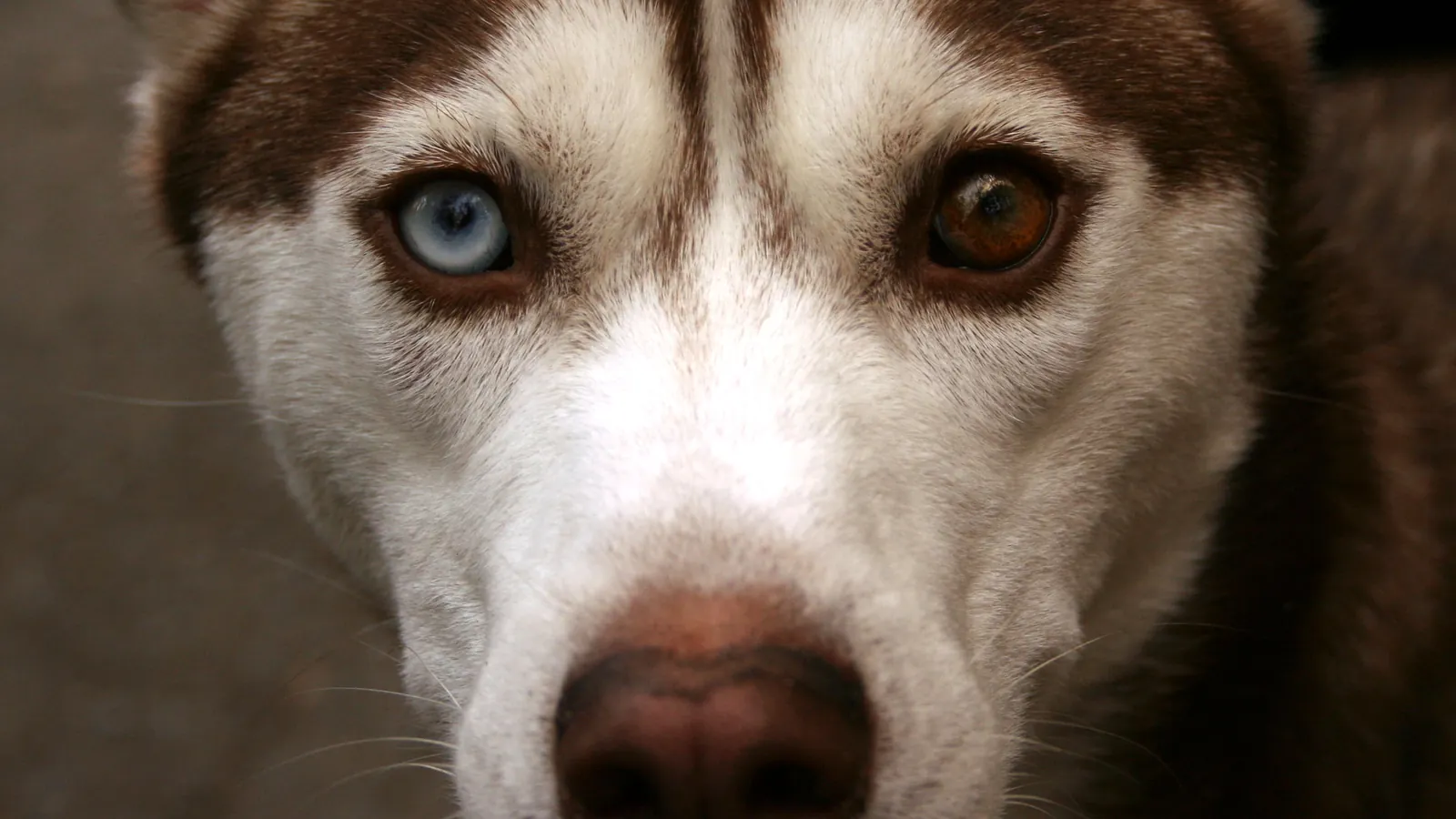

An Aussie Husky mix, also called a Husky Aussie mix or Aussie Siberian, is a cross between an Australian Shepherd and a Siberian Husky. There is no breed standard, so size, coat and temperament vary. What the two parents reliably share is a lot of energy, a thick shedding coat, and a need for a job. This is not a low-key companion.
Below is what the American Kennel Club (AKC), veterinary geneticists and pharmacologists actually say about the parent breeds, what that can mean for a mix, and where we do not have data. We also cover merle and MDR1, escape and noise, and whether this mix is a realistic fit for your household.
Aussie Husky mix quick facts
- Also called: Husky Aussie mix, Aussie Siberian, Australian Shepherd Husky mix. (This is not the same cross as a Gerberian Shepsky, which is a German Shepherd x Husky.)
- Breed type: a first-generation or later cross, not an AKC or UKC registered breed.
- Height (estimate from the parents): often about 18 to 23.5 inches at the shoulder. The AKC lists Aussies at 18 to 23 inches and Huskies at 20 to 23.5 inches (AKC Australian Shepherd; AKC Siberian Husky).
- Weight (estimate from the parents): often about 35 to 65 pounds. The AKC lists Aussies at 40 to 65 pounds (males often 50 to 65, females 40 to 55) and Huskies at 45 to 60 pounds (males) and 35 to 50 pounds (females) (AKC Australian Shepherd; AKC Siberian Husky).
- Lifespan (frame of reference, not a measured figure for the mix): about 12 to 15 years. The AKC lists 12 to 15 years for Aussies and 12 to 14 years for Huskies.
- Coat: a dense double coat; heavy seasonal shedding. Colors may include black, red, merle, gray, copper, sable or white markings, and some dogs have blue or split-colored eyes.
- Energy: very high. Both parents were bred to work for hours.
- Grooming: weekly brushing most of the year; daily during coat blow-outs. Do not shave the coat.
- Good with children and other pets: many can be, with socialization, but herding and prey drive are both possible. Supervise children; some mixes will try to herd running kids or chase small pets.
- Special health questions to ask: hips and an eye exam for both sides; an MDR1 test if there is Aussie ancestry; merle status, and never a merle-to-merle breeding (WSU MDR1; OFA Aussie CHIC).
- Good fit for: a very active household that can hike, run or do dog sports every day, with a tall, secure fence and time for training.
- Skip it if: you want a quiet apartment dog, you cannot give more than an hour of real exercise a day, you need reliable off-leash recall, or you cannot manage a heavy shedder.

What an Aussie Husky mix is
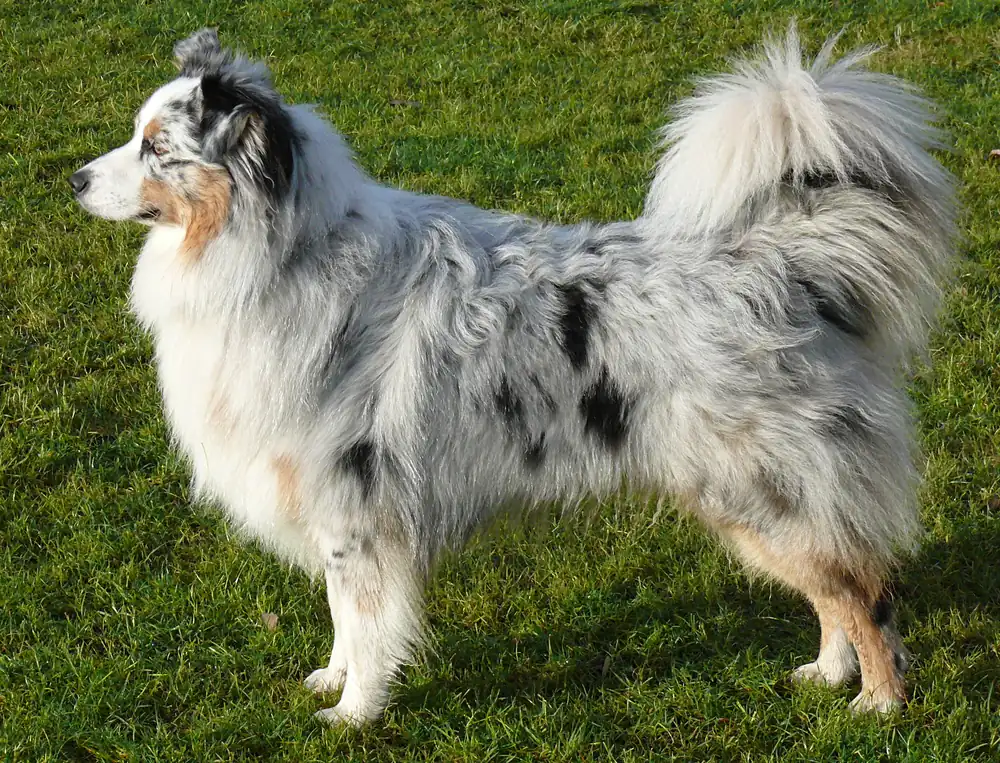
This is a mixed-breed dog, not a standardized designer breed. One parent is an Australian Shepherd, a medium herding dog developed on ranches in the western United States, not in Australia (AKC Australian Shepherd). The other is a Siberian Husky, a sled dog bred to travel long distances in a team (AKC Siberian Husky).
A Mini Aussie Husky is not a separate official variety. If a seller uses that name, ask whether the Aussie parent is a standard Australian Shepherd or a Miniature American Shepherd, which is a different, smaller AKC breed. Appearance and adult size will depend on which dogs were actually bred.
Appearance and size
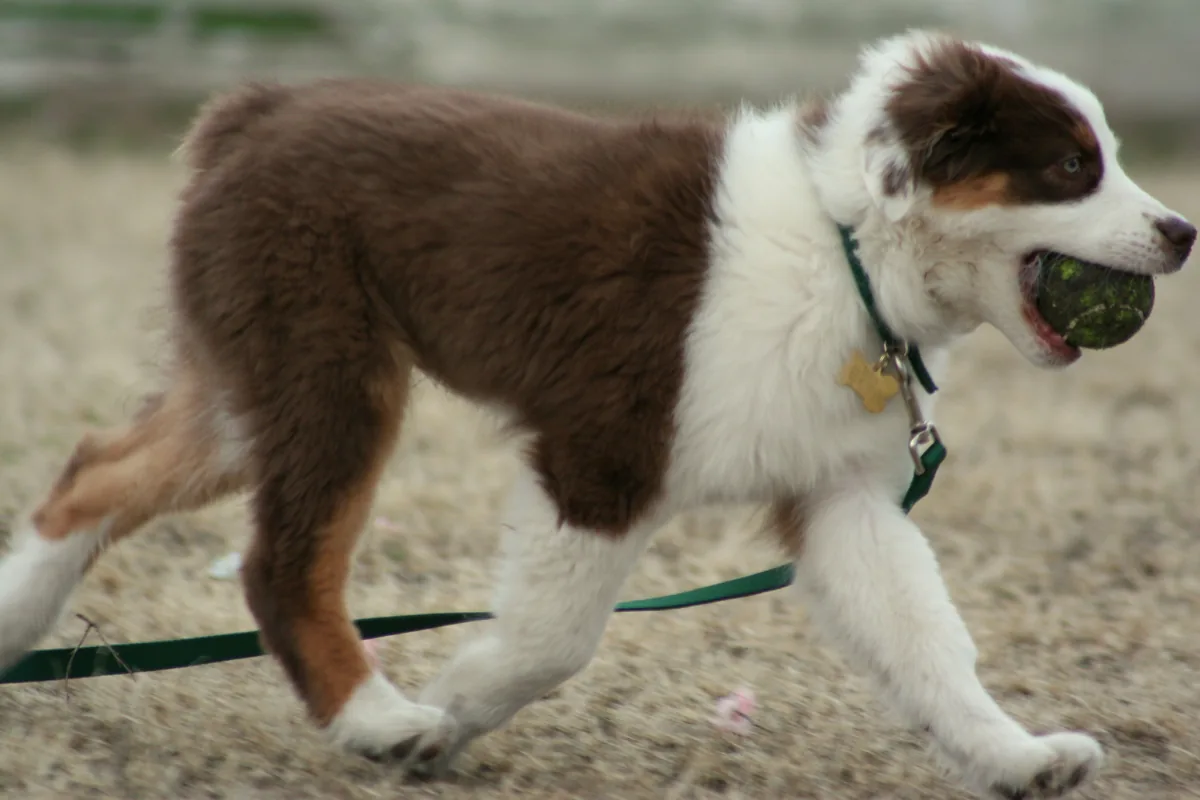
Littermates can look like a stocky merle herding dog, a long-legged Husky, or something in between. Erect or semi-pricked ears are common. Eyes may be brown, amber, blue, or one of each, a trait seen in both merle Aussies and many Huskies. The coat is almost always a double coat.
The figures in the table are from the parent-breed standards, plus an estimate for the mix. The estimate is not measured data.
| Trait | Australian Shepherd (AKC) | Siberian Husky (AKC) | Mix (estimate) |
|---|---|---|---|
| Height, male | 20 to 23 in | 21 to 23.5 in | about 20 to 23.5 in |
| Height, female | 18 to 21 in | 20 to 22 in | about 18 to 22 in |
| Weight, male | 50 to 65 lb | 45 to 60 lb | often about 45 to 65 lb |
| Weight, female | 40 to 55 lb | 35 to 50 lb | often about 35 to 55 lb |
| Coat | Moderate length, weather-resistant, with undercoat | Double coat; seasonal blow-out | Dense double coat; heavy shed |
| Lifespan | 12 to 15 years | 12 to 14 years | about 12 to 15 years (estimate) |
Sources: AKC Australian Shepherd, AKC Siberian Husky.
Temperament
The AKC describes the Australian Shepherd as an intelligent, loyal working dog with strong herding and guarding instincts, devoted to its people and often reserved with strangers (AKC Australian Shepherd). The same club describes the Siberian Husky as friendly, gentle and outgoing, a dog that is not typically a one-person guard dog, and one that can have an independent streak and a strong urge to run (AKC Siberian Husky).
A mix can inherit any combination. Some will watch your face for the next cue, like an Aussie. Some will treat a recall as a suggestion, like a Husky. Some will bark at the door; some will greet everyone and then howl. Many try to herd running children or other pets if they are under-exercised. None of this is guaranteed for any one dog. Meet the individual, and ask how it has done with visitors, kids, cats and other dogs.

Exercise, training, fences and noise
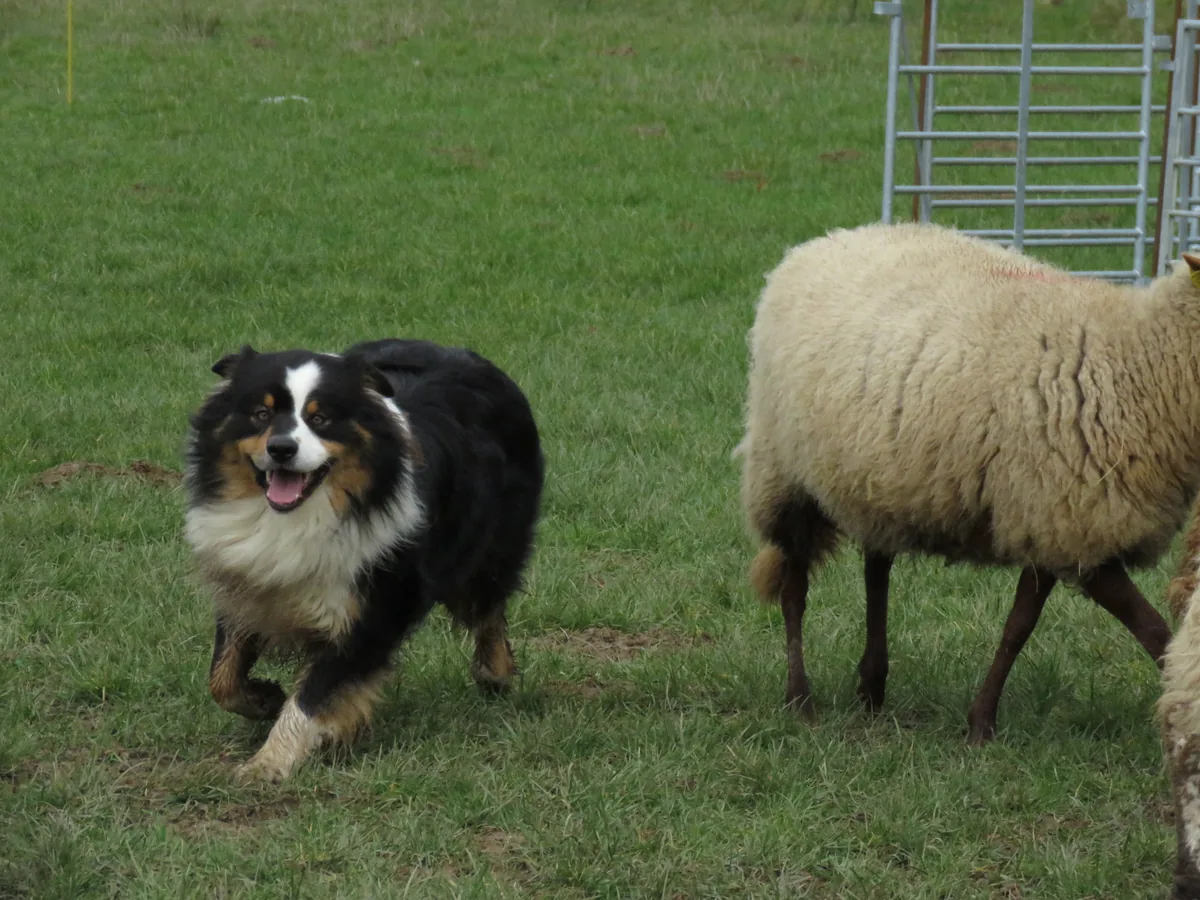
Budget more than an hour of real activity every day, plus training or puzzles. Hikes, canicross, herding lessons, rally or agility, once the dog is grown and your vet is comfortable with the work, all fit this mix better than a short neighborhood loop. Mental work is not optional: these dogs invent jobs, and the jobs they invent are usually digging, chewing, barking or escaping.
Train with short, reward-based sessions. The Aussie side is often eager; the Husky side can be stubborn. Practice recall on a long line, and do not assume off-leash reliability, especially around wildlife or open space.
A yard is useful only if the fence is tall, buried or coyote-rolled at the bottom, and hard to climb. Huskies are known for digging under and going over ordinary fencing. A bored mix left alone in a yard will test that fence. The AKC notes that Huskies should not be left off leash in unsecured areas.
Expect a vocal dog. Huskies howl and “talk.” Neighbors and apartment walls are part of the decision, not an afterthought. In hot weather, move exercise to early morning or evening. A thick northern coat is a poor match for midday summer runs.

Grooming
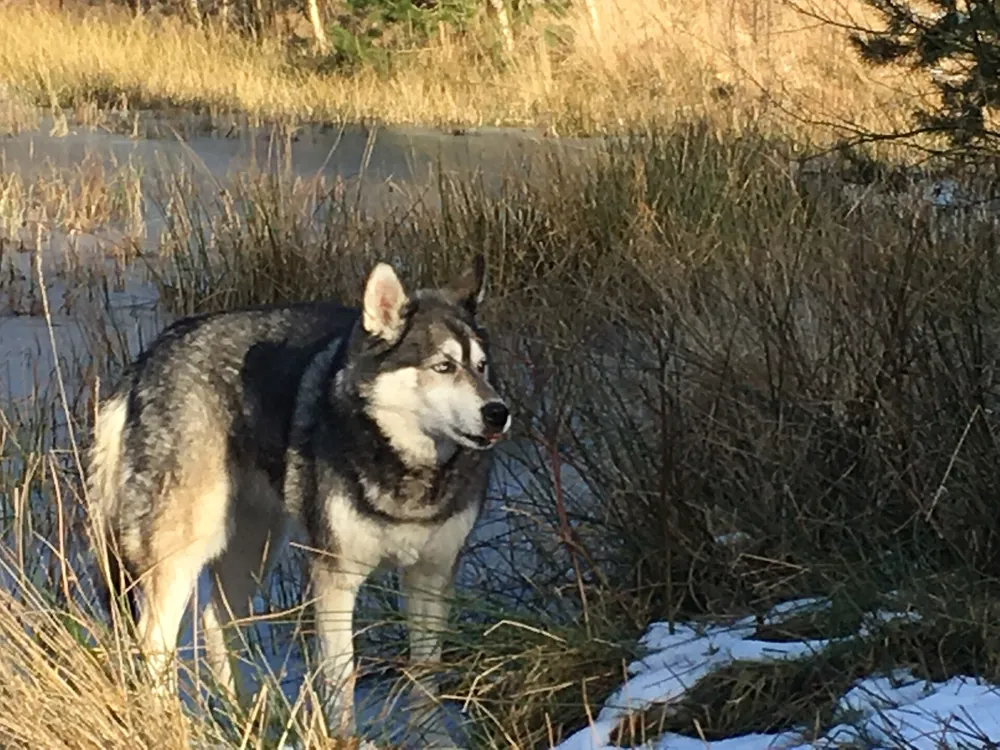
There is no low-shedding Aussie Husky. Brush at least weekly with a slicker and an undercoat rake, and daily when the undercoat is blowing in spring or fall. Pay attention to any Aussie-style feathering behind the legs. Baths can be occasional. Do not shave the double coat; it helps with temperature regulation. Check ears, trim nails, and brush teeth as your vet recommends. This is a poor choice for someone who needs a dog that leaves little hair.
Health
There is no health study of this specific mix, so the honest starting point is the parent breeds. A mix can inherit risks from either side. It is not automatically healthier than a purebred dog.
MDR1. If there is Australian Shepherd in the dog, test for the MDR1 mutation. Washington State University’s veterinary pharmacology lab, which discovered the canine mutation, reports that about 50% of Australian Shepherds carry it. The mutation can make certain medicines, including some commonly used ones, dangerous (WSU MDR1). A first-generation mix might inherit one copy, two, or none. The test is a cheek swab. Put the result in the dog’s record and tell every clinic that treats the dog.
Merle. Merle comes from the Aussie side. A single merle is a standard Aussie color. Breeding two merle-patterned dogs can produce double merles, which have a much higher risk of deafness and eye defects. In a hearing study of 153 merle dogs of several breeds, single merles had low rates of deafness (2.7% in one ear, 0.9% in both), while double merles did far worse (10% in one ear, 15% in both) (Strain et al., 2009). Do not pair two merle-coated dogs, including two merle mixes.
Joints and eyes. Hip dysplasia appears on both parents’ lists. Both breeds also have inherited eye disease: Australian Shepherds are screened for conditions including cataracts and collie eye anomaly, and Huskies for hereditary cataracts and other eye problems. Ask for hip results and a recent eye exam by a veterinary ophthalmologist (OFA Aussie CHIC; OFA Siberian Husky CHIC; AKC Australian Shepherd; AKC Siberian Husky). Epilepsy is also reported in Aussies; ask about any seizure history.
Keep the dog lean. Extra weight is hard on hips and is a risk you can actually control.
Costs
We do not quote puppy prices. Plan for a 12- to 15-year companion that needs quality food, routine and emergency veterinary care, and a secure fence. If you buy a puppy, add the cost of parent tests (hips, eyes, MDR1). The ASPCA’s pet-care cost page is a useful starting point for household budgeting (ASPCA).
Who it suits, and who should skip it
A good match is a very active person or household: hikers, runners, dog-sport people, or someone with livestock and a real job for a herding-type dog. You need time every day, a secure fence, and patience with hair and noise.
Think twice, at any age, if you want a calm house dog, have untreated balance or strength limits, cannot walk for more than a short loop, live in an apartment with close neighbors, or need a dog that will stay in an unfenced yard. A lower-energy breed or mix, puppy or adult, may fit far better; with an adult, you can see the manners and energy up front. Our best dog breeds for seniors guide is a starting point.
A short checklist if you are over 50
- Walk and, if you can, hike with the dog yourself before you sign.
- Test the fence, or be ready to upgrade it.
- Ask about recall, howling, digging and behavior when left alone.
- Be honest about your daily energy. This mix does not downshift just because its person has.
- Name who would take the dog if you became ill. That is a pledge to adopt a specific senior’s dog if that senior dies or can no longer care for it, not a vague promise.

Adoption and rescue tips
Search shelters and rescues for “Husky mix,” “Aussie mix,” “Shepherd mix” and “Siberian mix” as well as “Aussie Husky.” Visual labels are often a best guess. Spend time with the individual dog, ideally more than once, and walk it on a regular street and, if possible, near distractions.
Questions to ask
- How was the breed listed, and is there any parent or DNA information?
- Has the dog been tested for MDR1, or is merle in the known parents?
- How is recall, fence manners, howling and behavior when left alone?
- How does the dog do with children, cats, livestock and other dogs?
- Any history of lameness, eye problems or seizures?
- May I meet the dog more than once and walk it outside the shelter?
If you buy a puppy, meet both parents when you can, ask for hip, eye and MDR1 results, and walk away from a merle-to-merle litter or a seller who will not show you where the puppies live. Bone Voyage Dog Rescue operated as a shelter and rescue from 2019 to 2024 and no longer takes in or places dogs; we share adoption advice, not a current kennel list.
See also 9 questions to ask when adopting a dog and What breed is my dog?.
Related mixes and parent-breed guides
For the Australian Shepherd on its own, start with our Australian Shepherd guide. To compare other high-energy crosses, see the Siberian Husky Shepherd mix, Golden Retriever Siberian Husky mix, Border Collie Australian Shepherd mix and Aussie Bernese.

Frequently Asked Questions
How big does an Aussie Husky mix get?
There is no official standard, so size varies with the parents. The AKC lists Australian Shepherds at 18 to 23 inches and about 40 to 65 pounds, and Siberian Huskies at 20 to 23.5 inches and 35 to 60 pounds. A typical mix often lands around 18 to 23.5 inches and 35 to 65 pounds, but puppies in the same litter can take after either parent. An adult’s measured size is more useful than any estimate.
Do Aussie Husky mixes shed a lot?
Yes. Both parents have dense double coats. The AKC describes the Husky’s coat as shedding heavily in a seasonal blow-out, and Aussies shed steadily with heavier seasonal loss. There is no low-shedding version of this cross. Plan on weekly brushing and daily brushing when the undercoat is blowing.
Should an Aussie Husky mix be tested for MDR1?
Yes, if there is Australian Shepherd in the dog. MDR1 is a gene mutation that lets certain medicines build up in the brain and cause serious reactions. Washington State University’s veterinary pharmacology lab, which discovered the canine mutation, lists its approximate frequency at about 50% in Australian Shepherds. A first-generation mix may or may not inherit a copy; a cheek-swab test is the only way to know. Tell every vet who treats the dog, and ask before any medicine is given.
What does merle mean for an Aussie Husky mix?
Merle is a coat pattern that can come from the Australian Shepherd parent: a mottled blue merle or red merle coat, sometimes with blue or split-colored eyes. A single merle is a common Aussie color. Breeding two merle-patterned dogs together can produce double merles, which have a much higher risk of deafness and eye defects. In one study of merle dogs, double merles were deaf in one or both ears far more often than single merles. Do not breed two merle-coated mixes together.
How much exercise does an Aussie Husky mix need?
A lot. Both parents are working dogs. The AKC presents the Australian Shepherd as a dog that needs a job and substantial daily exercise, and the Siberian Husky as a sled dog built to travel. Plan on well over an hour of real activity every day, plus training or puzzles, not just a stroll. A bored mix may dig, chew, howl or climb a fence.
Are Aussie Husky mixes good apartment dogs?
Usually not. Both parent breeds were developed for outdoor work, and Huskies are famously vocal. An apartment can work only if you can give this dog serious daily exercise, a secure place to spend time, and neighbors who can live with howling. A house with a tall, dig-proof, climb-resistant fence is a better starting point, and it still is not a substitute for walks and training.
Is an Aussie Husky mix a good dog for someone over 50?
Age matters less than lifestyle: it suits people of any age who are very active and can handle an independent, strong dog. This mix can need more than an hour of hard exercise a day, may have unreliable recall if it takes after the Husky, and can escape an ordinary yard. A puppy works if you have time for lots of training; an adult lets you see manners and recall before you commit. If you want a quieter companion, look at a lower-energy breed or mix instead.
How much does an Aussie Husky mix cost?
We do not quote puppy prices, because sellers set their own and we found no reliable published average. Budget for the dog’s whole life: food for a 35- to 65-pound dog, routine and emergency veterinary care, a sturdy fence, and, if you buy a puppy, parent health tests including hips, eyes and MDR1. The ASPCA’s pet-care cost page is a useful starting point.
Before you go
Whatever its kennel card says, the dog in front of you is one specific animal with its own history. Weigh that more heavily than anything on this page. And whatever dog you bring home, it is worth deciding now who would care for it if you ever could not. That is what our A Home for Life guide, and the backup-plan worksheet, are about.
Sources
- American Kennel Club, Australian Shepherd breed page
- American Kennel Club, Siberian Husky breed page
- Washington State University Veterinary Clinical Pharmacology Lab, MDR1 in dogs
- Orthopedic Foundation for Animals, Australian Shepherd CHIC and Siberian Husky CHIC
- Strain GM et al. (2009), Prevalence of deafness in dogs heterozygous or homozygous for the merle allele, Journal of Veterinary Internal Medicine
- ASPCA, Cutting pet care costs