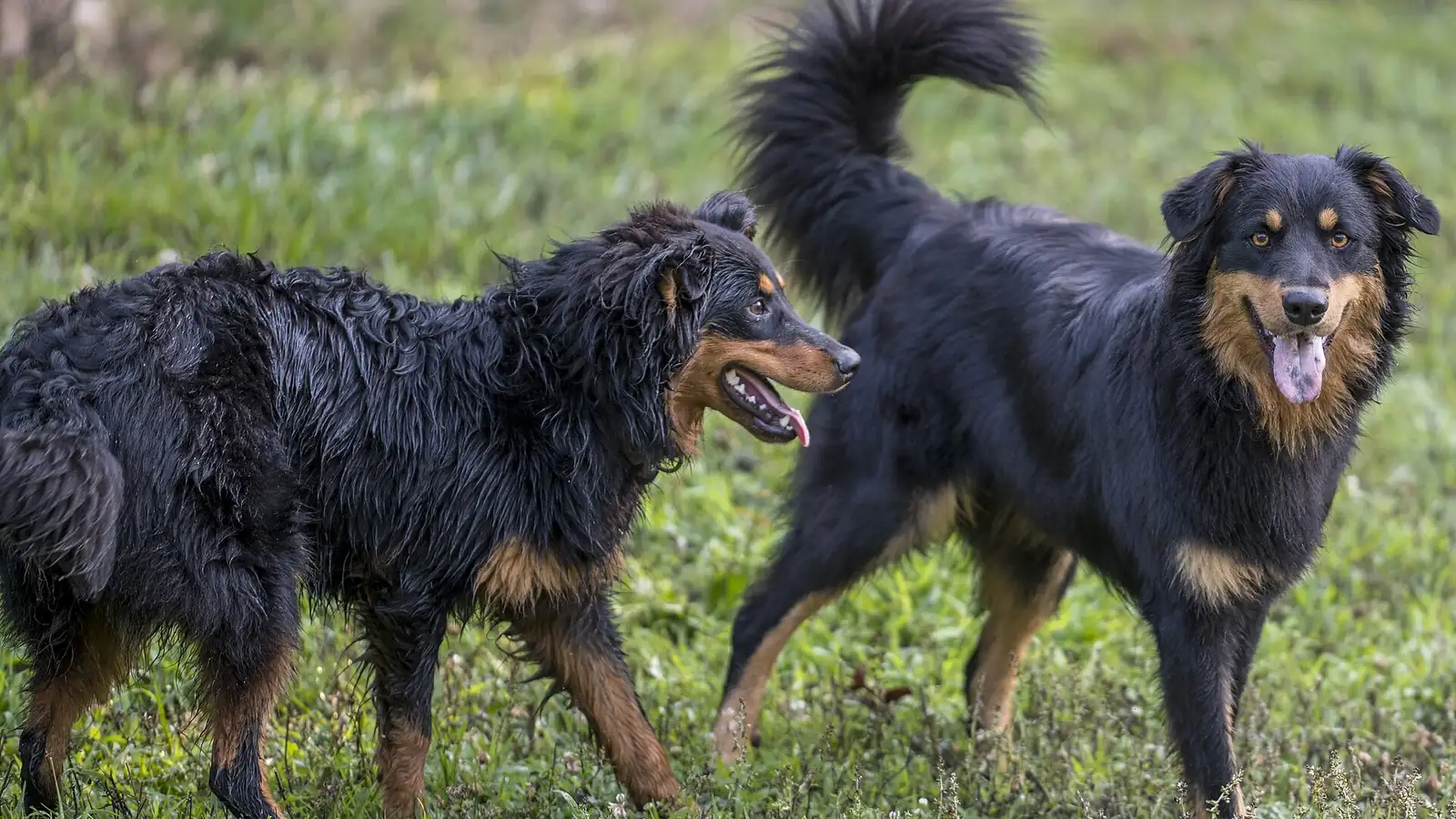

If you searched for a “British Shepherd,” the dog you’re almost certainly looking for is the English Shepherd: a medium-sized, all-purpose farm and herding dog, about 18 to 23 inches tall and 40 to 60 pounds. Despite its name, it’s an American breed, developed on American farms from the shepherds’ dogs that British settlers brought with them, and registered by the United Kennel Club since 1927. It’s loyal, clever, watchful and hard-working, and it’s sometimes still called the Farm Collie.
English Shepherds are rare, and when one turns up at a shelter it is often labeled a Border Collie, an Australian Shepherd or “just a mutt.” Below is what the breed’s registry, its own breed club and veterinary sources actually say about its history, looks, temperament, exercise, grooming, health and costs, how it differs from Aussies, Border Collies, Collies and German Shepherds, and how to adopt one if it suits your life.
English Shepherd quick facts
- Name: English Shepherd. Other historic names, according to the English Shepherd Club (ESC), include “the Old Fashioned Collie, Farm Collie, Farm Shepherd, Black Shepherd, Ring Tailed Shepherd and Ring Necked Shepherd” (ESC breed history).
- Origin: United States. The United Kennel Club (UKC) “is the original registrar of the English Shepherd and has recognized them since 1927” (UKC standard).
- Height: males 19 to 23 inches (20 to 21 preferred), females 18 to 22 inches (19 to 20 preferred) (UKC). The ESC standard allows 18 to 24 inches (ESC standard).
- Weight: males 45 to 60 pounds, females 40 to 50 pounds (UKC); 35 to 65 pounds “in lean and fit condition” in the ESC standard.
- Lifespan: we couldn’t find a published life-expectancy study for the breed. The ESC asks puppy buyers whether they can commit to caring for a dog “for the next 12 – 14 years” (ESC puppy buyer FAQs).
- Energy: high. The UKC calls the breed “energetic, intelligent, very active, agile, courageous and gritty.”
- Grooming: low, apart from heavy seasonal shedding twice a year (ESC).
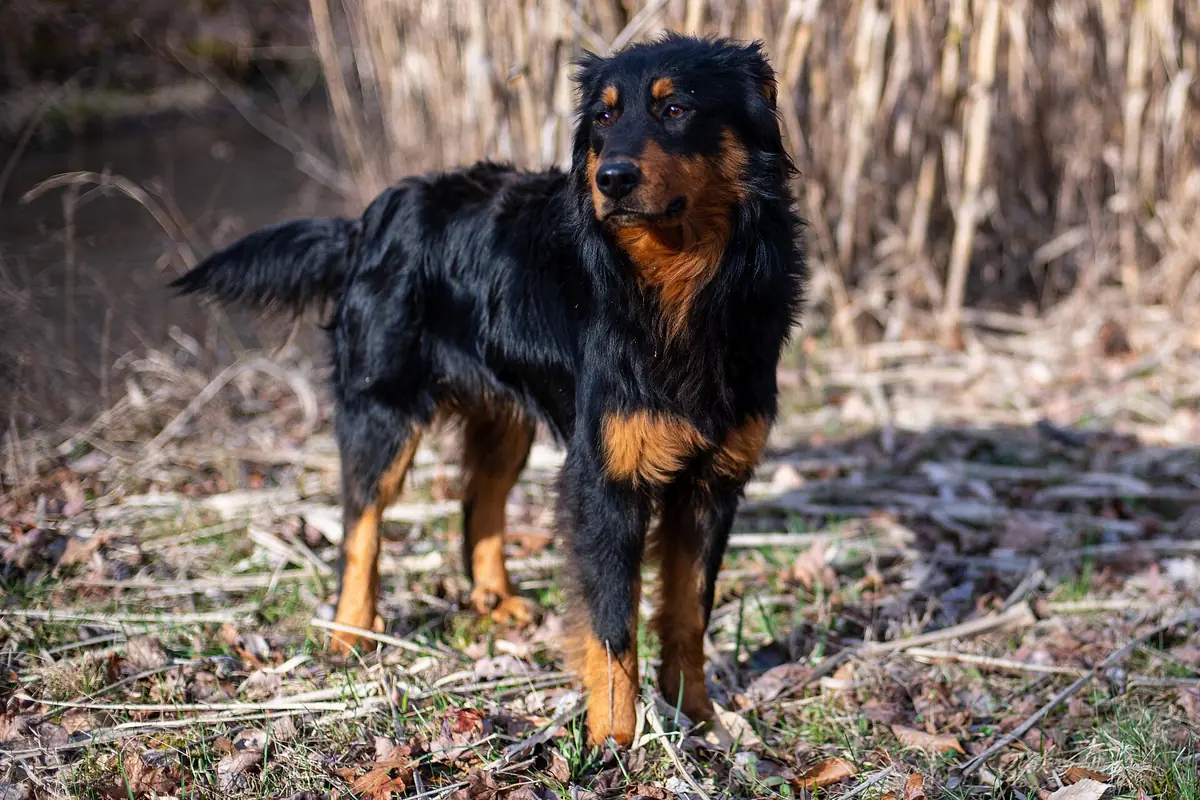
- Colors: black and tan; tricolor (black, tan and white); black and white; sable and white; tan and white. Never merle.
- With kids: traditionally a farm family dog whose jobs included “watching over children” (ESC standard). Supervise with young children, as with any herding dog.
- With other pets: usually fine with dogs it knows, but bossy about “the Rules” with others (more below). Ask about cats dog by dog.
- Home: the ESC says English Shepherds “are not suited for apartment or city living.”
Why “British Shepherd”? The name confusion explained
Three different dogs get tangled up in searches like this one:
- English Shepherd: the American farm dog this page is about. The “English” refers to where its ancestors came from, not where the breed was made. The ESC says English Shepherds “are descendants of the Shepherds’ dogs of England and southern Scotland,” and concludes that “the English Shepherd is truly an American breed” (ESC breed history).
- German Shepherd Dog: a much bigger, different breed. The AKC lists males at 24 to 26 inches and 65 to 90 pounds (AKC), against 19 to 23 inches and 45 to 60 pounds for an English Shepherd male. If you love the German Shepherd, our guides to the blue German Shepherd, the Labrador German Shepherd mix and the shepherd pitbull mix may help.
- Old English Sheepdog: a separate breed again, despite the similar name. Washington State University’s veterinary college, for example, lists “old English sheepdogs” and “English shepherds” as two different breeds on its MDR1 page (WSU).
We couldn’t find a kennel club breed, or a reputable source, that uses “British Shepherd” as the name of a particular dog or crossbreed. So if a seller or a kennel card says “British Shepherd,” ask exactly what they mean.
History: the original all-purpose farm dog
The UKC tells the breed’s early story as legend: “the English Shepherd is a combination of native dogs of the British Isles and the Roman sheep and cattle dog brought to the British Isles by Caesar when he invaded in 55 B.C.” The more solid part comes next: “The English Shepherd was brought to the American colonies by some of the first settlers and followed the development of the United States from east to west,” where it “was highly prized as it was used to herd valuable livestock and to protect the isolated homesteads” (UKC).
The ESC explains what set these dogs apart from their cousins. The same old shepherds’ dogs “also gave rise to modern ‘show’ Collies and Border Collies,” but English Shepherds were bred “primarily for an upright, loose-eyed herding style, and by the continuous selection for all-around ability,” including guarding and hunting. “English Shepherds have never been primarily show dogs or trial dogs, but rather practical versatile workers for farmers who were interested in function rather than flash” (ESC breed history).
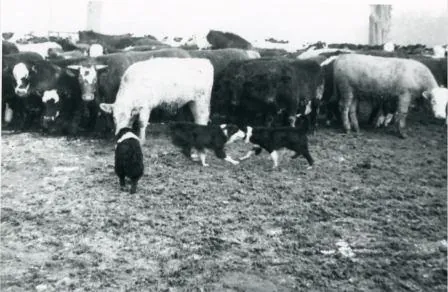

The ESC describes the breed’s traditional jobs as “herding and protecting stock, to dispatching vermin, guarding the home, and watching over children” (ESC standard). A breed-conservation text quoted by the club says these dogs became so widespread and consistent that “they were the archetype farm dog celebrated by the artist Norman Rockwell.” As small family farms declined, the club notes, “many English shepherds have become Search and Rescue dogs and therapy dogs,” and others do “agility, obedience, flyball, nosework, trialing, and tracking.”
Appearance and size
The UKC standard describes “a medium-sized dog of sturdy balance and harmonious proportions, built for speed and maneuverability,” with an “alert face” that “shows intelligence.” (UKC). The ESC adds that English Shepherds are “generally slightly longer than tall, in contrast to the more ‘square’ appearing Australian Shepherd” (ESC).
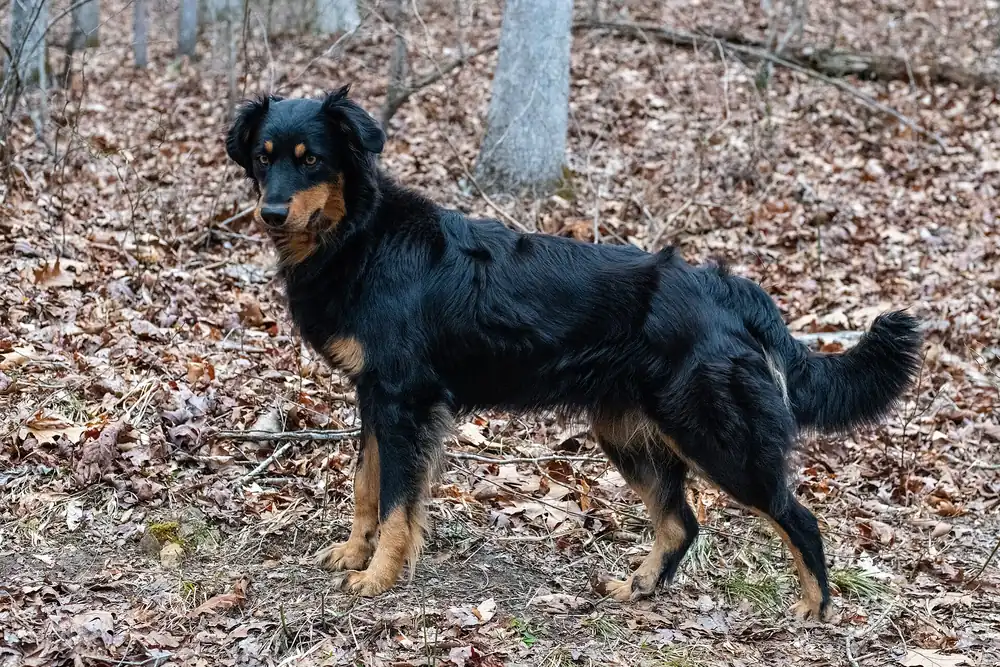

From the UKC standard:
- Eyes: “dark or medium brown,” moderately round, with “a strong, intelligent look.”
- Ears: wide at the base, “folding over approximately ¾ down and laying close to head.” The ESC says “variation in ear set is common and of trivial significance.”
- Tail: moderately long and “plume like.” Natural bobtails of about six to eight inches are acceptable.
- Coat: “thick, glossy, and soft. It may be straight, wavy or curly,” with feathering on the legs and a soft, fine undercoat. “Any evidence of excessive grooming is to be penalized.”
Working lines vary: the ESC says “different lines may vary physically, particularly in size and amount of coat” (ESC puppy buyer FAQs).
Colors and markings
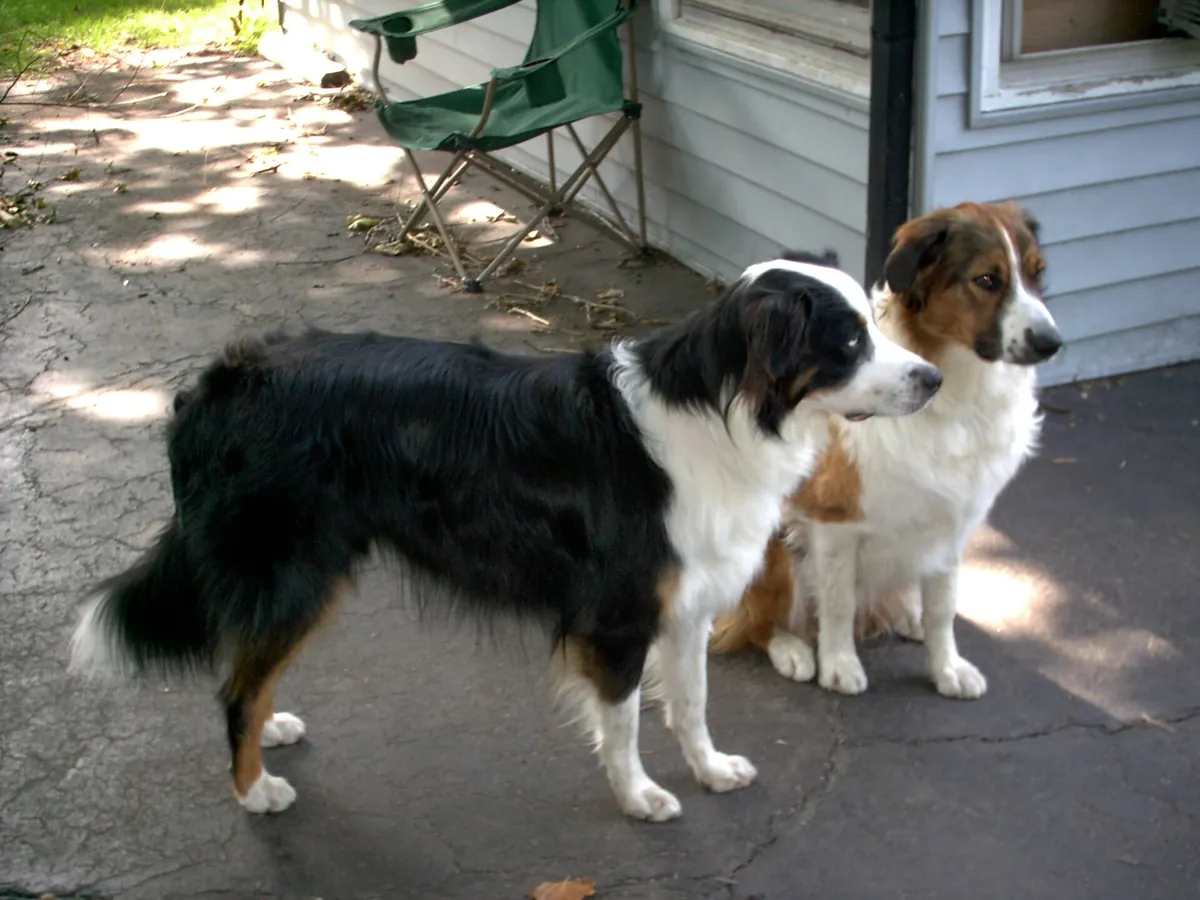
The UKC lists “five predominant color patterns: Black and White; Black and Tan; Black, White and Tan; Sable and White, and Tan & White.” The UKC disqualifies merles and solid white or solid black coats (UKC). The ESC puts it simply: “Merles do not appear in the English shepherd” (ESC standard), and adds that “there is no consistent relationship between markings and either health or temperament.”



Temperament: what living with an English Shepherd is like
The UKC calls the breed “very watchful as guards of the home” and “companionable to their master” (UKC). The ESC’s description for prospective owners paints the clearest picture of daily life (ESC, “English Shepherds Are”):
- Your shadow. “As far as your English Shepherd is concerned, you are the center of the universe.” “Many owners refer to their dogs as ‘English Shadows.’”
- Reserved, not unfriendly. English Shepherds “will hold themselves back until they make up their mind about a newcomer. Once they have accepted someone they will show their love and devotion with abandon.”
- Homebodies. “Most English Shepherds do not tend to stray or wander away from the home,” which helps, because “very few fences are tall enough to contain a motivated English Shepherd.”
- Watchful. A good English Shepherd “should never be aggressive (bite) without provocation,” but “he may demand that unfamiliar visitors ‘halt!’ until you say otherwise.” Early socialization is “critical.”
- Bossy about the rules. English Shepherds have “a strong internal sense of How Things Should Be.” In a dog park, the club jokes, he’ll appoint himself referee.
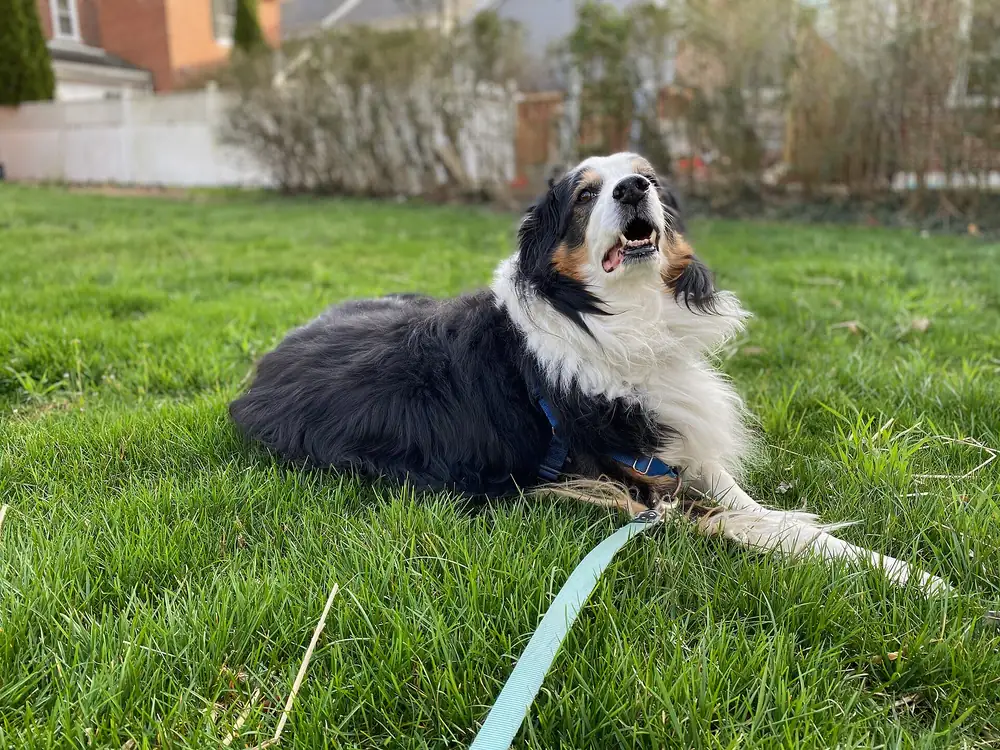
The ESC standard also notes something many herding breeds lack: the English Shepherd “is not obsessive about herding and is capable of resting quietly at his master’s feet when there is no work required” (ESC standard).

With children
Watching over the farm’s children was one of the breed’s traditional jobs. Herding dogs may herd children too, though. The UKC notes the breed’s working style is “strictly low heeling, and very free with the use of their teeth,” which on a farm means nipping at the heels of cattle. Supervise with young grandchildren, teach the dog that running kids aren’t livestock, and look for an adult dog that has already lived calmly around children.
With other dogs, cats and livestock
The ESC says English Shepherds “benefit from playing with other dogs,” usually have “a select group of canine buddies,” and “are not canine extroverts.” A well-raised English Shepherd “can be trusted to not bother livestock” and often develops “a nurturing attitude” toward the farm animals (ESC standard). They were also bred to dispatch vermin, though, so ask each rescue how that particular dog has done with cats. Our guide to introducing a cat and a dog covers the basics.
Exercise needs
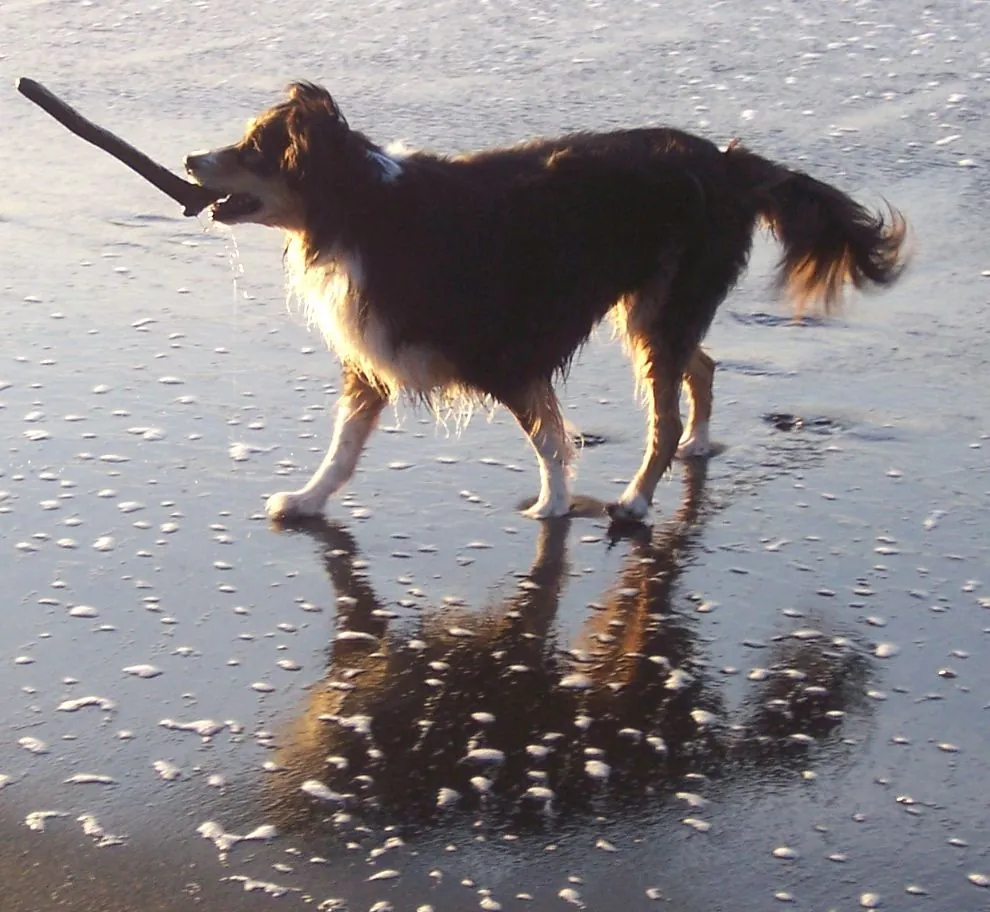
This is a working dog, and the ESC’s main advice is to give it something to do. “Intelligence can be dangerous when it is combined with boredom,” the club warns: a bored dog may take up “chasing cars or bicyclists, guarding your street against the mailman, and rummaging through your garbage.” Its advice: “give your English Shepherd a job to do” (ESC).
Good outlets:
- Long daily walks or hikes, on a leash near roads.
- Fetch, frisbee and hide-and-seek games in a fenced area.
- Real chores: carrying things, “helping” with garden or barn jobs.
- Dog sports the ESC lists for the breed, including agility, obedience and rally, nosework, tracking, herding, barn hunt and therapy work.

Training
English Shepherds learn fast. The ESC says your dog “will be the star of your obedience class,” but is also “continually trying to figure things out for themselves.” It adds that they “thrive in an environment with clear, consistent rules and a confident leader. Lacking those, an English Shepherd just might decide to take over and run things himself” (ESC puppy buyer FAQs).
“Confident leader” doesn’t mean harsh. The American Veterinary Society of Animal Behavior “recommends that only reward-based training methods are used for all dog training, including the treatment of behavior problems” (AVSAB). With this breed, that looks like:
- Clear house rules from day one, so the dog doesn’t write its own.
- Socialization with visitors, delivery drivers and the neighborhood, so the dog learns who is and isn’t a threat.
- A reliable “leave it” and recall, practiced on a long line.
- An “off switch”: teach the dog to settle on a mat while you read or watch TV.
Grooming
Easy for most of the year, hairy twice a year. The ESC describes a double coat with “a soft dense undercoat and a silky outer coat” that has a “teflon” quality: “matts and tangles are uncommon, and dirt falls out leaving the coat clean — but your floor dirty.” “Many dogs shed heavily twice a year while blowing their undercoat. Apart from these seasonal sheds, grooming requirements are minimal” (ESC). The ESC standard adds that “a correct English Shepherd coat should require minimal grooming.”
In practice: a weekly brush, daily brushing during a coat blow, nail trims, ear checks and tooth brushing with a dog toothpaste. With that much seasonal shedding, they aren’t a low-allergy choice.
Diet basics
There is no special English Shepherd diet. Feed a complete, balanced food suited to your dog’s age and activity, and keep it lean: the ESC standard describes ideal weight in “lean and fit condition.” Working farm dogs burn far more than a retired companion, so a dog moving from a farm to a quiet home may need less food. Ask your vet what a healthy weight looks like for your dog.
Health
The breed club and veterinary sources we could verify mention a small number of specific concerns. We couldn’t find published, breed-specific life-expectancy or disease-rate studies, so we haven’t listed any.
MDR1 drug sensitivity
Some dogs carry a mutation in the MDR1 gene that can cause “severe and life-threatening reactions to some common drugs.” Washington State University’s veterinary college, which runs the MDR1 test, says the mutation has been found in English shepherds, and lists an approximate frequency of 15% for the breed. “The only way to know if an individual dog has the mutant MDR1 gene is to have the dog tested” (WSU College of Veterinary Medicine). If you adopt an English Shepherd or a herding mix, ask your vet about MDR1 testing, and make sure every vet who treats your dog knows the result.
Hip dysplasia
“Hip dysplasia does occur in English Shepherds, and xrays are the only sure way to determine whether parents are affected,” says the ESC, which recommends that breeding dogs be certified clear “by either OFA, PennHIP, or a licensed veterinarian” (ESC puppy buyer FAQs). If an older dog seems stiff getting up or reluctant on stairs, ask your vet to check its hips.
What to ask a breeder about
The ESC tells puppy buyers to ask for written health results, looking for “OFA/PennHip scores, MDR1 status, CEA/PRA screening” (CEA and PRA are inherited eye conditions). “If the breeder refuses or only offers verbal evidence this is a huge red flag” (ESC, Choosing a Breeder). The club also collects owner health reports through its health questionnaire to track problems in the breed.
For an older English Shepherd, our senior dog care guide covers routine care as dogs age.
English Shepherd puppies
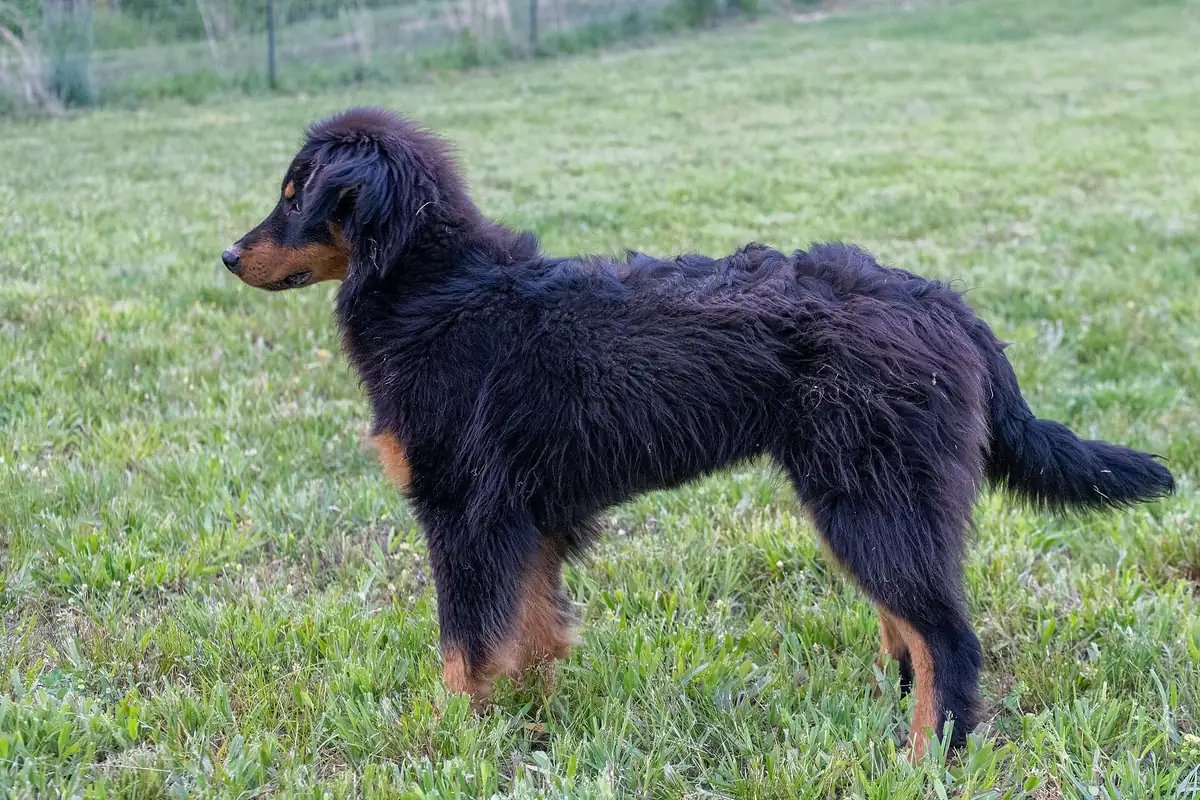

English Shepherds are rare, and the ESC notes that “in many areas of the country there are no English Shepherd breeders within a day’s drive.” The club keeps a breeder directory, and the breeders who list litters with it have signed its breeder requirements. It advises choosing a line whose temperament fits how you live, because lines “may be more or less gentle, active, and outgoing” (ESC puppy buyer FAQs).
From the ESC’s Choosing a Breeder checklist:
- How old are the parents? The ESC recommends dogs be at least 2 years old before breeding.
- What health screening have the parents had, and can I have copies?
- Will you take the dog back or help rehome it at any point? Is that in the contract?
- Puppies should be at least 8 weeks old before going home, and well socialized with people.
English Shepherd vs Australian Shepherd vs Border Collie vs Collie
All four come from the same broad family of British farm collies, and shelters often mix them up. Here’s how they compare using registry figures.
| English Shepherd | Australian Shepherd | Border Collie | Collie (Rough/Smooth) | |
|---|---|---|---|---|
| Height | 19-23 in male, 18-22 in female (UKC) | 20-23 in male, 18-21 in female (AKC) | 19-22 in male, 18-21 in female (AKC) | 24-26 in male, 22-24 in female (AKC) |
| Weight | 45-60 lb male, 40-50 lb female (UKC) | 50-65 lb male, 40-55 lb female (AKC) | 30-55 lb (AKC) | 60-75 lb male, 50-65 lb female (AKC) |
| Life expectancy | No published figure; ESC plans for 12-14 years | 12-15 years (AKC) | 12-15 years (AKC) | 12-14 years (AKC) |
| Where developed | United States, from British farm dogs | ”A European breed perfected in California by way of Australia” (AKC) | Northern England and Scotland (UKC) | From the same British shepherds’ dogs (ESC) |
| Herding style | Upright, loose-eyed; all-round farm dog (ESC) | Ranch and rodeo stock dog (AKC) | Known for its intense “eye” (UKC) | Shaped by 20th-century show demand (ESC) |
| Merle coat? | Never (ESC, UKC) | Yes, blue and red merle (UKC) | Yes, among less common colors (UKC) | Yes, blue merle (UKC) |
| Main registries | UKC (since 1927) and the ESC’s own registry | AKC and UKC | AKC and UKC | AKC and UKC |
Sources: UKC English Shepherd, UKC Australian Shepherd, UKC Border Collie, UKC Collie, AKC pages for the Australian Shepherd, Border Collie and Collie, and the ESC breed history and standard.
What actually tells them apart:
- English Shepherd vs Australian Shepherd: the ESC says the English Shepherd is “slightly longer than tall, in contrast to the more ‘square’ appearing Australian Shepherd,” and never merle. Eye color is another clue: the UKC Australian Shepherd standard allows brown, blue or amber eyes, while the English Shepherd standard calls for “dark or medium brown.” The Aussiedoodle and the Aussie-Bernese mix are two popular Aussie crosses.
- English Shepherd vs Border Collie: Border Collies are famous for their crouching, staring “eye.” English Shepherds work “in an upright, loose-eyed manner rather than crouching and showing strong eye” and are bred to guard and hunt too (ESC standard).
- English Shepherd vs Collie: the modern Collie is bigger, and the ESC says show demand in the 20th century pulled Collies toward the show ring while English Shepherds stayed farm dogs. Its smaller cousin, the Sheltie, comes from Scotland’s Shetland Islands.
- Other herding breeds: for working shepherds from mainland Europe, see our Dutch Shepherd and Belgian Malinois guides, and for a cattle dog, our Blue Heeler guide.
Is an English Shepherd right for you? A checklist for adopters over 50
Plenty of active older adults are a great match for this breed, especially those with land, animals or a love of long walks.
An English Shepherd may be a great fit if:
- You want a devoted companion who will follow you from room to room.
- You walk, hike, garden or farm most days and would like a helper.
- You have a house with a yard, or acreage, rather than an apartment.
- You enjoy training and are happy to set calm, consistent rules.
- You can handle a strong, 40- to 60-pound dog on a leash.
Think it over carefully if:
- You live in an apartment or a busy city; the ESC says the breed isn’t suited to it.
- You’re away from home most of the day.
- You want a dog who loves every stranger and every dog at the dog park.
- You have small grandchildren visiting often and can’t supervise closely.
- Your balance or grip would struggle with a quick dog who reacts to a delivery truck.
If the second list sounds more like you, choosing a different dog is a kind and sensible decision. Our guides to the best dog breeds for seniors and medium-sized dogs are good places to keep looking.

Costs to plan for
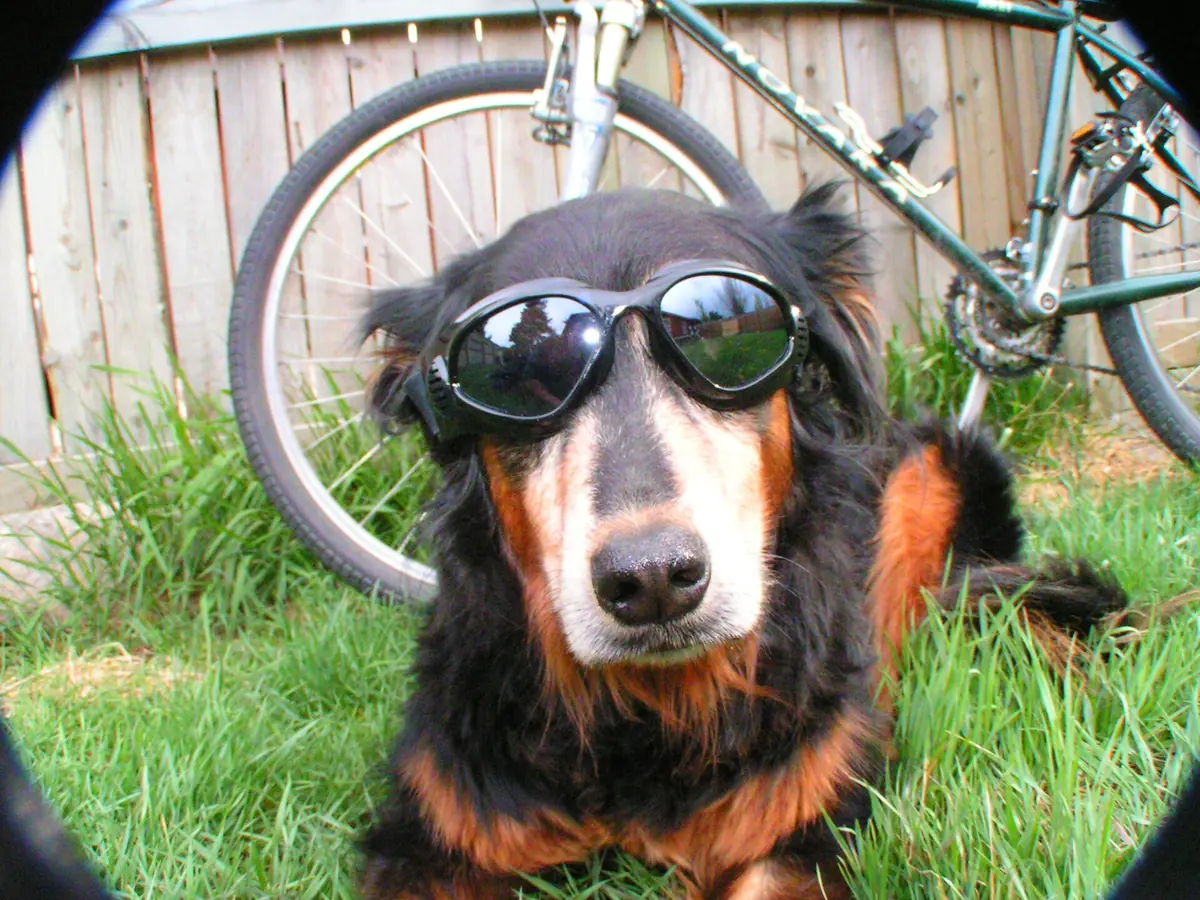
We couldn’t find a reliable, published price for English Shepherd puppies, so we won’t quote one; ask breeders directly. The ESC reminds buyers that “the money you spend purchasing a puppy is just the first of many expenditures,” including food, vet care, equipment, license fees, “fencing if you don’t already have it” and obedience classes (ESC puppy buyer FAQs). For any dog, the ASPCA’s 2021 estimates were about $1,030 in one-time costs and $1,391 a year after that (ASPCA). Those are averages for all dogs, not English Shepherds.
Budget extra for an MDR1 test, training classes, a good harness and long line, and an emergency fund.
Adopting an English Shepherd
Shelter labels and the “herding mix” reality check
If you’re looking in shelters, know that English Shepherds are easy to miss. The ESC’s rescue page says English Shepherds “are often misidentified as border collies, Australian shepherds, Rottweiler mixes, collies, and just plain mutts when they end up in pounds and shelters,” partly because they are bred “for function, rather than for a specific look” (ESC rescue).
Shelter breed labels are educated guesses in general. One study comparing adoption-agency breed labels with DNA results found that only 25% of dogs (4 of 16) had DNA evidence of the breed the agency named as predominant (Voith et al., 2009, DOI). So a black and tan “Border Collie mix” or “Aussie mix” at your local shelter may be an English Shepherd, or may not. Either way, meet the dog in front of you; its energy and manners matter more than the kennel card.
Where to look
- National English Shepherd Rescue (NESR). The ESC describes NESR as “a non-profit organization” that “works to help place English Shepherds who need new homes,” and also works with other rescues and shelters “to place dogs of the English Shepherd type.” NESR and the ESC are separate organizations. You’ll find NESR’s contact details on the ESC rescue page.
- The ESC’s available litters and adults page, which lists approved litters and points to NESR for dogs and puppies available for adoption. It notes that “many breeders have waiting lists.”
- Local shelters and herding-breed rescues. Search “English Shepherd,” “Farm Collie,” “Border Collie mix” and “Australian Shepherd mix,” and look for the black and tan or sable and white dogs with folded ears and no merle.
Questions to ask the rescue
- How does this dog behave with visitors and strangers coming to the house?
- Has it lived with cats, chickens or other small animals? How did that go?
- How is it with children, and does it try to herd or nip at heels?
- How much exercise does it get now, and what happens when it doesn’t get enough?
- Does it walk nicely on a leash? Has it ever climbed a fence?
- Has it had an MDR1 test, and are there any hip or eye issues in its records?
- Is there a foster-to-adopt period, and what happens if it doesn’t work out?
Our list of 9 questions to ask when adopting a dog covers the general ones, and our guide to senior pet adoption explains why an adult or senior dog can be the easiest match of all.

A backup plan for a one-person dog
The ESC asks puppy buyers to think about caring for a dog for 12 to 14 years, and an English Shepherd bonds hard with its person. That loyalty is a gift, and it’s also why it’s worth naming a backup caregiver now: someone your dog already knows and trusts, who has agreed to step in if you ever can’t care for them. Our guide What Happens to Your Dog When You Die explains how to set that up, and our free backup plan helps you write it down.
Frequently Asked Questions
Is a British Shepherd the same as an English Shepherd?
When people search for a British Shepherd, the dog they almost always mean is the English Shepherd, a farm and herding breed. Despite the name, it is an American breed. The English Shepherd Club says its ancestors were the shepherds’ dogs of England and southern Scotland, but the breed itself was developed on American farms, and the United Kennel Club has registered it since 1927. In the club’s own words, the English Shepherd “is truly an American breed.”
What does an English Shepherd look like?
A medium-sized, athletic farm dog with a thick, glossy, soft coat that can be straight, wavy or curly, a plume-like tail and ears that fold over. The United Kennel Club standard lists five main color patterns: black and white; black and tan; black, white and tan (tricolor); sable and white; and tan and white. Unlike Australian Shepherds and many Border Collies, English Shepherds are never merle; the English Shepherd Club says merle does not appear in the breed.
How much does a purebred English Shepherd cost?
We couldn’t find a reliable published price for English Shepherd puppies, so we won’t quote one. Ask breeders on the English Shepherd Club’s breeder list directly. For the cost of keeping any dog, the ASPCA’s 2021 estimates were about $1,030 in first-time costs and $1,391 a year after that. Adopting from National English Shepherd Rescue or a shelter is another route.
Is an English Shepherd the same as an Australian Shepherd or a Border Collie?
No, though they are cousins. The English Shepherd Club says the same old British shepherds’ dogs also gave rise to modern show Collies and Border Collies, and the AKC calls the Australian Shepherd a European breed perfected in California. English Shepherds work stock in an upright, loose-eyed way, rather than with a Border Collie’s intense crouching stare, are slightly longer than tall rather than square like an Aussie, and never come in merle.
Are English Shepherds good family dogs?
They can be wonderful ones for the right family. The English Shepherd Club describes them as gentle and devoted with their owners, bold guardians of the home, and dogs that traditionally watched over children. They are also very attached (owners call them English Shadows), reserved with strangers, and bossy about household rules. They need daily exercise, a job to do and early socialization, and the club says they are not suited to apartment or city living.
How big do English Shepherds get?
Medium-sized. The United Kennel Club standard calls for males of 19 to 23 inches and 45 to 60 pounds, and females of 18 to 22 inches and 40 to 50 pounds. The English Shepherd Club’s own standard is a little broader, at 18 to 24 inches and 35 to 65 pounds, because working lines vary.
Do English Shepherds shed?
Yes. The English Shepherd Club says they have a double coat with a soft, dense undercoat, and many shed heavily twice a year when they blow that undercoat. In between, grooming needs are minimal, because the silky outer coat rarely mats and dirt tends to fall out of it.
Before you go
The English Shepherd is the quiet hero of the American farm: loyal, clever and watchful. In a home with space, daily work or play and calm, consistent rules, few dogs make a more devoted partner. If that isn’t your life right now, a calmer adult dog matched to you by a good rescue may be the kinder choice. Whatever dog you bring home, make a plan so they’ll always have someone.
Sources
- United Kennel Club breed standards: English Shepherd (history, size, coat, colors, temperament; revised May 1, 2017), Australian Shepherd, Border Collie and Collie
- English Shepherd Club: Breed history, ESC breed standard, English Shepherds Are, Puppy buyer FAQs, Choosing a breeder, Health questionnaire, Rescue and Available litters and adults
- American Kennel Club breed pages: Australian Shepherd, Border Collie, Collie and German Shepherd Dog
- Washington State University College of Veterinary Medicine, Breeds commonly affected by MDR1 mutation
- American Veterinary Society of Animal Behavior, Humane dog training position statement (2021)
- Voith VL, Ingram E, Mitsouras K, Irizarry K (2009). Comparison of adoption agency breed identification and DNA breed identification of dogs. Journal of Applied Animal Welfare Science 12(3):253-62. PubMed 20183478, DOI 10.1080/10888700902956151
- ASPCA, Cutting pet care costs (2021 update)
- Photos: Wikimedia Commons contributors, credited under each image. Full license records are kept in this site’s image-credits file.