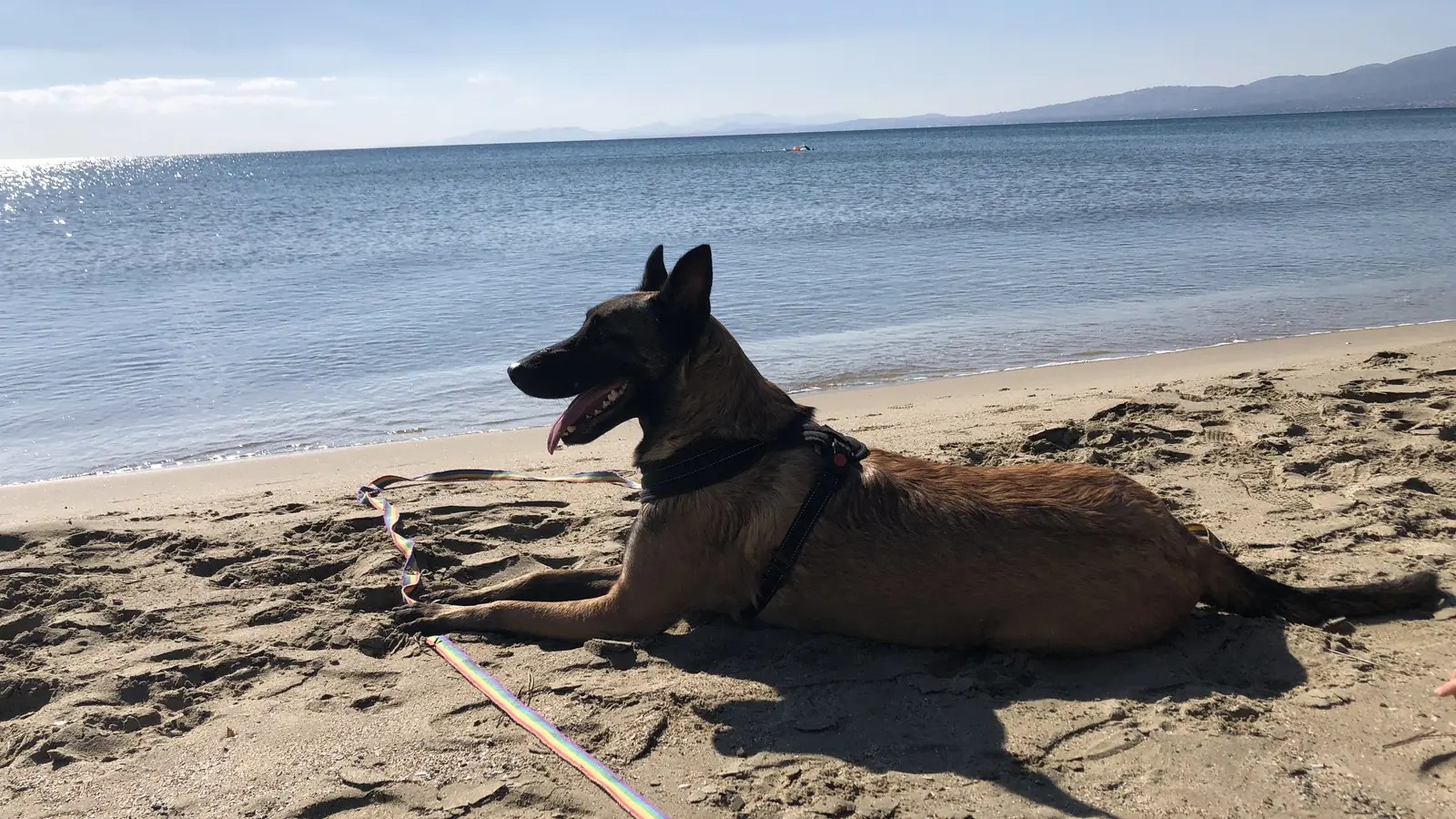

The Belgian Malinois (say MAL-in-wah) is a medium-large Belgian herding dog: lean, short-coated, fawn to mahogany with a black mask, and one of the smartest, most driven working dogs in the world. The AKC calls it “a world-class worker who forges an unbreakable bond with his human partner.” It’s a wonderful companion for the right, very active person, and a hard fit for almost everyone else.
That’s not us trying to scare you off. It’s what the breed’s own parent club says on its home page: “This is NOT your typical pet dog.” Below is what the AKC, the American Belgian Malinois Club, the international breed standard and veterinary research actually say about size, temperament, health and care, plus an honest checklist for deciding whether a Malinois fits your life and how to adopt one if it does.
At a glance
- Size: males 24 to 26 inches and 60 to 80 pounds; females 22 to 24 inches and 40 to 60 pounds (AKC Belgian Malinois).
- Life expectancy: the AKC lists 14 to 16 years; the American Belgian Malinois Club FAQ says an average of 10 to 12; a large UK study found a median of 12 years (McMillan et al., 2024).
- Coat and colors: short, straight, weather-resistant coat with a dense undercoat; rich fawn to mahogany with black-tipped hairs, a black mask and black ears (AKC breed standard).
- Energy: very high. The AKC rates it 4 out of 5 for energy and mental stimulation needs, and says “daily walks are not enough.”
- Trainability: 5 out of 5 on the AKC scale, the top score.
- Grooming: easy. The AKC rates grooming 2 out of 5 and shedding 3 out of 5, with two heavier sheds a year.
- With kids and other pets: 3 out of 5 for young children (with supervision) and for other dogs, per the AKC. Strong prey drive.
- AKC group: Herding Group; a separate AKC breed since 1959.
- Health screening the breed club requires of breeders: hips, elbows and eyes (ABMC health statement).
- Best fit: an experienced, very active owner who wants a training partner and is home a lot.
History: from the sheep pastures of Malines
The Malinois is named after Malines (Mechelen in Dutch), a city in Belgium where the short-haired type was developed in the late 1800s (AKC history). In 1891 the Belgian Shepherd Dog Club was founded in Brussels, and a veterinary professor, A. Reul of the Cureghem veterinary school, led the effort to sort Belgium’s farm herding dogs into a breed. The international breed standard calls him “the real pioneer and founder of the breed,” and a first standard was written in 1892 (FCI standard No. 15).
Those Belgian herders came in different coats, and coat is still how the four types are told apart:
- Malinois: short-haired, fawn with a black overlay and black mask.
- Tervuren (Tervueren): long-haired, fawn or gray with a black overlay.
- Groenendael: long-haired and solid black (called the Belgian Sheepdog by the AKC).
- Laekenois: rough, wiry-haired fawn.
The FCI, which sets standards for most of the world outside the US, still treats all four as one breed, the Belgian Shepherd Dog (FCI), and so does the United Kennel Club (UKC). The American Kennel Club splits them into separate breeds. According to the American Belgian Malinois Club, the first two Malinois were registered with the AKC in 1911, and in 1959 the AKC gave each variety separate breed status (ABMC history). The Laekenois became the fourth AKC breed in 2020 (AKC Belgian Laekenois).
Today the AKC lists the Malinois at 33rd of 210 breeds in its popularity ranking (AKC).

Appearance and size
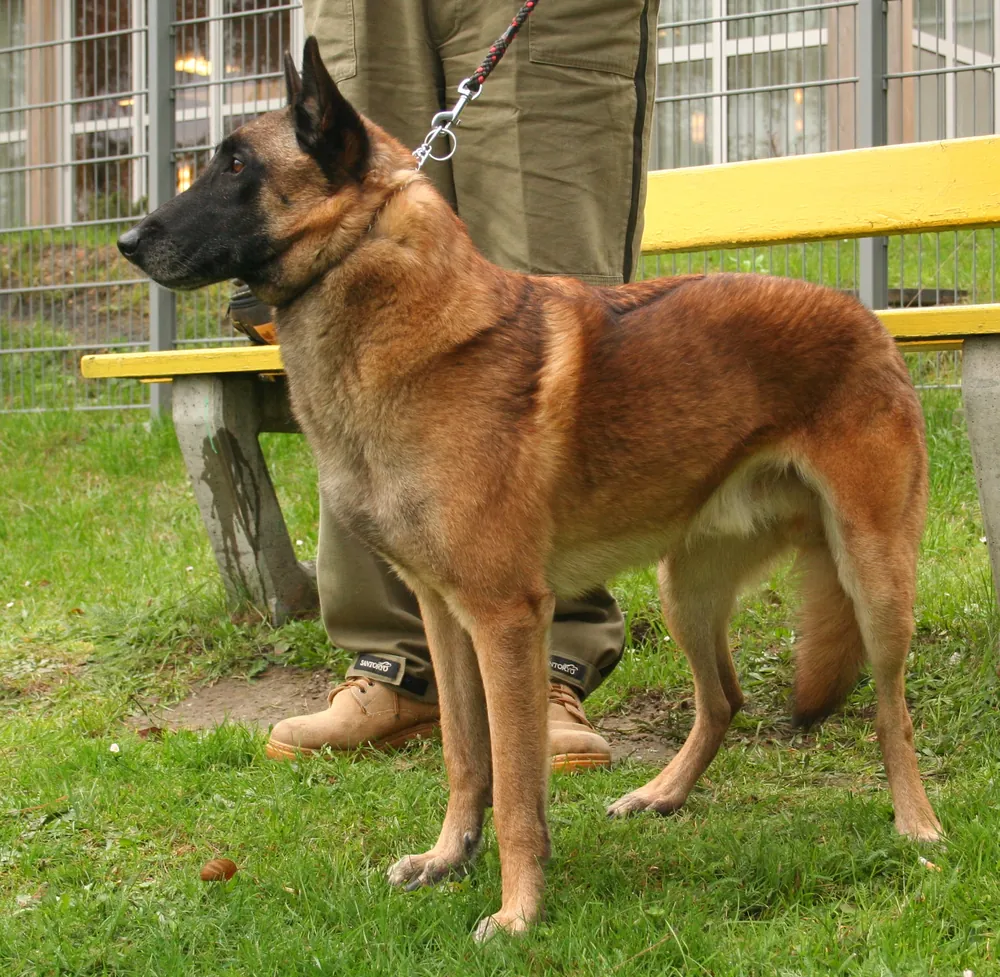
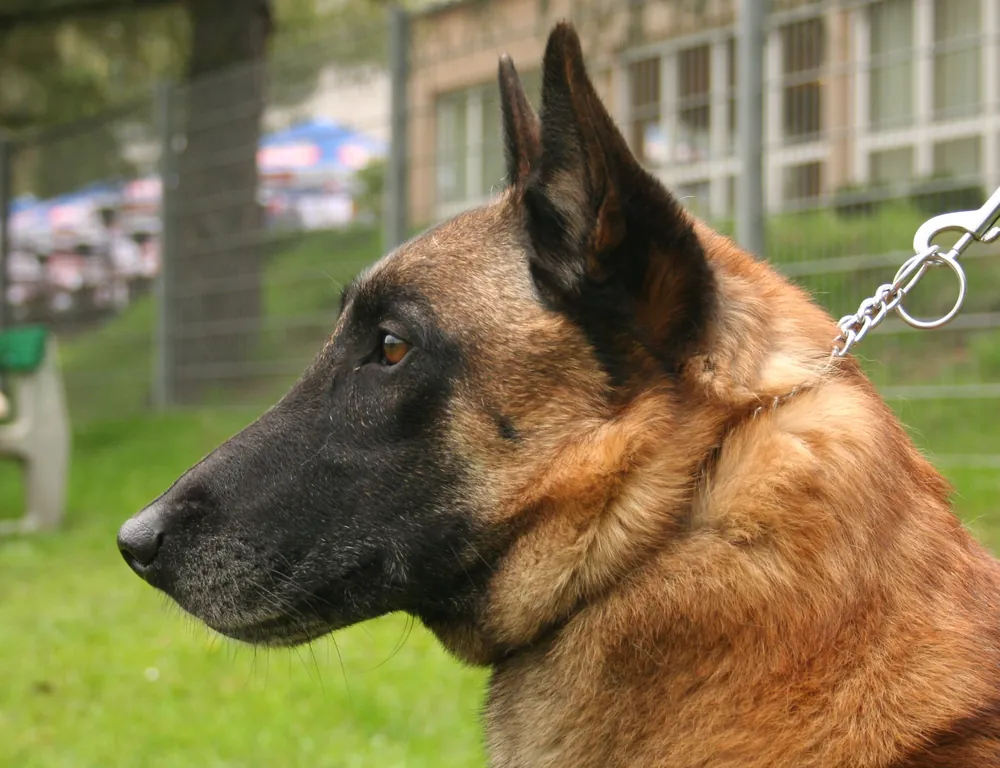
The AKC describes Malinois as “squarely built, proud, and alert herders” with “black ears and mask” that “accentuate bright, questioning eyes the color of dark Belgian chocolate.” The breed standard asks for erect, triangular ears, a coat that is “comparatively short, straight, hard enough to be weather resistant, with dense undercoat,” and a coat color of “rich fawn to mahogany, with black tips on the hairs giving an overlay appearance.” It also says the blackening “must not appear as patched or brindled.” A small white spot on the chest and white toe tips are allowed (AKC standard).
| Males | Females | |
|---|---|---|
| Height (AKC) | 24 to 26 in | 22 to 24 in |
| Weight (AKC) | 60 to 80 lb | 40 to 60 lb |
| Height (FCI ideal) | about 62 cm (24.4 in) | about 58 cm (22.8 in) |
| Weight (FCI) | about 25 to 30 kg (55 to 66 lb) | about 20 to 25 kg (44 to 55 lb) |
Sources: AKC, FCI standard No. 15. European-bred dogs are often described against the FCI figures, which run a little lighter.

Belgian Malinois vs German Shepherd, Dutch Shepherd and the other Belgian breeds
People mix these dogs up constantly, in shelters and on the street. Here’s how they compare using the AKC’s published figures and its 1 to 5 trait ratings (5 = most).
| Belgian Malinois | German Shepherd | Dutch Shepherd | Belgian Tervuren | Belgian Sheepdog (Groenendael) | Belgian Laekenois | |
|---|---|---|---|---|---|---|
| Height | M 24-26 in, F 22-24 in | M 24-26 in, F 22-24 in | 21.5-24.5 in | M 24-26 in, F 22-24 in | M 24-26 in, F 22-24 in | M 24-26 in, F 22-24 in |
| Weight | M 60-80 lb, F 40-60 lb | M 65-90 lb, F 50-70 lb | 42-75 lb | M 55-75 lb, F 45-60 lb | M 55-75 lb, F 45-60 lb | 55-65 lb |
| AKC life expectancy | 14-16 yrs | 12-14 yrs | 11-14 yrs | 12-14 yrs | 12-14 yrs | 10-12 yrs |
| Coat | Short, smooth | Medium, double | Short, double (AKC page) | Long, double | Long, double, black | Rough, wiry |
| Energy | 4 | 5 | 5 | 4 | 4 | 4 |
| Trainability | 5 | 5 | 5 | 5 | 5 | 5 |
| Affectionate with family | 3 | 5 | 5 | 3 | 3 | 3 |
| Good with young children | 3 | 5 | 3 | 3 | 3 | 3 |
| Good with other dogs | 3 | 3 | 3 | 3 | 3 | 3 |
| Watchdog / protective | 4 | 5 | 5 | 4 | 4 | 4 |
| Shedding | 3 | 4 | 3 | 3 | 3 | 3 |
| AKC status | Herding Group, 1959 | Herding Group, 1908 | Miscellaneous Class | Herding Group, 1959 | Herding Group, 1912 | Herding Group, 2020 |
Sources: AKC breed pages for the Belgian Malinois, German Shepherd Dog, Dutch Shepherd, Belgian Tervuren, Belgian Sheepdog and Belgian Laekenois.
A few practical differences:
- Malinois vs German Shepherd: the AKC says the Malinois “bears a passing resemblance to the German Shepherd Dog but has a different head, and is leggier and finer boned.” It’s lighter, with a shorter coat that sheds a bit less. Our guides to the Blue German Shepherd and the Labrador German Shepherd mix cover the German Shepherd side.
- Malinois vs Dutch Shepherd: similar jobs and energy, but the Dutch Shepherd’s standard colors are gold or silver brindle, and brindle isn’t allowed in a Malinois. See our Dutch Shepherd guide.
- Malinois vs Tervuren and Groenendael: same build and size range; the difference is the coat. The long-coated Belgian Tervuren needs much more brushing.
Temperament: what living with a Malinois is like
The AKC breed standard describes the Malinois as “alert, intelligent, inquisitive and confident, showing neither fear nor aggression,” “energetic, ready for action, yet highly responsive to his owner’s direction,” and “firmly loyal to those he loves but may be indifferent with strangers” (AKC standard). The FCI standard calls it “bursting with energy, and always ready to leap into action” (FCI).
What that means day to day:
- Your shadow. The AKC calls the Malinois a “people-oriented dog” and says “to deny a Mal activity and the pleasure of your company is to deprive him of his very reasons for being.” It isn’t a dog to leave alone all day. The AKC says Malinois “should not be left alone for extended periods of time” (AKC: Is the Malinois right for you?).
- A job, or it will find one. The breed club warns that without intensive, long-term training, “Malinois will create their own activities – and those activities can be destructive,” and that “an underutilized dog is a frustrated dog” (ABMC).
- Chasing and herding. The AKC notes a high prey drive and strong interest in moving objects, which “can lead to chasing children, vehicles, or other animals,” and should be directed into acceptable activities through training. The standard even notes “a marked tendency to move in a circle rather than a straight line,” a herding habit.
- Watchful with strangers. The AKC rates the Malinois 4 out of 5 as a watchdog and 3 out of 5 for openness to strangers. Many are polite but reserved with visitors.
Are Belgian Malinois good family dogs?
They can be, in the right family. The American Belgian Malinois Club says “Malinois are good with children and other animals when properly introduced or raised with them. However, this dog can also be protective, territorial, possessive, and jealous” (ABMC). The AKC rates the breed 3 out of 5 with young children (“with supervision”) and says Mals “would fare best in families with older, responsible kids” (AKC).
For grandparents, the practical point is this: a quick, strong dog with a herding instinct may nip at or chase running children. Supervise visits, give the dog a quiet place to retreat, and teach calm greetings early.
Exercise needs
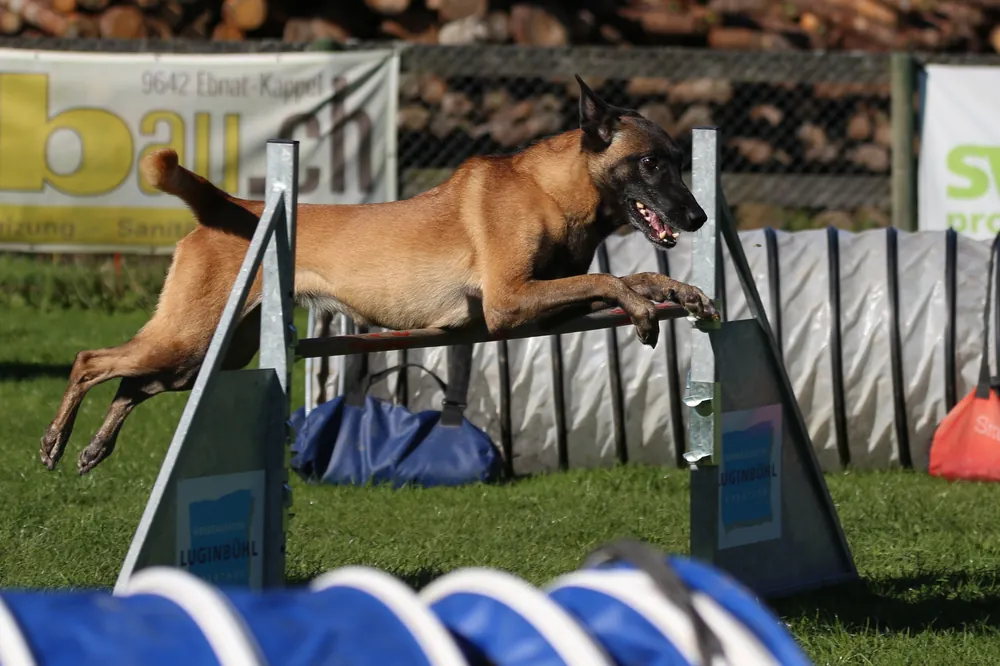
This is the part people underestimate most. The AKC is blunt: “This is not a dog who can be left in the backyard, and daily walks are not enough, either. Exercise, and plenty of it, preferably side by side with his owner, is paramount to the breed’s happiness.” It adds that Malinois “make great running, hiking, and biking companions, and they excel at agility, tracking, herding, obedience, and Schutzhund (protection) competitions” (AKC).
The breed club puts it even more vividly: “Daily walks will not satisfy him unless you are an avid runner who jogs 5 miles a day with your dog! A fenced yard is necessary” (ABMC: Is the Malinois right for you?).
Neither the AKC nor the club sets an exact number of hours, and you’ll see wildly different figures online. A better question is: will this dog get hard physical exercise plus real brain work every day? Good outlets include:
- Running, hiking or bike-jogging (once fully grown, and with your vet’s OK).
- A dog sport: agility, tracking, nosework, obedience, herding or dock diving.
- Fetch and flirt-pole games in a fenced area.
- Short daily training sessions and puzzle feeders.

Training
The Malinois earns the AKC’s top score for trainability, and the breed club says first-time Malinois owners are often “amazed and delighted at how quickly these dogs learn and how sensitive they are to corrections.” But it also says the breed “does not do well with poor or insufficient training” (ABMC FAQ). A dog this smart learns bad habits just as fast as good ones.
The AKC recommends “frequent, consistent training sessions rooted in positive reinforcement” and calls early socialization and obedience training “musts” (AKC). What helps:
- Start on day one, puppy or adult, with short, upbeat sessions using food and toys.
- Teach an “off switch.” Practice settling on a mat, and reward calm behavior, not just action.
- Channel the chase. Tug and fetch games with clear rules give the prey drive a safe outlet.
- Leash manners early. A 60-pound dog that lunges at a squirrel is a real fall risk. Ask a trainer about equipment that suits you.
- Get help. A certified trainer who uses reward-based methods and knows working breeds is worth every penny. Be wary of anyone offering “protection training” for a family pet.

Police and military work
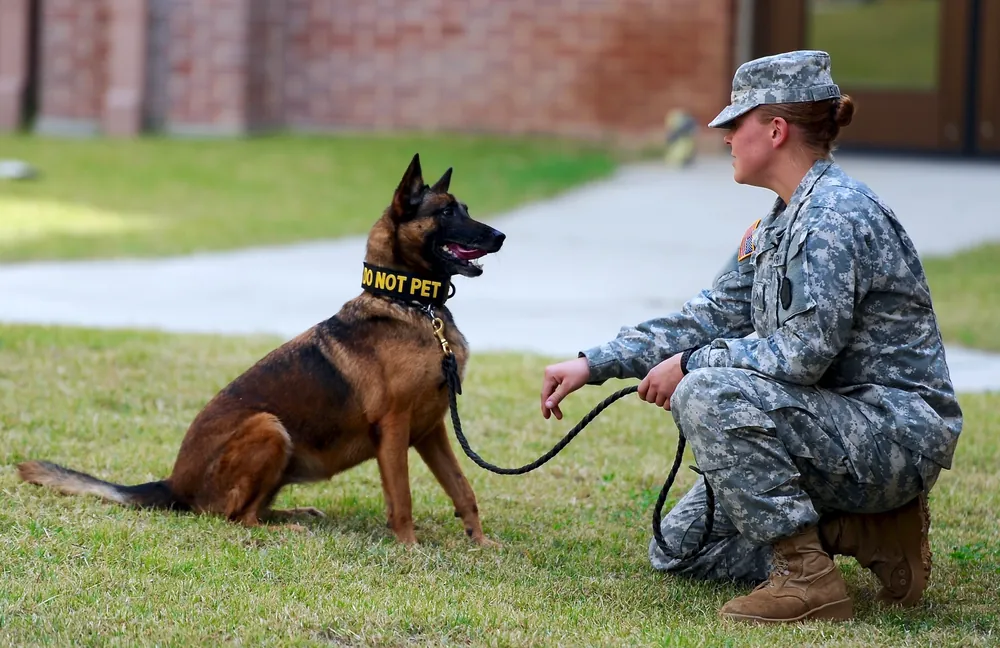
You’ve probably seen Malinois in police cars and military units. The AKC says “police commonly use Belgian Malinois, German Shepherd Dogs, Bloodhounds, Dutch Shepherds, and Labrador Retrievers,” and that herding breeds such as the Malinois, German Shepherd and Dutch Shepherd are often picked for patrol and apprehension work (AKC: What do police dogs do?). The US Department of Defense’s Military Working Dog Breeding Program at Lackland Air Force Base breeds only Belgian Malinois, because the breed “tends to make outstanding working dogs” (DVIDS / American Forces Press Service). A Malinois named Cairo served with SEAL Team Six in the 2011 raid on Osama bin Laden’s compound (AKC).
Those dogs are impressive because of years of daily, professional training. The breed club cautions that what you see on TV and in videos is “the result of lengthy, intense and constant training. Malinois are bred and born to perform most any task; they are not bred to be a couch potato” (ABMC). Retired military working dogs, many of them Malinois, can sometimes be adopted by civilians; our guide to adopting a military dog explains how.
Grooming and shedding
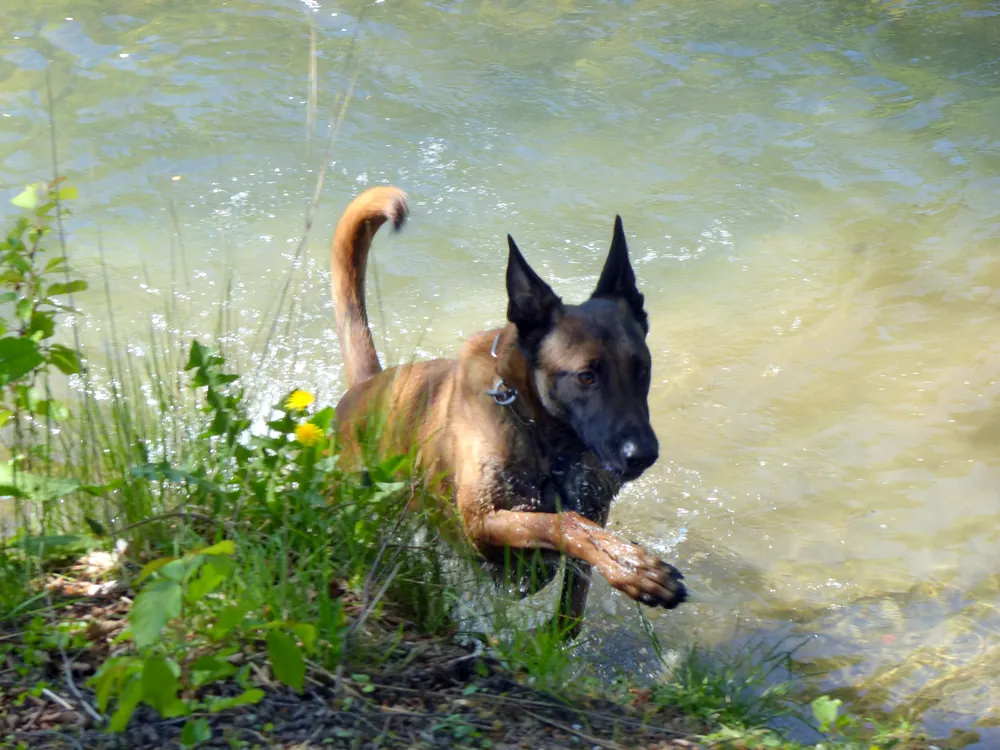
Easy care, some hair. The AKC says the Malinois’s “short, waterproof coat … is quite easy to take care of. Occasional brushing with a medium-bristle brush, a rubber grooming mitt or tool, or a hound glove will keep the dog looking his best.” But “Malinois do shed twice a year; during these periods, a daily once-over with a slicker brush will help to remove the loose hair.” Check ears regularly and brush teeth often (AKC). For more on the coat, see our article Do Belgian Malinois shed?

Diet basics
The AKC’s advice is simple: feed a diet appropriate to the dog’s age (puppy, adult or senior), and keep an eye on weight, since “some dogs are prone to getting overweight.” Treats are useful in training, “but giving too many can cause obesity” (AKC). A working-level Malinois may eat quite a lot; a retired or older one much less. Ask your vet what a lean, healthy weight looks like for your dog, and adjust portions as activity changes.
Health issues to know about
The AKC calls the Malinois “generally a healthy breed,” and says a responsible breeder will screen breeding stock “for health conditions such as hip and elbow dysplasia and certain eye problems” (AKC). Here is what the breed club and the research tell us.
Hips, elbows and eyes
The American Belgian Malinois Club requires breeders to screen for hip dysplasia and elbow dysplasia (by OFA X-ray evaluation) and to have the eyes examined by a board-certified veterinary ophthalmologist (ABMC health statement). The club’s FAQ notes that “although the incidence is low, genetic problems such as hip and elbow dysplasia are known to exist in the breed.”
The Orthopedic Foundation for Animals’ records for Malinois whose owners submitted results show 4.9% of 6,927 hip evaluations rated dysplastic, 8.9% of 5,613 elbow evaluations abnormal, and 3.1% of 2,780 eye exams abnormal (OFA breed statistics). Because these numbers only include dogs that were screened and submitted, they describe tested dogs, not every Malinois. If you’re buying a puppy, ask to see both parents’ OFA results.
Epilepsy
Epilepsy is a known concern in Belgian Shepherds. A US military veterinary report on Malinois working dogs said that “epilepsy is a breed problem and has been seen in this population” (Jennings, 1991). Danish research in the closely related Groenendael and Tervuren estimated epilepsy prevalence at 9.5%, with a mean age of onset of 3.3 years (Berendt et al., 2008). A follow-up study found that in those dogs the condition usually took “an overall benign course” and did not significantly shorten lifespan (Gulløv et al., 2012). The breed club suggests asking breeders about epilepsy in the dog’s family. If your dog ever has a seizure, call your vet.
Cancer, thyroid and heart
The breed club’s health statement also suggests discussing “cancer (hemangiosarcoma), thyroid and cardiac history” with any breeder (ABMC). In a study of US military working dogs that died in 1992, the risk of a malignant cancer being the cause of death or euthanasia was 4.21 times higher in Malinois than in German Shepherds (Peterson et al., 2000). That study looked at working dogs, not pets, but it’s a good reason for regular senior checkups.
Bloat
Bloat (gastric dilatation-volvulus) is a sudden, life-threatening emergency. It was among the leading causes of death in a large study of US military working dogs (Moore et al., 2001), and the military veterinary report noted it has been seen in Malinois (Jennings, 1991). Ask your vet to walk you through the warning signs, and treat a suspected case as an emergency.
Behavior and health
A small genetic study of Malinois found an association between a gene variant and episodes some owners describe as “glazing over,” unresponsiveness and sudden biting, alongside seizures. The authors said the findings “should be considered preliminary until replicated in a larger sample” (Lit et al., 2013). If a Malinois’s behavior changes suddenly, a vet visit should come before any training fix.
What is the main cause of death in Belgian Malinois?
No study has looked at causes of death in pet Malinois specifically, so be wary of any single answer online. The closest evidence comes from US military working dogs. In 927 military dogs that died or were euthanized between 1993 and 1996, the leading causes were “appendicular degenerative joint disease, neoplasia [cancer], spinal cord disease, nonspecific geriatric decline, and gastric dilatation-volvulus.” Compared with German Shepherds, Belgian Shepherd dogs, the group that includes the Malinois, “were at increased risk for death attributable to neoplasia, behavior, and respiratory tract disease” (Moore et al., 2001). Working dogs live very different lives from pets, so treat this as a guide to what to watch for, and ask your vet about your own dog.
Lifespan
Sources disagree, so here’s the full picture:
- The AKC lists a life expectancy of 14 to 16 years (AKC).
- The American Belgian Malinois Club FAQ says Malinois live “an average of 10 to 12 years” (ABMC).
- A 2024 UK study of more than 584,000 dogs found a median lifespan of 12 years for the Malinois (based on 337 dogs that had died), statistically no different from mixed-breed dogs (McMillan et al., 2024, supplementary data).
A healthy, lean, well-exercised Malinois can be with you well into its teens, so plan for the long haul.

The senior Malinois
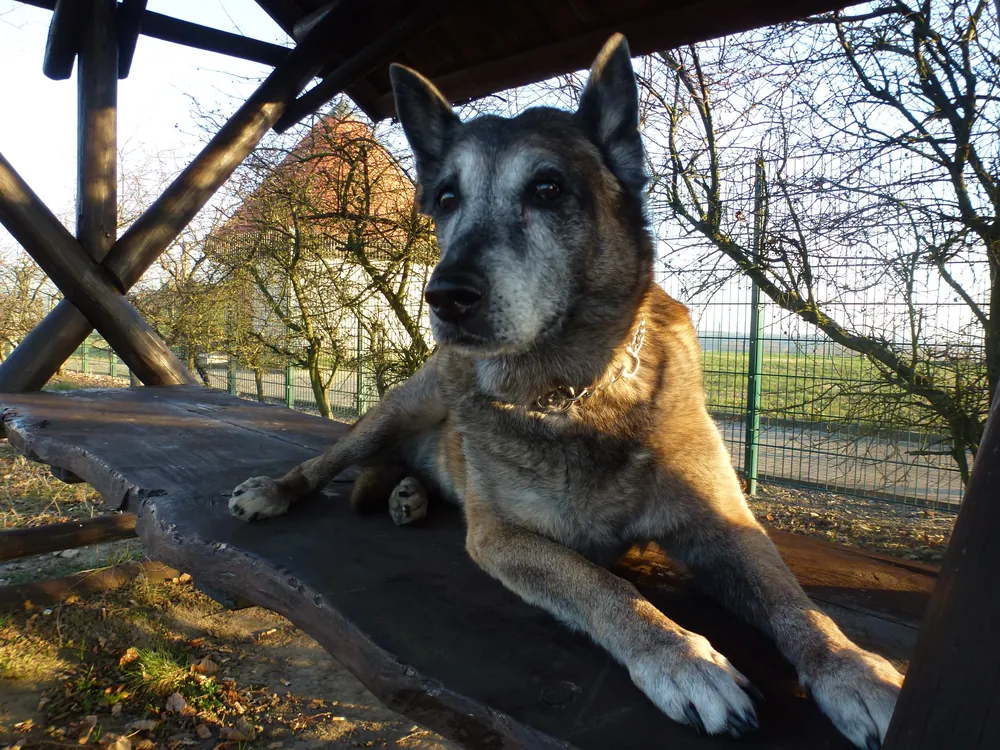
An older Malinois still needs a job, just a gentler one. Shorter walks, scent games, short training sessions and comfortable bedding go a long way. Because joint disease, spinal disease and cancer all show up in the research above, regular senior checkups matter, and stiffness, weight loss, lumps or wobbly back legs are all worth a call to your vet. A calm senior Malinois can also be a lovely match for an experienced adopter who wants the breed’s devotion without a puppy’s demands.
Belgian Malinois puppies
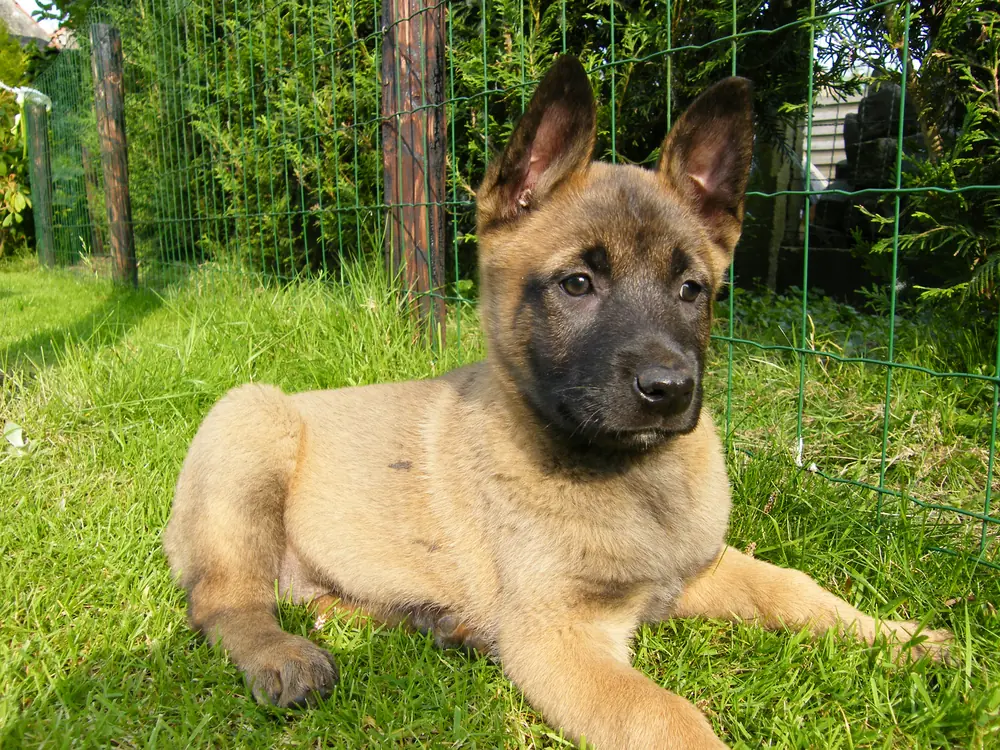
A Malinois puppy is a big project. The breed club notes that many people “who do not have the extra time nor the expertise required to raise, socialize, and train a young puppy would prefer to start with an older puppy or young adult,” and suggests that “if you don’t have the extra time and energy necessary to raise a puppy then consider the adult Malinois” (ABMC).

If you do go the puppy route, ask the breeder for:
- OFA hip and elbow results and a current eye exam for both parents (the breed club’s required tests).
- Family history of epilepsy, cancer, thyroid and heart problems.
- Whether the parents are working, sport or companion lines, and what their temperaments are like at home.
- AKC registration papers, and whether they’ll take the dog back at any age.
How to tell if a Belgian Malinois is purebred
Only paperwork can prove it. The AKC says “a dog is considered purebred by the AKC if it has four generations of recorded pedigree within an AKC-recognized breed,” and that “breed heritage tests are not purity tests and do not determine whether a dog is purebred” (AKC). AKC DNA testing can confirm parentage if both parents’ DNA is on file.
Without papers, you can only say a dog looks like a Malinois. Signs that fit the breed standard:
- A short, straight coat in fawn to mahogany, with black-tipped hairs, a black mask and black ears.
- No brindle striping (brindle suggests a Dutch Shepherd or a mix).
- Erect, triangular ears and a square, lean, leggy build.
- No long or wiry coat (that would point to a Tervuren, Groenendael or Laekenois).
Shelter labels are educated guesses. One study comparing adoption-agency breed labels with DNA results found that only a quarter of the dogs had DNA evidence of the breed the agency named (Voith et al., 2009). A “Malinois mix” might be part German Shepherd, Dutch Shepherd or something else, which is fine. Meet the dog, not the label. Our guide to figuring out your dog’s breed explains the options.
Is a Belgian Malinois right for you?
A Malinois may be a great fit if:
- You’ve owned and trained dogs before, ideally a herding or working breed. The AKC says the breed’s “high prey drive and boundless energy levels don’t make them a good choice for first-time dog owners.”
- You’re active every day: running, hiking, biking or a dog sport, and you want a dog to do it with.
- You enjoy training and want a partner who learns fast.
- Someone is home most of the day. The breed club says if you often work long hours, travel frequently or are often away, “then this is definitely not the breed for you” (ABMC FAQ).
- You have a securely fenced yard, which the breed club calls necessary.
Think it over carefully if:
- You want a calm companion for quiet days at home. The club is clear: “if you are looking for a beautiful animal to just sit at home with you … do NOT choose a Malinois” (ABMC).
- Your balance, grip or knees would struggle with a strong dog that can bolt after a squirrel.
- Young grandchildren visit often and the dog hasn’t been raised around kids.
- You’d like a dog that’s friendly with every visitor and every dog at the park.
If that second list sounds like you, there’s no shame in it. Loving a breed and choosing a different one is a kind decision for you and the dog. Our list of the best dog breeds for first-time owners is a good place to look, and the Belgian Tervuren and Doberman Pinscher guides cover other athletic, devoted breeds.
Costs to plan for
We couldn’t find a reliable, published price for Belgian Malinois puppies, so we won’t quote one. Prices vary widely by breeder, line and region; ask breeders and rescues directly. For the general cost of keeping a dog, the ASPCA’s 2021 estimates were about $1,030 in one-time costs (spay or neuter, first vet visits, microchip, crate, training and gear) and $1,391 a year after that, including food, routine vet care, preventive medicines and pet insurance (ASPCA). Those are averages for all dogs, not the Malinois specifically.
Budget extra for:
- Training classes or a private trainer, which most Malinois owners will want.
- Food for a very active dog.
- Sturdy gear: a strong crate, durable toys, a secure fence.
- Pet insurance or an emergency fund, since bloat and orthopedic problems can be expensive.
Adopting a Belgian Malinois
Why Malinois end up in rescue
The breed’s own club and rescue have been open about this. In 2015, ahead of the release of the film Max, the American Belgian Malinois Club and American Belgian Malinois Rescue warned of a possible influx of rescue dogs. The rescue’s president said “the overwhelming majority will not be equipped to live with an animal with such extreme energy levels,” and the rescue reported 140 dogs entering its system in 2014 (ABMC/ABMR press release, 2015). Life happens too: the rescue lists “divorce, moving, death, illness” among the reasons a Malinois can lose its home (American Belgian Malinois Rescue).
None of that makes the people who surrender these dogs bad people. It does mean there are wonderful adult Malinois waiting for experienced homes.
Where to look
- American Belgian Malinois Rescue, the rescue linked from the AKC parent club’s site. Adopters go through an application, references, a vet reference and a home visit.
- Regional Malinois and herding-breed rescues, and local shelters. Search for “Malinois,” “Belgian Shepherd” and “Shepherd mix.”
- Retired military working dogs: see our guide to adopting a military dog.
Foster-based rescues are especially helpful, because a foster family can tell you how the dog behaves in a real home.
Questions to ask the rescue
- How much exercise does this dog get now, and what does it do when it doesn’t get enough?
- Can I walk the dog myself? How does it handle squirrels, bikes, cars and other dogs on leash?
- How does it react to visitors, the doorbell and being handled (nails, ears, brushing)?
- Has it lived with children, cats or other dogs, in a home or only in kennels?
- Any history of guarding food or toys, nipping, or a bite? What happened?
- Has it been trained in bite work or protection? (Ask; it matters.)
- Any seizures, digestive problems or joint issues? What do the vet records show?
- How does it settle in a crate and when left alone?
- Is there a foster-to-adopt period, and what happens if it doesn’t work out?
Our list of 9 questions to ask when adopting a dog covers the general ones.
Make a plan for the long haul
A Malinois may be with you for a decade or more. Naming a backup caregiver now, someone who knows your dog, can handle a high-drive breed and has agreed to step in, means your dog never has to start over in a shelter. Our guide What Happens to Your Dog When You Die and the free My Dog’s Backup Plan worksheet walk you through it.
Similar dogs to compare
- Belgian Tervuren, the long-coated Belgian cousin.
- Dutch Shepherd, the brindle lookalike from the Netherlands.
- Blue German Shepherd and the Labrador German Shepherd mix, for the German Shepherd side.
- Siberian Husky Shepherd mix, another high-energy working cross.
- Doberman Pinscher, another athletic, people-focused guardian.
Frequently Asked Questions
Are Belgian Malinois good family dogs?
They can be, in the right family. The American Belgian Malinois Club says Malinois are good with children and other animals when properly introduced or raised with them, but can also be protective, territorial, possessive and jealous. The AKC rates the breed 3 out of 5 with young children (with supervision) and says Malinois fare best in families with older, responsible kids. They need a family with time for daily training and a lot of exercise.
What is the main cause of death in Belgian Malinois?
No study has looked at causes of death in pet Malinois specifically. The best evidence comes from US military working dogs. In a study of 927 military dogs, the leading causes of death or euthanasia were joint disease, cancer, spinal cord disease, general old-age decline and bloat, and Belgian Shepherd dogs (including Malinois) had a higher risk than German Shepherds of death from cancer, behavior problems and respiratory disease. Ask your vet what to watch for in your own dog.
How can you tell if a Belgian Malinois is purebred?
Only papers can tell you. The AKC considers a dog purebred if it has four generations of recorded pedigree within the breed, and says breed DNA tests are not purity tests. A Malinois looks like the breed standard: a short fawn to mahogany coat with black-tipped hairs, a black mask and black ears, and no brindle striping. Brindle points toward a Dutch Shepherd, and a heavier, longer-coated dog toward a German Shepherd.
What dog breeds do police and the military use?
The AKC says police commonly use Belgian Malinois, German Shepherd Dogs, Bloodhounds, Dutch Shepherds and Labrador Retrievers, with herding breeds like the Malinois, German Shepherd and Dutch Shepherd often picked for patrol work. The US Department of Defense’s military working dog breeding program at Lackland Air Force Base breeds only Belgian Malinois.
How long do Belgian Malinois live?
The AKC lists a life expectancy of 14 to 16 years, while the American Belgian Malinois Club’s FAQ says Malinois live an average of 10 to 12 years. A 2024 UK study of more than half a million dogs found a median lifespan of 12 years for the breed, about the same as mixed-breed dogs. Good weight, exercise and regular vet care matter for any one dog.
What is the difference between a Belgian Malinois and a German Shepherd?
They’re related herding breeds of similar height, but the AKC says the Malinois has a different head and is leggier and finer boned. Male Malinois weigh 60 to 80 pounds versus 65 to 90 for male German Shepherds. The Malinois has a short coat and is fawn to mahogany with a black mask; German Shepherds have a medium double coat and come in more colors.
Is a Belgian Malinois a good dog for a first-time owner?
Usually not. The AKC says the Malinois’s high prey drive and energy don’t make it a good choice for first-time dog owners, and the American Belgian Malinois Club says it is generally not a dog for the novice. If you love the breed but lack experience, the club suggests considering an adult dog rather than a puppy.
How much does a Belgian Malinois cost?
We couldn’t find a reliable published puppy price for the breed, so ask breeders and rescues directly. For ongoing costs, the ASPCA’s 2021 estimates for an average dog were about $1,030 in one-time costs and $1,391 a year after that. A large, very active dog that needs training classes and plenty of food may cost more.
Before you go
The Malinois is a breed people fall hard for, and for good reason. If you have the time, energy and experience, few dogs will match its devotion. If you don’t, an adult Malinois from a rescue, or a different breed altogether, may be the kinder choice. And whatever dog you bring home, it’s worth deciding now who would step in for them if you ever couldn’t.
Sources
- American Kennel Club, Belgian Malinois breed page (size, life expectancy, trait ratings, history, health, exercise, grooming, training, nutrition, popularity)
- American Kennel Club, Official Standard of the Belgian Malinois (2021)
- American Kennel Club, Belgian Malinois history and Is the Belgian Malinois the right breed for you?
- American Kennel Club breed pages for the German Shepherd Dog, Dutch Shepherd, Belgian Tervuren, Belgian Sheepdog and Belgian Laekenois
- American Kennel Club, What do police dogs do? and Breed heritage tests are not purity tests
- FCI, Standard No. 15, Chien de Berger Belge
- United Kennel Club, Belgian Shepherd Dog standard
- American Belgian Malinois Club: home page, FAQ, Is the Malinois right for you?, history, Malinois and children, health statement
- American Belgian Malinois Rescue; ABMC/ABMR press release, 2015
- Orthopedic Foundation for Animals, Belgian Malinois statistics and CHIC requirements
- McMillan KM et al. (2024). Longevity of companion dog breeds: those at risk from early death. Scientific Reports.
- Moore GE et al. (2001). Causes of death or reasons for euthanasia in military working dogs: 927 cases (1993-1996). JAVMA.
- Peterson MR et al. (2000). A study of the lifetime occurrence of neoplasia and breed differences in a cohort of German Shepherd Dogs and Belgian Malinois military working dogs that died in 1992. Journal of Veterinary Internal Medicine.
- Jennings PB (1991). Veterinary care of the Belgian Malinois military working dog. Military Medicine.
- Berendt M et al. (2008). Prevalence and characteristics of epilepsy in the Belgian shepherd variants Groenendael and Tervueren born in Denmark 1995-2004. Acta Veterinaria Scandinavica.
- Gulløv CH et al. (2012). A longitudinal study of survival in Belgian Shepherds with genetic epilepsy. Journal of Veterinary Internal Medicine.
- Lit L et al. (2013). Characterization of a dopamine transporter polymorphism and behavior in Belgian Malinois. BMC Genetics.
- Voith VL et al. (2009). Comparison of adoption agency breed identification and DNA breed identification of dogs. Journal of Applied Animal Welfare Science.
- US Department of Defense / American Forces Press Service, Breeding program turns puppies into troops
- ASPCA, Cutting pet care costs (2021 update)
- Photos: Wikimedia Commons contributors, credited under each image. Full license records are kept in this site’s image-credits file.