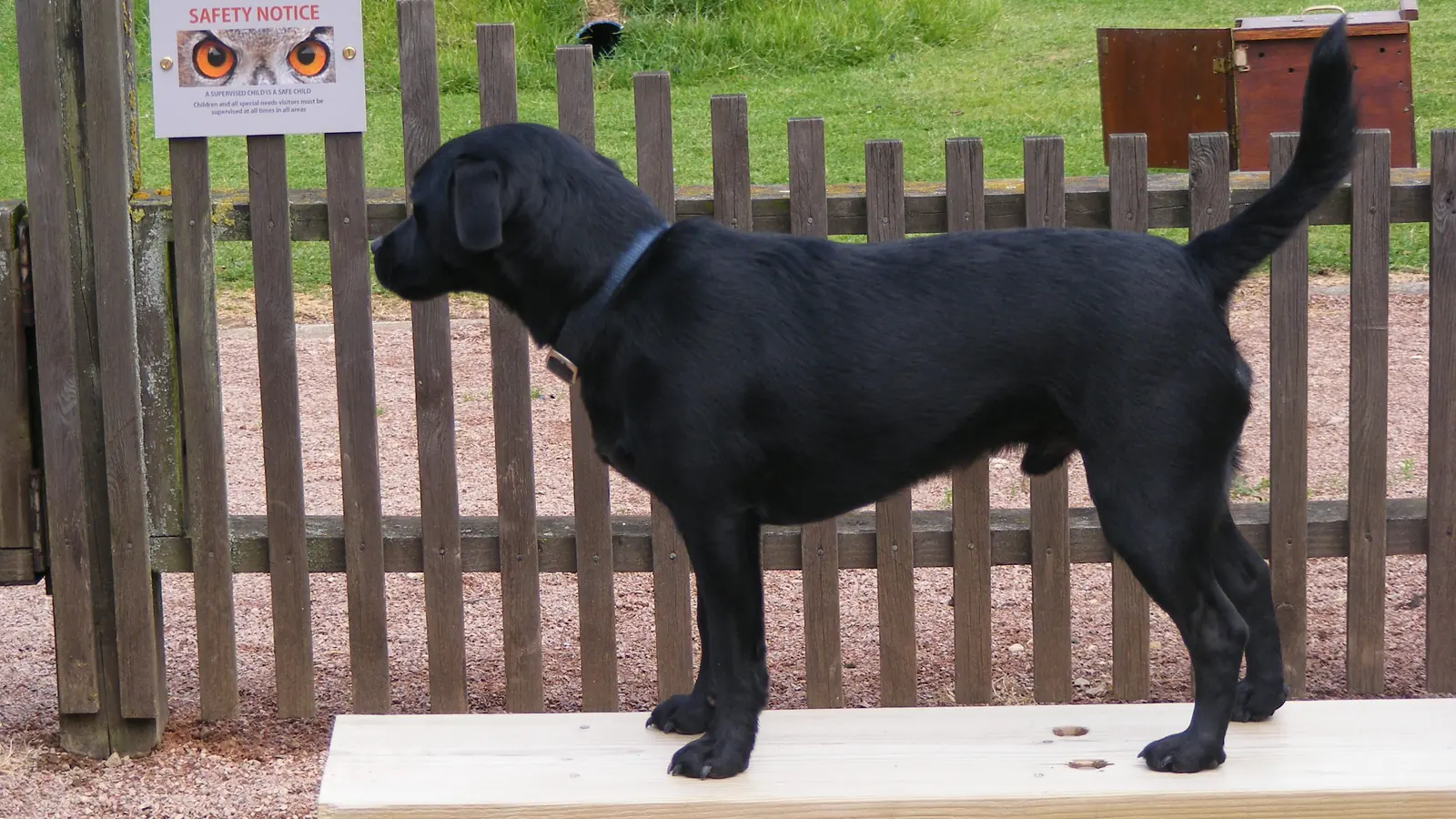

The Patterdale Terrier is a small, tough working terrier from the fells of England’s Lake District, usually 10 to 15 inches tall and most often black, red or chocolate. It was bred to follow foxes and other quarry underground, and it brings that courage, energy and prey drive home with it. It’s recognized by the United Kennel Club, but not by the American Kennel Club or the UK’s Kennel Club.
Patterdales are funny, loyal and full of life, and they’re also one of the more demanding small dogs you can bring home. Their own breed club says plainly that they are “not a dog for the average pet owner.” Below is what the United Kennel Club, the Patterdale Terrier Club of America and veterinary sources actually say about size, temperament, health and care, how the Patterdale compares with the Border, Jack Russell, Lakeland and Fell Terriers, and how to adopt one if it’s the right dog for you.
At a glance
- Height: 10 to 15 inches at the shoulder (UKC standard); the Patterdale Terrier Club of America (PTCA) standard allows 10 to 16 inches.
- Weight: the UKC sets no weight, only “in proportion to height.” The PTCA says 12 to 26 pounds (about 5.5 to 12 kg) is average, and that a very muscular dog “will weigh more than it looks.”
- Life expectancy: no published study yet. The PTCA says Patterdales often live “well into their teens” (PTCA).
- Coat: smooth, broken or rough, always with a short, dense undercoat (UKC).
- Colors: black, red, liver/chocolate, grizzle, black and tan, and bronze, solid or with some white on the chest and feet. White patches on the body or head are a disqualification (UKC).
- Energy: very high. The PTCA says leash walking alone won’t satisfy them.
- Grooming: easy, but they do shed. Smooth coats shed year-round; broken and rough coats need hand-stripping a few times a year (PTCA).
- With kids: usually friendly with well-behaved children who handle them properly; take extra care with children under six (PTCA).
- With other pets: can be aggressive with other dogs, especially of the same sex, and a real threat to cats, rabbits and other small pets (PTCA).
- Recognition: UKC Terrier Group since January 1, 1995. Not AKC or UK Kennel Club recognized.
- Best fit: an experienced, active terrier person with a securely fenced yard and lots of time at home.
History: the black terrier of the fells
The UKC standard says the Patterdale “is descended mainly from the black, smooth-coated Fell Terrier which was developed in the harsh environment of Northern England.” Fell Terriers “were used to control vermin that were predatory on sheep,” and the result, in the standard’s words, is “an extremely game, ‘tough as nails’ dog” (UKC).
The name is newer than the dogs. Patterdale is a village at the southern end of Ullswater in the Lake District, and Country Life reports that the terrier is thought to have taken its name from a dog show held there. The first Patterdale terrier is said to have been Bingo, a rust-colored dog owned by Joe Bowman, huntsman of the Ullswater hunt. According to the same article, the type wasn’t developed selectively in earnest until the 1950s, by Cyril Breay and Frank Buck, and in the 1960s Brian Nuttall furthered the breed. Many of today’s best dogs descend from his bloodlines (Country Life).
Lakeland fell packs hunt on foot over rough, steep ground, so the terriers had to keep up all day and then squeeze into rocky crevices. The UKC standard explains why size matters so much: the dog “has to be capable of squeezing through very small passages underground.” Judges test this by “spanning”: an average man’s hands should be able to circle the chest just behind the shoulders, with the fingers touching (UKC).
Recognition today
- United Kennel Club (US): recognized January 1, 1995, in the Terrier Group (UKC).
- Patterdale Terrier Club of America: describes itself as the first registry established for the breed, with registrations on more than 5,000 Patterdales and pedigrees on about 13,000 (PTCA services).
- American Kennel Club: not recognized. The Patterdale doesn’t appear on the AKC’s list of recognized breeds.
- The Kennel Club (UK): not recognized and not on its breeds A to Z. Country Life notes that in the UK the Patterdale “remains a ‘type’” (Country Life).
Appearance and size
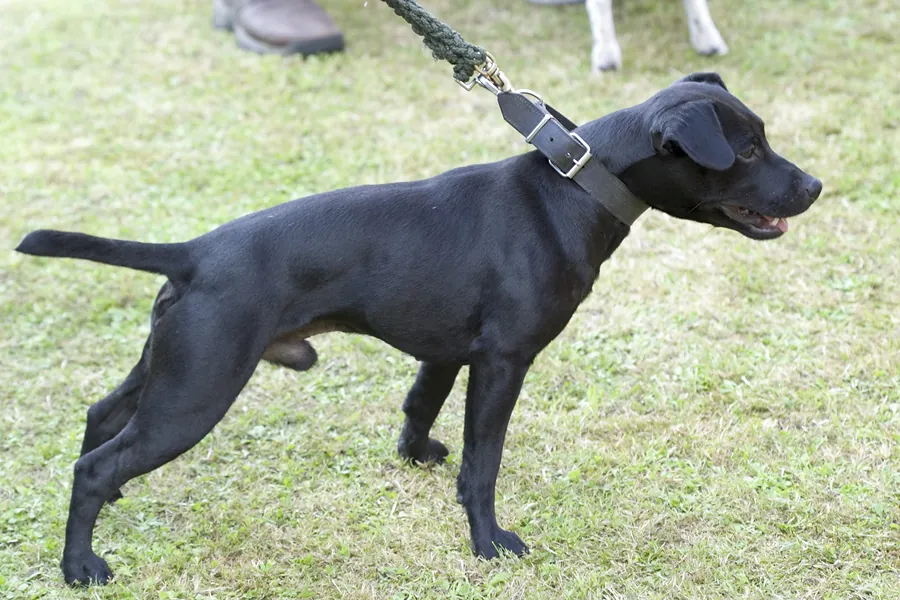
The UKC describes “a sturdy, tough, active little terrier that presents a compact, balanced image.” It adds that the breed “is worked far more than it is shown, and breeders are primarily concerned with the practicality of the breed.” Scars from work “are considered honorable and are not to be penalized” (UKC).
| UKC standard | PTCA standard | |
|---|---|---|
| Height at shoulder | 10 to 15 in | 10 to 16 in |
| Weight | In proportion to height; hard, fit, no excess fat | 12 to 26 lb average (about 5.5 to 12 kg) |
| Coat types | Smooth, broken, rough | Smooth, broken, rough |
| Colors | Black, red, liver/chocolate, grizzle, black and tan, bronze | Black, red, chocolate, black and tan |
| White | Some on chest and feet only | Some on chest and feet acceptable |
| Ears | Small to moderate, triangular, folding just above the skull | Button ears often preferred; rose, half-drop and prick ears are seen |
Sources: UKC Patterdale Terrier standard, PTCA breed standard.


A few more details from the UKC standard that help you recognize one:
- Head: strong and wedge-shaped from the front, with a muzzle that’s “never appearing snipy or weak.”
- Eyes: set fairly wide apart and not bulging. Eye color should match the coat, “but never blue.”
- Nose: black, except in liver/chocolate dogs, which have a brown nose that breeders call “red.”
- Body: square or slightly longer than tall, with a chest that can be compressed. A chest “too deep or wide” is a fault.
- Tail: set high but not carried over the back. If docked, only a quarter to a third should be removed, “as sometimes the tail is the only means of pulling the dog out of a burrow.” The UKC has no preference between docked and natural tails.
The three coat types
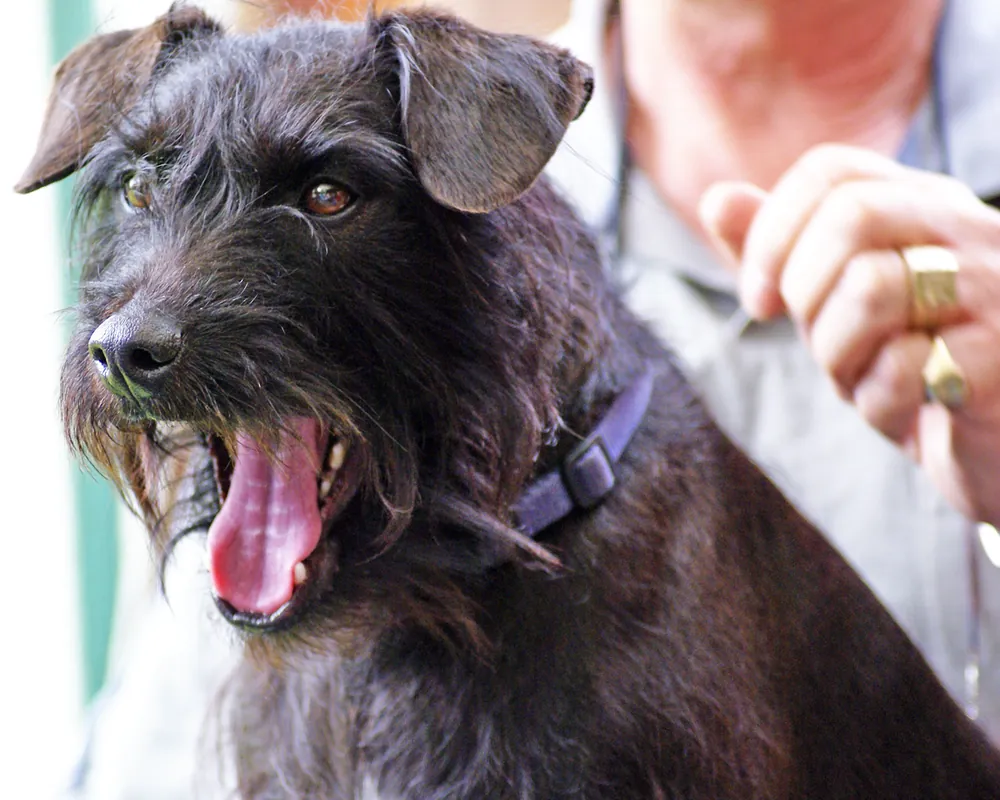
- Smooth: coarse, dense, stiff hair that falls back into place when lifted.
- Broken: an in-between coat with longer, wiry guard hairs, sometimes with a beard, moustache and eyebrows.
- Rough: coarse, longer hair all over, including the face and ears.
All three have “a short, dense undercoat” for protection against “the wet underground and briars” (UKC).

Patterdale Terrier vs Border, Jack Russell, Lakeland and Fell Terrier
These small working terriers from northern England and the Scottish border often get mixed up, in shelters and online. Here’s how they compare using registry and breed-club figures.
| Patterdale Terrier | Border Terrier | Jack Russell Terrier | Lakeland Terrier | Fell Terrier | |
|---|---|---|---|---|---|
| Height | 10-15 in (UKC) | 12-15 in (AKC) | 10-12 in (UKC) | Males 14.5-15 in (AKC) | No published standard |
| Weight | 12-26 lb average (PTCA) | M 13-15.5 lb, F 11.5-14 lb (AKC) | About 11-13 lb (UKC) | Males about 17 lb (AKC) | No published standard |
| Coat | Smooth, broken or rough | Wiry, broken, close-fitting | Smooth or wiry, always dense | Double coat, wiry outer coat | Varies (working type) |
| Colors | Black, red, liver/chocolate, grizzle, black and tan, bronze; white only on chest and feet (UKC) | Red, wheaten, grizzle and tan, blue and tan (UKC) | Solid white or mostly white, with black, tan or brown markings (UKC) | Blue, black, liver, red, wheaten, or wheaten/tan with a darker saddle (UKC) | Varies (working type) |
| UK median lifespan (2024 study) | Not studied | 14.2 yrs | 13.3 yrs | 14.2 yrs | Not studied |
| UKC recognized | Yes, 1995 | Yes, 1948 | Yes, 2001 (named JRT in 2009) | Yes, 1995 | No |
| AKC recognized | No | Yes, 1930 | No (the similar Russell Terrier, 2012) | Yes, 1934 | No |
| UK Kennel Club recognized | No | Yes | Yes | Yes | No |
Sources: UKC Patterdale, UKC Border Terrier, UKC Jack Russell Terrier, UKC Lakeland Terrier; AKC breed pages for the Border Terrier, Lakeland Terrier, Russell Terrier and Parson Russell Terrier; PTCA standard; UK Kennel Club breeds A to Z; lifespans from McMillan et al., 2024, supplementary data.
What actually tells them apart:
- Patterdale vs Jack Russell: color is the quickest clue. The UKC says a Jack Russell is “solid white, or predominately white,” while white on a Patterdale’s body or head is a disqualification. The AKC lists the taller Parson Russell Terrier at about 13 to 14 inches.
- Patterdale vs Border Terrier: the Border has a wiry, broken jacket and what the UKC calls a distinctive “otter-like head.” The Patterdale’s head is more wedge-shaped, and most Patterdales are smooth-coated.
- Patterdale vs Lakeland: both come from the Lake District, but the Lakeland is a Kennel Club and AKC breed with a trimmed, wiry double coat. The UKC says it was “bred to hunt vermin in the rugged shale mountains of the northern England Lake District.”
- Patterdale vs Fell Terrier: this is more of a family tree than a comparison. “Fell terrier” is the older name for the working terriers of the Lake District fells, and the UKC says the Patterdale descends mainly from the black, smooth-coated Fell Terrier. A terrier expert quoted by Country Life says “the modern Patterdale has been bred out of the old working fell terrier, a term that many traditionalists still prefer to use.”
If you’re drawn to terriers, our guides to the Fox Terrier (the taller, mostly white hunt terrier, in Smooth and Wire coats), the Bedlington Terrier (another northern English terrier) and the Airedale Terrier are worth a look, and our Jackapoo guide covers the Jack Russell’s best-known cross. For smaller terrier crosses, see our guide to Chihuahua terrier mix breeds.

Temperament: what living with a Patterdale is like
The UKC standard calls the Patterdale “an extremely courageous working terrier” that is “extremely willing to work” with “a high desire to please.” Then comes the honest part: “though they should be peaceful with humans, livestock and other dogs, they are not a dog for the average pet owner. They require an owner with a sense of humor and one that understands and can tolerate a real terrier temperament” (UKC).
The breed club describes them as “resilient, tenacious, and intelligent,” “fiercely loyal, courageous, and driven,” and says a Patterdale “can be equally contented unearthing a quarry or playing with a toy in your living room.” Their “playful antics will continually amuse you, and their sharp intelligence and boundless energy can sometimes be overwhelming” (PTCA).
What that means day to day, according to the PTCA (more about the Patterdale):
- They’ll find a job if you don’t give them one. Without an outlet, Patterdales may start “guarding their territory, chasing cars, hunting small animals, or digging incessantly.”
- Big dog attitude. “Despite their small size, Patterdales have the mentality and fearlessness of a much larger dog,” and “often challenge dogs several times their size.”
- They’re vocal. Barking at quarry is part of the job, and the club says their “vocal nature can be disruptive in high-density living environments.”
- They bond hard. Some “become possessive of their owners or favorite family members,” which the club says should be managed from an early age.

With children
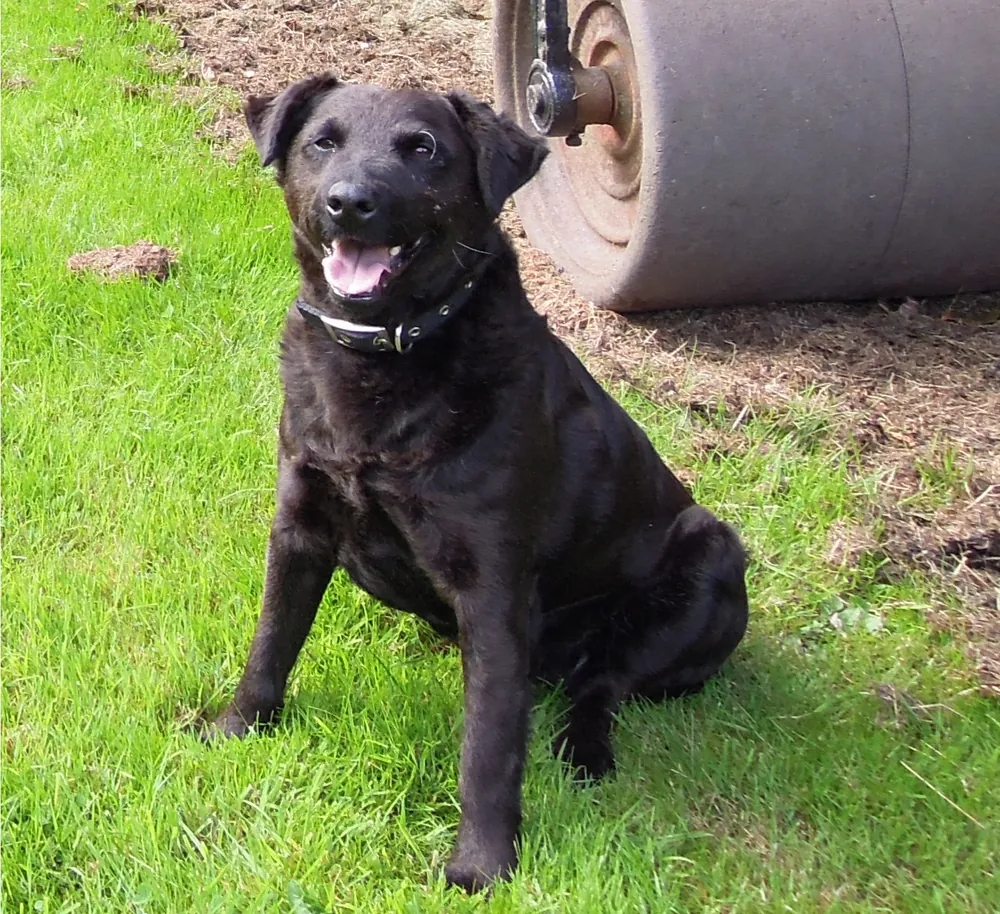
The PTCA says “the Patterdale gets along well with well-behaved children” and that “one of the Patterdale’s most surprising qualities is a kind and gentle nature.” It also warns that the dog “will not tolerate even unintended abusive behavior from a child,” and that this “should be carefully considered, particularly with children under the age of six” (PTCA). If grandchildren visit, teach them to let the dog come to them, give the dog a quiet place to retreat, and supervise every visit.
With other dogs, cats and small pets
This is the part people most need to know before adopting. The PTCA says “Patterdales can be very aggressive with other dogs,” particularly the same sex, and that “no more than two Patterdales of opposite sex” should be kept together unattended. Their hunting instinct makes them “a threat to small pets like cats, birds, rabbits, and rodents,” and “raising a Patterdale with other small animals does not guarantee their safety” (PTCA).
That doesn’t mean a Patterdale can never live with another dog. Many do. It does mean you should meet the dogs together first, ideally through a rescue that knows the Patterdale’s history, and keep a close eye on things for the first months. If you share your home with a cat, our guide to introducing a cat and a dog covers the basics, but be realistic with this breed.
Exercise needs
The breed club says Patterdales “need extensive exercise and outdoor activity” and that “leash walking alone will not satisfy their energy needs.” It also says “a confined or sedentary lifestyle, such as city or apartment living, does not meet the needs of a Patterdale Terrier” (PTCA).
Neither the UKC nor the PTCA sets an exact number of minutes, so treat online figures with caution. A better question is whether your Patterdale will get hard exercise and something to think about every day. Good outlets include:
- Long walks and hikes on a secure harness and leash.
- Fetch, tug and flirt-pole games in a fenced area.
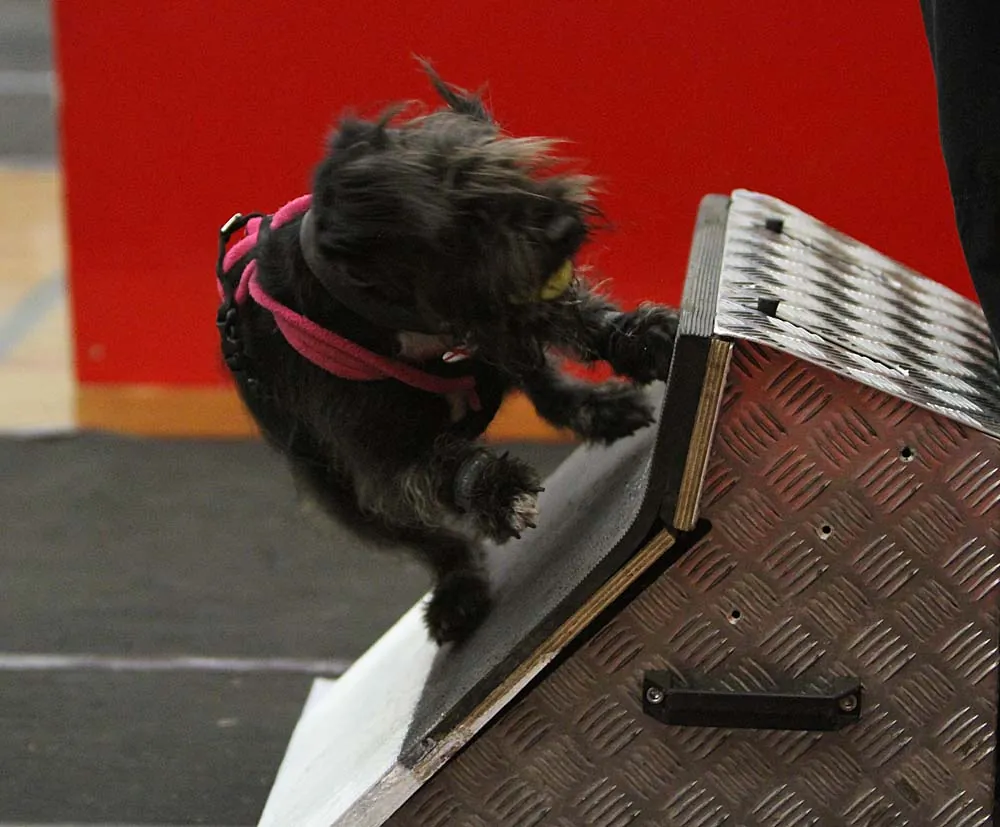
- Dog sports: earthdog, barn hunt, flyball, agility and nosework all suit a terrier’s brain.
- Digging boxes and scent games at home.
- Short daily training sessions.
Keep them safe: fences and recall
The PTCA is emphatic that a Patterdale “should never be permitted to roam unattended, even in remote country settings,” because it “will go to ground at every given opportunity.” A Patterdale that disappears down a burrow can be very hard to get back. The club says a “securely fenced yard is essential” (PTCA). Check fences for gaps and for spots where a determined digger could tunnel under, and keep your dog on a leash or long line anywhere with wildlife.

Training
The UKC says Patterdales have “a high desire to please,” and the PTCA calls them “very intelligent, determined, and bold.” The club adds, with some humor, that “they have been known to train their owners more often than not,” and that “basic obedience training is crucial for their safety and the owner’s sanity” (PTCA).
The club asks for “firm, consistent, and responsible handling.” Firm means clear and consistent, not harsh. The American Veterinary Society of Animal Behavior “recommends that only reward-based training methods are used for all dog training, including the treatment of behavior problems” (AVSAB position statement). What helps with a Patterdale:
- Recall, recall, recall. Practice coming when called every day, with high-value food, starting indoors and on a long line.
- Use the prey drive. Tug toys, flirt poles and “find it” games turn the chase instinct into a reward you control.
- Teach “leave it” and “settle.” Reward calm behavior on a mat, not just action.
- Short sessions. Five to ten minutes, ending on a win.
- Get help early. A certified trainer who uses reward-based methods and knows terriers is worth it, especially with any dog-to-dog tension.
Grooming and shedding
The UKC standard says “very little grooming is required to keep the coat healthy,” but the PTCA is clear that Patterdales “are not a non-shedding breed.” Smooth coats “shed continuously year-round,” while rough and broken coats “require manual shedding a few times a year,” meaning the loose dead hair is plucked out by hand (PTCA).
A simple routine:
- Brush a smooth coat weekly with a rubber mitt or bristle brush.
- Have a broken or rough coat hand-stripped a few times a year (a groomer can show you how).
- Check nails, ears and paws, especially after digging.
- Brush teeth regularly. The ASPCA notes dental disease can lead to “heart and kidney problems and expensive procedures” (ASPCA).
Because they shed, spend time with a Patterdale before adopting if anyone in your home has dog allergies.
Diet basics
There’s no special Patterdale diet. Feed a complete diet suited to your dog’s age and activity, and keep your dog lean: the PTCA’s rule of thumb is that “you should be able to feel the ribs, but not see them” (PTCA standard). A working or very active Patterdale may eat noticeably more than a retired one. Count training treats as part of the daily total, and ask your vet what a healthy weight and portion look like for your dog.
Health
Here’s the honest picture: there are no published breed-wide health surveys of Patterdale Terriers, and no health screening scheme run by a breed club that we could find. We could only find one breed-linked inherited condition with good research behind it.
Primary lens luxation (PLL)
Primary lens luxation is “a painful and potentially blinding inherited canine eye condition” in which the ligaments holding the lens weaken and the lens slips out of place. Cornell’s veterinary college says many terrier breeds are predisposed and that it most commonly develops between three and eight years of age (Cornell Riney Canine Health Center).
A 2011 study screened lens luxation cases across 30 breeds and found the ADAMTS17 gene variant linked to PLL in affected dogs of 14 additional breeds, including at least one affected Patterdale Terrier (Gould et al., 2011, summarized by OMIA). A DNA test exists, so if you’re buying a puppy, ask whether the parents were tested.
Cornell lists the signs as “red, teary, hazy, or cloudy, painful eyes” and says a lens that shifts forward “is treated as a medical emergency requiring prompt intervention.” If your dog’s eye suddenly looks different or painful, call your vet right away.
Working-life wear and tear
The UKC standard notes that scars, broken teeth and lost incisors from working are common enough in the breed that they’re not penalized in the show ring. If you adopt an ex-working dog, ask your vet to check teeth, ears and old injuries at the first visit.
Shaking or trembling
Some owners ask why their Patterdale shakes. We found no published evidence that trembling is a Patterdale trait. Because shaking can have medical causes, ask your vet if your dog trembles often or for no clear reason.
Routine care
Keep up with yearly checkups, vaccinations and parasite prevention as your vet advises, and make sure your dog’s microchip details and ID tag are current. For a dog that may vanish down a hole or under a fence, that last one matters.
Lifespan
No published study has measured Patterdale lifespan, so be wary of precise figures online. The PTCA says Patterdales “remain active and driven throughout their lives, often living well into their teens” (PTCA). For context, a 2024 UK study of more than 584,000 dogs found median lifespans of 13.3 years for Jack Russell Terriers and 14.2 years for both Border and Lakeland Terriers (McMillan et al., 2024, supplementary data). Our guide to which dog breeds live the longest has more.
Patterdale Terrier puppies
The PTCA says owning a Patterdale “is not for the faint of heart” and that their demands can overwhelm even experienced owners, “often leading to these dogs being abandoned before they reach adulthood” (PTCA). A puppy is the hardest version of an already demanding dog, so think carefully about whether an adult, whose personality you can already see, would suit you better.


If you do go the puppy route, ask the breeder:
- Are the parents registered with the UKC or the PTCA? Can I meet the mother, and ideally the father?
- Have the parents been DNA-tested for primary lens luxation?
- Are the parents working dogs or companions, and how do they behave at home, with visitors and with other dogs?
- How have the puppies been socialized with people, household noises and handling?
- Will you take the dog back at any age if I can’t keep it?
Is a Patterdale Terrier right for you?
A Patterdale may be a great fit if:
- You’ve lived with terriers before and enjoy their independent streak. The UKC asks for “an owner with a sense of humor.”
- You’re active every day and want a small, tough companion for long walks, hikes or dog sports.
- You have a securely fenced yard, and you’re happy to keep your dog leashed around wildlife.
- Someone is home most of the day. The PTCA says Patterdales need “an extraordinary amount of human attention.”
- Yours is a single-pet home, or you’re prepared to manage introductions carefully.
- You live somewhere with space and quiet neighbors, not a busy apartment block.
Think it over carefully if:
- You have a cat, rabbits, guinea pigs or birds at home.
- You already have a dog of the same sex.
- You’re out at work all day, or you’d like a dog who’s happy with a short walk around the block.
- Your balance, grip or knees would struggle with a strong little dog who suddenly bolts after a squirrel.
- Young grandchildren visit often and can’t yet be trusted to handle a dog gently.
If the second list sounds like you, that’s a kind and honest decision, not a failure. Loving a breed and choosing a different one is good for you and the dog. Our guides to the best dog breeds for first-time owners and the best small dog breeds are good places to look.
Costs to plan for
We couldn’t find a reliable, published price for Patterdale puppies, so we won’t quote one. Ask breeders and rescues directly. For the general cost of keeping a dog, the ASPCA’s 2021 estimates were about $1,030 in one-time costs and $1,391 a year after that (ASPCA). Those are averages for all dogs, not the Patterdale specifically.
Budget extra for:
- Secure fencing, including dig-proofing along the bottom.
- Training classes or a private trainer, especially for recall and dog-to-dog manners.
- Durable toys, since terriers are thorough chewers and shredders.
- Hand-stripping if your dog has a broken or rough coat.
- Pet insurance or an emergency fund for eye problems or injuries.
Adopting a Patterdale Terrier
Why Patterdales end up in rescue
The breed club itself says these dogs’ “high demands and intense drive can overwhelm even experienced dog owners, often leading to these dogs being abandoned before they reach adulthood” (PTCA). Life happens too: moves, new jobs, illness and changes in a family all send good dogs back into rescue. None of that makes the people who surrender them bad people. It does mean there are lovely adult Patterdales waiting for homes that suit them.
Where to look
- Adoption sites. Patterdales are often listed as “Patterdale Terrier,” “Fell Terrier” or “Patterdale mix.” Adopt-a-Pet has a Patterdale Terrier breed page with listings from shelters and rescues near you.
- Terrier and Jack Russell rescues. Many terrier rescues take in Patterdales too.
- Local shelters. Ask staff to let you know when a small black or red terrier comes in.
- The breed club. The PTCA offers help to “prospective fanciers in obtaining information on the breed” (PTCA services).
Shelter breed labels are educated guesses. One study comparing adoption-agency breed labels with DNA results found that only about a quarter of dogs had DNA evidence of the breed the agency named (Voith et al., 2009), and the AKC says breed DNA tests “are not purity tests” (AKC). A “Patterdale mix” might be part Jack Russell, Border Terrier or something else, which is fine. Meet the dog, not the label. Our guide to figuring out your dog’s breed explains the options.
Foster-based rescues are especially helpful with this breed, because a foster family can tell you how the dog really behaves with visitors, other dogs and cats.
Questions to ask the rescue
- How does this dog do with other dogs? Male or female dogs? On leash and off?
- Has it lived with cats or other small pets? In a home, or only in kennels?
- How good is its recall? Has it ever slipped a fence, dug out or bolted?
- How much exercise does it get now, and what happens when it doesn’t get enough?
- How does it react to visitors, the doorbell and being handled (nails, ears, brushing)?
- Has it been around children? How did it react?
- Any guarding of food, toys or favorite people?
- Any eye problems, old injuries or dental issues in its vet records?
- Is there a foster-to-adopt period, and what happens if it doesn’t work out?
Our list of 9 questions to ask when adopting a dog covers the general ones.
Make a plan for the long haul
If the breed club is right that Patterdales often live well into their teens, your dog could be with you for a very long time. That’s a gift, and it’s worth planning for. Naming a backup caregiver now, someone who knows your dog, can handle a strong-minded terrier and has agreed to step in, means your Patterdale never has to start over in a shelter. Our guide What Happens to Your Dog When You Die and the free My Dog’s Backup Plan worksheet walk you through it.
Frequently Asked Questions
How much should a Patterdale weigh in kg?
The Patterdale Terrier Club of America says twelve to twenty-six pounds is average, which is roughly 5.5 to 12 kg. The United Kennel Club standard doesn’t set a weight; it says weight should be in proportion to height (10 to 15 inches), with the dog in hard, fit condition and no excess fat. The club’s rule of thumb: you should be able to feel the ribs, but not see them. Ask your vet what a healthy weight looks like for your dog.
What breeds make a Patterdale Terrier?
The Patterdale isn’t a modern cross of two named breeds. The United Kennel Club says it is descended mainly from the black, smooth-coated Fell Terrier, a working terrier of Northern England. Country Life reports that the name is relatively new and that the modern Patterdale was bred out of the old working fell terrier, with serious selective breeding starting in the 1950s.
Are Patterdale Terriers good family pets?
They can be, in the right home. The Patterdale Terrier Club of America says a Patterdale can make a terrific family pet in the right environment and usually gets along with well-behaved children, but it will not tolerate even unintended rough handling, so take extra care with children under six. The club also says Patterdales need an extraordinary amount of human attention, exercise and outdoor activity, and that city or apartment living doesn’t meet their needs.
Do Patterdale Terriers shed a lot?
They do shed. The Patterdale Terrier Club of America says they are not a non-shedding breed: smooth coats shed all year round, while rough and broken coats need their loose hair stripped out by hand a few times a year. The United Kennel Club standard says very little grooming is needed to keep the coat healthy.
Are Patterdale Terriers aggressive?
Toward people, they shouldn’t be: the United Kennel Club standard says Patterdales should be peaceful with humans and lists viciousness as a disqualification. Other dogs and small animals are a different story. The Patterdale Terrier Club of America warns that Patterdales can be aggressive with other dogs, especially of the same sex, and that their hunting instinct makes them a threat to cats, rabbits, birds and rodents. Careful introductions and supervision matter.
How long do Patterdale Terriers live?
No published study has measured Patterdale lifespan. The Patterdale Terrier Club of America says Patterdales often live well into their teens. A large 2024 UK study found median lifespans of 13.3 years for Jack Russell Terriers and 14.2 years for Border and Lakeland Terriers, which gives a sense of what similar small working terriers can reach.
Is the Patterdale Terrier recognized by the AKC or the Kennel Club?
Neither. The United Kennel Club recognized the Patterdale Terrier on January 1, 1995, but it is not on the American Kennel Club’s list of recognized breeds or the UK Kennel Club’s breed list. Country Life notes that in the UK it remains a type rather than a Kennel Club breed. The Patterdale Terrier Club of America also runs its own registry.
What dog is best if you work all day?
Probably not a Patterdale. The Patterdale Terrier Club of America says these dogs need an extraordinary amount of human attention, exercise and outdoor activity, and can become destructive without it. If you’re out most of the day, a calmer adult dog from a rescue, matched to your schedule by a foster who knows it, is usually a kinder fit for you both.
Before you go
A Patterdale is a big personality in a small, tough package: brave, funny, devoted and never boring. In the right home, with space, time, a good fence and an owner who enjoys a real terrier, there are few more loyal companions. If that isn’t your life right now, an adult dog matched to you by a good rescue, or a different breed altogether, may be the kinder choice. And whatever dog you bring home, it’s worth deciding now who would step in for them if you ever couldn’t.
Sources
- United Kennel Club, Patterdale Terrier breed standard (origin, recognition date, size, coat, colors, temperament, disqualifications)
- United Kennel Club breed standards for the Border Terrier, Jack Russell Terrier and Lakeland Terrier
- Patterdale Terrier Club of America: The Patterdale Terrier, More about the Patterdale, Breed standard, Services
- American Kennel Club breed pages for the Border Terrier, Lakeland Terrier, Russell Terrier and Parson Russell Terrier; Breeds by year recognized; Breed heritage tests are not purity tests
- The Kennel Club (UK), Breeds A to Z
- Country Life, Lock up your cats, the Patterdale terrier is coming (history, naming, UK status)
- Cornell University College of Veterinary Medicine, Riney Canine Health Center, Primary lens luxation
- Gould D et al. (2011). ADAMTS17 mutation associated with primary lens luxation is widespread among breeds. Veterinary Ophthalmology 14(6):378-84. Summarized with the list of breeds in OMIA entry 000588-9615.
- McMillan KM et al. (2024). Longevity of companion dog breeds: those at risk from early death. Scientific Reports.
- American Veterinary Society of Animal Behavior, Humane dog training position statement (2021)
- Voith VL et al. (2009). Comparison of adoption agency breed identification and DNA breed identification of dogs. Journal of Applied Animal Welfare Science.
- ASPCA, Cutting pet care costs (2021 update)
- Adopt-a-Pet, Patterdale Terrier breed page
- Photos: Wikimedia Commons contributors, credited under each image. Full license records are kept in this site’s image-credits file.