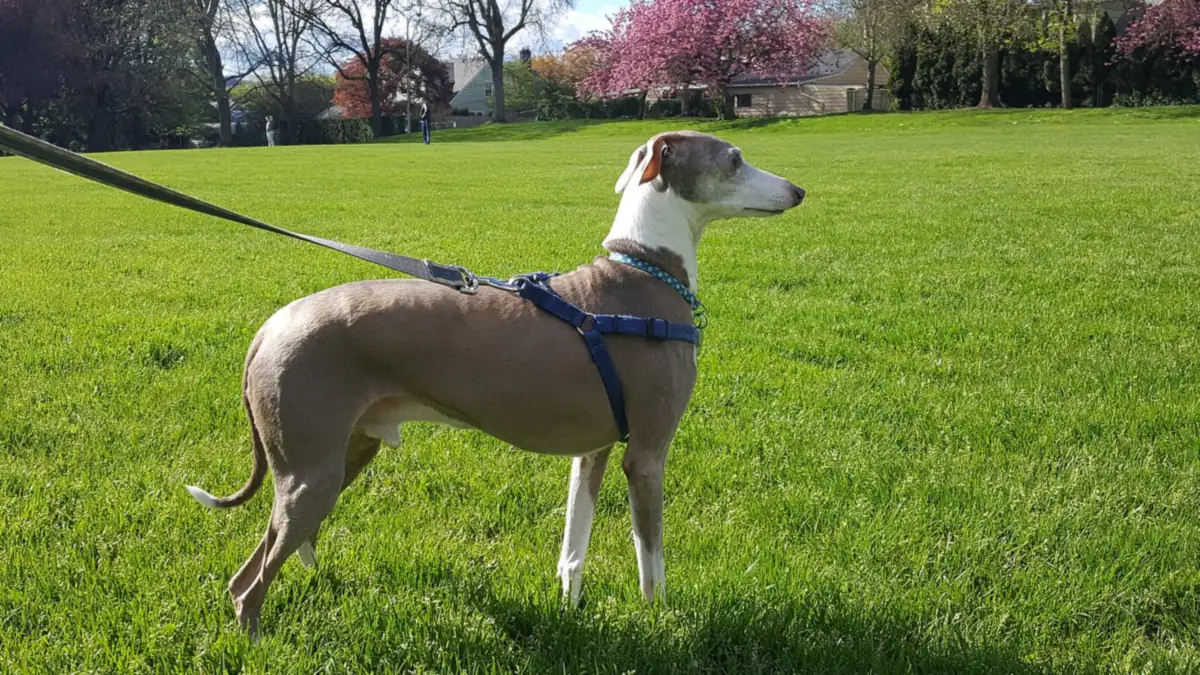

The dog breed Italian Greyhound is a toy-sized sighthound: a slim, fine-boned little runner, ideally 13 to 15 inches tall and about 7 to 14 pounds, with a short satin coat and a deep attachment to its people. Expect an affectionate, sensitive, playful companion that loves warmth, chases anything that moves, and needs its teeth, legs and house training taken seriously.
You’ll hear them called IGs or Iggies. Below is what the American Kennel Club (AKC), the Italian Greyhound Club of America (IGCA), veterinary sources and published studies say, and where they disagree.
Italian Greyhound quick facts
- Also called: IG, Iggy (AKC); Piccolo Levriero Italiano, or Italian Sighthound, in the international standard (FCI).
- Breed group: Toy Group in the AKC and the Royal Kennel Club (AKC; RKC); Sighthounds in the FCI (FCI).
- Height: ideally 13 to 15 inches at the shoulder (AKC standard).
- Weight: 7 to 14 pounds (AKC); the FCI sets a maximum of 5 kg, about 11 pounds (FCI).
- Lifespan: AKC 14 to 15 years in its quick facts, 13 to 15 in its health notes (AKC). A UK study found a median of 14.0 years (McMillan et al., 2024).
- Energy (AKC rating): 3 out of 5.
- Grooming (AKC rating): 1 out of 5 for the coat. Teeth and nails are the real work.
- Shedding (AKC rating): 3 out of 5.
- Barking (AKC rating): 3 out of 5.
- Good with young children (AKC rating): 3 out of 5, with supervision. The breed club is more cautious (see below).
- Good with other dogs (AKC rating): 5 out of 5. Choose gentle playmates.
- Recommended health tests: kneecaps, thyroid and eyes (IGCA).
- Good fit for: someone home much of the day, with a fenced yard or a leash habit, a warm sofa and a toothbrush.
History: a very old lap dog
The AKC says archaeological evidence suggests Italian Greyhounds were bred as noble companions some 2,000 years ago, in what is now Greece and Turkey. The breed “came into its own in Renaissance Italy,” where miniature versions of popular breeds were a status symbol, and it appears in paintings by Renaissance masters. Royal owners included Anne of Denmark, Frederick the Great, Catherine the Great and Queen Victoria (AKC).
The FCI, the international federation of kennel clubs, tells a longer story. Its standard traces the breed to small sighthounds at the court of the Egyptian pharaohs, then through Greece to Italy around the start of the 5th century BC (FCI). Both agree on the Renaissance heyday. The older chapters are harder to prove, so treat them as tradition.
The AKC registered its first Italian Greyhound in 1886. The two world wars nearly wiped out the breed in Europe, and American breeders helped rebuild it afterward (AKC). That narrow base still matters: a University of California, Davis study found the US breed began with a small number of European founders and stayed fairly isolated (Pedersen et al., 2015).
Was it bred to hunt? The IGCA says opinions differ, and that the breed most likely worked both as a small-game hunter and as a companion (IGCA).
Appearance: one breed, two rulebooks
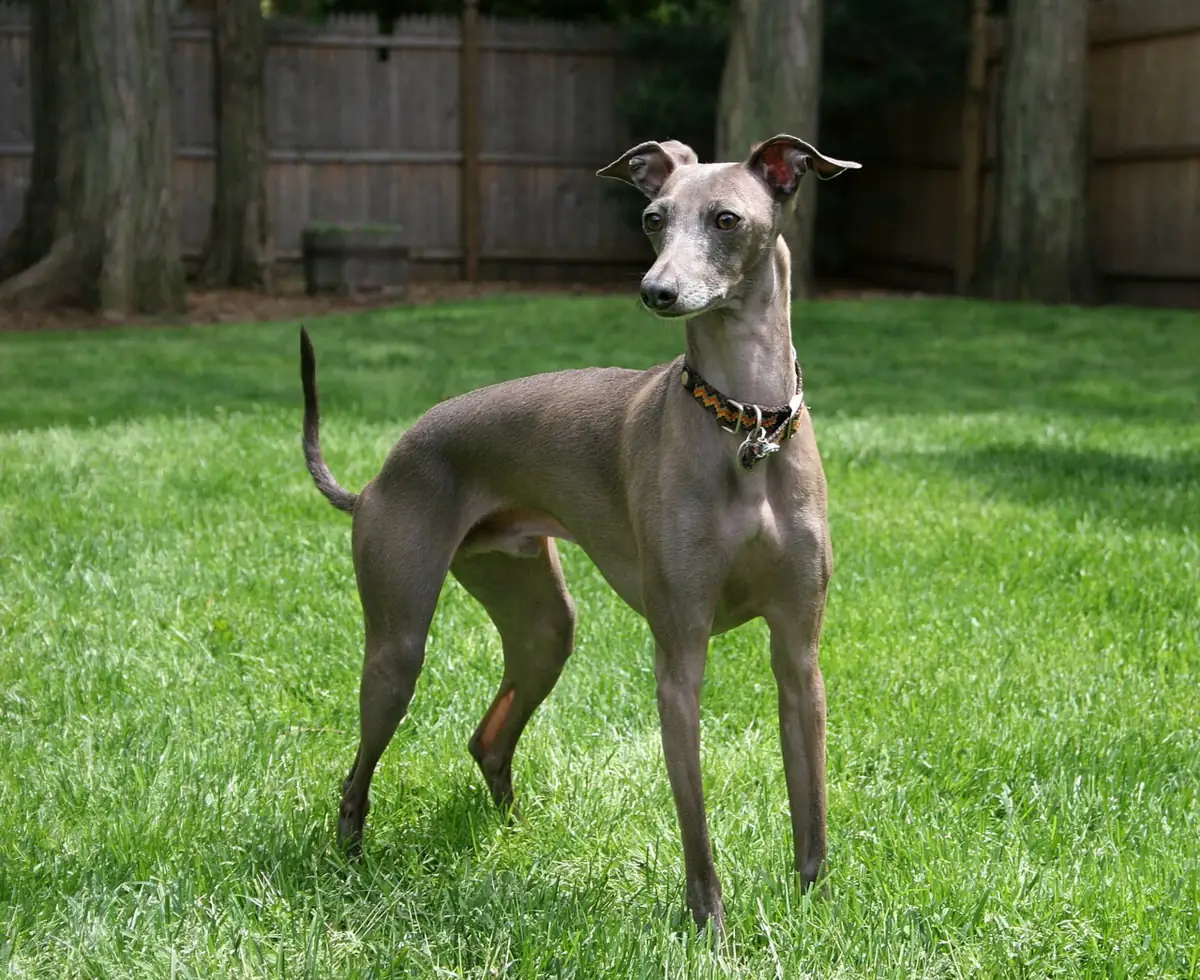
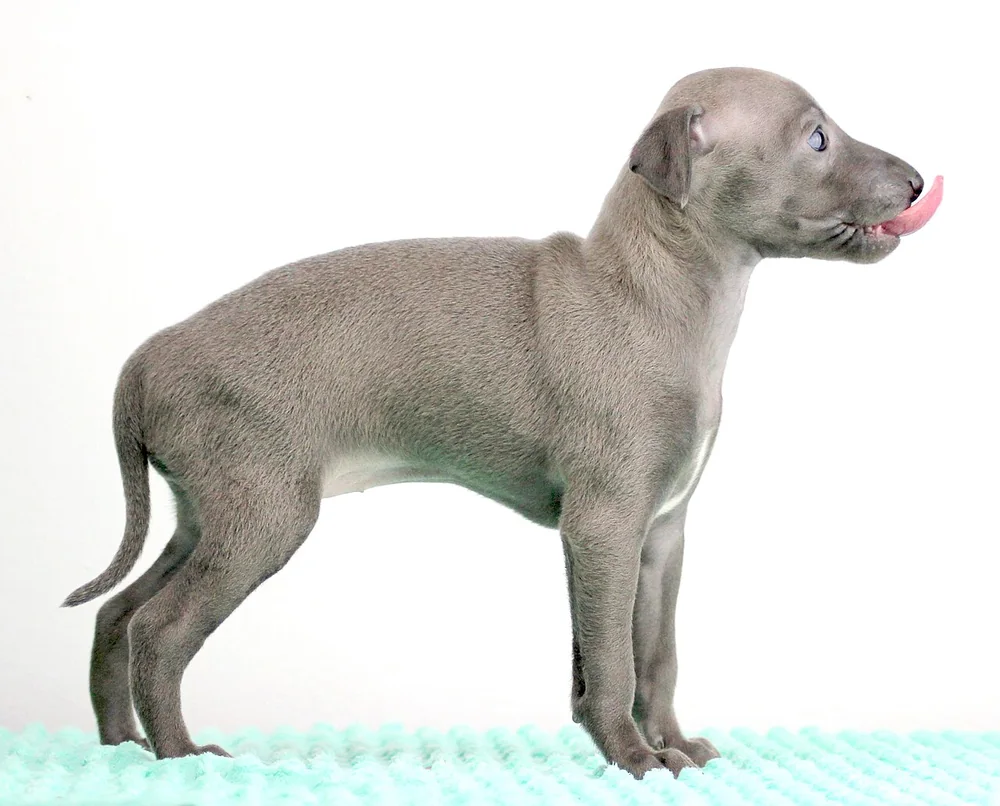
The AKC standard describes a dog “very similar to the Greyhound, but much smaller and more slender in all proportions and of ideal elegance and grace.” Look for a long, narrow head, dark eyes, small folded ears, an arched neck, a deep narrow chest, a tucked-up belly and a slim, low tail. The coat is short and “glossy like satin” (AKC standard).
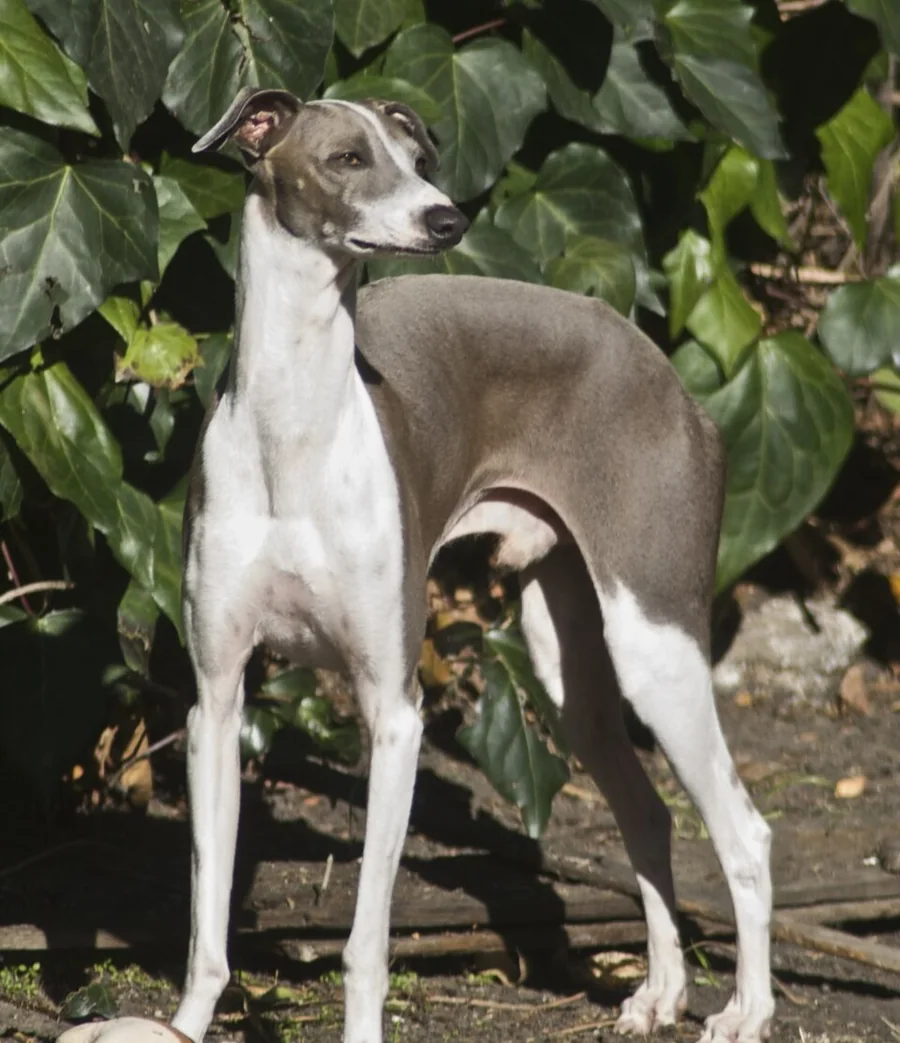

What counts as correct depends on where you live. This is the part most breed pages skip.
| AKC standard (US) | FCI standard (international) | |
|---|---|---|
| Group | Toy | Sighthounds |
| Height | Ideally 13 to 15 in | 32 to 38 cm (about 12.6 to 15 in) |
| Weight | Not stated | Maximum 5 kg (about 11 lb) |
| Colors | Any, except brindle and black-and-tan style markings | Solid black, gray or isabella (pale beige) |
| White | Allowed | Only on chest and feet |
| Back | Curved, high at the withers, drooping at the hindquarters | Straight, with a slightly arched loin |
| Movement | ”High stepping and free" | "Springy,” slightly raised trot; a hackney action is a fault |
Sources: AKC standard; FCI standard.
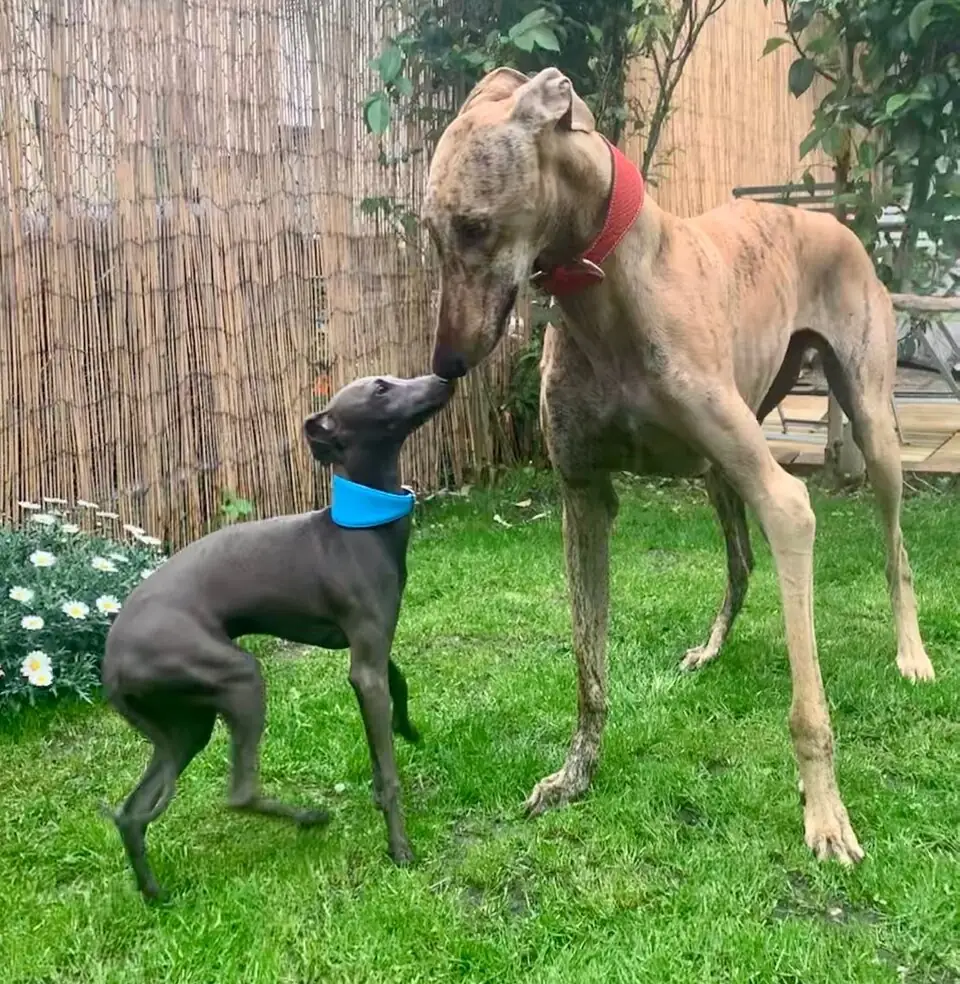
So a dog with white on its neck and legs, like the one above, is fine in an American ring but would not fit the FCI color rule, and a brindle one is disqualified under the AKC standard. None of that makes a dog a better or worse pet.

Temperament: affectionate and sensitive
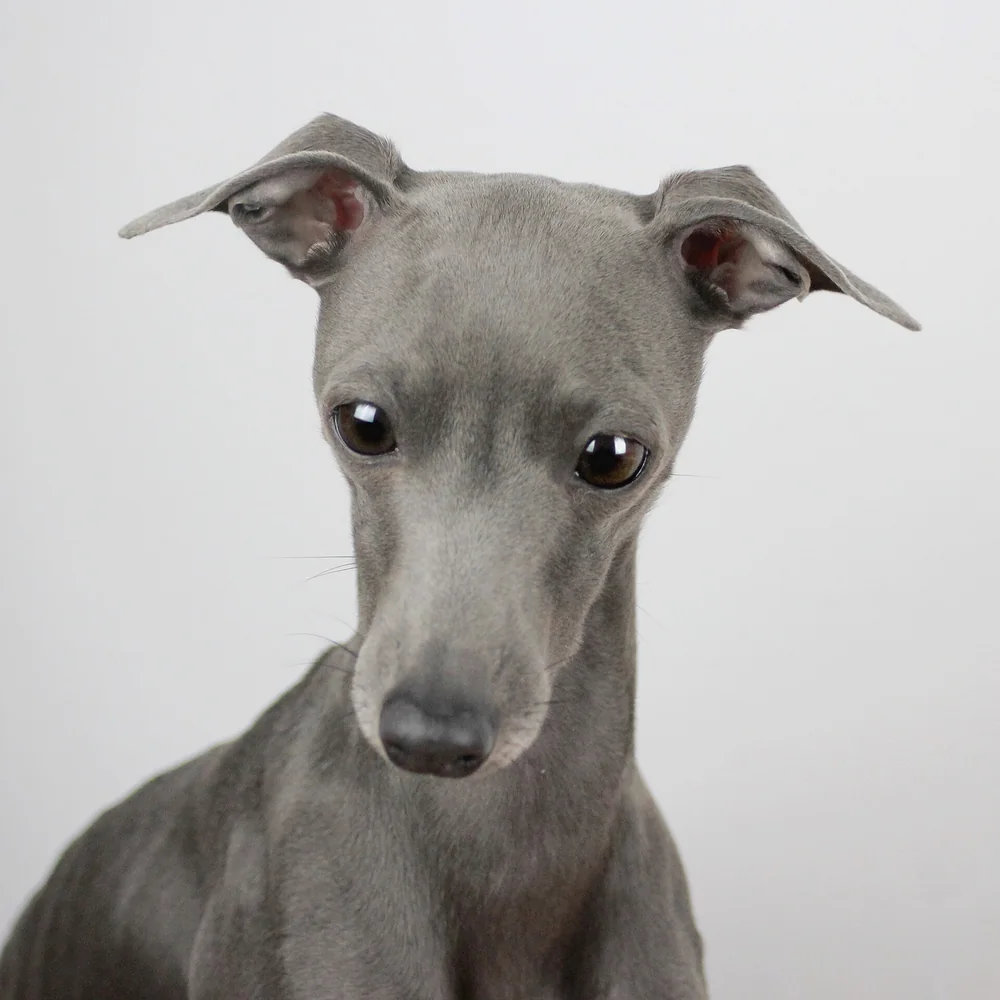
The AKC sums the breed up as “alert, playful, and highly affectionate” and rates it 5 out of 5 for affection with family (AKC). The IGCA says an Italian Greyhound is happiest with its owner and immediate family, and would “much rather be in your lap or bed than on the floor” (IGCA).
Our sources don’t agree on everything, and that is useful to know:
- Strangers. The AKC rates openness to strangers 5 out of 5. The breed club says an IG “may sometimes seem a trifle aloof with strangers” and needs early, regular socializing (AKC; IGCA). Ask about the dog in front of you.
- Children. The AKC gives a 3, meaning with supervision. The IGCA says that because of fine bones and a sometimes timid nature, IGs in general “do not make good pets for households with very young or rambunctious children or large, active dogs” (AKC; IGCA).
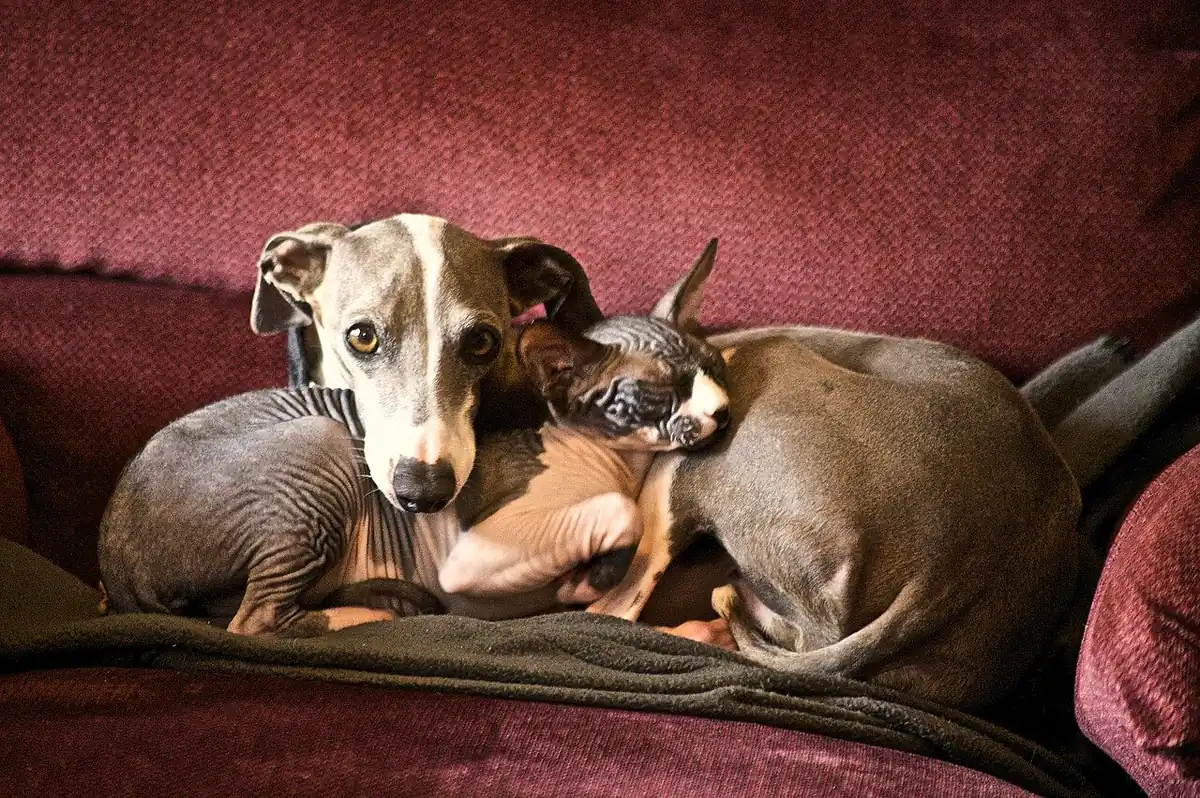
- Cats and small pets. Iggies are chasers. The AKC says they “will bolt after quick-moving prey” (AKC). Some share a sofa with a cat, like Louie below, but ask how a particular dog has done.
Breed is only part of the story. A study that surveyed owners of 18,385 dogs found breed explains just 9% of the behavior differences between individual dogs (Morrill et al., 2022).

Italian Greyhound vs Whippet vs Greyhound
They look like small, medium and large of the same dog, but they are three separate breeds. The 1 to 5 ratings are the AKC’s (5 = most).
| Italian Greyhound | Whippet | Greyhound | |
|---|---|---|---|
| AKC group and year | Toy, 1886 | Hound, 1888 | Hound, 1885 |
| Height | 13 to 15 in | 18 to 22 in | 27 to 30 in |
| Weight | 7 to 14 lb | 25 to 40 lb | 60 to 70 lb |
| Life expectancy (AKC) | 14 to 15 yrs | 12 to 15 yrs | 10 to 13 yrs |
| Median survival (UK study) | 14.0 yrs | 13.4 yrs | 11.5 yrs |
| Affectionate with family | 5 | 5 | 4 |
| Good with young children | 3 | 5 | 3 |
| Good with other dogs | 5 | 5 | 4 |
| Openness to strangers | 5 | 3 | 3 |
| Playfulness | 4 | 4 | 3 |
| Energy | 3 | 4 | 4 |
| Barking | 3 | 1 | 3 |
| Trainability | 4 | 3 | 3 |
| Shedding | 3 | 2 | 2 |
| Coat grooming | 1 | 1 | 1 |
| Health tests (AKC) | Kneecaps, eyes, thyroid | Heart, eyes, hearing | Heart, eyes, nerve disease DNA test |
Sources: AKC Italian Greyhound, AKC Whippet, AKC Greyhound, and McMillan et al., 2024 (Supplementary Table S3) for median survival.
How to choose. If you love the look but want a quieter dog that the AKC rates higher with children, read our Whippet guide. If a dog you can carry matters most, the Italian Greyhound wins. If you want a big couch companion and can manage 60 to 70 pounds, look at a Greyhound. All three need a leash or a secure fence.
Is a Whippet just an Italian Greyhound cross? No. The AKC says it is uncertain which breeds made the Whippet, though one of its articles says the ancestors may include Italian Greyhounds and terriers (AKC Whippet; AKC).

Exercise: short bursts, safe places
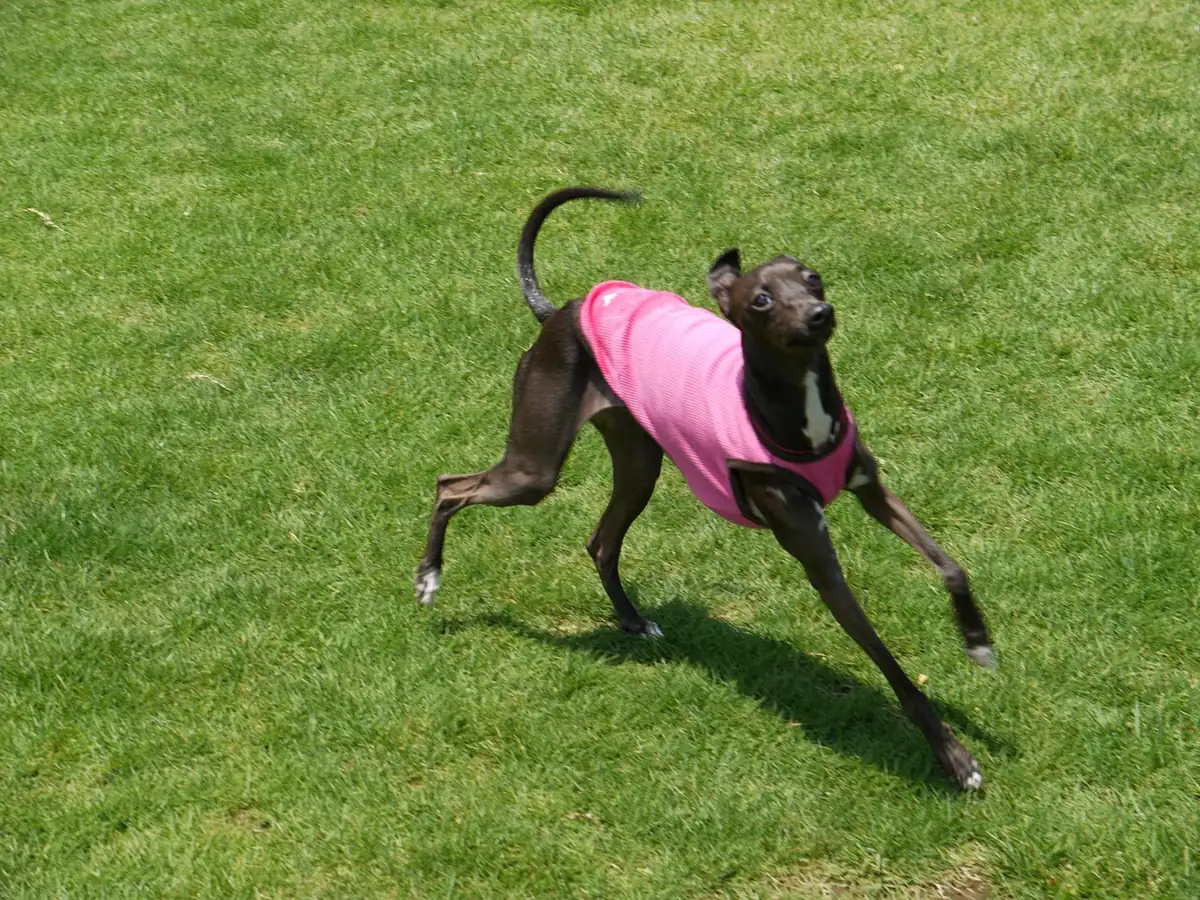
The AKC says playtime is mostly enough, and that walks on lead are appreciated (AKC). VCA suggests a moderate walk or a sprint in an enclosed area every day, and the Royal Kennel Club says up to an hour a day (VCA; RKC).
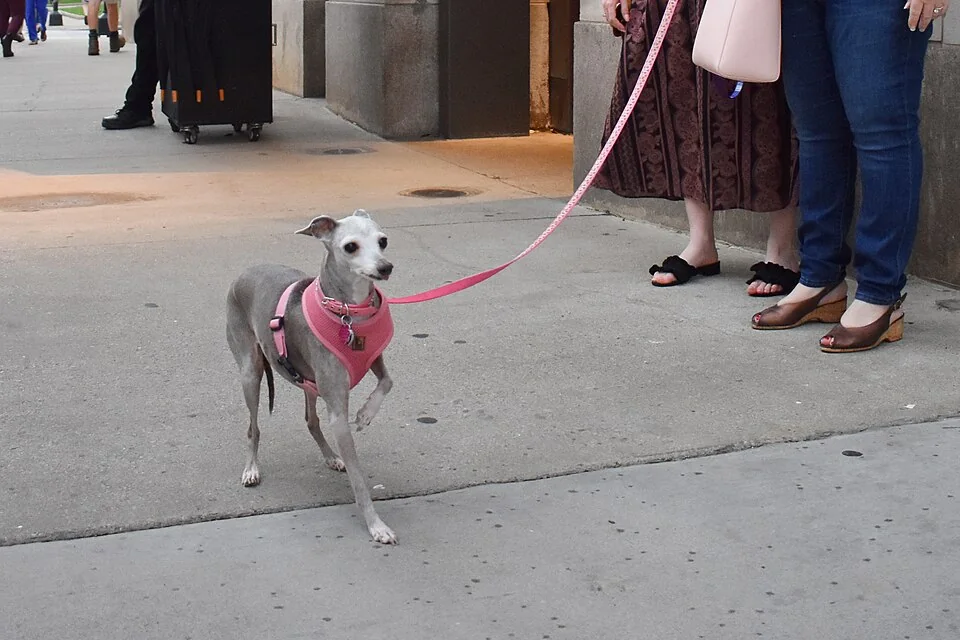
Leash or fence, always. The AKC says even obedience-trained Italian Greyhounds should not be off lead outdoors in unfenced areas, because small moving animals are “a huge incentive to run, possibly into danger” (AKC). The breed club recommends a martingale type lead, and the rescue foundation sends its dogs home with one so they’re less likely to escape if spooked (IGCA; IGRF).
Check the fence. The Italian Greyhound Rescue Foundation (IGRF) asks for a fence of at least 4 feet, with no gaps wider than 2 inches, and doesn’t accept underground electric fences (IGRF).
Pick playmates by size. The IGRF says never to trust an IG in a dog park that mixes large and small dogs, even with you nearby (IGRF).
For fun: lure coursing, agility, rally, scent work, trick dog titles and therapy visits are all on the breed club’s list (IGCA).

Cold, rain and heat
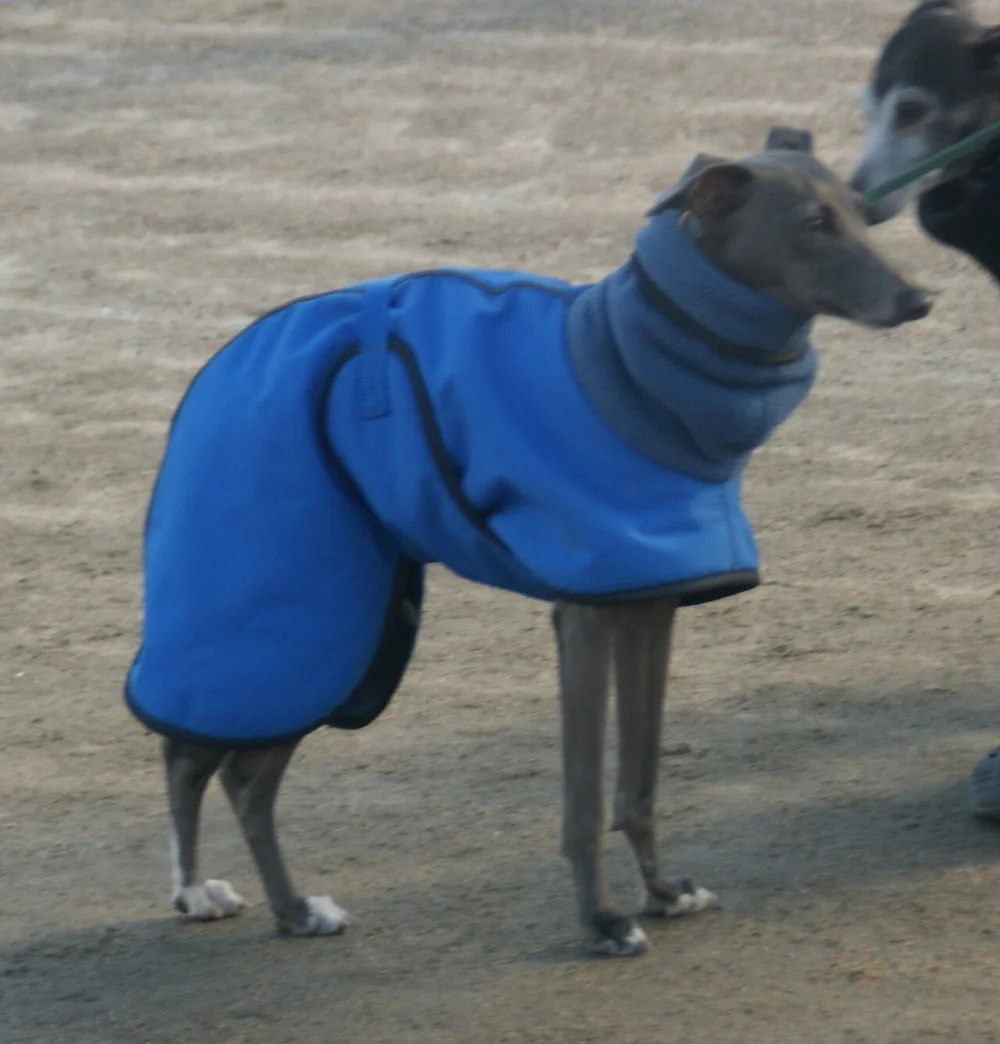
This is a short-coated dog with little body fat. VCA says the coat “provides virtually no protection against cold weather” and that a coat or sweater may help (VCA). The IGCA says IGs aren’t suited to long exposure to extreme cold, though many live happily in northern climates. They don’t mind a romp in snow but dislike rain in their faces, and they “are not kennel, backyard or basement dogs” (IGCA health; IGCA).
A simple plan:
- A coat that covers. For short-haired dogs, the ASPCA suggests a high collar or turtleneck and coverage from the base of the tail to the belly (ASPCA).
- Short trips, dry paws. Go out, do the business, come in, towel off.
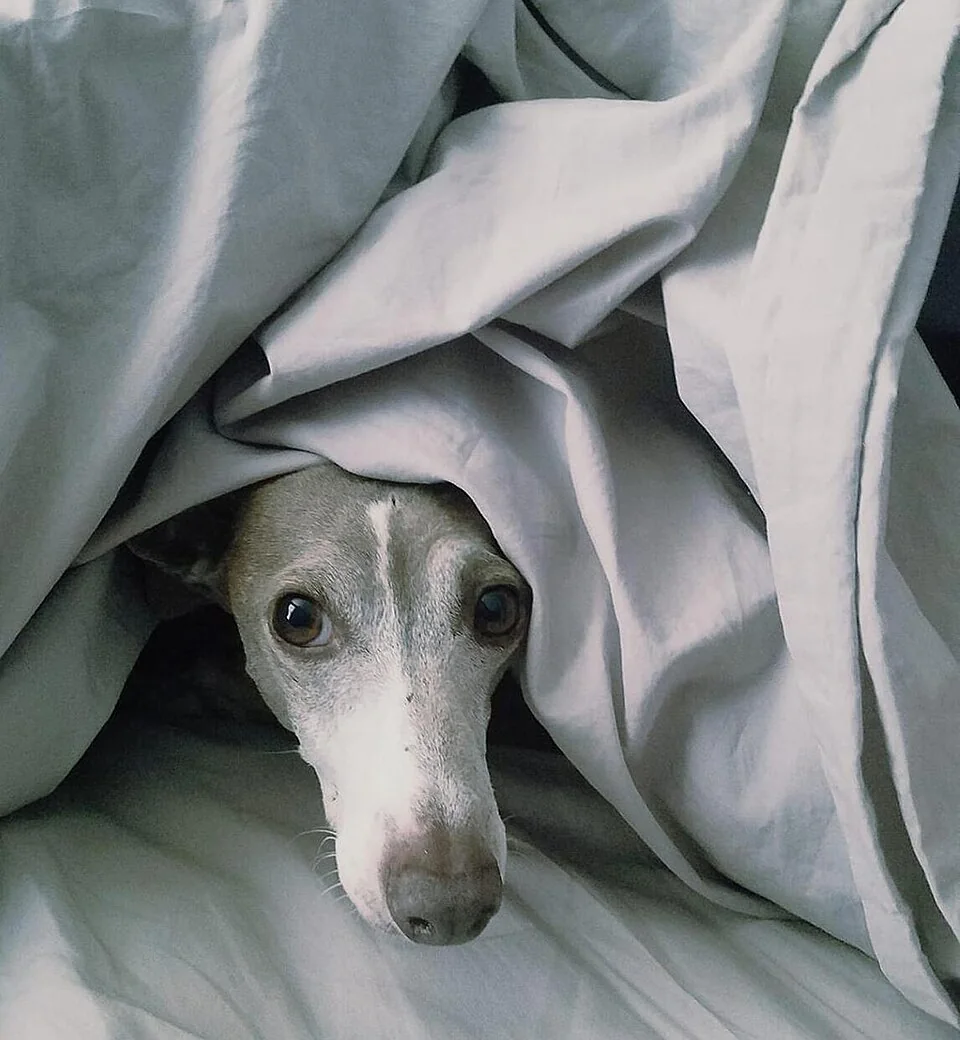
- A warm bed off the drafty floor, with a blanket to burrow under. Check before you sit down.
- A covered toilet spot for rainy days, which also helps house training.
Heat counts too. In an Australian study of 119 heat-illness cases, the Italian Greyhound was among the breeds at higher risk than crossbreeds (Tripovich et al., 2023). That is a small number of cases across many breeds, so treat it as a nudge: shade, water and cool hours.

Grooming: easy coat, serious teeth
- Coat. The AKC says baths are rarely necessary, and gentle brushing is enough (AKC). You may read that Iggies barely shed. The Royal Kennel Club lists them as non-shedding, while the AKC rates them 3 out of 5 (RKC; AKC). Expect some short hairs.
- Teeth. The AKC calls brushing the most important grooming tip for the breed, “preferably daily,” with veterinary cleaning yearly or as needed (AKC). Our page on professional dental cleanings explains that visit.
- Nails. The IGCA recommends grinding or filing one to three times a week, and says it helps prevent leg breaks. Never take a nail all the way to the quick (IGCA; AKC).
Are they hypoallergenic? No dog is. The AKC says there is no such thing as a 100% hypoallergenic breed (AKC). Spend time with the dog first, and see our hypoallergenic breeds guide for lower-shedding options.
Training and house training
The AKC says the breed responds best to reward-based methods, and that “harsh methods just don’t work with these intelligent, sensitive little dogs, even though they can be stubborn” (AKC). You may read that you must be a “pack leader.” The American Veterinary Society of Animal Behavior says “there is no evidence that aversive training is necessary” (AVSAB, 2021). Small treats, short sessions and a kind voice are the way in.
House training is the honest hard part. The IGRF calls it one of the top reasons both puppies and adults are given up, and says accidents happen when it’s cold, wet or frosty (IGRF). If that happened in your home, you’re in good company. What the breed club and rescue suggest:
- Go out with the dog and make sure it has actually finished.
- Use the clock: on waking, after meals, when you come home, before bed.
- Reward outside, right away, with a small treat.
- Keep the dog near you indoors. Wandering off is often the sign.
- Make bad weather easier: a coat, a covered spot, a cleared path.
- Consider pads or a litter box if you live in an apartment or a cold, rainy place.
- Be patient. The IGCA advises diligent attention for the first couple of years.
Sources: IGRF; IGCA. Our potty training guide has a step-by-step plan. A sudden change in a trained dog is a reason to call your vet.
Diet and weight
The AKC advises a high-quality food suited to the dog’s age, and warns that these dogs become overweight easily. On an IG at a proper weight, the hip bones should just be seen. Ribs shouldn’t be visible, but you should feel them under a thin covering (AKC). To people used to stockier dogs, that looks skinny. The breed club says adults should eat twice a day, and puppies three times a day until at least six months (IGCA). Ask your vet how much to feed yours.
Health: what to know and ask
The IGCA calls the breed “relatively healthy” and says IGs are sturdier than they look (IGCA). The AKC says most are healthy dogs (AKC). Most dogs won’t have most of what follows. It’s here so you know what to ask your vet.
| Topic | What the source says |
|---|---|
| Broken legs | The AKC says to avoid situations that could lead to a broken leg (AKC). See the next section. |
| Gum disease | The IGCA says it is common in IGs whose teeth aren’t cared for daily (IGCA). Cornell says it’s worse in smaller breeds, and that daily brushing is the mainstay of home care (Cornell). |
| Enamel hypoplasia | An inherited enamel defect: thin, rough, brownish teeth. A 2013 study found it in 14% of IGs, and 30% of dogs with normal teeth carried the gene. It wasn’t linked to gum disease. A DNA test exists (Gandolfi et al., 2013). |
| Kneecaps | Patella exam recommended once after 12 months (IGCA). Affected dogs may “skip” for a few steps (ACVS). |
| Thyroid and autoimmune disease | Thyroid blood tests are recommended from age two (IGCA). UC Davis researchers described multiple autoimmune problems in US dogs and tied risk to lost genetic diversity (Pedersen et al., 2012; 2015). |
| Eyes | Yearly eye exams to age 10, and DNA tests for progressive retinal atrophy and a form of glaucoma, are on the breed club’s lists (IGCA). In a 4,217-dog study of eye exams, IGs had a higher likelihood of vitreous degeneration, which wasn’t linked to cataracts or glaucoma (Krishnan et al., 2020). |
| Legg-Calvé-Perthes disease | The AKC says responsible breeders screen for it (AKC). VCA describes it as a hip condition of small breeds that shows up in young dogs (VCA). |
| Coat thinning | VCA lists the IG among breeds with color dilution alopecia, most often in blue or fawn coats (VCA). |
| Seizures, allergies, stomach upsets | Reported in some IGs, “but not to any great extent” (IGCA). |
| Skin lumps | A Colorado State laboratory review found IGs, Greyhounds and Whippets overrepresented among dogs with nonvisceral hemangiosarcoma, a tumor found mostly in skin (Schultheiss, 2004). Have any new lump checked. |
| Blood tests | Sighthounds have different normal ranges, and a study of eight breeds advised against applying Greyhound values to the others (Uhríková et al., 2013). |
Protecting those long legs
The breed club tells owners of young dogs to be alert to situations that could lead to a leg break until the dog “develops common sense” (IGCA). VCA says a dog raised with free running has strong bones, while one raised without the chance to run and jump may be susceptible to breaks when finally allowed to jump off things (VCA). So the aim is safe movement, not bubble wrap.
- Start with low objects, and teach the puppy how to get down, as the IGCA suggests.
- Put ramps, steps or rugs by the sofa and bed.
- Sit down before handing the dog to someone.
- Skip rough play with much larger dogs.
- If a leg is held up or looks wrong, call a vet right away.
There’s reassuring news too. A review of 461 fractures at two teaching hospitals found that forearm fractures in toy breeds did not have higher odds of slow or failed healing, and called the outlook better than historically believed (Marshall et al., 2022).
Before any surgery or dental cleaning
Ask your vet two things.
How will you manage anesthesia? The IGRF says sighthounds’ low body fat makes them more prone to chilling and can change how they handle some drugs, so owners should talk with the vet first (IGRF).
Should we think about delayed bleeding? Some sighthounds bleed in the days after surgery. Washington State University researchers tested for a gene variant used as a risk marker. It made up 42% of the gene copies in Italian Greyhounds, against 52% in Greyhounds and 25% in Whippets. Their 2025 paper describes one bleeding case, in an Irish Wolfhound rather than an Italian Greyhound, and calls for more research (Court et al., 2025). Bring it up, and ask what to watch for at home. Please don’t put off a needed cleaning.

Lifespan
- AKC: 14 to 15 years in quick facts, 13 to 15 in the health section (AKC).
- IGCA: not unusual to live to 14 or 15, and often longer (IGCA).
- VCA: 12 to 15 years (VCA).
- McMillan et al., 2024: a median of 14.0 years, among the longest in a study of 584,734 UK dogs. Only 70 Italian Greyhound deaths were recorded, so the likely range is 13.2 to 15.1 (McMillan et al., 2024).
A median is a midpoint, so about half live longer. No one can promise a number for one dog.
Italian Greyhound puppies
The IGCA describes puppies that “think they can fly” and bursts of energy followed by naps. It says a puppy alone should be crated no more than two to three hours, or left in a safe pen, and that house training is very difficult if nobody is home during the day (IGCA).
If you buy, meet the mother, ask for the kneecap, thyroid and eye results, and ask about the DNA tests above. The IGRF warns of scam puppy websites that avoid video chat and want payment by Zelle, wire or gift card (IGRF). An adult in a foster home is often the easier start.

Is an Italian Greyhound right for me? A checklist for 50+ adopters
A few “no” answers don’t rule you out. They tell you what to plan for.
- Yes / No: I’d enjoy a small dog that wants to be on me, beside me or under my blanket.
- Yes / No: Someone is home much of the day.
- Yes / No: I can be patient about house training, and go out in the rain.
- Yes / No: I’m willing to brush teeth daily and budget for professional cleanings.
- Yes / No: I’ll keep a dog leashed or fenced, every time.
- Yes / No: I can watch where I step. Night lights and a bed in each room would be easy to add.
- Yes / No: Visiting grandchildren can follow “sit on the floor, gentle hands” rules, with me right there.
- Yes / No: I can keep nails short, or pay someone to.
- Yes / No: I’ve thought about who would care for this dog if I ever couldn’t.
An Iggy may suit you if you’re home a lot, want a dog you can lift, like short play sessions more than long hikes, and think a dog in a sweater is a good thing.
Consider a different dog if you want off-leash walks, have toddlers or big rowdy dogs, need instant house training, or would rather not fuss over teeth. Our guide to dog breeds for people over 50 and our best small dog breeds list cover other choices.

Costs to plan for
We don’t quote puppy prices, since sellers set their own. The ASPCA estimates $1,391 a year for a dog, and $3,221 in the first year with one-time costs (ASPCA). For this breed, leave room for dental cleanings, warm clothes, secure fencing, and insurance or an emergency fund in case of a broken leg.
Adopting an Italian Greyhound
Bone Voyage is a publisher now and doesn’t place dogs. Start with your local shelters, then look at breed rescue. We checked these two groups’ own websites in November 2026:
- Italian Greyhound Rescue Foundation (United States) is the rescue the breed club points to (IGCA). You apply through the representative for your state, and it checks vet references and does a home visit. Adoption donations depend on the dog’s age. Its Senior Adoption Program says senior dogs are “some of the easiest and most well-adjusted dogs” in foster care, often with good potty habits, and have the lowest donation. Note that it doesn’t offer trial periods (IGRF).
- The Italian Greyhound Rescue Charity (England, Scotland and Wales) gives advice, emergency care and lifelong rehoming for Italian Greyhounds and IG crosses. Its site lists registered charity number 1104157.
Listing a group isn’t an endorsement. Ask your own questions, and check that they cover your area.
Is that shelter dog really an Italian Greyhound? Maybe. In one study, shelter staff’s main breed label matched the main breed in the DNA for 56.7% of 384 dogs (Gunter et al., 2018). A slim little dog with folded ears could be an IG, a cross, or something else. Meet the dog, not the label. Our guide to figuring out your dog’s breed explains the options.
Questions to ask the rescue
- Is it house trained, where does it go, and what happens in rain or cold?
- How does it do alone, and for how long?
- Has it ever broken a leg? Any plates, or limits on jumping?
- What did the vet find on its teeth, kneecaps, eyes and thyroid? Any dental work due?
- How is it with strangers, children, cats and larger dogs?
- Does it slip collars, climb or jump fences?
- Is it happy being lifted, dressed, and having its nails and mouth handled?
- Will you take the dog back if it doesn’t work out?
The ASPCA suggests leaning on shelter staff to find a match for your life (ASPCA), and our 9 questions to ask when adopting a dog covers the general ones.

Give your dog a backup plan
An Italian Greyhound bonds closely and may be with you for many years. Naming a backup caregiver now, someone who knows your dog and has agreed to step in, helps make sure it never has to go to a shelter. Our guide What Happens to Your Dog When You Die walks you through it, and the free My Dog’s Backup Plan worksheet records routine, vet and quirks (which blanket, which sofa). Bone Voyage is also building the pledge: a promise by a volunteer to adopt a specific older adult’s dog if that person dies or can no longer care for it. You can join the free list on the guide page.
Similar dogs to compare
- Whippet, the next size up.
- Borzoi, Afghan Hound and Irish Wolfhound, the large sighthounds.
- Basenji, a small hound the AKC also counts as a sighthound.
- Types of hounds, for how sighthounds and scenthounds differ.
Frequently Asked Questions
At what age do Italian Greyhounds calm down?
We found no study that puts an age on it. The Italian Greyhound Club of America says the breed stays playful until long past puppyhood, and that house training can need close attention for the first couple of years. The AKC rates adult energy 3 out of 5. If you want a settled dog, adopt an adult whose foster home can tell you what its days are like (IGCA; AKC).
What is the smaller version of a Greyhound?
There are two. The Whippet is the middle size, at 18 to 22 inches and 25 to 40 pounds. The Italian Greyhound is the toy size, ideally 13 to 15 inches and about 7 to 14 pounds. They are separate breeds, not small Greyhounds. The AKC puts the Whippet in its Hound Group and the Italian Greyhound in its Toy Group (AKC Whippet; AKC Italian Greyhound).
Is an Italian Greyhound a hunting dog?
It is a true sighthound with a strong urge to chase, but it has mostly been a companion. The AKC calls it a popular companion and perhaps a small-game hunter. The breed club says opinions differ and that it most likely filled both roles. Today most of that instinct goes into play, lure coursing and the occasional squirrel (AKC; IGCA).
Which breeds are considered sighthounds?
The AKC counts 16: Afghan Hound, Azawakh, Basenji, Borzoi, Cirneco dell’Etna, Greyhound, Ibizan Hound, Irish Wolfhound, Italian Greyhound, Pharaoh Hound, Portuguese Podengo Pequeno, Rhodesian Ridgeback, Saluki, Scottish Deerhound, Sloughi and Whippet. Other registries recognize more, and group them differently (AKC).
How big does an Italian Greyhound get full grown?
The AKC standard asks for 13 to 15 inches at the shoulder and sets no weight. The AKC breed page lists 7 to 14 pounds. The international FCI standard is a little stricter, at 32 to 38 centimeters (about 12.6 to 15 inches) and no more than 5 kilograms (about 11 pounds) (AKC standard; AKC; FCI).
Are Italian Greyhounds hard to house train?
They often take longer. The Italian Greyhound Rescue Foundation calls house training one of the top reasons puppies and adults are given up, and points to cold, rain and frost. The breed club advises close attention for the first couple of years. A steady schedule, a covered spot, a coat, rewards and, in some homes, indoor pads all help (IGRF; IGCA).
Do Italian Greyhounds need a coat in winter?
Usually, yes. VCA says the short coat provides virtually no protection against cold weather, and that a coat or sweater may help. The breed club says they are not suited to long exposure to extreme cold, though many live happily in northern climates. Keep winter outings short and the bed warm (VCA; IGCA).
Is an Italian Greyhound a good dog for an older adult?
Often, for someone who is home a lot and wants a small, affectionate shadow. The size is easy to lift and exercise needs are moderate. Think about house training, daily tooth brushing, a fine-boned dog underfoot, always using a leash or fence, and who would step in if you couldn’t care for the dog. A settled adult or senior can be a lovely start.
Before you go
The Italian Greyhound you meet will be one particular dog, with its own history and favorite blanket. Trust what you see, and what its foster family tells you, over anything on this page. And whichever dog comes home with you, decide now who would step in if you ever couldn’t.
Sources
- American Kennel Club, Italian Greyhound, Whippet and Greyhound breed pages, Official Standard of the Italian Greyhound, Get to Know the Sighthound Breeds and Hypoallergenic Dog Breeds
- Italian Greyhound Club of America, About the Italian Greyhound, Health, Performance & Sports and Rescue
- Fédération Cynologique Internationale, Standard No. 200, Piccolo Levriero Italiano
- The Royal Kennel Club, Italian Greyhound
- Italian Greyhound Rescue Foundation, home, requirements, exercise, house training, anesthesia, FAQ, finalizing an adoption and Senior Adoption Program
- The Italian Greyhound Rescue Charity, home
- VCA Animal Hospitals, Italian Greyhound, Necrosis of the Femoral Head and Color Dilution Alopecia
- Cornell University Riney Canine Health Center, Periodontal Disease
- American College of Veterinary Surgeons, Patellar Luxations
- American Veterinary Society of Animal Behavior, Position Statement on Humane Dog Training (2021)
- ASPCA, Cold Weather Safety Tips, Cutting Pet Care Costs and Finding your Fido
- McMillan KM et al. (2024). Longevity of companion dog breeds. Scientific Reports 14:531.
- Morrill K et al. (2022). Ancestry-inclusive dog genomics challenges popular breed stereotypes. Science 376(6592):eabk0639.
- Gandolfi B et al. (2013). Simple recessive mutation in ENAM is associated with amelogenesis imperfecta in Italian Greyhounds. Animal Genetics 44(5):569-78.
- Pedersen NC et al. (2012). Multiple autoimmune diseases syndrome in Italian Greyhounds. Vet Immunol Immunopathol 145:264-76.
- Pedersen NC et al. (2015). A search for genetic diversity among Italian Greyhounds. Canine Genet Epidemiol 2:17.
- Krishnan H et al. (2020). Vitreous degeneration and associated ocular abnormalities in the dog. Vet Ophthalmol 23(2):219-224.
- Schultheiss PC (2004). A retrospective study of visceral and nonvisceral hemangiosarcoma and hemangiomas in domestic animals. J Vet Diagn Invest 16(6):522-6.
- Uhríková I et al. (2013). Haematological and biochemical variations among eight sighthound breeds. Aust Vet J 91(11):452-9.
- Marshall WG et al. (2022). Delayed union, non-union and mal-union in 442 dogs. Vet Surg 51(7):1087-1095.
- Court MH et al. (2025). Delayed postoperative hemorrhage in an Irish Wolfhound, and variant prevalence across dog breeds. Front Vet Sci 12:1609780.
- Tripovich JS et al. (2023). Incidence and risk factors of heat-related illness in dogs from New South Wales. Aust Vet J 101(12):490-501.
- Gunter LM et al. (2018). A canine identity crisis. PLOS ONE 13(8):e0202633.