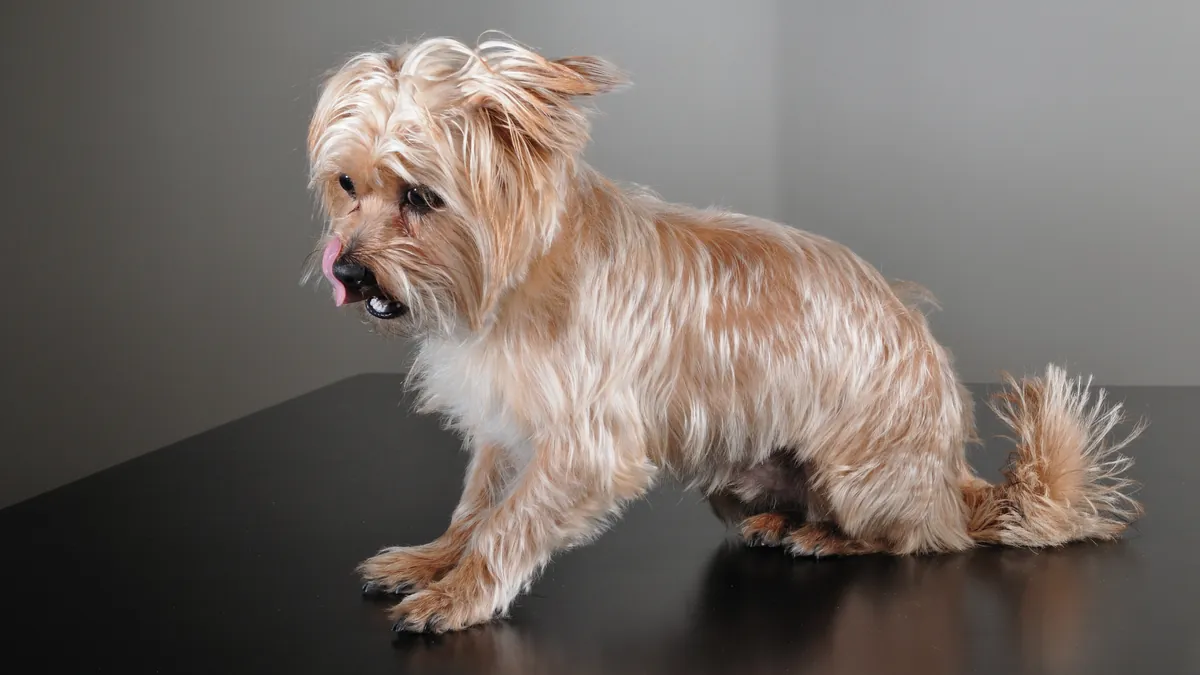
A Shih Tzu Yorkshire mix, usually called a Shorkie, is a cross between a Shih Tzu and a Yorkshire Terrier. Expect a small, affectionate, low-shedding companion of roughly 7 to 16 pounds that needs regular grooming and daily tooth care, and that may bark at the door. It isn’t a recognized breed, so size, coat, face shape and personality can land anywhere between its two parents.
You’ll also see Shorkie Tzu, Yorkie Tzu and Shih Tzu Yorkie mix. Most pages about Shorkies repeat the same unsourced numbers. This guide sticks to what the American Kennel Club (AKC), the two parent breed clubs, veterinary schools and published research actually say, is honest about what nobody has studied, and ends with a frank fit checklist and adoption tips.
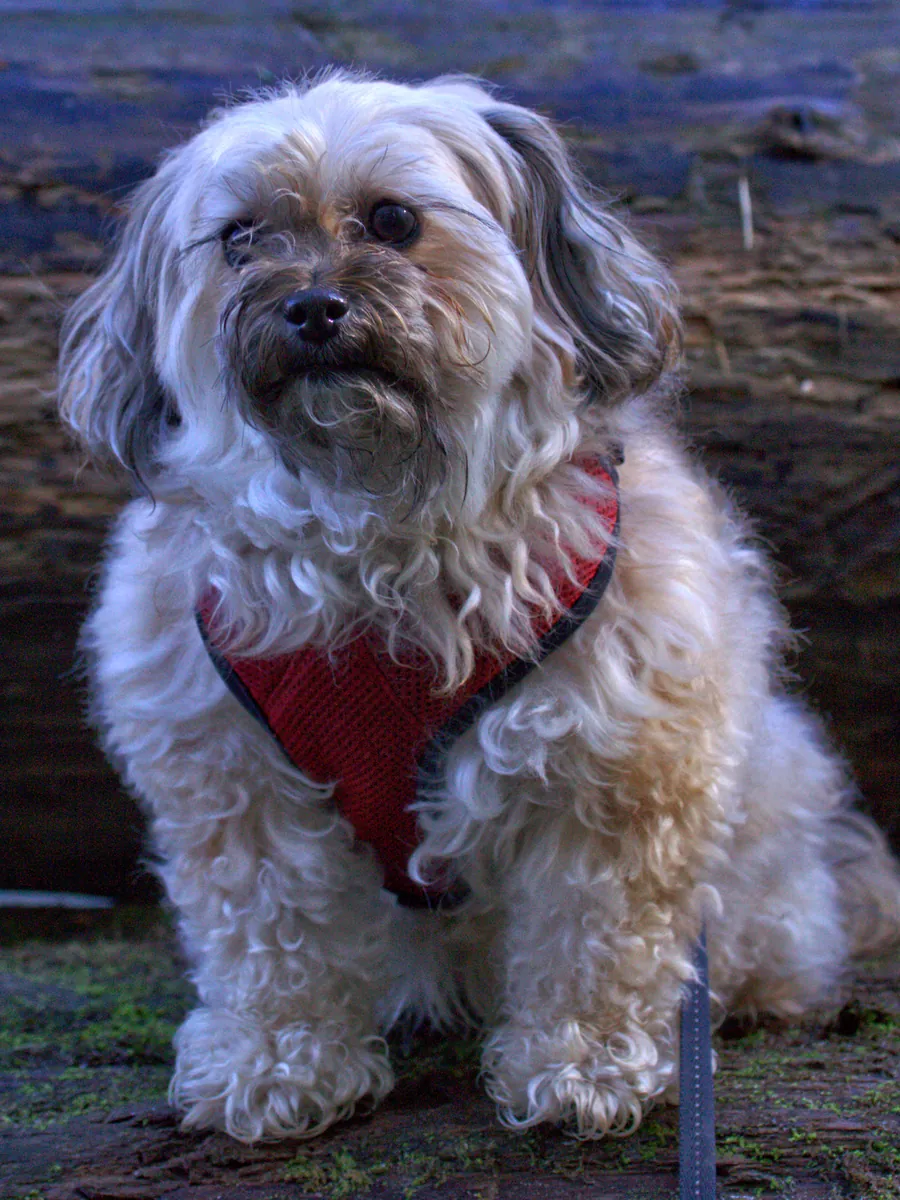
A note on our photos: every Shorkie on this page was described or tagged as a Shorkie, or as a Yorkie and Shih Tzu mix, by its owner or photographer. You’ll meet Bentley, Simba, Roxie, Cutie and others. Nobody has shown us DNA tests, but they do show how differently the same cross can turn out.
Shorkie quick facts
Figures are for the parent breeds unless we say otherwise. They are not measurements of Shorkies.
- Also called: Shorkie Tzu, Yorkie Tzu, Shih Tzu Yorkie mix. Informal names, not a recognized breed.
- Height (parent breeds): Yorkshire Terrier 7 to 8 inches (AKC); Shih Tzu 9 to 10.5 inches (AKC).
- Weight (parent breeds): Yorkie 7 pounds or less; Shih Tzu 9 to 16 pounds (same AKC pages). Pet Yorkies are often heavier than the standard; see the size section.
- Lifespan (parent breeds): Yorkie 11 to 15 years, Shih Tzu 10 to 18 (AKC). The mix has not been studied.
- Energy (AKC ratings): Yorkie 4 out of 5, Shih Tzu 3.
- Barking (AKC ratings): Yorkie 4 out of 5, Shih Tzu 3.
- Shedding (AKC ratings): 1 out of 5 for both, the lowest score. Low shedding is not the same as allergy-free.
- Grooming (AKC ratings): Yorkie 5 out of 5, Shih Tzu 4.
- Good with young children (AKC ratings): 5 out of 5 for both, but a dog this small still needs close supervision.
- Good with other dogs (AKC ratings): Yorkie 3 out of 5, Shih Tzu 5.
- Face: the Shih Tzu is short-faced (brachycephalic); the Yorkie’s muzzle is longer. A Shorkie can be anywhere in between.
- Health to ask about: teeth, kneecaps, eyes, breathing, windpipe and liver. Sources below.
- Good fit for: someone home much of the day who wants a small, cuddly shadow and will brush, or budget for a groomer.
What a Shorkie actually is
A Shorkie has a Shih Tzu on one side of the family and a Yorkshire Terrier on the other. Some are first-generation crosses of two purebred dogs. Others have Shorkie parents, or are small shaggy dogs given the label because they look the part.
The AKC does not recognize the cross. It recognizes the Shih Tzu and the Yorkshire Terrier separately, each with its own breed standard and parent club. Some websites say a designer-dog registry “recognizes” the Shorkie, but we couldn’t confirm that with any registry, so we don’t repeat it.
Where did the cross come from?
We found no reliable record of who first bred Shih Tzus to Yorkies on purpose, or when. You’ll see confident dates elsewhere, without sources. The parents’ stories are well documented.
The Shih Tzu side. The AKC says imperial breeders in the palace of the Chinese emperor developed the Shih Tzu (the name means “lion dog”) centuries ago from Tibetan stock, most likely from crosses of the Lhasa Apso and the Pekingese. It stayed “hidden behind palace walls” until the 1930s and entered the AKC Stud Book in 1969 (AKC). The breed standard says “the sole purpose of the Shih Tzu is that of a companion and house pet” (AKC Shih Tzu standard). Our Shih Tzu breed guide covers the breed in more depth.
The Yorkie side. The AKC says the Yorkshire Terrier was developed in the mid-1800s in the northern English counties of Yorkshire and Lancashire, probably by Scottish weavers who brought their small terriers with them. Its beginnings were “distinctly working-class,” catching rats, before it became a fashionable lapdog. The AKC lists 1885 as the year of recognition (AKC). Our Yorkshire Terrier guide covers the breed itself.
So a Shorkie is part palace lapdog and part mill-floor ratter. That mix explains a lot.
Shih Tzu vs Yorkie: the two parents side by side
This is the heart of “what will my Shorkie be like?” The numbers are registry figures and the AKC’s 1 to 5 trait ratings (5 = most).
| Shih Tzu | Yorkshire Terrier | |
|---|---|---|
| Origin | China, palace companion | England, working terrier |
| AKC Toy Group since | 1969 | 1885 |
| Height | 9 to 10.5 in | 7 to 8 in |
| Weight | 9 to 16 lb | 7 lb or less |
| Life expectancy (AKC) | 10 to 18 yrs | 11 to 15 yrs |
| Muzzle | Short and square, ideally no more than 1 in | Not too long |
| Coat | Long, flowing, double | Long, silky, straight, single |
| Affectionate with family | 5 | 5 |
| Good with young children | 5 | 5 |
| Good with other dogs | 5 | 3 |
| Openness to strangers | 3 | 5 |
| Watchdog nature | 3 | 5 |
| Playfulness | 3 | 4 |
| Energy | 3 | 4 |
| Barking | 3 | 4 |
| Trainability | 4 | 4 |
| Mental stimulation needs | 3 | 4 |
| Shedding | 1 | 1 |
| Grooming | 4 | 5 |
Sources: AKC Shih Tzu, AKC Yorkshire Terrier, AKC Shih Tzu standard, AKC Yorkshire Terrier standard.
The pattern to notice: both parents score top marks for affection and low for shedding, and both need real coat care. The differences are terrier spark and dog-friendliness. The Yorkie rates higher for energy, barking, watchfulness and interest in strangers; the Shih Tzu rates higher for getting on with other dogs. So one Shorkie may be a bossy little doorbell and its littermate a mellow lapdog.


How big does a Shorkie get?
There’s no standard size. On paper the parents span about 7 to 10.5 inches and from under 7 pounds to 16 (AKC Yorkie; AKC Shih Tzu). That span is ours, worked out from the parents, not a measurement of Shorkies.
Real dogs run heavier than the standards. The Yorkie standard says weight “must not exceed seven pounds” (AKC standard). But in a study of 28,032 Yorkshire Terriers under veterinary care in the UK, the median adult weight was 5.06 kg, about 11 pounds (O’Neill et al., 2025). UK Shih Tzus averaged 7.9 kg, about 17 pounds (Dale et al., 2024). So don’t be surprised by a 15-pound Shorkie.
Be wary of “teacup” or “micro” Shorkies. Neither parent standard has a teacup size, and very small toy puppies carry a real risk of low blood sugar, covered under health. If size matters for your lap, your lease or your back, adopt a grown dog and you’ll know.
Coat, color and face
Two very different coats
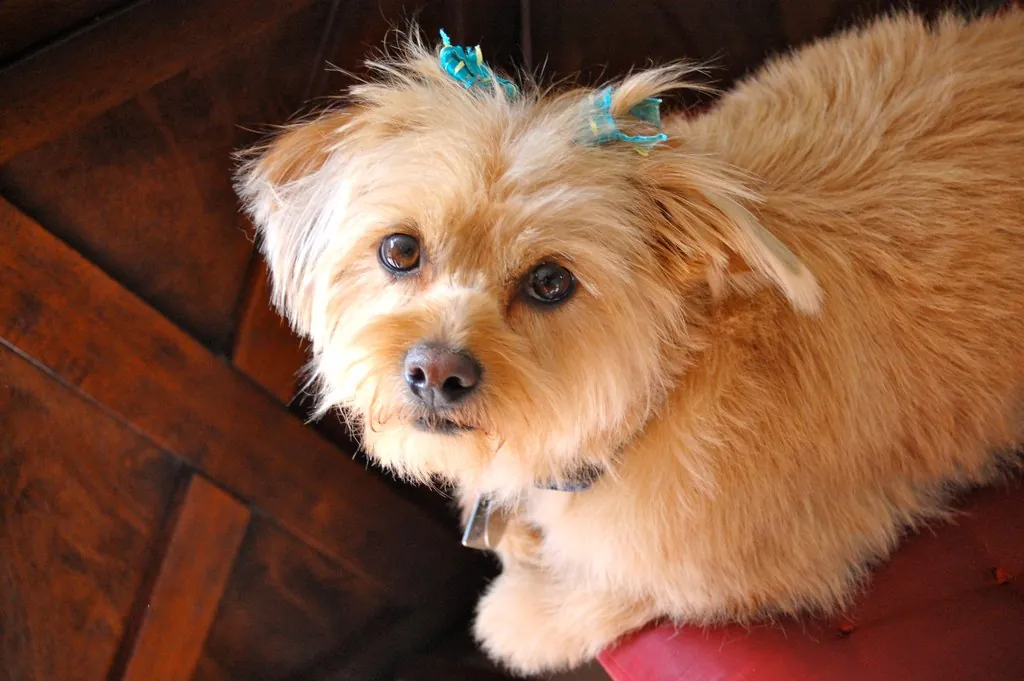
The Yorkie standard asks for a coat that is “glossy, fine, and silky,” and “perfectly straight (not wavy)” (AKC standard). The Shih Tzu standard asks for a “luxurious, double-coated, dense, long, and flowing” coat (AKC standard). A Shorkie can inherit either, or a soft, slightly wavy coat in between, like Simba’s above.
Color is wide open. The Shih Tzu standard allows all colors, and the Yorkie standard calls for blue and tan in adults, with puppies born black and tan (AKC Shih Tzu standard; AKC Yorkie standard). The Shorkies on this page are golden, cream, blond, gray and black, and brindle and tan.
The face matters more than you’d think
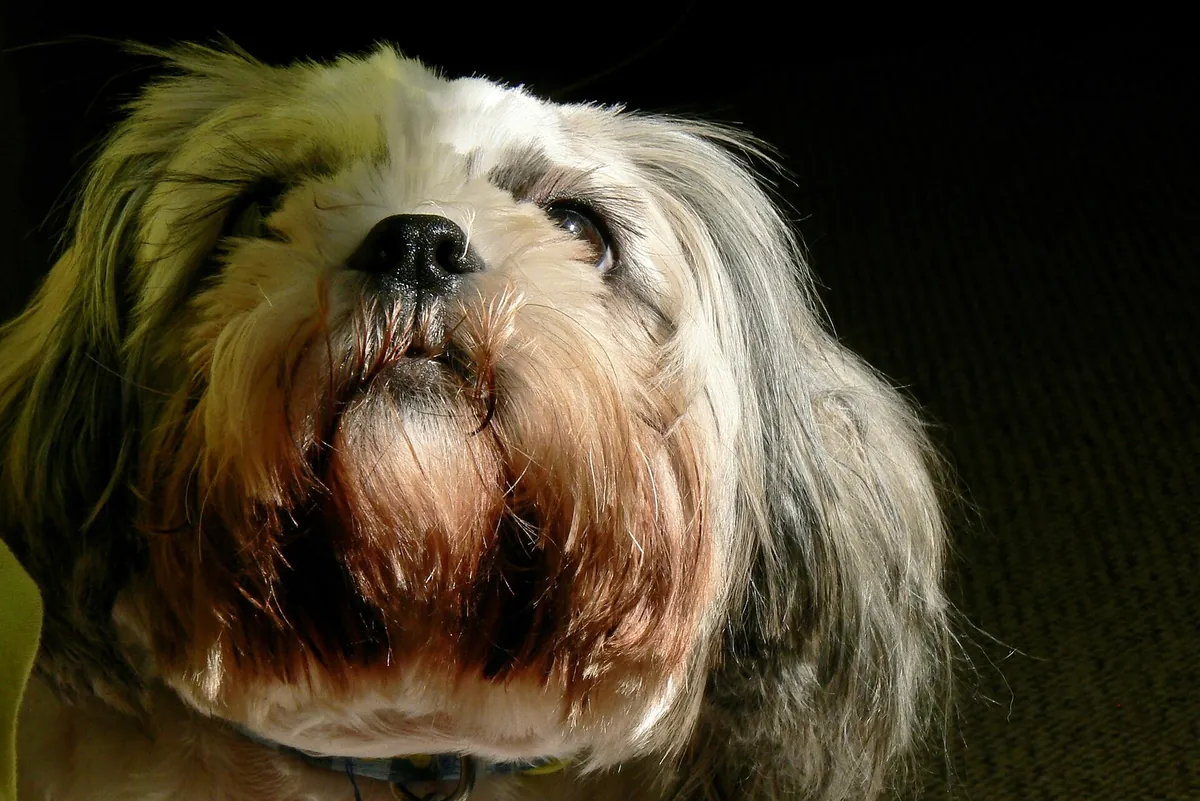
The Shih Tzu standard calls for a short, square muzzle, ideally no longer than an inch (AKC standard). The Yorkie’s muzzle is “not too long” but clearly longer (AKC standard). A Shorkie can take after either, and the face shape affects breathing, heat tolerance and eye protection. Look closely at the dog’s nose and eyes when you meet it. Simba, below, has a short muzzle and prominent eyes, closer to the Shih Tzu side.

Are Shorkies hypoallergenic?
Not in any guaranteed way. The AKC rates both parents 1 out of 5 for shedding (AKC Shih Tzu; AKC Yorkie), so a low-shedding coat is a fair expectation. But the AKC also says there are no 100% hypoallergenic dogs, breeds or mixes (AKC), and that mixed breeds marketed as hypoallergenic are “just that – marketing” (AKC). A study that measured the main dog allergen found no evidence for calling any breed hypoallergenic (Vredegoor et al., 2012).
If you have allergies, spend time with the actual dog, more than once, and talk to your doctor before you commit. Our hypoallergenic dog breeds page has more on the topic.
Temperament: what to realistically expect
These are registry descriptions of the purebred parents, not promises about any one Shorkie.
The Shih Tzu side. The standard asks for a dog that is “outgoing, happy, affectionate, friendly and trusting towards all” (AKC Shih Tzu standard). The AKC notes that a Shih Tzu’s idea of fun is “sitting in your lap acting adorable” (AKC).
The Yorkie side. The AKC calls the Yorkie “tenacious, feisty, brave, and sometimes bossy,” with “all the traits of a true terrier,” and a fine little watchdog (AKC).
What breed can’t tell you. A 2022 study in Science surveyed owners of 18,385 dogs and found breed explains only about 9% of the differences in behavior between individual dogs (Morrill et al., 2022). If you’re adopting an adult, that’s good news: you can meet the actual dog.
In daily life:
- Family: both parents rate 5 for affection. Expect a little shadow who follows you from room to room.
- Barking: expect some alert barking, more if the Yorkie side shows. Covered under training.
- Other dogs: the Shih Tzu rates 5 with other dogs, the Yorkie 3. Ask how this particular dog does with dogs and cats.
- Small pets: the Yorkie was bred to catch rats (AKC). Keep hamsters, guinea pigs and birds safely out of reach.
- Grandchildren: the AKC rates both parents 5 with young children, but the worry is mostly for the dog. A dog this small is easily hurt by a fall or a tight hug, and a scared dog may snap. “Sit on the floor, gentle hands,” with you right there, is a good house rule.

Exercise needs
Modest, and easy to arrange. The AKC says the Shih Tzu “was bred to be a house companion” and needs only “short daily walks with their owner and indoor playtime” (AKC Shih Tzu). It says a short walk twice a day will likely be enough for a Yorkie, with short bursts of play such as chasing a ball (AKC Yorkie). A Shorkie usually lands in the same place.
A good starting day: two short walks at your pace, with time to sniff, plus a few minutes of fetch, tug or a food puzzle indoors. Ask your vet what’s right for your dog’s age, knees and breathing.
- Mind the heat. The AKC says Shih Tzus, with their heavy coats and short faces, “do not tolerate heat well and are not good swimmers” (AKC Shih Tzu). If your Shorkie has a short face, walk in the cool of the day.
- Use a harness. Cornell lists switching from a neck collar to a harness among the lifestyle changes for dogs with tracheal collapse, a windpipe problem common in toy breeds such as Yorkies (Cornell). Ask your vet whether it makes sense for yours.
- Limit jumping. The AKC advises limiting a Yorkie’s jumping height, especially as a puppy, to help protect the kneecaps (AKC Yorkie). Steps or a ramp by the sofa help you both.


Grooming: the real commitment
Low shedding means the loose hair stays in the coat, so it has to be brushed out. Both parents need more coat care than their size suggests.
| Your dog’s coat | A workable routine | Source |
|---|---|---|
| Long and silky, like a Yorkie | Brush daily; bath every week or so; trim the hair above the eyes or tie it up; check ears weekly | AKC Yorkie |
| Long and dense, like a Shih Tzu | Brush daily right down to the skin; bath about every three or four weeks; comb the mustache and topknot daily and wipe the eye corners | AKC Shih Tzu |
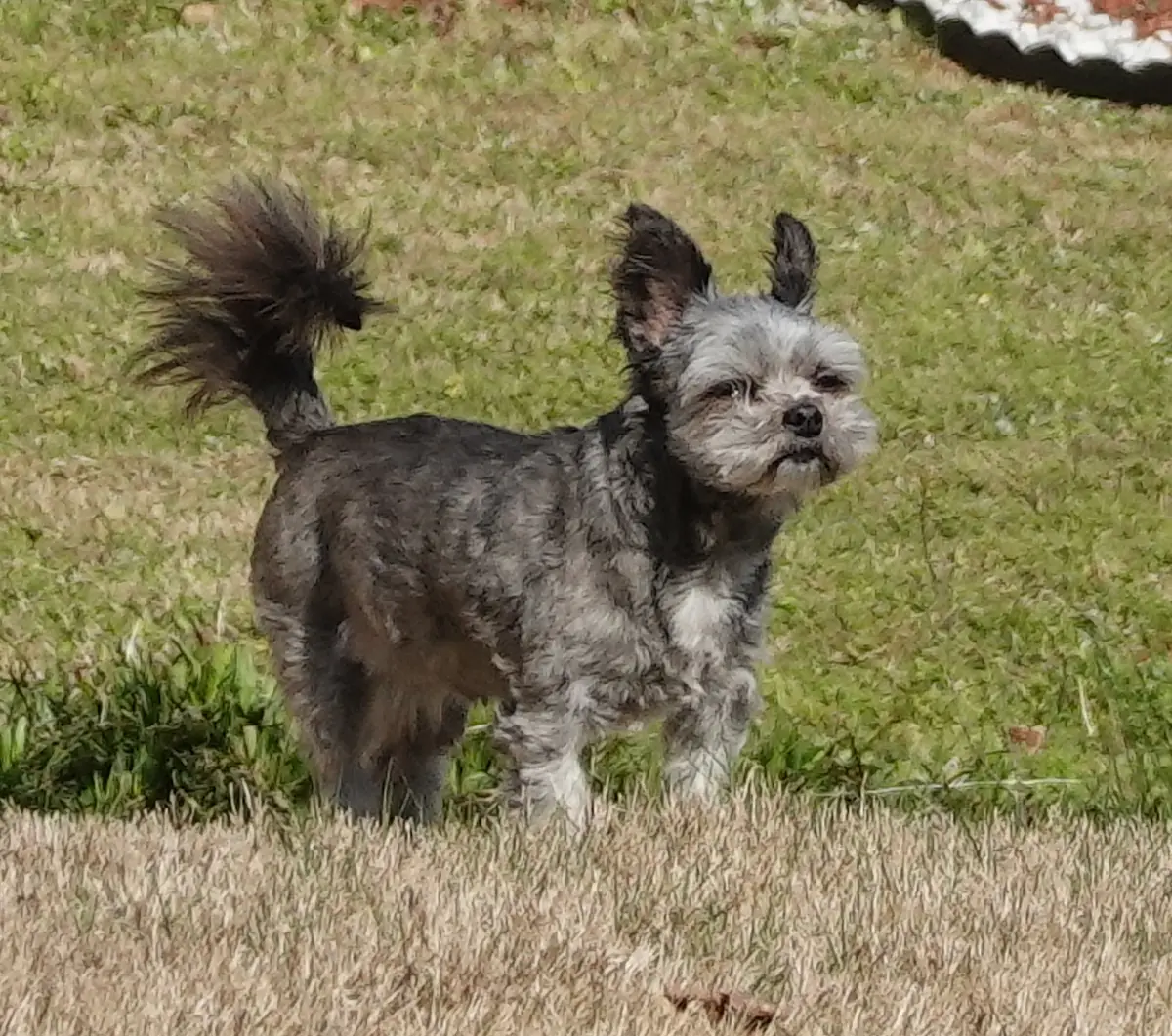
| Clipped short (“puppy trim”) | A professional trim on a regular schedule, with brushing between visits; the AKC says this is fine if you don’t want to spend time on the coat | AKC Shih Tzu |
Trimming nails and cleaning ears belong in the routine too (AKC Shih Tzu). If your hands are sore or your back doesn’t love bending, a short trim is the kind choice. Roxie, below, wears one. Ask the groomer to show you how to brush to the skin, and bring the dog in for short, happy visits from the start.
Health: what to know and what to ask
We found no health study of Shorkies. Everything below is about the parent breeds, and most dogs won’t have most of it. Use it as a list of questions for your vet.
Being a mix is no guarantee of good health. A UC Davis study found purebred dogs more likely to have some inherited conditions, but no difference for many others, including patellar luxation (Bellumori et al., 2013). And the Shorkie’s two parents share some of the same small-dog problems, so crossing them doesn’t dodge those.
| Condition | Which parent? | What the source says |
|---|---|---|
| Dental (periodontal) disease | Both | The most common diagnosis in UK Yorkies, at 21.1% in one year, with retained baby teeth in 3.6% (O’Neill et al., 2025). Also the most common single diagnosis in UK Shih Tzus, at 9.5% (Dale et al., 2024). |
| Loose kneecaps (patellar luxation) | Both | Named as predisposed in UK Yorkies (O’Neill et al., 2025) and among the conditions Shih Tzu breeders screen for (AKC). Dogs may “skip” on a back leg for a few steps (ACVS). |
| Eye problems | Shih Tzu, mostly | Eye disorders affected 11.9% of UK Shih Tzus in a year (Dale et al., 2024), and Shih Tzus had one of the highest rates of corneal ulcers in English vet records (O’Neill et al., 2017). Responsible Yorkie breeders screen for eye problems too (AKC). |
| Breathing problems (BOAS) | Shih Tzu | Rated moderate risk in a 2026 University of Cambridge study; overweight Shih Tzus were more likely to be affected (Tomlinson et al., 2026). |
| Tracheal collapse | Yorkie | A weakening windpipe, common in toy breeds such as Yorkies, with a “goose-honking” cough. Many dogs respond well to medicine (Cornell). |
| Liver shunt (portosystemic shunt) | Yorkie | Blood bypasses the liver. Signs include stunted growth, odd behavior after meals and seizures (VCA). Diagnosed in 2.9% of Yorkies seen at teaching hospitals, against 0.05% of mixed-breed dogs (Tobias & Rohrbach, 2003). |
| Low blood sugar | Toy-breed puppies | Young toy puppies can’t store enough glycogen and can run low between meals (AKC). |
| Others on the clubs’ lists | One or both | Shih Tzu: hip dysplasia and juvenile renal dysplasia, a rare kidney problem (AKC). Yorkie: Legg-Calve-Perthes disease, protein-losing enteropathy and others (YTCA). |
Teeth come first. Cornell’s vet college calls daily brushing with a veterinary toothpaste the mainstay of home dental care, along with an annual professional exam (Cornell). The UK Shih Tzu researchers named oral hygiene a healthcare priority for the breed (Dale et al., 2024). For a Shorkie, five minutes a day with a toothbrush may be the most useful habit you build. Our page on professional dental cleanings explains that visit.
Watch the eyes. The AKC warns that a breed “with large eyes and no muzzle to protect them” is prone to eye injuries, and to get prompt vet care if you suspect a problem (AKC Shih Tzu). Squinting, rubbing, cloudiness or a red, weepy eye is worth a same-day call.
Breathing. The American College of Veterinary Surgeons says short-faced dogs can have noisy breathing, gagging, and trouble with exercise, excitement or heat, and that “obesity will aggravate the problems” (ACVS). A Shorkie with a longer, Yorkie-type muzzle may be at lower risk, but no study has measured this in the mix. Keep your dog lean.
Call your vet about a skipping or limping leg, a honking cough, snoring while awake, a puppy that isn’t growing or acts strangely after meals, bad breath or sore gums. A cough with labored breathing, blue gums or fainting is an emergency (Cornell).
Lifespan: why the numbers disagree
No study has measured Shorkie lifespan. Competing pages quote everything from 11 to 18 years to 14 to 19, without sources. Here is what exists for the parents:
| Source | Shih Tzu | Yorkshire Terrier | Crossbreeds of all kinds |
|---|---|---|---|
| AKC life expectancy | 10 to 18 yrs | 11 to 15 yrs | Not listed |
| UK vet records, median age at death | 12.7 yrs | 13.6 yrs | Not in these studies |
| UK study of 584,734 dogs, median survival | Not used here | 13.3 yrs | 12.0 yrs |
Sources: AKC Shih Tzu; AKC Yorkie; Dale et al., 2024; O’Neill et al., 2025; McMillan et al., 2024.
A median is a midpoint, so about half of dogs live longer. Both parents are long-lived by dog standards. Plan for a companion who may be with you well into its teens, which is one reason we encourage every owner to make a backup plan (more below).
Training: barking and house training
Expect a willing learner with a charming stubborn streak. The AKC says Yorkies are “very intelligent and eager to please,” and that praise and treats work far better than harsh corrections (AKC Yorkie). It says training a Shih Tzu “can be both an amusing and a frustrating experience,” because the breed “tends to charm his owner into letting him have his own way” (AKC Shih Tzu). The American Veterinary Society of Animal Behavior recommends reward-based methods for all dogs (AVSAB, 2021).
- Barking. For barking at passersby, the ASPCA suggests blocking the view and teaching “quiet”: when the dog barks, calmly say “Quiet” and reward silence with tiny treats (ASPCA). If you share walls with neighbors, start on day one.
- House training. The AKC warns that an indulged Shih Tzu can end up “less-than-completely-housebroken” (AKC Shih Tzu). Frequent trips out, a predictable schedule, supervision and rewards work best. Our potty training guide has a step-by-step plan.
- Handling. Pair brushing, tooth brushing, nail trims, eye wipes and ear checks with treats from day one.
- Being alone. Both parents are people-focused. Build up alone time in small steps. Our guide to separation anxiety in rescue dogs can help.
- A “wait” at doors and stairs, which helps keep both of you safe.
Diet basics
There’s no special Shorkie diet. For both parents, the AKC advises a good-quality food suited to the dog’s age, attention to calories and weight, and treats in moderation (AKC Shih Tzu; AKC Yorkie). On a ten-pound dog, a few extra treats are a big share of the day’s food, so count them.
- Keep them lean. Extra weight raised BOAS risk in Shih Tzus (Tomlinson et al., 2026) and adds strain on small knees.
- Tiny puppies, small frequent meals. Toy-size puppies can run low on blood sugar between meals (AKC). Follow your vet’s schedule.
- “Natural” doesn’t mean safe. The ASPCA lists foods that are dangerous to dogs, including grapes and raisins, onions and garlic, and xylitol, a sweetener in some sugar-free products (ASPCA).
Ask your vet how much and how often to feed yours.
Shorkie puppies: pretty and unpredictable
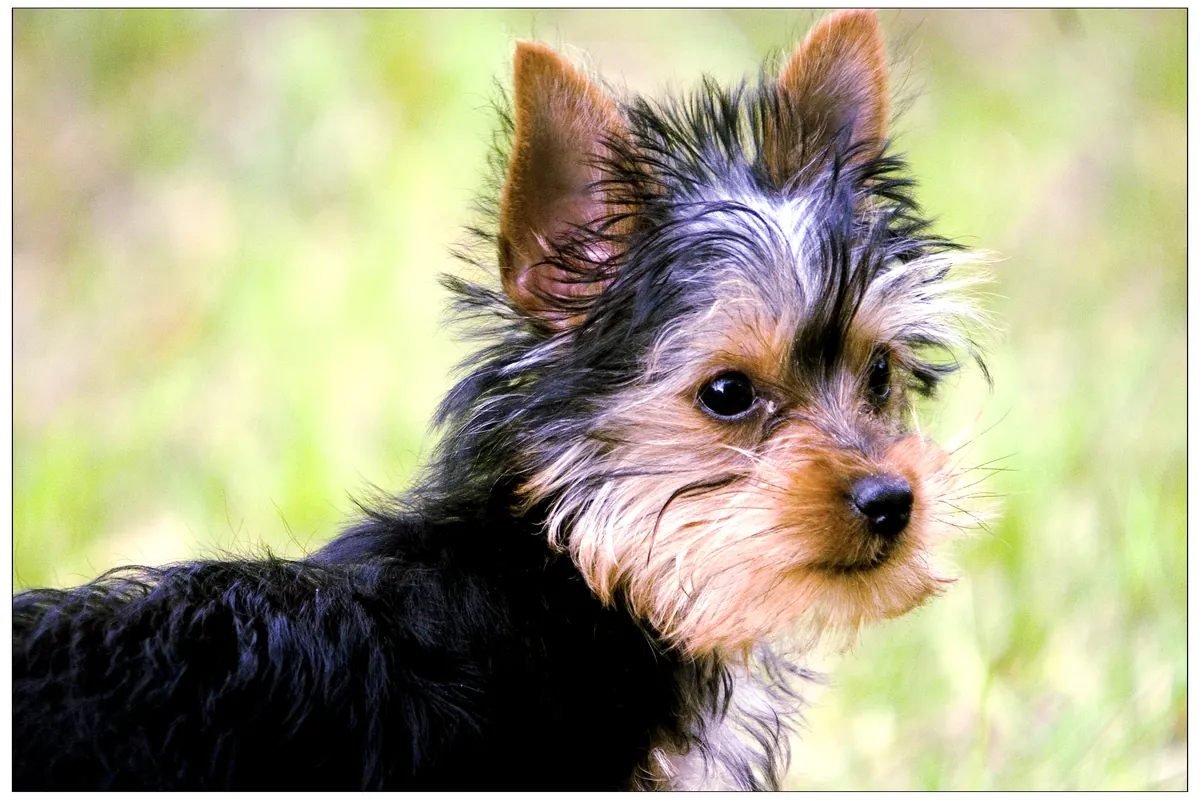
A puppy’s adult size, color and coat are hard to call. Yorkie puppies are born black and tan and change as they mature (AKC standard), so a dark Shorkie puppy may lighten. The puppy below was described by the photographer as a mix of Yorkshire Terrier and Shih Tzu.


If you do buy a puppy, Humane World for Animals (formerly the Humane Society of the United States) advises against buying from a pet store or website, since most of those puppies come from puppy mills, and recommends meeting the breeder in person where the puppy was raised (Humane World). Ask for proof of the parents’ health checks: kneecaps and eyes for both, and the hip and eye screening the AKC names for the Shih Tzu (AKC Shih Tzu; AKC Yorkie). Ask whether the puppy has been checked for a liver shunt; the Yorkie club says a bile acid test may suggest one (YTCA).
Watch for scams. United Yorkie Rescue warns that impostors use its name to offer puppies for sale and ask for a down payment (UYR). Never send money for a dog you haven’t met.
Shorkie vs similar small crosses
Weighing a Shorkie against its parents and the crosses people often compare it with? The mix columns show only the space between the parents, from AKC figures. None of these crosses has been measured.
| Shih Tzu | Yorkshire Terrier | Shorkie | Yorkie-Poo | Shih-Poo | Malshi | |
|---|---|---|---|---|---|---|
| Parents | Purebred | Purebred | Shih Tzu x Yorkie | Yorkie x Toy or Mini Poodle | Shih Tzu x Toy or Mini Poodle | Maltese x Shih Tzu |
| AKC recognized | Yes | Yes | No | No | No | No |
| Parent weights | 9 to 16 lb | 7 lb or less | Under 7 to 16 lb | 4 to 15 lb | 4 to 16 lb | Under 7 to 16 lb |
| Parent lifespans (AKC) | 10 to 18 yrs | 11 to 15 yrs | 10 to 18 yrs | 10 to 18 yrs | 10 to 18 yrs | 10 to 18 yrs |
| Face | Short | Longer | Short to longer | Longer | Short to long | Short to longer |
| Coat | Long, double | Long, silky | Silky to dense | Straight to curly | Straight to curly | Silky to dense |
| Parents’ barking ratings | 3 | 4 | 3 to 4 | 4 | 3 to 4 | 3 |
| Parents’ shedding ratings | 1 | 1 | 1 | 1 | 1 | 1 |
Sources: AKC Shih Tzu, AKC Yorkshire Terrier, AKC Toy Poodle, AKC Miniature Poodle, AKC Maltese. “Parent lifespans” shows the widest span of the two parents’ AKC ranges, not a forecast.
Our full guides: Yorkie Poodle mix, Shih-Poo, Maltese dogs for the Malshi’s other parent, and Lhasa Apso and Shih Tzu for the Shih Tzu’s closest cousin.
Is a Shorkie right for me? A checklist for adopters over 50
A few “no” answers don’t rule you out. They tell you what to plan for, or which dog to ask about.
- Yes / No: I’d enjoy a small, affectionate dog that follows me from room to room.
- Yes / No: I can brush most days, or I’m happy to pay a groomer for a short trim on a regular schedule.
- Yes / No: I’ll brush tiny teeth daily and budget for professional dental care.
- Yes / No: I’ll check its eyes daily and call the vet promptly about squinting or redness.
- Yes / No: Barking at the door won’t cause trouble with my neighbors or lease, or I’m ready to work on it.
- Yes / No: I can keep a dog cool in summer and lean all year.
- Yes / No: Someone is home much of the day, or I can arrange company for the dog.
- Yes / No: I can watch where I step. A night light, a bell on the harness or a bed in each room would be easy to add.
- Yes / No: I’ve spent time with this dog and checked whether my allergies react.
- Yes / No: I’ve thought about who would care for this dog if I ever couldn’t.
A Shorkie may suit you if you’re home a lot, want a dog that’s easy to lift and travel with, live in an apartment or a smaller home (the AKC rates both parents 5 out of 5 for adaptability), and enjoy grooming or will pay for it.
Consider a different dog if you need a quiet home, want wash-and-wear hair, live somewhere very hot and can’t keep a short-faced dog cool, or have large dogs that play rough. Our best dog breeds for seniors guide has other ideas.
A word on trips and falls
A US study estimated that emergency-room visits for fractures linked to walking leashed dogs among people 65 and older rose from 1,671 in 2004 to 4,396 in 2017 (Pirruccio et al., 2019). A Shorkie won’t pull you over, but a small dog can get under your feet. Hold the leash in your hand rather than wrapping it around your wrist, wear sturdy shoes, teach a “wait” at stairs, and keep walkways lit at night.
Costs to plan for
We don’t quote Shorkie puppy prices. We found no reliable, independent source for them, and sellers set their own. Rescue fees are easier to pin down: United Yorkie Rescue, which places Yorkies and Yorkie mixes, lists adoption donations of $150 to $1,100 depending on the dog’s age and health (UYR).
For any dog, the ASPCA estimates $1,391 a year, or $3,221 in the first year with one-time costs, which includes $300 for professional grooming and $500 for dental care (ASPCA). With a Shorkie, grooming, teeth and eyes are the lines to watch. Get a quote from a local groomer before you adopt, and ask your vet about dental cleanings, pet insurance or an emergency fund.
Adopting a Shorkie
Shorkies do end up in shelters and rescues, often as adults whose size, coat, face and personality you can see before you commit. That’s a real advantage. (Bone Voyage’s own rescue has closed, and we don’t have dogs to adopt.)
Where to look
Search “Yorkie mix,” “Shih Tzu mix” and “terrier mix” as well as “Shorkie,” since labels vary. These groups’ own websites were checked in November 2026:
- United Yorkie Rescue is a foster-based rescue that says it has rescued more than 4,600 Yorkies and Yorkie mixes. It prefers to adopt locally and only adopts out of state in special cases.
- The American Shih Tzu Club lists its rescue and welfare contacts. Ask whether local groups take Shih Tzu mixes.
- Local shelters and all-breed rescues, especially foster-based groups, where a foster family can tell you how the dog behaves in a real home.
Listing a group here isn’t an endorsement. Ask your own questions, and check that they cover your area. Our page on small dogs for adoption has more places to look.
Is that shelter dog really a Shorkie?
Maybe. Small, shaggy dogs are easy to label, and Maltese, Lhasa Apso, Havanese or Yorkie-Poo mixes can look similar. In a study of shelter dogs, staff labels often missed breeds that DNA testing found (Gunter et al., 2018). Meet the dog, not the label. Our guide to figuring out your dog’s breed explains the options.
Questions to ask the rescue
- What is the “Shorkie” label based on: known parents, a DNA test, or looks?
- How old is the dog, and what does it weigh?
- How does it breathe at rest, on walks and in warm weather? Does it snore?
- Any eye history: ulcers, dry eye, drops or ointments?
- When were its teeth last cleaned? Any extractions?
- Does it cough, limp or skip on a back leg? Any liver bloodwork or seizures?
- How much does it bark, and what sets it off?
- Is it house trained, and is that outdoors or on pads?
- How does it handle brushing, baths, nail trims and being picked up?
- How has it done with dogs, cats and children, and how does it cope alone?
- Is there a foster-to-adopt or trial period, and will you take the dog back if it doesn’t work out?
Our 9 questions to ask when adopting a dog covers the general ones.
Give your dog a backup plan
A Shorkie may be with you for many years. Naming a backup caregiver now, someone who knows your dog and has agreed to step in, makes it far less likely your dog will end up in a shelter. Our guide What Happens to Your Dog When You Die walks you through it, and the free My Dog’s Backup Plan worksheet records your dog’s routine, vet, groomer, quirks and favorite things. Bone Voyage is also building the backup-adopter pledge: a volunteer’s pledge to adopt a specific senior’s dog if that senior dies or can no longer care for it. You can join the free list on that same page.
Similar dogs to compare
- Shih Tzu and Yorkshire Terrier, the two parents.
- Shih-Poo, a Shih Tzu and Poodle cross.
- Yorkie Poodle mix, the Yorkipoo.
- Yorkinese, a Yorkie and Pekingese cross.
- Maltese Chihuahua mix, another toy-size cross.
- Chihuahua terrier mix breeds, including the Chorkie, a Yorkie and Chihuahua cross.
- Maltipoo, a Maltese and Poodle cross.
Frequently Asked Questions
What is the difference between a Shih Tzu and a Yorkie?
They’re both toy breeds with long coats, but they were bred for different jobs. The Shih Tzu is a Chinese palace companion: 9 to 10.5 inches, 9 to 16 pounds, with a short muzzle and a double coat (AKC). The Yorkie is an English terrier that once caught rats: 7 to 8 inches, 7 pounds or less, with a longer muzzle and a silky single coat (AKC). The AKC rates the Yorkie higher for energy, barking and watchfulness, and the Shih Tzu higher for getting along with other dogs.
What is the lifespan of a Shorkie?
No study has measured it. The AKC lists 10 to 18 years for the Shih Tzu and 11 to 15 for the Yorkshire Terrier (AKC; AKC). In UK vet records, the median age at death was 12.7 years for Shih Tzus (Dale et al., 2024) and about 13.6 for Yorkies (O’Neill et al., 2025). Both parents are long-lived for dogs, so plan for a companion who could reach its teens.
How big does a Shih Tzu Yorkie mix get?
There’s no standard size. The AKC lists the Yorkie at 7 to 8 inches and 7 pounds or less, and the Shih Tzu at 9 to 10.5 inches and 9 to 16 pounds, so most Shorkies land somewhere between. Pet Yorkies often outweigh their standard, with a UK median of about 11 pounds (O’Neill et al., 2025), so a Shorkie can too. If size matters to you, adopt a grown dog.
Are Shorkies hypoallergenic?
Not in any guaranteed way. The AKC rates both parents 1 out of 5 for shedding, so a low-shedding coat is likely. But the AKC also says no dog is 100% hypoallergenic (AKC), and a 2012 study found no evidence for calling any breed hypoallergenic (Vredegoor et al., 2012). If you have allergies, spend time with the actual dog and talk to your doctor.
Do Shorkies bark a lot?
Many do some alert barking. The AKC rates the Yorkie 4 out of 5 for barking and 5 for watchdog nature, and the Shih Tzu 3 for both (AKC; AKC). A Shorkie could land anywhere in that range. Reward-based training to teach a quiet cue helps (ASPCA), and it’s worth asking a rescue how much a particular dog barks.
What is the best dog to mix with a Shih Tzu?
No kennel club or study ranks Shih Tzu crosses, so there’s no single best. Common crosses include the Shorkie (with a Yorkshire Terrier), the Shih-Poo (with a Poodle) and the Malshi (with a Maltese). Each brings in a parent with a different size, coat, face shape and energy. The best match is the individual dog whose grooming, barking and energy fit your life.
How much are Shorkie-poo puppies?
We found no reliable source for a typical price, so we don’t quote one. A Shorkie-poo is a further cross that adds a Poodle to a Shorkie, and it isn’t a recognized breed, so sellers set their own prices and they vary widely. Rescue fees are easier to pin down: United Yorkie Rescue, which takes Yorkie mixes, lists adoption donations of $150 to $1,100 depending on the dog’s age and health (UYR).


Is a Shorkie a good fit for an older adult?
Often, yes, if you want a small, affectionate dog and you’re home much of the day. A Shorkie is easy to lift and can get much of its exercise from short walks and indoor play. Plan for brushing or regular grooming, daily tooth care, some barking, a small dog underfoot, and a backup caregiver. A grown dog from a foster home lets you see its size, coat and manners first.
Before you go
The Shorkie you meet will be one particular dog with its own history and haircut. Trust what you see, and what its foster family tells you, over anything on this page. And whichever dog comes home with you, decide now who would step in if you ever couldn’t.
Sources
- American Kennel Club, Shih Tzu, Yorkshire Terrier, Maltese, Poodle (Toy) and Poodle (Miniature) breed pages (size, life expectancy, trait ratings, history, exercise, training, grooming, nutrition and health); Official Standard of the Shih Tzu; Official Standard of the Yorkshire Terrier; Hypoallergenic Dogs; Do Hypoallergenic Dogs Exist?; Hypoglycemia in Dogs
- Yorkshire Terrier Club of America, Health Statement (2024)
- American Shih Tzu Club, Rescue committee contacts
- Dale F et al. (2024). Demography, common disorders and mortality of Shih Tzu dogs under primary veterinary care in the UK. Canine Medicine and Genetics 11:2.
- O’Neill DG et al. (2025). Yorkshire Terriers under primary veterinary care in the UK: demography and disorders. Companion Animal Health and Genetics.
- O’Neill DG et al. (2017). Corneal ulcerative disease in dogs under primary veterinary care in England. Canine Genetics and Epidemiology 4:5.
- Tomlinson F et al. (2026). A cross-sectional study into the prevalence and conformational risk factors of BOAS across fourteen brachycephalic dog breeds. PLOS ONE 21(2):e0340604.
- Tobias KM, Rohrbach BW (2003). Association of breed with the diagnosis of congenital portosystemic shunts in dogs: 2,400 cases. JAVMA 223(11):1636-9.
- McMillan KM et al. (2024). Longevity of companion dog breeds: those at risk from early death. Scientific Reports 14:531.
- Bellumori TP et al. (2013). Prevalence of inherited disorders among mixed-breed and purebred dogs. JAVMA 242(11):1549-55.
- Vredegoor DW et al. (2012). Can f 1 levels in hair and homes of different dog breeds. Journal of Allergy and Clinical Immunology 130(4):904-9.
- Morrill K et al. (2022). Ancestry-inclusive dog genomics challenges popular breed stereotypes. Science 376(6592):eabk0639.
- Gunter LM et al. (2018). A canine identity crisis: Genetic breed heritage testing of shelter dogs. PLOS ONE 13(8):e0202633.
- Pirruccio K et al. (2019). Fractures in elderly Americans associated with walking leashed dogs. JAMA Surgery 154(5):458-459.
- American College of Veterinary Surgeons, Brachycephalic Syndrome and Patellar Luxations
- Cornell University Riney Canine Health Center, Tracheal Collapse and Periodontal Disease
- VCA Animal Hospitals, Portosystemic Shunt in Dogs
- American Veterinary Society of Animal Behavior, Position Statement on Humane Dog Training (2021)
- Humane World for Animals (formerly HSUS), How to find a responsible dog breeder
- ASPCA, Barking, Cutting Pet Care Costs and People Foods to Avoid Feeding Your Pets
- United Yorkie Rescue, home page and FAQ
- Photos: Flickr and Wikimedia Commons contributors, credited under each image. Full license records are kept in this site’s image-credits file.