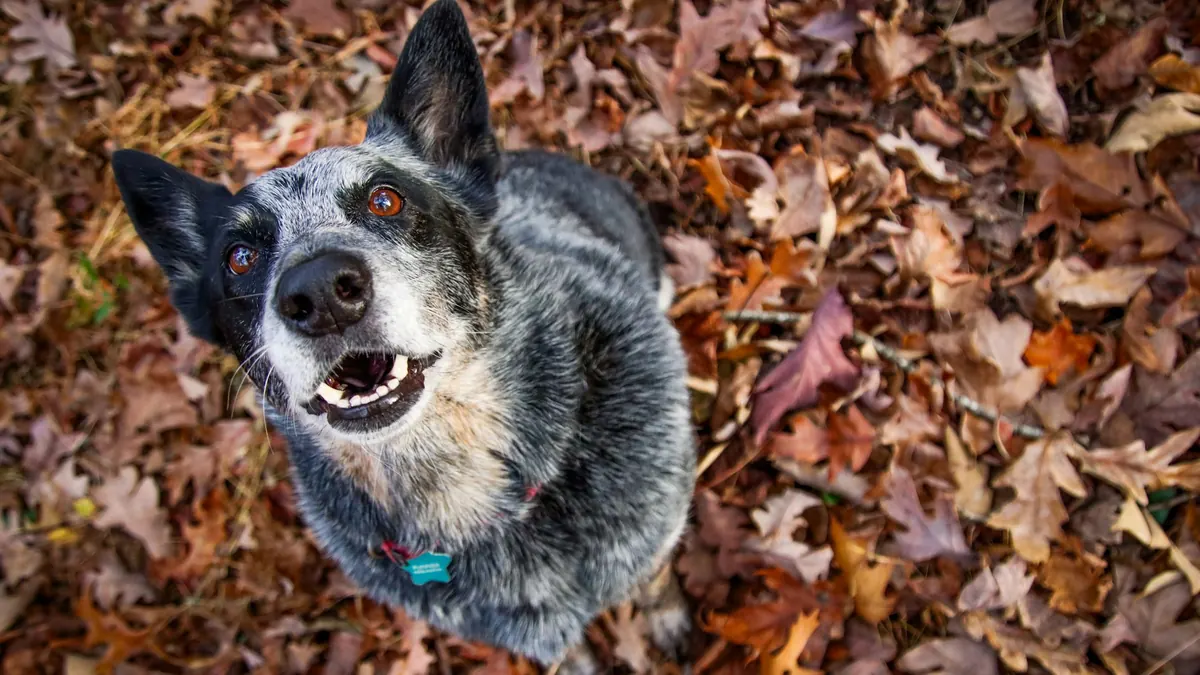
A Queensland Heeler and Border Collie mix, usually called a Border Heeler, is a cross between an Australian Cattle Dog (the Queensland, Blue or Red Heeler) and a Border Collie. It’s typically a medium dog, around 17 to 22 inches tall and 30 to 55 pounds by our estimate from the parent breeds, with two strong herding breeds behind it. That makes it brilliant, tireless and sometimes nippy: a superb partner for active people with time to give it a job, and a hard fit for a quiet home.
Below is what the American Kennel Club (AKC), the international breed standards, the Orthopedic Foundation for Animals (OFA) and veterinary research say about both parents. We explain the naming confusion, the herding drive and nipping, how much exercise and mental work this mix really needs, which health tests to ask for in both parents, and how to decide honestly whether a Border Heeler fits your life.
Border Heeler quick facts
- Also called: Border Heeler, Border Collie Heeler, Border Collie Blue Heeler mix, Border Collie Red Heeler mix, Border Collie Cattle Dog mix.
- Parents: Border Collie × Australian Cattle Dog. The AKC says the Cattle Dog is “also called Blue Heeler or Queensland Heeler” (AKC).
- Registry status: a mixed breed. Not recognized by the AKC, UKC or FCI. Dogbreedinfo.com lists recognition by the Dog Registry of America, a hybrid registry (Dogbreedinfo).
- Height (estimate): about 17 to 22 inches, from the AKC parent ranges of 17 to 20 inches for the Cattle Dog and 18 to 22 inches for the Border Collie (AKC; AKC).
- Weight (estimate): about 30 to 55 pounds, from AKC parent ranges of 35 to 50 and 30 to 55 pounds.
- Lifespan (estimate): roughly 12 to 16 years, from AKC parent ranges of 12 to 16 years (Cattle Dog) and 12 to 15 years (Border Collie). No study has looked at the cross itself.
- Energy (AKC rating, both parents): 5 out of 5. Mental stimulation needs: 4 (Cattle Dog) and 5 (Border Collie).
- Grooming: low to moderate. AKC grooming rating 1 for the Cattle Dog, 3 for the Border Collie; shedding 3 for both.
- Good with young children (AKC rating, both parents): 3 out of 5. The Cattle Dog rating comes with the note “with supervision.”
- Good with other dogs (AKC rating, both parents): 3 out of 5. Herding instincts mean cats and small pets may get “herded.”
- Health tests to ask about: hips, elbows, eyes, hearing (BAER) and DNA tests for PRA-prcd, primary lens luxation, Collie eye anomaly, TNS and NCL (see the health section).
- Best fit: active people who want a training, hiking or dog-sport partner and have a secure fence.
Queensland Heeler, Blue Heeler, Australian Cattle Dog: one breed, many names
Many people searching for this mix aren’t sure whether a “Queensland Heeler” is a different dog from a Blue Heeler. It isn’t. All of these names point to the Australian Cattle Dog:
- Australian Cattle Dog is the official breed name used by the AKC and the FCI (AKC; FCI).
- Queensland Heeler comes from the state where the breed was developed. The AKC says the breed was “first known as the Australian Heeler, although it is still called the Blue or Queensland Heeler today” (AKC).
- Blue Heeler and Red Heeler describe the two coat colors the standard allows: blue (blue, blue-mottled or blue-speckled, often with tan or black markings) and red speckle (FCI). The AKC notes there is no difference in temperament between blue and red dogs.
- “Heeler” describes the job. The FCI standard says the dog “is required to move difficult cattle by heeling or biting” (FCI).
So a “Queensland Heeler Border Collie mix,” a “Blue Heeler Border Collie mix” and a “Border Collie Cattle Dog mix” are all the same cross. Our Blue Heeler guide covers the Cattle Dog side in more depth.
Where the two parent breeds come from
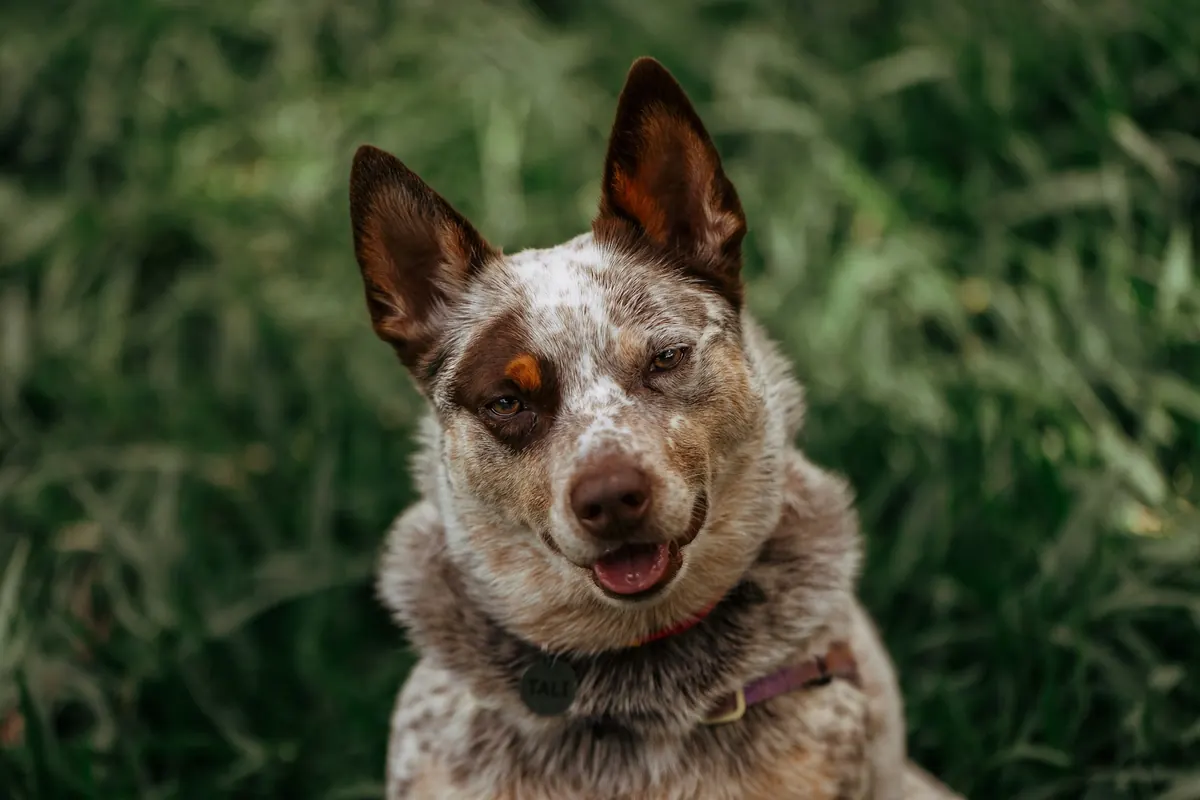
The Australian Cattle Dog was built for a hard job: moving half-wild cattle over long distances in hot, rough country. The FCI standard says early breeders kept little written record, but “it is generally recognised” that the breed came from “crossing blue merle, smooth haired Collies with the Dingo, with a later injection of Dalmatian and black and tan Kelpie blood” (FCI). The AKC credits George Elliott of Queensland, who bred Dingoes with Collies, and brothers Jack and Harry Bagust, who added Dalmatian. The breed joined the AKC in 1980 (AKC).
The Border Collie comes from “the borderland between England and Scotland,” according to the AKC, and was bred to gather and move sheep with a crouching approach and an intense stare, often called “eye.” It joined the AKC Herding Group in 1995 (AKC). The FCI standard sums up the temperament as “tenacious, hard-working, of great tractability. Keen, alert, responsive and intelligent. Neither nervous nor aggressive” (FCI).
The cross. Interestingly, the Cattle Dog already carries collie ancestry, so this mix reunites two branches of the herding family. Farmers and ranchers have crossed working dogs for generations, but nobody has documented when or where the first Border Collie × Cattle Dog was bred, and there’s no breed club or standard for the mix.
What does a Border Heeler look like?
There’s no standard, so think in ranges, not guarantees.
- Size: medium and athletic. The AKC lists the Cattle Dog at 18 to 20 inches (males) and 17 to 19 inches (females), 35 to 50 pounds, and the Border Collie at 19 to 22 inches (males) and 18 to 21 inches (females), 30 to 55 pounds (AKC; AKC). Our estimate for the mix, from those ranges, is about 17 to 22 inches and 30 to 55 pounds.
- Build: the Cattle Dog is compact and muscular; the Border Collie is a little lighter and longer than tall (FCI).
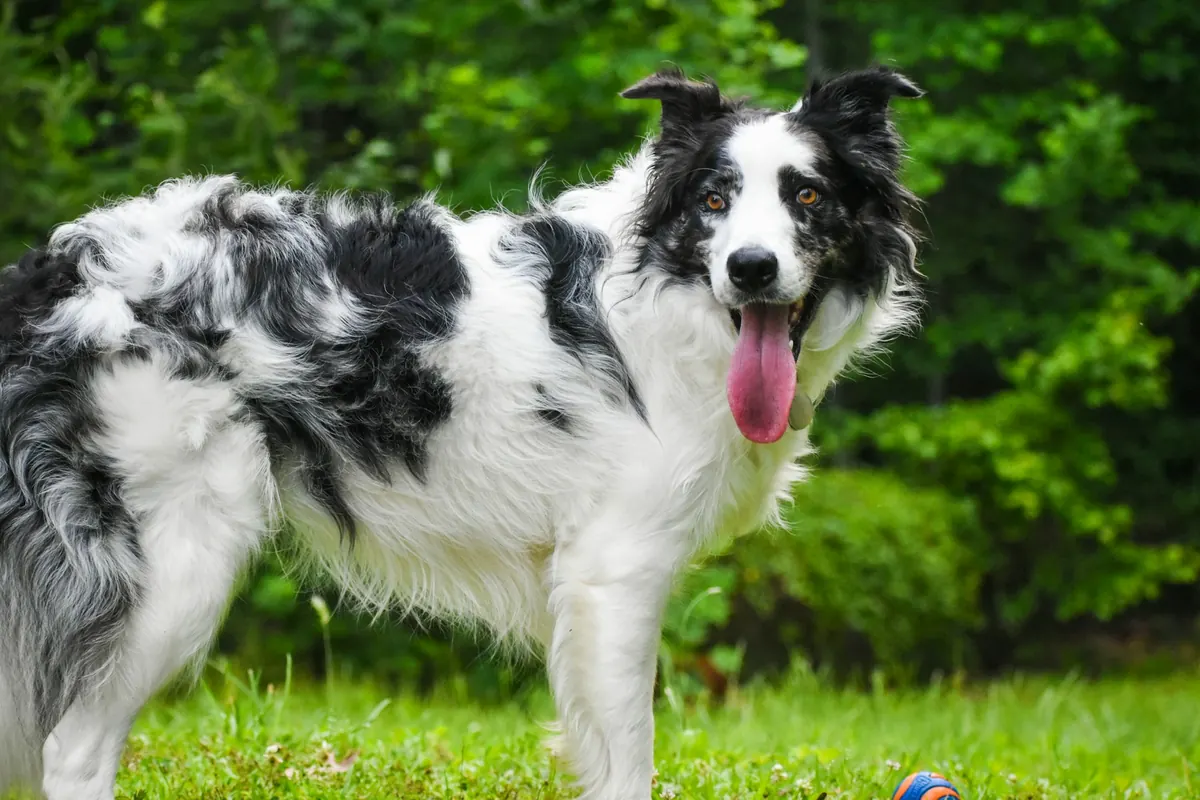
- Coat: the Cattle Dog has a short, smooth double coat. The Border Collie comes in “two varieties: moderately long or smooth,” both with a dense undercoat (FCI). A Border Heeler can have either a short coat or a medium, feathered one.
- Colors: expect anything from blue or red speckle (ticking) to black and white, tricolor or merle. The Border Collie standard allows a “variety of colours,” while the Cattle Dog standard allows only blue and red speckle (FCI; FCI).
- Ears: pricked like a Cattle Dog, semi-erect like many Border Collies, or one of each.
- Eyes: usually brown. The Border Collie standard allows blue eyes in merles (FCI).
Border Heeler vs Border Collie vs Australian Cattle Dog vs similar mixes
| Border Heeler (estimate) | Border Collie | Australian Cattle Dog | Border Collie × Australian Shepherd | |
|---|---|---|---|---|
| Status | Mixed breed | AKC Herding Group (1995) | AKC Herding Group (1980 recognition) | Mixed breed |
| Height | About 17-22 in. | 19-22 in. (males), 18-21 in. (females) | 18-20 in. (males), 17-19 in. (females) | See our Border Aussie guide |
| Weight | About 30-55 lb | 30-55 lb | 35-50 lb | See our guide |
| Life expectancy | About 12-16 years | 12-15 years | 12-16 years | See our guide |
| Energy (AKC) | Very high | 5/5 | 5/5 | Very high |
| Openness to strangers (AKC) | Varies | 4/5 | 3/5 | Varies |
| Protective (AKC) | Varies | 3/5 | 4/5 | Varies |
| Grooming (AKC) | Low to moderate | 3/5 | 1/5 | Moderate |
| Herding style | Either or both | Gathers with “eye,” chases | Heels: nips and grabs | Either |
| Key DNA/health tests | Both parents’ lists | Hips, eyes, CEA, TNS, NCL, MDR1 | Hips, elbows, eyes, BAER, PRA-prcd, PLL | Both parents’ lists |
Sources: AKC breed pages for the Border Collie and Australian Cattle Dog (sizes, life expectancy and trait ratings as listed on November 25, 2026); AKC on herding styles; OFA CHIC requirements. The mix columns are estimates from the parent breed ranges, not a standard.
If you’re weighing other herding crosses, see our guides to the Border Collie Australian Shepherd mix, the German Shepherd Border Collie mix and the English Shepherd, a versatile American farm dog that’s often mistaken for a Border Collie mix.
Temperament: smart, loyal and always working
Both parents were bred to think for themselves at a distance from their person, then respond in a split second when asked. In a family home, that tends to look like:
- Deep loyalty. The FCI standard says the Cattle Dog’s “loyalty and protective instincts make it a self-appointed guardian to the Stockman, his herd and his property” (FCI). Many Border Heelers bond strongly with one or two people.
- Watchfulness with strangers. The Cattle Dog is “naturally suspicious of strangers,” the FCI says, and the AKC rates it 3 out of 5 for openness to strangers and 4 for protectiveness. The Border Collie is friendlier, at 4 out of 5 for openness (AKC). Your dog could be anywhere in between.
- A busy brain. The AKC rates both parents 4 or 5 out of 5 for mental stimulation needs and trainability. A bored Border Heeler usually invents its own job, like herding the kids, chasing cars or redesigning your garden.
- Sensitivity to motion. Bikes, joggers, skateboards and running children can all trigger herding.
Breed descriptions are averages. A shelter dog labeled “Border Collie/Heeler mix” may have more of one parent, or other breeds altogether, so the individual dog’s history and behavior matter most.
Herding drive and nipping
This is the section most competitor pages skip, and it matters most for families and older adults.
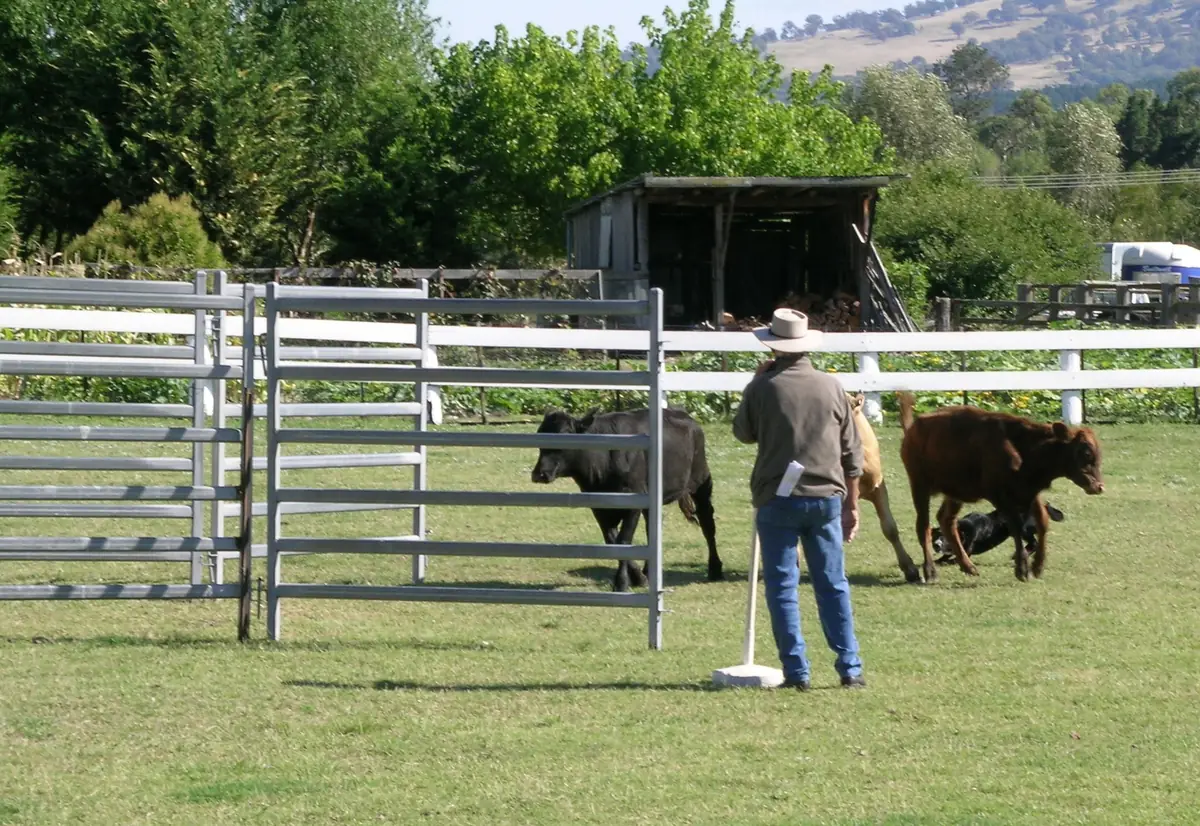
The AKC explains that herding is a modified hunting sequence, and the breeds stop it at different points. A Border Collie “might occasionally nip a stubborn sheep, but that’s not usually part of their repertoire”; its sequence “tends to stop at chase.” Heelers, on the other hand, “nip the heels of cattle”; for them “the predatory sequence stops at grab/bite” (AKC). A Border Heeler can inherit either style, or both.
What nipping usually looks like: a quick nip at heels or ankles when people walk or run, circling and bumping children, stalking the cat, or grabbing pant legs during play. It’s instinct, not spite, but it can still hurt, or trip someone.
What helps (from the AKC and reward-based training guidance):
- Teach “Watch me” and “Leave it,” so you can redirect your dog the moment it starts to fixate (AKC).
- Ask for a calm sit or down before the fun starts, such as before you throw a ball or start a game of tug (AKC).
- Give the drive a legal outlet: herding lessons, Treibball (pushing big balls into a goal), fetch, flirt-pole play or scent games.
- Manage while you train: a leash or baby gate when young children are running around, and supervised play only.
- Never punish nipping with force. The American Veterinary Society of Animal Behavior says evidence “supports the use of reward based methods for all canine training” (AVSAB).
If nipping is frequent, hard or aimed at people’s faces, ask your vet to refer you to a qualified behavior professional.

Exercise and mental work
The AKC gives both parent breeds its top energy score, 5 out of 5 (AKC; AKC). We couldn’t find a registry or vet-school source that sets a specific number of minutes for either breed, so be wary of exact figures online. What we can say is that a Border Heeler needs both physical exercise and a job for its brain, every day, for most of its life.
A realistic weekly plan for an adult Border Heeler:
- Daily: at least one long, purposeful outing: a brisk walk, hike, jog or swim, plus off-leash running in a safely fenced area if you have one.
- Daily brain work: 10 to 15 minutes of training (new tricks, impulse control, recall), puzzle feeders or scatter-feeding meals, and “find it” scent games.
- Weekly: a dog-sport class or club session. Agility, herding, Treibball, disc dog, rally obedience, scent work and canicross all suit herding breeds.
- Off-switch practice: reward settling on a mat. Many herding dogs need to be taught to relax.
Exercise caution: Border Collies can carry Border Collie collapse, an exercise-induced disorder studied at the University of Minnesota. “Affected dogs are normal at rest and seem healthy,” and typical episodes “begin 5 – 15 min after onset of exercise” (University of Minnesota). If your dog wobbles, drags its legs or seems disoriented during hard exercise, especially in heat, stop and call your vet.
Grooming and shedding
Fairly easy. The AKC gives the Cattle Dog a grooming score of 1 and the Border Collie a 3, with shedding at 3 out of 5 for both (AKC; AKC).
- Short-coated Border Heelers: a weekly brush, more during seasonal shedding.
- Medium, feathered coats: brush two or three times a week, checking behind the ears, the “pants” and the tail for tangles.
- Everyone: nail trims, tooth brushing, and a check of pads and coat for burrs and ticks after hikes. The Companion Animal Parasite Council recommends year-round tick control for all dogs (CAPC).
Neither parent is low-shedding, so a Border Heeler is not a good choice for someone with dog allergies.
Health: tests to ask for in both parents
Mixed-breed dogs aren’t automatically healthier. A puppy can inherit a recessive condition if both parents carry the same gene, and these two breeds share some herding-breed risks. Here’s what the Orthopedic Foundation for Animals’ Canine Health Information Center (CHIC) program asks for in each parent breed (OFA ACD; OFA Border Collie):
| Health test | Australian Cattle Dog (CHIC) | Border Collie (CHIC) |
|---|---|---|
| Hip evaluation (OFA or PennHIP) | Required | Required |
| Elbow evaluation | Required | Optional |
| Eye exam by a veterinary ophthalmologist | Required | Required, yearly until age 7 |
| BAER hearing test | Required | Optional |
| PRA-prcd DNA test | Required | Not listed |
| Primary lens luxation (PLL) DNA test | Required | Not listed |
| Collie eye anomaly (CEA) DNA test | Not listed | Optional |
| Neuronal ceroid lipofuscinosis (NCL) DNA test | Not listed | Optional |
| Trapped neutrophil syndrome (TNS) DNA test | Not listed | Optional |
| DNA sample in the OFA/CHIC repository | Not listed | Required |
What those conditions are, in plain English:
- Congenital deafness. In a study of 899 Australian Cattle Dogs, 10.8% were deaf: 7.5% in one ear and 3.3% in both. Females were at higher risk, and dogs with a dark mask on both sides of the face were at lower risk (Sommerlad et al., 2012). A BAER test is the only reliable way to check, because a dog that’s deaf in one ear can seem to hear normally.
- Collie eye anomaly (CEA). An inherited eye condition caused by a deletion in the NHEJ1 gene that researchers found “arose as a single disease allele in a common ancestor of herding breeds” (Parker et al., 2007). Since the Cattle Dog also has collie ancestry, ask about it for both parents.
- Progressive retinal atrophy (PRA-prcd). A gene for inherited, progressive vision loss that’s required testing for Cattle Dogs (OFA ACD; Zangerl et al., 2006).
- Primary lens luxation (PLL). The lens of the eye can slip out of place, linked to a mutation in the ADAMTS17 gene (Gould et al., 2011).
- Trapped neutrophil syndrome (TNS) and neuronal ceroid lipofuscinosis (NCL). Serious inherited conditions documented in Border Collies, each with a DNA test (Shearman & Wilton, 2011; Melville et al., 2005).
- MDR1 drug sensitivity. Washington State University’s veterinary pharmacogenetics lab lists the Border Collie at under 5% frequency and “herding breed cross” at 10%. The Australian Cattle Dog isn’t on its list. WSU notes that in mixed breeds it is “less likely to occur … it is still possible, and testing is recommended” (WSU). Ask your vet whether to test before using certain medications.
- Hip and elbow dysplasia. Both parents’ clubs ask for hip screening, and the AKC lists hip dysplasia among the conditions breeders screen for (AKC; AKC).
For a rescue dog, you won’t have parent results, but you can still ask your vet about a hearing test, an eye exam and DNA health screening. Anything beyond that is a question for your vet.
Lifespan
No one has studied the lifespan of Border Heelers specifically. The AKC lists 12 to 15 years for the Border Collie and 12 to 16 for the Cattle Dog (AKC; AKC), so roughly 12 to 16 years is a fair estimate from the parent ranges. In a large UK study of more than 584,000 dogs, the Border Collie’s median lifespan was 13.1 years (McMillan et al., 2024).
You may read that Border Heelers live 13 to 17 years. That figure is higher than either parent’s AKC range, and we found no source for it. Treat any lifespan claim as a range, not a guarantee. The famous outlier is Bluey, an Australian Cattle Dog that Guinness World Records says lived 29 years and 5 months, as reported by NPR. Bluey was extraordinary, not typical.
Training
These are some of the most trainable dogs in the world, which is a gift and a responsibility. The AKC rates the Border Collie 5 and the Cattle Dog 4 out of 5 for trainability (AKC; AKC). They learn bad habits as quickly as good ones.
- Use rewards. Food, toys and play work beautifully with herding breeds (AVSAB).
- Start with impulse control: wait at doors, “Leave it,” settle on a mat, and loose-leash walking.
- Build a rock-solid recall in a fenced area before trusting it outdoors. Moving wildlife, bikes and livestock are big triggers.
- Socialize thoughtfully, especially with visitors, children and other dogs, because of the Cattle Dog’s guarding streak.
- Keep sessions short and frequent. Several five-minute sessions beat one long one.
Diet basics
There’s no special Border Heeler diet. How much your dog needs depends on its size, age, body condition and how hard it works, and a dog doing herding or agility needs more than the same dog on a quiet week. The World Small Animal Veterinary Association’s Global Nutrition Guidelines help vet teams create an individual nutrition plan for each pet. Keeping a dog lean matters too: in a lifetime study of Labrador Retrievers, dogs fed 25% less than their pair-mates lived longer, with a median lifespan 1.8 years longer (Kealy et al., 2002). Ask your vet to check your dog’s body condition and suggest a food and portion size.
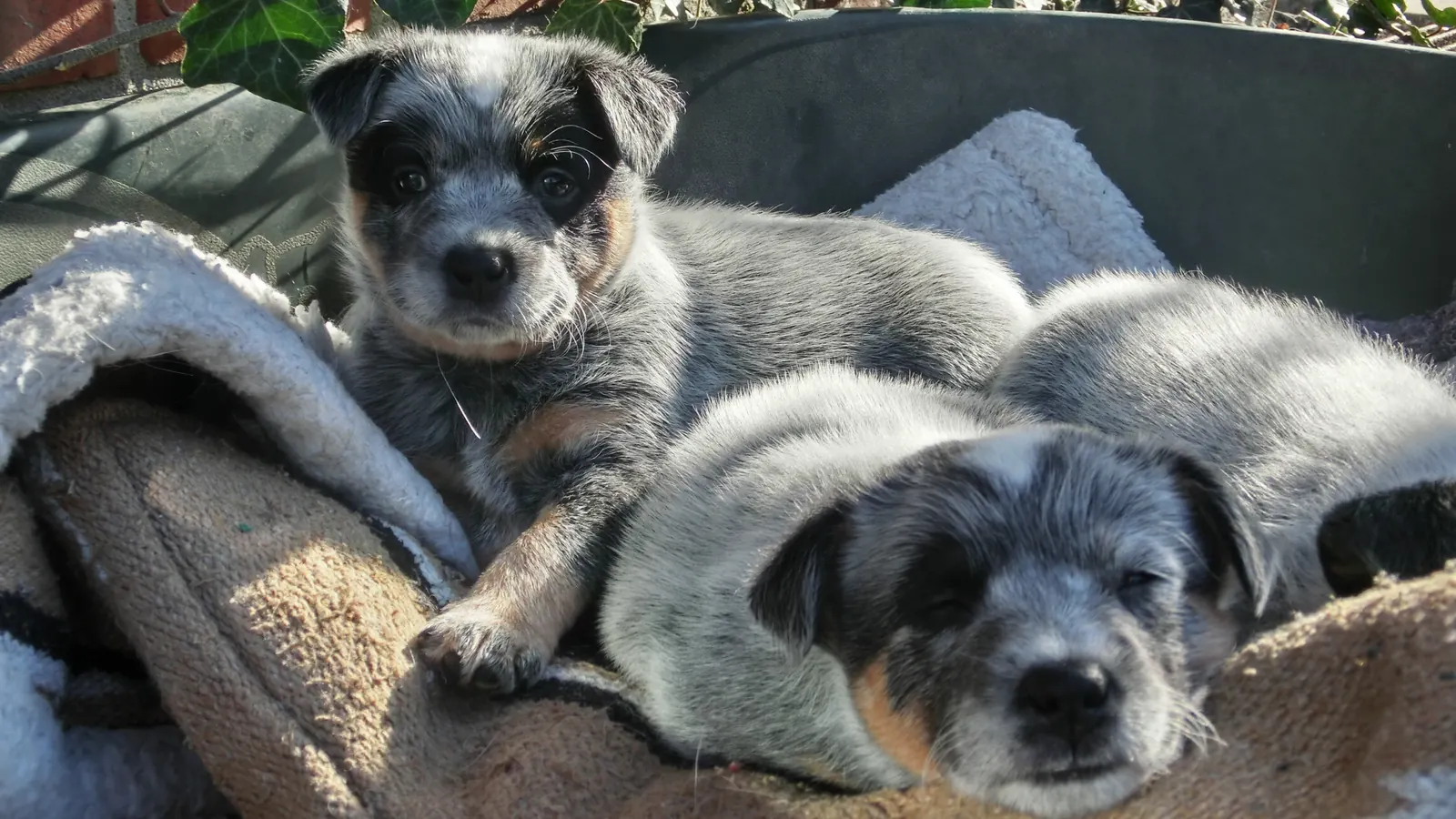
Border Heeler puppies
A Border Heeler puppy is a lot of puppy. Expect mouthing, chasing feet and a brain that needs training from day one. If you’re buying from a breeder:
- Ask for both parents’ health results from the table above, and look them up on the OFA database.
- Meet at least the mother, and ask what the parents do day to day (working stock, sports or family life).
- Avoid sellers who pair two merles. Merle comes from the Border Collie side. Ask your vet about the risks of merle-to-merle breeding before you buy a merle puppy.
- Ask whether the puppies have had a BAER hearing test.
We don’t quote puppy prices, because sellers set their own and we found no reliable source.

Is a Border Heeler right for you? A checklist for 50+ adopters
A Border Heeler can be a brilliant partner for an active person of any age, and an exhausting one for a quieter life. Be honest with yourself:
A Border Heeler may suit you if:
- You walk briskly, hike, run or cycle most days, and want a dog to come along.
- You enjoy training, and would love to try agility, herding, scent work or Treibball.
- You have a securely fenced yard, or easy access to a safe fenced space.
- You’re home a fair amount, or your dog can come with you.
- Your household doesn’t include toddlers or visiting grandchildren who run around a lot, or you’re ready to manage those visits carefully.
- You can hold a strong, quick 40-pound dog on a leash when a cat or jogger appears.
You may want a different dog if:
- Your walks are short, or your balance makes a sudden pull or a nip at your heels risky.
- You want a dog that’s happy with a stroll and a nap.
- You live in a small apartment with no regular access to a place to run.
- You’re away for long workdays.
If the second list sounds like you, that’s a wise choice, not a failure. Our guide to the best dog breeds for seniors can help you find a calmer match. And a middle-aged or older Border Heeler from a rescue, past the puppy whirlwind and with a known history, can be a lovely middle ground.
Costs to plan for
We don’t quote puppy prices. For the cost of keeping any dog, the ASPCA’s 2021 estimates were about $1,030 in first-time costs and $1,391 a year after that (ASPCA). For a Border Heeler, budget extra for:
- dog-sport classes or herding lessons,
- durable toys and puzzle feeders,
- a solid fence or fence repairs,
- DNA health screening, an eye exam and a BAER hearing test if your vet recommends them.
Adopting a Border Heeler
Bone Voyage Dog Rescue ran as a shelter and rescue from 2019 to 2024 and no longer takes in or places dogs, so here’s how to find one near you.
Where to look
- Local shelters and rescues, especially in farming and ranching areas. Search “Border Collie mix,” “Cattle Dog mix,” “Heeler mix” and “Blue Heeler mix,” since labels vary.
- Herding-breed rescues for Border Collies and Australian Cattle Dogs often take in crosses. Ask how they assess herding behavior and nipping.
- Breeders, if you want a puppy. Use the health-test questions above.
Is that shelter dog really a Border Heeler?
Maybe. Visual breed labels are educated guesses. In one study, DNA confirmed the breed an adoption agency named as a main breed in only 25% of dogs (Voith et al., 2009). In a larger study of shelter dogs, staff matched at least one breed in a dog’s DNA 67.7% of the time, but agreement fell to 10.4% when they had to identify more than one breed (Gunter et al., 2018). Both Embark and Wisdom Panel publish breed pages for the Australian Cattle Dog and the Border Collie, so a DNA test can help. Our guide to figuring out what breed your dog is explains what those tests can and can’t tell you.
Questions to ask the rescue or foster
- How does this dog react to people jogging, cycling or running past? Does it nip at heels?
- How does it do with children, cats and small dogs?
- How much exercise and brain work settles it at home?
- How does it greet visitors? Has it shown guarding behavior?
- Has it had a hearing test or an eye exam?
- How is it when left alone?
Our list of 9 questions to ask when adopting a dog covers the general ones.
Give your dog a backup plan
A healthy Border Heeler can be part of your life for a long time, and it’ll need someone who understands a smart, busy herding dog if you ever can’t care for it. Naming a backup caregiver now, someone who knows your dog and has agreed to step in, makes it far less likely your dog will end up in a shelter. Our guide What Happens to Your Dog When You Die walks you through it, and the free My Dog’s Backup Plan worksheet records your dog’s routine, vet, training cues and favorite games. Bone Voyage is also building the backup-adopter pledge, in which a volunteer pledges to adopt a specific senior’s dog if that senior dies or can’t care for it. You can join the free list on that same page.
Frequently Asked Questions
What is a Queensland Heeler Border Collie mix called?
Most often a Border Heeler. You will also see Border Collie Heeler, Border Collie Blue Heeler mix, Border Collie Red Heeler mix and Border Collie Cattle Dog mix. They all describe the same cross: a Border Collie and an Australian Cattle Dog, the breed many people call the Queensland Heeler, Blue Heeler or Red Heeler. It is a mixed breed, not a breed recognized by the AKC, the UKC or the FCI.
Is a Queensland Heeler the same as a Blue Heeler?
Yes. Queensland Heeler, Blue Heeler and Red Heeler are all nicknames for the Australian Cattle Dog. The AKC says the breed is also called the Blue Heeler or Queensland Heeler, and that it was first known as the Australian Heeler. Blue and red are simply the two coat colors the breed standard allows, and the AKC notes there is no difference in temperament between them.
How big does a Border Heeler get?
Usually a medium dog. Based on the AKC ranges for both parents, an estimate for the mix is about 17 to 22 inches at the shoulder and about 30 to 55 pounds. That is an estimate from the parent breeds, not a breed standard, and an individual dog can land anywhere in that range or a little outside it.
How long do Border Heelers live?
There is no lifespan study of the cross itself. The AKC lists 12 to 15 years for the Border Collie and 12 to 16 years for the Australian Cattle Dog, so a reasonable estimate from the parent ranges is roughly 12 to 16 years. Some websites claim 13 to 17 years, which is higher than either parent’s AKC range. How long any one dog lives depends on genes, weight, care and luck.
Do Border Heelers nip?
Many do, at least sometimes. The AKC explains that Australian Cattle Dogs were bred to nip the heels of cattle, while Border Collies mostly control sheep by chasing and staring. A Border Heeler can inherit either style, so watch for nipping at heels, children and other pets. Give the herding drive a job, reward calm behavior, teach Leave it and Watch me, and ask your vet for a referral to a qualified behavior professional if nipping worries you.
What is the personality of a Border Collie heeler mix?
Expect a smart, intense, busy working dog. The AKC rates both parent breeds 5 out of 5 for energy. Border Collies score higher for affection and openness to strangers, while Australian Cattle Dogs score higher for protectiveness and are described by the FCI standard as naturally suspicious of strangers. A Border Heeler can land anywhere between the two, so meet the individual dog.
Is a Queensland Heeler a good family dog?
It can be for an active family that wants a working partner, but it is not an easy dog. The AKC rates the Australian Cattle Dog 3 out of 5 for being good with young children and notes this is with supervision, partly because of the breed’s habit of nipping heels. A Border Heeler is similar: loyal and fun with older children who respect it, harder with toddlers, and happiest with a daily job.
Is a Border Heeler a good dog for someone over 50?
For an active older adult who hikes, trains or does dog sports, it can be a wonderful partner. For quieter days, limited mobility or a small home, it is usually a hard fit, because both parent breeds were bred to work all day. If you love the look, a puppy can work at any age if you have the time and energy for training; an adult Border Heeler from a rescue, whose energy and manners are already known, can be easier if you’d rather skip that stage.
Before you go
The Border Heeler brings together two of the hardest-working herding dogs in the world. For the right person, one is a joyful, loyal, endlessly game partner. For a quieter life, it can be too much dog. Whatever dog you bring home, meet the individual, ask for health tests, and make a backup plan so they’ll always have someone.
Sources
- American Kennel Club: Australian Cattle Dog and Border Collie breed pages (names, history, height, weight, life expectancy and trait ratings as listed on November 25, 2026); Why does my dog herd my kids?
- Fédération Cynologique Internationale: Standard No. 287, Australian Cattle Dog and Standard No. 297, Border Collie
- Orthopedic Foundation for Animals, CHIC requirements for the Australian Cattle Dog and Border Collie
- Sommerlad SF et al. (2012). Prevalence of congenital hereditary sensorineural deafness in Australian Cattle Dogs and associations with coat characteristics and sex. BMC Veterinary Research 8:202.
- Parker HG et al. (2007). Breed relationships facilitate fine-mapping studies: a 7.8-kb deletion cosegregates with Collie eye anomaly across multiple dog breeds. Genome Research 17(11):1562-71.
- Zangerl B et al. (2006). Identical mutation in a novel retinal gene causes progressive rod-cone degeneration in dogs and retinitis pigmentosa in humans. Genomics 88(5):551-63.
- Gould D et al. (2011). ADAMTS17 mutation associated with primary lens luxation is widespread among breeds. Veterinary Ophthalmology 14(6):378-84.
- Shearman JR, Wilton AN (2011). A canine model of Cohen syndrome: Trapped Neutrophil Syndrome. BMC Genomics 12:258.
- Melville SA et al. (2005). A mutation in canine CLN5 causes neuronal ceroid lipofuscinosis in Border collie dogs. Genomics 86(3):287-94.
- University of Minnesota, Border Collie Collapse
- Washington State University, Breeds affected by the MDR1 mutation
- McMillan KM et al. (2024). Longevity of companion dog breeds: those at risk from early death. Scientific Reports 14:531.
- NPR (2024), Bobi loses Guinness title of oldest dog ever
- Kealy RD et al. (2002). Effects of diet restriction on life span and age-related changes in dogs. JAVMA 220(9):1315-20.
- American Veterinary Society of Animal Behavior, Position Statement on Humane Dog Training (2021)
- Companion Animal Parasite Council, Ticks guideline
- World Small Animal Veterinary Association, Global Nutrition Guidelines
- ASPCA, Cutting Pet Care Costs (2021 update)
- Voith VL et al. (2009). Comparison of adoption agency breed identification and DNA breed identification of dogs. Journal of Applied Animal Welfare Science 12(3):253-62.
- Gunter LM et al. (2018). A canine identity crisis: Genetic breed heritage testing of shelter dogs. PLOS ONE 13(8):e0202633.
- Embark, Australian Cattle Dog breed profile; Wisdom Panel, Border Collie breed page
- Dogbreedinfo.com, Border Heeler (registry listing)
- Photos: Unsplash photographers and Wikimedia Commons contributors, credited under each image. We could not find a freely licensed photo that is verified as a Border Heeler, so every photo on this page shows one of the two parent breeds and is labeled that way. Full license records are kept in this site’s image-credits file.