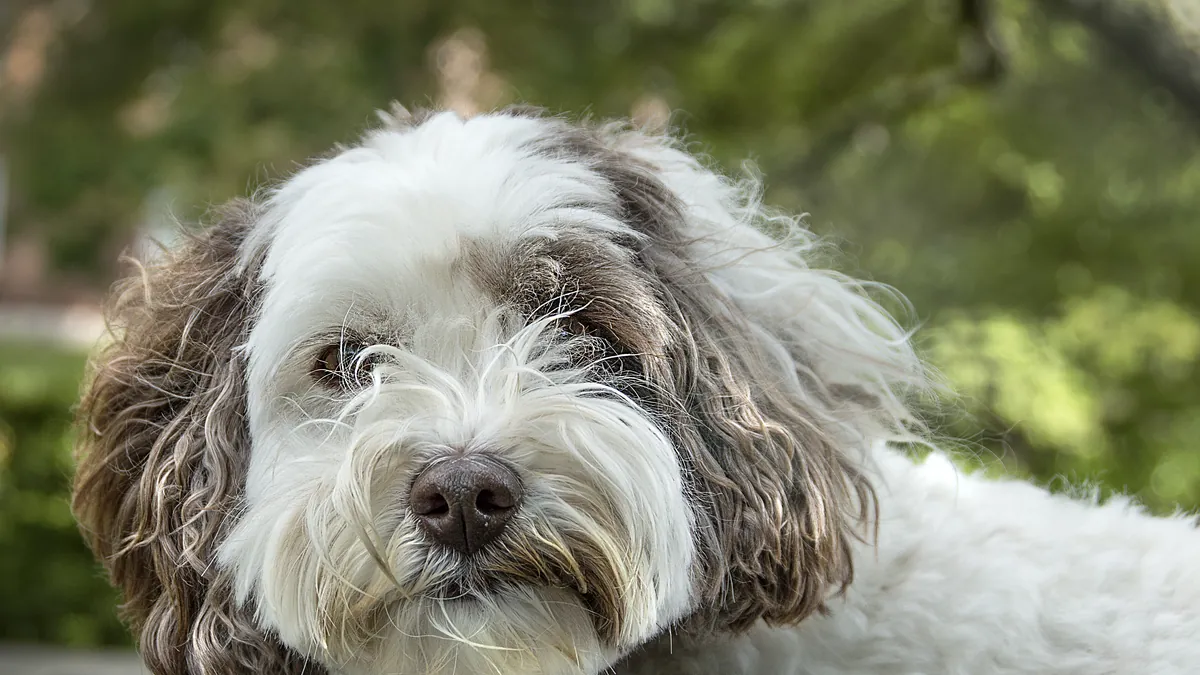
A Miniature Labradoodle (mini Labradoodle) is a cross between a Labrador Retriever and a Miniature or Toy Poodle, bred to be a smaller version of the Labradoodle. Expect a friendly, smart, active dog with a wavy or curly coat that needs regular grooming, somewhere between a Mini Poodle and a Lab in size. It isn’t a recognized breed, so size, coat and temperament vary from dog to dog, and the honest guide is what each parent is like, plus the dog in front of you.
You’ll also see “mini Labradoodle” used for miniature Australian Labradoodles, a separate multigenerational line with some Cocker Spaniel in the family tree. Below is what the American Kennel Club (AKC), the Labradoodle breed associations and veterinary research can tell you, where the answer is “it depends on the dog,” and how to tell whether one fits your life.
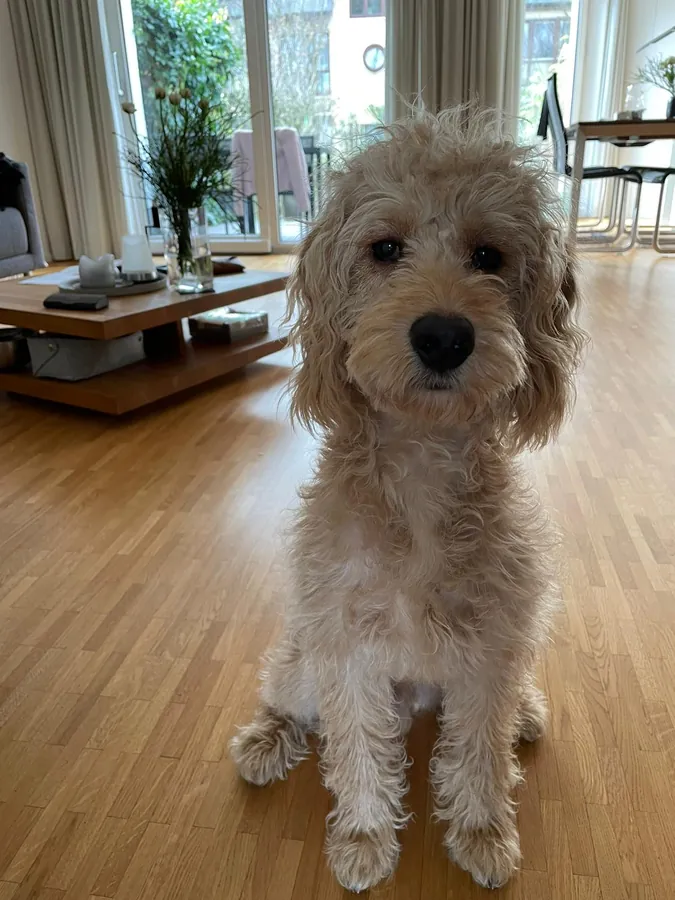
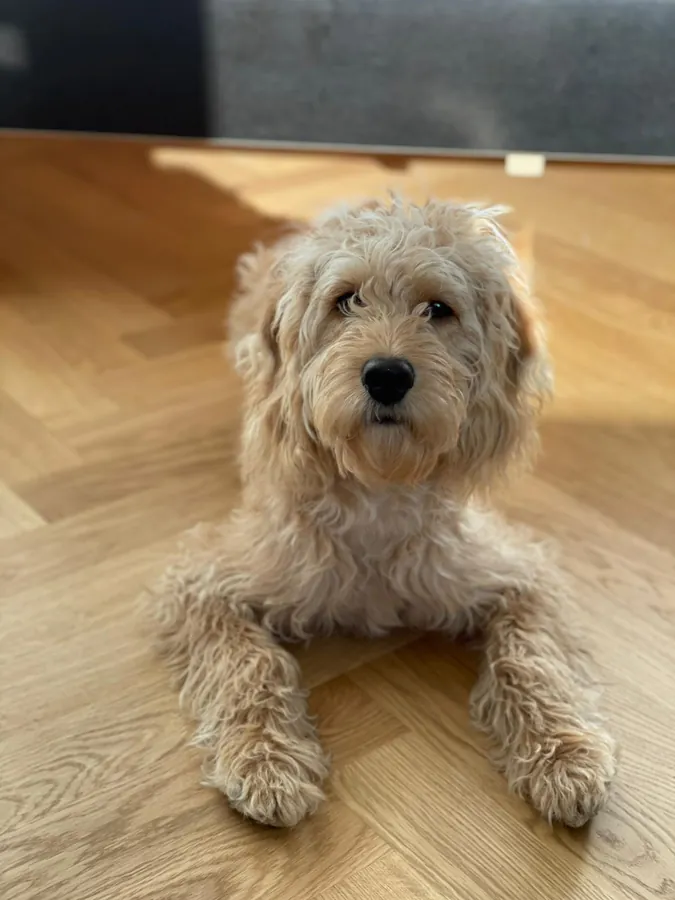
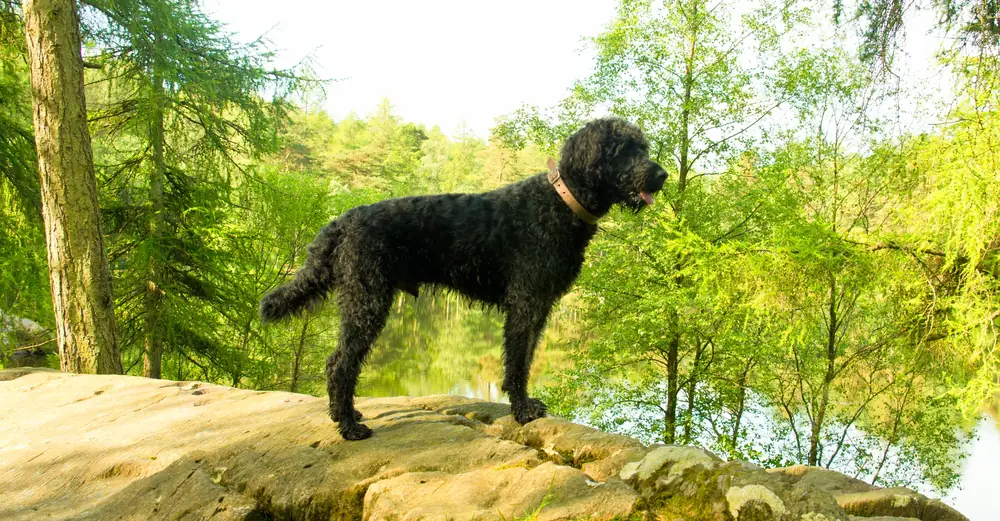
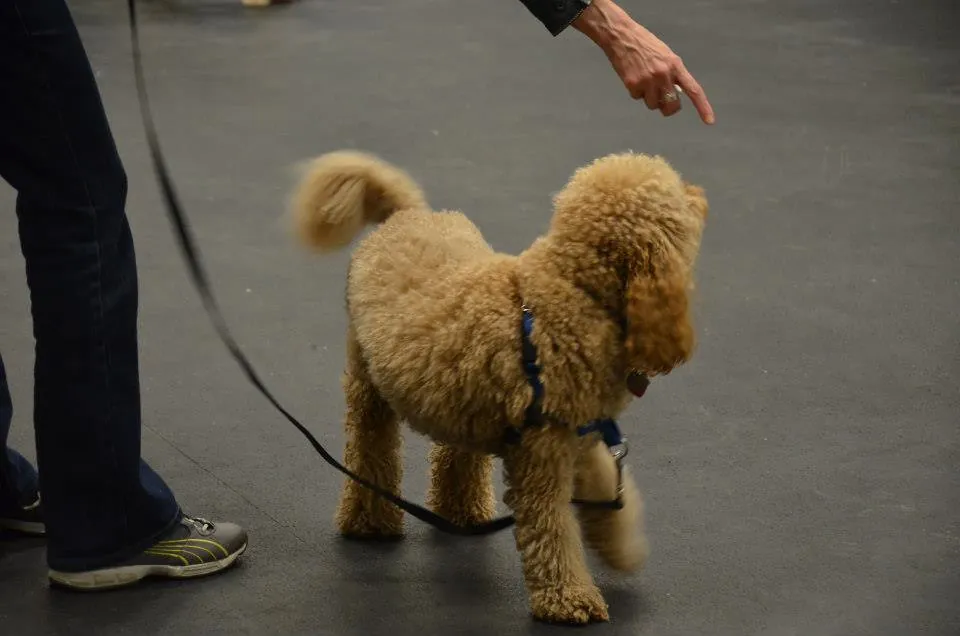
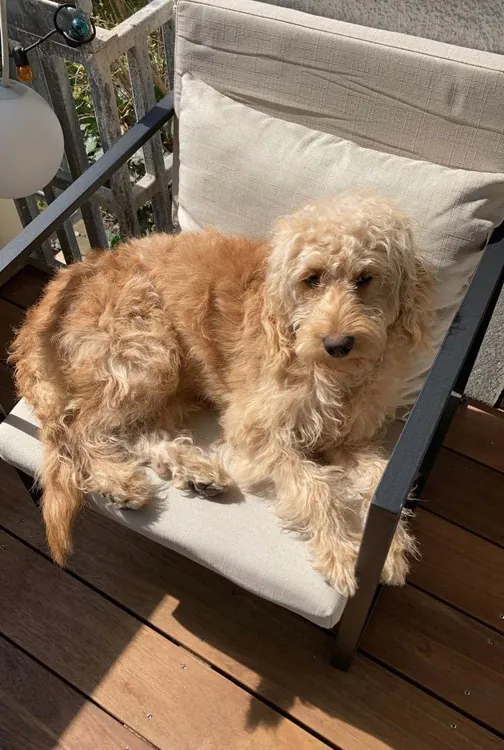
A note on our photos: every dog pictured on this page was described by its owner or photographer as a mini, miniature or toy Labradoodle. You’ll meet Karl, Ollie, Ginger, Jasper, Freddie and others. They show how differently the same cross can turn out.
Mini Labradoodle quick facts
The size, lifespan and trait figures here are for the parent breeds, from the AKC, or for the Australian Labradoodle’s miniature size, from its breed association. None is a measurement of first-generation mini Labradoodles.
- Also called: Mini Labradoodle, Miniature Labradoodle, Mini Doodle. Toy Labradoodle is a name some sellers use for crosses with a Toy Poodle. Not a recognized breed.
- Size (parent breeds): Miniature Poodle 10 to 15 inches and 10 to 15 pounds; Toy Poodle no more than 10 inches and 4 to 6 pounds; Labrador Retriever 21.5 to 24.5 inches and 55 to 80 pounds (AKC; AKC; AKC). The Australian Labradoodle Association of America sets its miniature at 14 to 16 inches, no more than 17 inches (ALAA).
- Lifespan (parent breeds): 11 to 13 years for the Labrador and 10 to 18 years for the Miniature and Toy Poodle (AKC; AKC). There is no published figure for the mix.
- Energy (AKC ratings): 4 out of 5 for both the Labrador and the Poodle. Plan for daily walks and play.
- Grooming and shedding (AKC ratings): the Poodle is rated 4 out of 5 for grooming needs and 1 for shedding; the Lab is 2 for grooming and 4 for shedding. Most mini Labradoodles need regular brushing and professional grooming.
- Barking (AKC ratings): Labrador 3 out of 5, Poodle 4.
- Good with young children (AKC ratings): 5 out of 5 for both parents. Still supervise, since a bouncy young dog can knock a toddler over.
- Good with other dogs (AKC ratings): Labrador 5 out of 5, Poodle 3.
- Health to ask about: hips, elbows, kneecaps, eyes, and inherited conditions both parents’ clubs screen for. Details and sources below.
- Good fit for: someone who enjoys daily walks, training games and regular grooming, and wants a sociable dog that likes to be with people.
What a mini Labradoodle actually is
A mini Labradoodle has a Labrador Retriever on one side of the family and a Miniature or Toy Poodle on the other, sometimes several generations back. You’ll see a few types sold under the name:
- First generation (often called F1): a Labrador crossed with a Miniature or Toy Poodle. These dogs are the least predictable, because the two parents are so different in size and coat.
- Later generations (often called F1B, F2 and so on): an F1 bred back to a Poodle, or two Labradoodles bred together. The Australian Labradoodle Association of America says F1 Labradoodles “typically are moderate- to low- shedding” and F1B dogs “typically are low- to non-shedding if both parents non-shedding,” which is a breeder group’s description, not a promise (ALAA).
- Australian Labradoodles: a multigenerational line that “carries the DNA of the Labrador, Poodle and Cocker Spaniel (American or English),” in which “both parents of the dog were Australian Labradoodles” (ALAA). It has its own breed standard with miniature, medium and standard sizes, but it isn’t recognized by the AKC either.
So the label on a mini Labradoodle tells you less than you might hope. Ask what the parents were, and if you’re adopting, meet the dog.
Where the Labradoodle came from
The Labradoodle story starts with guide dogs. Wally Conron, then breeding manager for the Royal Guide Dogs Association of Australia (now Guide Dogs Victoria), first crossed a Labrador with a Poodle in 1989, for a blind woman in Hawaii whose husband was allergic to dog hair (CBS News; RTÉ). The name, not the dog, made it a sensation: when the puppies were offered simply as a crossbreed, nobody wanted them, but “everybody wanted a labradoodle. Same dog, different name,” Conron later said, quoted in HumanePro, the magazine of Humane World for Animals (HumanePro). He has since said he regrets it, telling NPR, “I opened a Pandora Box and released a Frankenstein monster,” and adding of the Labradoodles he sees, “the biggest majority are either crazy or have an hereditary problem” (NPR). That’s one man’s strong opinion, not a study, but it’s a good reason to ask about health testing.
Conron’s work was with the Labradoodle in general. We found no reliable record of who first bred the miniature version, so we won’t guess.
The Labrador Retriever side
The AKC calls Labs “friendly, outgoing, and high-spirited companions” and says the Lab is “an exuberant, very energetic breed that needs lots of exercise every day.” It lists 21.5 to 24.5 inches, 55 to 80 pounds and 11 to 13 years, and rates the Lab 5 out of 5 for affection, good with young children, good with other dogs, openness to strangers, playfulness, adaptability and trainability (AKC Labrador Retriever). It has “a thick, water-repellant double coat that sheds” and is rated 4 out of 5 for shedding. For more, see our Labrador Retriever guide.
The Poodle side: Miniature and Toy
The AKC recognizes one Poodle breed in three sizes: “Standards should be more than 15 inches tall at the shoulder; Miniatures are 15 inches or under; Toys stand no more than 10 inches.” The Miniature is listed at 10 to 15 pounds and the Toy at 4 to 6 pounds, both with a life expectancy of 10 to 18 years. The AKC rates the Poodle 5 out of 5 for affection, trainability and need for mental stimulation, 4 for barking and grooming, and 1 for shedding, and says “Poodles of any size are very active dogs who require good exercise every day” (AKC Miniature Poodle; AKC Toy Poodle).
A Lab mixed with a Standard Poodle is the original, larger Labradoodle. A Lab mixed with a Miniature or Toy Poodle is where “mini” comes from.
How big does a mini Labradoodle get?
There’s no official answer, and that’s the most important thing to know before you fall for a puppy. Here is what the reputable sources say:
- Parent breeds: a Toy Poodle can be under 6 pounds and a Labrador up to 80 pounds (AKC; AKC). A first-generation puppy from a Mini Poodle and a Lab can grow up anywhere in the wide band between them.
- Australian Labradoodle miniature: the ALAA breed standard says “Between 14 and 16 inches (35 to 42 centimeters) in height at wither, but not more than 17 inches,” and gives one weight range for all sizes, 15 to 65 pounds. It also notes that “inter-size breeding is acceptable and expected at the moment” (ALAA breed standard). The Worldwide Australian Labradoodle Association puts its miniature at “12 to less than 17 inches” (WALA).
- Seller websites give figures that disagree with each other, from roughly 15 to 30 pounds on one breeder’s blog to 30 to 50 pounds on a long-running breed-information site. Those numbers aren’t measured data, and their spread shows how much minis vary.
In practice, many mini Labradoodles are small-to-medium dogs, but some stay small and some grow well past “mini.” If size matters for your lap, your car, your apartment rules or your balance on walks, adopt an adult whose size you can see.


Coat, colors and looks
The ALAA standard for Australian Labradoodles says “coats must be fleece or wool” (ALAA breed standard). A first-generation mini has no such standard and may have anything from a loose, wiry or flat coat closer to the Lab’s to tight Poodle curls. As the photos on this page show, colors include cream, apricot, red, black, and white with brown patches.
The Lab’s coat is short and double, and it sheds; the Poodle’s is “curly,” long, and rated 1 out of 5 for shedding (AKC; AKC). Which one your dog takes after, or where in between it lands, isn’t something anyone can promise for a puppy.

Are mini Labradoodles hypoallergenic? The honest answer
This is the claim that sells the most doodles, and it doesn’t hold up. The AKC says “there are no 100% hypoallergenic dogs, dog breeds, or mixed-breeds” (AKC). In a 2012 study, Dutch researchers measured Can f 1, the main dog allergen, in hair, coat and home samples. Labradoodles and other “hypoallergenic” breeds actually had significantly higher allergen levels in their hair and coat samples. Floor dust in Labradoodle homes had less allergen, but airborne levels didn’t differ between breeds, and the authors concluded there is “no evidence for the classification of certain dog breeds as being ‘hypoallergenic’” (Vredegoor et al., 2012). A separate US study found allergen levels in homes with “hypoallergenic” dogs didn’t differ from other homes (Nicholas et al., 2011).
The Labradoodle’s own creator set out to help one allergic man, and HumanePro notes that “a lot of marketing around doodle dogs touts the false claim that they are ‘hypoallergenic’” (HumanePro). If you have allergies, spend real time with the specific dog before committing, and talk to your doctor. Our hypoallergenic dog breeds guide covers other options.
Temperament: what to realistically expect
These are descriptions of the parent breeds and of Labradoodles as a group, not predictions for any one dog.
The parents. Both are rated 5 out of 5 by the AKC for affection with family, good with young children, openness to strangers and playfulness. The Lab is rated 5 for good with other dogs, the Poodle 3 (AKC; AKC).
What research says about Labradoodles. A 2026 Royal Veterinary College study compared the owner-reported behavior of 9,402 dogs, including Labradoodles, Labradors and Poodles. Labradoodles “differed from Labrador Retrievers and Poodles in 11/24 comparisons, scoring worse than their progenitors in five behaviours, but better in six.” Compared with Labradors, they scored worse on dog rivalry, non-social fear (such as fear of noises), separation-related problems, excitability and trainability. Compared with Poodles, they scored better on several kinds of fear and aggression, and on separation-related problems (Bryson et al., 2026). That study didn’t separate minis from standards.
Breed only explains part of it. A 2022 study in Science of more than 18,000 dogs found breed explains just 9% of the behavioral variation between individual dogs (Morrill et al., 2022). The individual dog’s history, training and personality matter more.
Day to day, many mini Labradoodles are people-loving, playful dogs that want to be included. In practice:
- Family: usually very social and happiest close to their people. A dog that’s alone for long days may struggle.
- Visitors: both parents are rated 5 out of 5 for openness to strangers, and the research above found Labradoodles more excitable than Labs, so expect an enthusiastic greeter that may need to learn not to jump up.
- Other pets: many do well with other dogs; ask how a particular dog has done with cats.
- Children and grandchildren: both parent breeds are rated 5 out of 5 with young children, but a bouncy young dog can knock over a toddler, so supervise.
Male or female? We found no study comparing male and female mini Labradoodles, so treat claims that one sex is calmer, smaller or more loving with caution. The AKC does list males as taller and heavier than females in the Labrador (AKC), but in a cross the individual parents matter more than sex.
Therapy or service dog? The Labradoodle began as a guide-dog project (CBS News), but no label makes a puppy a working dog. Whether any one dog suits therapy visits or service work depends on its own temperament and a great deal of training.

Exercise needs
Both parents are active. The AKC says a Lab “who doesn’t get enough exercise is likely to engage in hyperactive and/or destructive behavior,” and that Poodles “of any size are very active dogs who require good exercise every day” (AKC Labrador Retriever; AKC Miniature Poodle). The Poodle is also rated 5 out of 5 for needing mental stimulation.
For most mini Labradoodles that means daily walks plus play and brain games: fetch, sniff walks, food puzzles and short training sessions. How much a particular dog needs is something to ask the shelter or foster, who has seen it. Ask your vet before starting longer walks or hikes, especially with a young puppy or an older dog.
Training
The AKC rates both the Labrador and the Poodle 5 out of 5 for trainability (AKC; AKC). Many mini Labradoodles learn quickly, but don’t assume “easy”: in the Royal Veterinary College study, owners rated Labradoodles lower on trainability and higher on excitability than Labradors (Bryson et al., 2026). A smart, excitable dog with nothing to do will invent its own games.
Kind, consistent training works best. The American Veterinary Society of Animal Behavior says evidence supports reward-based methods for all dog training and that “there is no evidence that aversive training is necessary” (AVSAB, 2021).
What works well with this mix:
- Polite greetings. Reward four paws on the floor before anyone says hello.
- Alone-time practice. Since separation problems showed up in the research, build up short absences gradually from day one.
- Handling and grooming practice. Pair brushing, combing, nail trims and ear checks with treats, so grooming isn’t a battle later.
- A reliable recall and “leave it.” Practice in the house and a fenced yard first.
- Short, fun sessions. Tricks and games keep a busy mind happy.
Grooming
This is the part many new doodle owners underestimate. The AKC tells Poodle owners that “unless you plan to keep your Poodle clipped in a short trim, you will need to learn how to brush him daily to keep his coat from matting,” that a coat not brushed and combed “completely to the skin” will mat near the roots and “will have to be shaved off,” and that some owners “choose to take their dog to a professional dog groomer every four to six weeks” (AKC Miniature Poodle). A mini Labradoodle with a curly or fleecy coat usually needs much the same. One with a looser, Lab-like coat may need less trimming but will shed more.
Shelters see the cost of skipped grooming. A shelter manager quoted by HumanePro said “the biggest issue that we’re seeing health-wise is the doodles coming to us that haven’t been groomed and have heavily matted coats,” noting that grooming a big dog there costs “over $100” every 6 to 8 weeks (HumanePro). A mini may cost less to groom, but budget for it and ask a groomer for a price before you adopt.
Don’t forget teeth and ears. The American Veterinary Medical Association recommends regular dental checkups and brushing your pet’s teeth at home (AVMA).

Diet basics
There’s no special mini Labradoodle diet. Feed a complete, good-quality food suited to your dog’s age and size, measure meals, and count treats, since a dog’s size can be anywhere from Mini Poodle to near-Lab. Your vet can tell you your dog’s ideal weight and how much to feed.
Health issues to know about
A mix can inherit health problems from either parent, and mixing doesn’t cancel them out. A 2024 Royal Veterinary College study compared Labradoodles, Cockapoos and Cavapoos with their parent breeds and found no statistically significant difference in 86.6% of health comparisons, “challenging widespread beliefs in positive hybrid vigour effects” (Bryson et al., 2024). So ask the same health questions you’d ask about the parent breeds.
| Condition | Which parent breed | What the source says |
|---|---|---|
| Hip and elbow dysplasia | Labrador; hips also Miniature Poodle | Hip and elbow evaluations are on the Labrador’s recommended screening list, and hip evaluation on the Miniature Poodle’s (AKC; AKC). |
| Loose kneecaps (patellar luxation) | Miniature and Toy Poodle | On the screening lists for both small Poodle sizes. The AKC says Legg-Perthes, a hip-joint disease, and luxating patellas “are more likely to occur in Toy and Miniature Poodles than in Standards” (AKC). The American College of Veterinary Surgeons says affected dogs often “suddenly carry the limb up for a few steps” (ACVS). |
| Inherited eye disease | Both | Eye exams and a DNA test for progressive retinal atrophy (PRA-prcd) are on the lists for the Labrador and both small Poodles (AKC; AKC). A UK study found multifocal retinal dysplasia in 4.6% of the Labradoodles examined, more than in Labradors (Oliver and Gould, 2012). |
| Exercise-induced collapse and centronuclear myopathy | Labrador | DNA tests for both are on the Labrador’s screening list (AKC). |
| Bloat | Labrador (larger dogs) | The AKC says “like other large, deep-chested dogs, Labs can develop a life-threatening stomach condition called bloat” (AKC). Ask your vet whether it’s a concern for your dog’s size and build. |
Sources for screening lists: the AKC breed pages, which reproduce each parent club’s health statement (AKC Labrador Retriever; AKC Miniature Poodle; AKC Toy Poodle).
What this means day to day: ask a breeder for the parents’ hip, elbow, eye and kneecap results and DNA tests; ask a shelter for the dog’s vet records. Mention limping, skipping a step, cloudy eyes, bumping into things in dim light, or collapsing after hard exercise to your vet. Keep your dog lean, and ask your vet what checkups suit its age.
Lifespan
No study has measured the mini Labradoodle’s lifespan, so any single number you see online is a guess. As a frame of reference, the AKC lists 11 to 13 years for the Labrador Retriever and 10 to 18 years for the Miniature and Toy Poodle (AKC; AKC; AKC). Many mini Labradoodles can be expected to live well into their teens, but no one can promise that for any one dog.
Mini Labradoodle puppies
A puppy’s adult size, coat and temperament are especially hard to predict when the parents are as different as a Lab and a Mini Poodle. Puppies also mean house training, chewing and months of socialization before you know who the adult will be.
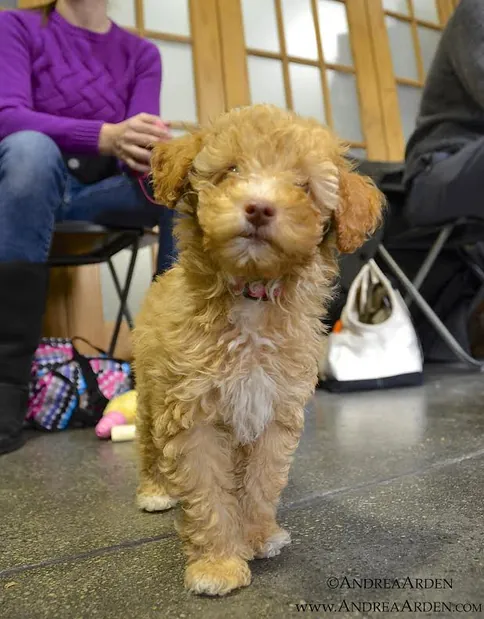
Freddie, below, was described by his owner as “a toy labradoodle.” At 16 weeks he has a scruffy, wiry red coat, very different from Ginger’s fluffy curls. Same type of cross, different result.
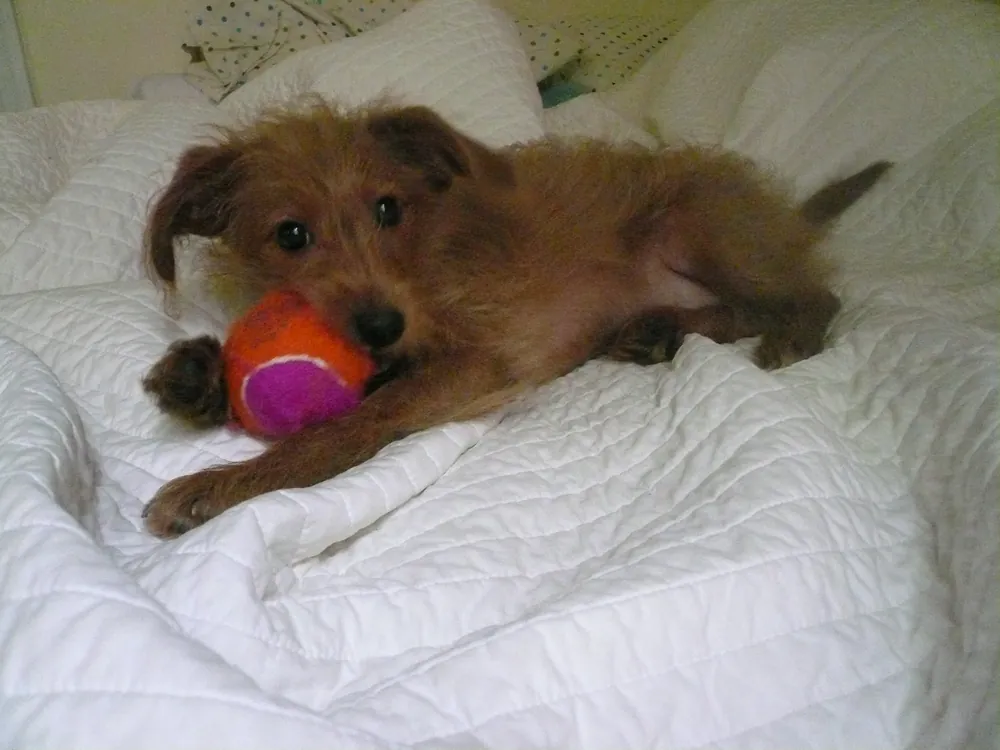
If you’re buying a puppy, be cautious. HumanePro reports that the puppy mill industry has been quick to cash in on designer dogs “sold online and in pet stores for thousands of dollars” (HumanePro). Ask to meet the mother, ask for both parents’ health test results, and walk away from anyone who won’t show them or who promises a “guaranteed hypoallergenic” puppy.
Mini Labradoodle vs Labrador vs Miniature Poodle vs Labradoodle vs Australian Labradoodle
Here’s how the mini Labradoodle compares with its parents and its larger and Australian cousins, using registry figures, breed standards and the AKC’s 1 to 5 trait ratings (5 = most). The Labradoodle columns aren’t measured data: they’re the range set by the parents or, for the Australian Labradoodle, its breed association’s standard.
| Labrador Retriever | Miniature Poodle | Toy Poodle | Mini Labradoodle (mix) | Standard Labradoodle (mix) | Australian Labradoodle | |
|---|---|---|---|---|---|---|
| Recognition | AKC (Sporting Group) | AKC (Non-Sporting Group) | AKC (Toy Group) | None; a mix | None; a mix | Own breed associations; not AKC |
| Parentage | Purebred | Purebred | Purebred | Lab x Miniature or Toy Poodle | Lab x Standard Poodle | Multigenerational; Lab, Poodle and Cocker Spaniel ancestry |
| Height | 21.5 to 24.5 in | 10 to 15 in | 10 in or less | Varies; between the parents | Varies; Standard Poodle is over 15 in | Miniature 14 to 16 in; medium 17 to 20 in; standard 21 to 24 in (ALAA) |
| Weight | 55 to 80 lb | 10 to 15 lb | 4 to 6 lb | Varies widely | Varies; Standard Poodle 40 to 70 lb | 15 to 65 lb across all sizes (ALAA) |
| Life expectancy | 11 to 13 yrs | 10 to 18 yrs | 10 to 18 yrs | Not studied | Not studied | Not given in standard |
| Coat | Short, double; sheds | Curly | Curly | Hair, wavy or curly; can’t be predicted | Hair, wavy or curly | Fleece or wool (ALAA) |
| Shedding | 4 | 1 | 1 | Low to high | Low to high | Varies; ask |
| Grooming needs | 2 | 4 | 4 | Usually high | Usually high | Usually high (fleece or wool coat) |
| Energy | 4 | 4 | 4 | Usually moderate to high | Usually high | Varies |
| Trainability | 5 | 5 | 5 | Usually high; can be excitable | Usually high; can be excitable | Varies |
| Barking | 3 | 4 | 4 | Moderate | Moderate | Varies |
| Good with other dogs | 5 | 3 | 3 | Usually good; ask | Usually good; ask | Varies; ask |
| Breed-club health tests (AKC) | Hips, elbows, eyes, EIC, CNM, PRA-prcd, D locus | Kneecaps, hips, eyes, PRA-prcd | Kneecaps, eyes, PRA-prcd | Ask for both parents’ results | Ask for both parents’ results | Ask the breeder |
Sources: AKC Labrador Retriever, AKC Miniature Poodle, AKC Toy Poodle, AKC Standard Poodle, ALAA breed standard and ALAA about page. The mix columns are informed estimates from the parents’ figures, not measurements.
The biggest real-world differences are size and coat. A mini can turn out close to a Mini Poodle in size or much closer to a Lab, and its coat anywhere from Lab-like to tightly curled. If you’re also considering other small doodles, our Mini Sheepadoodle, Mini Bernedoodle and Goldendoodle guides compare well.
Is that shelter dog really a mini Labradoodle?
Maybe, maybe not. Shelter breed labels are usually a best guess from looks, and curly-coated small dogs get called “doodle” a lot. In one study, DNA confirmed the main breed an adoption agency had named in only 25% of the dogs tested (Voith et al., 2009). In a larger study of shelter dogs, staff and DNA results often disagreed too (Gunter et al., 2018). Meet the dog, not the label. Our guide to figuring out your dog’s breed explains the options.
Is a mini Labradoodle right for me? A checklist for adopters 50+
A few “no” answers don’t rule you out; they tell you what to plan for, or which dog to ask about.
- Yes / No: I can give a dog a daily walk or two plus play and some training games, in the amount the shelter or foster says this dog needs.
- Yes / No: I’m ready to brush a curly or wavy coat several times a week, and I’ve priced professional grooming every four to eight weeks.
- Yes / No: If I have dog allergies, I’ve spent time with this specific dog and talked to my doctor, and I’m not relying on a “hypoallergenic” label.
- Yes / No: Someone is home much of the day, or I can arrange a sitter or day care, since separation-related problems showed up in the Labradoodle research.
- Yes / No: I’m OK with a dog that may be excitable and jump up when greeting, or I’m ready to train polite greetings.
- Yes / No: The dog’s adult size works for my home, my car, any building pet rules and my comfort on a leash.
- Yes / No: I can budget for routine vet care and grooming for 10 years or more.
- Yes / No: I’ve thought about who would care for this dog if I ever couldn’t.
A mini Labradoodle may suit you if you enjoy daily walks and training, don’t mind regular grooming, and want a sociable, playful dog that likes to be close to its people.
Consider a different dog if you want a low-maintenance coat, if the dog would be alone most of the day, or if your main reason is allergies. A calm adult mini whose foster knows it well can be a lovely exception to the “puppy chaos” stage.
A word on tripping and leash safety
This isn’t a reason to skip an active dog, but it’s worth planning for. A dog that pulls or darts after a squirrel can throw you off balance. A University of Pennsylvania study estimated that fractures among Americans 65 and older linked to walking leashed dogs more than doubled from 2004 to 2017 (Pirruccio et al., 2019). Loose-leash training, a well-fitted harness, and a fixed-length leash rather than a retractable one all help. Ask your vet or a trainer what suits you and your dog.
Costs to plan for
We found no reliable cost figures for this mix specifically, and we don’t quote puppy prices. The ASPCA estimates a dog costs about $1,391 a year, and $3,221 for the first year once one-time and special costs are included; it lists professional grooming as a special cost of about $300 (ASPCA). A doodle that’s groomed every four to eight weeks will likely cost more than that, so ask local groomers for prices. Budget for:
- Adoption fee, which at shelters and rescues often includes vaccines, a microchip and spay or neuter surgery. Ask what’s included.
- Grooming: professional grooming, plus a slicker brush, a metal comb and nail clippers at home.
- Routine vet care: exams, vaccines, parasite prevention and dental care.
- Pet insurance or an emergency fund, especially with hip, knee and eye conditions on the parents’ screening lists.
- Training classes and gear: a harness, a crate or bed, chew toys and puzzle feeders.
Adopting a mini Labradoodle
The doodle rescue reality
Doodles do end up in shelters. HumanePro reported that in a 2023 Shelter Animals Count survey, “over 60% of 314 polled organizations reported receiving doodles and other intentionally mixed breeds,” and almost 60% had received surrenders or surrender requests from people who had paid a lot for their dogs but could no longer afford them (HumanePro). One shelter manager told HumanePro they’d even seen breeders surrender unsold litters, including “small-breed doodles” (HumanePro).
That’s good news if you want one: there are mini Labradoodles and other doodles waiting for homes, often adults whose size, coat and personality are already known.
Where to look
Start with shelters and rescues. Search for “Labradoodle,” “doodle,” “Poodle mix” and “Labrador mix,” since labels are often a guess. Search “doodle rescue” plus your state too, and check Poodle and Labrador rescues, which sometimes list mixes. Foster-based rescues are especially helpful, because a foster family can tell you how the dog behaves in a real home. Our Lab mixes directory covers other Labrador crosses you may meet.
Questions to ask the shelter or rescue
The ASPCA suggests leaning on shelter staff “to help play matchmaker” and making sure the dog’s personality fits your lifestyle (ASPCA). For a mini Labradoodle, ask:
- What does the dog weigh now, and is it fully grown?
- What kind of coat does it have, how does it handle brushing and grooming, and when was it last professionally groomed?
- Has anyone with dog allergies spent time with it?
- How does it handle being left alone? Any barking, chewing or distress?
- How does it greet visitors? Does it jump up? Does it pull on the leash?
- How has it done with other dogs, cats and children, in a foster home or only in the kennel?
- Why was it surrendered, if that’s known?
- What do the vet records show about its hips, knees, eyes and teeth?
- Is there a foster-to-adopt or trial period, and what happens if it doesn’t work out?
Our list of 9 questions to ask when adopting a dog covers the general ones.
Give your dog a backup plan
A healthy mini Labradoodle may be with you well into its teens. Naming a backup caregiver now, someone who knows your dog and has agreed to step in, helps make sure your dog never has to go back to a shelter. Our guide What Happens to Your Dog When You Die walks you through it, and the free My Dog’s Backup Plan worksheet records your dog’s routine, vet, groomer, quirks and favorite things, so the person who steps in knows exactly how to care for them. Bone Voyage is also building the pledge: a promise by a volunteer to adopt a specific older adult’s dog if that person dies or can no longer care for it. You can join the free list on that same page.
Similar dogs to compare
If you’re weighing a mini Labradoodle, these related guides may help:
- Labrador Retriever, for the Lab side of the family, and our Lab mixes directory.
- Goldendoodle, the Golden Retriever and Poodle cross.
- Mini Sheepadoodle and Mini Bernedoodle, two more small doodles.
- Cocker Spaniel Poodle mix, since Cocker Spaniel is part of the Australian Labradoodle’s background.
- Hypoallergenic dog breeds, if allergies are part of your decision.
Frequently Asked Questions
What is the smallest size Labradoodle?
The miniature (mini) is the smallest size you’ll usually see, and some breeders also sell toy Labradoodles bred from a Toy Poodle. No kennel club recognizes the Labradoodle, so there’s no official size. The Australian Labradoodle Association of America defines its miniature as 14 to 16 inches at the shoulder and no more than 17 inches (ALAA), but a first-generation Lab and Mini Poodle cross can land anywhere between its parents.
How big does a mini Labradoodle get?
It depends on the parents. The AKC lists the Miniature Poodle at 10 to 15 inches and 10 to 15 pounds and the Labrador Retriever at 21.5 to 24.5 inches and 55 to 80 pounds (AKC; AKC), so puppies of that cross can grow up anywhere in a wide band. The Australian Labradoodle Association of America sets its miniature at 14 to 16 inches (ALAA). If size matters to you, an adult dog lets you see it instead of guessing.
Do mini Labradoodles bark a lot?
Usually a moderate amount. The AKC rates the Labrador Retriever 3 out of 5 for barking and the Poodle 4 out of 5 (AKC; AKC). A 2026 Royal Veterinary College study found Labradoodles scored as more excitable than Labradors (Bryson et al., 2026), so expect a dog that greets the doorbell with some noise. Reward-based training helps, and a foster can tell you how vocal a particular dog is.
Are mini Labradoodles hypoallergenic?
No dog is. The AKC says there are no 100% hypoallergenic dogs, breeds or mixed breeds (AKC). A 2012 study measured the main dog allergen in Labradoodles and other so-called hypoallergenic breeds and found no evidence that any breed deserves that label (Vredegoor et al., 2012). A Poodle-type coat may shed less hair, but if you have allergies, spend time with the specific dog first and talk to your doctor.
How long do mini Labradoodles live?
No study has measured the mini Labradoodle’s lifespan. As a guide, the AKC lists 11 to 13 years for the Labrador Retriever and 10 to 18 years for the Miniature and Toy Poodle (AKC; AKC). Good weight control, dental care and regular checkups matter more for any one dog than its label.
What’s the difference between a mini Labradoodle and an Australian Labradoodle?
A mini Labradoodle is usually a cross of a Labrador Retriever with a Miniature or Toy Poodle, or a later generation of that cross. An Australian Labradoodle is a separate multigenerational line that, according to its breed association, carries Labrador, Poodle and Cocker Spaniel ancestry, and it comes in miniature, medium and standard sizes (ALAA; ALAA). Some puppies advertised as mini Labradoodles are miniature Australian Labradoodles, so ask the seller which one you’re looking at.
How much does a mini Labradoodle cost?
There’s no set price, since no kennel club registers the cross and sellers set their own prices, so we don’t quote one. Adopting from a shelter or rescue means an adoption fee that often includes vaccines, a microchip and spay or neuter surgery. Budget for grooming too: the AKC says some Poodle owners use a professional groomer every four to six weeks (AKC), and the ASPCA puts the cost of owning a dog at about $1,391 a year (ASPCA).
Before you go
Whatever its kennel card or sales listing says, the mini Labradoodle in front of you is one specific dog with its own size, coat and quirks, so weigh what you learn about that dog more heavily than anything on this page. And whatever dog you bring home, it’s worth deciding now who would step in for them if you ever couldn’t.
Sources
- American Kennel Club, Labrador Retriever breed page (height, weight, life expectancy, trait ratings, coat, exercise, health and recommended screening)
- American Kennel Club, Poodle (Miniature), Poodle (Toy) and Poodle (Standard) breed pages (sizes, life expectancy, trait ratings, grooming, exercise, health and recommended screening)
- American Kennel Club, Hypoallergenic Dogs
- Australian Labradoodle Association of America, Breed Standard and About the Australian Labradoodle (archived copies)
- Worldwide Australian Labradoodle Association, Australian Labradoodle Breed Standard
- CBS News, Labradoodle creator calls dog breed his “life’s regret” (2019); RTÉ, Creator of the labradoodle says it’s his life’s regret (2019); NPR, interview transcript with Wally Conron (2019)
- HumanePro (Humane World for Animals), The impact of purebred and ‘designer’ dogs on shelters (2024)
- Vredegoor DW et al. (2012). Can f 1 levels in hair and homes of different dog breeds: lack of evidence to describe any dog breed as hypoallergenic. Journal of Allergy and Clinical Immunology 130(4):904-9.e7.
- Nicholas CE et al. (2011). Dog allergen levels in homes with hypoallergenic compared with nonhypoallergenic dogs. American Journal of Rhinology & Allergy 25(4):252-6.
- Bryson GT et al. (2024). The doodle dilemma: How the physical health of ‘Designer-crossbreed’ Cockapoo, Labradoodle and Cavapoo dogs’ compares to their purebred progenitor breeds. PLOS ONE 19(8):e0306350.
- Bryson GT et al. (2026). Comparing undesirable behaviours between ‘designer’ Poodle-cross dogs and their purebred progenitor breeds. PLOS ONE 21(3):e0342847.
- Oliver JA and Gould DJ (2012). Survey of ophthalmic abnormalities in the labradoodle in the UK. Veterinary Record 170(15):390.
- Morrill K et al. (2022). Ancestry-inclusive dog genomics challenges popular breed stereotypes. Science 376(6592):eabk0639.
- Voith VL et al. (2009). Comparison of adoption agency breed identification and DNA breed identification of dogs. Journal of Applied Animal Welfare Science 12(3):253-62.
- Gunter LM et al. (2018). A canine identity crisis: Genetic breed heritage testing of shelter dogs. PLOS ONE 13(8):e0202633.
- Pirruccio K et al. (2019). Fractures in elderly Americans associated with walking leashed dogs. JAMA Surgery 154(5):458-459.
- American College of Veterinary Surgeons, Patellar Luxation
- American Veterinary Medical Association, Pet Dental Care
- American Veterinary Society of Animal Behavior, Position Statement on Humane Dog Training (2021)
- ASPCA, Cutting Pet Care Costs and Finding your Fido: tips for adopting your new BFF
- Photos: Flickr and Wikimedia Commons photographers credited under each image, all under Creative Commons licenses or CC0. Full license records are kept in this site’s image-credits file.