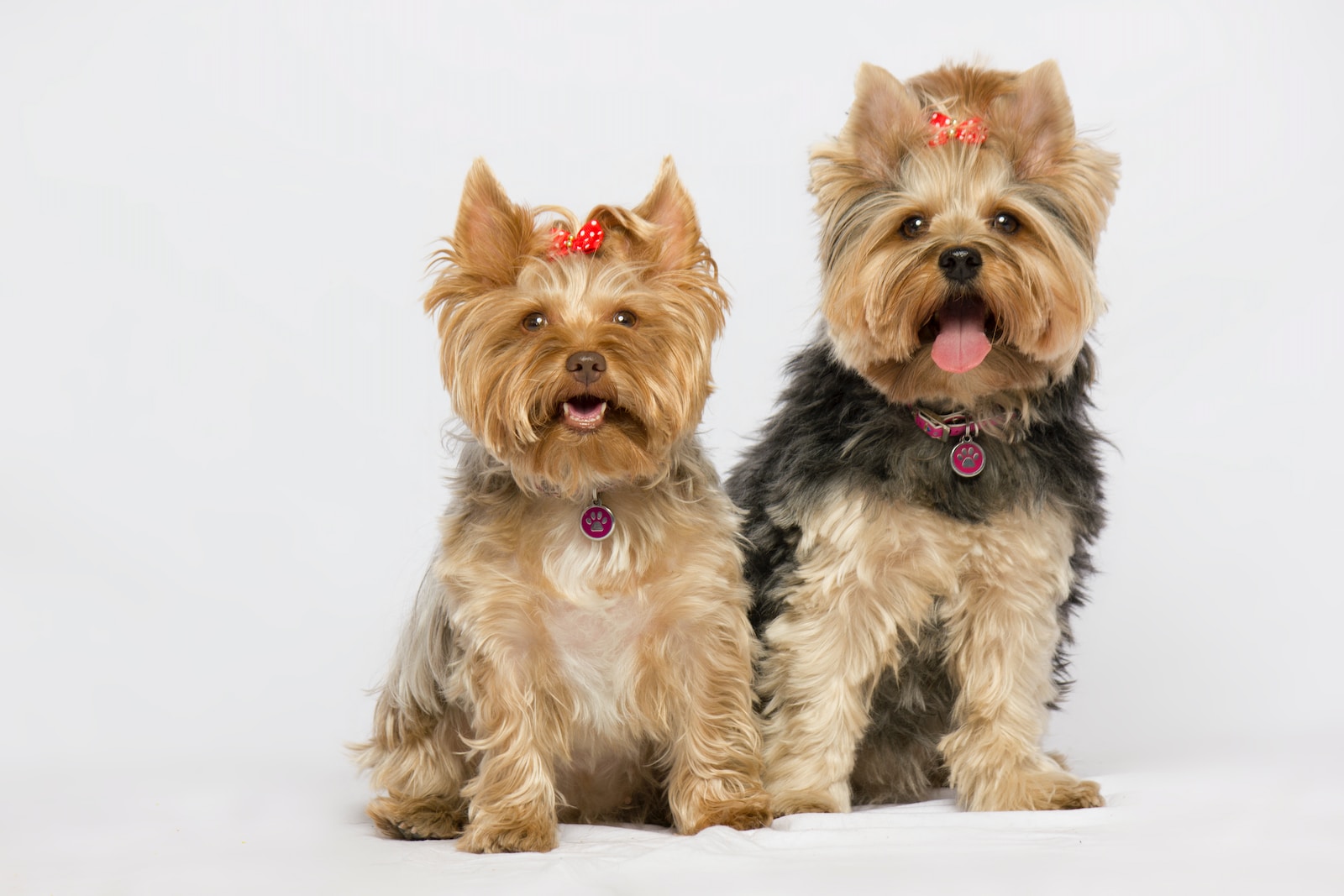
Search “Husky mixed with Yorkie” and you’ll find listings, photos and price tags. What you’ll rarely find is anyone explaining the physical problem at the heart of this cross: a Yorkshire Terrier weighs 5 pounds and a Siberian Husky weighs 50.
That gap is the most useful fact about the Yorkie Husky mix, and it shapes everything else. Here’s what it means, what a real one looks like, and how to tell whether the dog you’re being offered is one at all.
The breeding reality nobody puts in the listing
A Yorkie dam carrying puppies sired by a Husky is a veterinary emergency waiting to happen. The puppies would grow too large for her pelvis, and the pregnancy itself would put a dog the size of a house cat under load she isn’t built for. No responsible breeder attempts it, and no responsible vet would support it.
That leaves one direction: a Husky mother bred to a Yorkie father. The mother’s size makes the pregnancy survivable. But a 7-inch-tall sire and a 22-inch-tall dam can’t mate naturally, so the pairing takes artificial insemination, which takes a deliberate decision, a vet and money.
Almost nobody does this. Which means the dogs being sold as Yorkie Husky mixes, sometimes called Yorskies, are usually something else:
- A Pomsky, which is a Pomeranian crossed with a Husky, also produced by artificial insemination but far more commonly and with an actual market behind it
- A Husky crossed with a mid-sized dog that happens to have a scruffy face
- A small mixed-breed shelter dog whose DNA test came back with a low-confidence Husky or Yorkie percentage
That last one deserves a note. Consumer dog DNA tests are strong at identifying purebred parents and much weaker at calling small percentages in a many-generation mutt. A result reading “12 percent Siberian Husky” is not the same kind of claim as “50 percent Siberian Husky,” and it shouldn’t change what you call your dog.
The practical test: ask to see both parents, in person, with the puppies. A seller who can produce a Husky dam and a Yorkie sire is telling the truth. Everyone else is guessing or selling you something.
If it is real: what to expect
Say you’ve verified it, or you’ve adopted a shelter dog that genuinely appears to be this cross. Here’s what to expect, with the caveat that a population this small doesn’t support precise numbers.
Size: unpredictable. With parents that differ by a factor of ten, the usual “average the parents” logic breaks down. Recorded examples land roughly between 15 and 35 pounds and 12 to 18 inches tall, and littermates can differ dramatically. You will not know what you have until around 12 months. If a seller quotes you a confident adult weight for an eight-week-old puppy from this cross, they’re making it up.
Coat: usually the Husky’s, and it sheds. A Yorkshire Terrier has a single, fine, hair-like coat that grows continuously and sheds very little, which is why Yorkies are often recommended to people with allergies. A Siberian Husky has a dense double coat built for Arctic winters that sheds constantly and blows out completely twice a year. In the cross, the double coat usually shows. Plan for real shedding, weekly brushing, and an undercoat rake in spring and fall. This dog is not hypoallergenic and no honest seller will tell you it is.
Colors run to the Husky’s palette: black and white, gray and white, agouti, red and white, occasionally the Yorkie’s steel blue and tan. Facial masking from the Husky side is common.
Eyes. Blue eyes are possible and they come from the Husky. Researchers analyzing tens of thousands of dog genomes traced blue eyes in Siberian Huskies to a duplication near the ALX4 gene, and it behaves as a dominant trait, so a single copy from the Husky parent can produce one or both blue eyes. One blue and one brown is common and isn’t a health problem in this cross.
Temperament: two very different jobs
The Yorkshire Terrier was bred in 19th century Yorkshire to kill rats in textile mills. The Siberian Husky was bred by the Chukchi people to pull sleds long distances in the cold and to make its own decisions on the trail. Neither was bred to sit quietly on a couch.
What you get from combining them:
A dog that runs. Leaving is the Husky’s job description, so treating it as disobedience gets you nowhere. Huskies are among the most notorious escape artists in dogdom, and a smaller version is easier to lose through a gap in a fence, not harder. Off-leash recall is unreliable in most of them. Fence height matters less than fence gaps and gate latches.
A dog that talks. Yorkies bark and Huskies howl, whine, grumble and produce that theatrical wooing noise. This cross is vocal from both directions, and it’s a real consideration in an apartment.
A dog that’s affectionate but not clingy. Huskies are friendly with everyone and attached to no one in particular, which makes them poor guard dogs. Yorkies are intensely bonded and suspicious of strangers. Individual dogs land anywhere on that spectrum.
Serious prey drive. A ratting terrier and a sled dog that historically hunted for its own food. Cats, rabbits and small pets are a genuine question.
Exercise: 60 to 90 minutes daily. More if the dog came out closer to Husky size, less if it’s genuinely small, but the drive doesn’t scale down as fast as the body does.
Health: two very different lists
The one advantage of a cross this genetically distant is that the parents share almost no inherited conditions, so a puppy is unlikely to get a double dose of anything. The risk is inheriting one problem from each side.
From the Yorkshire Terrier:
- Portosystemic shunt (liver shunt). A blood vessel that bypasses the liver, leaving toxins uncleared. Yorkies have one of the highest rates of any breed. Signs are a puppy that stays small, seems dull after meals, or has seizures. A bile acid blood test screens for it and is worth doing in any small-breed puppy that isn’t thriving.
- Collapsing trachea. A honking cough that gets worse with excitement or collar pressure. Use a harness, not a neck collar, from day one.
- Luxating patellas. Kneecaps that slip out of the groove, causing a skipping gait. Mild cases need nothing, severe ones need surgery.
- Dental disease. Small jaws crowd teeth, and Yorkies lose teeth young. Brushing matters more in this cross than in almost any other.
- Puppy hypoglycemia in very small individuals during the first few months.
From the Siberian Husky:
- Juvenile cataracts, sometimes appearing before the dog is two. An annual eye exam catches them early.
- Progressive retinal atrophy and corneal dystrophy. Both documented in the breed, both detectable on eye exam.
- Zinc-responsive dermatosis. Crusting around the eyes, muzzle and elbows caused by poor zinc absorption rather than diet quality. It responds well to supplementation once diagnosed, and it’s frequently misdiagnosed as an allergy first.
- Hypothyroidism. Weight gain, coat loss, lethargy in middle age. Cheap test, cheap treatment.
Lifespan: 12 to 15 years, and small dogs generally outlive larger ones, so a Yorkie-sized individual may run longer.
Living space, food and cost
Apartments work for this cross only if you’re honest about the exercise and the noise. The dog is small enough to fit and vocal enough to bother neighbors, and 90 minutes a day doesn’t get shorter because the floor plan did.
A yard needs the gaps checked, not just the height. Small escape-driven dogs go through fences rather than over them.
Food runs about $20 to $35 a month. A 25 pound adult needs roughly 700 to 800 calories a day. Feed measured meals rather than free-feeding, and use part of the daily ration for training.
Cost to acquire. Rescue adoption fees run roughly $200 to $500 for a small dog and usually include vaccinations, microchip and spay or neuter. Sellers advertising Yorkie Husky puppies ask $1,000 to $2,500, and given how rarely the cross is produced deliberately, a listing at that price should trigger the parent question before the payment question.
Other costs: a small dog with Yorkie dental genetics may need professional cleanings every year or two, at several hundred dollars each under anesthesia. Budget for it rather than being surprised.
Is this the right dog for you?
Good fit if you want a small dog with a big dog’s temperament, you’re active outdoors, you don’t mind hair, and you’re not counting on off-leash freedom.
Poor fit if you were drawn in by the photos and expected a low-shedding lap dog. That’s the specific mismatch that lands these dogs in rescue.
If the appeal is a small dog with Husky looks, the Pomeranian Husky cross is the far more commonly produced version. If it’s the Husky temperament you want in a full-sized dog, the Doberman Husky mix and the Vizsla Husky mix are both real, common and easier to verify.
Frequently Asked Questions
Can a Husky and a Yorkie actually breed?
Only in one direction, and not naturally. A 5 pound Yorkie cannot safely carry a litter sired by a 50 pound Husky, so the only survivable pairing is a Husky mother and a Yorkie father, which requires artificial insemination because of the size gap. That’s why genuine Yorkie Husky mixes are so rare.
How big is a Yorkie Husky mix?
There’s no reliable range, and anyone quoting you a precise one is guessing. Recorded examples fall roughly between 15 and 35 pounds and 12 to 18 inches tall, but with parents differing by ten times in weight, littermates can vary enormously and you won’t know until the dog is a year old.
Is a Yorkie Husky mix hypoallergenic?
No. The Yorkie’s fine, low-shedding coat and the Husky’s dense double coat are opposites, and the Husky coat usually wins in a cross. Expect real shedding, including two heavy seasonal blowouts a year.
Are Yorkie Husky mixes rare?
Genuinely rare. Most dogs advertised as one are something else, commonly a Pomsky, a Husky crossed with another small breed, or a shelter dog whose DNA test returned a low-confidence result. Ask to see both parents before you believe the label.
What health problems does a Yorkie Husky mix have?
Liver shunt, collapsing trachea, luxating patellas and severe dental disease come from the Yorkie side, and juvenile cataracts, progressive retinal atrophy and zinc-responsive skin disease come from the Husky. A liver bile acid test and an eye exam are the two screenings worth doing early.
Before you go
If a specific dog has already caught your eye, the label matters much less than the animal. Ask what it weighs, what it does when left alone, and how it behaves on a leash near a squirrel. Those answers hold up better than any breed name.
Our breeds and adoption guides cover a lot of the mixes that get confused with this one.